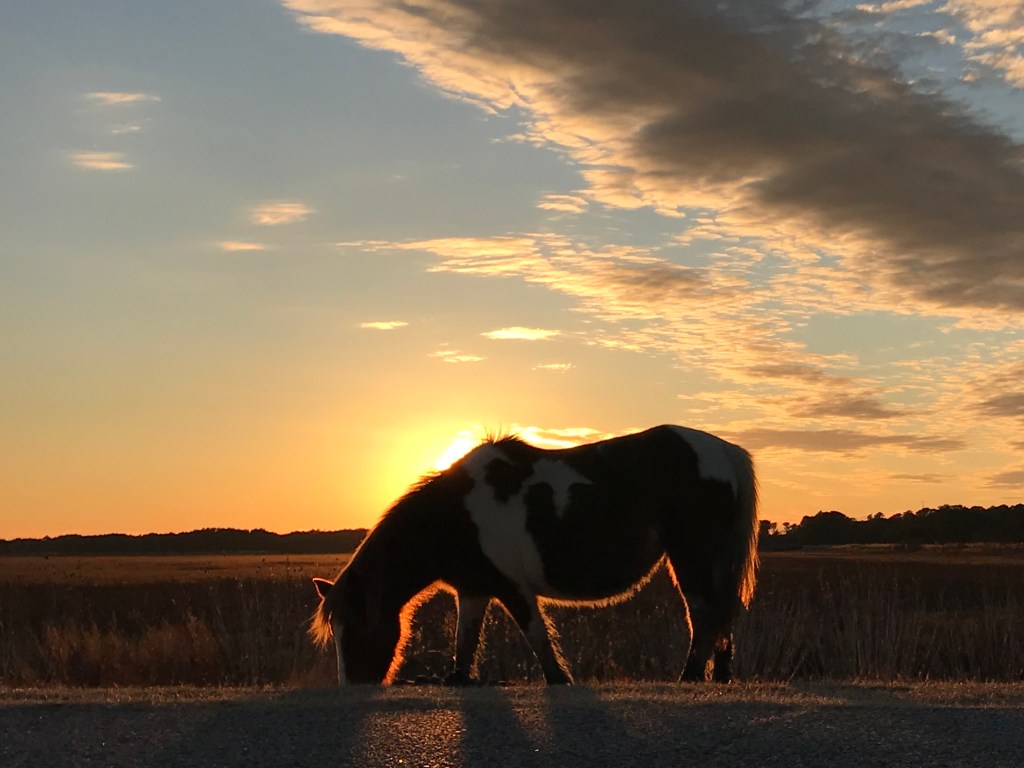
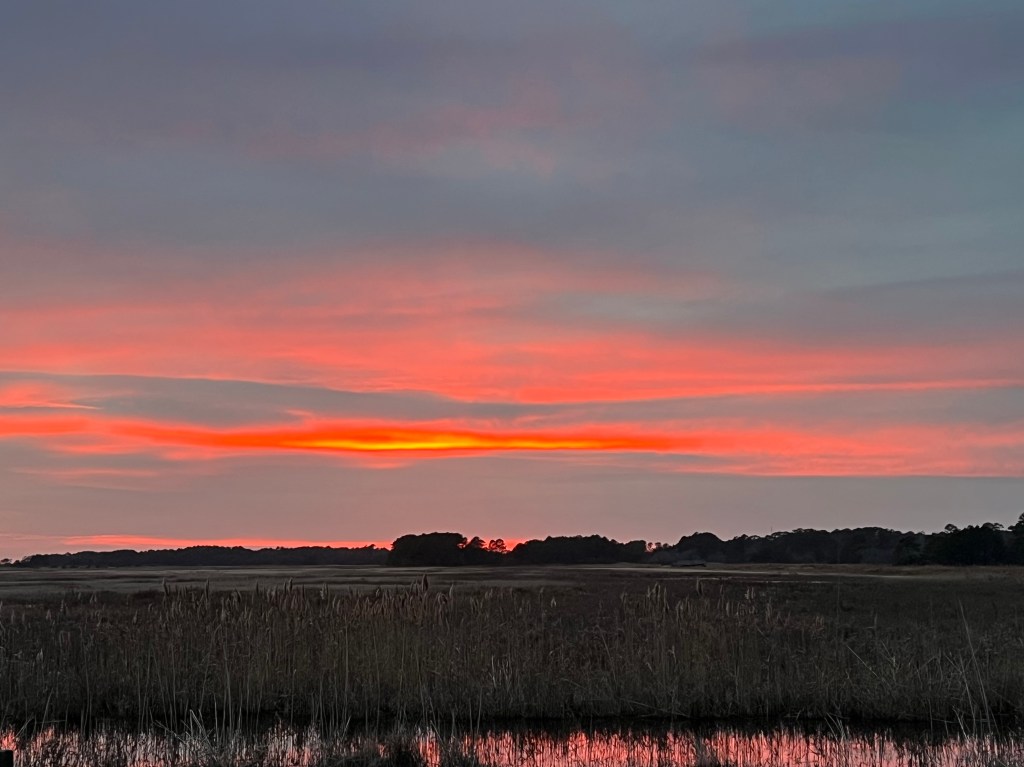
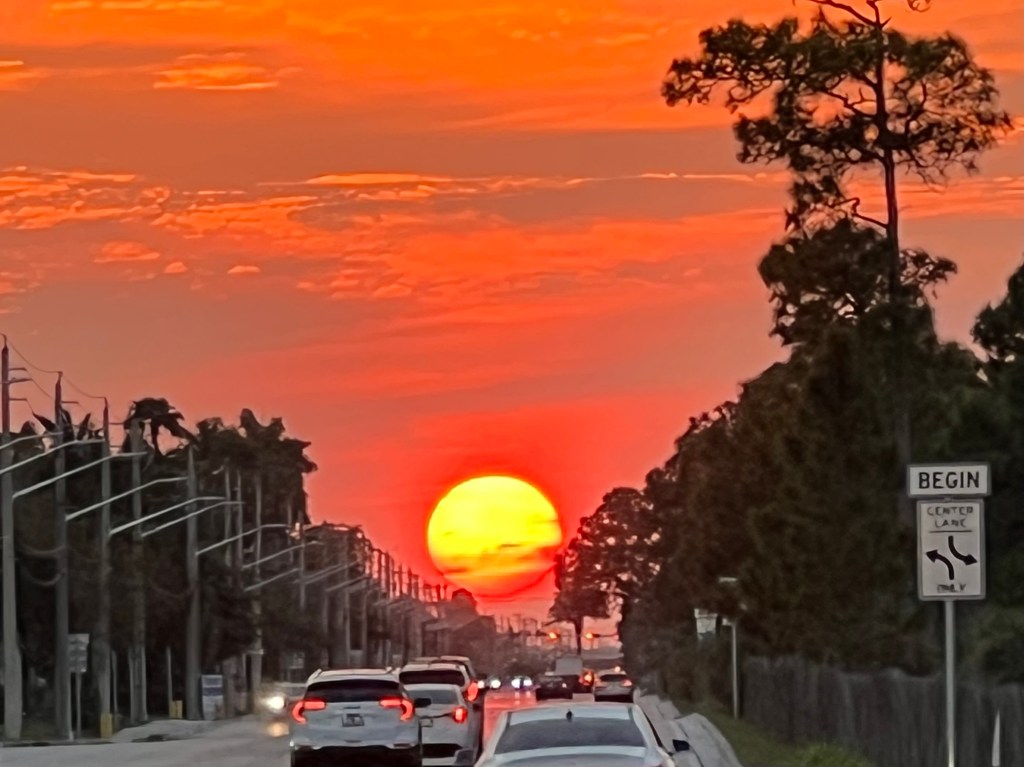
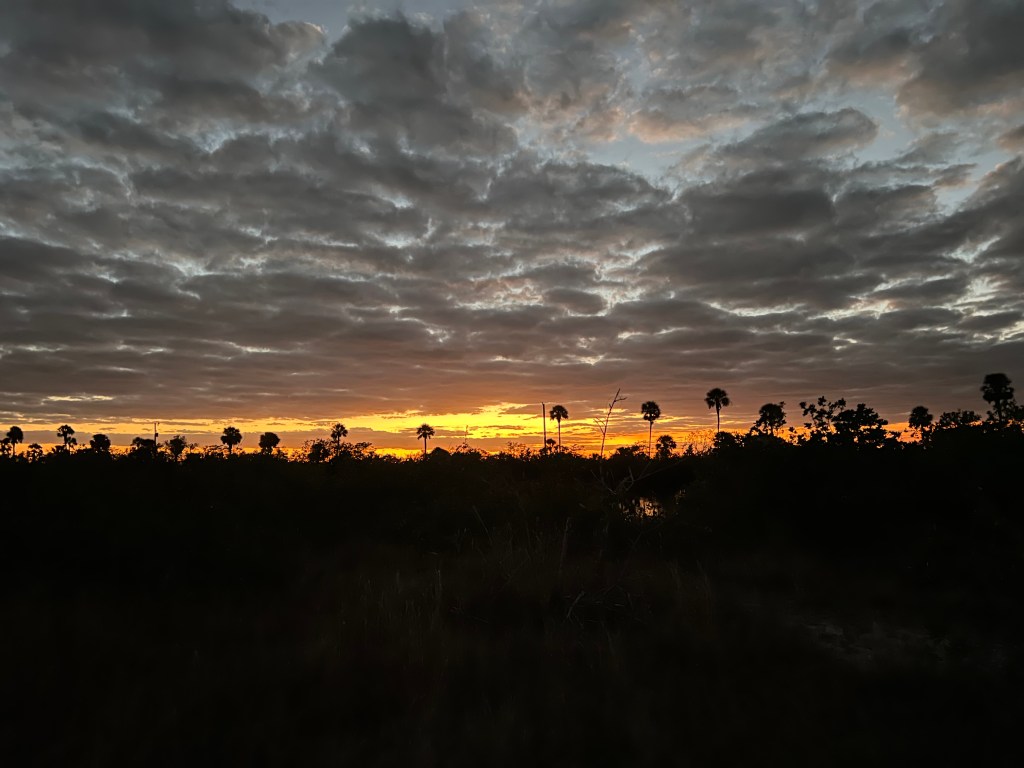
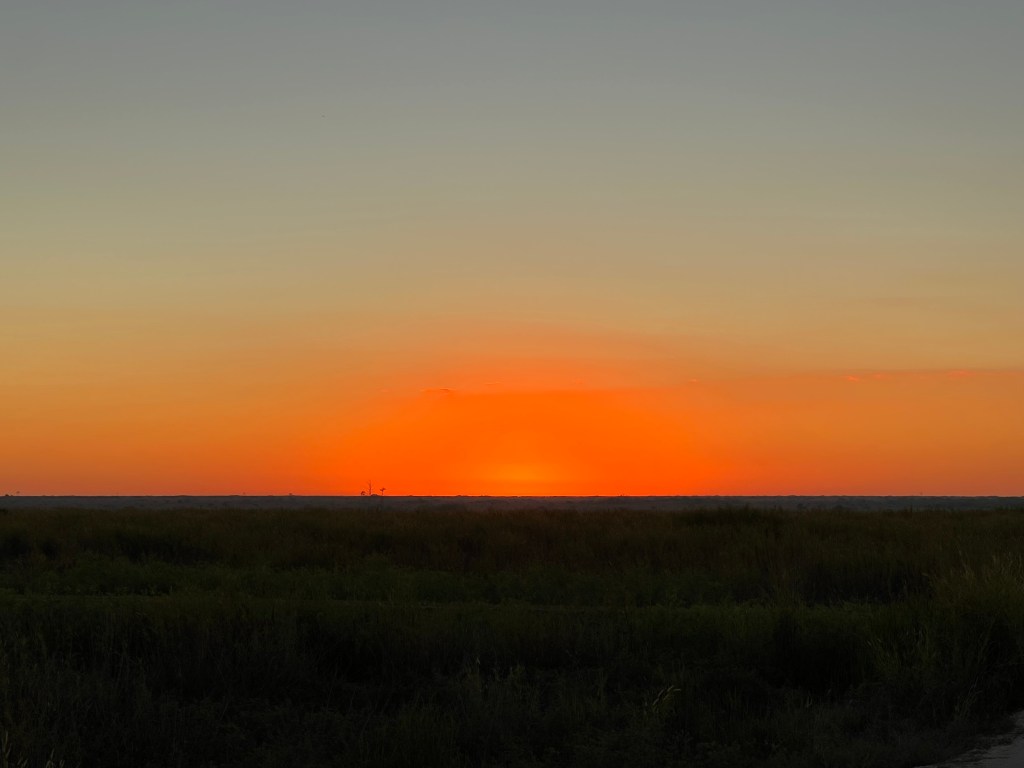
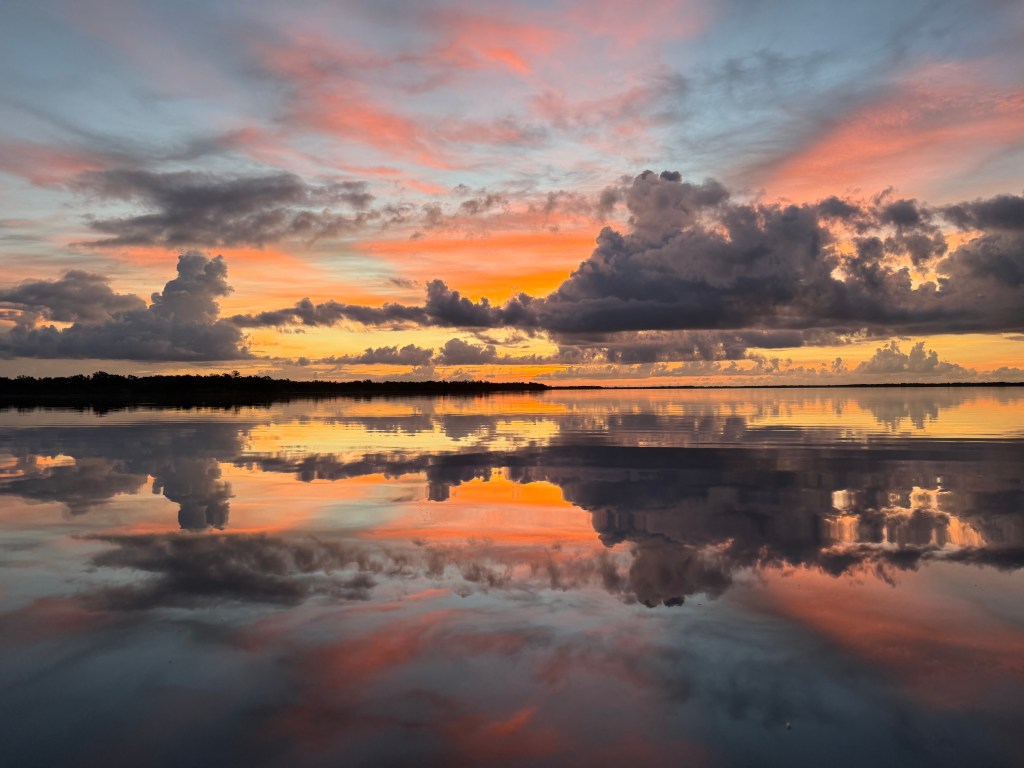
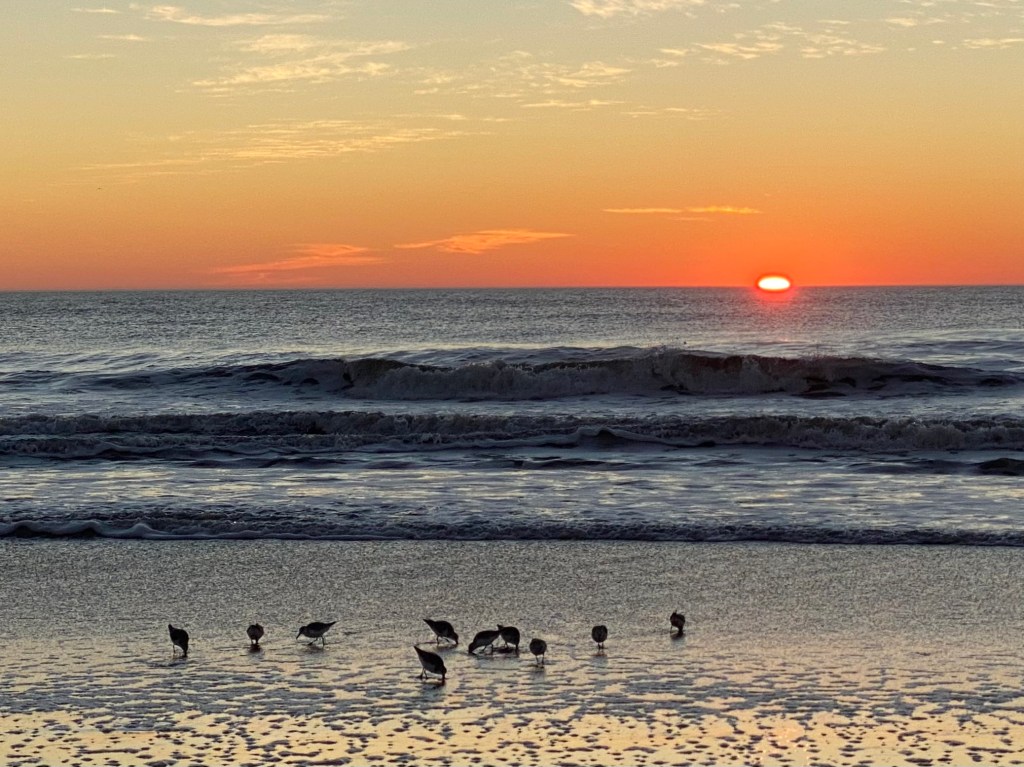
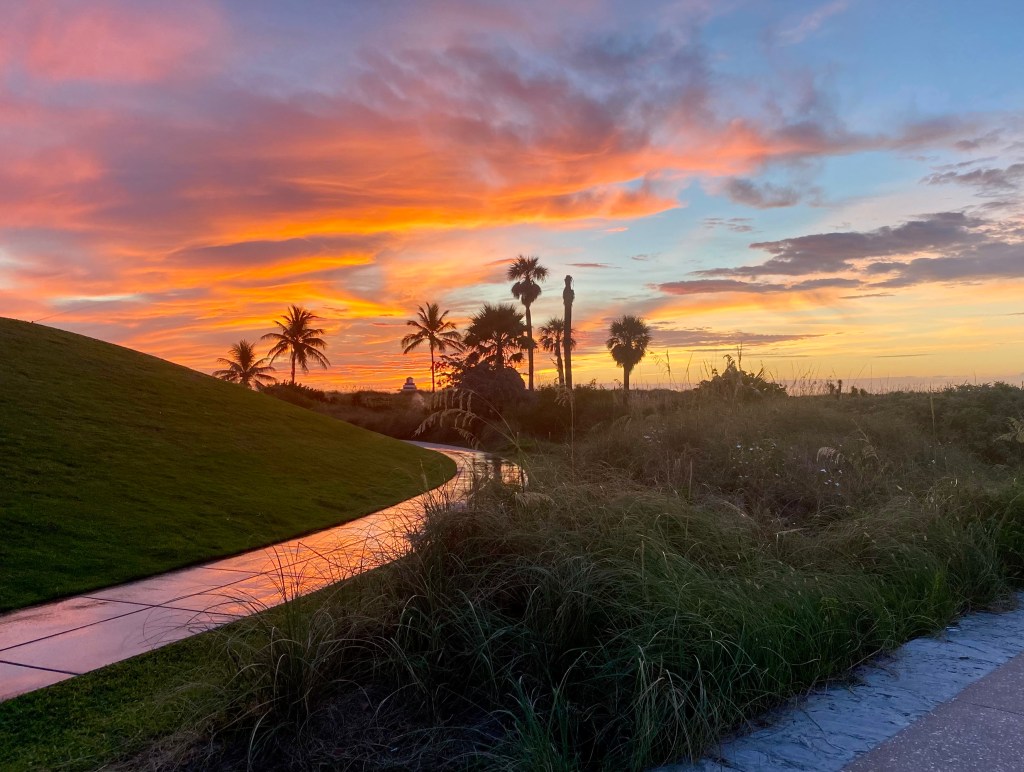
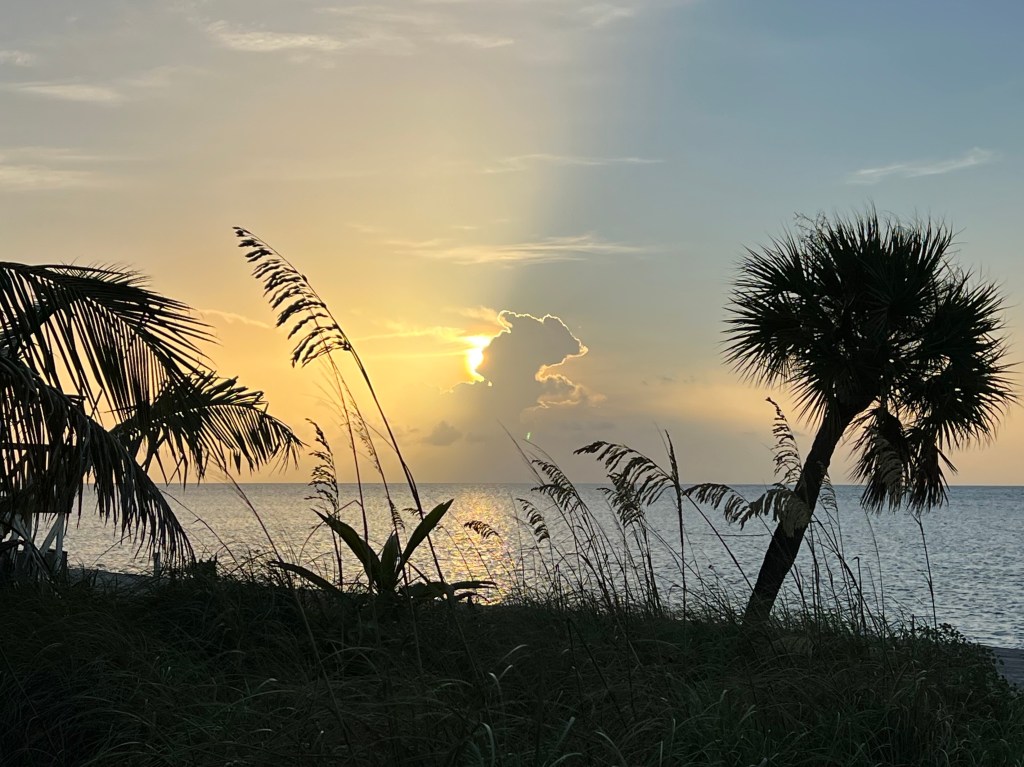
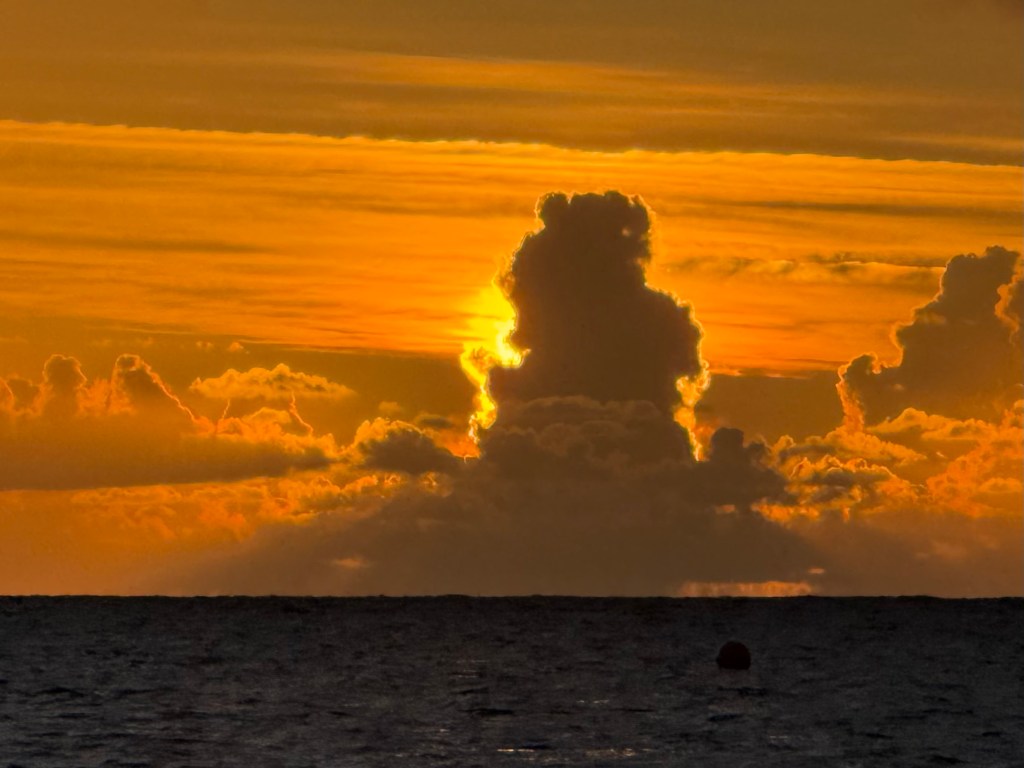
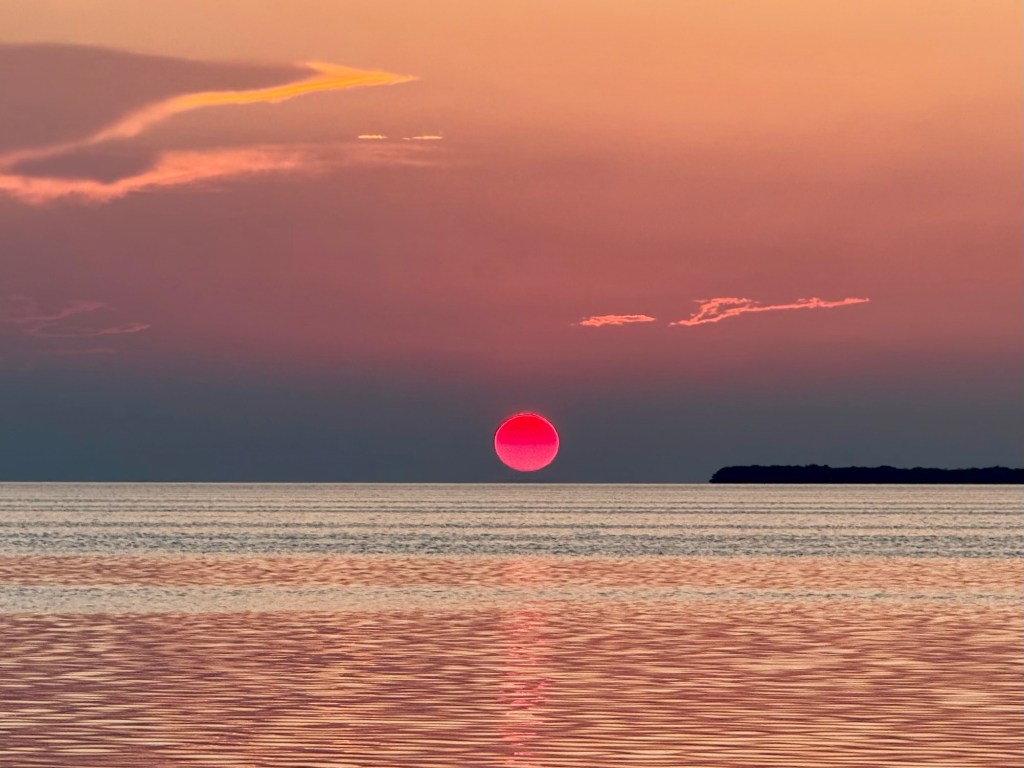
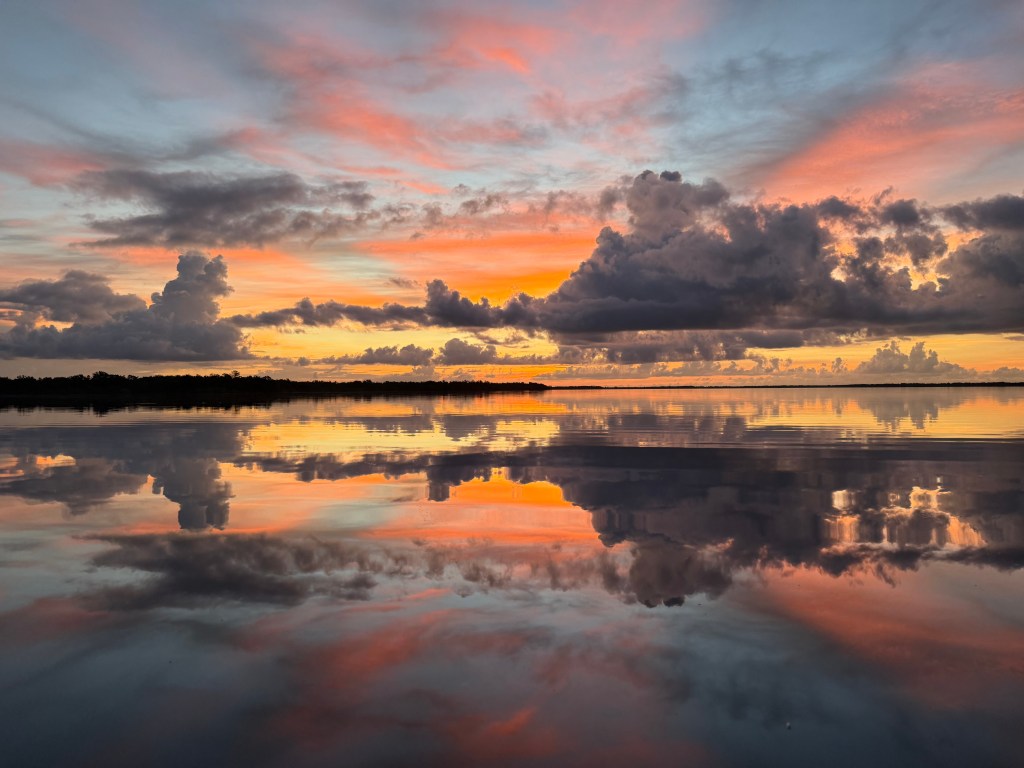
Dave Barry once noted that he’d seen more spectacular sunsets in his first year in Miami than his entire life in Philadelphia. Having an iPhone in my pocket helps to illustrate his point. Sunsets are splendid, though as a fisherperson, I’m partial to sunrises.
Dusk
Wild pony, Assateague Island, VAAssateague Island, VASpring equinox, Southwest Miami-Dade County, FLTarpon rise (lower right), Ochopee, FLWomenfolk on Rabbit Key, Everglades National ParkOchopee, FLEast Everglades, Miami
Dawn
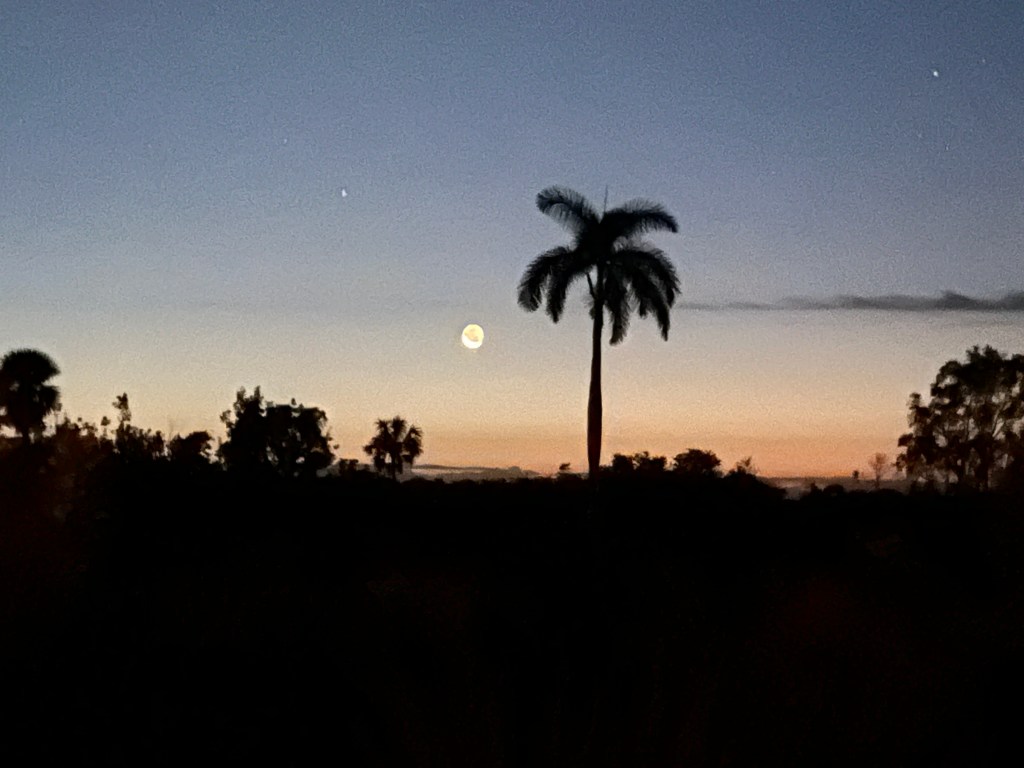
Fly fishing at the start of civil twilight, West Lake, Everglades National ParkTwo planets and a moon, Everglades National Park entrance roadWest Lake, Everglades National ParkAssateague Island, VASouth Pointe Park, Miami BeachCrandon Park, Key BiscayneKey Biscayne, FLLittle Duck Key, FLPalm Key, Everglades National Park
P.S. Last sunset of 2025
Assateague Island, VA.
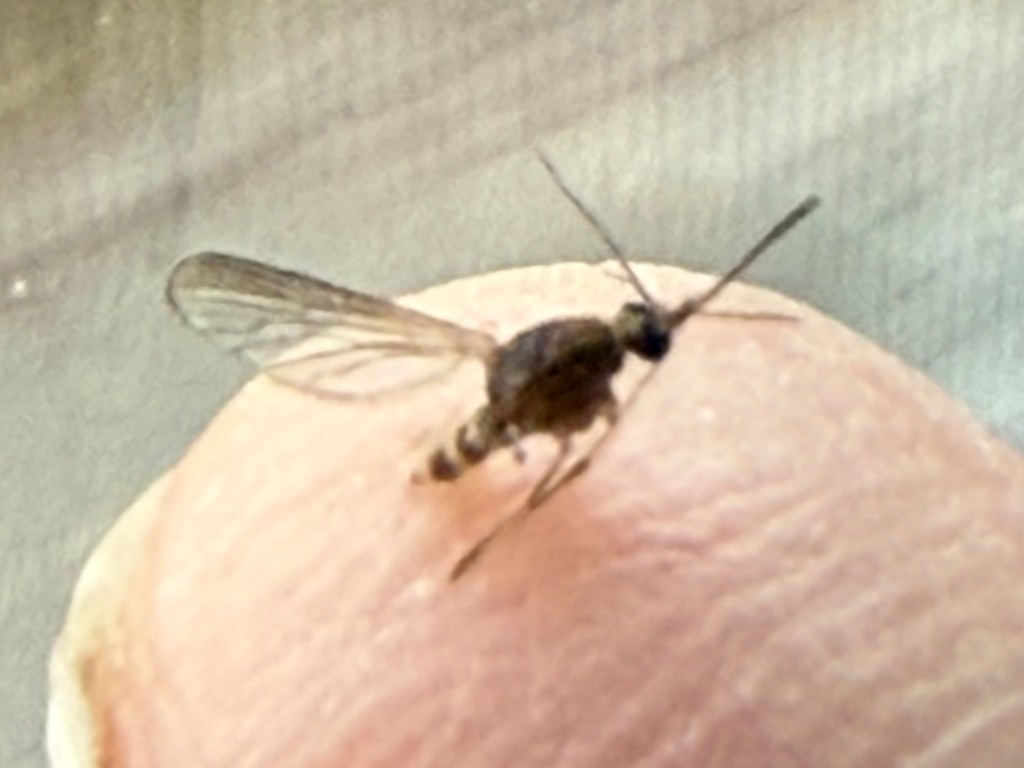
P.P.S. First mosquito of 2026
Remnants of a mosquito that entered through the heat vent at our rental house in Chincoteague VA, assisted by raccoons who partially dismantled the heating ducts under the house.
Powering artificial intelligence might involve constructing a fleet of new nuclear reactors, yet natural intelligence runs handily on organic farm waste, such as tofu and kale.
If powering Nvidia chips to make fake videos is that important, nuclear power is still the most expensive way to add power to the electric grid, while renewables, wind and solar/battery, are the cheapest.
The push to build more old-style nuclear reactors suggests that AI and data companies have made so much money from their stratospheric stock valuations that they and everyone around them are willing to waste it.
Seems like a sign, and I am hardly alone in thinking so. Here, I believe, is a hint to how this mystery might resolve.
Remember Michael Burry and Scion Asset Management from the film “The Big Short”? Scion is betting big on an AI stock decline, allocating 80% of its $1.1 billion portfolio to put options against the AI companies Nvidia (NVDA) and Palantir (PLTR).
Why stop at shorting NVDA & PLTR? When was the last time any utility company failed to lose money building nuclear power?
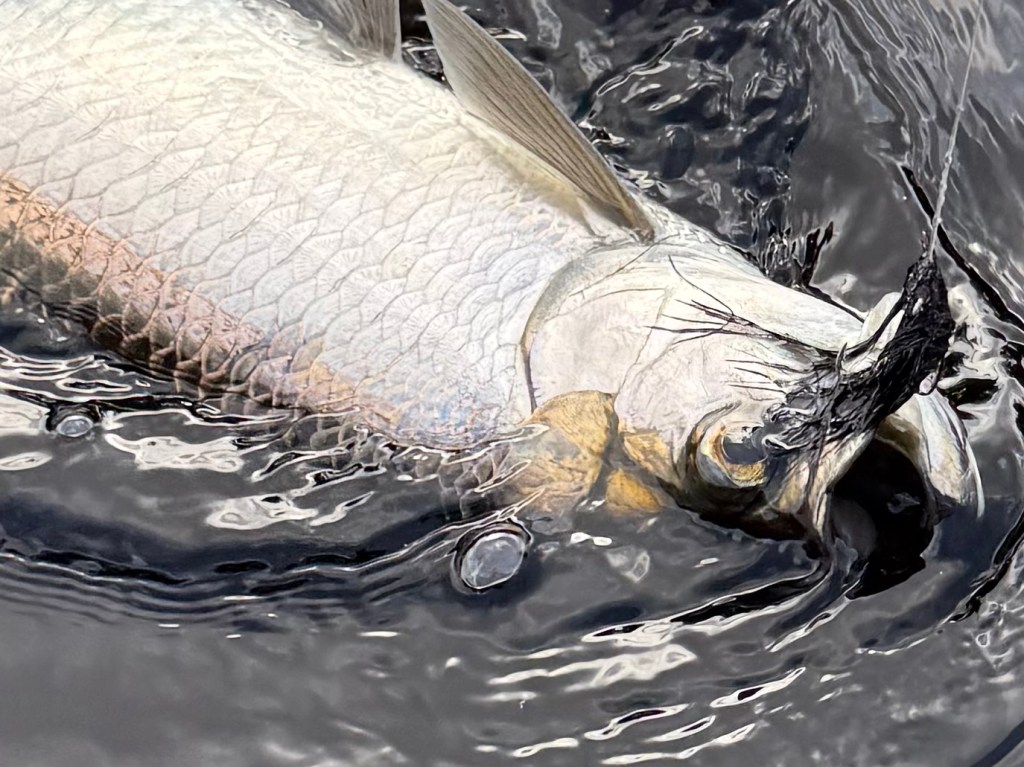
My last few fishing trips onto the flats have been unproductive. The late summer water has been hot and low in oxygen. Maybe the fish are somewhere else, or maybe they’re just laying low. Tomorrow morning I’m venturing back into the mangrove lakes of Mosquito Hell, an area where I always find fish this time of year, assuming the Black Salt Marsh Mosquitoes (BSSMs) don’t drive me out first.
Trip planning
The moon is near full tonight, so the morning fishing activity is likely to be brief. I plan to arrive in the dark to maybe find a snook or two before the sun comes up. Then I’ll peddle-paddle my kayak to an area where the tarpon hang out and snook spend their day hiding in the mangroves. Occasionally, a snook wakes up for a mid-morning snack. If I find the juvenile tarpon rolling, I can see if they’ll play with me. Like snook, tarpon feed actively at night on a full moon, so they may be sated by the time I arrive.
I’m preparing for the BSSMs the night before, putting into play a few improvements over my last trip to Mosquito Hell:
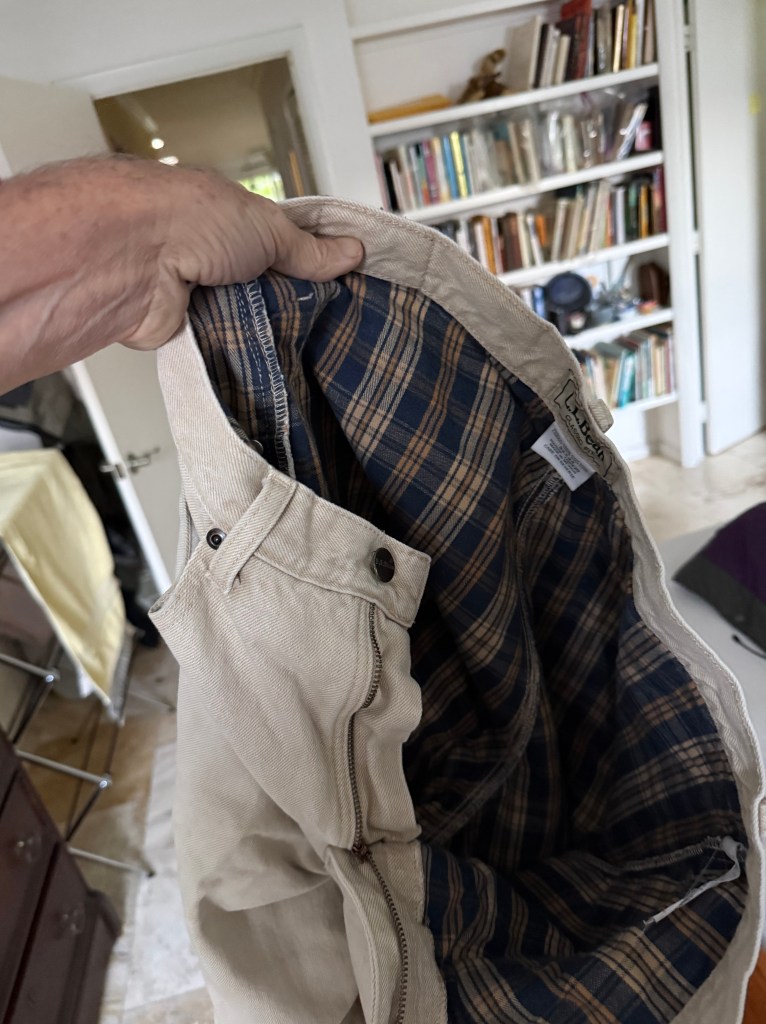
I take my khaki fishing pants, outer shirt, and gloves to the driveway, spray them with DEET, and place them inside a 2-gallon zip-loc bag. I lay out a towel to protect the car seat from the DEET. The rest of my special mosquito gear I place on the passenger seat: for my head, a Tilley hat and insect head net; for my feet, Simm’s neoprene wading gaiters and neoprene dive booties. Mosquitoes are not going to bite through 5 mm of neoprene.
My scheme is to drive to the launch in the dark, and change into my stinky DEET-soaked clothes, then get out of the car to rig and launch my kayak. I will start fishing at 06:00, before the first dawn light. The nearly full moon sets at 05:49 and the sun rises at 07:06, with civil twilight starting at 06:36.
It’s tricky fishing in total darkness, and tricker fly fishing. I only know that a snook is nearby if I hear it blow up the water while chasing mullet. Sometimes the water is silent. Other times I cast too far and hang the fly into a mangrove tree. Then I have to turn on my head lamp to untangle the line and of course the light attracts mosquitoes to my head. But other times I cast the fly near a snook and things get exciting in a much better way. Hope springs eternal.
My alarm is set for 3:50 am. Time for bed.
Fishing report
On the Mosquito Horror Scale (0-10) the morning ranks an 8, “Severe” but not “Extreme”. My mosquito gear system works perfectly. The only mosquitoes that try to bite me are 3 or 4 that go for the pads of my fingers where I have no repellant. That’s not a safe place for a mosquito to bite a human, and they are instantly dispatched with a pat of the finger. With my DEET-soaked outer clothes, mosquitoes don’t even follow me into the car.
No mullet are splashing around the kayak launch area in the dark, so no predatory fish are there either. Too bad – sometimes the fishing is amazing right there. I light out for the far mangrove shore, about a mile’s paddle.
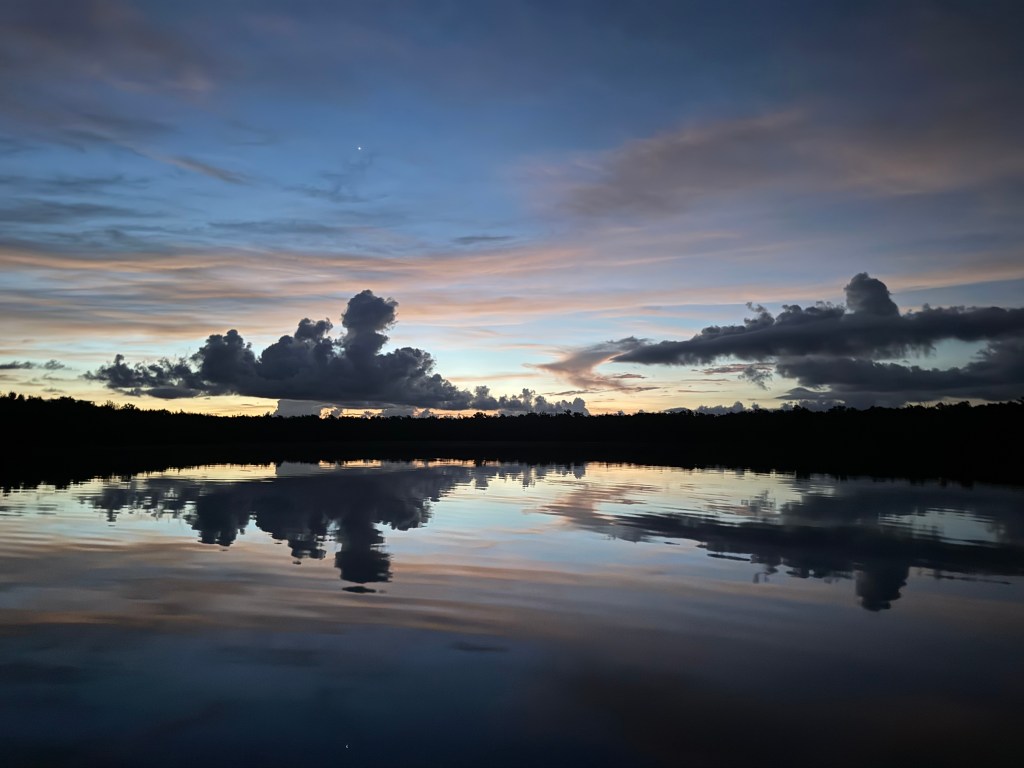
The first traces of dawn light appear, with Venus still visible directly above the tallest thunderhead on the left.
Dawn explodes enroute. Yowza.
I reach the other side eight minutes after sunrise. The water is extremely murky and tannic, like donut shop coffee with a tiny splash of horrid non-dairy creamer. I dip my finger in the water and taste it through the head net: slightly brackish.
To find fish in water this opaque I need a “search bait” that’s dark, for maximum contrast when viewed from below against the sky, but with some sparkle and a lot of vibration to get a fish’s attention. I put away the fly rod and rig my spinning rod with a 4” paddletail in rootbeer & gold with a gold underspin jig – just the ticket.
The paddletail, true to its name, wiggles its tail back and forth, and the underspin leaf twirls up a storm.
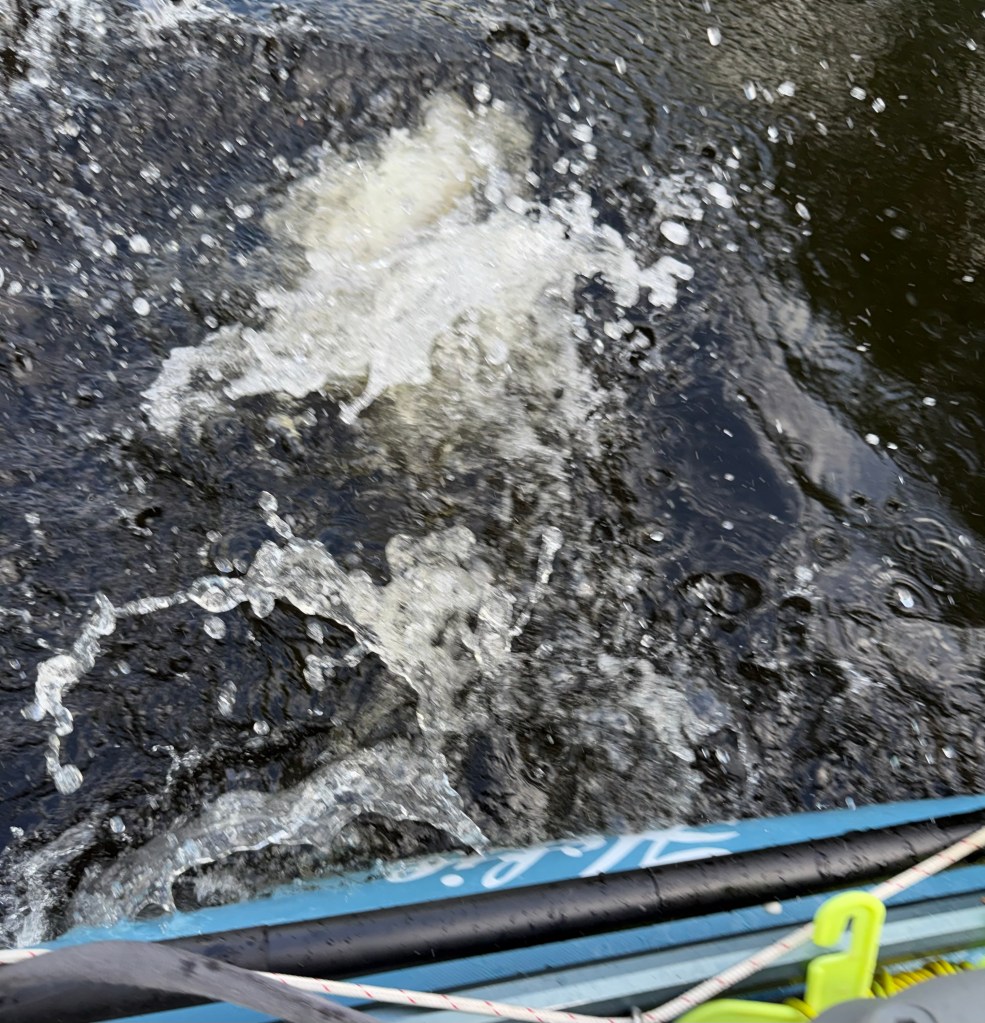
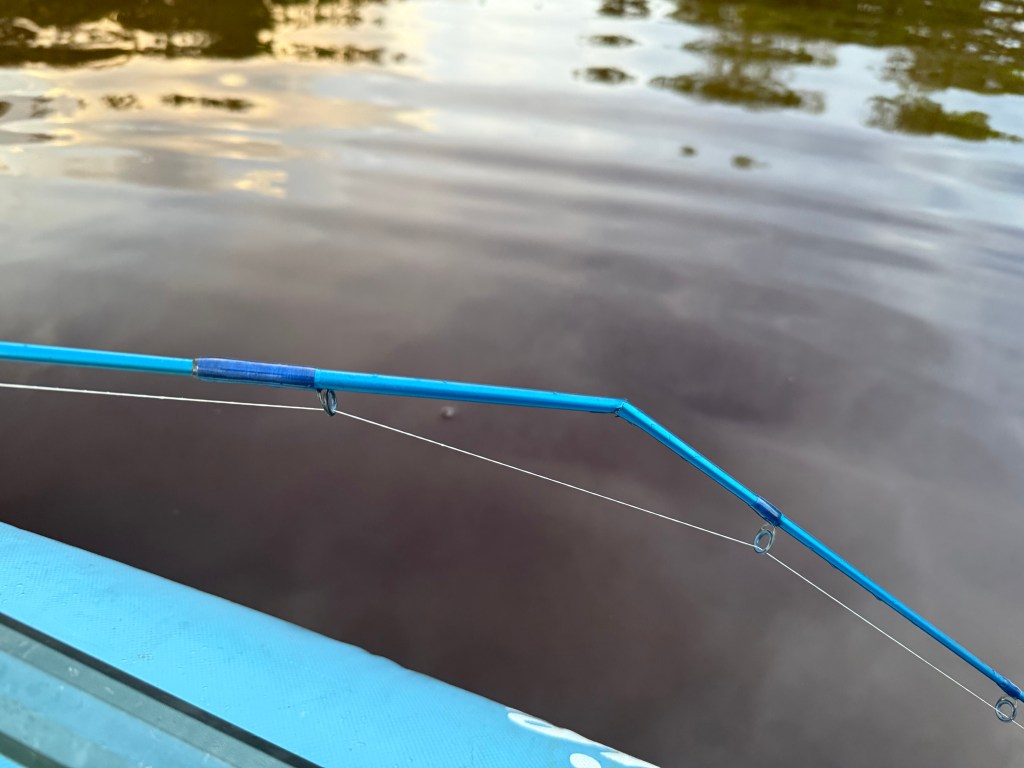
At 7:15, my second cast is slammed by a snook in the 30″ range. It makes one jump, a brief lateral run pulling line off the reel, then runs straight for me as fast as I can take up line. It passing directly under the middle of the kayak, bending the rod hard. The tip section of my three-piece TFO travel rod snaps, creating a brief moment of slack that pops the lure free of the fish’s mouth.
This is the 4th time this spinning rod has broken, every time in exactly the same spot, 5″ above the ferule. Until now, I’ve blamed myself, but thinking on it, each break occurred under a different circumstance and stress geometry and I’ve never broken any other spinning rod. I’d wager the TFO Traveler is weak at the internal edge of a carbon fiber sheet wrap. I will write the company about this problem. I bought two replacement tip sections the last time one broke, so I still have one left, but I need a more reliable multi-piece spinning rod.
Why even bring a travel rod on a local fishing trip? When kayak fishing tight to the mangroves, it helps to have the rods I am not using at the moment disassembled and stowed safely out of the way. That’s a key advantage of multi-piece rods, not to mention the obvious advantage when I travel.
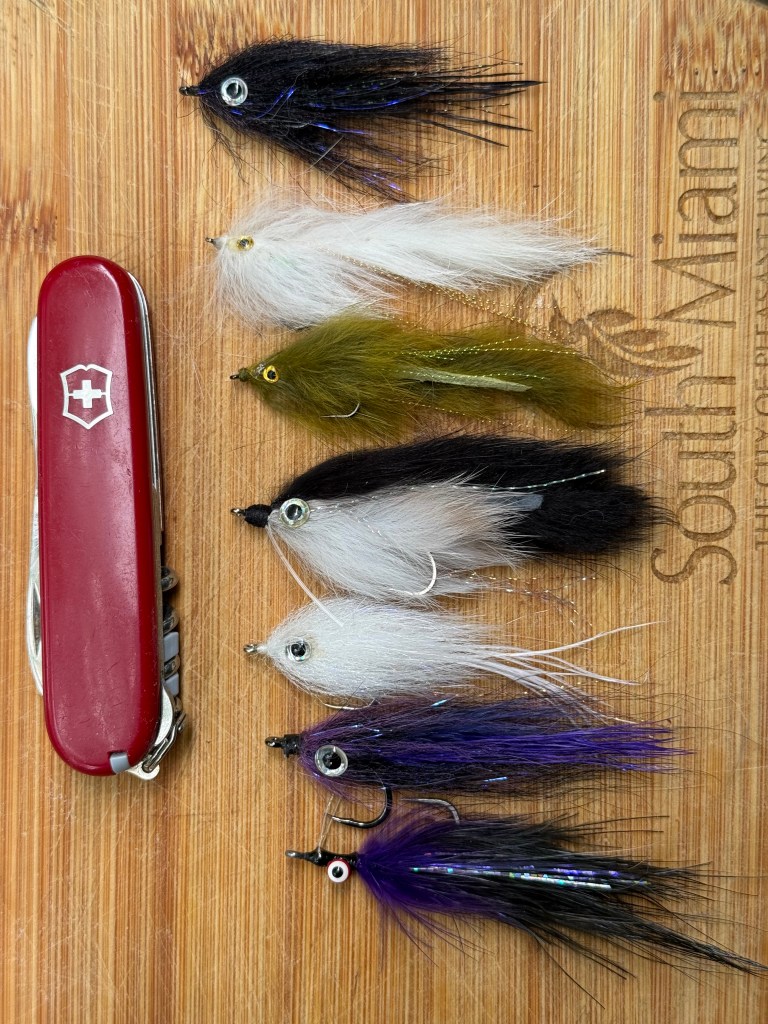
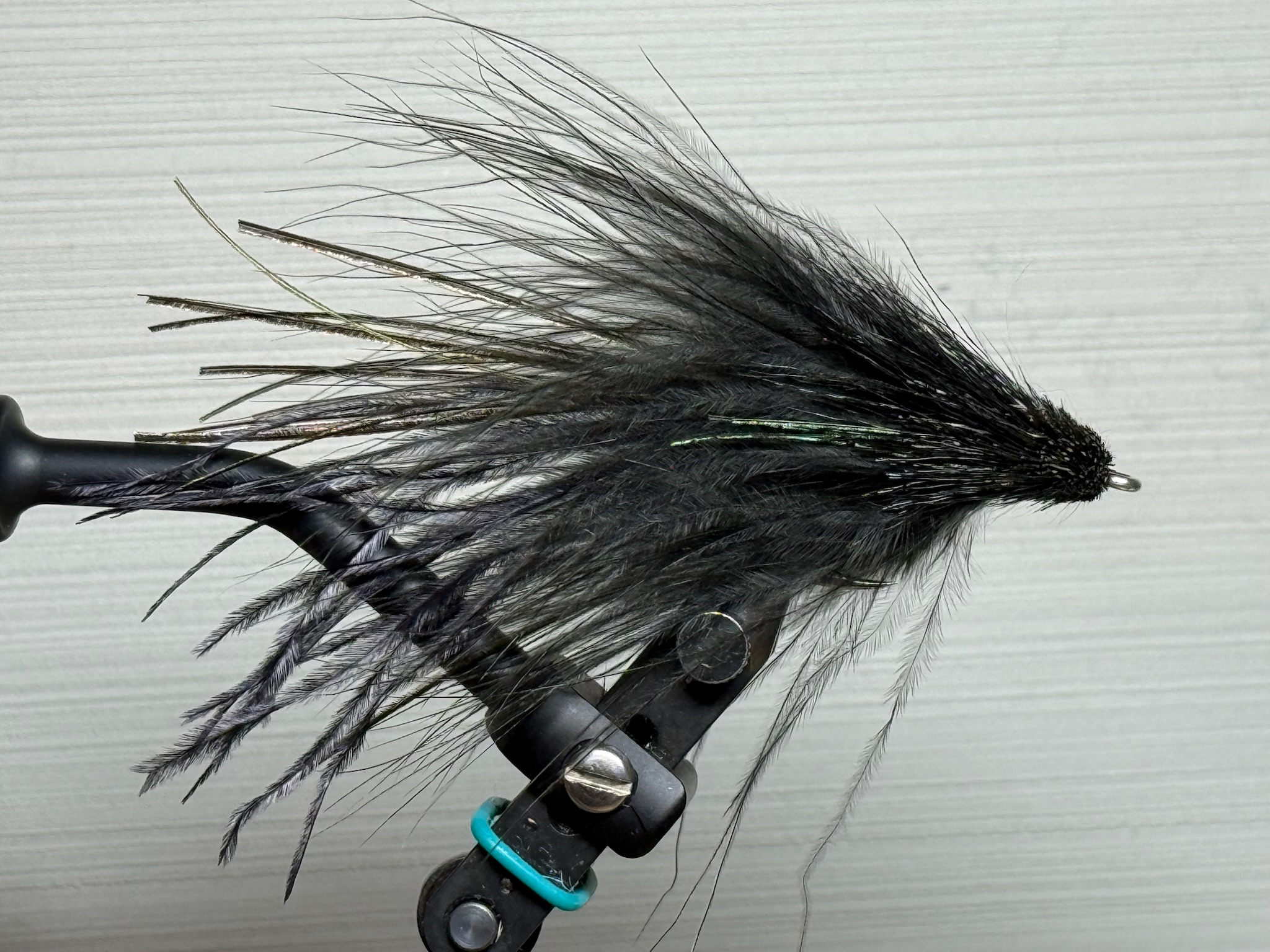
Back to fishing. Having broken the spinning rod, it’s “fly or die”. I re-assemble the 8wt fly rod and choose a black dark-water fly, this one tied from Drew Chicone’s pattern, The Devil’s Daughter. The tail is ostrich and peacock herl, the body is fluffy marabou feathers, and the head is spun deer hair. Peacock herl gives It shimmer and the ostrich and marabou make it swish enticingly in the water.
I start with the fly in the photo and immediately hang it in a mangrove. Impatiently, I shove my kayak into the mangroves to untangle the fly, leader, and line, then tie on another I’d made with a weed guard to keep it from hanging in trees and roots.
Predatory fish that have spent the night foraging under a bright moon generally won’t be hungry again until the afternoon. This morning fits that typical pattern, with fish ending their feeding spree shortly after sunrise, shortly as in 9 minutes. In the next hour, I get rained on briefly (feels good) and catch a couple of small juvenile tarpon on fly (they’re always hungry), while their older cousins roll on the surface for air but won’t eat.
Fishing is over until afternoon but the shoreline holds birds, orchids, and bromeliads. I can see for miles, the mosquitoes have let up, the rain shower has cooled things off, and I have yet to spot another human. It’s has turned into a pretty fine Sunday in the Everglades wilderness, but it’s time to get out. Bigger storm clouds are assembling and I don’t want to be crossing open water in an electric storm.
On the way home I stop by Moreno’s Tortilla shop in Florida City to pick up hot tamales and a pack of corn tortillas. Josephine greets me and knows what I want without my asking. This little hole-in-the-wall makes the best Mexican tamales and you can’t buy all-corn tortillas this good in a supermarket.
On the drive back, I divert 10 miles to check out a canal that friend Jay and I had identified from a YouTube video. In the video, a young kayak fisher from out of town was catching lots of fish while getting bitten on the eyelids and lips by something he called “yellow flies”. As soon as I step out of the car I am engulfed by a swarm of hungry deer flies. Uh oh.
I consider deer flies even worse than mosquitoes because they are active midday when it’s too hot for protective bug clothes, they will find the the tiniest spot of skin on which you did not apply repellant (e.g. lips and eyelids), and their bites really hurt.
Climbing over two metal gates, swat swat swat, I find the kayak put-in, swat swat. From the vague track through the vegetation, swat swat swat, I can tell it’s rarely used. I wonder why not, swat swat.
I mash the deer flies that followed me into the car and photograph one that wasn’t too mangled.
Serious rain slows the drive home but returns a few minutes by washing salt from the kayak and car.
Unpacking my fishing gear, two stow-away mosquitos escape into the house. It’s still summer here in South Florida where if it’s not one nasty biting bug it’s another. I’ll bet the Wisconsin Driftless Area is getting really nice about now.
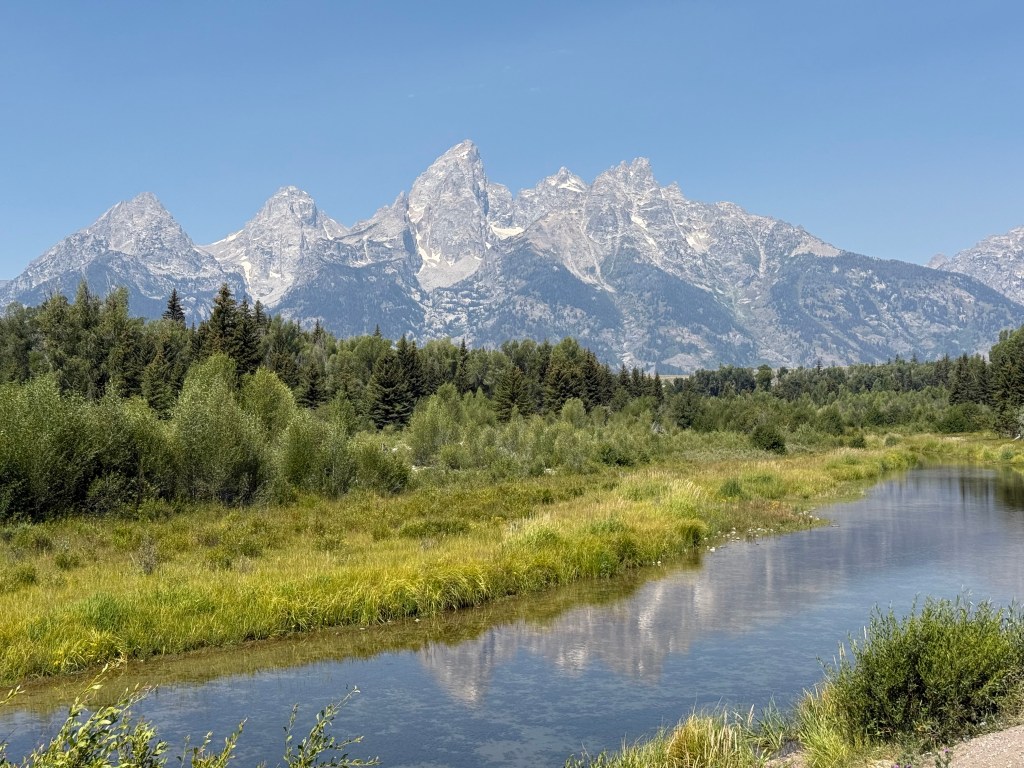
I last visited Grand Teton National Park in August of 1980. Since then, the Tetons have moved about four feet due to fault slippage, not so noticeable for a mountain range 43 miles long. Indeed, most things seem about the same, but one thing that has changed noticeably is the tenfold increase in number of fly fishers.
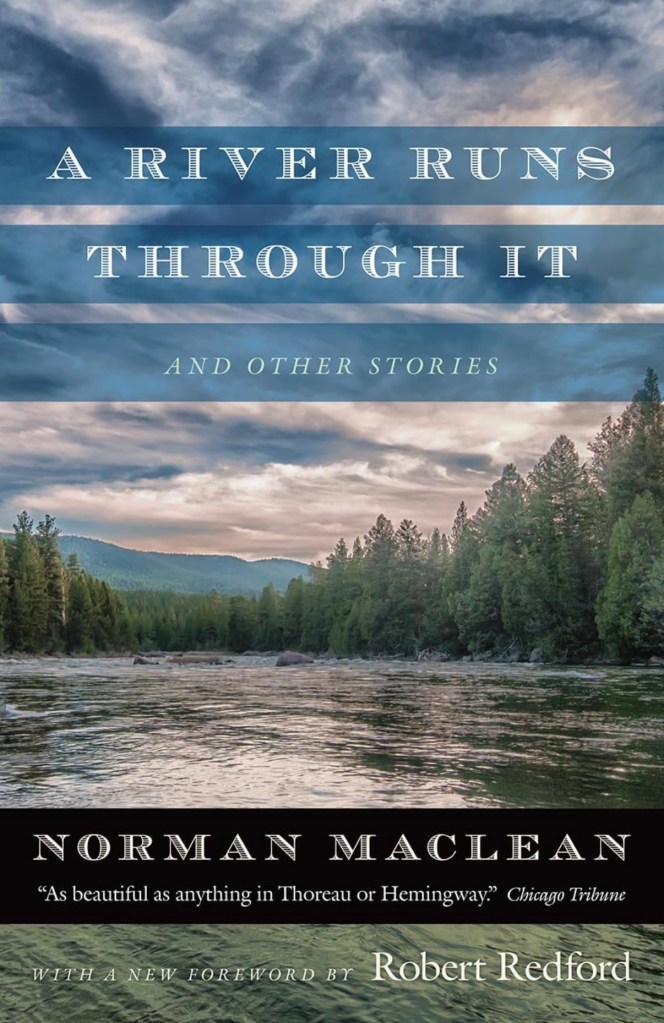
The exponential rise in the popularity of trout fishing is widely attributed to the movie made from Norman Maclean’s wonderful novel.
People tell me all the time “I LOVED that movie. It made me want to take up fly fishing. It looks so relaxing.” Relaxing? They missed how seriously the menfolk in that family took the challenging and technical craft of trout fishing on a big western river. The narrator recalled his father’s sermon:
“He told us about Christ’s disciples being fishermen, and we were left to assume, as my brother and I did, that all first-class fishermen on the Sea of Galilee were fly fishermen and that John, the favorite, was a dry-fly fisherman.”
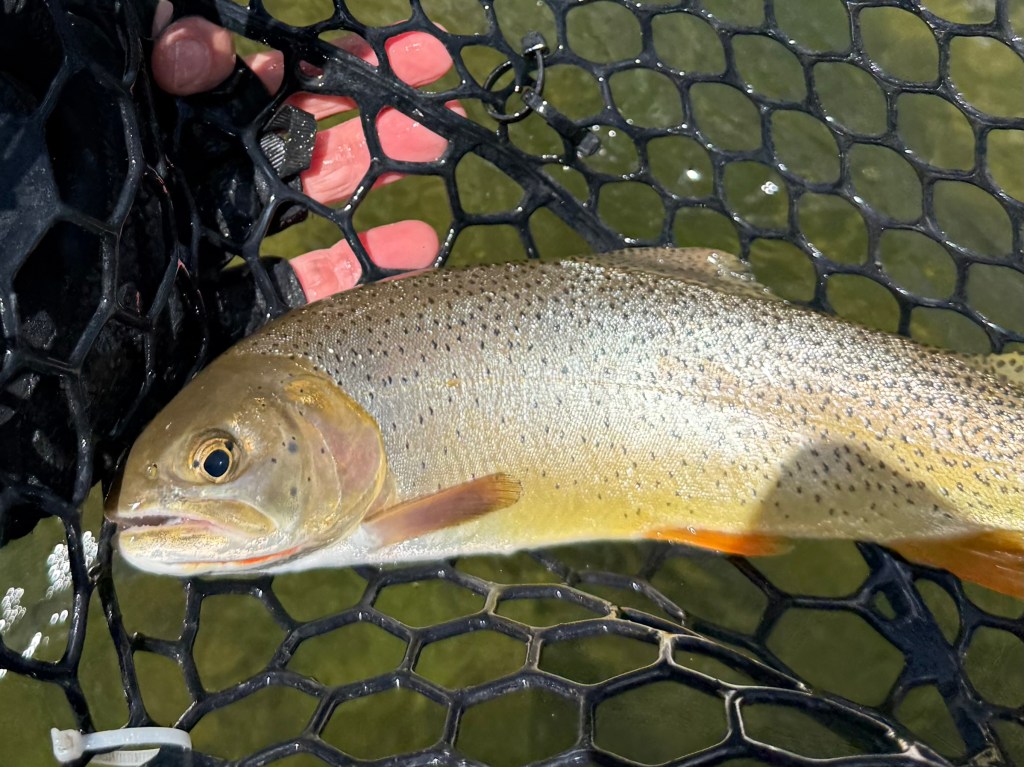
The Snake River is the region’s big trout fishing draw, and even has its own race of fine-speckled Cutthroat Trout. Snake River Cutthroats are gorgeous creatures, silver and gold with little black dots, orange fins, and the trademark orange lines under the chin for which they are named.
Dozens of guided drift boats ply the river each day, and as many people fish from shore. Small trout are gullible but the medium and large ones have learned the mantra “look twice, bite once”.
Our first day exploring Teton Park I spotted a distant, shallow creek below a splendid overlook. The Snake River was open for fishing, but creeks in the park were closed for one more day. Gray was painting, so I wandered down to the creek for a look. Descending through the dense brush I sang a little song: “Go away bears – go away moose”.
The creek was brimming with solid cutthroats, 12”-18” in length. Here they are:
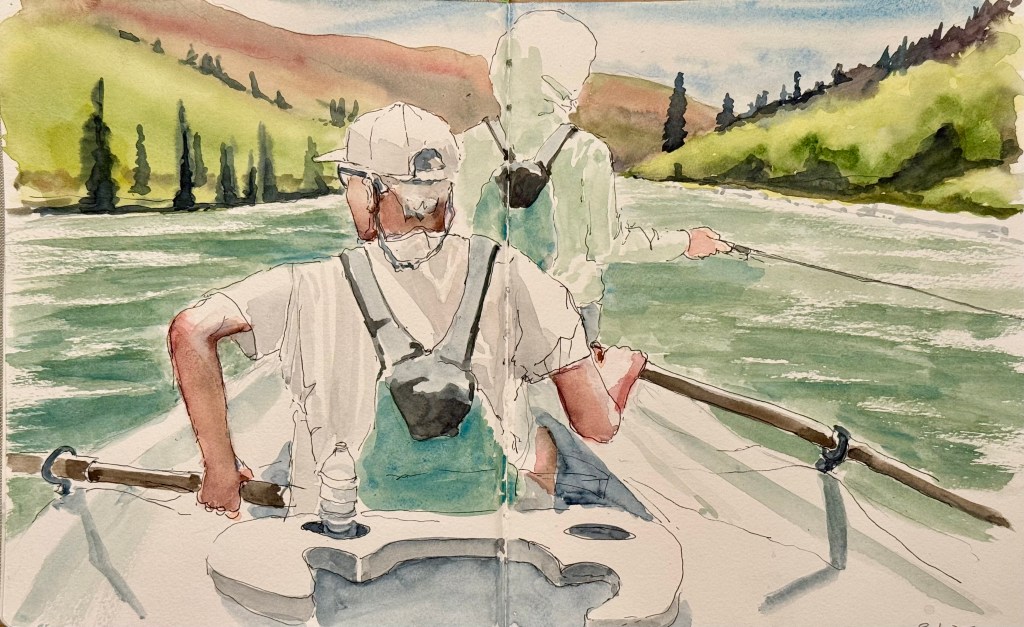
The next day we had our big splurge, a full-day float trip down the Snake in a drift boat manned by Larry Milton of Mangis Fishing Guides. In addition to a day of glorious scenery, an oared drift boat (shallow draft dory) provides a fly fisher access to many good trout holes inaccessible to those wading or fishing from shore. Even so, Larry, with his 30+ years of floating the Snake, kept saying “this hole SHOULD get you a bite”.
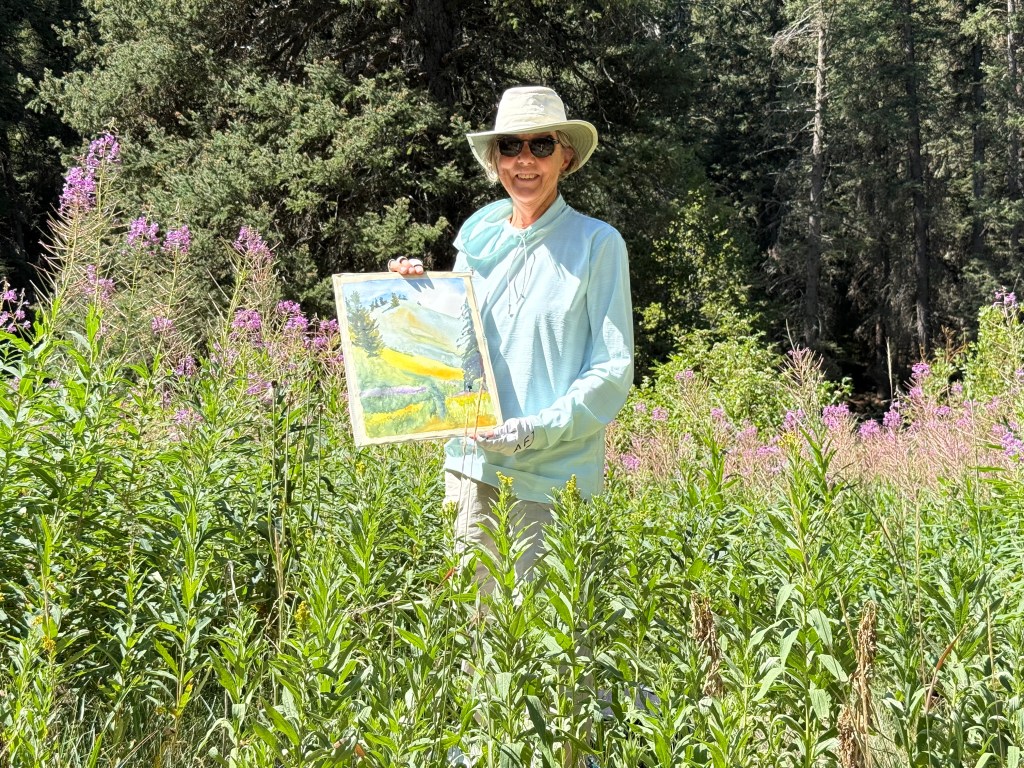
Watercolor by Gray Read
The “hatch” on the river that day was a random hoard of hapless spruce moths that either fell in the water or ventured close enough for a trout to leap up and grab one.
I started out the day casting a “hopper-dropper” rig, a floating grasshopper dry fly with a small sparkly nymph fly dangling below. Usually 90% of bites come on the nymph, but this day 90% of the bites came on the dry fly. I snipped off the nymph to get a better drift of the dry and did a little better.
Of ~20 cutthroat trout I caught and released, one was 16-17”, three were about 11”, and the rest were little pookers, 5-8”. Not a bad day.
The water was warming – better to get fish back in the river post haste than pose them for a pretty photo.
The evening of the next day, we returned to that first creek, me with my fly rod, Gray with her watercolor kit. A fellow watching for moose from the overlook told me he’d seen a dozen fishermen trudge up the hill from the creek below. I went exploring anyway, expecting the lovely trout from before would be gone or hiding. To my surprise, every trout from two evenings prior was holding in exactly the same spot as before, lazily rising to pick the odd caddisfly off the surface.
Gray paints while I fish. Amid the scattered raindrops on the water, you can see the expanding ring where a trout has just picked a bug off the surface. Perfect dry fly conditions.
Alas, these beauties showed exactly zero interest in the assorted flies I drifted past them on fine 6X tippet. They weren’t even disturbed by me casting at them. I could just as well have been a moose.
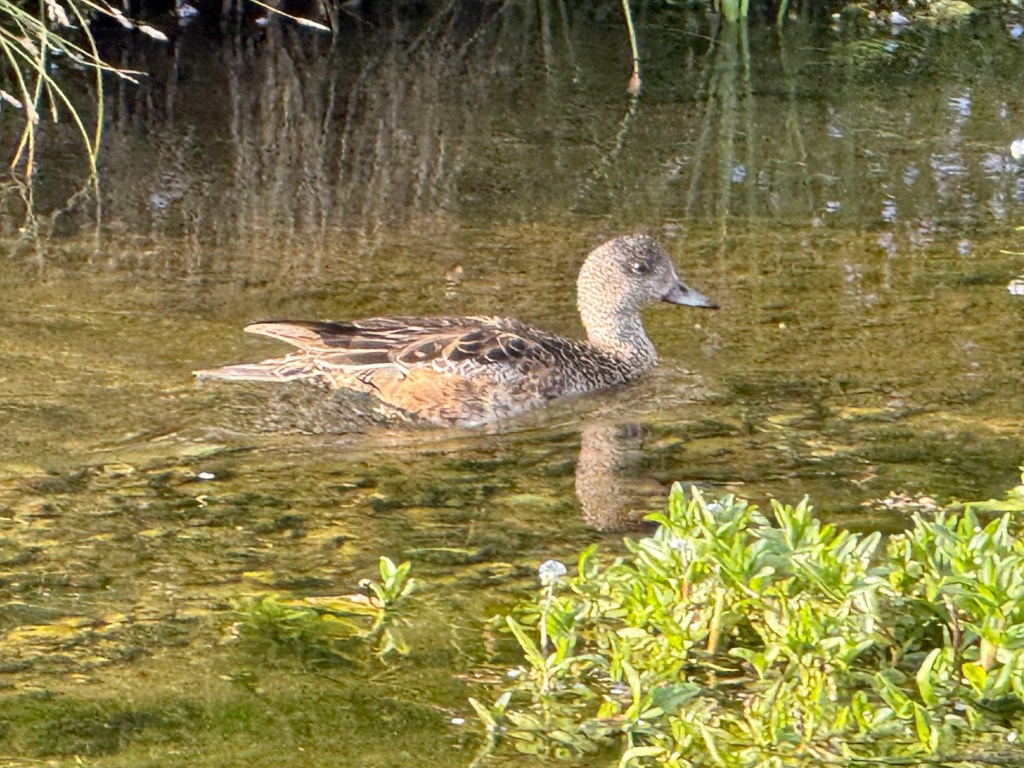
I did get some attention, though. I was followed down the creek, then back up the creek, by a female Cinnamon Teal. She squawked at me the whole time. When I sat down to change flies she flew up into the air to spy on me from above.
Between bouts of nibbling aquatic vegetation, Mrs. Teal had no compunction against splashing directly over a big trout to keep up with me. I saw no sign of ducklings and it was too late in the year for nesting. She was just a busybody. The extended mountain twilight was coming to an end, and moose were wandering in – time to leave.
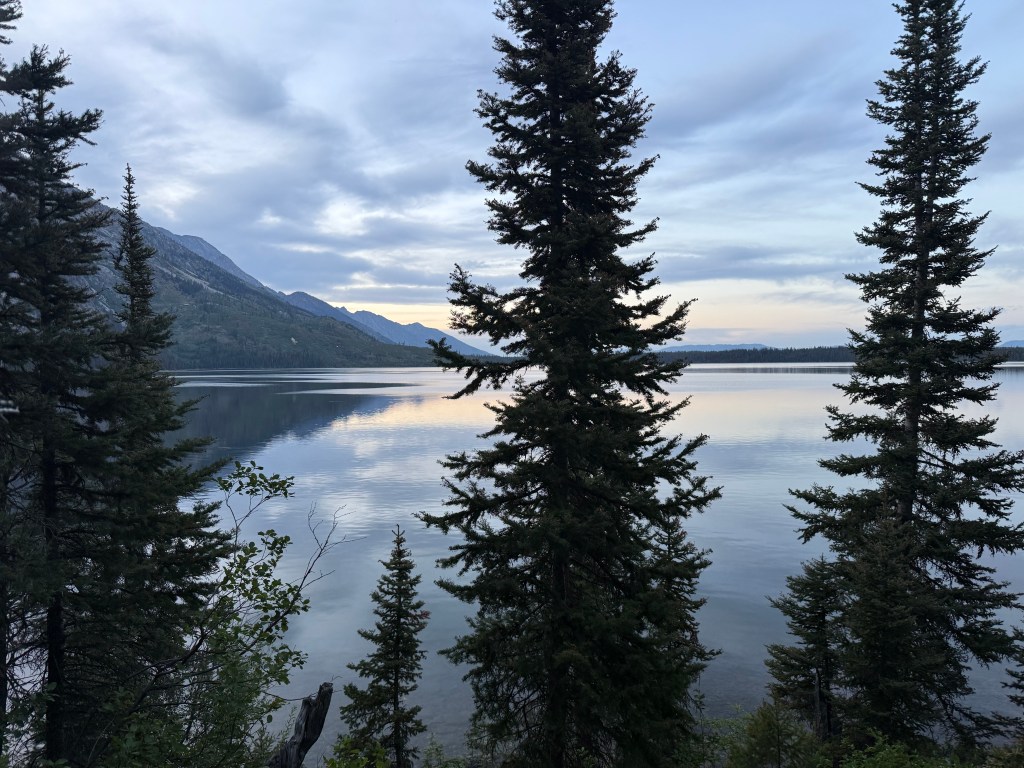
Jenny Lake had opened to fishing, but we found the water was over 65° F, too warm to fish trout without stressing them.
Same with Cottonwood Creek that flows from Jenny Lake.
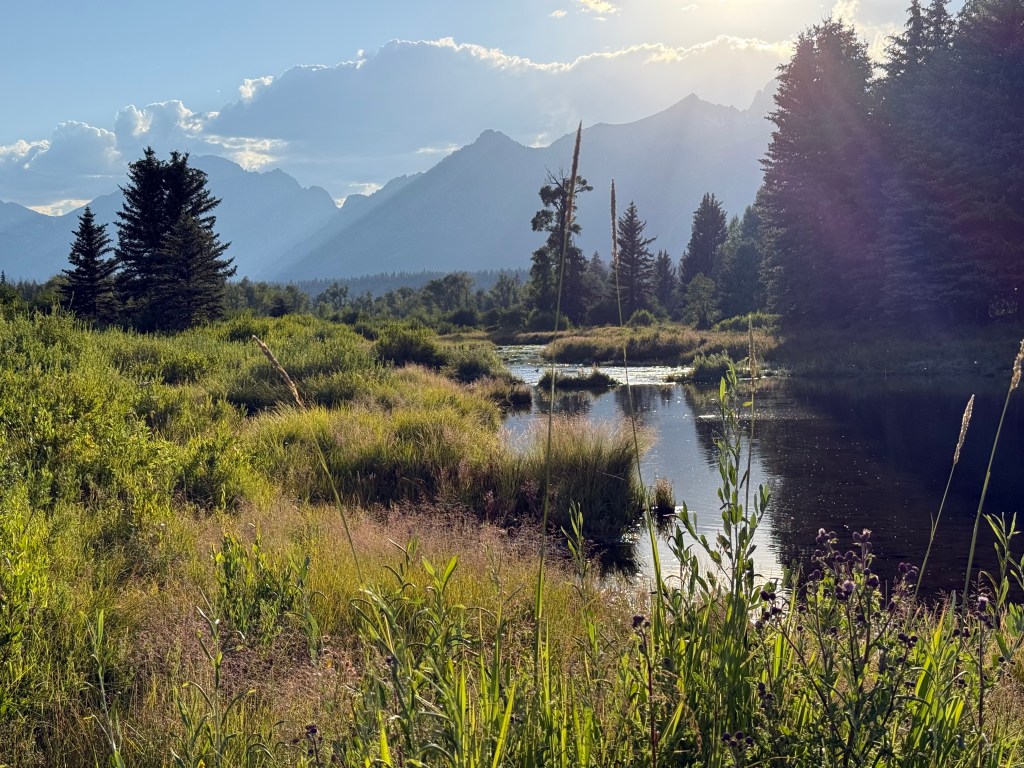
Instead, we hiked in to some beaver ponds to look for moose. Tiny trout dappled the surface or leapt into the air for flying insects, popping from the glassy water like slippery watermelon seeds squeezed between the fingers. Good dry fly fishing for naive 4-5” trout, but mind your backcast and keep an eye peeled for thirsty megafauna.
Funny looking moose by the beaver pond.
On our last morning we stopped by Flat Creek in the National Elk Refuge, a spot recommended for wade fishing by Larry the river guide. From the number of parked cars with single-purpose fly rod transport tubes clamped to their roof racks, I estimated 40 experienced and dedicated fly fishers were already stalking this narrow winding creek. Assuming I could even find a couple of bends to myself, I knew these fish would be highly over-educated.
We left the crowded stream and drove over to the Gros Ventre River, which I’d also wanted to explore. We parked at a turnout away from the river and hiked to a section of water not visible from the road.
I had this cold, braided river to myself as far in each direction as I cared to wander. Each bend offered promising trout spots. As I walked the banks, the air filled with small brown grasshoppers. Freshly expired stonefly nymphs littered the gravel bars. Easy to guess what these trout were eating. Indeed, I SAW lots of trout swim up and check out my flies: “Ooo, brown Morish Hopper, size 10” or “Golden Stone nymph, nicely tied.” Indeed, I had a wonderful time picking my way along the game trails, fording the river to access the promising holes and seams, and seeing trout flash my flies in such a beautiful spot, even though I didn’t get a single bite.
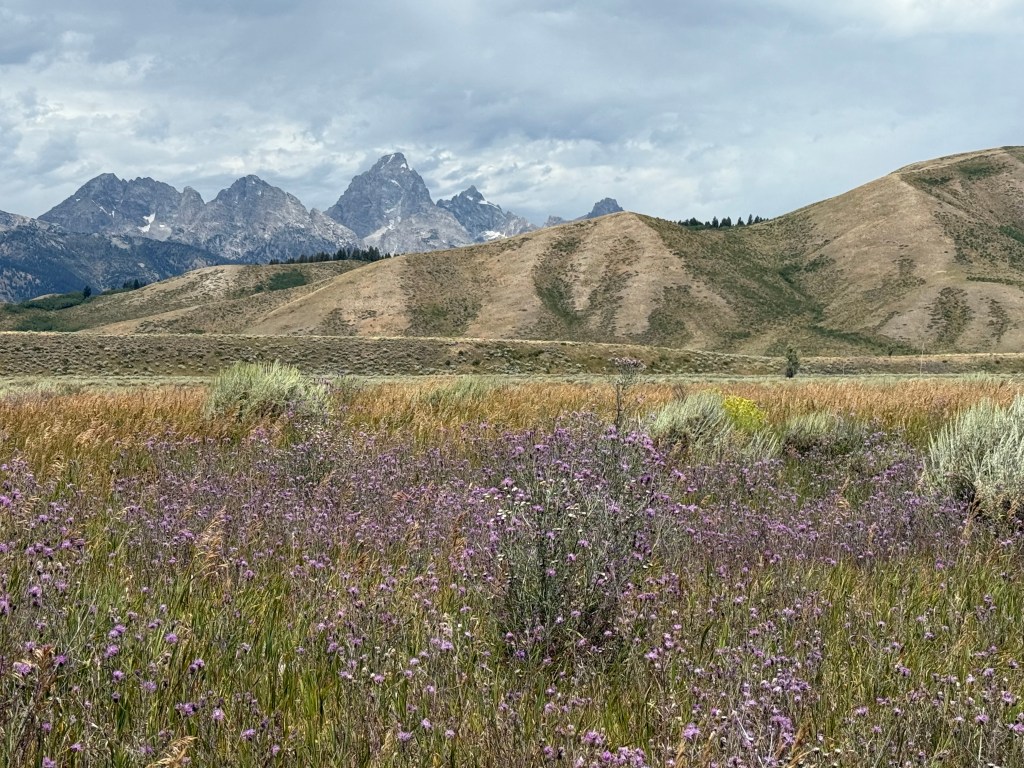
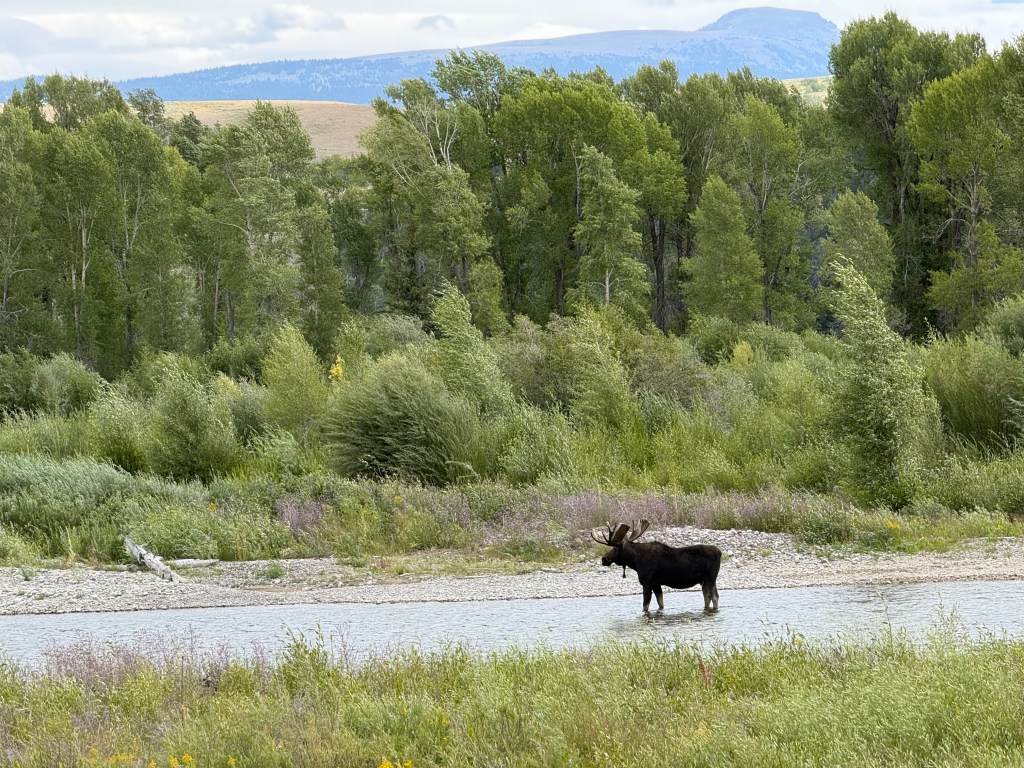
As we hiked back to the car, the rangeland had every color on display. Hard to believe that’s a photograph.Three bull moose grazed in the river as we too ate our lunch.
In contrast to our day in the drift boat, I caught one trout and a whitefish while wade-fishing a couple of hours a day across the rest of the week.
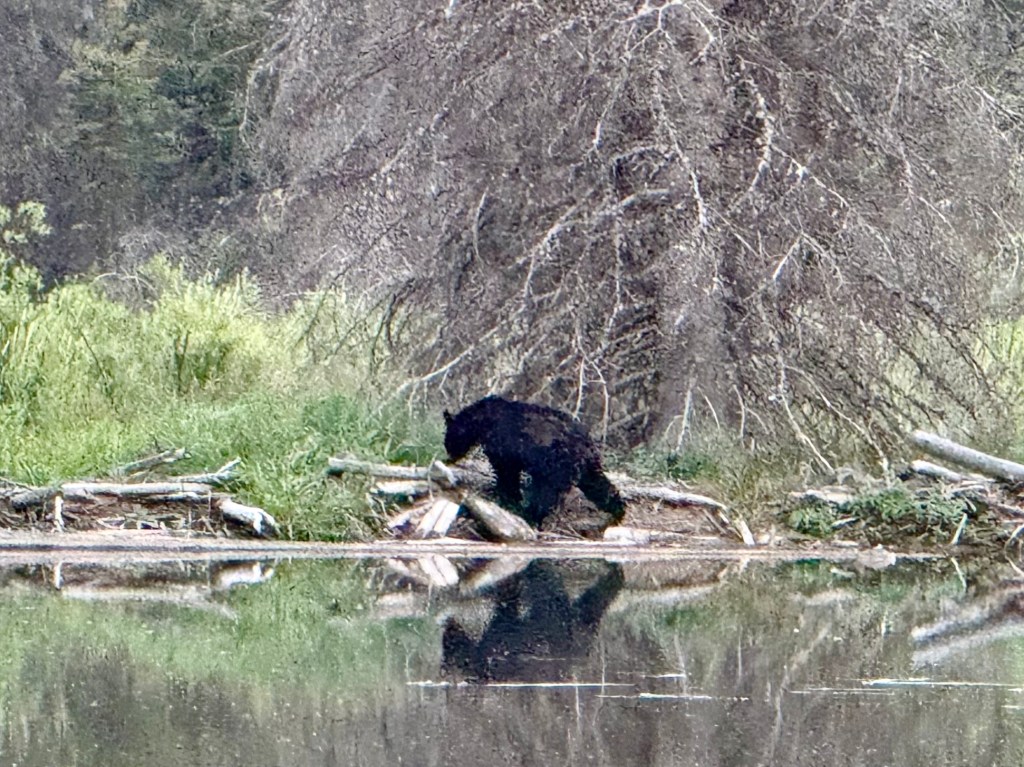
You can’t beat the Tetons for scenery, hiking, and critter-watching. I was delighted to spot my first Pine Marten and spent half an hour happily watching a Dipper bobbing and swimming in a mountain creek while Gray painted nearby, surrounded by a patch of fireweed and its attendant Rufus Hummingbird.
But, if you thrill when a trout eats your fly, and again seeing it up close in your net, the Driftless Area of SW Wisconsin draws far fewer people, and, as a result, offers much more productive trout-fishing.
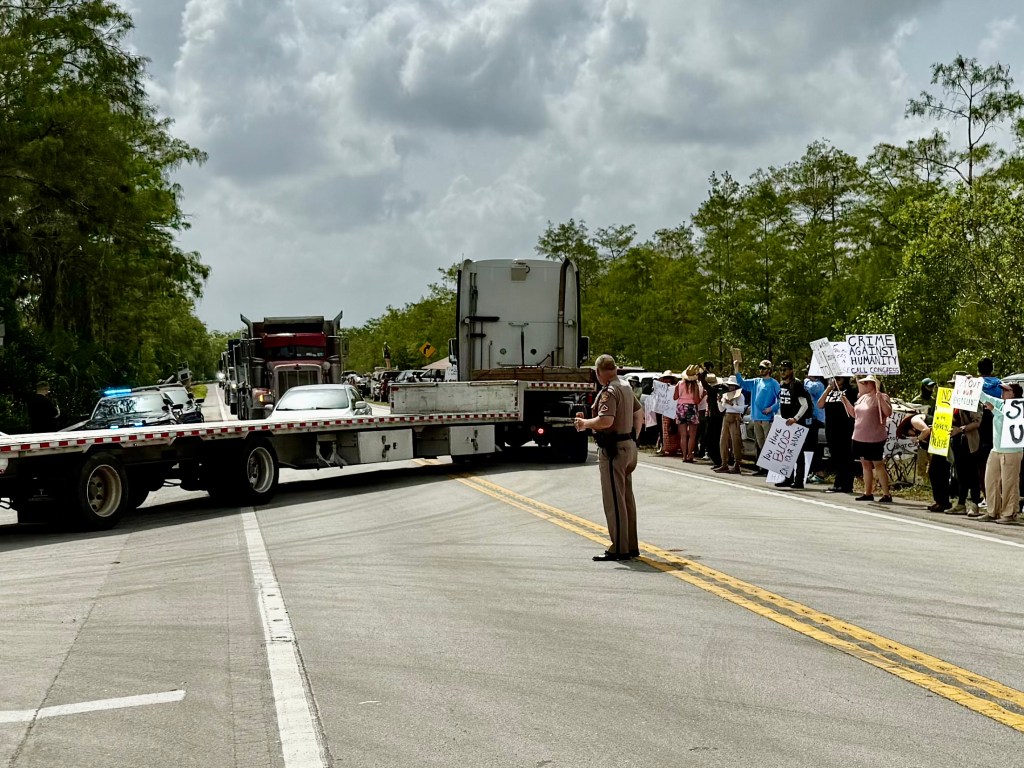
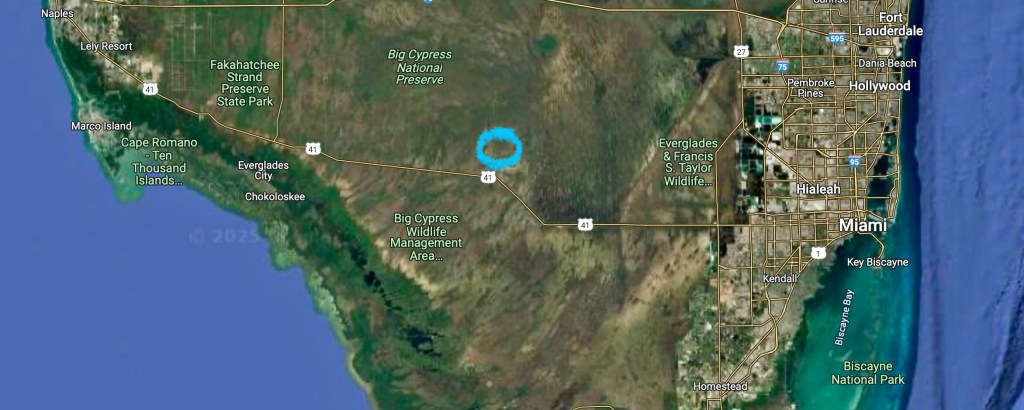
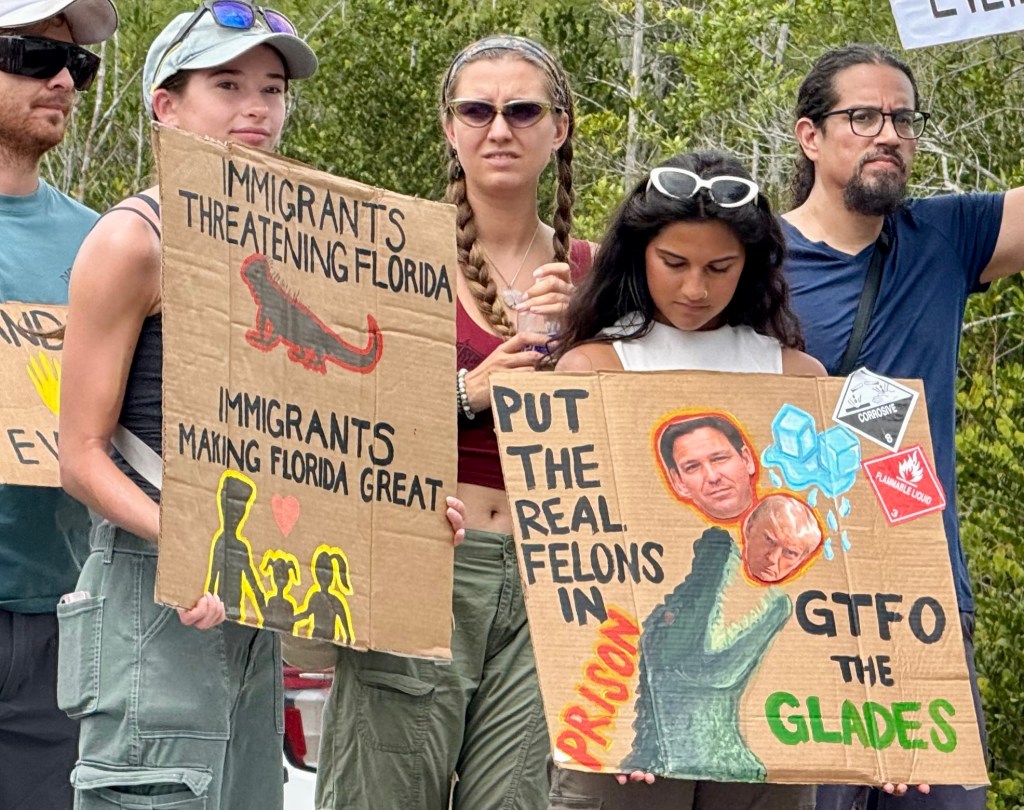
Construction has begun on Alligator Alcatraz, the 1000 person immigration prison that Florida Governor Ron DeSantis is building in the heart of a sensitive wetland. Once again, 400 concerned Floridians made the trek out to the center of the Big Cypress National Preserve to stand and protest for 4 hours under the midday sun.
On the drive out to the second protest on Saturday morning we passed 8 concrete mixing trucks returning from the site and dozens of tractor-trailer rigs lined up to deliver construction materials.
In winter, the center of Big Cypress National Preserve is a nature lover’s paradise, but in summer you reach a terminal sweat in the unrelenting heat and saturating humidity. Mosquitoes are big and fierce. The nearest small town is Everglades City, 40 miles away. This site has the makings of a Siberian style gulag, described by Alexandr Solzhenynitzyn in The Gulag Archipelago.
Environmental activist Betty Osceola of the Miccosukee Tribe led the crowd of peaceful protesters. We could hear the drum beats in the distance as the Miccosukees themselves protested to a higher authority.
Friends of the Everglades and the Center for Biological Diversity have filed for an injunction pending the full environmental review required by federal law, and ignored by Gov. DeSantis. DeSantis plows ahead, ignoring the law, his trademark modus operandi.
DeSantis has seized the land under his 2023 emergency declaration, but the only emergencies we’re seeing here in South Florida are unnecessary ICE raids in our communities and unnecessary prison construction in a cherished and protected wetland.