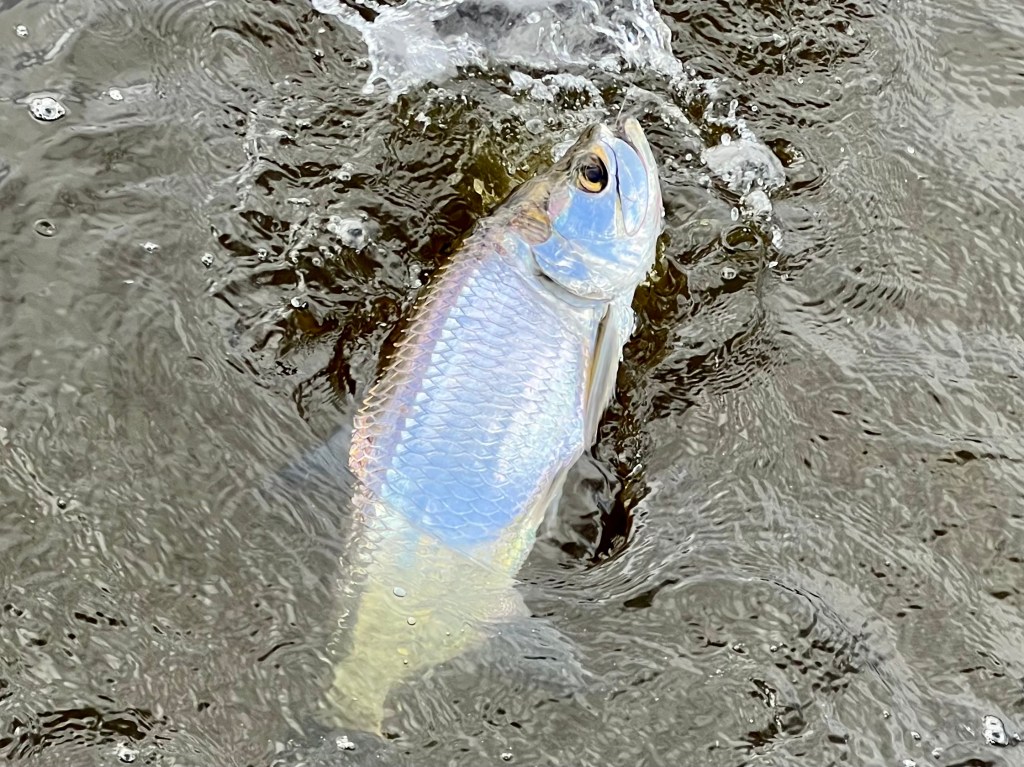
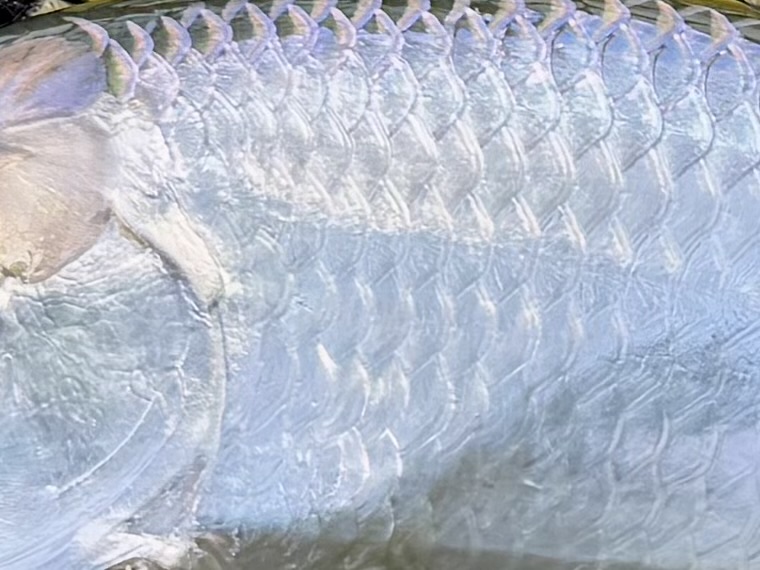
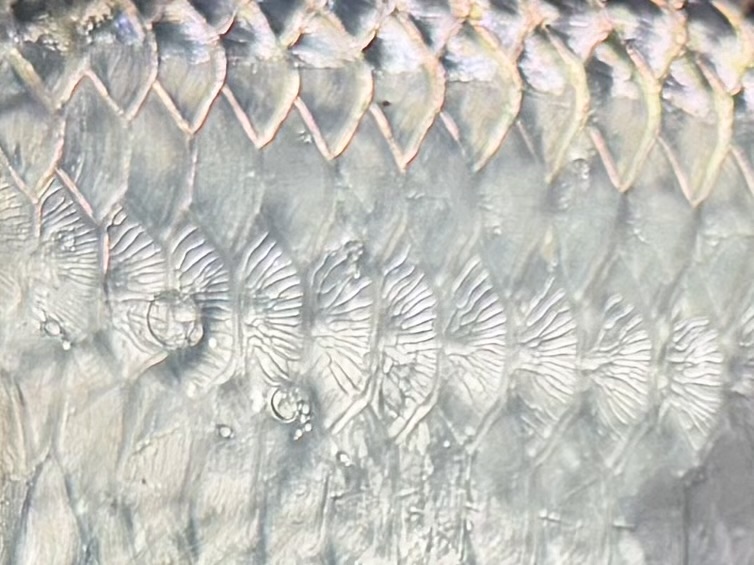
Fish are often camouflaged, some by color and patterns that resemble their backgrounds, others by reflecting the light around them and thus matching any and every background. Tarpon do the latter with scales that work like mirrors.
Juvenile tarpon are about my favorite fish to chase on the fly rod. I say “juvenile” because the adults weigh 70 to 200 pounds. I normally avoid disturbing the adults and fly fish instead for smaller juveniles weighing 3 to 20 pounds, reasonably common in the canals and tidal creeks of South Florida.
Tarpon are smart and strong, and they are spirited jumpers. The mantra among tarpon fishers is “Bow to the King”, meaning when the tarpon jumps, you lower the rod to create slack and prevent it breaking off or throwing the fly.
Instead, I lightly tension the fly line during a jump to help the tarpon toss the fly without breaking the line. My goal is to fool the tarpon into eating my fly, have it give me a showy jump or two, but spare it the exhaustion of a complete fight and spare me the guilt of exhausting a beautiful fish.
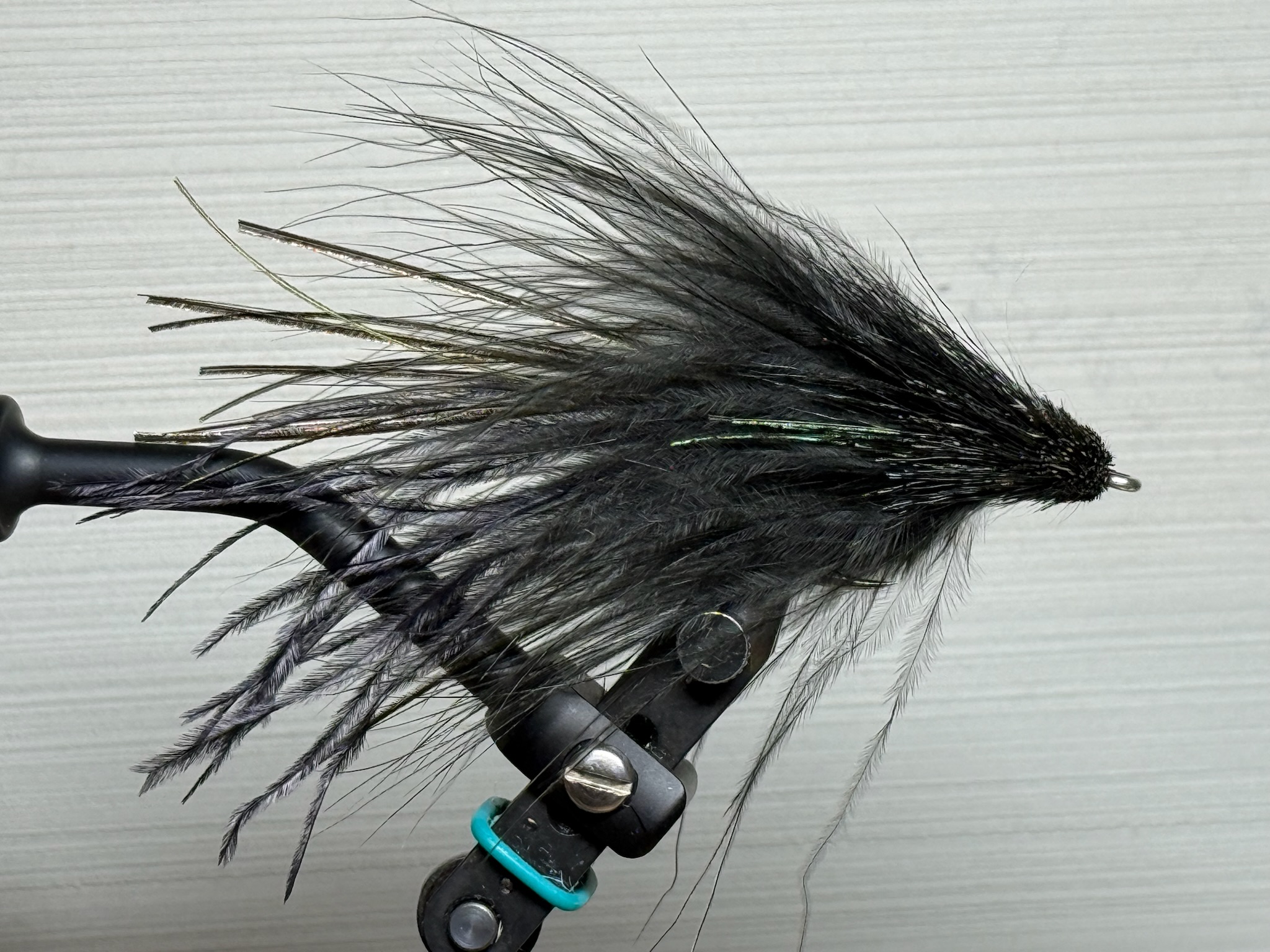
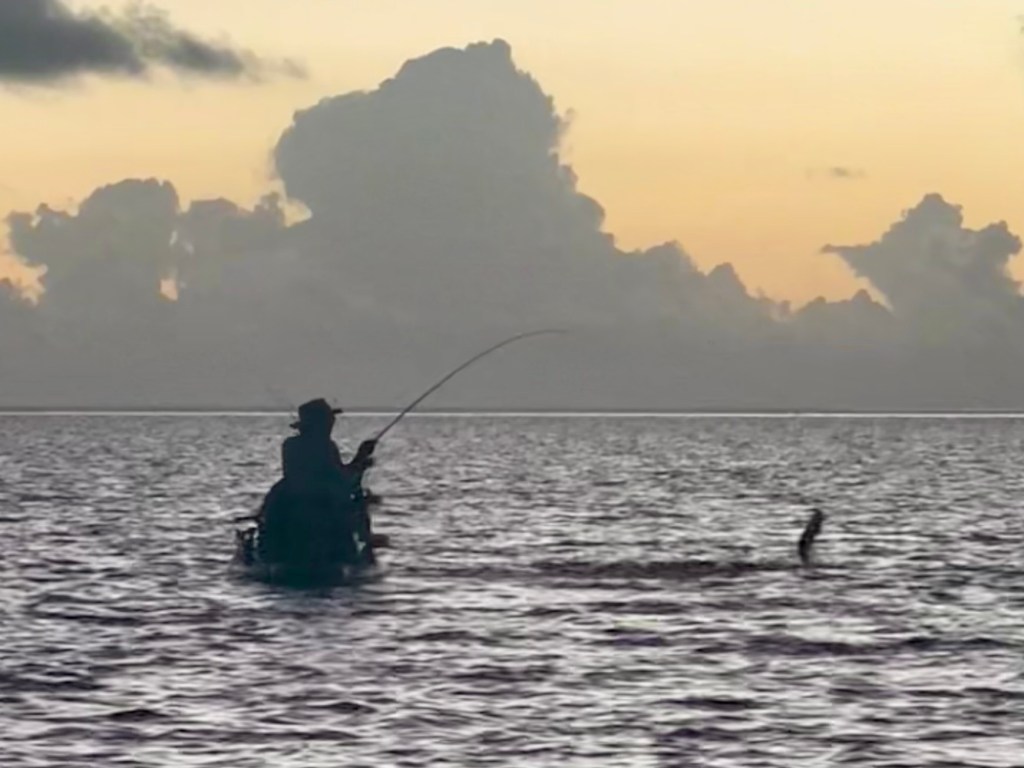
Yesterday, while kayak-fishing a saltwater canal, three miles from home as the cormorant flies, I spotted a couple of big juvenile tarpon in the 40-60 pound range. I swapped up to a larger fly “the Devil’s Daughter”, a muted black pattern designed by Drew Chicone for catching tarpon that are wise to the fly fisher’s usual sparkly fare.
Tarpon can breath air, “rolling” on the surface to gulp a bubble before descending into the murky water. Following a roll, I’d cast the fly 6-10 feet in front, let it sink a bit, and retrieve it steadily. Twice I felt “short strikes”, in which an unseen tarpon grabbed only the feathery tail of the fly. A couple of casts later the fly stopped mid-retrieve, like I’d hooked a log. I set the hook and the line began to pull. The fish was in no hurry.
Smaller tarpon jump immediately. Instead this tarpon went deep and swam away slowly. I took up the slack and kept reeling until my 7wt rod bent double and the leader touched the tip guide of the rod. The tarpon turned and made a dash under the kayak. I flattened the propulsion flippers to keep the line free as I worked it around the bow and the tarpon took off. Once in a while, I’m glad for the smooth drag on my fly reel.
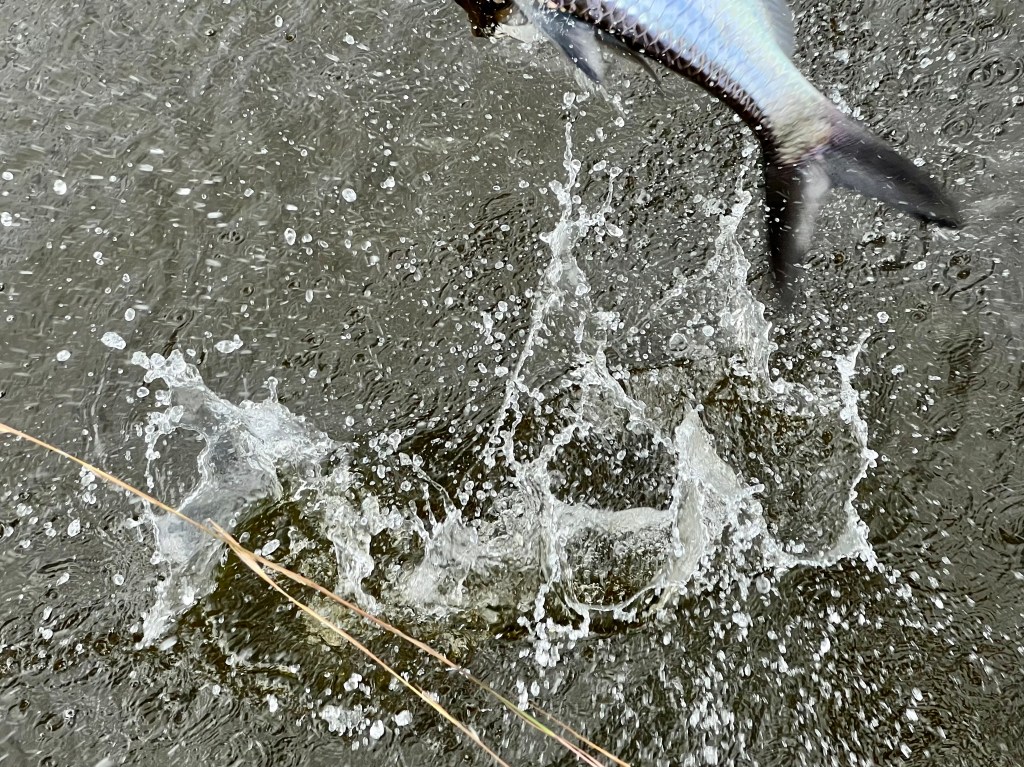
We had been pulling back and forth on the fly line (intermediate clear tip) for a couple of minutes and the tarpon had enough. It took to the air, arcing its body in a fast reciprocating shake that tossed the fly. I got my fly back and the tarpon continued on its hunt for hapless baitfish. I was ecstatic – that’s about as good as it gets in my book.
Sometimes the fly won’t shake loose and I must net the fish to release it. While I have it in the net, I usually take a photo to document the spectacular purples, pinks, blues, and greens reflected by the tarpon’s mirrored scales. Here are some photos from my collection.
I’ve been grappling with a multi-way conflict: (1) trying shake the “forever cold” while (2) healing a torn rotator cuff muscle (supraspinatus) in my fly casting arm, and (3) enjoying every nice day I can on the water with a fly rod and binoculars. At least I don’t have to grade papers.
A cold front reached South Florida, knocking down the mosquitoes and moving sharks away from the shallows. The Everglades mangrove flats beckoned me southwards.
Entrance to the flats.
One shallow flat in particular draws me to watch shorebirds and chase game fish.
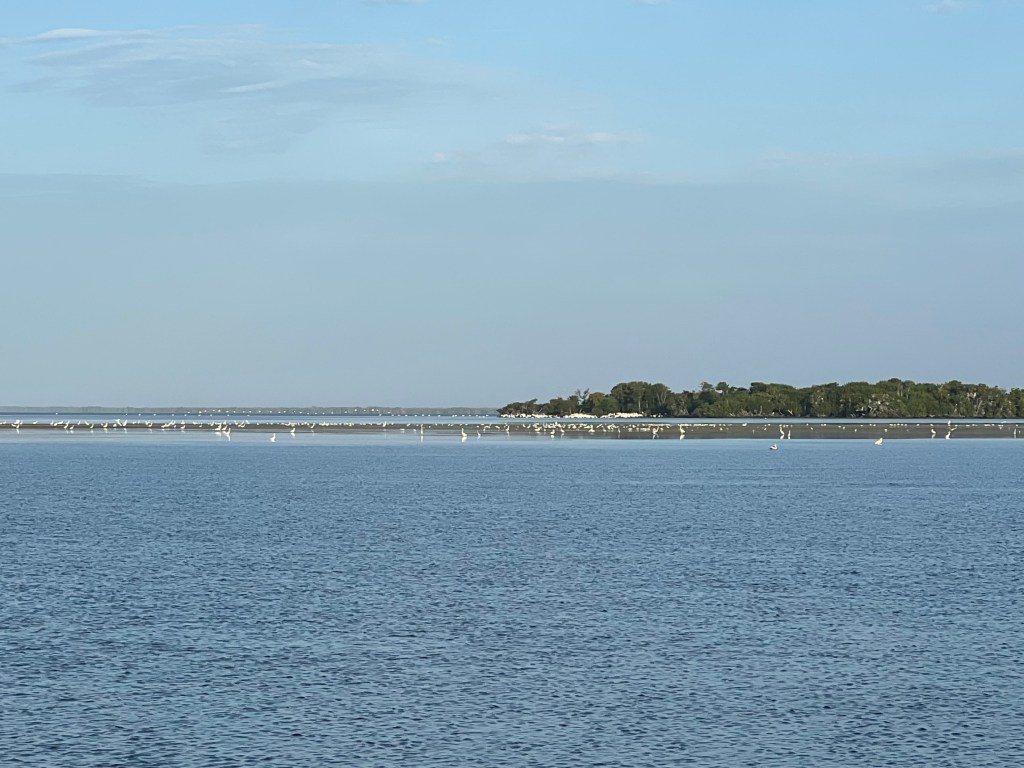
Birds gather on the falling tide. Snook and Redfish forage near that edge.
To get the best experience, you have to get the tides right. Depending on the moon and tide phases, the area can be 16 square miles of water (birds wait in the trees and fish are everywhere), 15 square miles of exposed mud (birds dispersed everywhere and fish are concentrated in the channels with the sharks), or something in between (birds and fish both concentrated on the edge of the tide). If the wind comes up, water might blow onto or off the flat, superseding the tidal prediction.
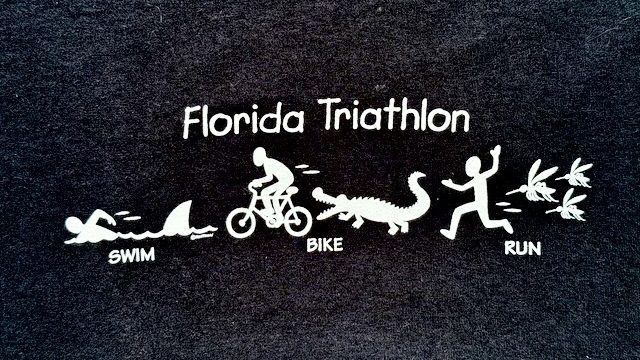
Several two mile trails lead to the edge of the flat. When my late colleague George Dalrymple took his zoology class down the Snake Bight Trail, one student had to be carried out after she fainted from the sheer horror of the Black Salt Marsh Mosquitoes. I found that pedaling my bicycle down the trail lets me keep ahead of the swarm. Just don’t stop! But the best access is in a shallow-draft boat, a kayak, canoe, or technical poling skiff.
Coming by boat, you have access to more of the flat and can approach the edge of the tide where birds and fish are concentrated. However, it’s easy to get trapped by the falling tide, particularly when distracted by fish or shorebirds, both of which follow the rapidly moving tidal edge. If Poseidon empties the bathtub while you are far from a channel, there’s no walking out. The deep, sucking mud steals your sandals before eating you whole.
People who get stuck sometimes phone the Park dispatch office. The ranger explains:“Yes, we see you out there, but we can’t get to you. Unless it’s an emergency and you want to pay for a helicopter, you are going to sit there until the tide comes back in.” You might spend up to eight hours waiting for the next high tide to free your boat. Hope you brought extra water and a granola bar, and good luck with the lightning.
I have willingly allowed myself get stranded at the bottom of the outgoing tide while watching shorebirds, chasing fish, or watching shorebirds chase fish. I eat lunch then escape when the tide returns to float my boat. The show can be worth the wait.
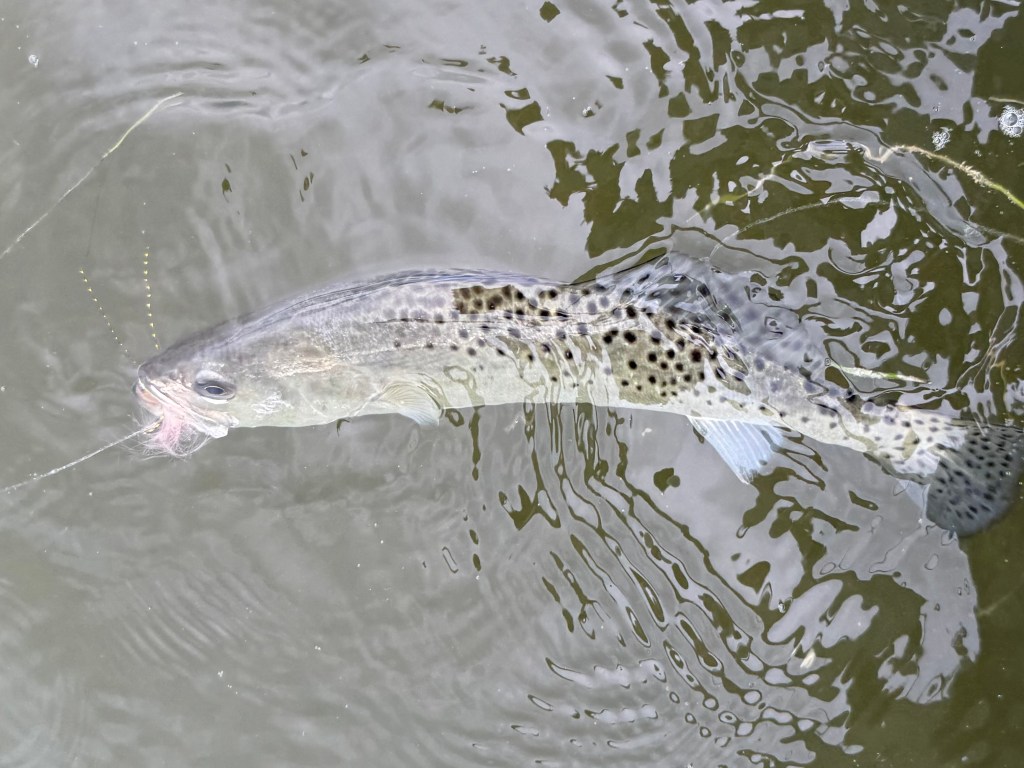
Tricolored HeronBlack-necked StiltSpeckled Seatrout that took my fly.
The low tide can bring spectacular birding as it did last week when baitfish and birds filled the runouts along one of the main channels. The flats were covered with winter waterbirds: White Pelicans, Black Skimmers, all the long-legged waders, Marbled Godwits, Short-billed Dowitchers, Wilson’s Plovers, and assorted “peeps”.
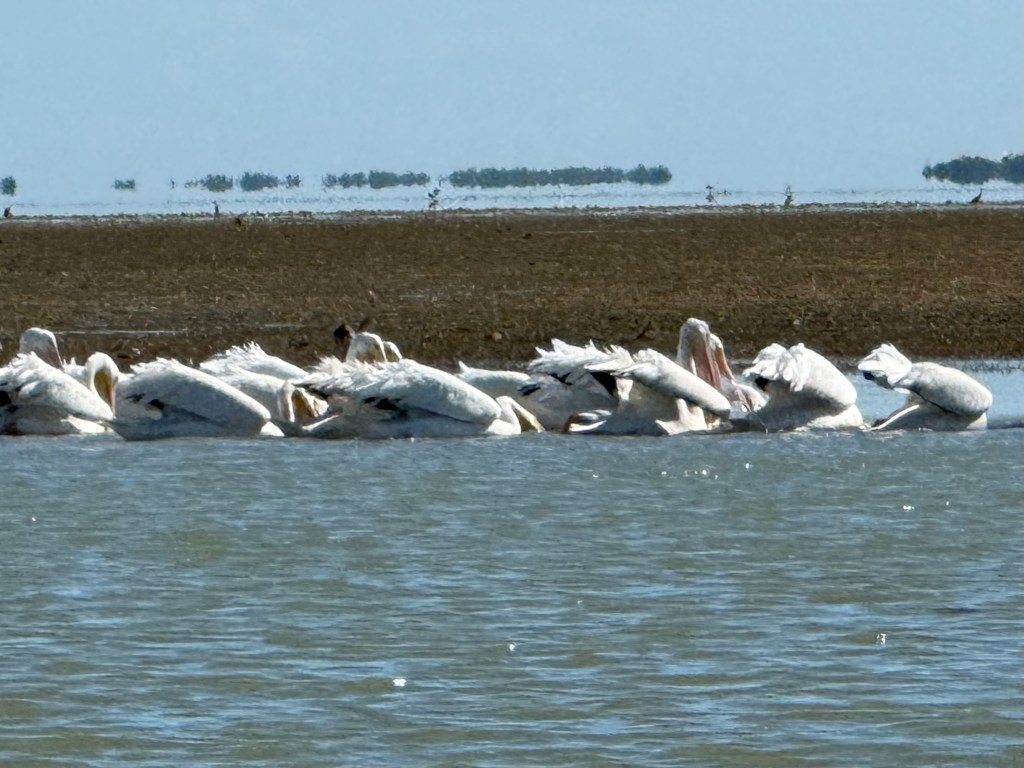
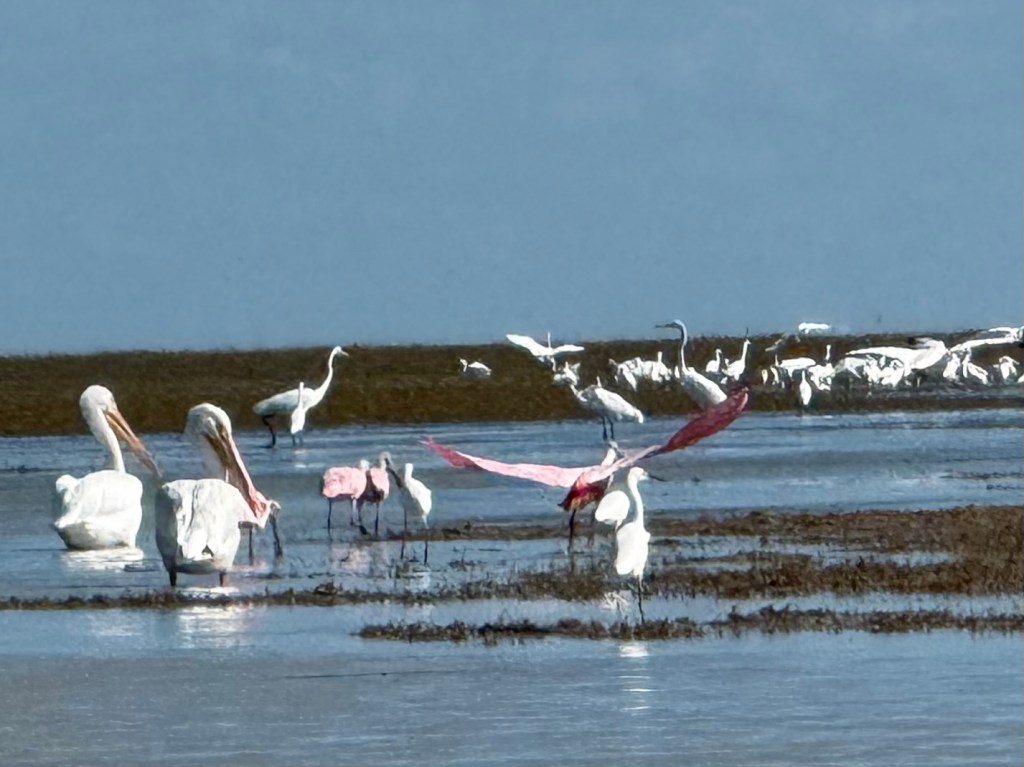
White Pelicans fishing cooperatively for mullet.Black Skimmers leaving the flat as the tide rises.White Pelicans, Great White Herons, Great Egrets, Roseate Spoonbills, Snowy Egrets, all fishing the shallow run-out at dead low tide.
When the high tide pushes birds off the flats, some regroup on the highest shorelines, while others settle into the mangrove trees.
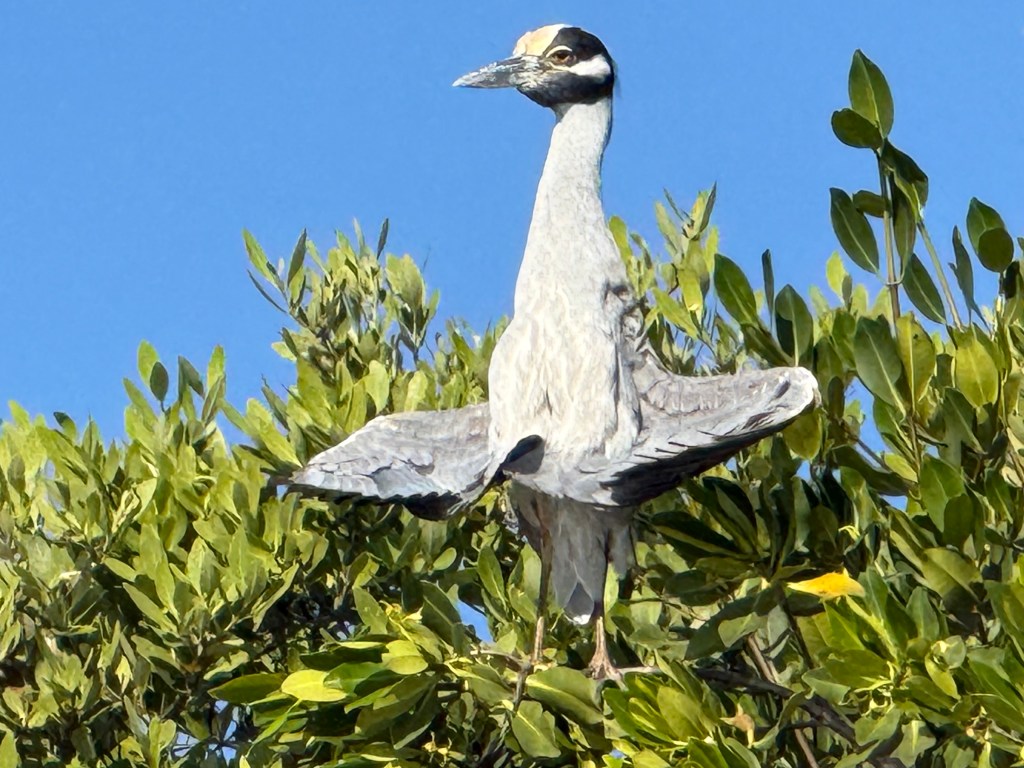
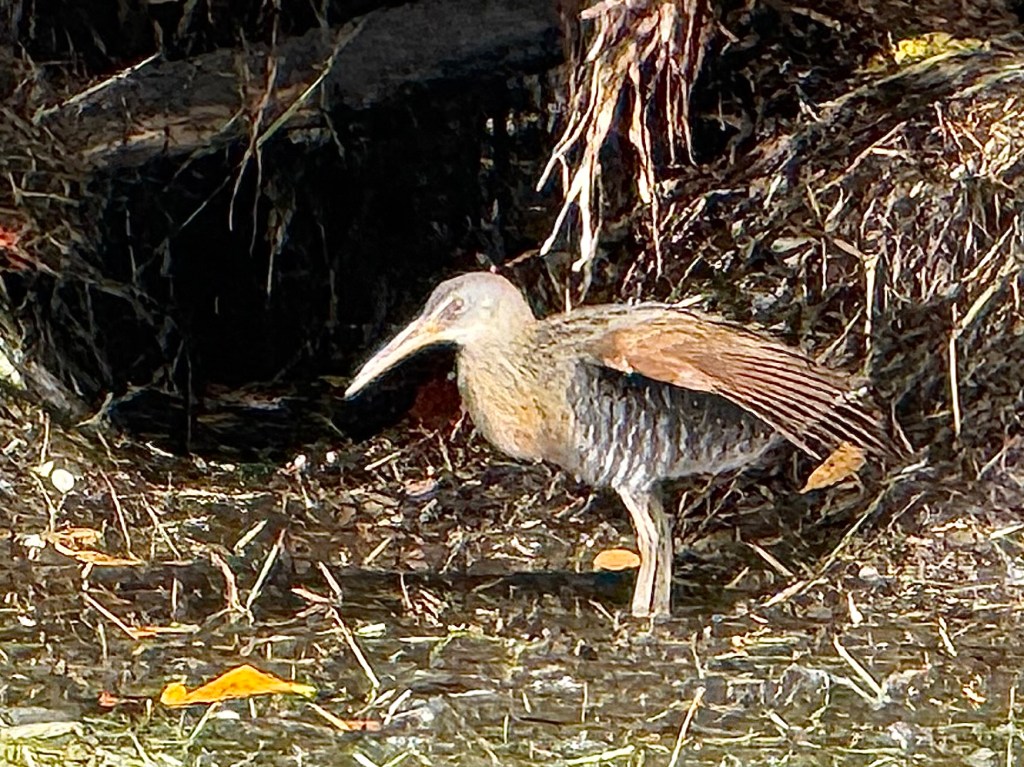
Reddish Egret takes refuge from the high tide on a mangrove island.Yellow-crowned Night heron practices the Angeli Mudra yoga pose.Roseate Spoonbill looks down to assess the water level while waiting for the tide to recede.A Mangrove Clapper Rail skulks through the matted seagrass caught in the mangrove roots.
A couple of days prior, my friend Jay Levine had caught and released 30 Snook on fly in a channel and had zero shark hassles. But when I arrived, the water had rewarmed, the sharks were returning, and the Snook were making themselves scarce. I caught and released a couple of Snook safely but an unseen shark took the third one and I called it quits.
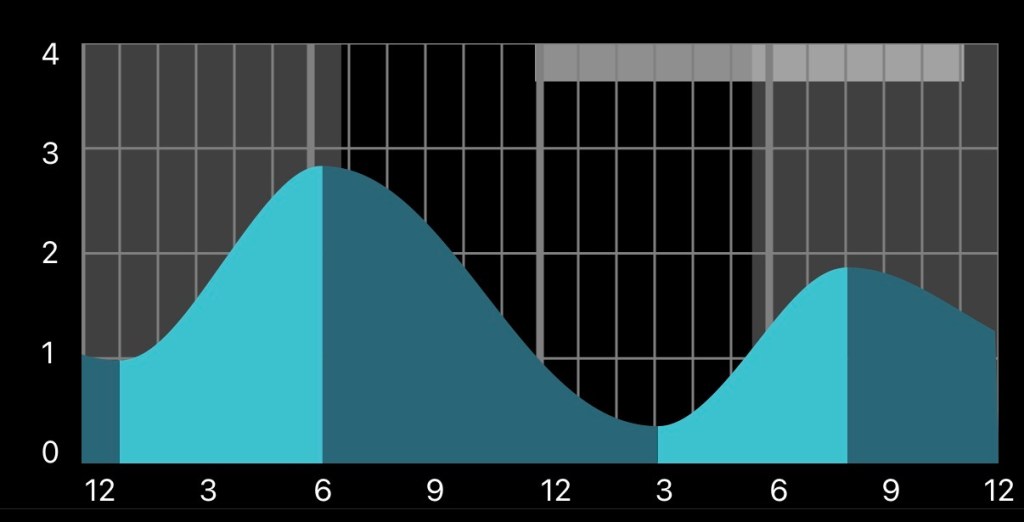
Four days later, my fishing friend Jeremy Nawyn asked me to join him kayak fishing this same flat once again. At first I declined, but then I took a look at the tide chart:
Tide chart for Flamingo on 26 Nov 2025. The black band in the middle is daylight and the gray bar at the top is the moon. The tide on the flat we are fishing is delayed by an hour. It will fall for eight hours, from 7:45 am until 4 pm .
I normally fish this flat by motorized skiff because it’s so exhausting to exit by kayak. If you fish the rising tide (safest) you must paddle back against the fast incoming tidal current to escape, but a long falling tide like this one is a virtual water taxi service. As a lagniappe, the wind would be at our backs coming out. I texted Jeremy that the tide chart had changed my mind. I was in.
Jeremy’s proposal was to head out in the dark before dawn and ride the incoming tide up a narrow unmarked channel on the edge of the flat, then ride the outgoing tide back toward the marina with the wind at our backs. We faced little risk of getting stranded if we stayed in or near the narrow channel, and would not have to fight the tides or winds to escape.
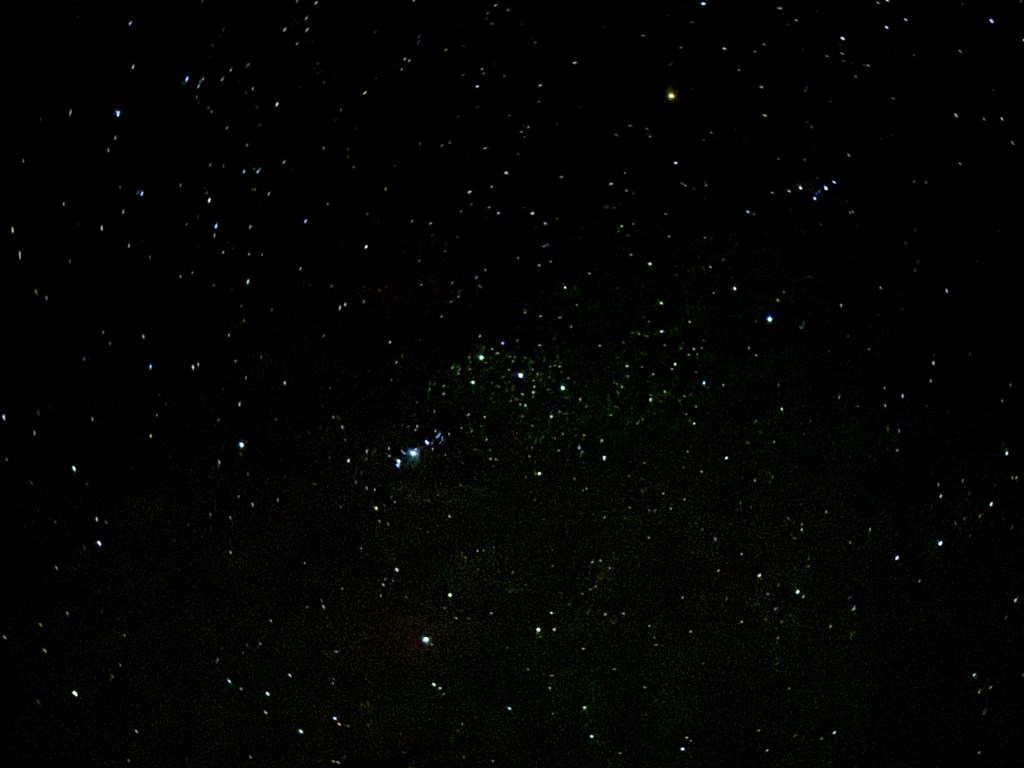
I arrived early to enjoy the starry moonless sky.
Orion.
I rigged my kayak while the resident Barred Owl hooted:“Who cooks for you? Who cooks for you-all?”
Jeremy arrived at 5:30 am with his kayak mostly rigged in the back of his pickup truck. We were on the water by 5:45 am, 70 minutes before sunrise.
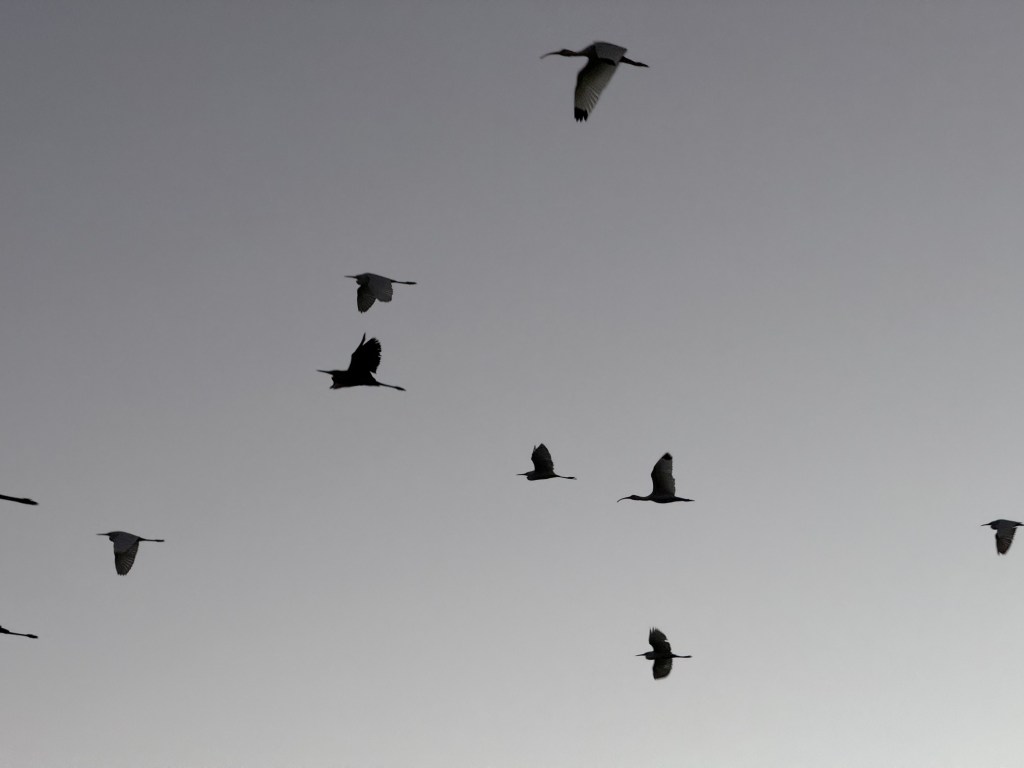
Great Egrets and White Ibis leaving their roosts. White birds look black in the pre-dawn light.Jeremy in the lead. One of his teenage kids sometimes joins us, but not if we’re going out this early.
Our fishing strategy was to paddle the narrow channel and cast toward the mangrove roots on shore where the predatory fish typically forage for crabs and small fish when the tide is up.
I hooked a nice Snook near the mangroves then pedaled my kayak hellbent-for-leather onto the shallow flat, grounding the Hobie’s pedal flippers on the mud before stopping to work the fish to my landing net for a quick measurement and release.
Phil with Snook in shallow water. Photo by Jeremy Nawyn
Grounding the kayak on the flat might seem like an odd thing to do on purpose, but it prevents unseen sharks from popping up from below and grabbing the fish on my line. A Snook or Redfish hides handily in a foot of water, but a Lemon Shark or Bull Shark is conspicuous. If a shark comes for my fish in super-skinny water, I can see its approach, open the reel, and let the fish run. My trick worked this morning with a handsome Snook and a chunky Redfish.
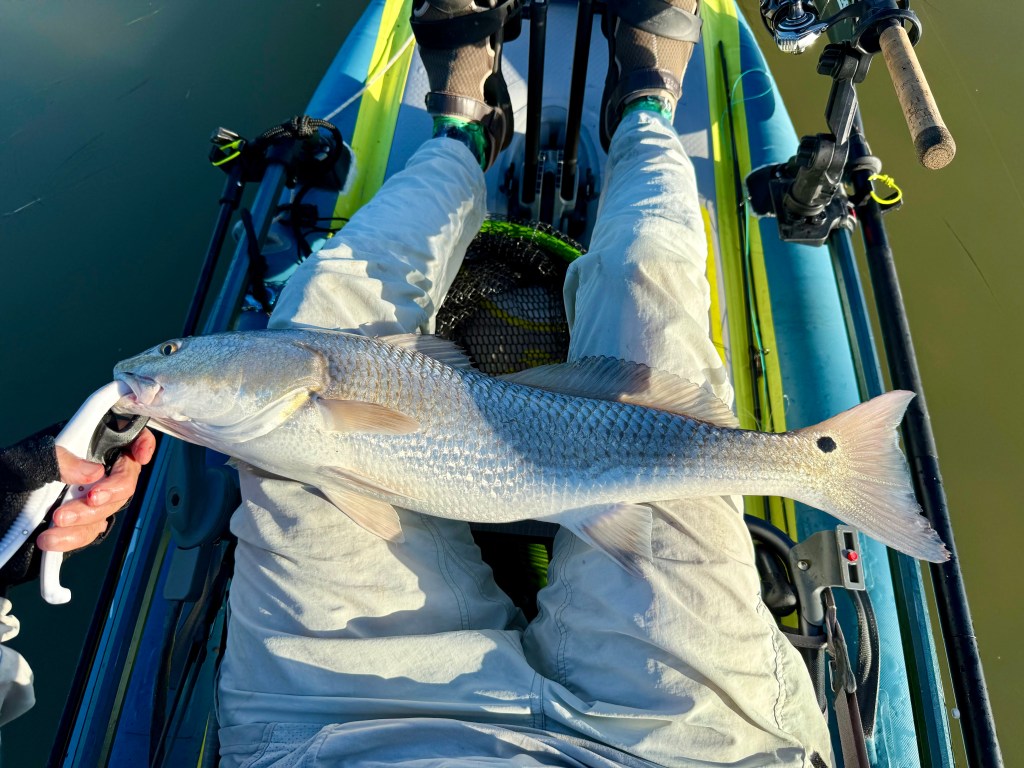
Snook, 24″.Redfish, 24.5″
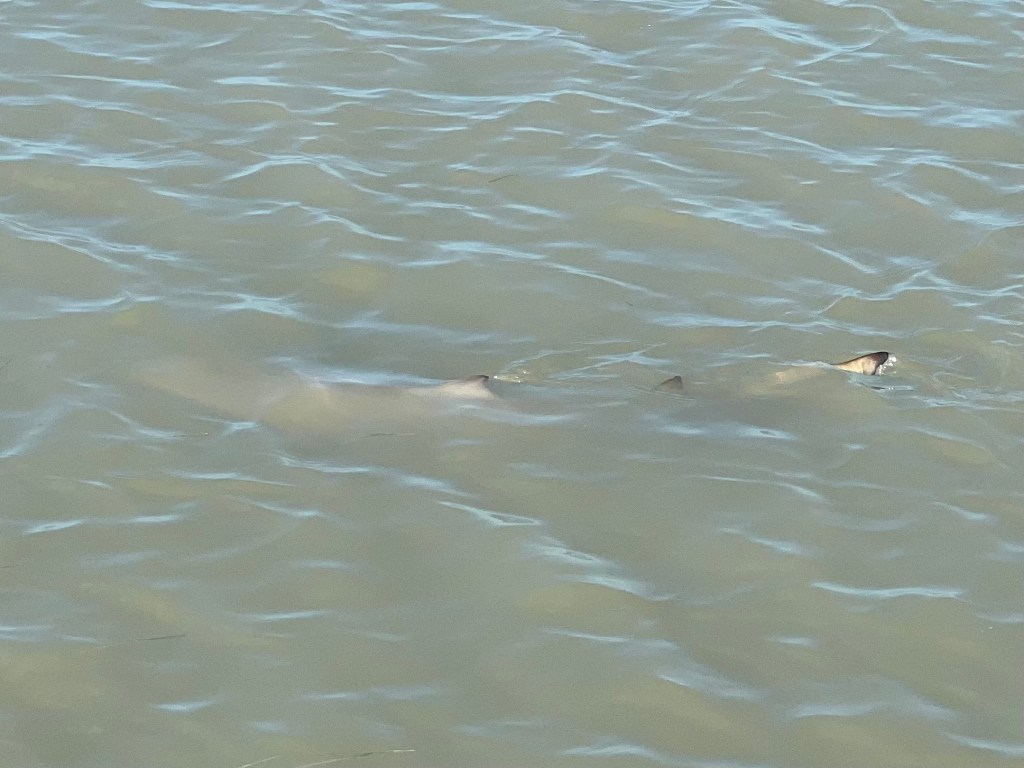
A Lemon Shark circled my kayak looking for my redfish as I hefted it in my landing net from one side of the kayak to the other.
Pesky Lemon Shark circling the kayak.
Enough already. I pedaled the kayak right at the shark to chase it away.
Typical of this flat, the water was opaque with sediment. One could only make out detail in the top 6”, which made it hard to spot fish. At the farthest extent of the tiny channel, a three-foot tarpon swam under my kayak, which I only saw because the water was just a foot deep… and dropping. Time to turn around.
I stopped in at a favorite cove on the way back, wherein I often find Snook and Tarpon. A four foot Lemon Shark had gotten in ahead of me and was working over the cove, chasing all the fish up the mangrove creek – definitely time to head back. As cool as they are to see up close, I don’t want sharks hanging around my boat jonesing for my fish. Lemon Sharks at Flamingo have bitten the hands of several fishermen in the past couple of years and even dragged one careless lad overboard and into the water (YouTube video).
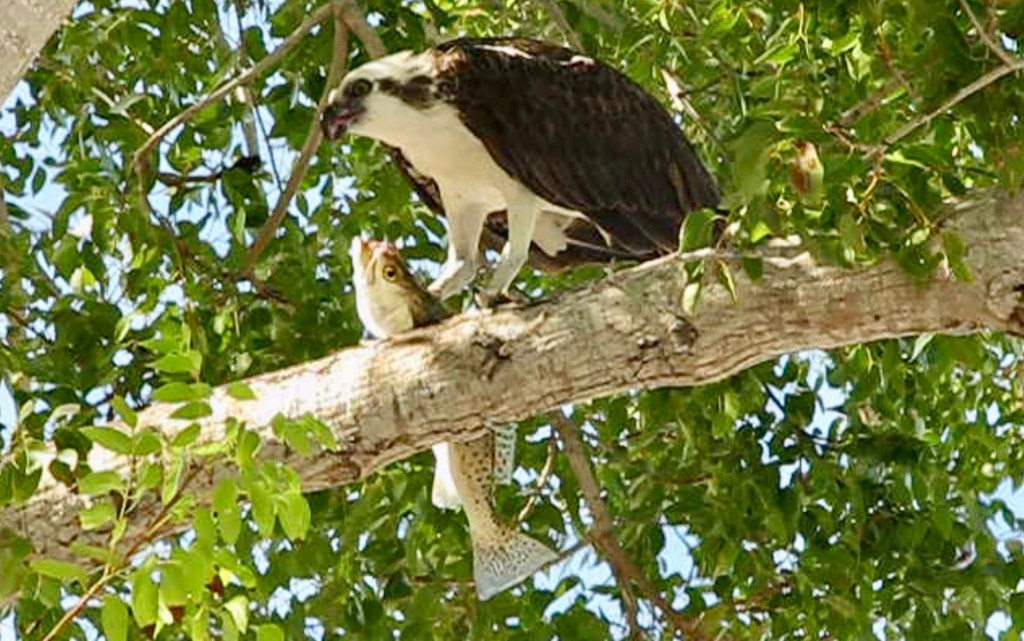
I paused to watch eight Ospreys circle a mullet school, diving in succession, snatching hapless fish, and landing in the trees on shore to enjoy a sashimi breakfast.
This lucky Osprey caught a yummy seatrout.
Full of fresh fish, the Ospreys set about collecting soft material to line their stick nests. Some carried clumps of dead seagrass in their feet.
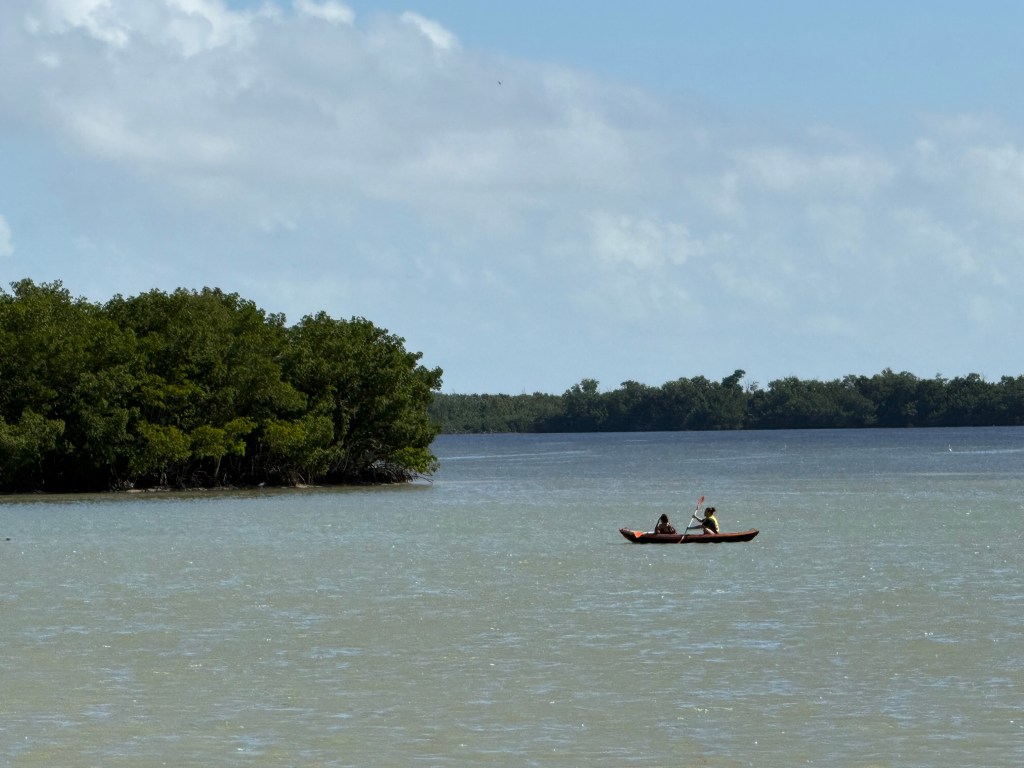
On our way back to the marina, I spotted a young couple in an inflatable kayak paddling the opposite direction, heading toward the heart of the flat. Unless they knew what they were doing, they stood to get stranded in about 20 minutes and stuck there for the next 5 hours. Seeing neither fishing gear nor binoculars, I took them for tourists. I paddled over and asked whether they came here often. “First time” responded the young man in a British accent.
I explained about the tides and the mud, and pointed them toward a channel marker. If they paddled directly to that marker they could spend all day watching birds, sea turtles, and marine mammals from the main channel without getting stranded.
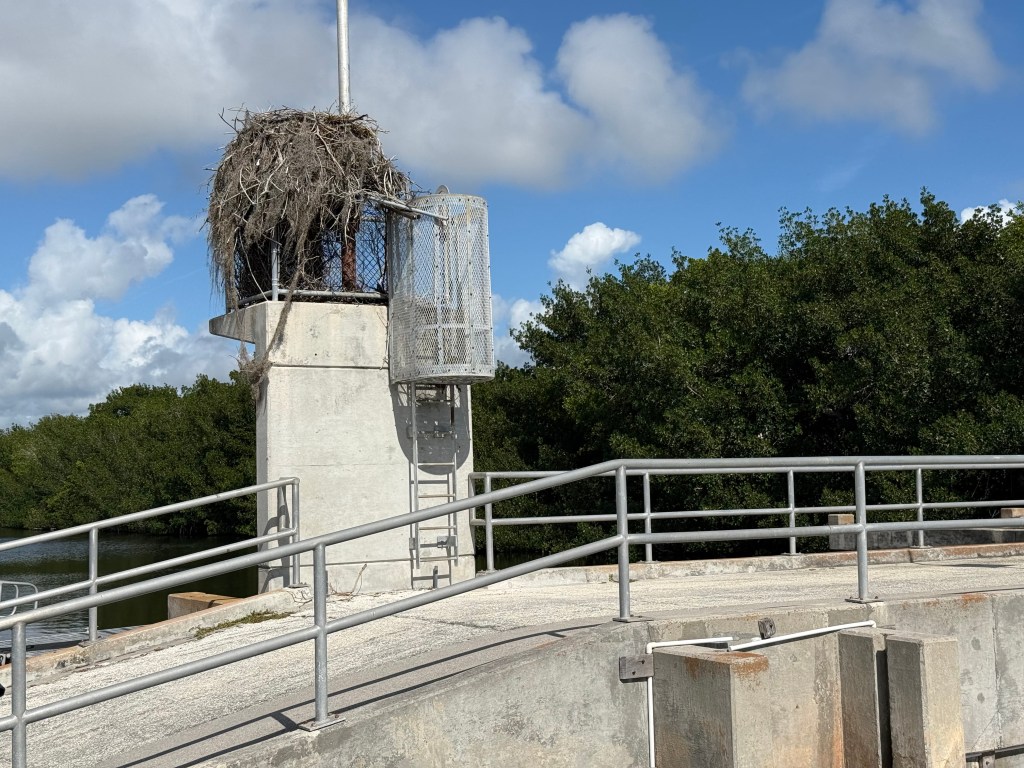
As I packed my gear in the car, I watched another Osprey pair skimming the West Indian Mahogany trees to collect Spanish moss for their bulky nest on the water control lock that separates the Buttonwood Canal from Florida Bay.
Lock Moss Nesters
I ate my lunch while overlooking Florida Bay from the refurbished visitor center. In addition to the wildlife viewing it’s entertaining to watch international visitors enjoying this National Park in their own ways.
Keeping up with Instagram is priority anywhere you go.More my style.
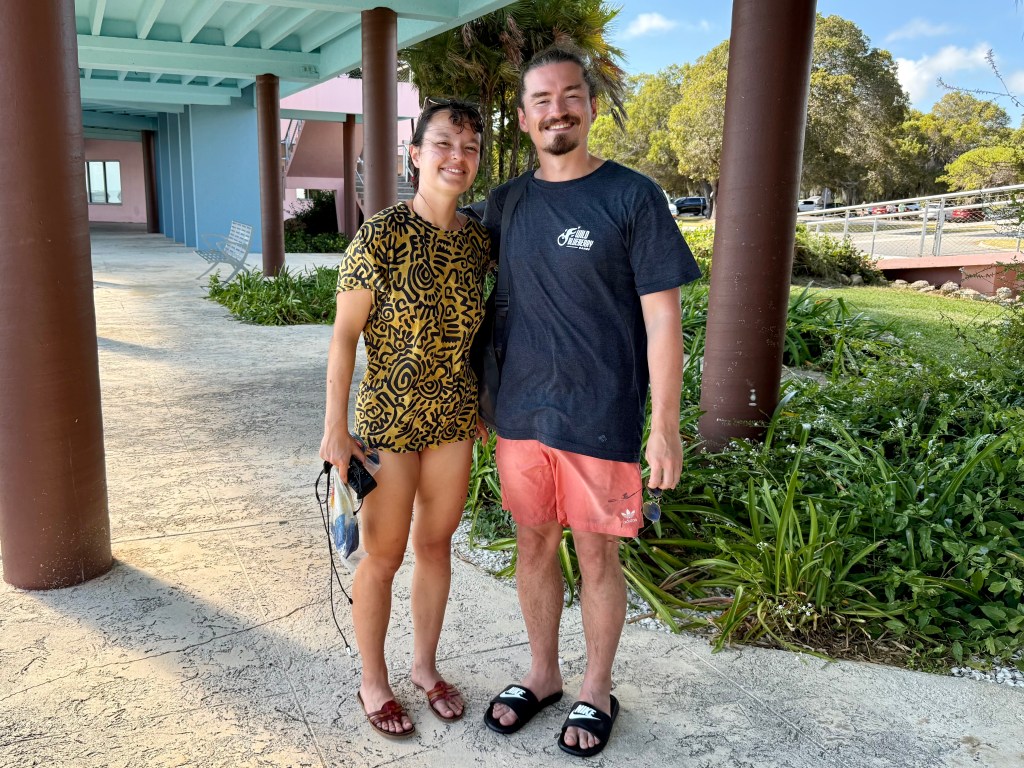
Hey, that’s the same couple in the kayak I saw earlier, now returning from the flats. They pulled their boat ashore and stopped by to say “hi”.
Caroline from Strasbourg and Jason from London.
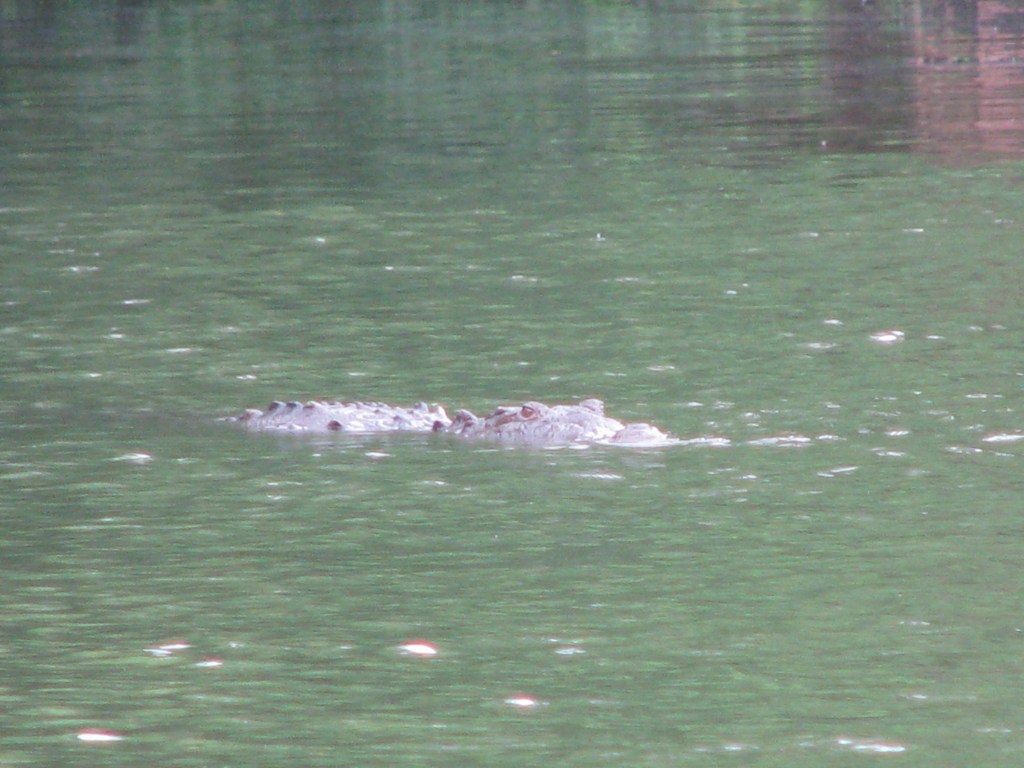
They had decided to head back in after a large American Crocodile surfaced in the channel next to their inflatable kayak.
My photo, not theirs, but you can see why they might have felt unsafe in an inflatable kayak.
Until recently, I’d have told them not to worry about the normally docile American Crocodile, but last summer an experienced fly fisherman told me of a large croc at Flamingo that went airborne in its best attempt to take him off the deck of his skiff.
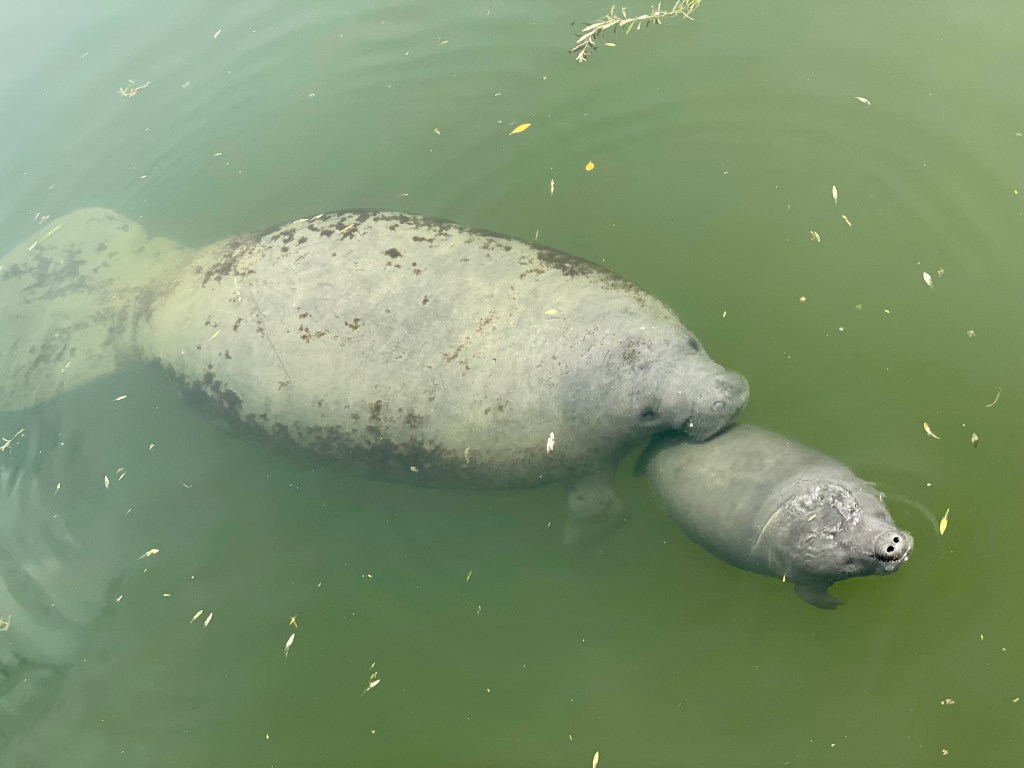
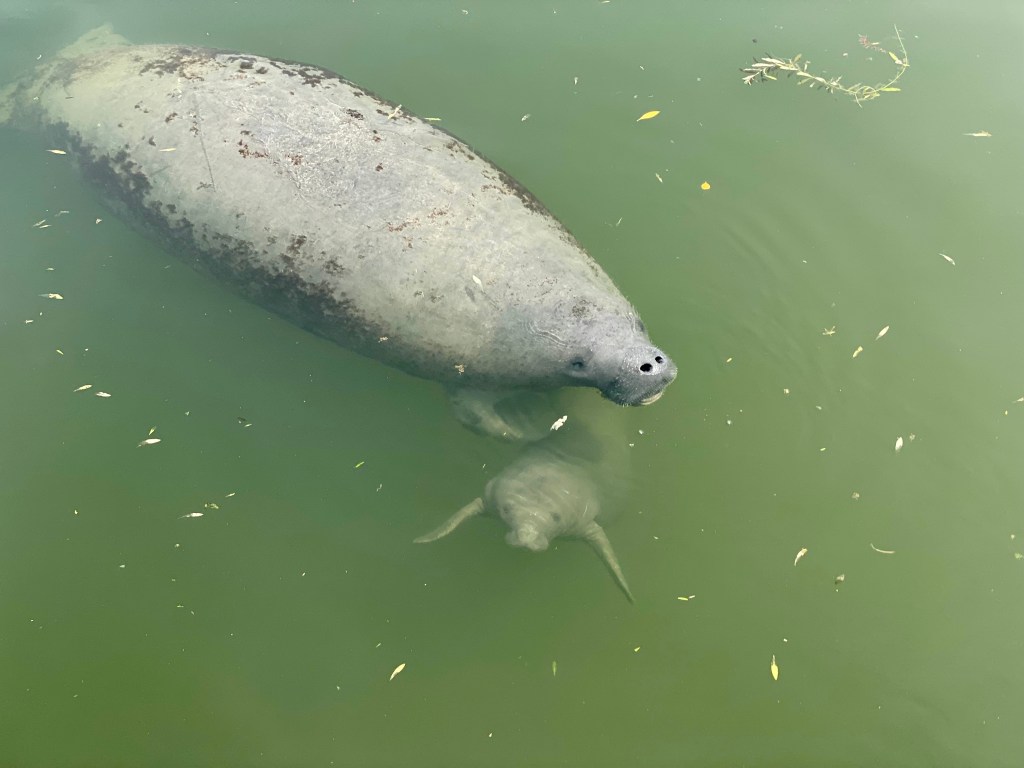
I took Caroline and Jason over to the marina to admire the assembly of mother and baby manatees.
Too cute.
* * *
Pandora’s Flats
A couple of months back, I promised to write an essay about why you shouldn’t fish at Flamingo. The dense mosquito swarms are sufficient reason for normal people to stay away nine months of the year. Risk of stranding on the flats while exposed to sun and lightning should give pause to any sane person. We recently acquired the man-made problem of habituated sharks and crocodiles popping up at random from the opaque water below – recreational fishing boats have trained them well. If you just wanted to fish, you might find an equally productive area with fewer ancillary hazards.
American Crocodile. Note the skinny snoot, Roman nose, and 4th tooth on the bottom that sticks up.
All of these risks have proven insufficient to keep a certain zoologist away. The combination of birds, fish, and scenery will keep me coming back as long as my health and the rising seas allow.
I did not get into fishing at the age of 12 to meet girls. I was enchanted by the fish.
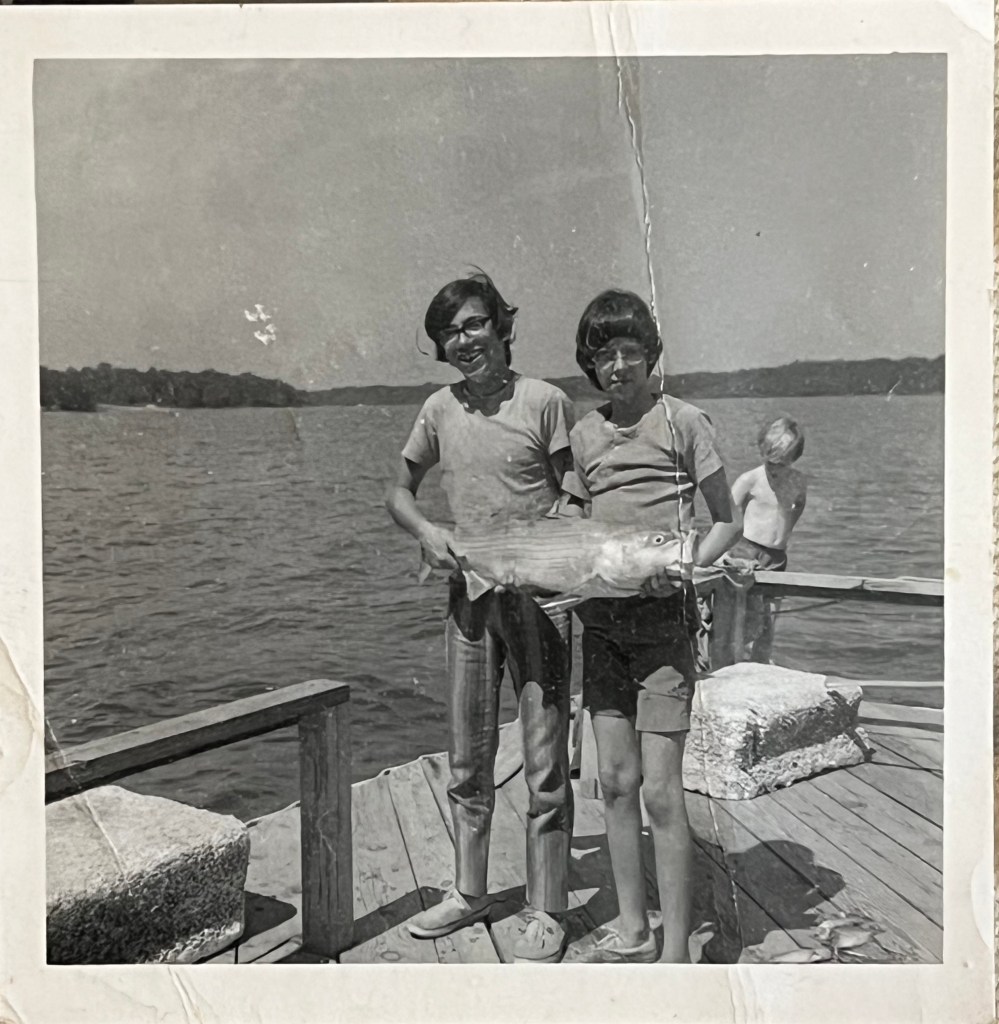
Chuck Sheperdson and me, with my brother Andrew in the back, August 1969, Lake Kerr, NC.
Still, my early teen fishing obsession was quickened by an outdoor magazine article about wade-fishing for Jack Crevalle in Miami.
The story featured color photos a pretty blond woman in a bikini wielding a spinning rod, waist-deep on the flats at Key Biscayne. The next photos showed her holding up good-sized Jack Crevalle that she’d caught. Pretty fish, pretty girl. Gorsh!
Half a century later I remember those photos like they were yesterday. But in my early teens, the blue and green sea grass flats of Key Biscayne were a thousand miles away, while birds were diverse and abundant close to home. I switched from fishing to birding, a somewhat less male-biased activity, but only somewhat. The fields of ornithology and recreational birding are now, thankfully, well-mixed flocks, while fishing remains entirely too much a boy’s club. Even as a birder, it became clear that other social graces would have to be cultivated if I didn’t aspire to be a hermit.
* * *
In researching this post, I tried to find the original article so I could show you the photos that made such an impression. I checked the archives of Field and Stream Magazine from 1969 to 1974 with no luck. The story must have been in Outdoor Life Magazine, which I could not find archived from those years.
Could AI re-create the images? I haven’t tried AI image generation yet, so I figured I’d give it a go.
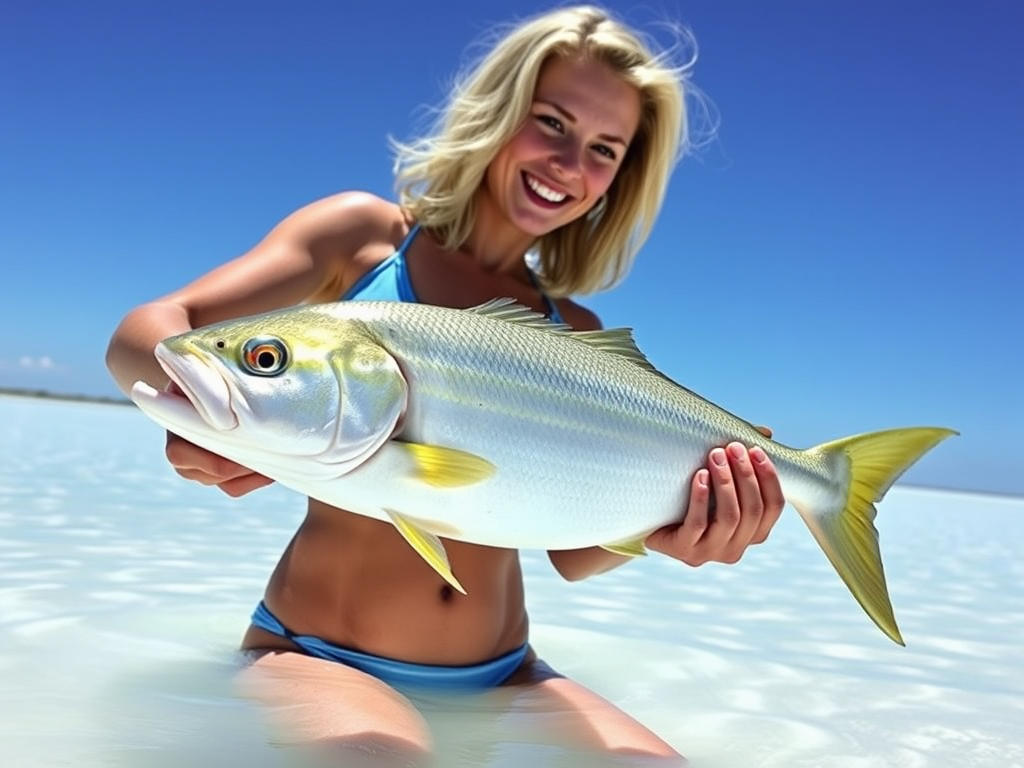
I asked ChatGPT to create an image of a young woman with blond hair below her shoulders, standing waist-deep on a tropical salt flat, wearing a light blue bikini, and holding up a glistening Jack Crevalle about 20” long. ChatGPT responded that it does NOT make images of women in bikinis, with the implication that I should go take a cold shower and behave myself. The AI engine in WordPress, on the other hand, actually offered to help me produce such an image.
Pretty close. The woman has shoulder-length hair, and is sitting, not standing as I’d described. For no discernible reason, the AI engine could not convincer her to stand up. The fish is very handsome, if somewhat plastic-looking. It even has the requisite yellow fins but it’s shaped like an Amberjack, not a Jack Crevalle. I’d call it an AI Hallucination Jack. The AI-generated lass is holding this invention the way you’d hold a plastic fish that had no interest in escaping or capacity to do so. A live jack doesn’t stop fighting when you land it so, so you’d best hang on tight to the skinny part near the tail (the caudal peduncle).
This is a Jack Crevalle, one that I caught recently in Jupiter Sound, onboard the boat of former student turned fishing guide Mike Haines. Note the secure grip for a quick photo prior to launching it head-first back into the water.
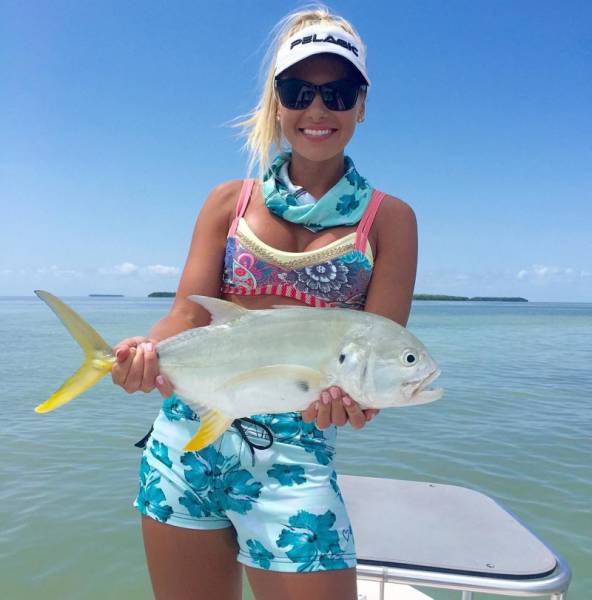
Google is not so modest as ChatGPT and found half a dozen images that matched my description, though not the ones from the article in the early 1970s. From their genuine grins and their practiced grips on the fish, most of these young women appear to have caught their fine jacks themselves – congratulations!
Pretty blond fisherwoman with the proper grip for catch-and-release of an equally pretty Jack Crevalle.
My wife Gray advised me to limit the number of sexy fish photos in this post, so I just kept the one closest to the original. Still, even today, the ratio of online photos of men versus women holding Jack Crevalle is about 50 to 1.
Since I moved to Miami 33 years ago, I’ve spent plenty of time on the flats around Key Biscayne and I have yet to see a woman do anything serious with a fishing rod. The famously gorgeous women of Miami are abundant on the beaches, picnicking, reading, sunbathing, taking selfies, even bird-watching. They can be seen doing all manner of things in the water – except fishing. When I wander past them, covered head-to-toe in SPF-50 outdoor clothing, as per the dermatologist’s orders, I look and feel like a different species. When I say “hi” to women I know, they are surprised to hear a familiar voice emanating from under the layers: “Oh, Mayor Stoddard! I didn’t recognize you! Can you join us for lunch?”
The implication of that article from around 1971, that a fellow might be joined by pretty girls while wade-fishing the flats at Key Biscayne, fits the very definition of a bait-and-switch. Other social graces are still required.
My new dad, Ted Stoddard, was a Naval Intelligence Reserve officer. At the age of 4, I knew the Navy had ships, that ships had lots of ropes, and ropes had to be secured with just the right knots. Since Ted’s work was classified, I determined that he had to know the US Navy’s trove of secret navy knots. Under questioning, he admitted this was true. I set out to learn as many of these knots as I could, but of course they were secret so he couldn’t reveal them.
My favorite bathtub toy was a 3 foot length of India rubber tubing. I’d sit in the tub at bath time and tie a complex knot in the rubber tube then ask: “Is THIS one of the Secret Navy Knots?”
Lt. Commander Stoddard would gravely inspect the knot and answer “No, not that one.” After inspecting half-dozen of my intricate tangles he’d bend down closer to the splash zone and whisper, “Yes, that’s one.”
That was in the 1961, around the time of the Cuban Missile Crisis. Most of the Secret Navy Knots have been declassified since then, but I suspect a few remain secret. I can’t know for sure.
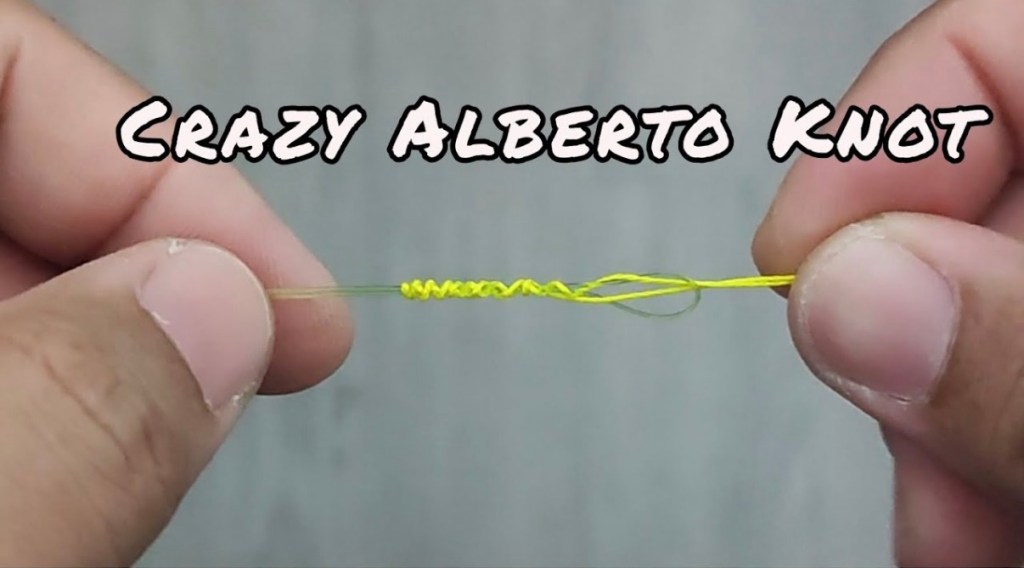
Some knots are named for their inventors. My favorite named knot is the Crazy Alberto knot, invented by Alberto Knie, who is intense, high-spirited, and very funny, but not crazy. Alberto is an unusually astute observer of wild fish, a great fisherman, and a lovely guy. His knot is terrific.
I’m a fan of Alberto and I use his knot to attach the bite tippet in every leader I tie for snook or juvenile tarpon. As of my writing, Alberto is recovering from a massive heart attack – if you are also a fan, you can help him out at https://gofund.me/4b854b908
I’m not in Alberto’s league as a fisherman, but I’m good with knots and I’ve long aspired to have a knot named after me. Of course, I’d have to invent a knot so good that a lot of people would use it, and the knot would have to be so unique that a graphic name like “figure-8 knot” wouldn’t capture it.
I do have a candidate.
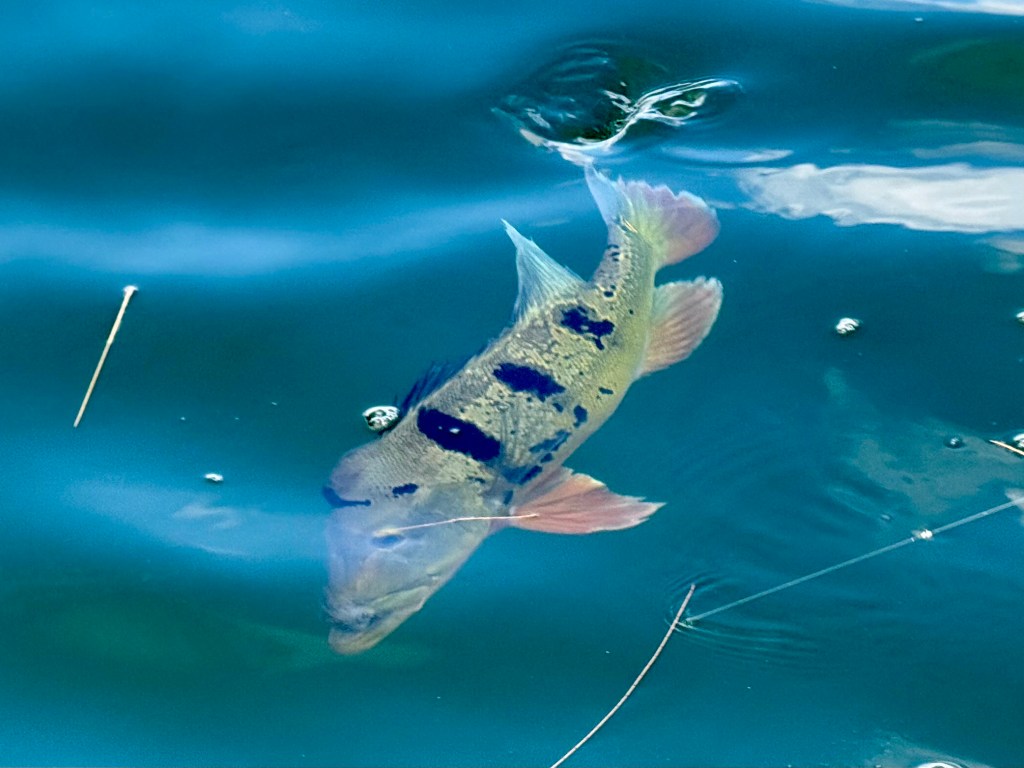
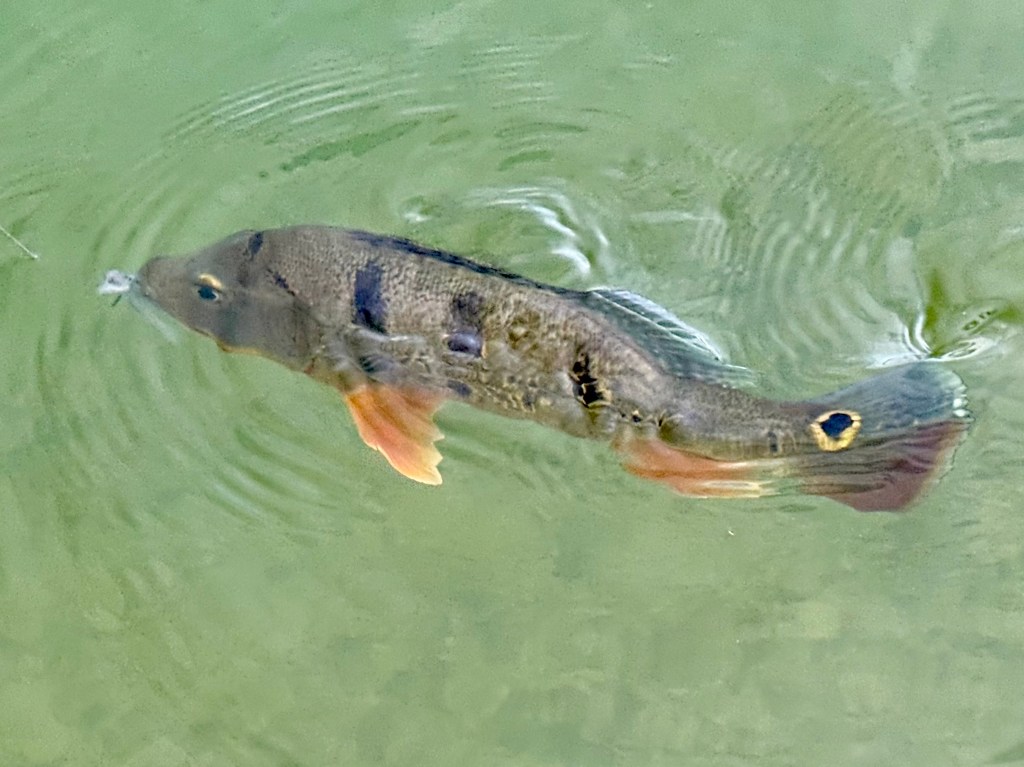
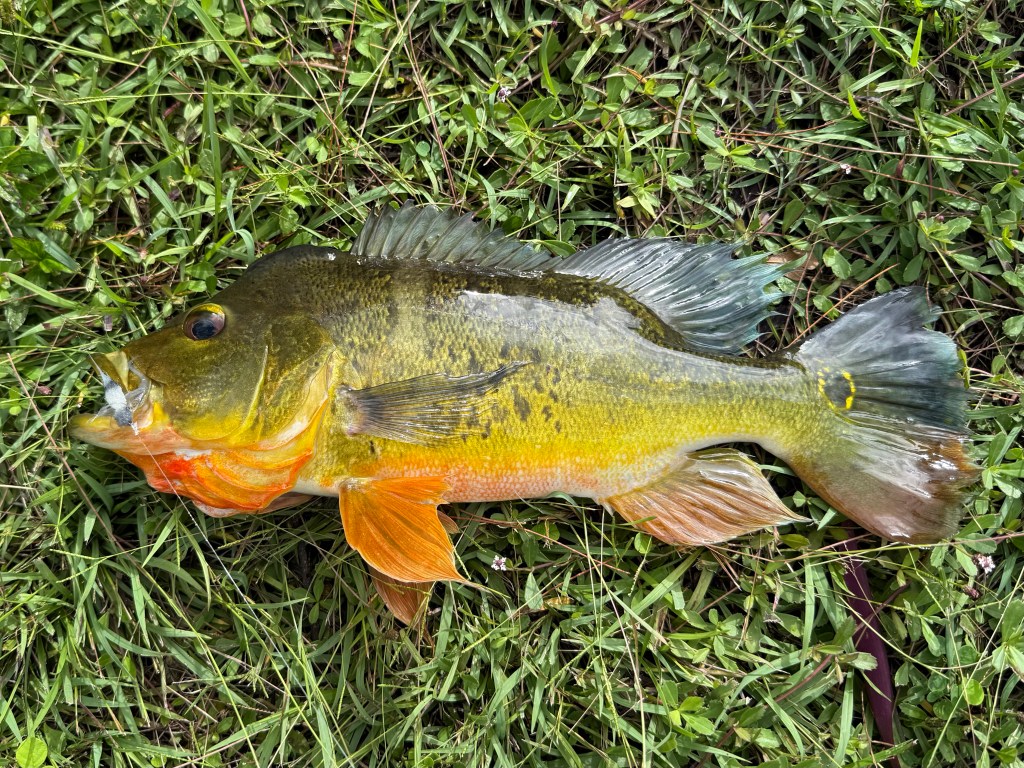
On days I want to fly fish but I don’t feel like messing with boats in heavy winds and/or heavy rain, I often grab my 5-weight fly rod and head over to a local lake to fish for Butterfly Peacock Bass (“peas” for short). There, if the sky opens up on me, it’s a short dash to the car and not too far home to change into dry clothes.
Peas aren’t the hardest-pulling fish I catch, but they’re gorgeous and they fight plenty hard, leaping into the air or diving and delivering a series of sharp body snaps. Here’s a big male in action:
If the line has enough tension, the pea’s body snap can break the monofilament tippet that joins the leader to the fly. The tippet breaks at the weakest point, usually the loop knot that connects the tippet to my streamer fly. The pea’s other trick is to head for the nearest submerged branch tangle where it will break off for sure. It takes a lot of line tension to keep a big pea out of the branch tangles, to which it responds with – yes – sharp body snaps, breaking the line at the loop knot.
The obvious solution is to use sufficiently heavy tippet to resist breaking, but the peas in this lake have become educated and won’t eat a fly if they can spot the tell-tale tippet. When I upsize to thicker, stronger tippets, the peas stop eating my flies. When I downsize to thinner, less visible tippets, I get bites once again but the peas break off at the loop knot. This trade-off has only arisen recently, a byproduct of the fish education that arises from my catch-and-release fly fishing. The peas have learned to watch for my tippets and I’m stuck.
Earlier this week I hooked a not-so-big pea on my special mosquitofish fly, and the pea broke off at the loop knot once again. Dang! I can’t go up in tippet diameter and I’m tying the strongest known loop knot, the Kreh Loop, invented by Lefty Kreh. The Kreh Loop is slightly stronger than another great loop knot, the Duncan Loop, invented by Norman Duncan. I need an even stronger knot.
I sat on the bank for a few minutes and pondered until I hatched an idea for a new loop knot, a cross between the Palomar knot and the Kreh Loop. If I was lucky, this new loop knot would combine the best traits of both, the enhanced strength of the Palomar and the non-slip property of the Kreh Loop.
I tied on my fly with a prototype of the new loop knot. Here’s it is, photographed against my shorts:
In a few minutes I’d hooked a scrappy, medium-sized peacock bass and the knot held despite the pea’s snapping tugs.
The next fish was a much larger pea that put up a long and vigorous fight, and again the knot held.
Lucky coincidence? As a scientist I can tell you that empirical testing can never rule out coincidence entirely, but with enough tests one can reduce the likelihood of coincidence to a very tiny number. One percent is the standard comfort level for most scientists.
METHODS
First thing when testing knots is to test the line to make sure it performs as expected. I tie one end of the line to a digital archery bow scale with peak hold function ($18 on Amazon). Obviously securing the line to the scale requires a knot, so I use a Bimini Twist, one of the rare “100% knots”, that retains 100% of the original line strength. The other end of the line I keep on the spool. I put on gloves to protect my hands from being cut when the line breaks (learned my lesson there), grip the spool and scale in my two hands and pull slowly and steadily until the line breaks. This is a static line test. Admittedly, the fish breaks the line with faster dynamic loading, conditions under which even the Bimini Twist is no longer a 100% knot, but for now a static load test will do.
My original tippet that was breaking at the knot, Rio Powerflex 1X, is rated at 13 pounds, but my spool was breaking around 10 pounds. Oops. That’s an issue right there and explains part of my break-off problem. Next I tried Rio’s 16 pound fluorocarbon tippet material but it also broke well below its rated strength. Hmm. Does Rio have production problems? If single strand line stays too hot during production it can lose strength.
Next I tried Yo-Zuri Hybrid 12# line, a nylon-fluorocarbon mix. I have discarded spools of Yo-Zuri Hybrid that tested far below their rated strength, but other spools have tested fine. My open 12 pound spool breaks at 14.0 pounds (standard deviation 2.8 pounds), so that’s what I used for my knot testing session.
I tied and broke a dozen Kreh Loop Knots, my standard knot for streamer flies. These I alternated with a dozen of my new loop knots. Why a dozen? With the variance in the strength of this line spool (mean=14, SD=2.8) a sample size of 12 per group gives me a decent chance of finding an effect if an effect exists (i.e., good statistical power). I could do the mathematical power analysis, but I’ve run similar statistical tests for 46 years, long enough to ballpark it.
After each break, I pulled a foot of line off the spool and discarded it to get all fresh line for the next test.
RESULTS
All 12 of the Kreh Loops broke at the knot, and all 12 of my new loop knots broke in the middle of the line.
The odds of getting a result this extreme by chance alone is the same as flipping a fair coin 24 times and calling it correctly in the air all 24 times: one in 16,777,216. A little better than one in 100? My best run of coin flips ever was 11 in a row, the odds of which are one-in-2048. I won’t waste my time trying for a run of 24 unless I achieve a life sentence in a prison with a coin but no library.
Since the new loop knot never broke, I can’t know how strong it actually is. However, the Kreh loop knots broke, on average, at 79% of the line strength with a standard deviation of 2.2 pounds. A two-sample T-test comparing the peak breaking tensions of the two knot types showed that the new loop knot is statistically stronger. The P-value of this statistical test is 0.005, meaning that a pattern this extreme or more extreme would occur by chance in only 5 of 1000 similar knot break-off contests using 12 knots of each type. That’s 1-in-200 odds, twice as good as my 1% criterion.
[31-Oct-2025, Addition since original post: Andy Mill on his recent Mill House podcast stated that the Improved Homer Rhode Loop Knot retains 100% of the line strength. Competitive tarpon fishers swear by this knot. I tied and tested 14 of them, and found the Improved Homer Rhode Loop broke, on average, at 64% of the line strength compared to 79% for the Kreh Loop, and 100% for the my new knot. The standard deviation was 2.1, similar to the Kreh Loop. The Improved Homer Rhode is significantly weaker than either the Kreh Loop or my new knot. Woof woof, it’s a dog.]
DISCUSSION
The two statistical tests are good enough for me to have faith that the difference is real. The fact that in tests of my new knot the line always broke in the middle and never at the knot, means this new loop knot is at least as strong as the line itself, making it the first 100% line-to-hook loop knot. That’s a knot worthy of a name.
Hey, this is exciting!
Oops. Can’t say that. Successful scientists might pop the cork on a bottle of good Champagne to celebrate a major discovery, but it’s considered unprofessional to fully convey our excitement in print. Even Watson & Crick, in their original publication about the structure of DNA forced themselves to remain understated when explaining how a double helix structure could facilitate DNA replication: “It has not escaped our notice….”
This study also helps explain my break-off problem. My original 13 pound-rated tippet was functioning at 10 pounds, and the Kreh Loop was reducing that strength by 21% to ~8 pounds. The standard deviation was 2.2 pounds which means that in over a third of my knots the functional strength is reduced to under 6 pounds static load, and maybe half that under dynamic loading. The peacock bass are having a much lighter task breaking that tippet than the nominal 13 pound strength I might have thought I had going for me. I will switch to the Yo-Zuri Hybrid 12 pound spool for now, and use my new loop knot to tie on the streamer flies.
This new loop knot might be a Secret Navy Knot. If it is, the US Navy’s PR office certainly won’t tell me. After illegally blowing up several boatloads of Venezuelans, some of whom now appear to be fishermen, the US Navy will be too anxious about media shit storms to field a loony call from an American fisherman inquiring about “secret knots”. I might do better calling the Office of Naval Research.
My father Ted will turn 99 next month, having retired long ago at the rank of Captain. I will ask him about this knot for sure.
I’d call the National Institute of Standards and Technology (NIST) to find out if my knot is in their collection of Standard Knots, but they’re closed during the government shutdown, stemming from a dispute as to whether Americans, such as my brother’s family, should be able to afford health insurance, versus rich people getting a big tax break. My wife and I are on Medicare now, but we think all families should have access to affordable health care. We support the goals of those in Congress holding out to restore affordable health care to middle and low income Americans, and to keep community hospitals from closing.
* * *
Returning to the prosaic, I have simplified the new loop knot slightly, to make it easier to tie while retaining its strength. I will explain how to tie this knot in another post, but first it needs a name.
When I took up fishing again after a 50 year hiatus, my wife Gray was bewildered: “Phil, you’ve spent your whole career being nice to fish. Why do you suddenly want to be mean to them?”
I could say I went fishing for the spectacular sunrises and experience of nature, but Gray would quickly note that I could get up at 3:30 am to be on Florida Bay for the sunrise, spend the morning watching shorebirds, manatees, dolphins, rays, and sharks, and come home to enjoy lunch and a nap, all while leaving the fish in peace.
So hers is a fair question. I studied electric fish and mosquitofish for 35 years at Cornell and FIU. I had a massive fish-rearing facility on the roof of my building where our fish bred because we made them so happy. An undercover plant from PETA worked as a technician in my lab for a few months then left because he couldn’t find any evidence that we were inhumane in our treatment of fish. I definitely don’t want to be mean to fish.
So, yes, my love of fishing embodies a patent contradiction in my values. I truly love all the wild things and trying to catch fish. I especially enjoy chasing fish with a fly rod, widely recognized as the least efficient way to actually catch a fish.
With that bed of nettles as our background, let’s relocate temporarily to the site of the sunrise photo, a seagrass flat in Florida Bay, two miles south of the Flamingo Marina in Everglades National Park. In a future essay, I’ll tell you all the reasons you should NOT fish there, but this day I will share some of its magic.
Here’s the flat surrounding a mangrove key a few minutes after sunrise. This light always enchants me. Look for a moment and you’ll see the water is pink dimpled with dark blue, far prettier to my eye than Christo’s famous pink island wrapping.
The water surface reflects the sky at low sun angles so my iPhone camera can’t see into the water to document for you how the fish are going about their morning activities. That would require a circular polarizer on my iPhone (wait, look it up… PolarPro makes a good one). But I’m up on the poling platform of my skiff this morning wearing polarized sunglasses. You’ll have to trust me when I tell you what fish I’m seeing and what they are doing.
Mullet are flipping and splooshing in the shallows, while egrets line up to try for the small ones. From the key comes the hollow whinny of a Bald Eagle, the raucous clatter of a Mangrove Clapper Rail, and the sweet song of a Yellow Warbler. Against the key lies a deeper channel where I spot a nice redfish but I won’t try for it. A five foot lemon shark cruises the channel, not far behind. Hooking a snook or redfish in any channel at Flamingo is tantamount to feeding a shark. I do not feed sharks or alligators, for similar reasons.
Two juvenile Goliath Groupers, about 18” long, are out in the open on the flat. Young Goliaths normally spend their days holed up in the mangroves, roving the flat at night. But here they are in the light of day.I watch to see what these young groupers will do when they’re caught out in their pj’s with a flats skiff poling towards them. When I get closer, they panic and swim to the nearest clump of red mangroves, sticking their heads in the roots and leaving their mottled brown and black bodies sticking out in the open. With their heads concealed, they can’t see me, so I guess I’m not supposed to see them either, but they look thoroughly silly.
Two young redfish with light gold bodies and blue tails are cruising the shoreline. I pitch a sparkly spoon fly in front of them, then retrieve it. One redfish starts to follow the fly, then changes its mind and wanders back to cruise with its friend. A different fly might have worked better, but which one? Unlike a rising trout that feeds for a while in one spot while the flyfisher tries one fly after another, a flats fish on the move rarely affords a second chance.
The edge of the flat becomes a reverse shower of small jacks taking to the air. Underneath the water, I presume, a school of large jacks roars through the water in hot pursuit. In fifteen seconds, the water is still once again. It’s a fish-eat-fish world on the flats.
I round the corner of the key and the glassy water surface erupts and goes still in alternation. Silver tails appear briefly and disappear. A school of juvenile tarpon is actively feeding on baitfish.
The prey this morning is a school of anxious young mangrove snappers that’s holding in one area. To my happy surprise, the tarpon are cruising back and forth to take multiple shots at the bait school and affording me a parallel opportunity with my fly rod.
I throw a black tarpon fly in front of the advancing tarpon with no success. The same fly worked last week in murky water four miles to the east, but the water here today is clear. Oh, right. Light-colored flies work better in clear water than dark patterns because fish (including baitfish) in clear water change to lighter, more reflective body colors for better camouflage. I knew that. The tarpon will be coming back soon for another pass at the snappers, so I remove the black fly and select a big gray & white snook fly that I tied but never put in front of a fish. If I stretch my imagination, this fly could resemble a young mangrove snapper. It looks very fishy in the water and it’s not black.
I attach this snook fly to the heavy tarpon-proof bite tippet on my leader, and cast it in front of the tarpon school. To complete the illusion of a small fish finding itself in the wrong place at the wrong time, I make the fly attempt an escape. It works. One of the larger tarpon breaks from the school and grabs the hapless fly. I set the hook, but the tarpon doesn’t seem to care. The lining of a tarpon’s mouth is as tough as Kevlar – I’ve seen a tarpon consume a whole blue crab without chewing. But, feeling the line resistance, the tarpon forcibly yanks some fly line from my left hand and swims back into formation in the school. I restore tension on the line, putting a good arc into the 7-weight fly rod. The tarpon resists for a moment, then jumps clear of the water, snapping its body back and forth in the air and creating the slack needed to neatly toss my fly.
You normally drop the rod tip when a tarpon jumps, precisely to keep it from creating that line slack, but I kept light tension on specifically to help the tarpon escape. More on that in a moment.
Free of the leader’s encumbrance, the young tarpon, roughly 10 pounds’ worth, once again resumes its position in the school as the members continue their search for yummy little mangrove snappers.
* * *
Even though a fish’s face doesn’t change with mood, I swear this tarpon glared with an annoyed expression in its whole body. Perhaps it was in the way it shouldered loose some free line and went back to what it was doing before. It was never so clear that my hard earned fly-fishing skills, such as they are, do indeed annoy the fish.
When a woman sends me a message like this, it stings. Same with a fish it turns out. I didn’t spend 35 years studying fish behavior to no effect.
Increasingly, I compromise, seeking a bite on the fly then a self-release at a distance.
When a fish takes a fly that I tied myself, I delight at having completed the illusion. My heart skips a beat at the sudden appearance of weight and power on the other end of the fly line gripped in my left hand. If I’m lucky, the fish makes a fast initial run, and maybe, if it’s the right species, it makes a couple of spectacular jumps. If it’s a new species for me, I want to see it up close and take a photo to remember it better. But for familiar species I do what I can to help the fish pitch the fly and get on with its fish life, ideally without my having to net and unhook it.
We’ll see how that deal sits with me. And, I suppose, with the fish.
Casting the new (used) Spey rod at Crandon Park, photo by Gabriella Parilla
A favorite backyard game in the summer of 2006 was holding my 8-year old daughter aloft in both hands and tossing her headlong into the deep end of the pond. “Do it again, Daddy!”
And I did, over and over, until something went “pop”.
The regional elbow specialist, Dr. Obvious, diagnosed the injury:“You pulled a ligament in your elbow.”
He prescribed the state-of-the-art treatment: “Baby it.”
Forever, it seems.
After taking up saltwater fly fishing in 2022, I discovered that fly casting is an elbow-intensive sport. The heavier the rod and line, the greater the elbow strain.
I settled into elbow-friendly fly rods 7 weight and lighter. But I’ve found that a 7wt setup, situated in the middle of the weight range, has its limits: the 7wt can’t deliver big flies very far or turn a big snook away from the mangroves. Of greater consequence, a 7wt fly line cannot punch far through the coastal winds common on the open flats. Can I only pursue medium-sized fish using smallish flies on calm days?
This year has been extra windy, as documented by the local avocado growers, who complain that wind desiccates the blooms and lowers their yields. I’ve been using the 8wt rod more than my elbow likes.
To fish tarpon with my friend Chris Schneider in the Keys where it’s often windy, I really need an 11 or 12wt setup, but I can cast Chris’s elegant Hardy 11wt tarpon rod twice at most before my elbow calls Uncle.
I’ve been pondering two solutions: left-handed casting (working on it) and two-handed casting. Left-handed casting is good relief, but when my left elbow began taking notes from the fussy right one and demanding equitable treatment, it came time to study up on two-handed casting.
Salmon fishers on the River Spey in Scotland invented the two-handed Spey casting system for throwing big flies on big rivers with long rods and heavy lines. Queen Elizabeth II was said to be a good Spey caster in her day.
Steelhead fishers on the Skagit River north of Seattle evolved their own variant of Spey casting, using shorter shooting heads on their fly lines.
A two-handed cast with a long Spey rod should still load the elbow but minimize the elbow flexion that particularly irritates my injured ligament. In Spey casting, the caster’s dominant hand holds the rod above the reel and remains almost stationary as a fulcrum, while the other lightly hand grips the rod butt, performing a sharp, short, punch and tuck to lever the distant rod tip back then forward. In contrast, a single-handed fly rod cast is 100% forearm action, maximizing both elbow flexion and torsion.
I looked up [Spey + tarpon] on the web. Wading past the page of retail ads, I spotted the podcast Wet Fly Swing featuring an hour-long interview with saltwater Spey casting evangelist John Grasta,. Grasta has adapted the Skagit Spey style to fishing Florida’s mangrove coasts for tarpon. And he lives in Florida within half a day’s drive of my house.
I tracked down John Grasta at the Bass Pro Shop in Orlando, where he runs the store’s expansive fly fishing department.
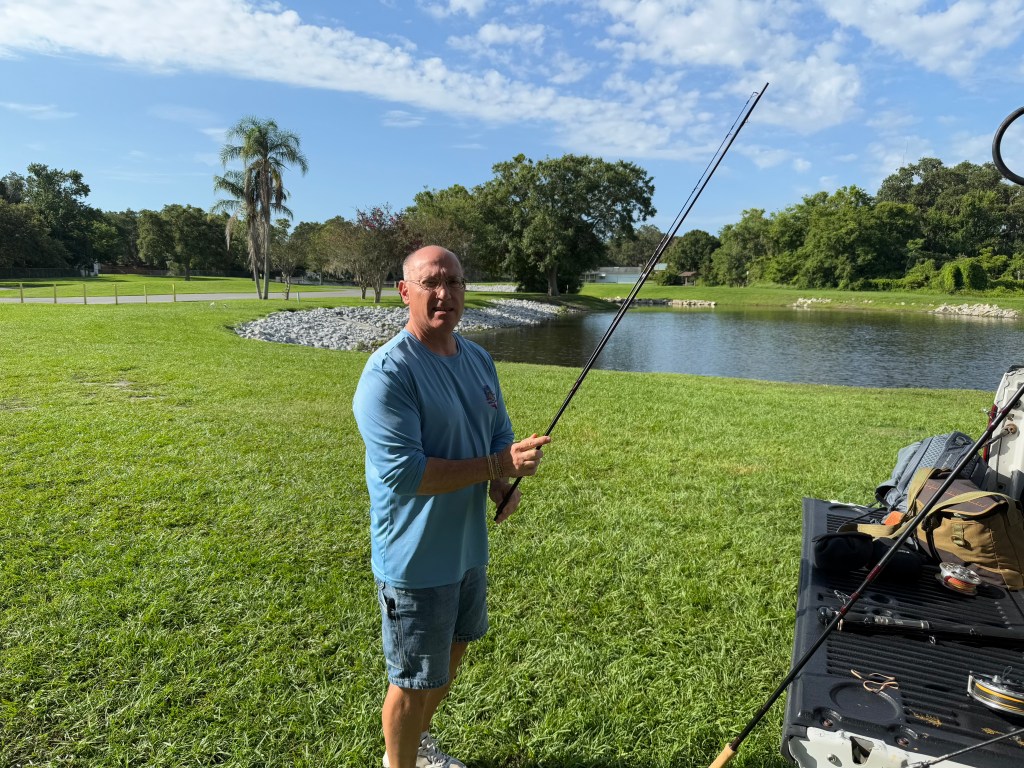
John is an affable guy who retains his Rochester accent. One could not find a more enthusiastic Spey coach. A couple of weeks ago, I hired John to give me a Spey orientation and casting lesson on one of his days off from work.
I drove 215 miles north from Miami to Orlando, stayed overnight with a University of Central Florida colleague, and met John at his house in Winter Garden, Florida, following him to a park on the shore of Lake Apopka.
Apopka is famous in zoological circles for its male alligators having been feminized by the endocrine disrupting effects of pesticide runoff. Here in Florida, that’s a lifestyle choice, right? But I digress.
John laid out his collection of Spey rods on the bed of his pickup.
He rigged up a few rods, and spent the next hour explaining innovations in the specialized tackle and narrating the dynamics of the simpler Skagit Spey casts.
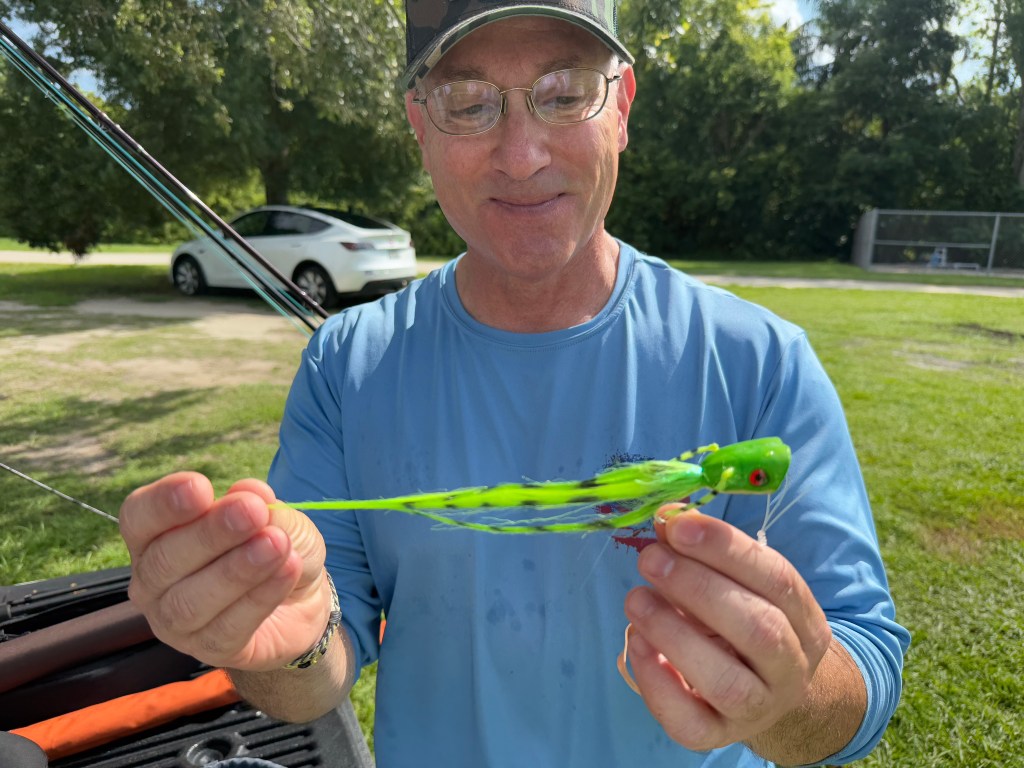
John Grasta shows me one of his big iguana popper flies. A big Spey rod can throw this monster a long distance. And speaking of monsters, John recently caught a 200 pound arapaima on the Spey rod. You can see a video of its epic jumps on the JohnGrasta Instagram feed.
I asked a million questions, taking notes, photos, and videos.
Video of John Grasta firing off a demo Spey cast.
After an hour of explanations and demo casts, John handed me a 15 foot, 10wt rod rigged with a short Skagit shooting head.
Hopes are high, but tempered by the recall of my learning curve with single-handed fly gear. I also remembered the podcast where John explains how many thousands of casts it takes to get competent with a Spey rod. To increase the challenge, a wind is blowing directly at us. Being realistic, I expect my first two dozen or so Spey casts will resemble hurled plates of spaghetti.
I took a breath and exhaled as I made my first cast…
The line shot out 70 feet, dead straight. I couldn’t believe it. That’s my maximum single-handed cast range with no wind.
I tried all the rods and, not surprisingly, my elbow chose the lightest one, a 12 foot, 7wt, fast action Sage Igniter that John had rigged with the equivalent of a 12wt single-handed tarpon line.
After half an hour with the 7wt, I was throwing long casts that cleared all the line. After the last one, I retrieved the thrown line from the lake, laid it out on the grass, and measured it with my calibrated paces: 96 feet +/- 3%. That should do.
* * *
On the long drive home I spotted fourteen Swallow-tailed Kites.
Fishing the flats at Flamingo yesterday, a Swallow-tailed Kite danced in the sky over the mangroves.
More kites swooped low over the trees as I drove home through Everglades Natl. Park.
Last night as Gray and I shared mango slices for desert, we heard a chorus of whistled peeps above us – baby Swallow-tailed Kites! While I got odd glimpses through the trees (video below), Gray scrambled up the step ladder to the roof for a view of the open sky. Five kites circled our neighborhood, the parents with three noisy fledglings.
In July, the Swallow-tailed Kites will leave the Southeast to winter in the tropics. Satellite tracking shows they depart the west coast of Florida and fly SW across the Gulf of Mexico to the Yucatan.
Sensing a theme in the air, I take my recent flurry of kite sightings as an omen for a bright future of feathers making long flights over water.
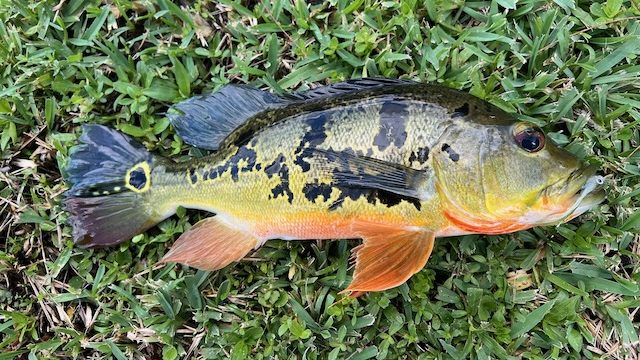
The Butterfly Peacock Bass (Cichla ocellaris), or “pea” for short, is not a bass at all, but rather a cichlid (pronounced “sic-lid”) from the Guianas and Brazil.
In our version of the song “I know an old lady who swallowed a fly” Peacock Bass were introduced to South Florida waters to control the Oscar, an invasive exotic cichlid from Africa. Now we have plenty of both.
The Oscar is a hard fighting fish. Also hard-biting. I learned the hard way not to skinny-dip at night near the Oscar in our pond.
These exotic cichlids are fine game fish: strong, ferocious, and beautiful. Most people fish for them with live bait. Peas are partial to shiners, but I chase them with a 5-weight fly rod.
Like most pressured fish, peas in public waters become educated and discriminating. They’ve seen it all. The farther from a road one ventures into the Everglades, the easier it is to catch them. But late last December, a hard cold snap hit the Everglades waters and killed 98% of the peas. These tropical beauties survived in the warmer urban canals and lakes, but it will take a few years for them to recolonize the Everglades.
Though it’s hard to beat fishing in the Everglades, I had a backup spot for peas at a private suburban lake in a gated community not far my house. Two sets of friends reside there and grant me access. The lake is posted “no fishing”, but folks fish off their backyard docks, and nobody minds me fishing the heavily treed east side, since I release what I catch. One resident told me: “That’s a FLY ROD. You have my utmost respect.” Ooo.
The peas on this lake have gotten steadily fussier, but since I’m the only one tossing flies at them, I probably have no one to blame for their education but myself.
In the beginning, they’d readily devour an olive-over-orange Clouser Deep Minnow, even competing to be the first to grab it.
Cichlid candy, the olive-over-orange Clouser Deep Minnow. Prior to the recent cold snap, you could not throw this fly in an Everglades canal without catching a cichlid fish of one species or another. They’ll recover in time.
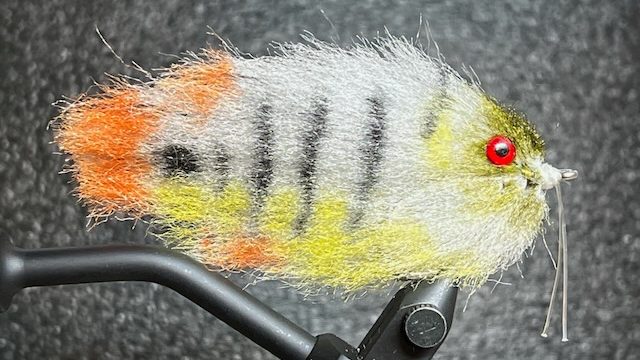
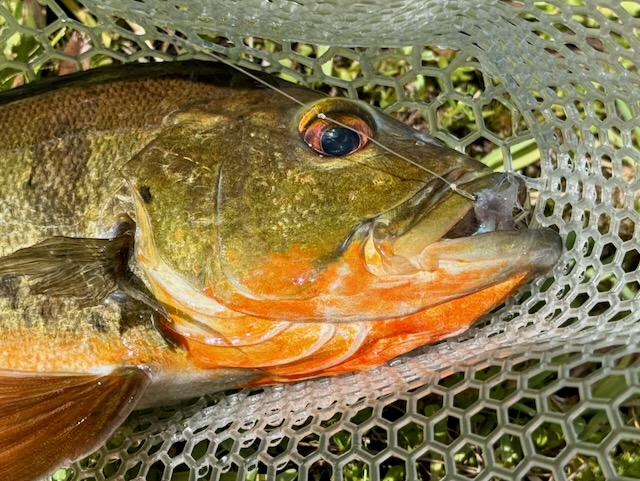
Then the magic wore off. My “can’t fail” fly would get weak follows, but no eats. In frustration, I devised a fly that looked like a baby Mayan Cichlid, one of the pea’s favorite treats. Sometimes on a cold day, a sluggish pea would take that big fly, thinking it a big reward for a small effort. Wrong this time, but generally a winning idea.
Baby Mayan Cichlid fly.
Yes, I pretend to know what fish think. Some fish, some of the time. I studied fish behavior for 35 years, long enough to learn some things about their thought processes, and long enough to be unsure about anything I think they think.
[Ursula Le Guin noted: “Few people know what fish think about injustice, or anything else.” ]
When the peas stopped eating my flies altogether, it was time to pay closer attention to what they WERE eating.
They were stalking and ambushing mosquitofish shoals.
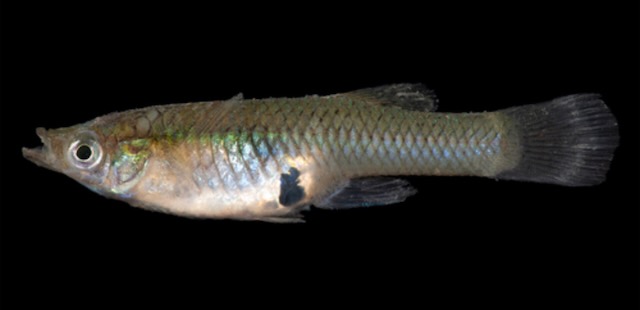
Eastern Mosquitofish (Gambusia holbrooki). A pregnant female.
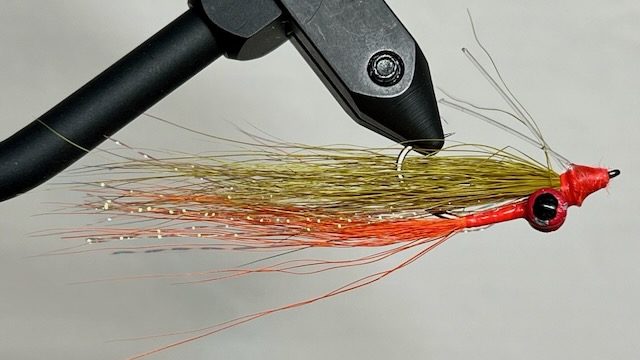
A famous fly pattern already existed for mosquitofish. Mike Connor invented his Glades Minnow fly to catch snook and juvenile tarpon feeding on mosquitofish in late summer and fall along the Tamiami Trail. But, since every fish in the Everglades eats mosquitofish, it worked on those too.
My tie of Connor’s Glades Minnow
I tried Connor’s Glades Minnow on these peas, and it worked great for about two days, then zip.
How does this happen? There must be something like 400+ mature peas in this lake. If I catch 20, I can see those 20 not eating the same fly again. But why do the other 380 now refuse it as well?
Maybe they learn from their friends. My grad student, Ben Sager, studied observational learning among fish in the lab (mosquitofish, no less) and found that they do learn about safe food sources from their buddies. Other researchers have found similar effects in other fish species.
Alternately, maybe these 380 peas were already “line shy” from a prior encounter with a different fly or a lure fished from a dock, and wouldn’t have eaten this fly or any other tempting object dragged behind a fishing line. Even if one fishes super-transparent lines (e.g., thin fluorocarbon) a fish can use their mechanoreceptor system (neuromasts in the head and the lateral line system that runs the lengths of the body) to feel the water disturbance caused by those lines. One get more eats on thinner lines, but more break-offs too.
Not ready to give up, I spent the next couple of months devising and testing a fly that’s converging on a near perfect mosquitofish mimic. To make it more tempting, I chose a pregnant female mosquitofish as my model (photo above). Mosquitofish are live bearers, like their relatives the guppies and mollies. Pregnant ones are slower and extra nutritious.
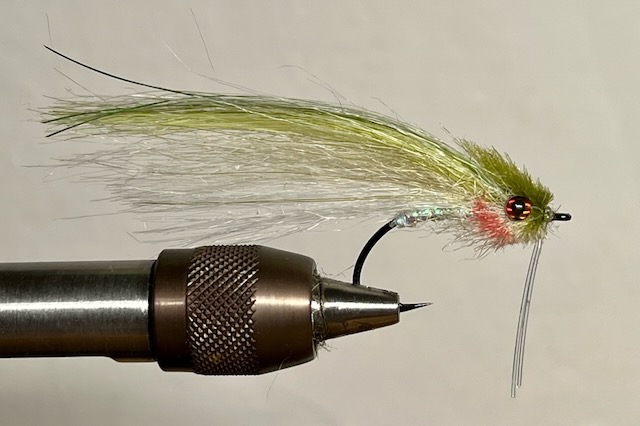
The fly’s construction borrows from the Clouser Deep Minnow and the Glades Minnow, with a few unique features that better match the real thing.
My mosquitofish fly needs a catchy name. Suggestions welcomed.
Once I got the size and details right (small with concealed flash to reproduce the abdominal iridescence), the fly worked brilliantly. It didn’t matter how I fished it. The fly could swim casually, take off in a panic, sit on the bottom, or hang motionless in the water column – a big pea would grab it.
I’d even go back and try other flies for comparison and the peas would ignore those while still eating the mosquitofish fly.
Other fish species liked it too. Everything eats mosquitofish.
Midas Cichlid (Amphilophus citrinellus) endemic to Costa Rica, is naturalized in the waters around Miami. That’s a mosquitofish fly in its mouth.
And then it happened. The peas stopped eating this fly too.
This morning, for example, I probably saw 30 peas, but no pea would even approach the fly unless it swam away from them in apparent fear. Of the first five that took the escaping fly, I caught zero. They were short-striking, a sign of hesitancy. I caught other fish on the same fly with no difficulty: Midas and Mayan Cichlids and a Bluegill Sunfish.
It took two hours to get a couple of big peas to take the fly in full eat mode. By that time I was sweaty, had retrieved flies from underwater snags and overhead branches, had scraped my arm sliding down the slippery layer of casuarina (Australian pine) needles on the bank, had cinched a tight figure-8 knot in my leader, and my last two flies had been chewed to bits. The usual wear & tear.
Another possibility is that the peas aren’t eating mosquitofish right now. The lake is full of baby cichlids, all of which have grown larger than the dinky mosquitofish, so perhaps those are top summer fare. Come winter, mosquitofish may return to the menu. Fingers crossed.
I am planning to uncross my fingers and tie up another batch of mosquitofish flies. Not being one to underestimate the power of education, I can’t help wondering if they have a future.
What National Park offers so many opportunities for exciting wildlife encounters as the Everglades?
In 1979, Professor Tim Williams, wrote me a grad school recommendation letter that ended with this line:
“If I were planning a research expedition to the mosquito-infested swamps of Hell, I would choose Philip as my field assistant.”
I was never 100% sure if Tim meant that as a compliment, but to my prospective grad school advisor, Mike Beecher, it sounded like high praise so he took me on.
With that reputation as a prelude, I’m embarrassed to report that a year ago, in June of 2024, Black Salt Marsh Mosquitoes kicked by butt (well, bit my butt, to be precise) and drove me out of my favorite Everglades kayak-fishing spot when I’d barely gotten started.
I studied mosquitoes in the lab and I’m not a mosquito sissy.
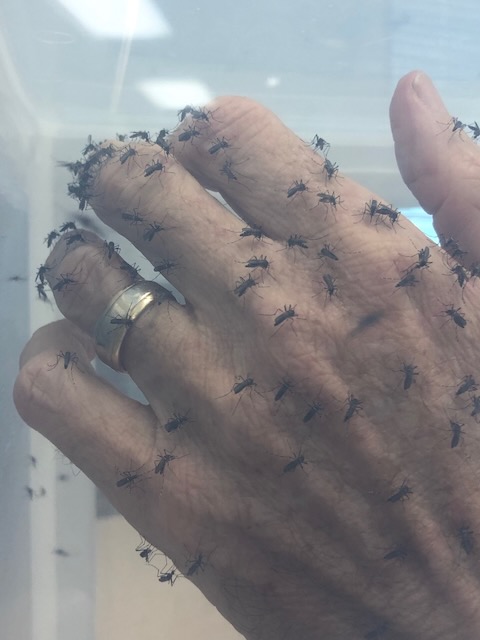
This is my hand, feeding a precious batch of Aedes aegypti mosquitoes selected for the “Tiki Bar” phenotype in the which this normally diurnal mosquito is hyperactive after sundown.
Even I have my limit, and the Black Salt Marsh Mosquito (BSMM) found it that morning.
Determined vampirism of the summer BSSM hoard provides solitude for anyone hardy enough to fish the tidal mangrove estuaries of the Everglades backcountry. That morning, 30 minutes before sunrise, I was the only human within miles, attempting to cast a topwater fly at a large, actively feeding snook. The BSSMs were so brutal, it was hard to pay attention, much less savor the splendor. But the one single mosquito that managed the coup de grâce somehow found her way inside my head net, whereupon I inhaled her. Ten minutes of hard coughing to dislodge that mosquito from my trachea, while her sisters and cousins bit me through my clothes and chewed my exposed finger tips (despite the insect repellant) – that was too much. I gave up and went home with my bitten tail between my itching legs.
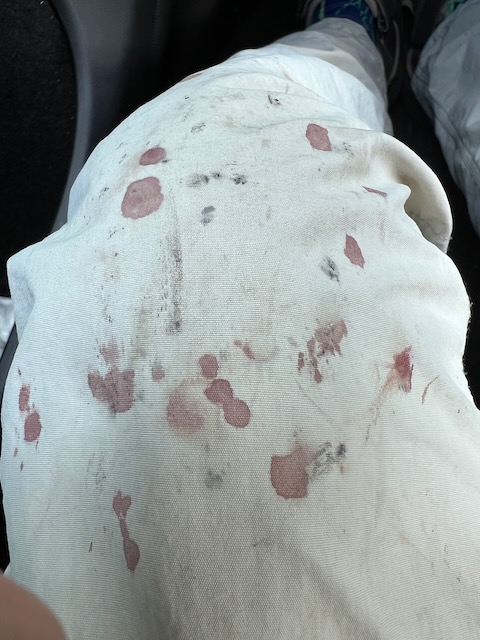
Here’s what my pants looked like after 15 minutes.
The secret antidote to mosquito bites:
I don’t much react to bites of local mosquitoes, but the number of BSSM bites that day overwhelmed my acquired defenses. To sleep that night I had to take the antidote, the invention of my clever FIU colleague, Dr. Laura Serbus.
Read the labels before ingesting, right?
Mosquito bites irritate our skin via two histamine receptors, H1 and H2. H1 receptors produce about 20% of the itch and H2 receptors the other 80%. Typical antihistamines, like Benadryl, only block the H1. I use cetirazine instead, which lasts 24 hours and doesn’t make me drowsy. To block the H2, I use Pepsid AC, an over-the-counter drug for excess stomach acid. Not everybody reacts well to the H2 blockers, but I’m OK with them. Itching disappears completely for 12 hours.
* * *
Back into the cauldron on Friday, June 13th, 2025
It took me a full year to recover the motivation to venture back into Mosquito Hell, succumbing once again to the prospect of fly fishing snook, juvenile tarpon, and redfish from the intimacy of the kayak. Winds in the open were 14 mph with gusts to 22 mph and my usual flats and creek mouths were too exposed. That left the sheltered mangrove coves, areas best left for winter when the mosquito population is at a dull roar instead of a loud one.
This time I had to better prepare myself for the onslaught of the June BSSM population. Here’s what I wore:
Fishing pants. AFTCO, synthetic, light tan
Snow gaiters, calf height
Second pair of fishing pants
Sand socks
Crocs
Hoodie fishing shirt, knit fabric
Tight weave sun shirt, with top button fastened and collar turned up
Tilley hat
No-see-um proof head net, Cochrans
Insect repellant (Lemon Citronella) on my exposed fingertips and the edges of my gaiters where they met my Crocs sandals
It worked well enough at keeping BSSMs from reaching my skin that I could enjoy a good morning fly fishing tarpon & snook. A great morning, in fact. I lost count of the tarpon hits.
The BSSMs found a vulnerable spot where the gaiters met the Crocs [I’ll spare you the photo of my red-spotted ankle]. Next time, I will wear ankle-high neoprene dive booties instead of the Crocs.
Another twenty skeeters somehow managed to bite me on my butt [definitely no photo], though damned if I know how. This happened before while camping on the Arctic tundra and I couldn’t figure it out that time either.
High concentration DEET works pretty well but dissolves plastics on contact (thinking of my fly line here). Picaridin works well too but lasts half as long as DEET.
Mosquitoes don’t see red light (ditto snook, tarpon, redfish). I outfitted my head lamp with a red lens (3D printers rock) so I could see to set up the boat without getting mobbed by BSSMs and no-see-ums.
Two things I don’t think will work for me:
(1) mosquito netting suit. It’s too easy to tear and simple for BSMMs to bite through where it touches my skin or another article of clothing.
(2) permethrin-soaked clothing. Permethrin is a good mosquito excito-repellant, but new research shows it damages our heart and nervous system.
The next puzzle: How do you get 300 mosquitos out of a car?
It took three days to fully rid the car of BSSMs. Several hid in my stuff and found their way into the house. Next time, I’m going to open the car’s rear hatch and all four doors, then drive backwards around the parking lot in circles as fast as I can. Other suggestions are welcome by email or in the comments section below.
buzz buzz buzz.
P.S. I received a comment worth sharing from Dr. David Glabman: “As for the mosquitos in your car maybe try capturing a bat for release in the car since he will eat many times his weight in them.”
Regarding Dr. Glabman’s idea, I very much like the concept. I’d need one of those tropical leaf-gleaning bats that can forage in tight spaces, and I’d have to wait until nightfall for the bat to feed. I do need to drive home with fewer vampires for company. Mabel’s Orchard Spider, however, might do the job. They’re our most common orbweaver, voracious predators of mosquitoes, diurnal, completely harmless to humans, and their possession does not require federal and state permits. I might release a couple in the passenger seat next trip to see what they can do.
How can a fisher tell if one lure is better than another?
Say I am fishing and not getting a bite. I see a juvenile tarpon roll and throw a black fly in front of the expanding rings on the surface. I do it four times to four circles. Nothing.
That’s never happened to me, because I change up after three rejections, but say it did.
How do I know whether lack of a bite is because: (a) I have on the wrong lure or fly, (b) there’s something wrong with my presentation, (c) the fish aren’t biting, (d) or, if I am blind-casting, that the fish are simply elsewhere?
I postulate the problem is (a), tarpon don’t want black flies today, so I clip off my black fly and tie on a white fly.
Next cast, BOOM, I hook up.
I make another cast and hook up again. Ah ha! I’ve found it! White flies are the ticket. Pretty clever, huh?
Maybe.
Are white flies effective just here and now? Whenever / wherever the conditions are just like this? Every day, but just at this place? Did the tarpon bite finally turn on (right time or tide)? Or did a couple of naïve tarpon just happen by?
It’s hard to tell.
John Gierach (1988) noted that some fly fishers on The Henry’s Fork of Idaho switch flies regularly, cycling through all their mayfly imitation types (spinners, duns, emergers, and nymphs) until they connect with a feeding trout. Others cast their dry fly spinner imitation to multiple trout until they find the one that’s eating spinners (mayflies that have landed on the water after they finished breeding). Gierach described it as a question of how you want to spend your time on the river: looking down while tying minuscule flies onto a thin leader with tiny knots, or looking at a pretty river and fly casting.
But my point is that it’s hard for us fishers to know what we know.
Worse, a nerd like me sets out to enjoy himself on a beautiful day in nature and stumbles headlong into the tar pit of epistemology, the branch of philosophy that explores the nature, origin, and limits of human knowledge.
Back home, seeking enlightenment, I watch an online video where some fishing pro sets out to see which of two lures works best, perhaps two artificial shrimp, the new pink variety (lure A) or the old original shrimp-colored variety (lure B). He throws the two lures in alternate bouts of five on two identical fishing setups. Being scientific here.
Our pro gets a couple of bites on the original (B) but FOUR bites on the new pink one (A), including a really nice fish. The pink lure outperformed original color by a factor of two.
But the difference in effectiveness of the pink lure found in that video might not have been real. I don’t mean anyone faked the results, I mean that I know, in the back of my head, that a higher catch rate on one of two lures that day might not have been caused by the superior color, but by chance, like a run in a string of coin flips or rolls of the dice. Brings to mind Abelson’s 1st Law: “Chance is Lumpy“ (Abelson 1991).
Here’s the question that our pro ought to have asked before posting the video: “What is the likelihood of getting a result that extreme (i.e., twice as good) or more extreme (better than twice as good) by chance alone?”
To figure it out, I could do some probability math or write a quick computer simulation to estimate the odds of getting at least a two-to-one success ratio for six fish caught by two identical lures, just by chance.
I opt for the simulation because I enjoy programming. I have my computer do six virtual coin flips: [heads = lure A catches the fish] [tails = lure B catches the fish]. And, to make it accurate, I’ll repeat the test an astronomical number of times and take the average (computers are fast). Here are the results for Lure A:
What do we have here… First, I see a bell curve, as expected.
Lure A catches zero fish 2% of the time, one fish 9% of the time, two fish 23% of the time, half the fish (three) 32% of the time, and so on, eventually catching all six fish 2% of the time. A graph for lure B, not shown, would be the left-right mirror image: when Lure A catches zero fish, Lure B catches all six, and so on.
How impressed should we be that the pink lure (A) did twice as well as the gray one (B)? In my simulations it caught four of six fish 23% of the time, five of six 9% of the time, and all six fish 2% of the time.
23% + 9% + 2% = 34%
So roughly a third of the time, by chance alone, the new lure A will perform at least twice as well as the old lure B. Likewise, lure B will perform twice as well as lure A another third of the time. So 2/3 of the time we can expect one of the two lures to outfish the other by at least two-to-one. Just one third of the time they’ll perform similarly.
Four percent (2% + 2%) of the time, one fishing trip in 25, one lure or the other will totally clean up, catching all six fish while the other delivers a resounding skunk (see Vantesall et al. 1991, “Removing Skunk Odor”, citation below).
I might have just wasted my money on that new lure color.
But suppose that instead of spending just $7 on a pack of the new pink lures, my brother and I are making an important commercial decision, “Should we invest serious money in developing this new lure color for the marketplace?”
In theory, I suggest, we have to decide whether we’re willing to be wrong, given the high odds that there’s no real difference in effectiveness.
But then my brother reminds me that commercial success of a new lure depends on hooking fishermen rather than fish. It doesn’t matter if the new lure is actually better. As long as it looks great and works roughly as well the old one, our customers will be happy.
Plus, everybody with more experience than me knows that pink works for Redfish.
A few years ago, one of my favorite tackle vendors proudly touted their new pink lure as being especially attractive to Redfish. They even gave it a name to indicate its effectiveness “FRED: Fooling Redfish Everywhere Daily”. I want to fool Redfish too, so I clicked the link and ordered the new pink ones. Here they are, the old shrimpy one, and the new pink one:
The wise folks at my local tackle shop likewise swear by pink for Redfish: pink Rapala X Rap lures (bought one) and pink flies (tied some).
Then I discovered that the Redfish visual system doesn’t extend to the red end of the color spectrum. Redfish don’t have a cone receptor in their retina that’s stimulated by wavelengths longer than orange (Horodysky et al. 2008). Anything red, lacking a sensitive receptor, appears as black to them. Pink, a diluted red, appears as gray. That means Redfish cannot distinguish my pretty pink lures and flies from the shrimpy old gray ones. DOINK!
But humans see the difference, so merchants sells a lot of pink lures.
I don’t feel too bad, though. I justify my resources devoted to pink shrimp lures & flies because my beloved Bonefish, unlike Redfish, Snook, and Speckled Seatrout, actually do see red, so pink stands out to Bonefish in the waters I fish on the west side of Biscayne Bay. Here, with an N=1, is definitive proof that pink gets it done.
What are the chances a shrimpy-colored or silver one would have caught that same fish? I want to think that pink did the trick, my gut tells me about 99%, but I really have no way of knowing.
Side note: I prefer to throw flies at Bonefish because it makes the difficult into the borderline impossible, but these photos were taken when I was forced to use my spinning rod after snagging and breaking the tip of my fly rod on a “No Fishing” sign.
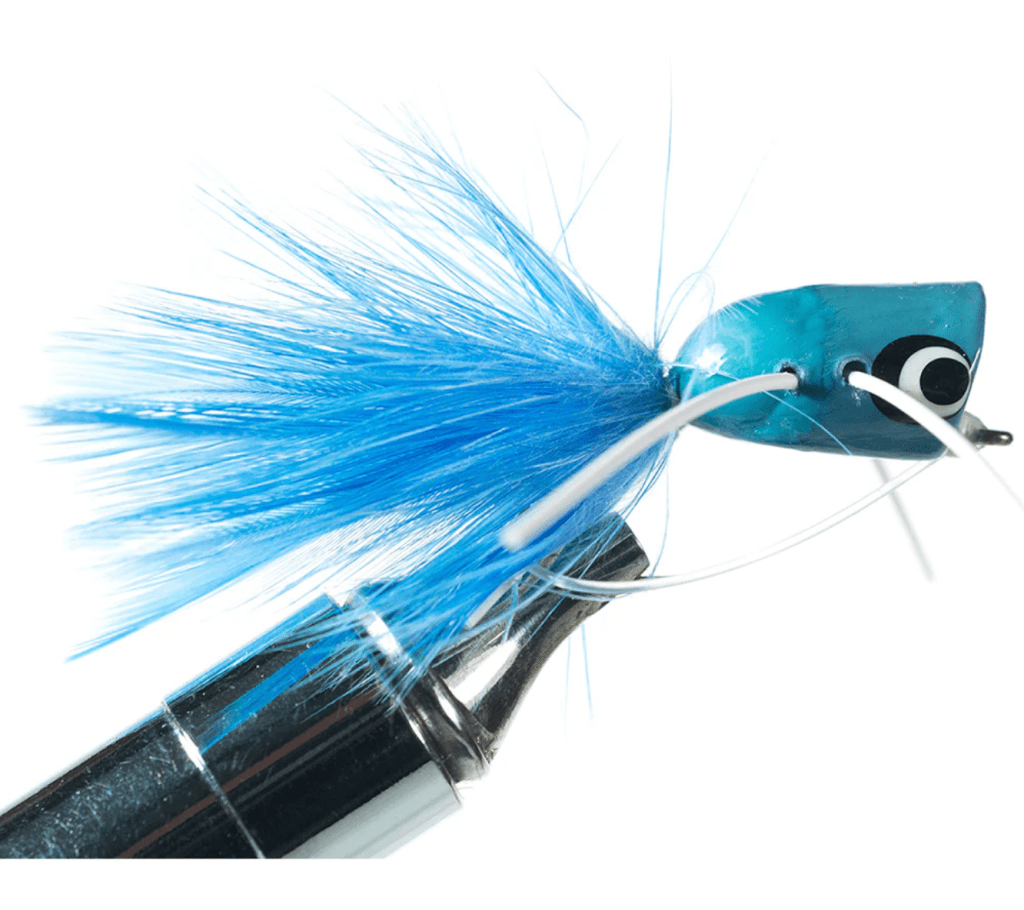
On a recent visit to Virginia, Smallmouth Bass guide John Waller mused to me how local fly fishers swear by the Shenandoah Blue Popper, despite all the research showing that Black Bass (including the Smallmouth) don’t see wavelengths as short as blue.
Shenandoah Blue popper, $9.90
This pretty blue popper looks gray to the bass. Apparently they’re just fine with neutral gray while bass fishers themselves strongly prefer blue.
If it’s hard to figure out what a fish will eat, it’s sometimes easier to figure out what they won’t eat. For instance, when fish are heavily pressured, they learn to avoid familiar things bearing hooks. Changing color can help. And pressured fish get spookier to presentation: lures and flies with less splash do better on wary fish. Natural selection.
Then there’s my friend, Andy Hong, who catches redfish on sautéed broccoli. For real. He’s posted the recipe.
In short, I have not yet seen the justification for all the cool lures and flies in my possession. At most, three shades of each lure or fly would probably set me up for life: light for clear water, dark for nighttime or tannic water, and medium-shaded for when the fish get wise to black and white. And maybe last night’s broccoli if I’m getting skunked.
Here’s my takeaway: If you find it more fun to mess with the new lures and flies go for it. If you want to stick with your old lures and flies, go ahead – the guys who outfish me regularly do so on their old favorites for a whole lot of reasons having nothing to do with lure selection.
Crawling from the tar pit, I realize that I am still only pretending I know what I’m doing.
Gierach, John (1988) “Big Empty River” in: The View from Rat Lake. Pruett Publishing Co., Boulder, CO
Horodysky, A. Z., Brill, R. W., Warrant, E. J., Musick, J. A. and Latour, R. J. (2008). Comparative visual function in five sciaenid fishes inhabiting Chesapeake Bay. Journal of Experimental Biology 211,3601-3612. https://doi.org/10.1242/jeb.023358
Vantasell SM, Hygnstrom SE, Ferraro DM (2011) Removing Skunk Odor. NebGuide, Univ Nebraska, Lincoln Extension, Institute of Agriculture and Natural Resources. edu/publication/g2100/2011/pdf/view/g2100-2011.pdf


























 Eye of the Cormorant