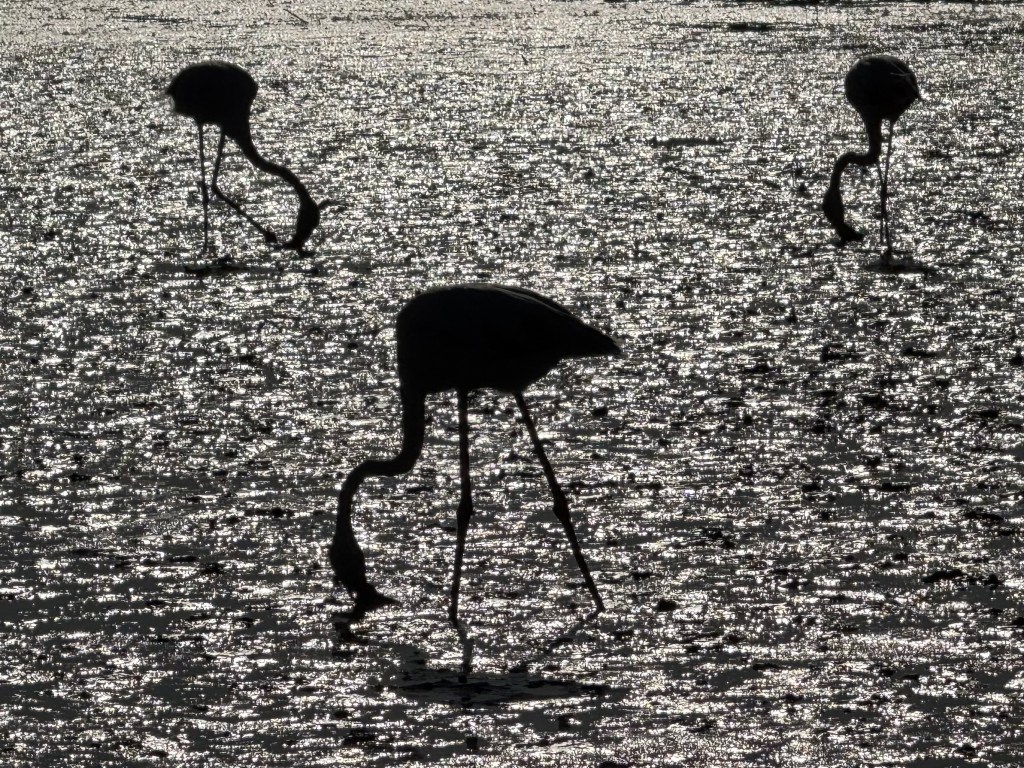
Camargue is the floodplain delta of the Rhône, situated between the city of Arles, where we are staying, and the Mediterranean Sea. The terrain is flat and marshy, checkered with rice fields, brackish pools, small canals, salt ponds, and tidal estuaries. On the advice of my cousin Judy, we rented a car to visit Camargue.
DAY 1
Our first afternoon with wheels we headed down the west side of Camargue to the Parc Ornithologique.
Enroute, we picked up a sweet young couple who were hitch-hiking, and drove them a bit beyond our turn-off to a better spot where they could find their next ride.
The Parc Ornithologique is much like Chincoteague National Wildlife Refuge on Assateague Island, Virginia, but better in important ways. Impoundments are well-maintained and are teaming with water birds. The maze of trails is for walking only. Observation benches and blinds are situated close to the birds.
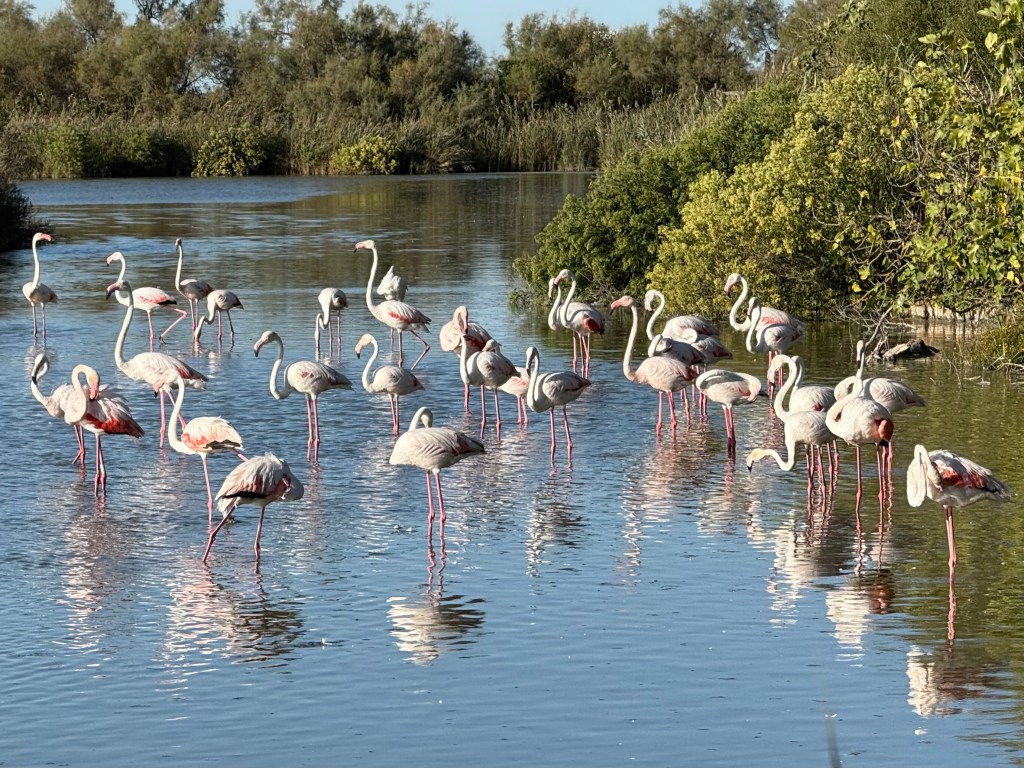
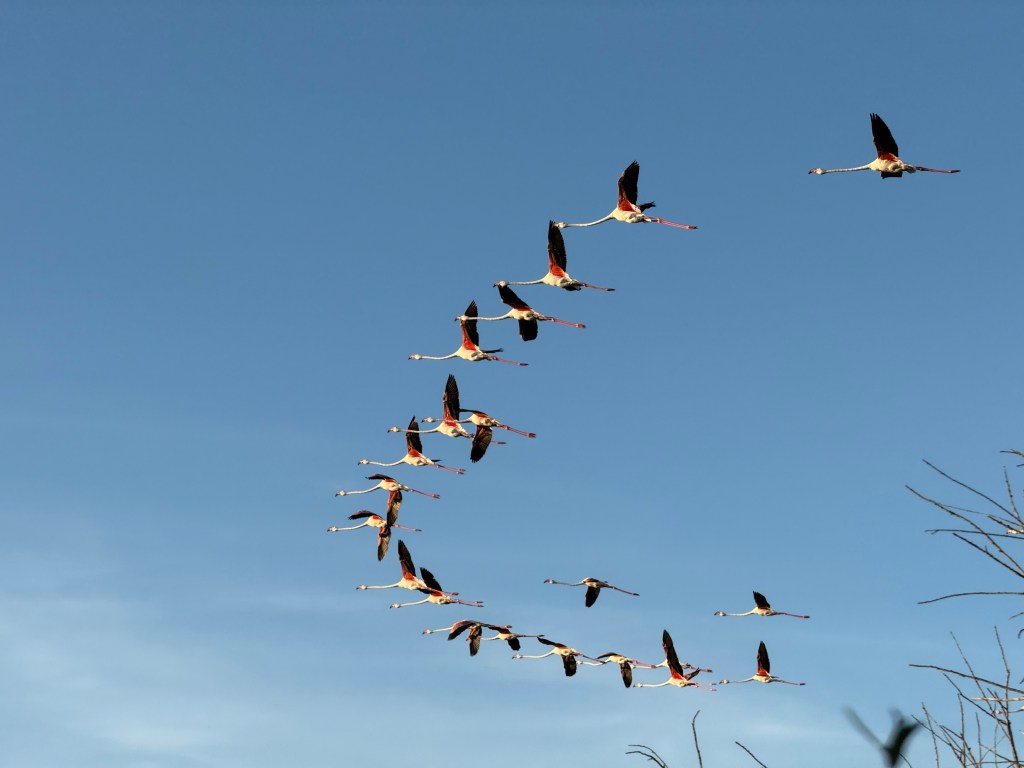
Greater Flamingos are everywhere.
The multilingual signage is informative, even for an old pro like me. For instance, banding results show the flamingoes roam the Mediterranean, but particular individuals return to this park year after year.
I learned that Cetti’s Warbler is one of the few polygynous passerines. My bird book told me that Cetti’s Warbler sings from concealed spots, moving quickly from spot-to-spot. My Merlin phone app played me the song. Ah ha!
I had been hearing the beautiful liquid song of Cetti’s Warblers everywhere and getting only the odd peak at its sources (nondescript brown-backed jobs with a faint white eye-line) hiding in the dense vegetation. Cetti’s Warbler, and the handsome European Dipper I encountered while trout fishing, were my new birds for the trip.
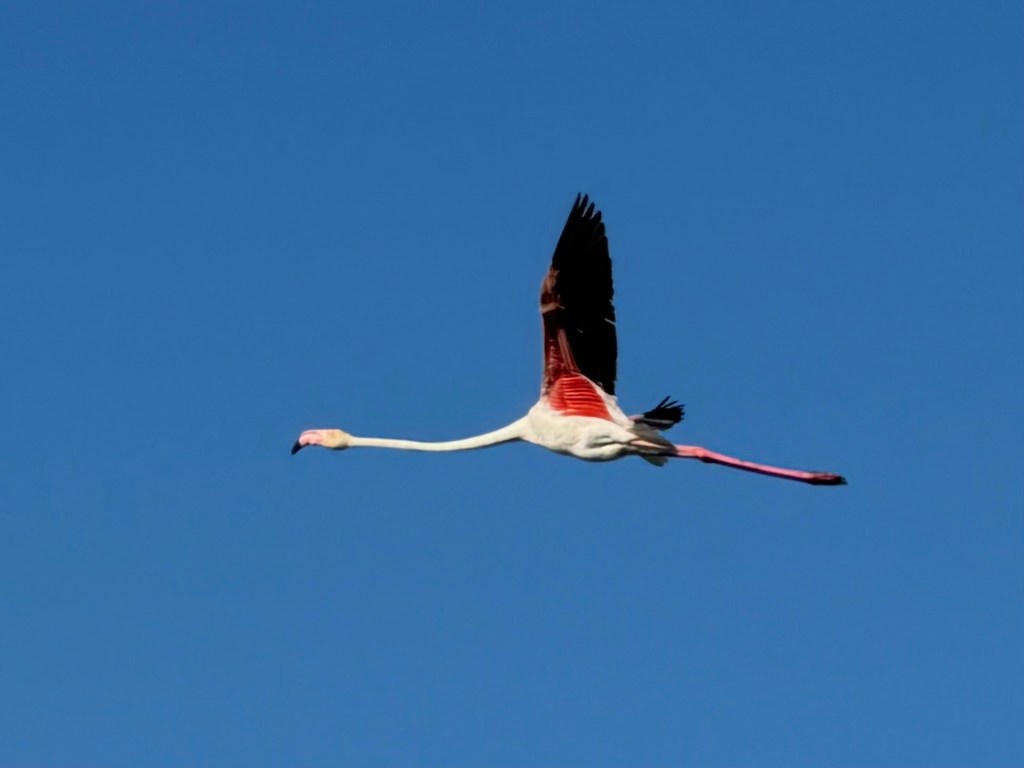
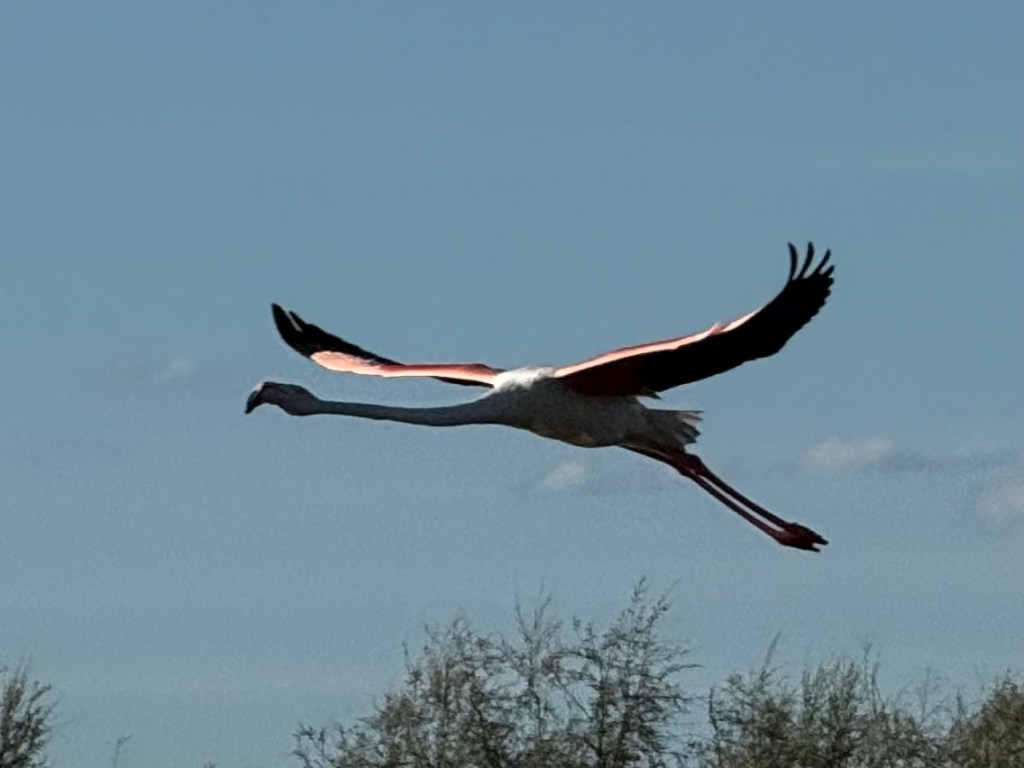
In contrast to the solid orange-pink of the American Flamingos, the Greater Flamingos are pinkish white, with their crimson wing coverts and axillaries visible mainly in flight.
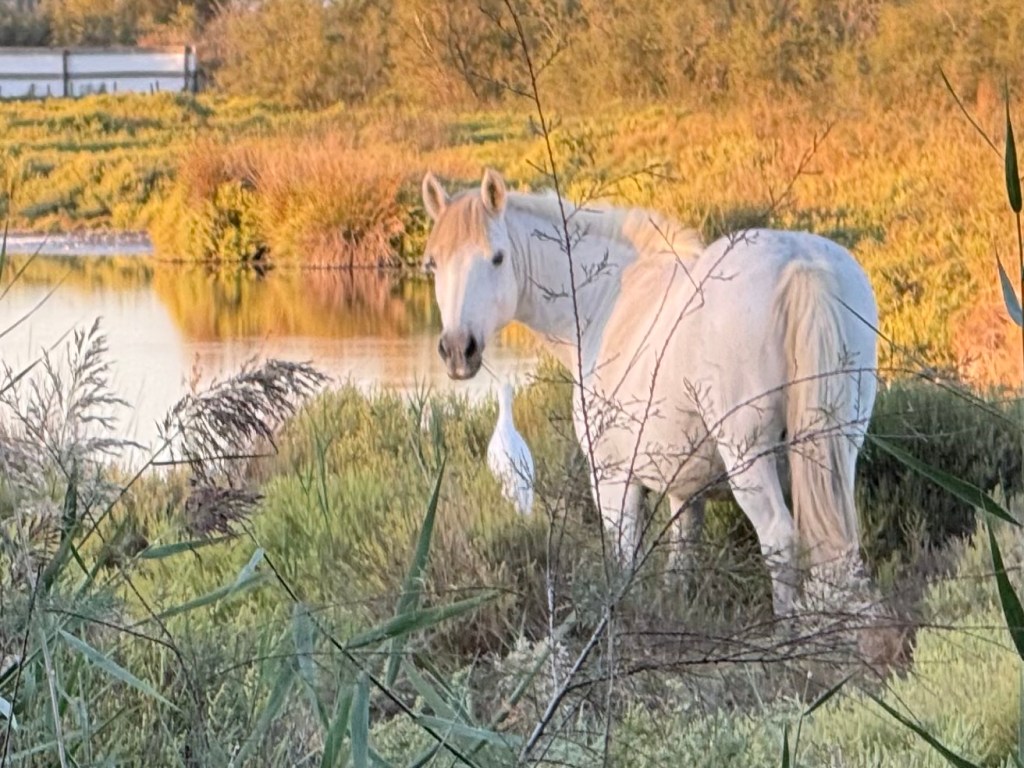
Hearing whinnies from across the thick reed beds, we finally saw the sources. As on Assateague Island, wild horses roam the marshy terrain of Camargue, accompanied by faithful Cattle Egrets, which sometimes rode on their backs.
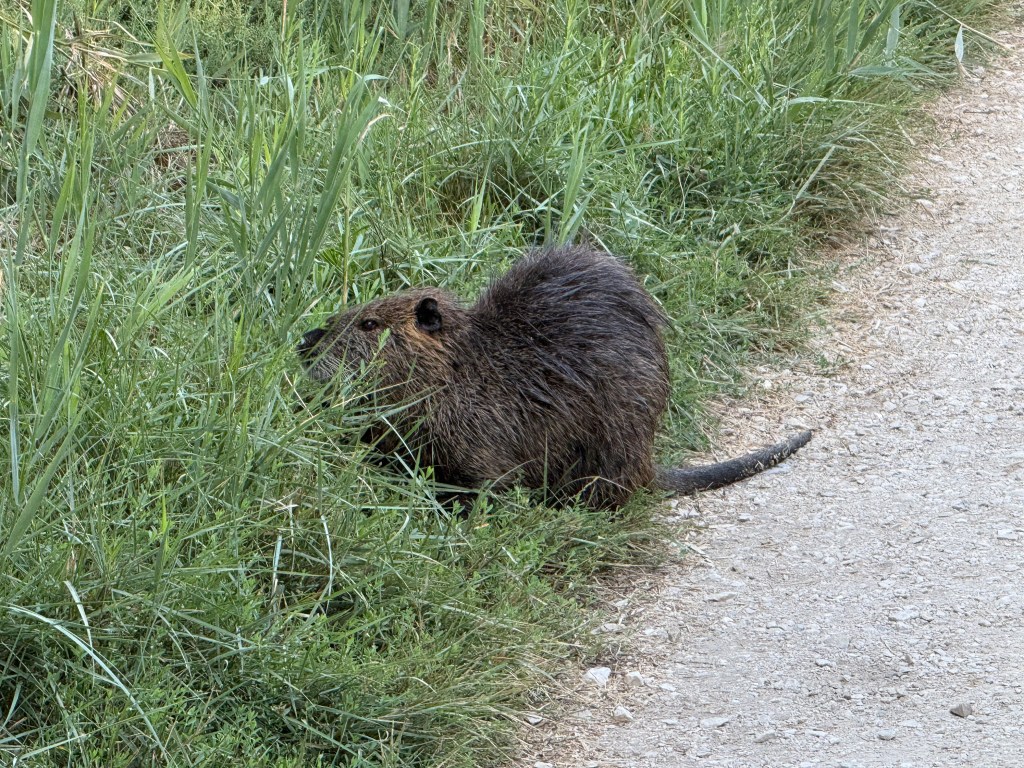
Nutria, introduced from South America, don’t seem to be doing so much damage to embankments as they did in the southeastern US.
Park staff told us we could remain after the park closed for the evening, letting ourselves out via the revolving gate. It’s been very dry of late – we saw just one mosquito and one no-see-um – so we stayed until dusk, watching the day birds put themselves away for the night.
As night herons emerged against a pink and purpling sky, we enjoyed a picnic supper of Brillat-Savarin cheese and guacamole on gluten-free toast accompanied by fresh plums and figs. Pas mal.
DAY 2
Having parked the car overnight near our apartment in Arles for half a Euro, we spent the next morning exploring the east side of Camargue.
We drove into the Reserve Nationale Camargue where sea salt has been evaporated and harvested from salt ponds at least since Roman times. Now it’s done with big machines instead of slaves.

Sel de Camargue is found in all the local salt shakers. It’s good on fried potatoes and would go well with rice, if you could find rice.
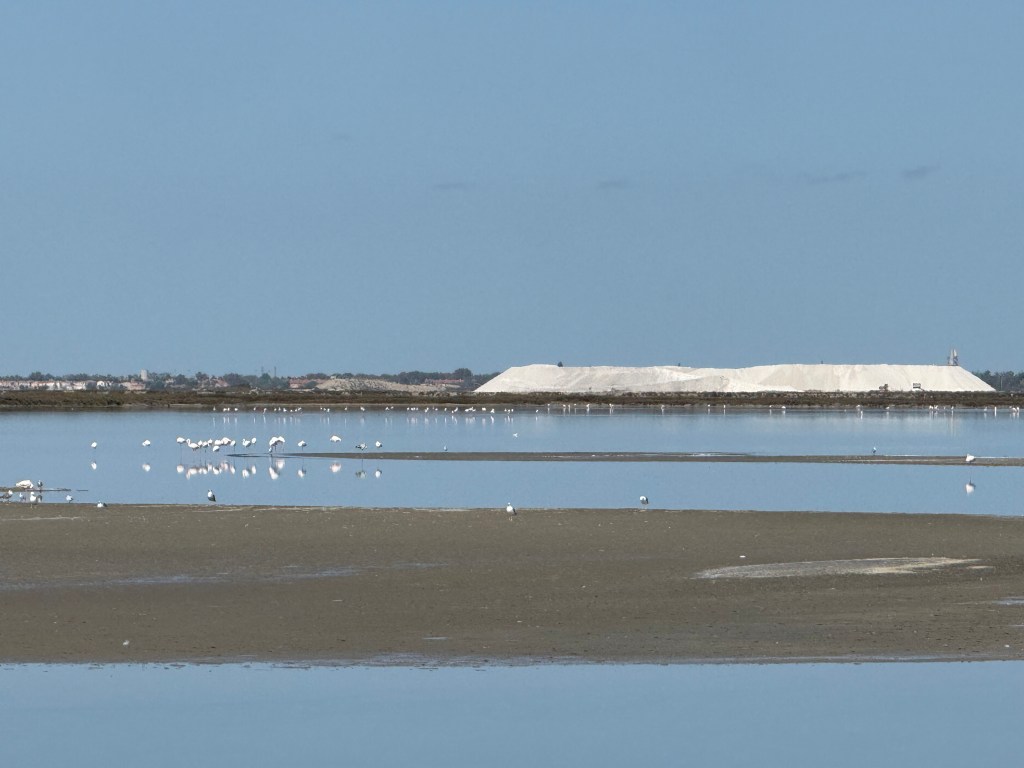
White dots in front of the salt mesa are flamingoes.
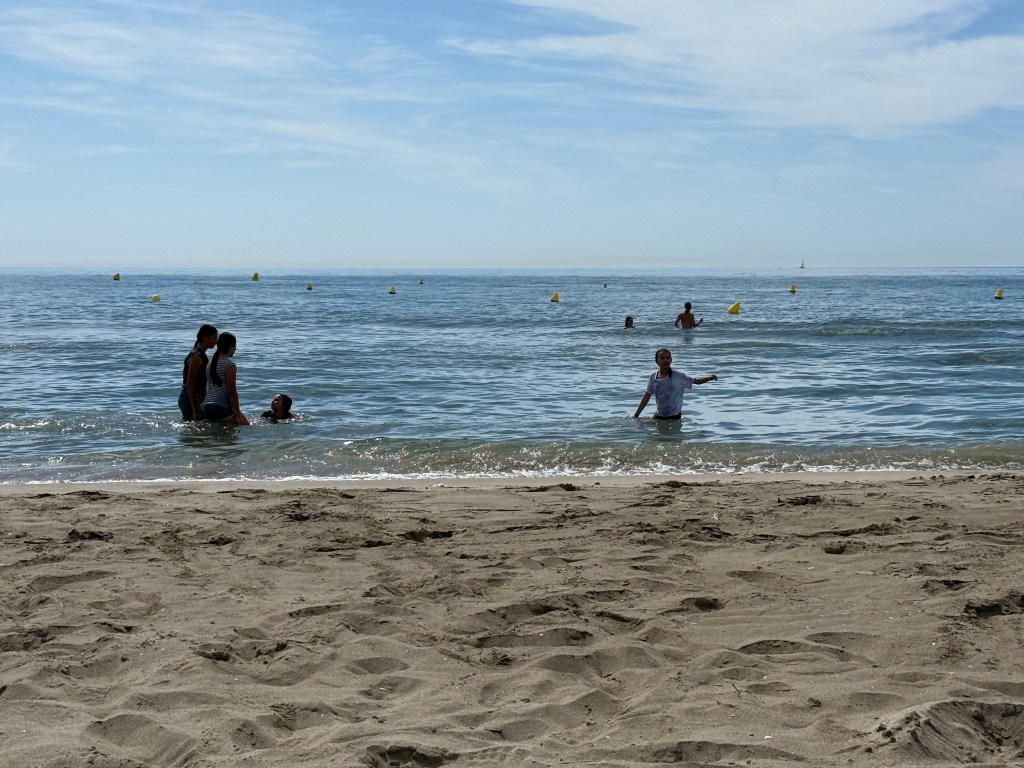
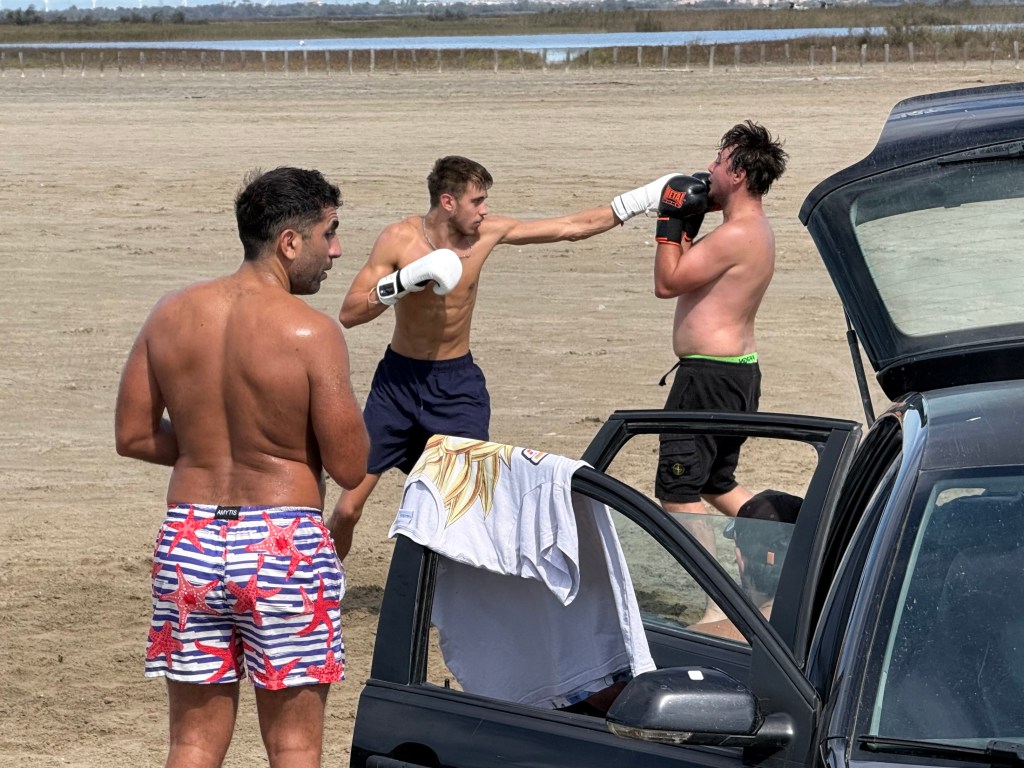
We finally made it to the Mediterranean, where gleeful children splashed in the warm water and sweaty young Frenchmen enjoyed the manly art of hitting each other in the face.
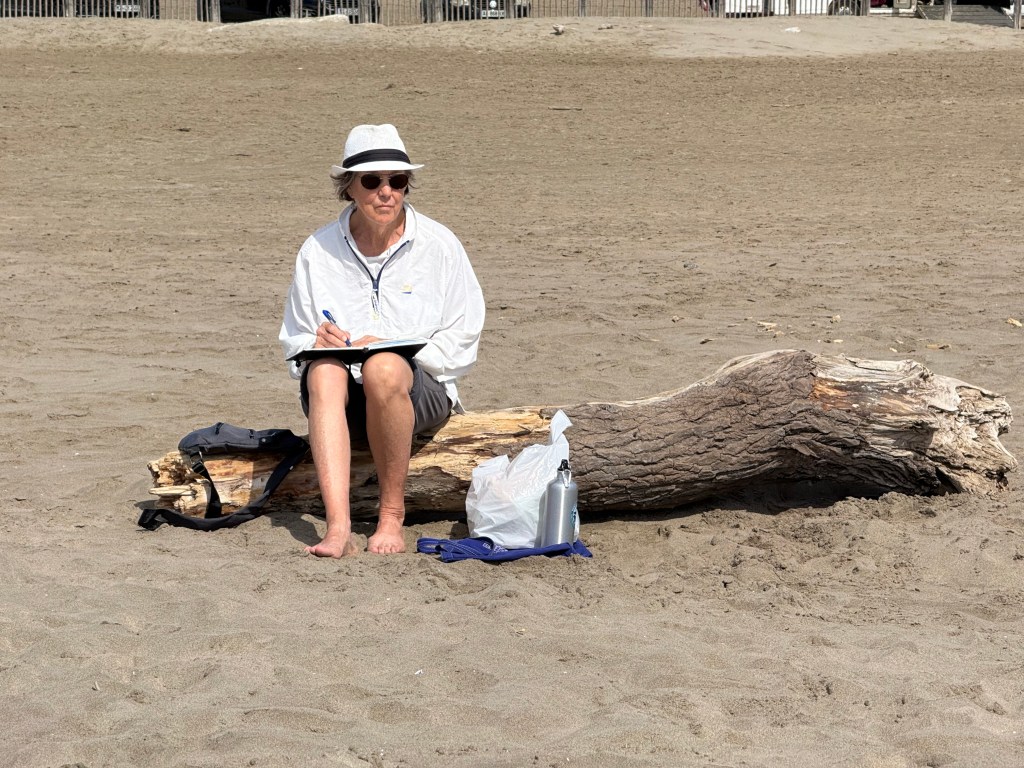
And Gray did what Gray does.
For the birders among you, my bird list follows …
18 Sep 2026, Parc Ornithologique &
19 Sep 2026, Reserve Nationale Camargue
- Great Crested Grebe
- Great Cormorant
- Greater Flamingo
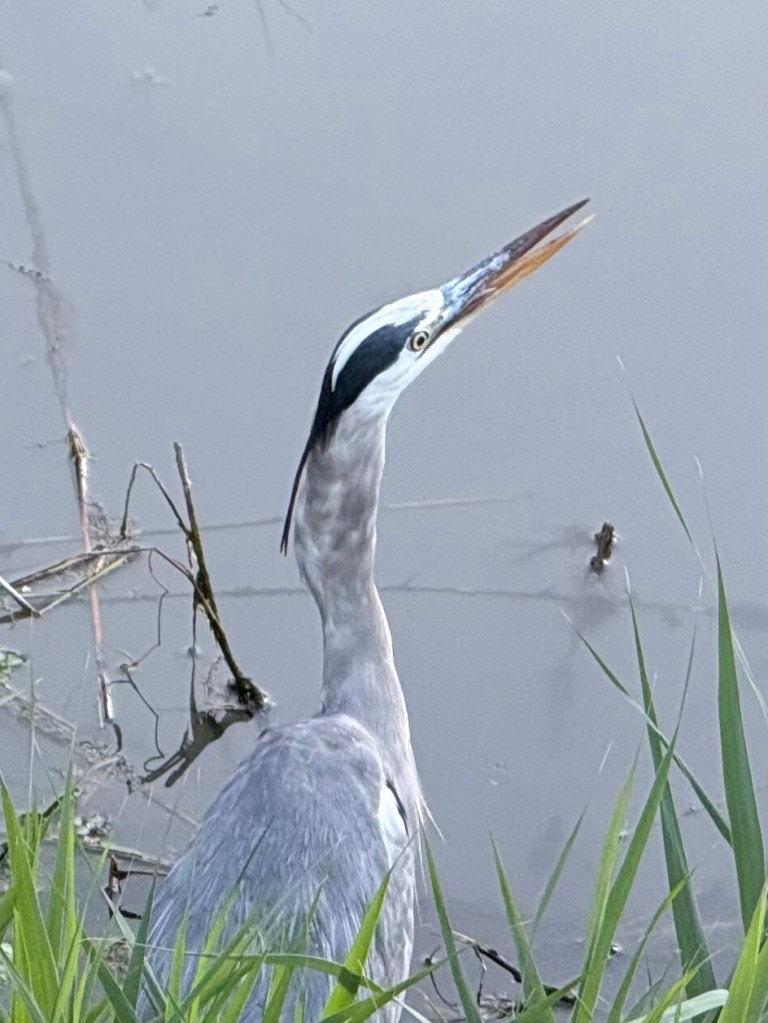
- Great Grey Heron
- Great Egret
- Little Egret
- Cattle Egret
- Night Heron
- Glossy Ibis
- Mute Swan
- Black Swan (1)
- Common Shelduck
- Mallard
- Teal
- Shoveler
- European Coot
- Moorhen
- Western Swamphen
- Yellow-footed Gull
- European Herring Gull
- Black-headed Gull
- Caspian Tern
- Sandwich Tern
- Common Tern
- Dunlin
- Green Sandpiper
- Greenshank
- Redshank
- Black-tailed Godwit
- Avocet
- Black-winged Stilt
- Ringed Plover
- European Kestrel
- Sparrowhawk
- Marsh Harrier
- Osprey
- Common Buzzard
- Kingfisher
- Collared Dove
- Rock Dove
- Barn Swallow
- Sand Martin
- Cetti’s Warbler
- House Sparrow
- Blue Tit
 Eye of the Cormorant