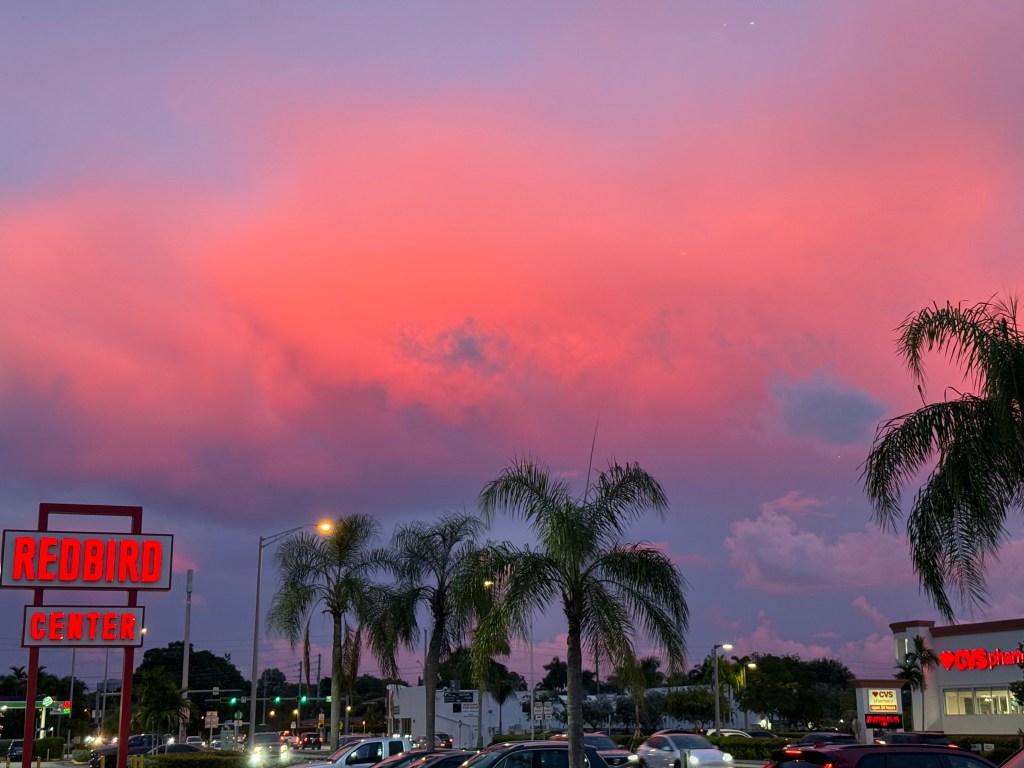
When the sun sets in Miami, our nocturnal biota makes its unseen entrance. The screaming parrots retire, replaced by soft-trilling screech owls. Limpkins stalk the canal banks, emitting eerie calls into the darkness. Night herons, pondering the nature of dark matter, exclaim “Quark!”.
Like the birds, Miami’s invertebrate community holds its own changing of the guard: day-hunting spiders take down their webs and nocturnal spiders weave theirs.
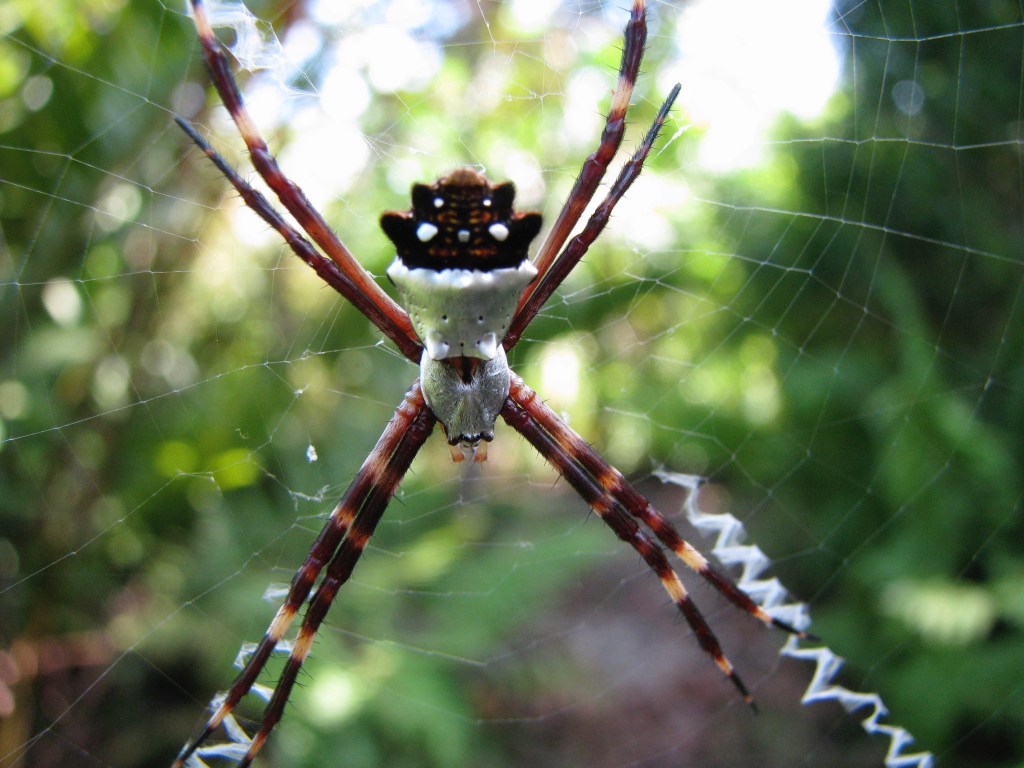
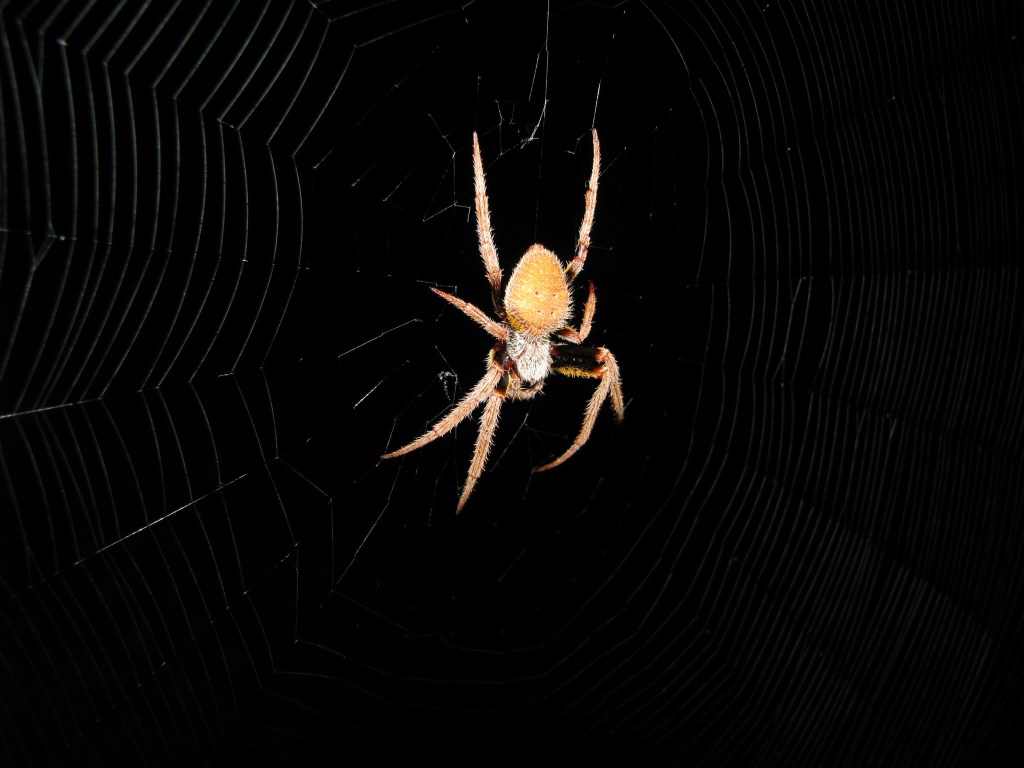
We have a grotto in the backyard where we can amble down steps cut into the limestone rock (duck the spider webs) and visit the surface of the Biscayne Aquifer sitting two meters below the level of the yard.
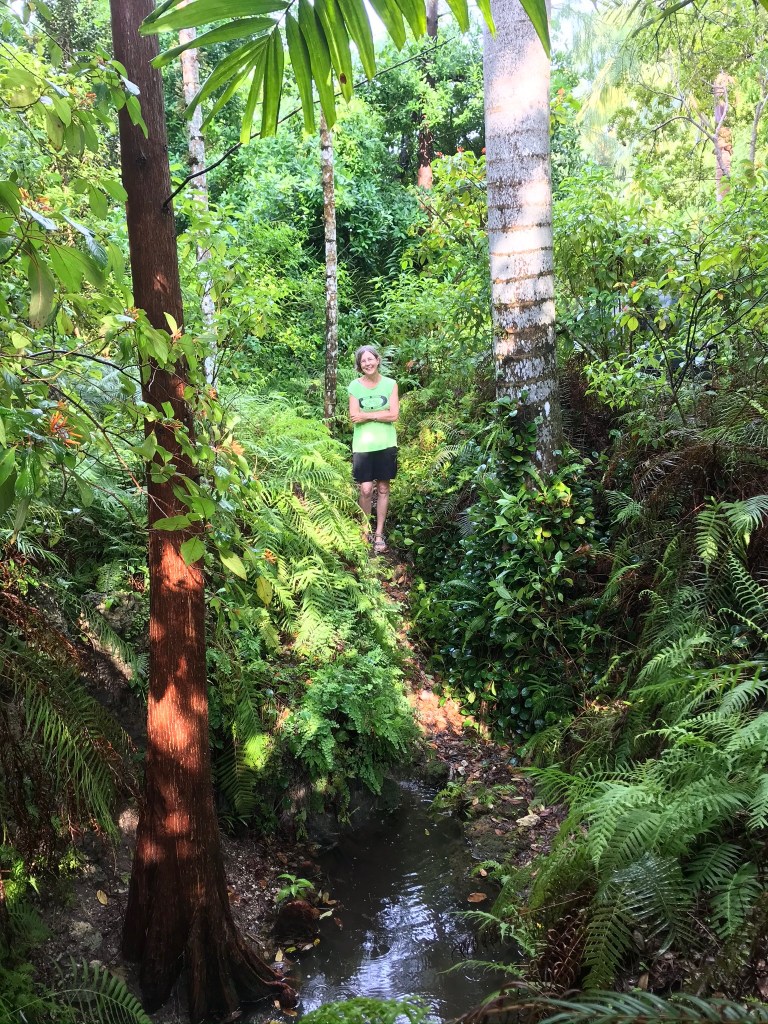
Starting from a grassy backyard, we cut the grotto with big yellow machines. I labored with a pickaxe to chop a stepped path into the rock wall. Having a safe way down, I planted Southern Maidenhair Ferns, pepperomia, and two tree seedlings: a cypress and a royal palm. With ready access to water, nature did the rest.
Sheltered by the geometry of its sheer walls, the grotto is a silent place. As night falls over the grotto, sometimes, just sometimes, a Miami Cave Crayfish wanders into the grotto from the top edge of the aquifer.
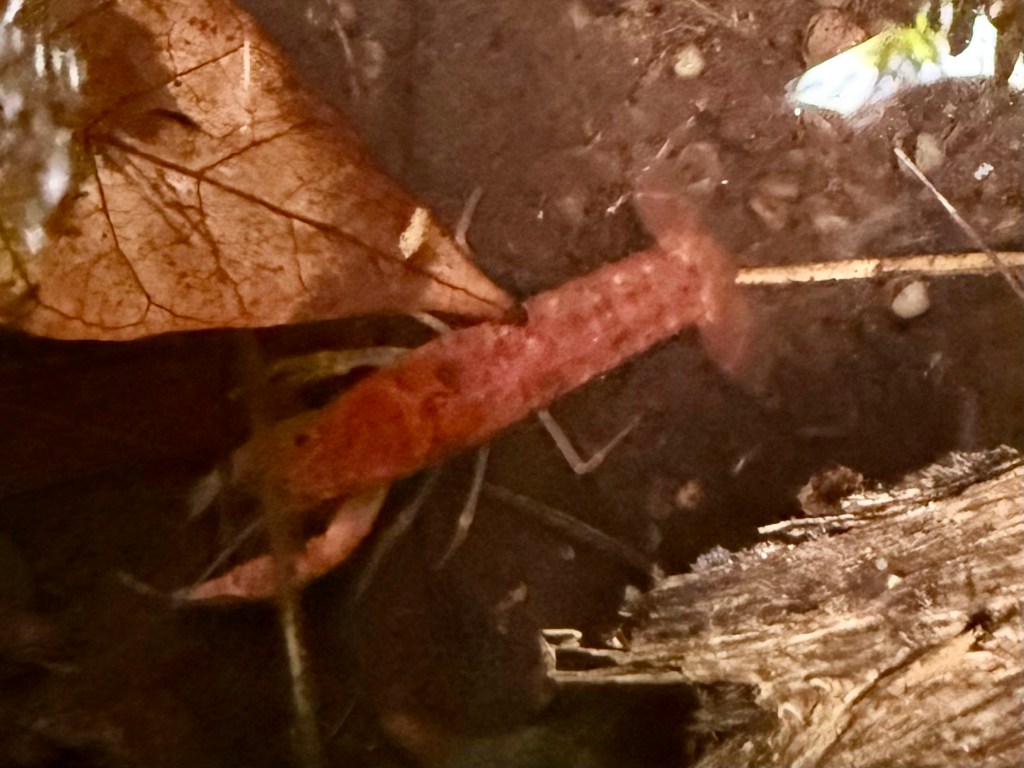
A few meters below the ground, the subterranean Miami Cave Crayfish (Procamberus milleri) resides in large pores within the oolitic limestone through which flows the Biscayne Aquifer. Biologists from US Fish and Wildlife Service only know this hard-to-find species from our backyard. It’s a genuine treat to see one.
The Miami Cave Crayfish was on schedule to be federally listed as “threatened”, but then, as part of Project 2025, the Trump Administration declared war on the Endangered Species Act and the process stopped. This story, in which I am deeply entangled, will be continued in a different post.
After dinner last night I was wading in the grotto in search of cave crayfish (no luck), when a movement on the rock wall caught my eye. Just above the water line, something gray, resembling a very large spider caught my eye. It had six legs, two spiked claws tucked in front, and long antennae that flicked about in all directions. It was 3” across, 7” including the antennae. Here’s the photo, taken in the light of my flashlight.
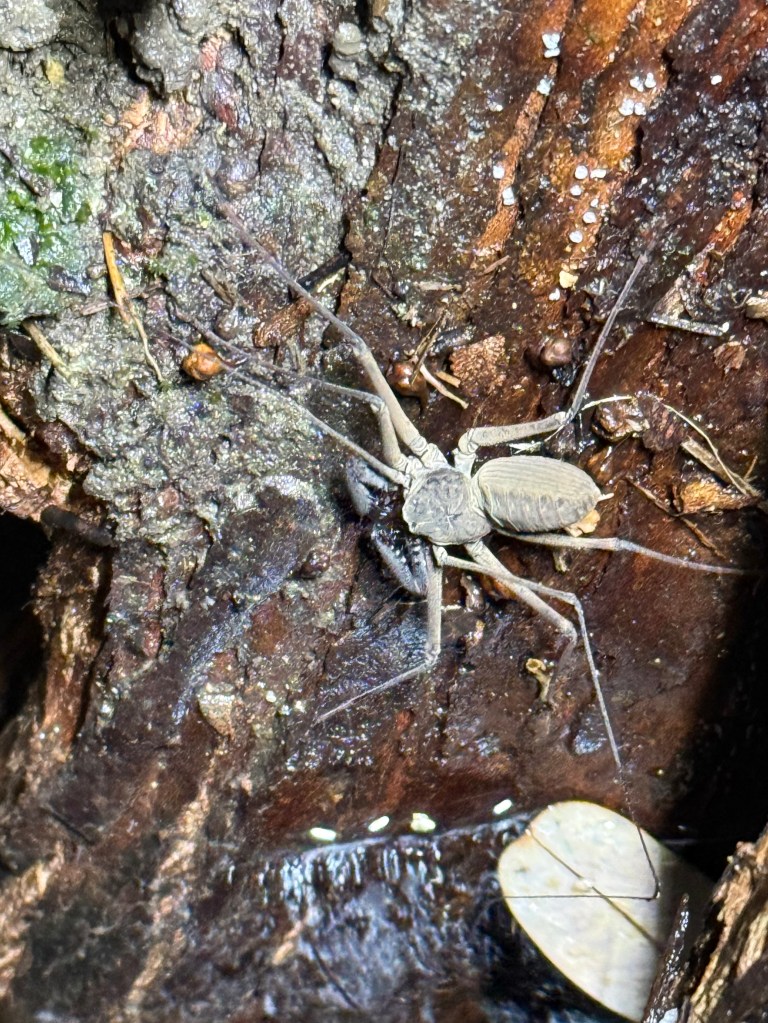
Recognize this thing? It’s a tailless whip-scorpion – my first one ever.
The Spotted Tailless Whip Scorpion (Phrynus marginemaculatus) is an arachnid in the order Amblypygi, native to South Florida, the Bahamas, Cuba, and Hispaniola. The antennae are actually modified legs and the claws are modified pedipalps. The spiked claws on this dude were sufficient inducement to keep my hands to myself.
My daughter, Vannak, received the photo by text and replied “nightmare fuel thank u”. Ever the thoughtful dad, I assured her that, although they’re large (“I was afraid of that”), they only come out at night.

