Eye of the Cormorant

another odd bird who chases fish.

Tag: hiking

  • Taxi Tides

    Taxi Tides

    “Time and tide wait for no man.”

    A trip by paddle craft to the coastal marshes and flats can be a breeze or a slog depending on wind and tides. It took me one arduous kayak trip to Rabbit Key and another escaping the Snake Bight flat to become a tide chart addict.

    The wind. Paddling home against a stiff headwind is somewhere between exhausting and impossible. Returning from Sandfly Pass in the Ten Thousand Islands I was stopped in my tracks by a squall that forced me to get out of the boat in the rocky shallows and wade back to the launch, pulling the kayak behind me. My favorite hat blew off and disappeared in the distance.

    Tides are the same, but more predictable. Get the tides right and you get a free ride. Get them wrong, and you fight a river, ferry-crossing back and forth to seek eddies and weaker currents.

    My purchase of a motorized skiff made it possible to move against the elements, to cover long distances, and sometimes to dodge a localized thunderstorm. Very efficient, but I missed the quiet and stealth of the pedal kayak. And the exercise. It’s the difference between a car and a bike: the motor craft is useful, the pedal craft enjoyable.

    When I itch to be on the water, I open the marine weather forecast and the tide chart phone apps, looking for happy windows of winds and tides. Living on a peninsula provides choices. My choice of location and craft is based on the forecasts. If conditions are unfavorable on the east coast, nearby Biscayne Bay or the Keys, how about Flamingo on the southern tip of the peninsula? No? Then check the west coast out of Chokoloskee / Everglades City. If all three look threatening, I may opt for the interior mangrove creeks or central Everglades marshes. If it looks horrible everywhere, I stay home and tie flies while imagining the next outing.

    A TAXI TIDE

    I normally I take the skiff into Snake Bight in Everglades National Park to escape against the incoming tide, but the tide chart for Tuesday showed the rare, magical tide cycle that’s perfect for kayak exploration. One can ride the incoming tide into Snake Bight before sunrise, fish and bird well into the morning, then ride the outgoing tide back out again.
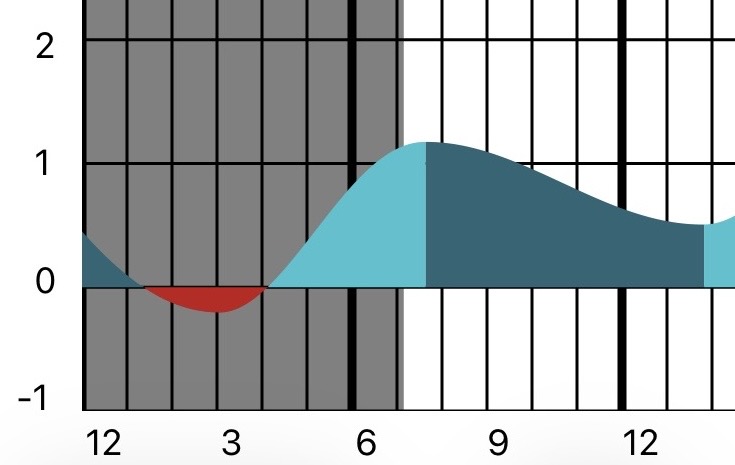
    Snake Bight’s tides are one hour delayed from the Flamingo tide chart shown here.

    I wake at 3:30 am and check the weather report. The wind looks to remain low through the morning. Rain looks iffy – it’s supposed to rain solid until 6 am, then let up until afternoon. Hopefully the algorithm running on the National Weather Service computer gets it right today.

    Scary-hard rain pounds my drive south to the bottom of the peninsula, then stops to let me set up and launch the kayak in the dark. I can see the odd lightning flash to the south. Gradually the clouds break up and I have a lovely morning waiting for me on the water with 50 minutes to sunrise. 

    The half moon is still blocked by clouds and it is DARK. I turn on the pole-mounted kayak light. Its #1 job is to keep me from being run over by powered craft, but as a bonus, it casts a bit of soft light in all directions. Sitting above and behind me, the light doesn’t shine in my eyes. It does, however, shine in the eyes of the crocodiles.
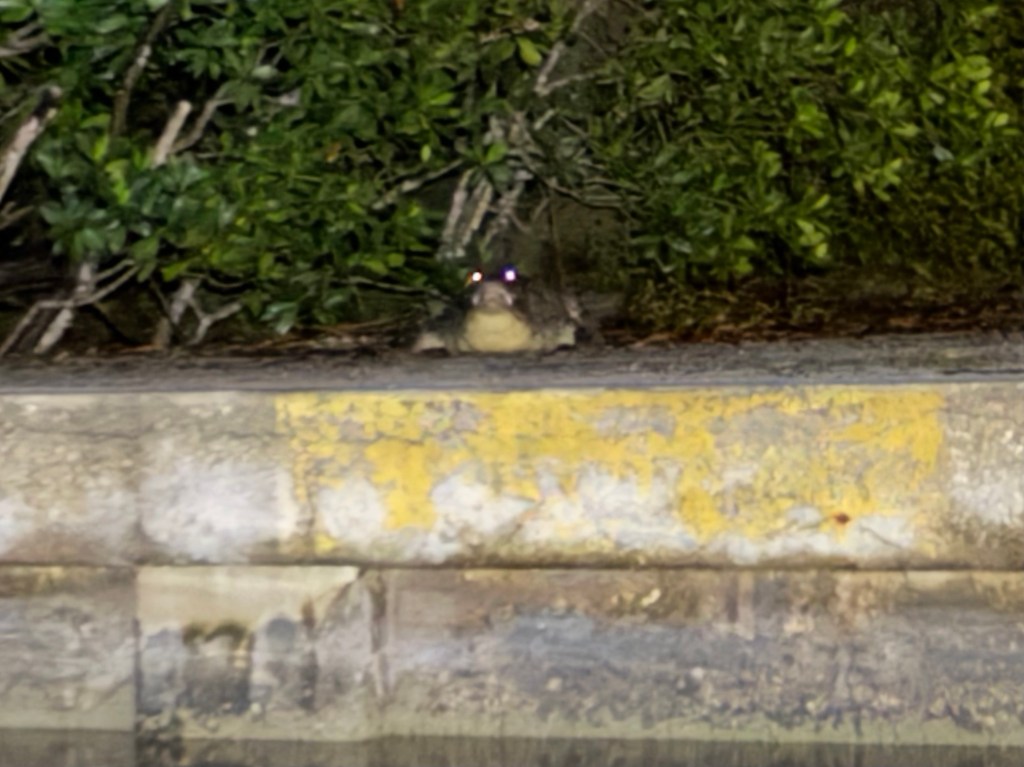
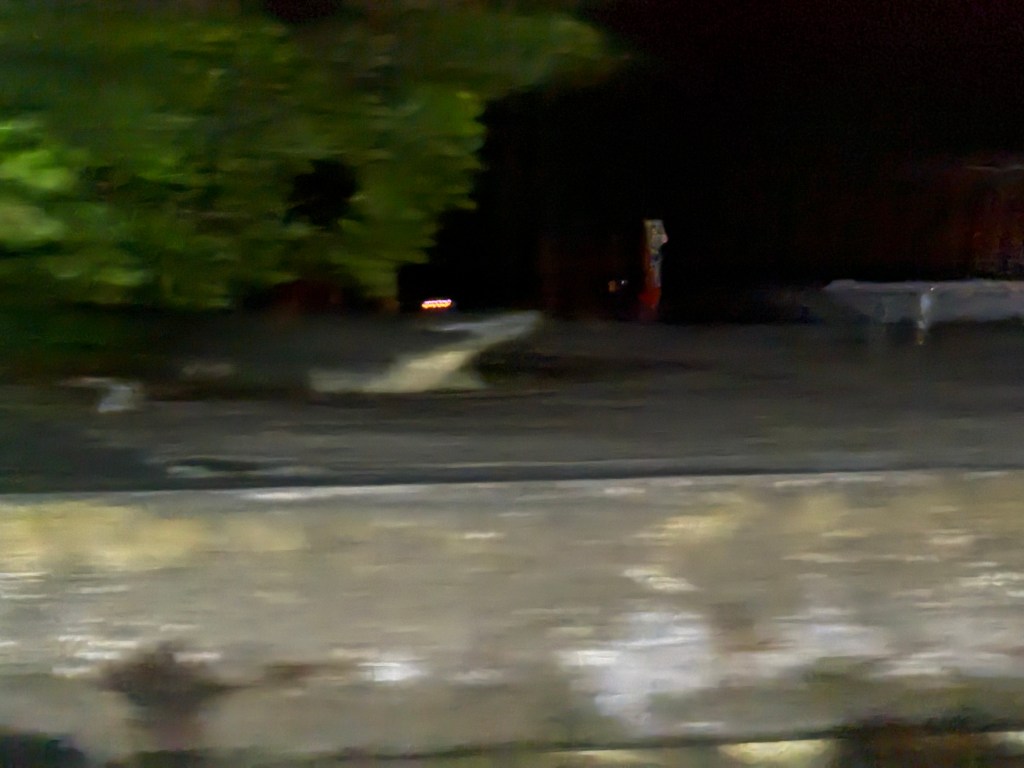
    American Crocodile perched on the marina wall. Amazing what the iPhone’s camera can do with the faintest of light sources.
    Here’s the same croc in motion.

    Several more crocs take umbrage at my passage and splash off in a huff.

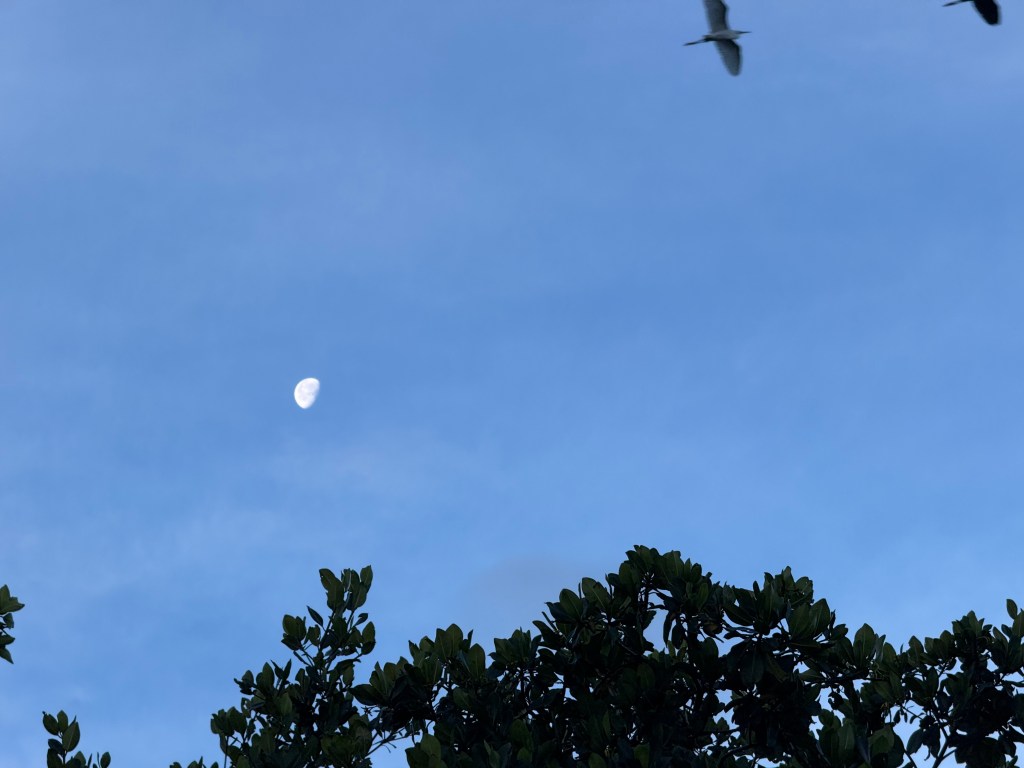
    In time, the clouds melt away, allowing the half moon to illuminate the mangrove shoreline.
    A Spotted Sandpiper perches on a fallen log, bobbing up and down. The end of the log has eyes and large teeth. Eek!
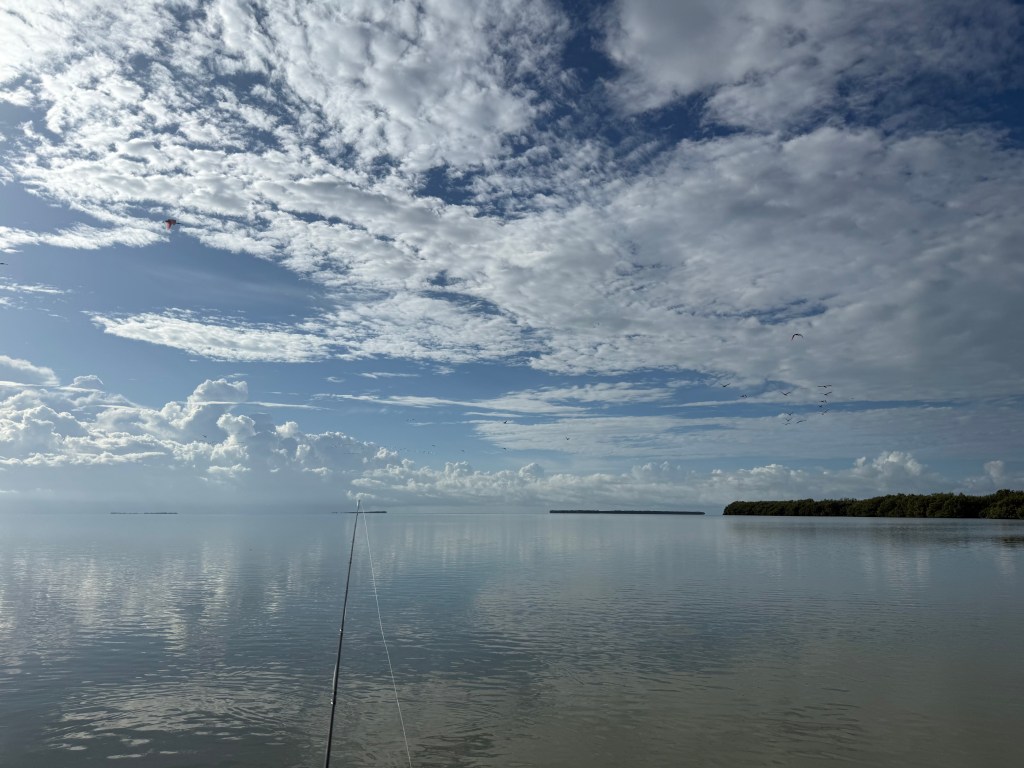
    The sun glows as I round the corner into the Snake Bight flat. The north edge of the flat has a thin line of shocking pink. Though I’m looking for fish, Roseate Spoonbills always steal the show.

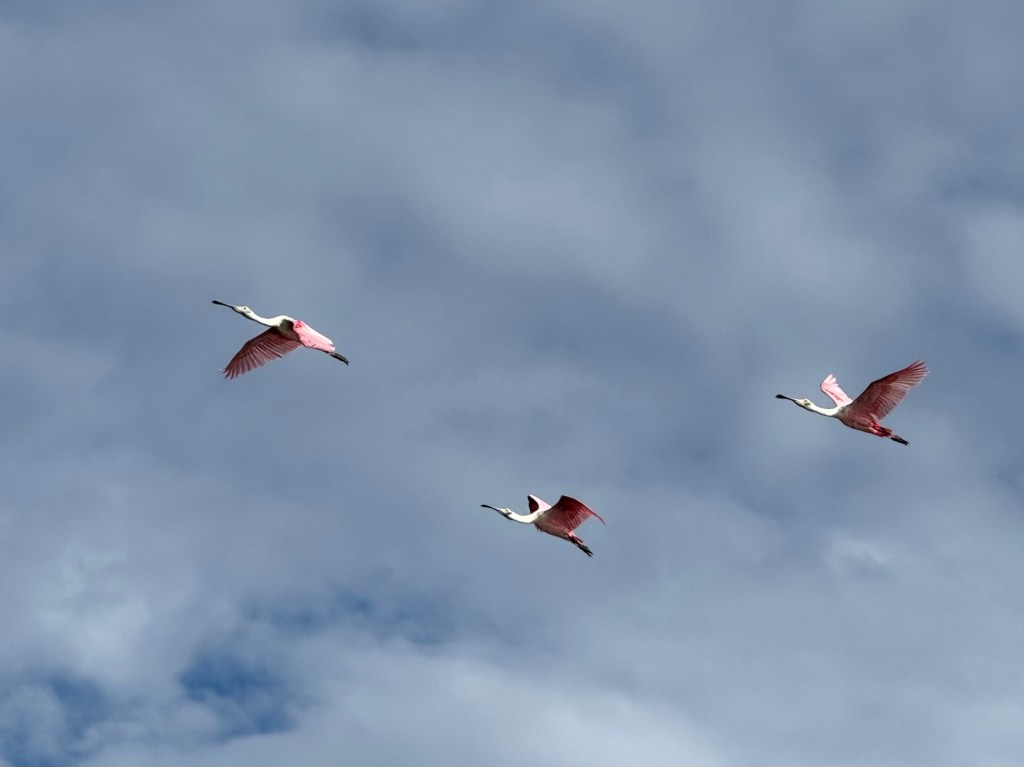
    Some spoonbills fly over my kayak enroute to their favorite roost of snags by a mangrove creek.
    I spot another kayaker approaching the cove where the spoonbills are roosting. He pulls out a camera with a giant lens, then paddles in too close, spooking some of the spoonbills. If that’s not bad enough, he starts paddling in even closer – too much.
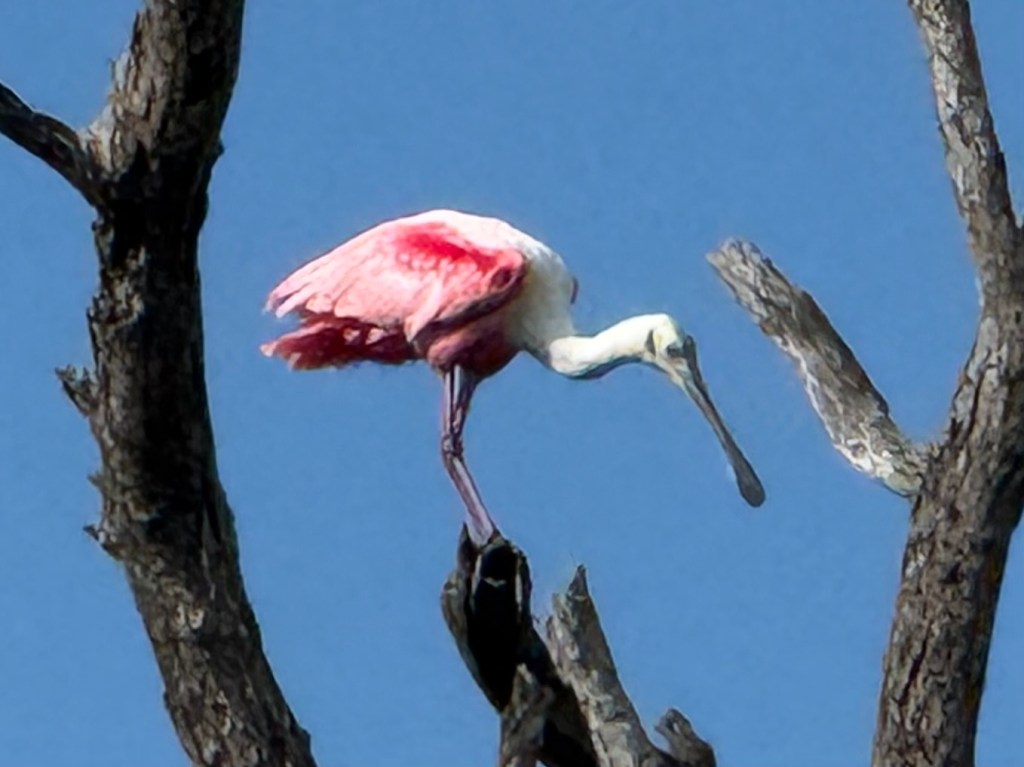
    If I can use an iPhone to get this photo without spooking the spoonbills, a kayaker with a giant lens doesn’t need to crawl down their throats.

    First rule of not spooking birds is to act like you are interested in something else. Definitely do not aim your kayak directly at them.
    I call out: “That’s close enough!” He stops, turns around, and leaves. Good thing too. In half an hour, a carefully guided kayak tour comes by specifically to see the spoonbills.

    * * *

    FISHING REPORT (stop here if fishing bores you)

    Last weekend I tied a mangrove crab fly using whatever I had lying around, with a notion to try for redfish feeding in the mangrove roots along the edge of Snake Bight. It came out pretty well.
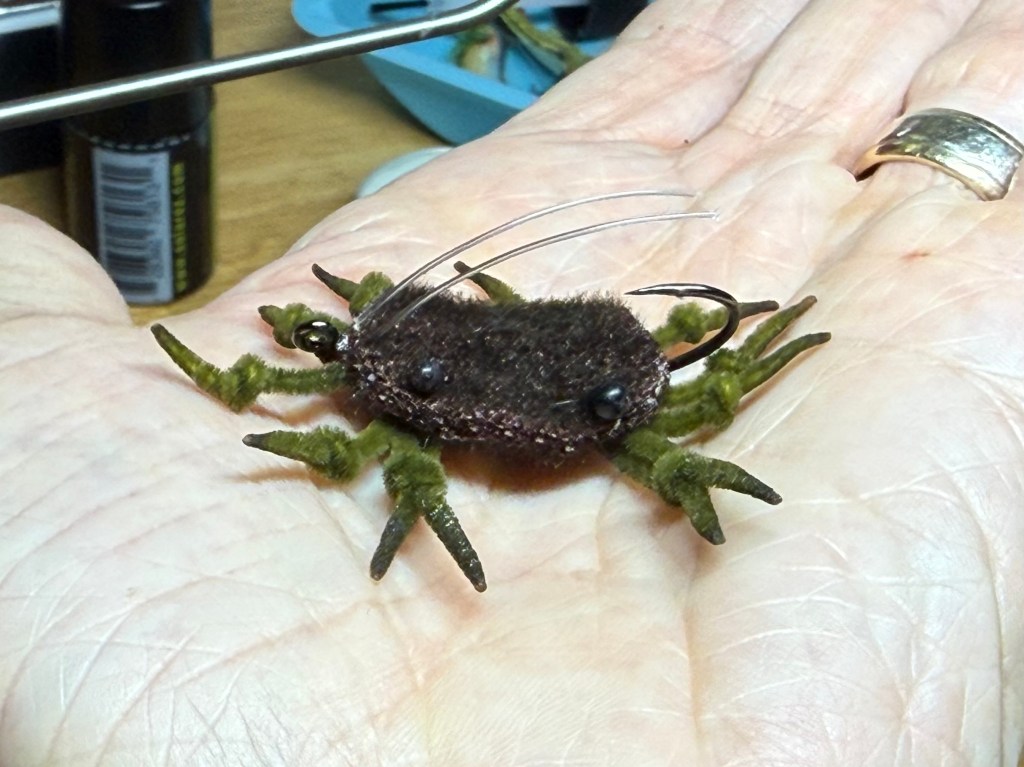
    Never mind the fish – I think it’s adorable.

    I try it out. Crabby casts fine and stays upright while it sinks, but the legs entangle too much sea grass detritus.  I’ll try it again in the Ten Thousand Islands where there’s less sea grass.

    Instead, the winning fly today is my weedless tie of the classic chartreuse-over-white Clouser Deep Minnow.
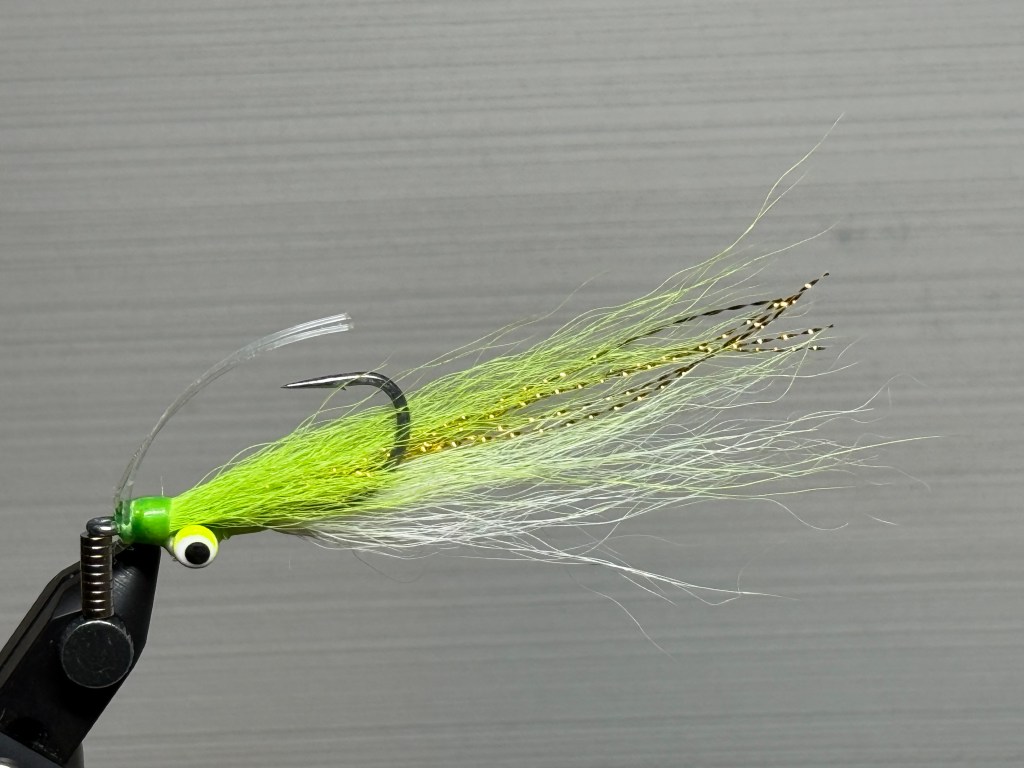
    It catches seven snook 18-22”.
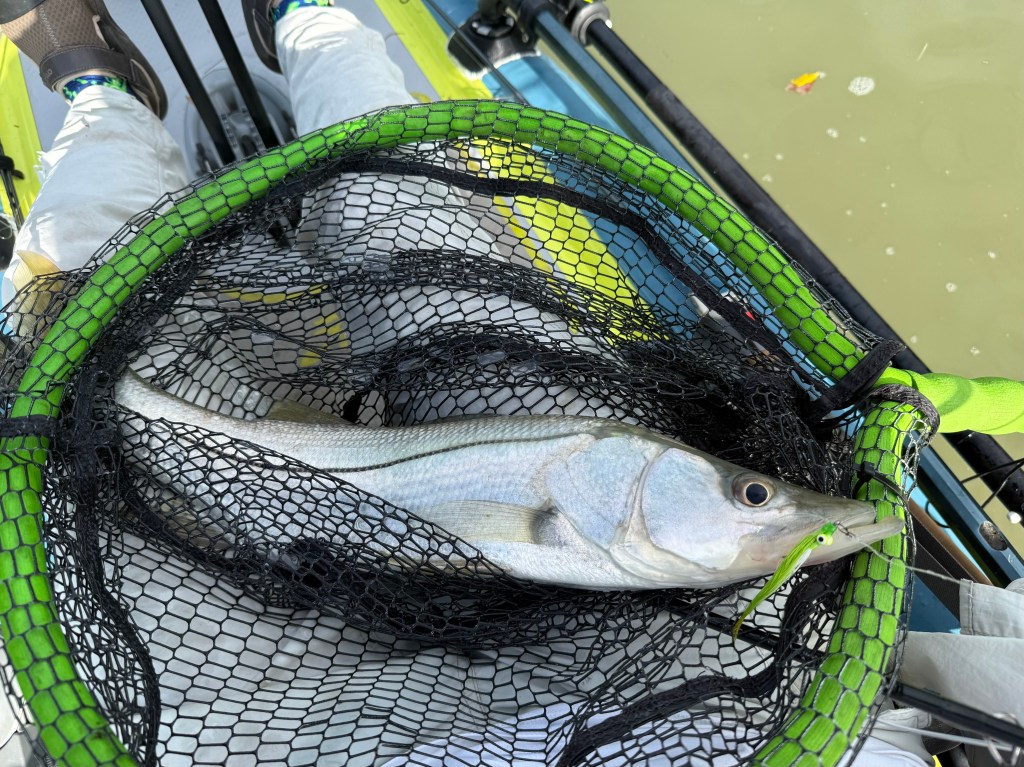
    20″ male snook with Clouser fly.

    Snook in this size range are all males, turning into females when they get bigger, around 26-28”. I wonder if our Florida State legislators know that many of our prize game fish are transexual, “protandrous”, to be exact.

    Somewhere else out there lurk the female snook. Research by FIU professor Jenn Rehage indicates that most of the females are still up-river, fattening up on sunfish and cichlids for the breeding season. This rainy spell should get them moving downriver again.
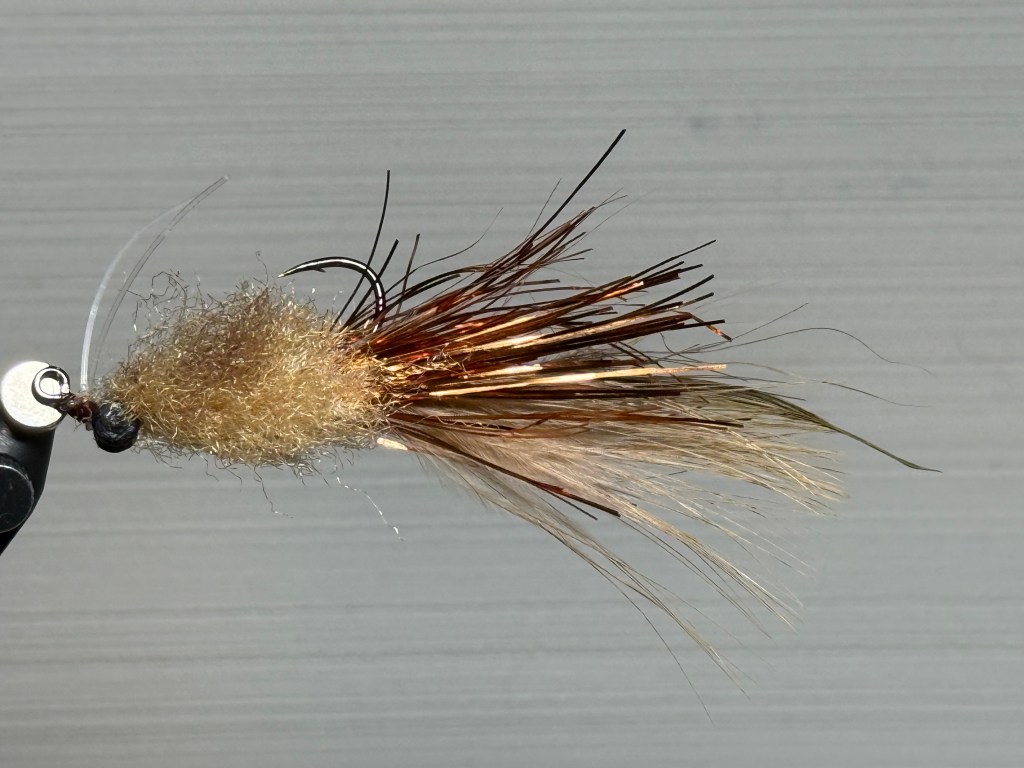
    I have caught countless redfish on spinning gear but exactly zero on fly. I tied this sparkly fly in the hopes of temping a bite. Don Quixote jousts at yet another windmill.

    Snook are great but I am still hoping to catch at least one redfish today. I swap out the Clouser for a sparkly redfish attractor pattern. Instead of a redfish, it catches my biggest snook of the morning (23″) plus a pretty little sea trout.

    Lunch is leftover tamales from Moreno’s Tortilla Shop, re-heated in the sun. Gentle rain resumes on the drive home, kindly washing the saltwater drips from kayak and car. Fine morning all around.
  • Fly fishing the Tetons

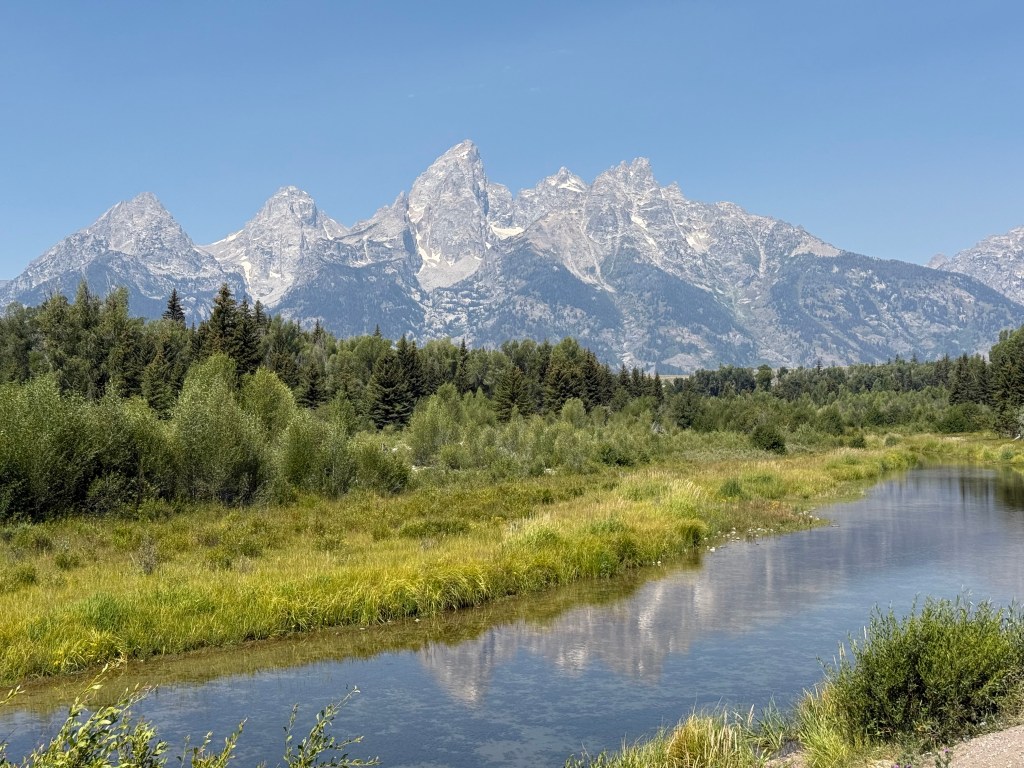
    I last visited Grand Teton National Park in August of 1980. Since then, the Tetons have moved about four feet due to fault slippage, not so noticeable for a mountain range 43 miles long. Indeed, most things seem about the same, but one thing that has changed noticeably is the tenfold increase in number of fly fishers.

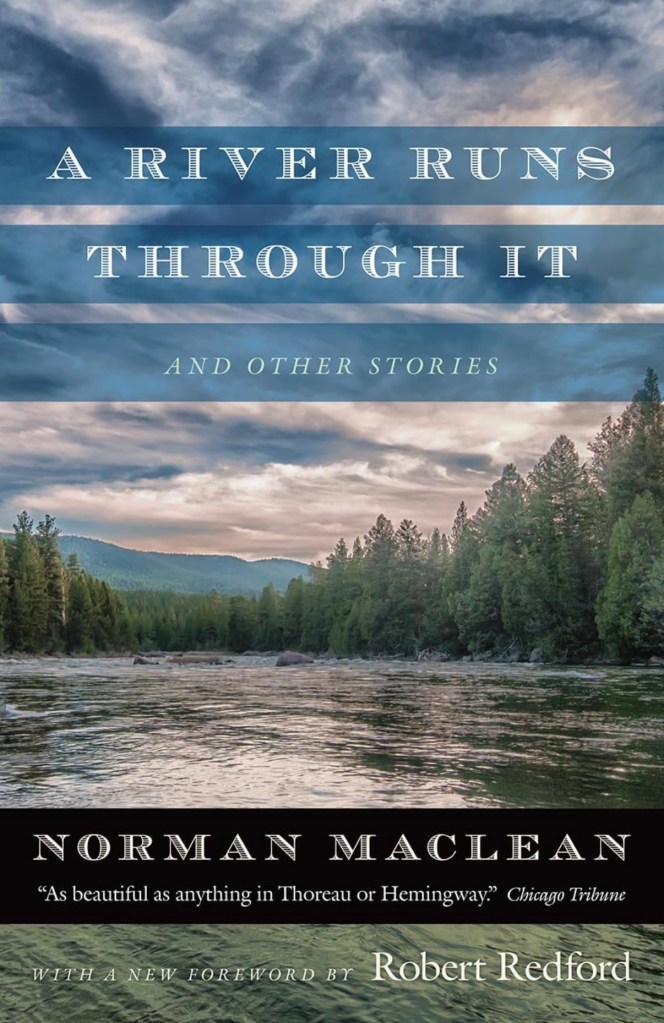
    The exponential rise in the popularity of trout fishing is widely attributed to the movie made from Norman Maclean’s wonderful novel.

    People tell me all the time “I LOVED that movie. It made me want to take up fly fishing. It looks so relaxing.”  Relaxing? They missed how seriously the menfolk in that family took the challenging and technical craft of trout fishing on a big western river. The narrator recalled his father’s sermon:

    “He told us about Christ’s disciples being fishermen, and we were left to assume, as my brother and I did, that all first-class fishermen on the Sea of Galilee were fly fishermen and that John, the favorite, was a dry-fly fisherman.”  

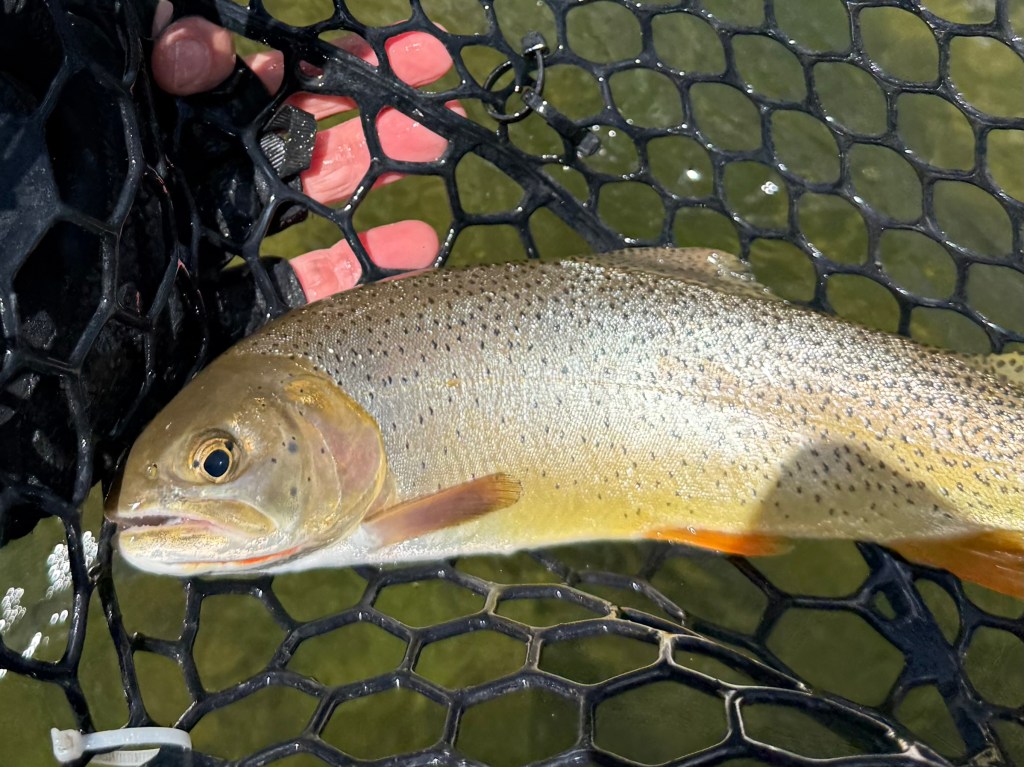
    The Snake River is the region’s big trout fishing draw, and even has its own race of fine-speckled Cutthroat Trout. Snake River Cutthroats are gorgeous creatures, silver and gold with little black dots, orange fins, and the trademark orange lines under the chin for which they are named. 

    Dozens of guided drift boats ply the river each day, and as many people fish from shore. Small trout are gullible but the medium and large ones have learned the mantra “look twice, bite once”.

    Our first day exploring Teton Park I spotted a distant, shallow creek below a splendid overlook. The Snake River was open for fishing, but creeks in the park were closed for one more day. Gray was painting, so I wandered down to the creek for a look. Descending through the dense brush I sang a little song: “Go away bears – go away moose”. 

    The creek was brimming with solid cutthroats, 12”-18” in length. Here they are:

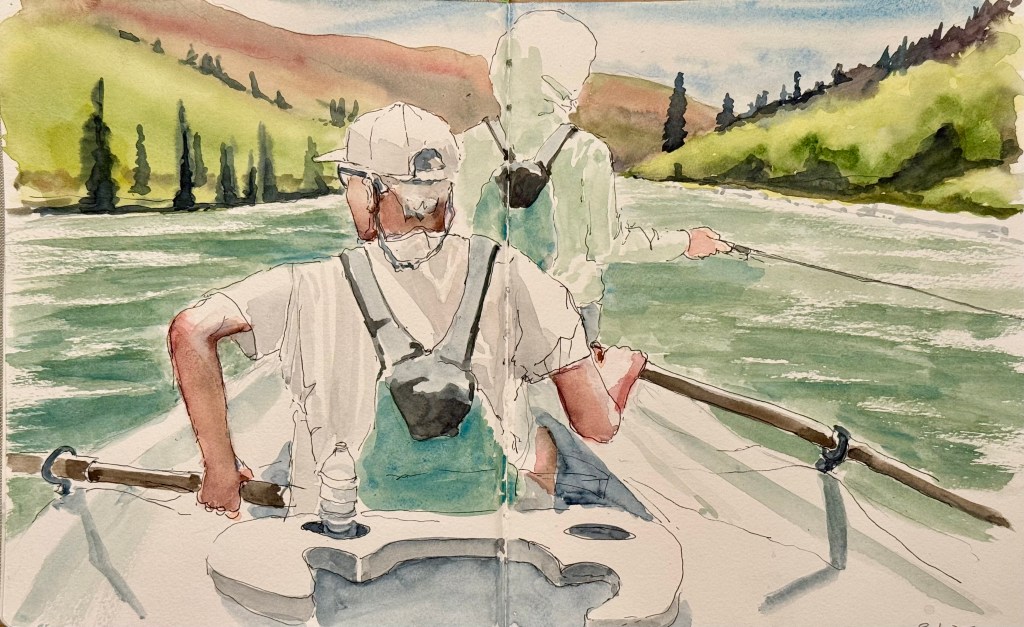
    The next day we had our big splurge, a full-day float trip down the Snake in a drift boat manned by Larry Milton of Mangis Fishing Guides. In addition to a day of glorious scenery, an oared drift boat (shallow draft dory) provides a fly fisher access to many good trout holes inaccessible to those wading or fishing from shore. Even so, Larry, with his 30+ years of floating the Snake, kept saying “this hole SHOULD get you a bite”. 

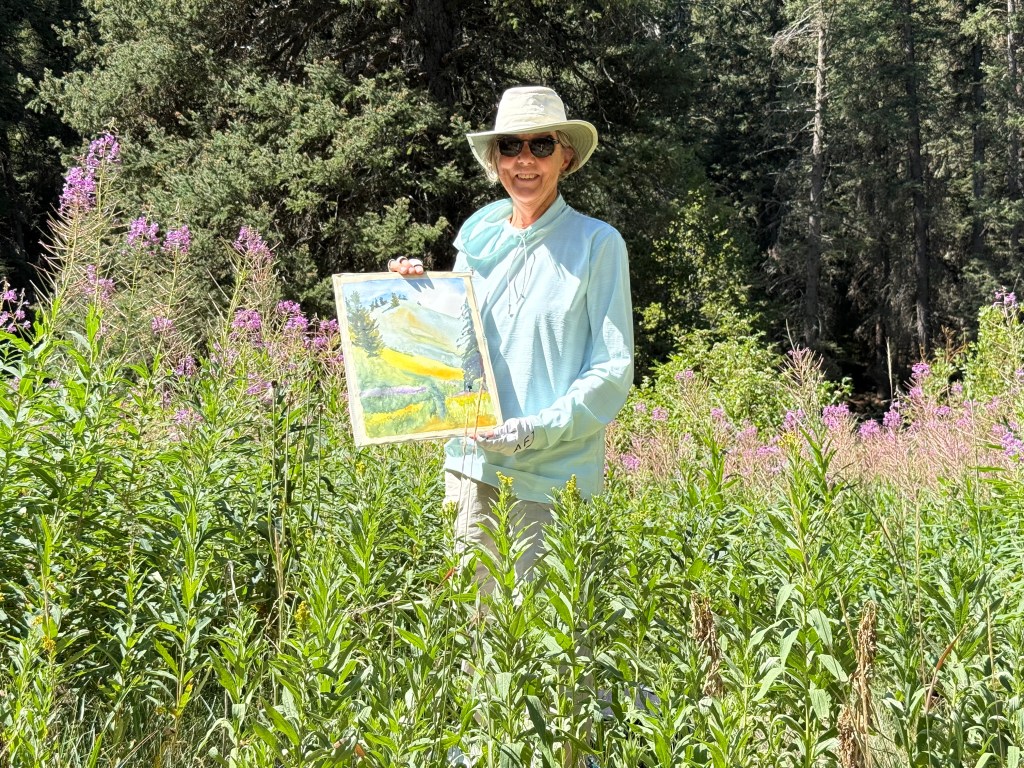
    Watercolor by Gray Read

    The “hatch” on the river that day was a random hoard of hapless spruce moths that either fell in the water or ventured close enough for a trout to leap up and grab one.

    I started out the day casting a “hopper-dropper” rig, a floating grasshopper dry fly with a small sparkly nymph fly dangling below. Usually 90% of bites come on the nymph, but this day 90% of the bites came on the dry fly. I snipped off the nymph to get a better drift of the dry and did a little better.

    Of ~20 cutthroat trout I caught and released, one was 16-17”, three were about 11”, and the rest were little pookers, 5-8”. Not a bad day. 

    The water was warming – better to get fish back in the river post haste than pose them for a pretty photo.

    The evening of the next day, we returned to that first creek, me with my fly rod, Gray with her watercolor kit. A fellow watching for moose from the overlook told me he’d seen a dozen fishermen trudge up the hill from the creek below. I went exploring anyway, expecting the lovely trout from before would be gone or hiding. To my surprise, every trout from two evenings prior was holding in exactly the same spot as before, lazily rising to pick the odd caddisfly off the surface. 

    Gray paints while I fish. Amid the scattered raindrops on the water, you can see the expanding ring where a trout has just picked a bug off the surface. Perfect dry fly conditions.

    Alas, these beauties showed exactly zero interest in the assorted flies I drifted past them on fine 6X tippet. They weren’t even disturbed by me casting at them. I could just as well have been a moose. 

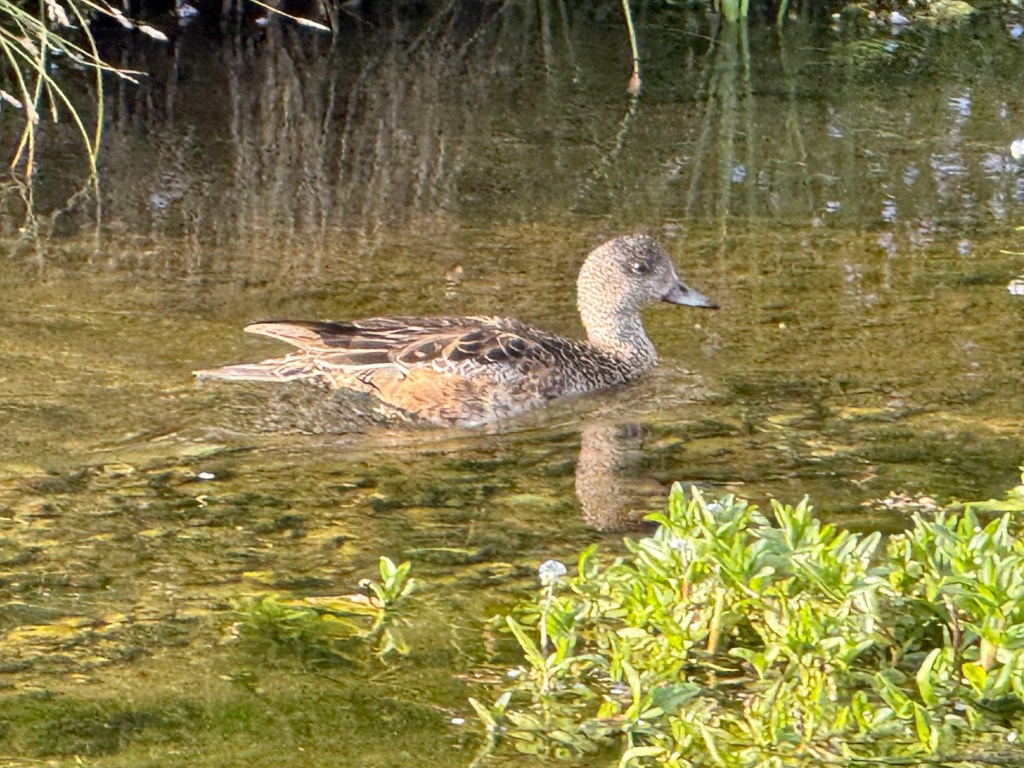
    I did get some attention, though. I was followed down the creek, then back up the creek, by a female Cinnamon Teal. She squawked at me the whole time. When I sat down to change flies she flew up into the air to spy on me from above.

    Between bouts of nibbling aquatic vegetation, Mrs. Teal had no compunction against splashing directly over a big trout to keep up with me. I saw no sign of ducklings and it was too late in the year for nesting. She was just a busybody. The extended mountain twilight was coming to an end, and moose were wandering in – time to leave.

    Jenny Lake had opened to fishing, but we found the water was over 65° F, too warm to fish trout without stressing them.

    Same with Cottonwood Creek that flows from Jenny Lake.

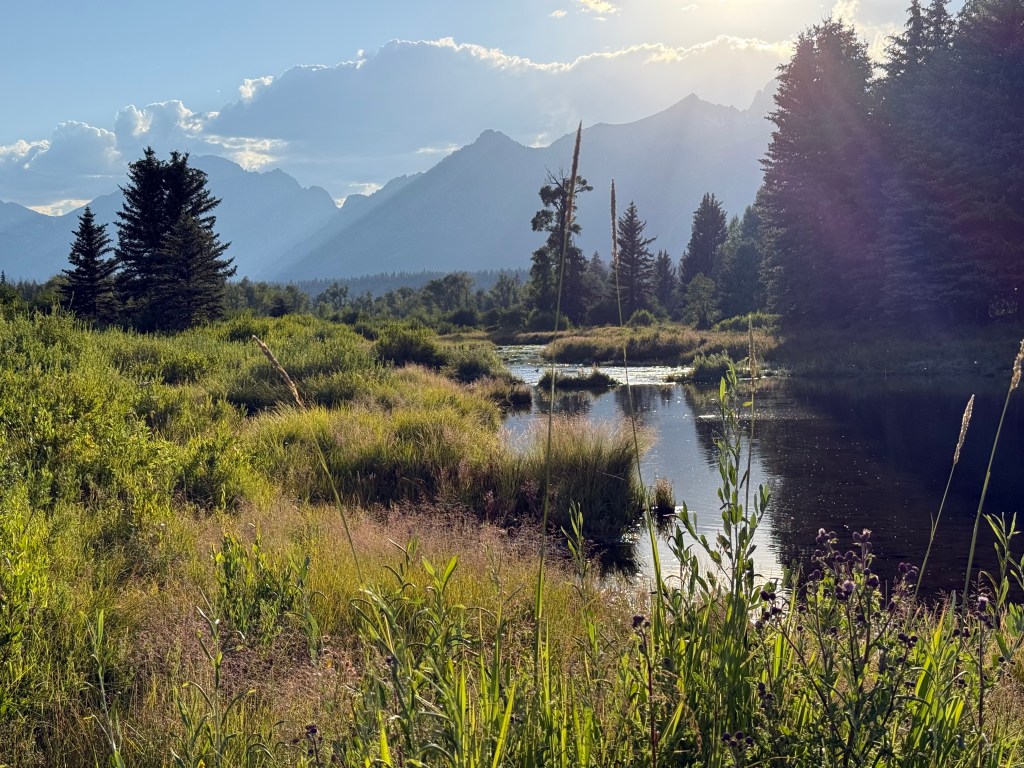
    Instead, we hiked in to some beaver ponds to look for moose. Tiny trout dappled the surface or leapt into the air for flying insects, popping from the glassy water like slippery watermelon seeds squeezed between the fingers. Good dry fly fishing for naive 4-5” trout, but mind your backcast and keep an eye peeled for thirsty megafauna.

    Funny looking moose by the beaver pond.

    On our last morning we stopped by Flat Creek in the National Elk Refuge, a spot recommended for wade fishing by Larry the river guide. From the number of parked cars with single-purpose fly rod transport tubes clamped to their roof racks, I estimated 40 experienced and dedicated fly fishers were already stalking this narrow winding creek. Assuming I could even find a couple of bends to myself, I knew these fish would be highly over-educated.

    We left the crowded stream and drove over to the Gros Ventre River, which I’d also wanted to explore. We parked at a turnout away from the river and hiked to a section of water not visible from the road.

    I had this cold, braided river to myself as far in each direction as I cared to wander. Each bend offered promising trout spots. As I walked the banks, the air filled with small brown grasshoppers. Freshly expired stonefly nymphs littered the gravel bars. Easy to guess what these trout were eating. Indeed, I SAW lots of trout swim up and check out my flies: “Ooo, brown Morish Hopper, size 10” or “Golden Stone nymph, nicely tied.”  Indeed, I had a wonderful time picking my way along the game trails, fording the river to access the promising holes and seams, and seeing trout flash my flies in such a beautiful spot, even though I didn’t get a single bite.

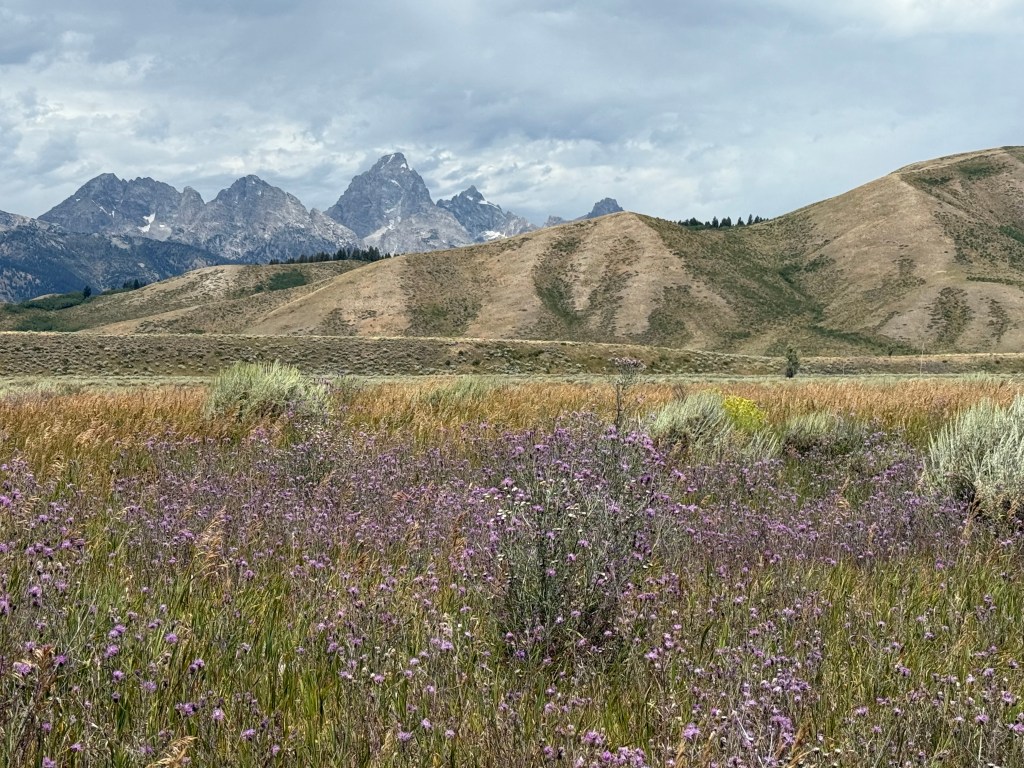
    As we hiked back to the car, the rangeland had every color on display. Hard to believe that’s a photograph.
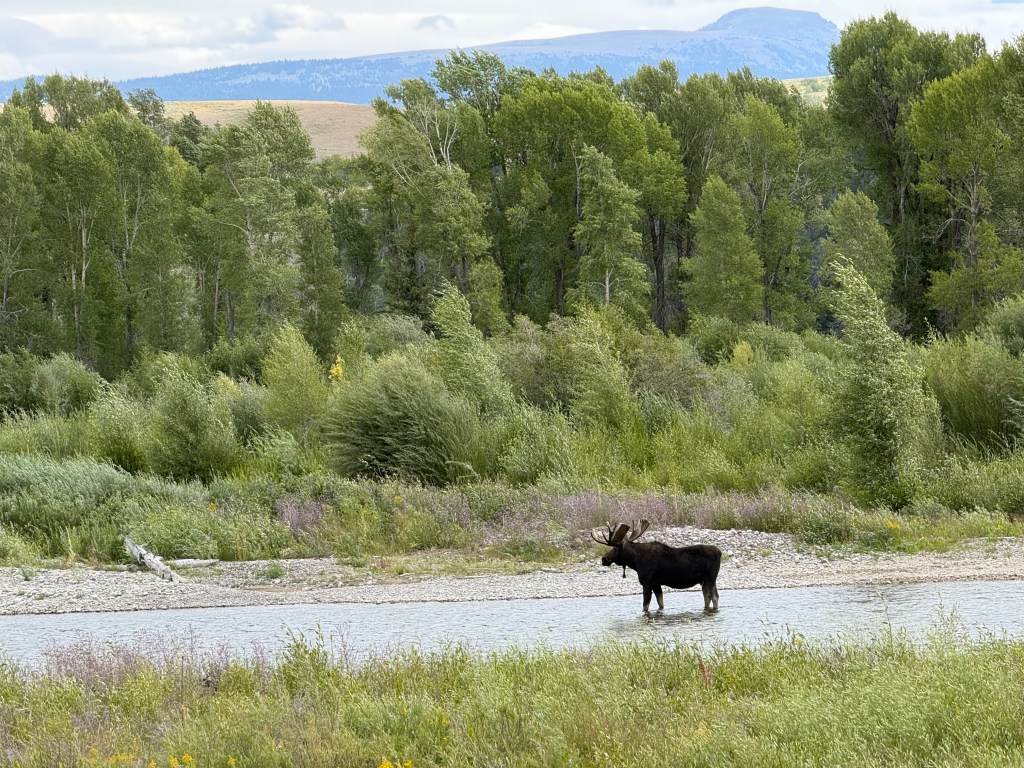
    Three bull moose grazed in the river as we too ate our lunch.

    In contrast to our day in the drift boat, I caught one trout and a whitefish while wade-fishing a couple of hours a day across the rest of the week.

    You can’t beat the Tetons for scenery, hiking, and critter-watching. I was delighted to spot my first Pine Marten and spent half an hour happily watching a Dipper bobbing and swimming in a mountain creek while Gray painted nearby, surrounded by a patch of fireweed and its attendant Rufus Hummingbird.

    But, if you thrill when a trout eats your fly, and again seeing it up close in your net, the Driftless Area of SW Wisconsin  draws far fewer people, and, as a result, offers much more productive trout-fishing.