Eye of the Cormorant

another odd bird who chases fish.

Tag: history

  • Streets of Arles

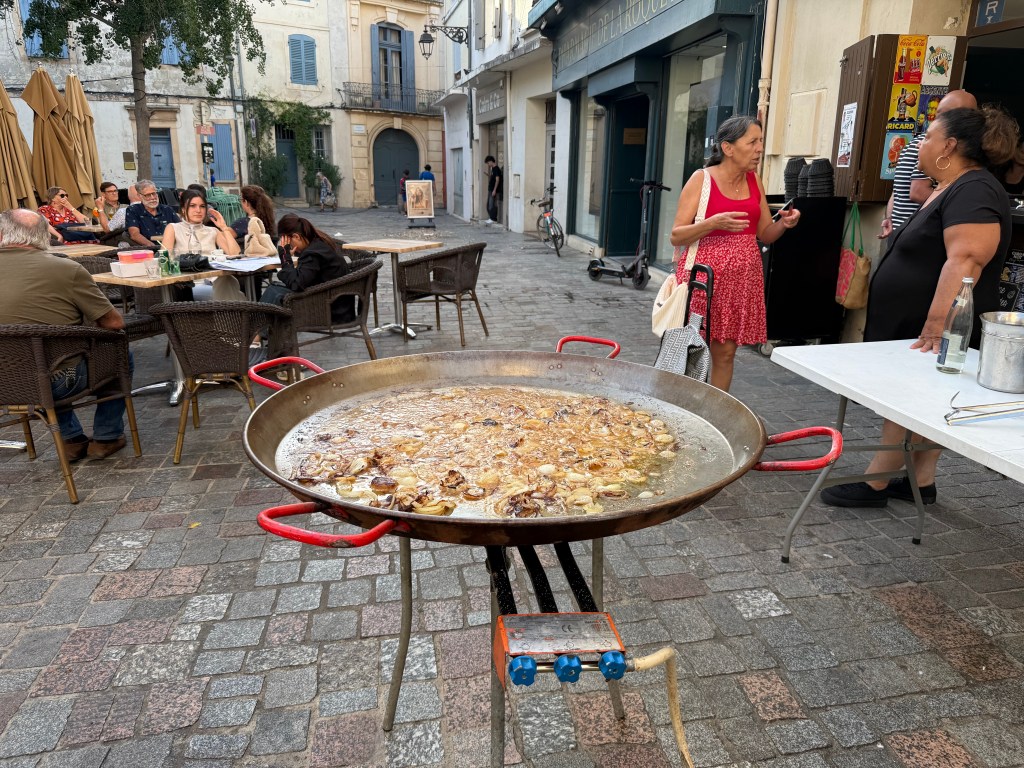
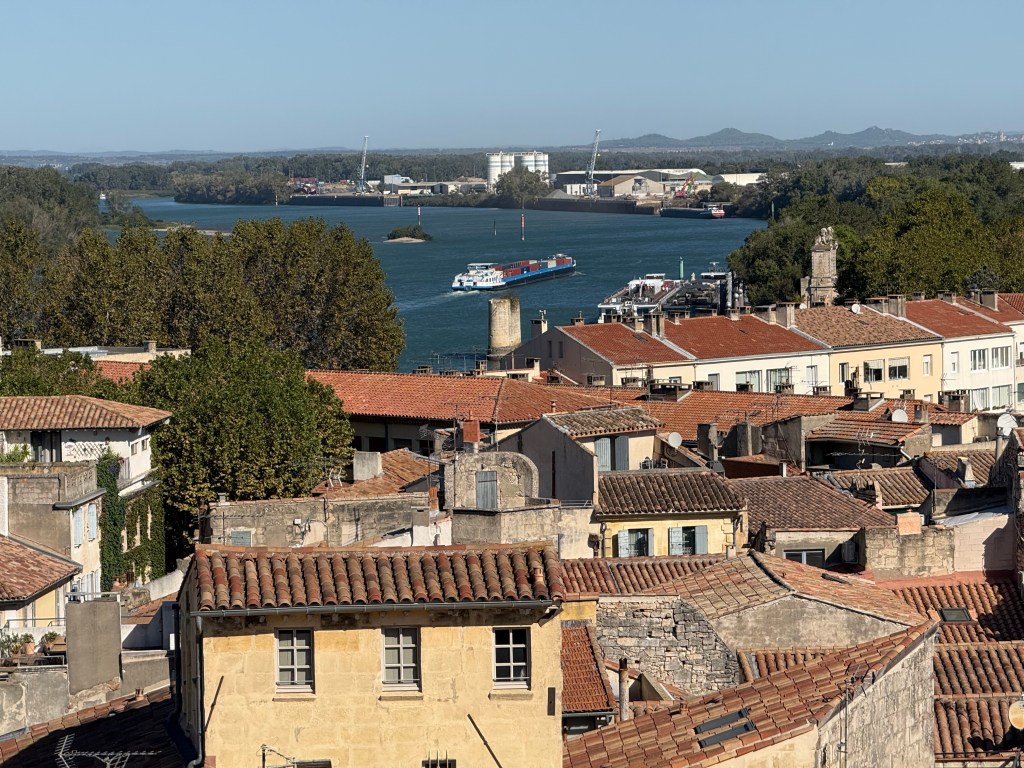
    The city of Arles in the south of France dates to pre-Roman times. Built at the mouth of the Rhône, three millennia of silt deposition has left the city ~50 km inland of its original situation on the Mediterranean.
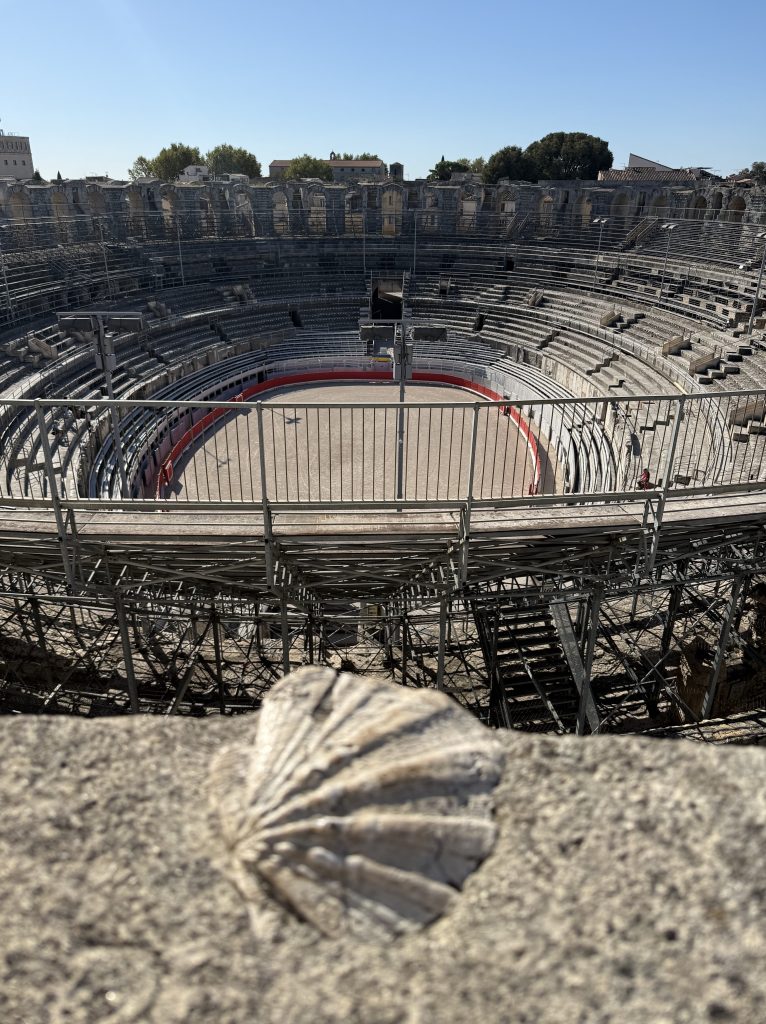
    Romans took control of the city and built an arena to entertain their new subjects with gladiator fights. The arena has been partially restored. Incongruous metal bleachers with safety rails were added to accommodate modern audiences in the highest places where the original stone seating could not be supported. Ascending and descending the steep stone stairways in the strong Mistral wind of the Rhône valley, we appreciated the new iron hand rails.
    Not wishing to restrict entertainment to the martial arts, the Romans followed up their arena with an elegant semicircular amphitheater next door. It has been partially reconstructed as well. While we sat in the top row, one of a group of Japanese tourists stepped up to the stage at the coaxing of his friends. Here’s a snippet of what happened next:

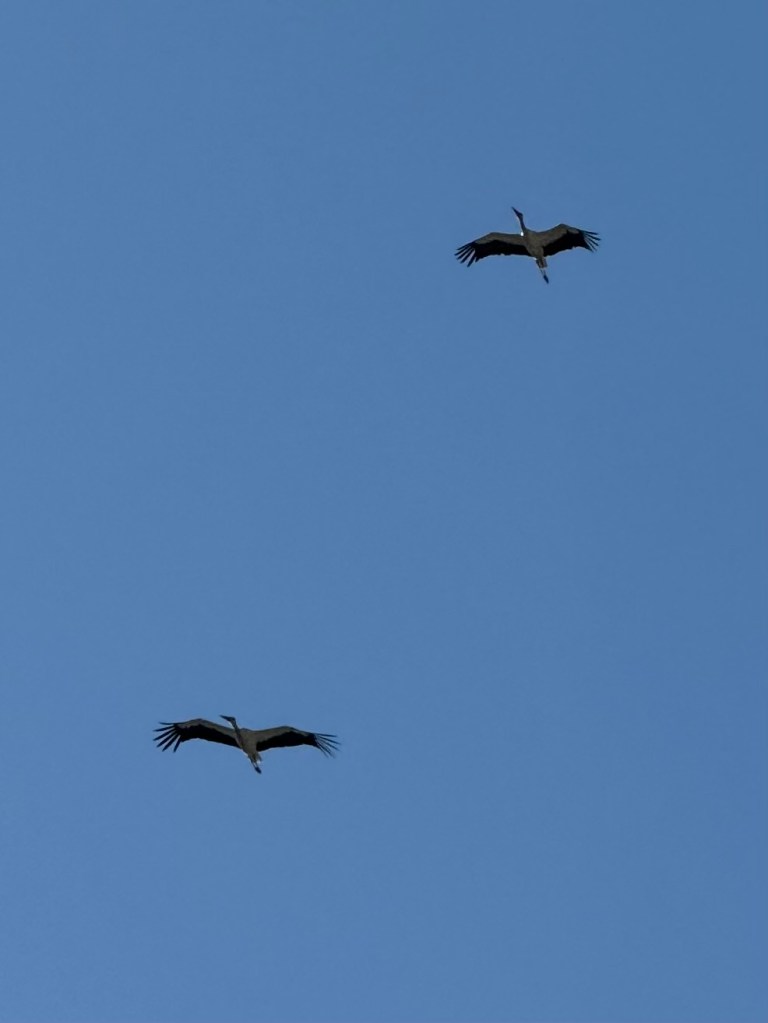
    Wherever I go, I seek out nature the way a beagle hunts a dropped slice of pepperoni. Accordingly, I spotted wild things on the periphery of the urban hardscape. High atop the rim of the ancient arena, I watched White Storks catching thermals to assist their migration southward to sub-Saharan Africa.
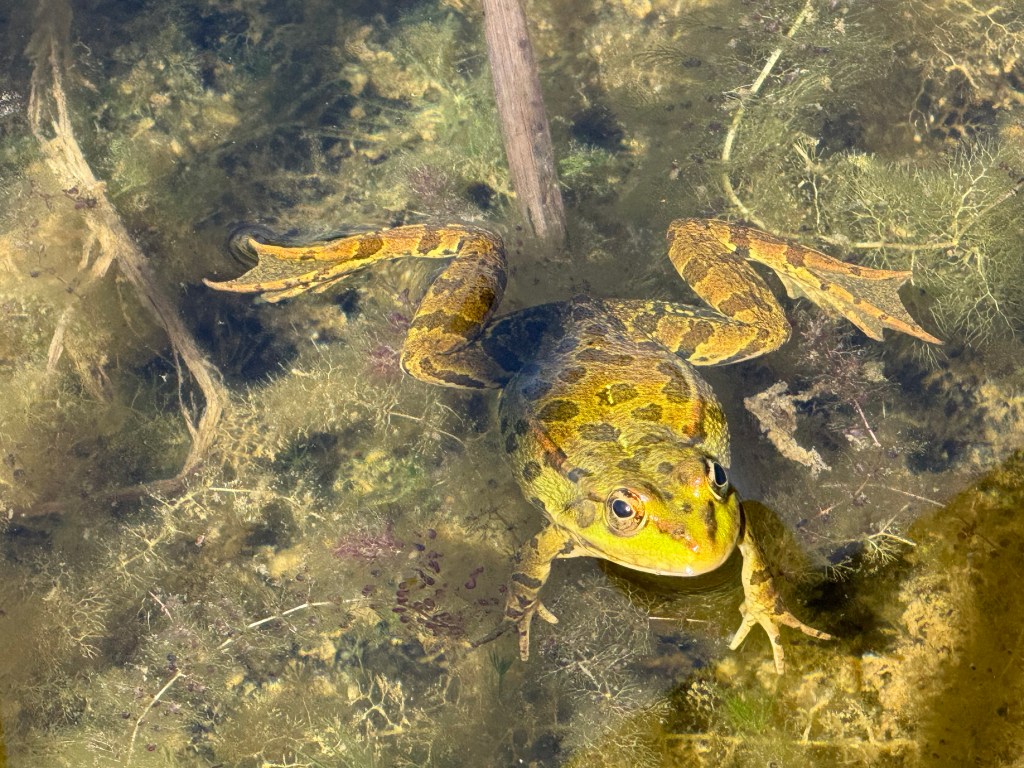
    In the marsh of a finely landscaped park next to Frank Gehry’s shiny LUMA tower, I found happy frogs of Arles celebrating the departure of the hungry storks.
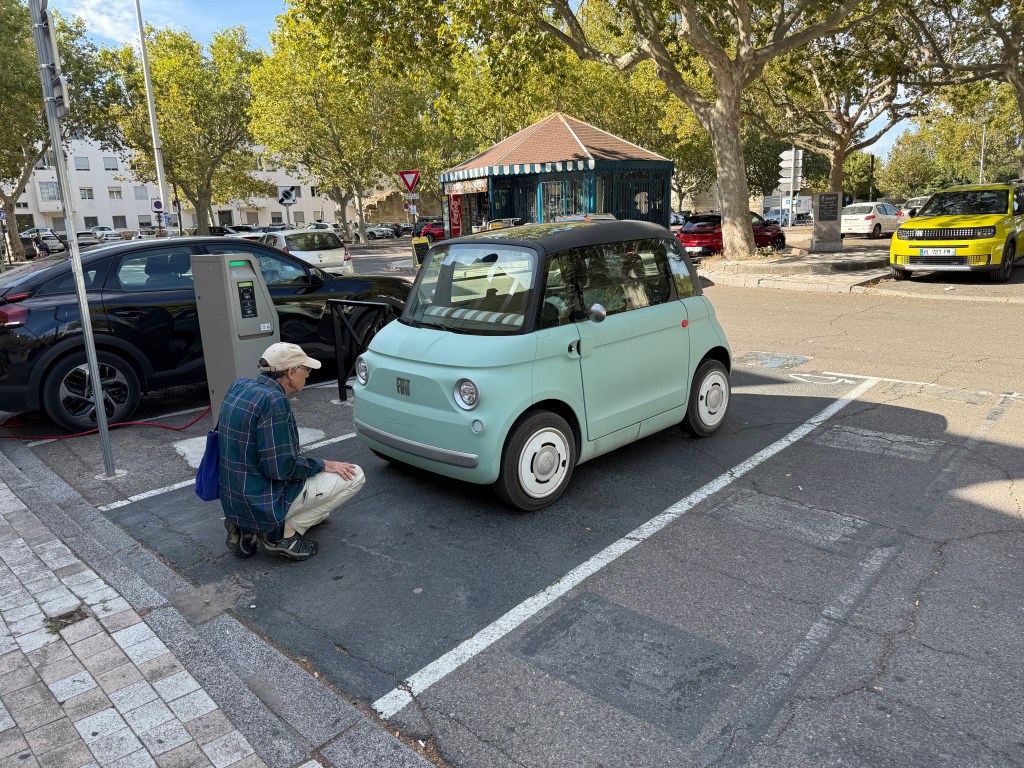
    Does a tiny Fiat EV count as animal, vegetable, or mineral?

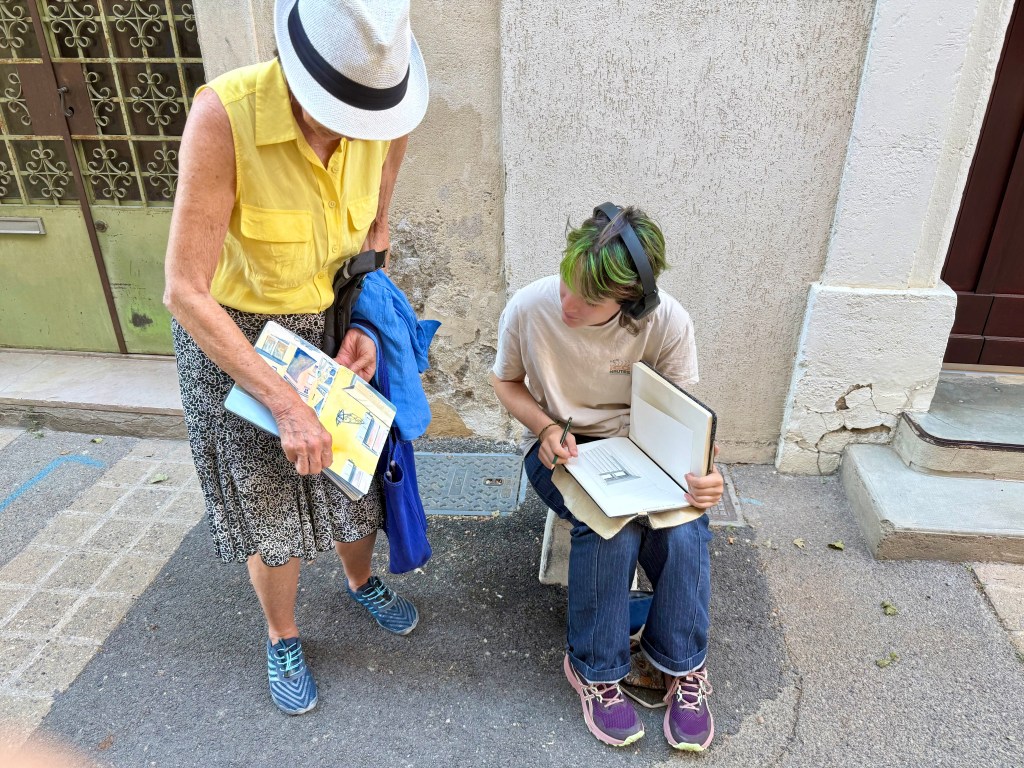
    Vincent van Gogh, during his 16 month stay in Arles, produced 300 paintings. Gray, sketchbook and watercolor set in hand, cooed in ecstasy our entire week in Arles.

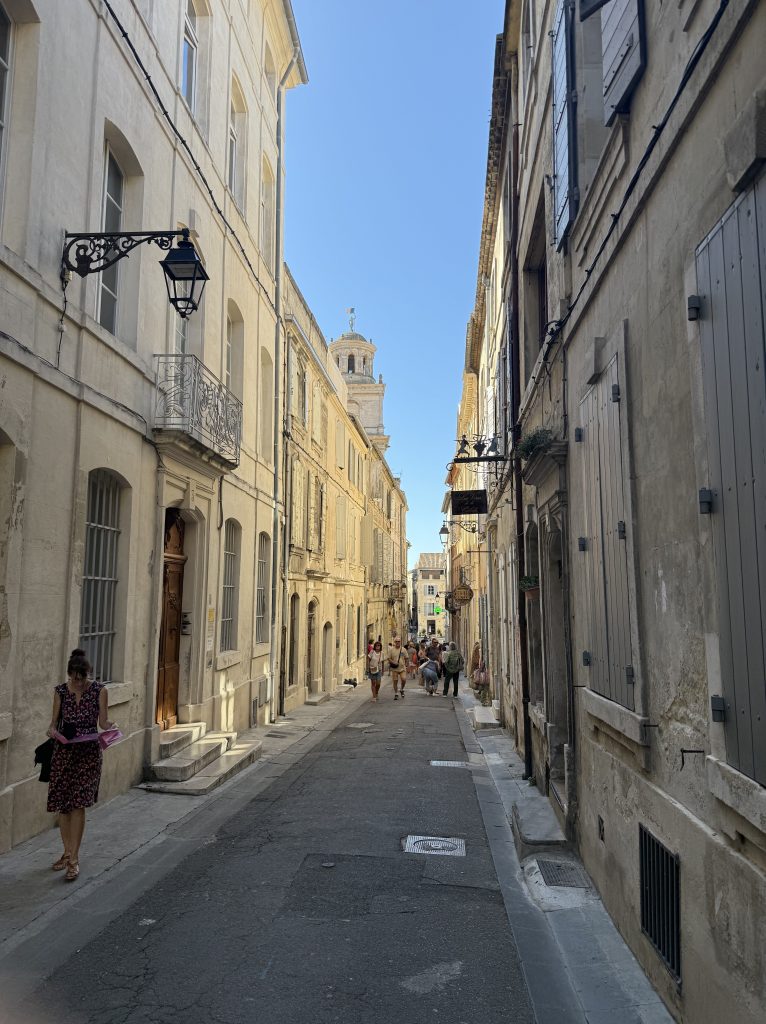
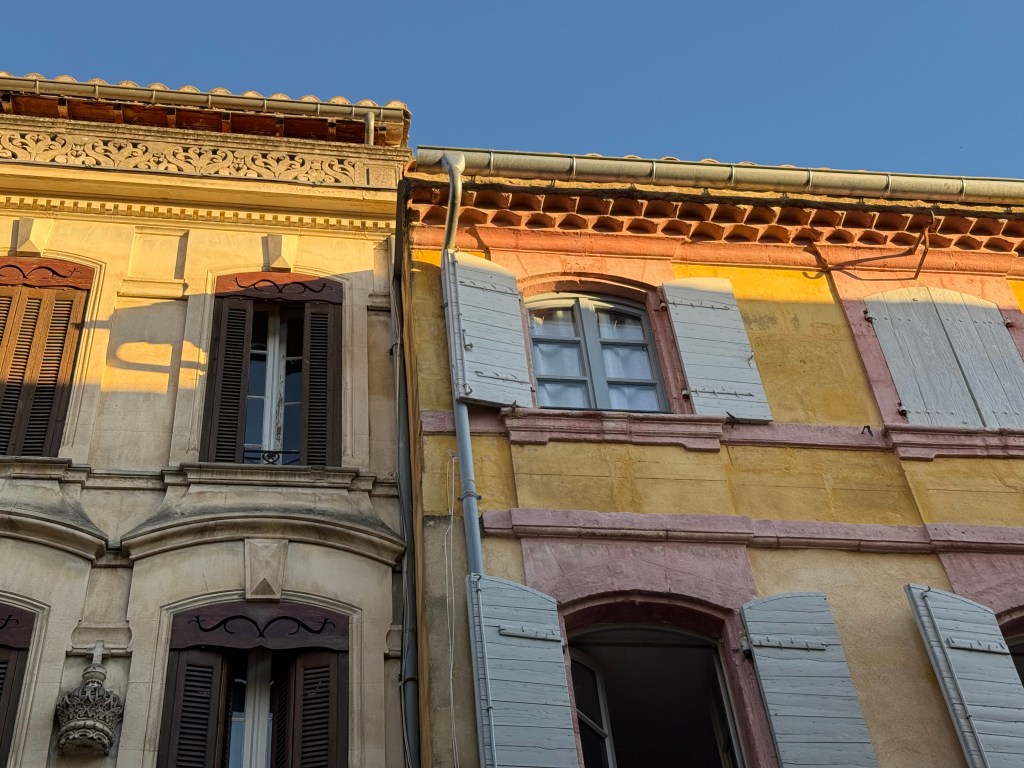
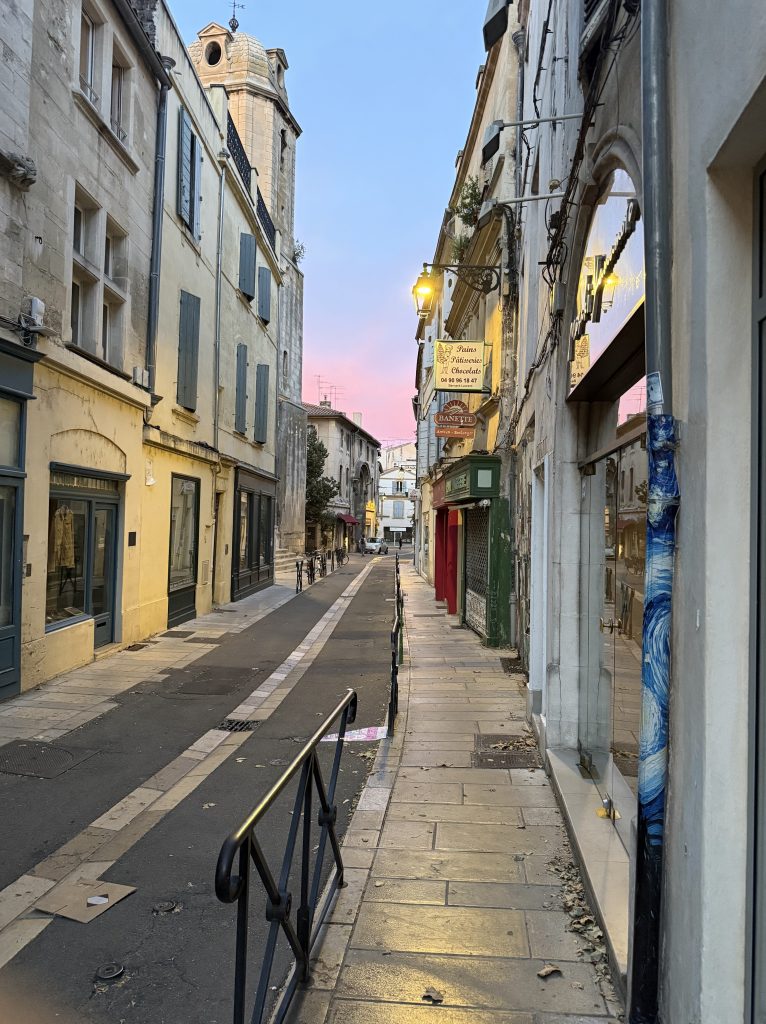
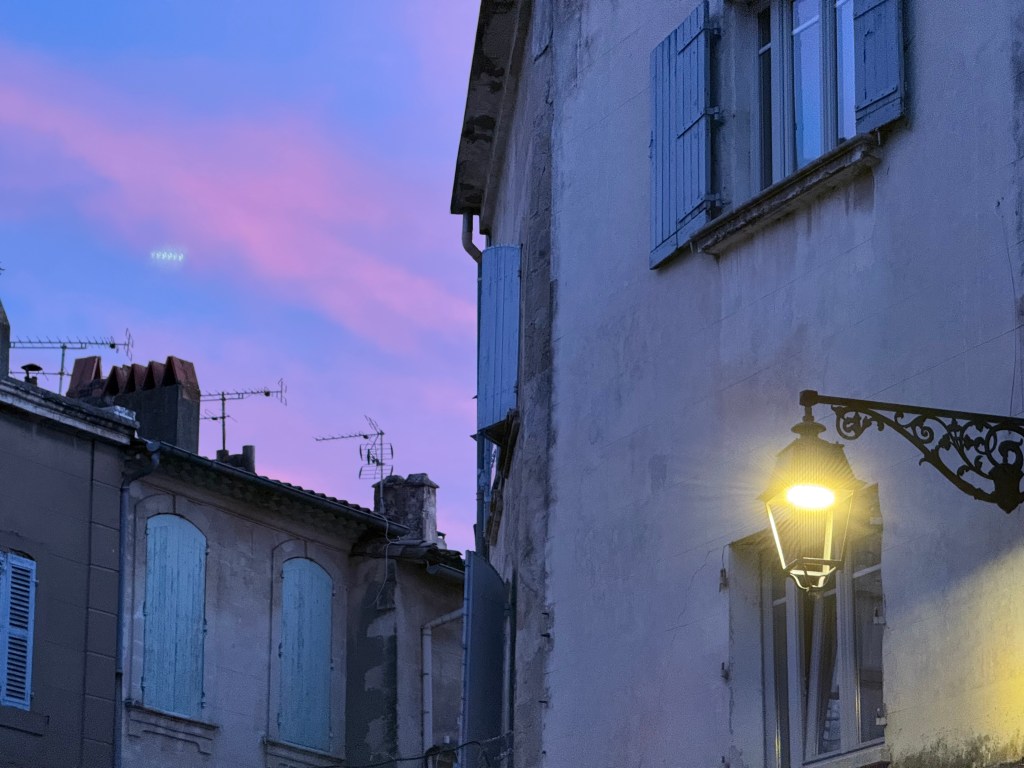
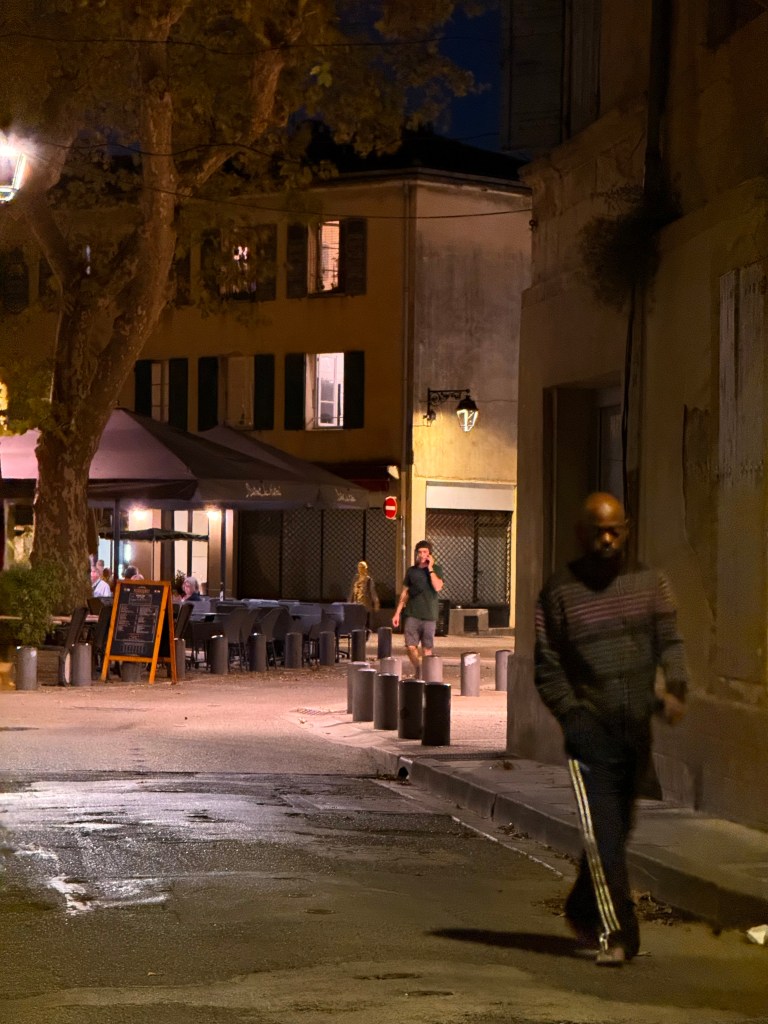
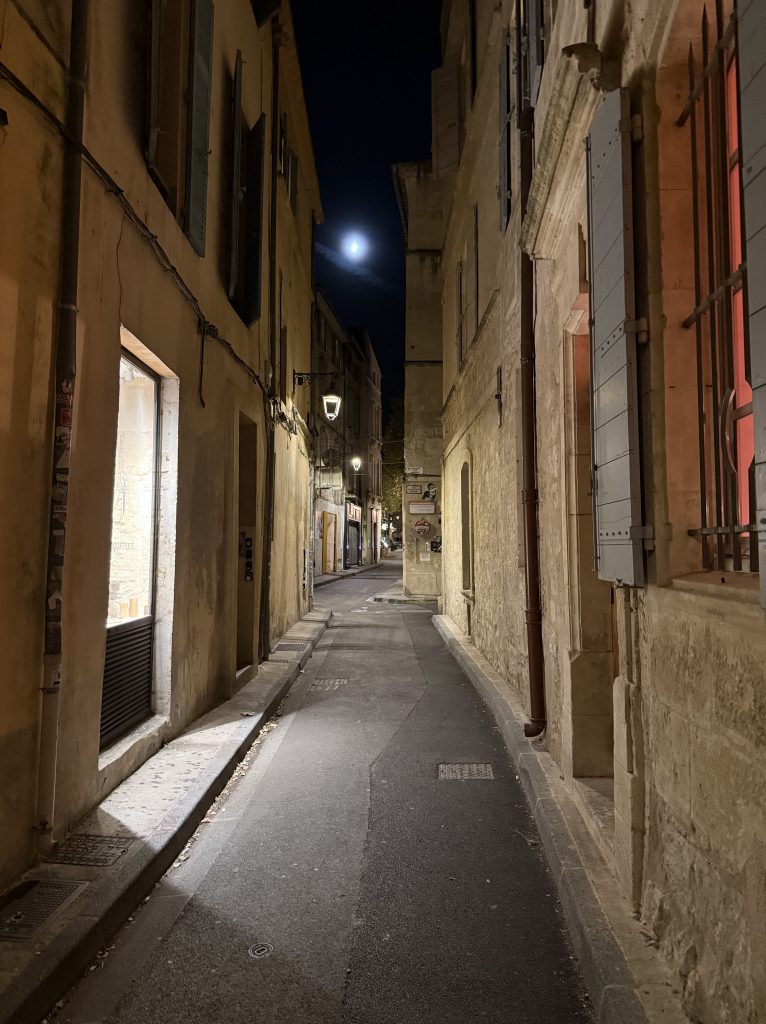
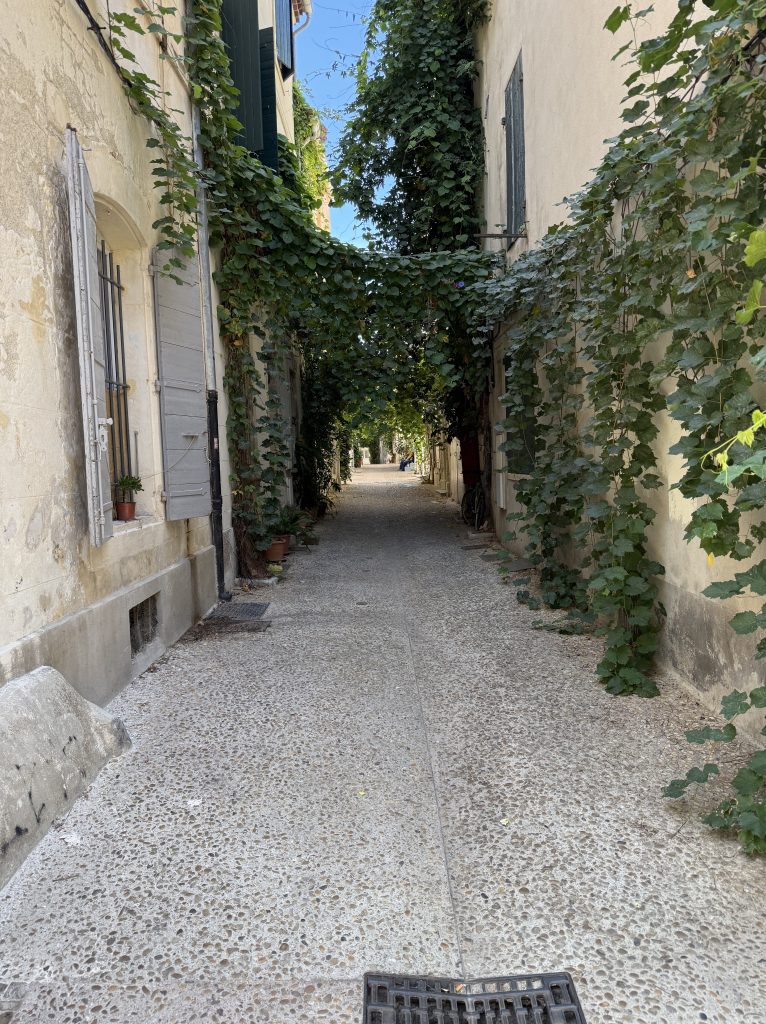
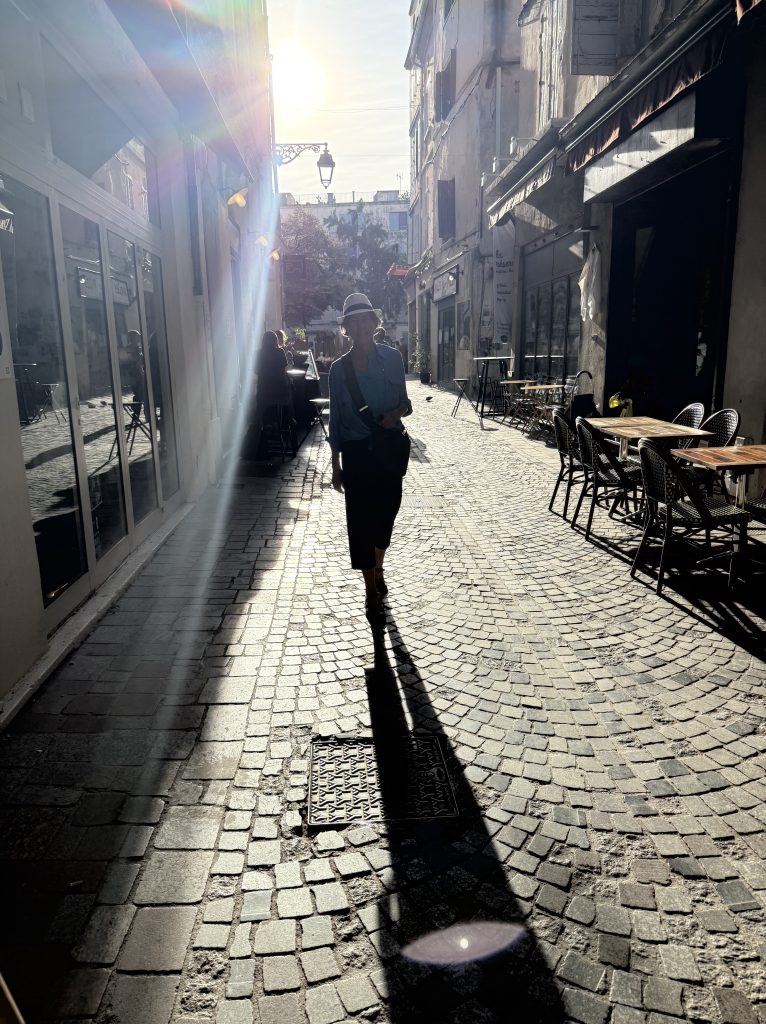
    Gray’s excitement over the painting possibilities was contagious. As sun angles dropped each day, my eye was increasingly drawn to the glow and shadow of buildings along narrow streets of the old city.

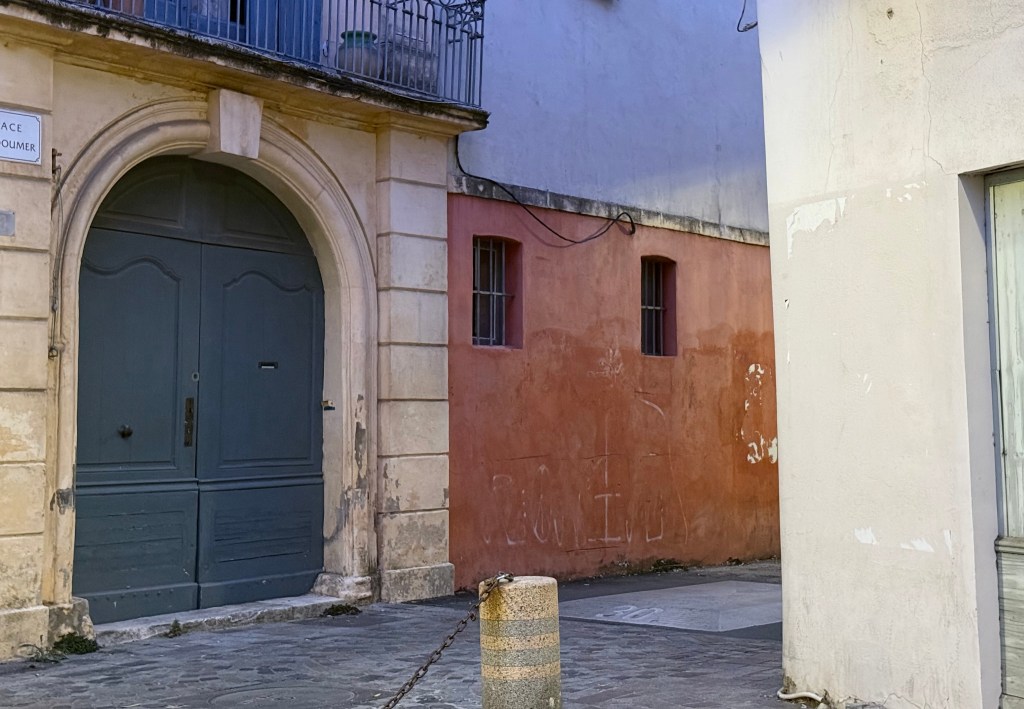
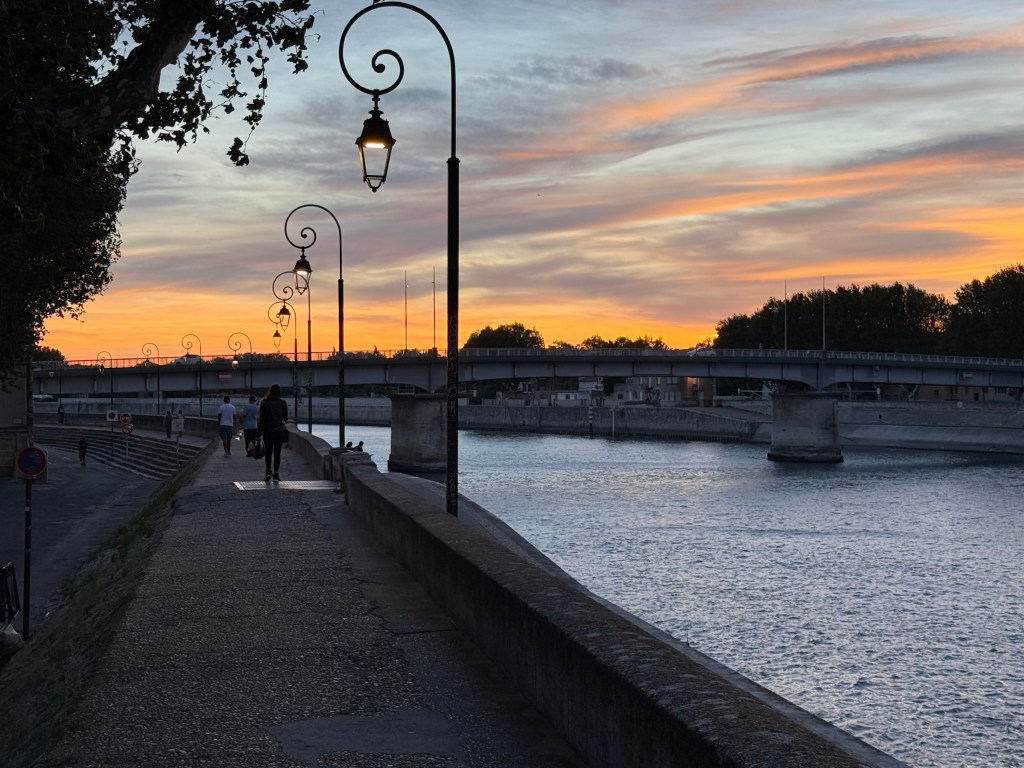
    I finish with a progression of photos showing the changing light through the afternoon and into the night. I promise I did not enhance the colors.
    Goodnight moon. Goodnight Arles.

  • To decimate 

    … as in “The Burmese python is decimating native wildlife across their invaded range.” Miami Herald, 12-Jun-2025

    Marsh Rabbit photo swiped from Animal Diversity Web. Such cute ears!

    People today use “decimate” synonymously with “devastate” and it bugs me.

    These two words sound similar, but to “decimate” is to reduce by 1/10th, not reduce to 1/10th

    I’d be thrilled if pythons had only decimated Everglades mammal populations.

    Origin – The verb “decimate” dates back to ancient Rome. My high school Latin teacher, Mr. Downum, explained that if a member of the Roman Legion committed a heinous crime, and nobody among the ranks would identify the culprit, all the soldiers were lined up and every tenth one was killed.  Wikipedia provides a similar explanation with more detail and historic record, albeit limited. Decimation didn’t happen a lot after the scary new word got around. The original meaning gave “decimate” the power to change human behavior for the better.

    Here are more examples in which over-educated people are decimating the lexical diversity and power of our language:

    The first time I drove into Tuscaloosa after the storms, I had to pull over on the side of the road to take in the decimation and collect myself.”  Joyce Vance, 17-May-2025

    A Fungus Decimated American Bats. Now Scientists Are Fighting Back”  Headline, The New York Times, 17-Sep-2024

    In 1989, Hurricane Hugo decimated much of the remaining old-growth forest that is vital habitat for endangered red-cockaded woodpeckers, Leuconotopicus borealis.” @grrlscientist, 11-Oct-2024

    It’s everywhere. Even Heather Cox Richardson and Paul Krugman conflate “decimate” and “devastate”, two erudite professors with a mastery of English.

    In a living language, word meanings can change. Still, this one sticks in my craw every time I read it. Seems a shame to lose such a graphic and powerful word to confusion in common parlance.

    * * *

    I’d tell this to the marsh rabbits in the Everglades, if I could find one to tell. Not that a marsh rabbit ever listened to what I had to say. Not even back in the pre-python glory days, when legions of round-eared bunnies lined up ten feet apart along the swale of the Shark Valley tram road every evening. Had they merely been decimated by Burmese pythons, they’d line up today eleven feet apart. Like coral reefs and trees dripping with migrant warblers, or a savored word that’s lost its meaning to misuse, I miss them.

    Grumph, grumph, grumph.

    © Philip Stoddard