This post is for the subset of serious knot nerds out there who fish using lures or streamer flies. If that doesn’t sound like you, I’ll see you next time with something less arcane.
Fishers connect their leaders to artificial lures and streamer flies using nonslip loop knots to allow these bait mimics to move more naturally in the water.
It really irks me when a nice fish, typically a bonefish, black bass, or peacock bass, breaks my line at the loop knot. The Kreh Nonslip Loop Knot that I’ve used for years retains about 80% of the leader strength, which is pretty good, but a sharp tug can lower that strength and break the knot.
Loop knot breakage is rarely an issue for the real inshore bruisers I fish, snook and tarpon, because we add a heavy bite tippet to resist their abrasive mouths, and the loop knot in that short segment is stronger than the thinner “class tippet” behind it. But the peacock bass in the lake where I fish them regularly have wised up to my leaders and won’t take my streamer fly unless it’s tied on a tippet thin enough for them to break.
In frustration, I devised a stronger loop knot, which subsequent testing showed was as strong as the line itself. This knot is only the second known loop knot to retain 100% of the line strength under static loading. The first such knot is the Bimini Twist, a great knot, but too big for direct fly connection in most cases.
Phil’s 100% Loop Knot fills the void.

[Addition since original post: Andy Mill on his podcast states that the Improved Homer Rhode Loop Knot retains 100% of the line strength. I tied and tested 14 of them, and found the Improved Homer Rhode Loop broke, on average, at 64% of the line strength compared to 79% for the Kreh Loop, and 100% for the Phil Loop.]
Instructions to tie “Phil’s 100% Loop Knot”:
Summary: tie a Kreh Loop with doubled line and 1.5 wraps.
The working knot, like the one above, is tied in thin monofilament or fluorocarbon leader that is hard to visualize from a photograph. In the photos that follow, I tie the knot using parachute cord to make it easier for you to see.
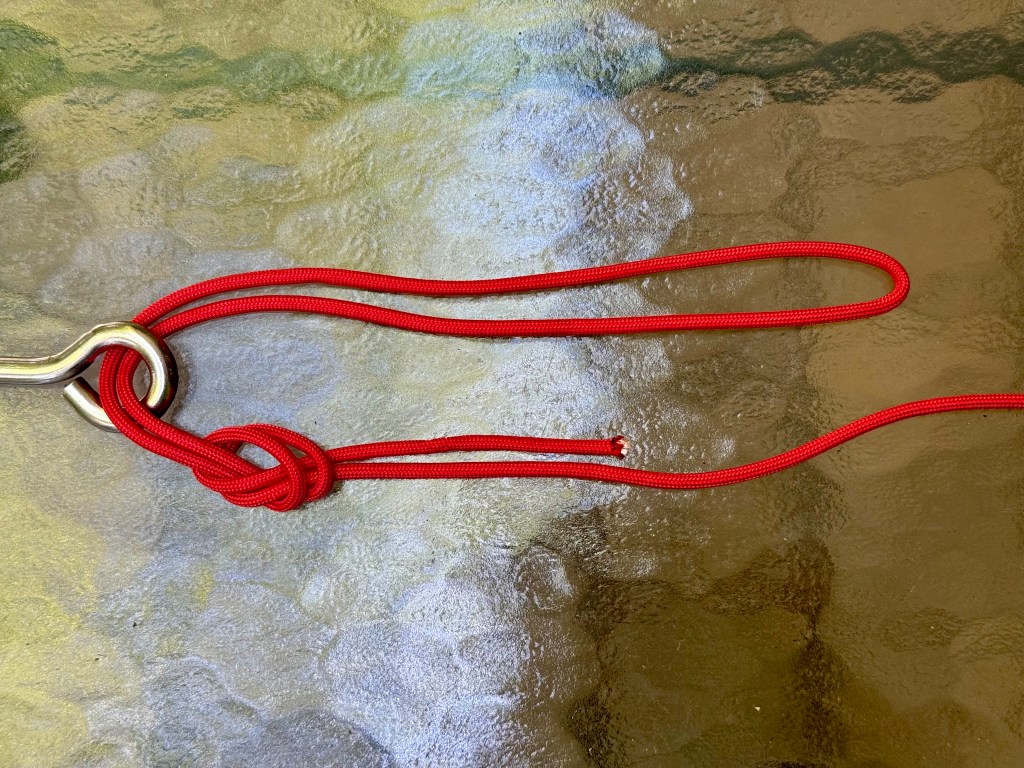
(1) Double the line. You can fold the line over on itself, or lay another segment of the same material along side if you don’t want to shorten your leader as much. In a thin line, make this doubled section 3” long (try 4″ the first time you tie it).
(2) Tie an overhand knot in the doubled section,~2” from the tag end. Don’t snug it tight yet, but keep it open 1/8 to 1/6”.
(3) Slip the doubled end through the hook eye.
With hook sizes #6 and smaller, that loop won’t fit through the hook eye without a fight, so I cut the line to make two ends and slip them through one after the other.
(4) Slide the line through the hook eye until the overhand knot touches or comes close to the hook eye, and lay the loop beside the doubled reel-ends of the line.
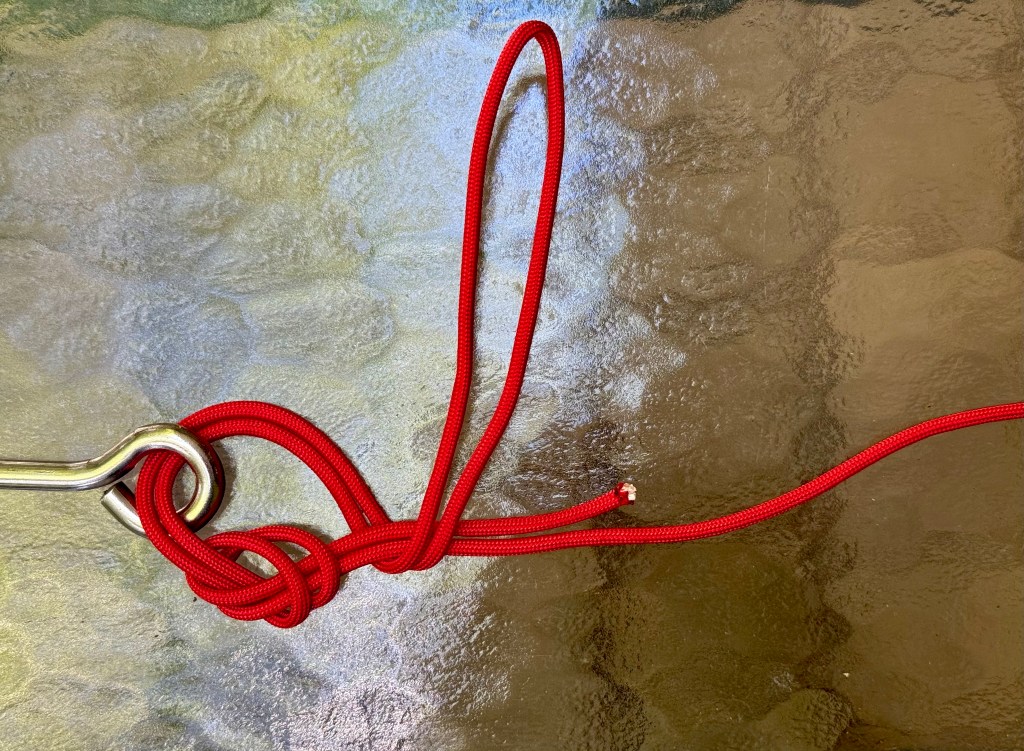
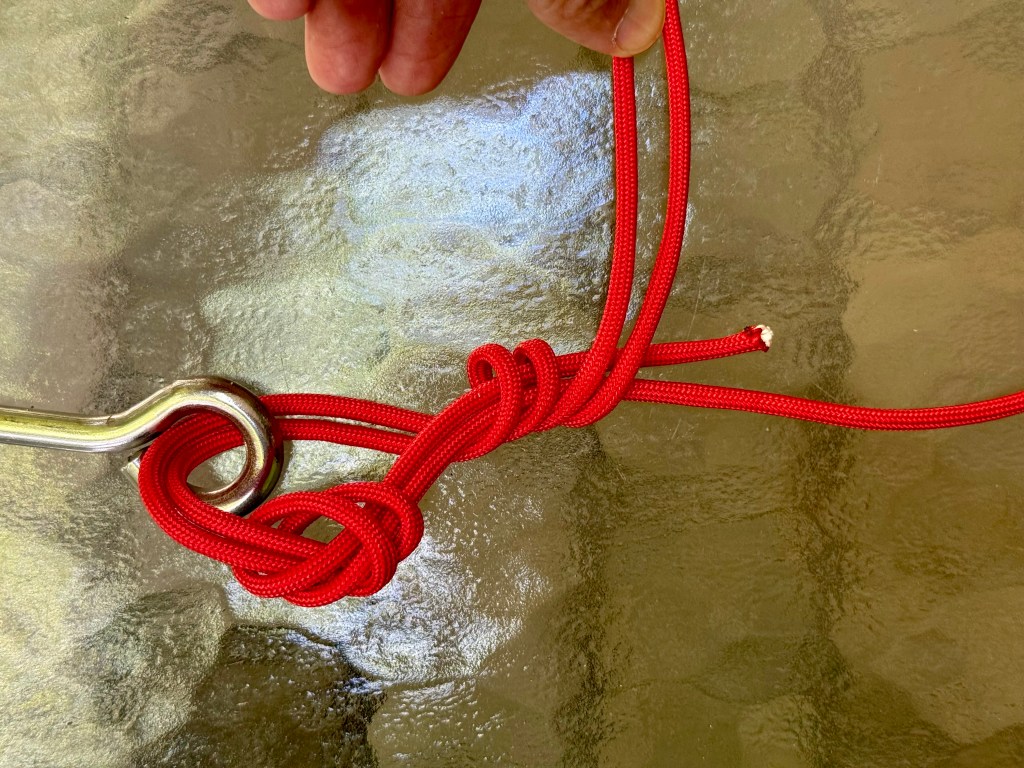
(5) Wrap the loop end (or 2 cut ends) 1.5 times around the double reel-ends of the line.

(6) Slip the loop end (or 2 cut ends) back up through the overhand knot.

(7) Pull the knot tight, being sure to tug all involved strands.

(8) Cut the 3 tags short.
The knot typically consumes 6 inches of my tippet or leader. To conserve the original leader, you can tie the same knot with a second piece of line instead of folding over the tippet on itself. Here’s an example where yellow parachute cord is the 2nd piece of line:


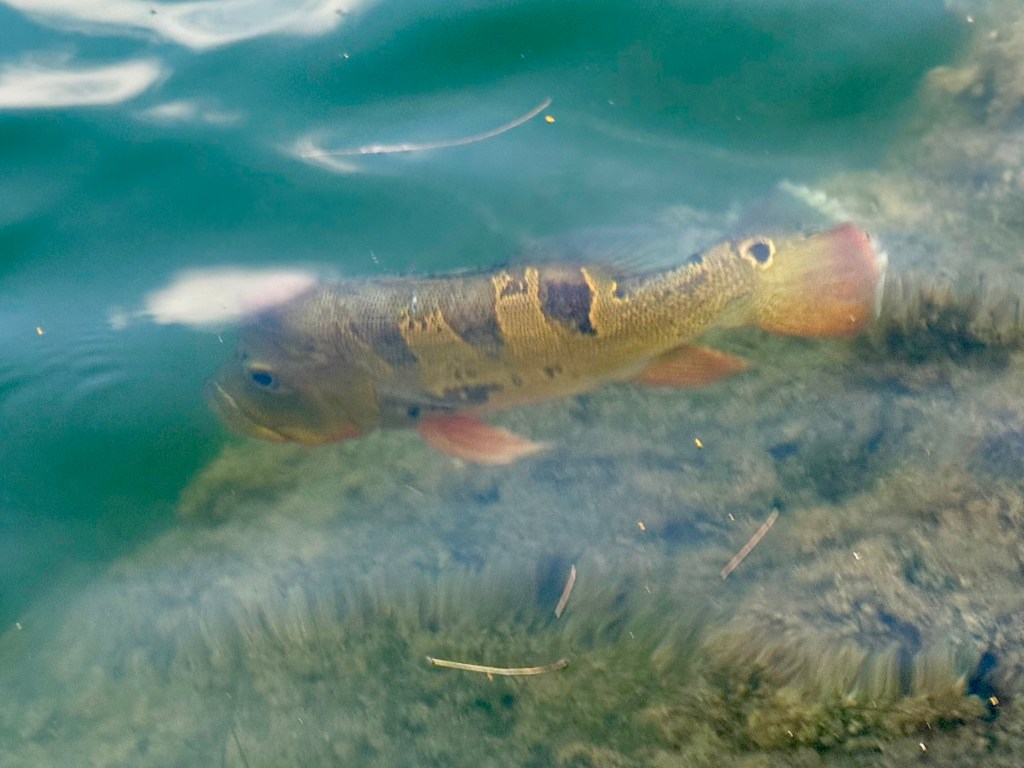
Here it is holding an 18” peacock bass on 1X tippet. Let me know how it works for you: pkstoddard@gmail.com
Tight knots!
© Philip Stoddard
 Eye of the Cormorant