Not the TV dolphin, a kayak flipper.
My kayak fisherman buddy Cesar flipped over in a shallow rill along the edge of Florida Bay. Poor guy had no choice but to thrash around waist deep in shallow water and sticky mud groping for his lost fishing gear. He paddled back to the marina soaked, muddy, and completely humiliated.
It’s genuinely hard to flip a rotomolded fishing kayak in flat water. These craft have high primary stability and stick tight to the water’s surface. Nor is Cesar a beginner so I don’t think the flip was his fault. Two related stories suggest possible explanations.
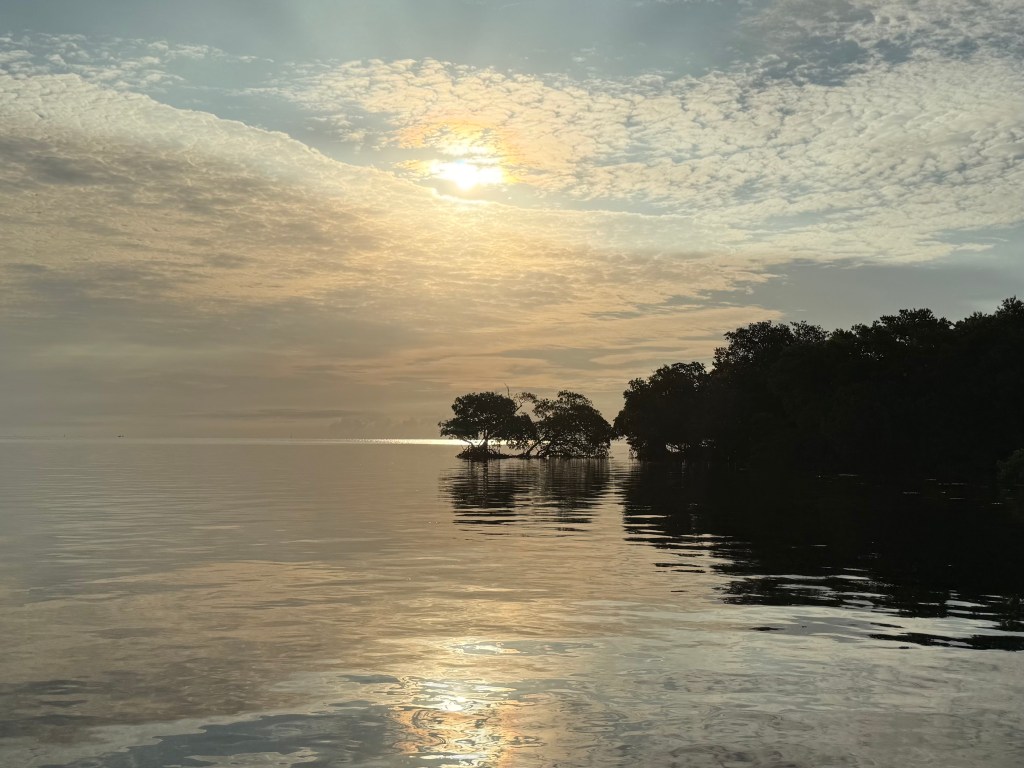
In September 2015, I took my wife Gray out for a birthday paddle in Biscayne Bay. I was a couple of boat lengths ahead as we passed over a bed of lush turtle grass in two feet of water. Out of nowhere, a wave rose up another two feet above the bay’s glassy surface, racing for the shore-side of my kayak. Some large and unseen creature was coming at me, and fast. For whatever protection it could afford, I lifted my paddle blade and held it firmly between me and whatever was coming at me beneath the wave. The wave jumped out of the bay and exploded over me. In the next instant the kayak and I flew up into the air. As we fell back into the bay, I executed a low-brace to stabilize the kayak. I had reflexively turned my face away from the shower, affording me the view of a bull manatee rocketing out the other side, bound for deeper water. I was completely soaked and gallons of seawater had joined me in the cockpit, but I was upright.
From her ringside seat, Gray enjoyed the whole show.
An unseen bull manatee had been grazing underwater near the mangrove shore and panicked when he saw my kayak cutting off his escape route. The exploding water resulted from the hard tail flip he made to shove his body under my kayak in water the same depth as his rotund body.
Unlike my unfortunate friend, Cesar, I had two advantages that kept me from flipping over. First, I was paddling a touring kayak designed for rough water. Such a kayak has low primary stability and high secondary stability, meaning the hull rocks a bit on flat water but exerts a significant righting force that keeps it upright when tipped between 30 and 60 degrees. Second, I had a well-practiced low brace, the paddle maneuver that prevents a flip by controlling the hull’s rotational angle on the water. The low brace couldn’t prevent a soaking, but did keep me from going over.
Since then I have watched out for the telltale wave of a kayak-panicked bull manatee in shallow water. Several times I have had to back-paddle hard to let a bull manatee barrel through to safety. Cow manatees are more relaxed around passing kayaks. Being smaller, perhaps they don’t feel so vulnerable in the shallows.
But I can think of another manatee-related, possibility for how Cesar flipped in flat water.
In 2022, I purchased a Hobie iTrek 11 for inshore fishing. It’s essentially an inflatable paddleboard with a lawn chair and pedal-operated flippers. An additional inflated tube along each side provides extra primary stability. This thing is not going to flip in anything short of breaking surf. The iTrek is oval in shape and gray underneath, like a manatee.
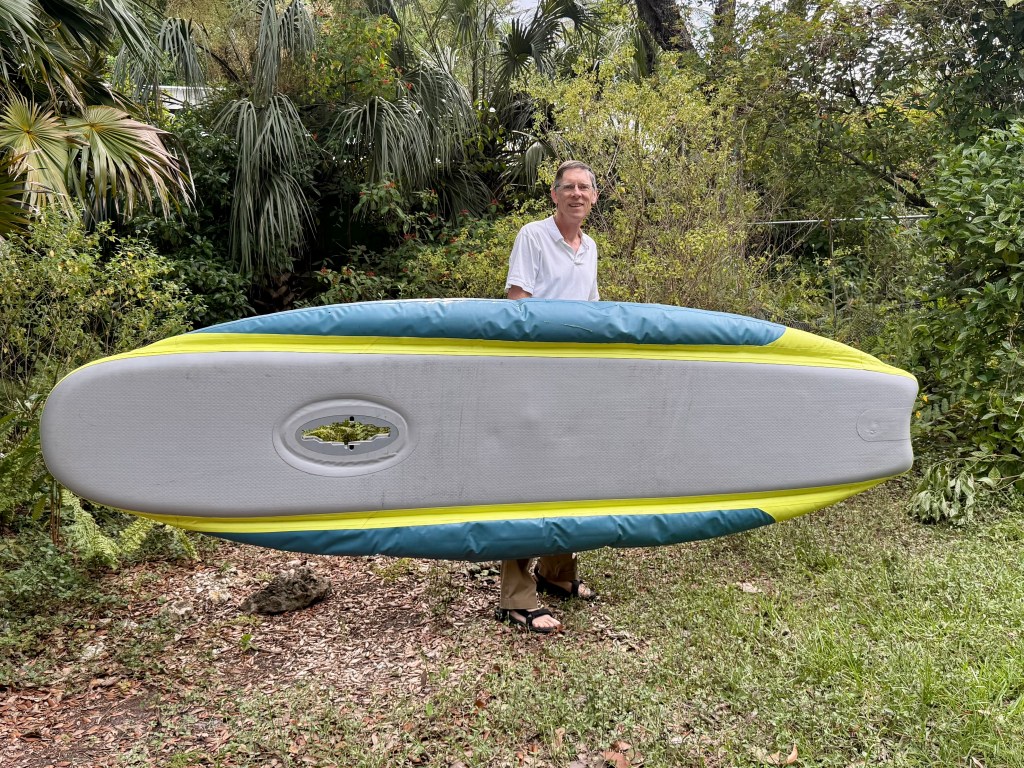
Manatees love the iTrek. Many times I have had to reel in my fishing line when cow manatees come up to snuggle. A few times the bow of the iTrek has risen mysteriously out of the water, elevated on the nose of an amorous bull. It’s disconcerting for sure, but unlike a kayak, the iTrek stays upright while balanced at one end on a manatee’s nose, with no athletic intervention by the paddler. One morning I gave up trying to fish because a bull manatee followed me everywhere I went, nudging the boat from underneath then backing away with a silly grin.
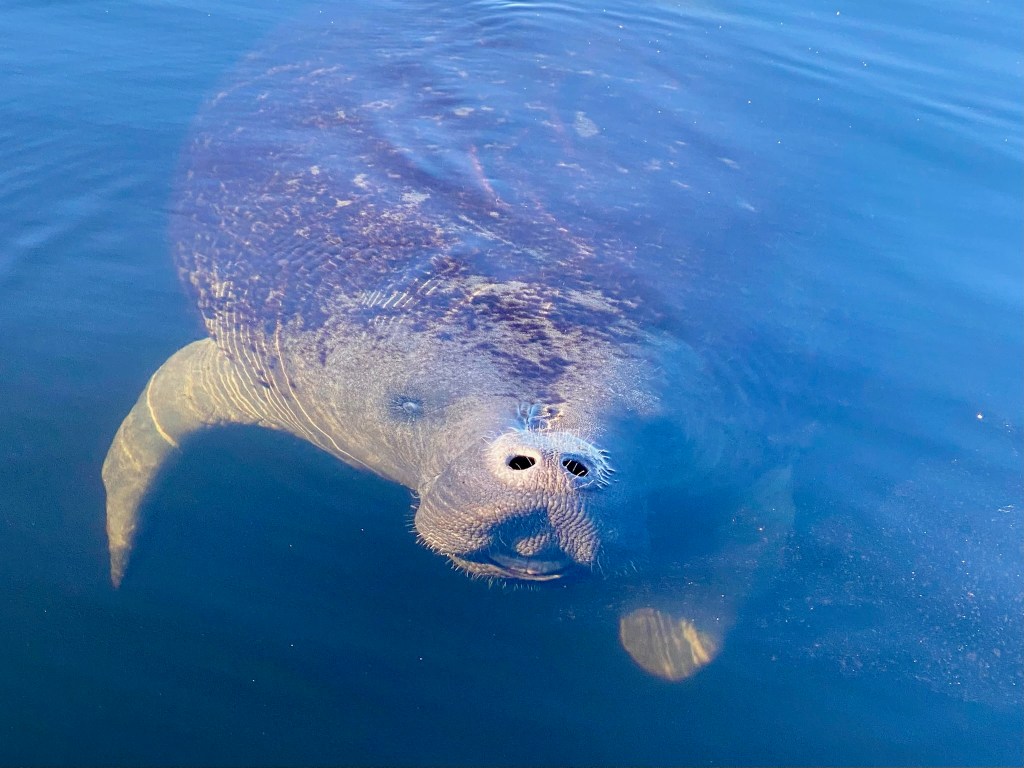
Hardly the worst reason to miss out on the morning’s fishing, don’t you think? And definitely better than being flipped over like my buddy Cesar.

