Eye of the Cormorant

another odd bird who chases fish.

Tag: adventure

  • Yucatan 4: First Permit on a Spey rod?

    Yucatan 4: First Permit on a Spey rod?

    Fly fishing for Permit on the flats of Espiritu Santo Bay in the Sian Ka’an Biosphere Preserve

    Day 2.

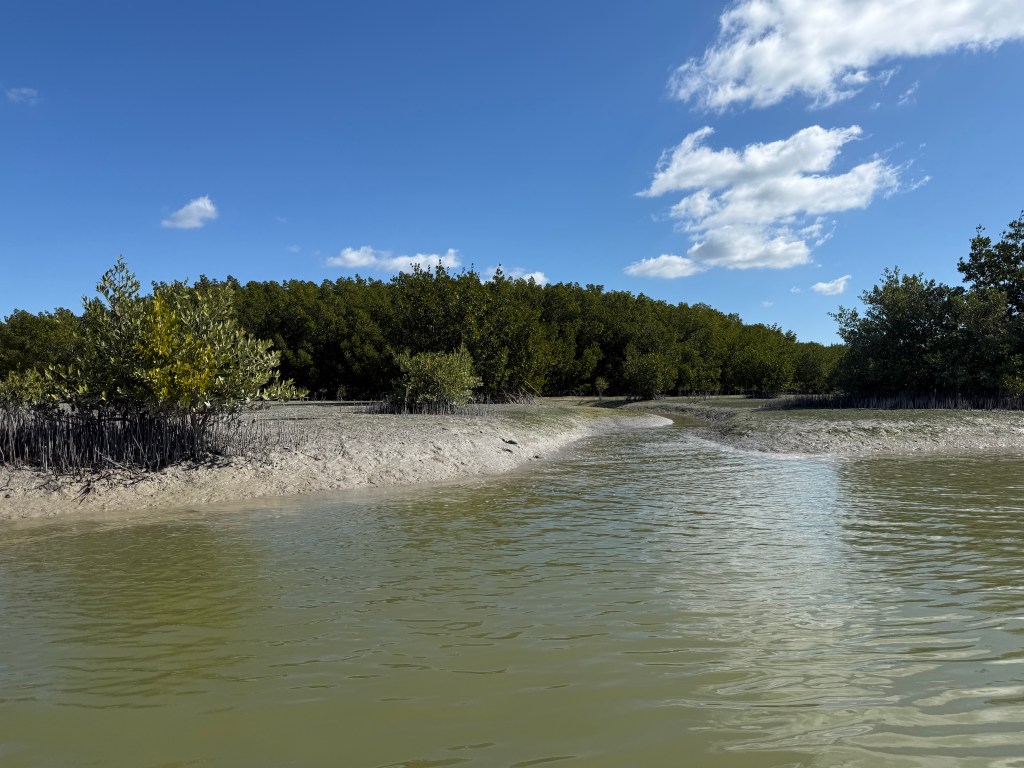
    Today I am sharing a boat with another fisherman. Our morning is spent deep in a network of steamy mangrove creeks and coves where we see lots of juvenile tarpon and six hefty snook. The tarpon do not want to eat flies and the snook stay out of our way in the tight mangrove creeks. I catch one small tarpon and my partner refuses my offer to loan him a fly in the successful pattern. To his immense chagrin, he catches nothing but mangrove branches, usually on his backcast, each snag followed by a barrage of Spanish curses. Just outside the mangroves my partner hooks a hefty barracuda on one of the many tarpon flies that the tarpon had refused. Remarkably, the cuda does not sever the tarpon bite-tippet.
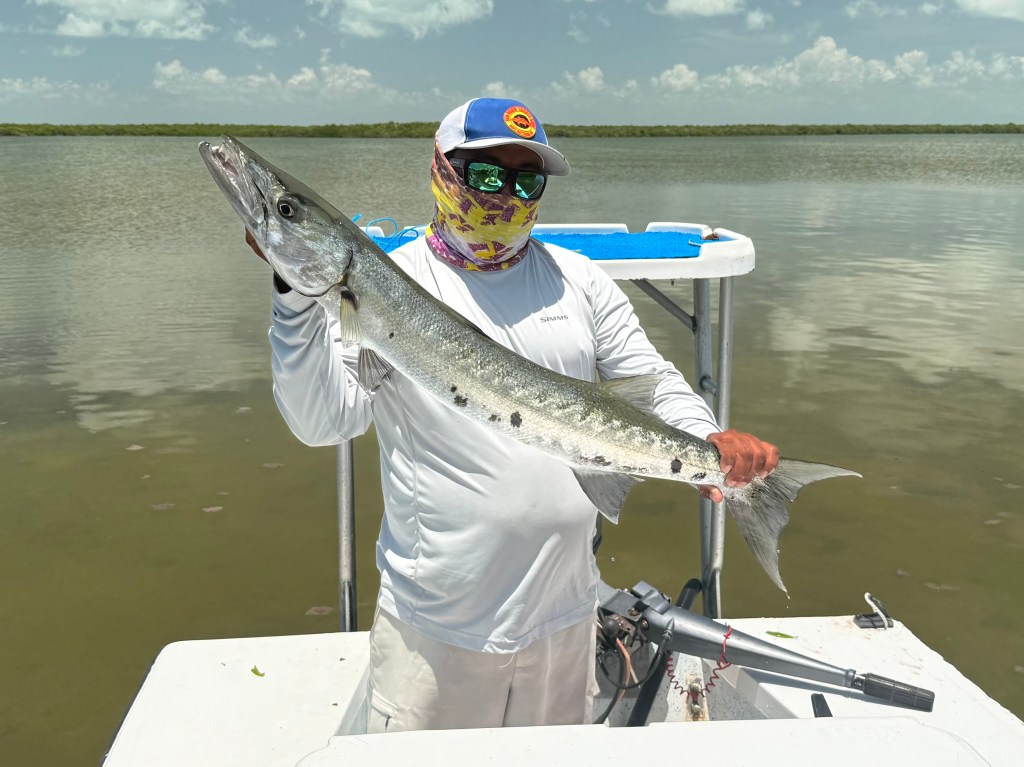
    Guide Chepo with the barracuda.

    Back on the flats again after lunch, it’s my turn to be up front casting. Our guide Chepo takes us to a shallow stretch of green water edged by a beach. Just as we arrive, a school of ~20 Permit rips past us going the other direction. Chepo stows his push pole and fires up the outboard. We roar out a quarter mile from the shore then head back up the beach to get around the Permit school and wait for their approach.
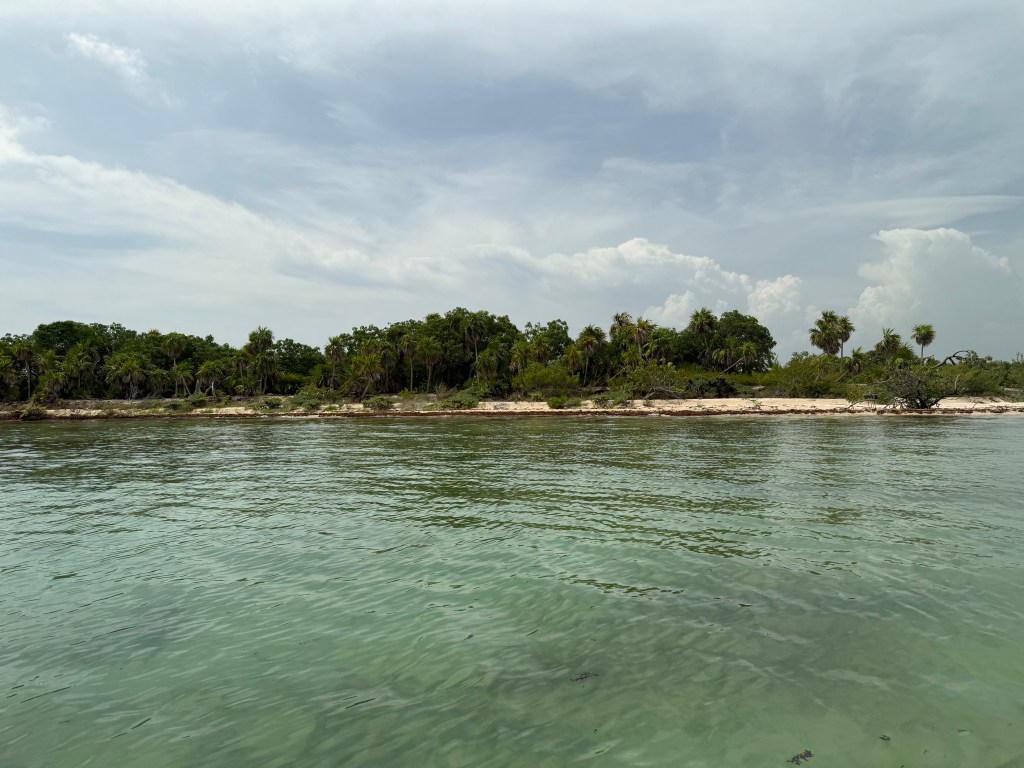
    Poling slowly off the beach we come upon the Permit school tailing in shallow water over a patch reef. Their black tails and dorsal fins extend from the water, swishing back and forth like so many knife blades.

    Chepo suggests that rather than cast from the boat, I should hop out and wade to fish for them. I love wade fishing, but more importantly, a slow-wading human pushes less of a bow wave than a boat. Chepo and I work our way carefully forward and I began casting to the closest Permit. It follows the fly briefly two times but turns back each time.

    As I prepare to cast again, the other fisherman, who will not be named, has worked his way up the beach. I assume he wants to watch, or maybe wait his turn to cast after I hook up. Instead he flanks me and starts casting into the middle of the Permit school. He lines a Permit (i.e., throws his fly line over a fish). That Permit spooks, and the whole school takes off for the middle of the bay. He does not apologize. Even though it was my turn to be on the bow and I was working the school first, he insists he’s allowed to wade fish the same school at the same time. A small black cloud settles in over my head.

    While my boat partner is on the bow, I become aware of the inevitable, creeping dehydration and reach for my water bottle, which has rolled deep behind the seats. While retrieving the bottle, I accidentally scrape it lightly on the hull. Unbeknownst to me, my boat partner is working a group of permit and they turn away from his fly following the audible scrape. I apologize profusely. Despite my annoyance, I did not consciously scrape the hull with the bottle. After chewing me out, my boat partner says, “Well, I guess we’re even.”

    * * *

    DAY 3

    Before getting back on the water here in the Yucatan, I’ll back up a month. Gearing up to fly fish for Permit, I went out every day to an open lake or salt flat near my home to practice casting heavy crab flies in the wind using my moderately fast Sage 9wt fly rod. 

    People usually fly fish for permit using a beefier 10wt fly rod because the heavier line penetrates the wind better. In fact, my friend Juan offered to loan me his ultra-fast 10wt rod for the trip.

    Experience has taught me that my two enemies in a fly rod setup are fast and heavy. Even my moderately fast 9wt setup tends to overload my light bone structure and aggravate old injuries. That’s why I’d built a 8/9wt fly rod around a softer rod blank. My hand, wrist, and elbow get progressively grumpier with every step up in weight. My preferred flats rod is a 7wt – anything heavier is asking for trouble.

    And trouble I got. Two weeks before the trip, I sprained my casting hand through the repetitive motion of a home carpentry project and daily casting practice with the 9wt. Ice reduced the pain, but healing was slow and I had to lay off casting practice to aid the recovery. The day I left for the Yucatan, my hand felt 95% better.

    My wise spouse, who does not fish, nonetheless integrates information well and has a history of dispensing good fly fishing advice. She suggested I bring, as a backup, my two-handed “Spey” rod. Because it doesn’t load the same joints as a one-handed fly rod, if or when my right hand gives out again, I could continue to fish.

    I’d never heard of anyone fishing for Permit with a two-handed rod, so I sought a second opinion from Anthropic’s “Claude” AI chatbot (Sonnet 5 medium LLM):

    “Does anyone fly fish for Permit with a two-handed fly rod (Spey rod)?”

    Claude returned a five paragraph treatise, the gist of which was that Spey rods are designed for distance, not accuracy, and that I’m a sacrilegious twit for considering such a crude instrument in the noble pursuit of Permit. Claude did throw me a small bone in the last paragraph:

    That said, “almost never” isn’t “never” — some experimental or novelty anglers have tried switch rods or short two-handers for permit, mostly out of curiosity rather than because it offers any real advantage. It’s not a recognized or recommended technique in the permit-fishing community.

    Being a scientist, I necessarily qualify as an experimental angler. My two-handed fly rod is 13 feet long, though, not a short two-hander or a switch rod. But what the heck, maybe I’ll be the first person to catch a Permit on a proper Spey rod.

    OK, fat chance. Still, an extra checked item in my baggage would only cost $60 each way – not a bad price for trip insurance given the recent injury to my right hand.

    Sure enough, after my first two days of fishing for fussy Permit with one-handed 9wt rods (“Cast again, same place!”), my right hand is trashed. I have four more days of fishing ahead of me here in the Yucatan. Casting left-handed, I’m quite accurate at close range but I can’t reach the full distance needed to hit every Permit shot the guide calls. So, on DAY 3, out comes the two-hander.

    * * *

    Yesterday’s boat partner has hired a guided boat all to himself for the rest of the week. Good idea. This day I share guide Chepo’s boat with Tim.

    As Claude had explained, the two-handed fly rod won’t let me place a fly as precisely as I can with a single-handed rod, but contrary to Claude’s pronouncements, it excels at every other demand. Without hurting my hand, the two-hander tosses heavy permit flies 60 feet in a wind. Plenty of times a permit ignores a fly, so repeated casts are needed, even with a one-handed rod. When the guide calls out “Cast again, same distance, more left!” the two-handed rod can pick up 40-50 feet of fly line and recast it “more left” 60 or 70 feet with no time-wasting false casts.

    From my collection of Permit flies, Chepo selects a white tie of Dave Skok’s Strong Arm Merkin. I always fish with the tip of the hook barb depressed. Saltwater fly fishing pioneer, Chico Fernandez, insists that by pressing just the tip of the barb down to make a hump out of the barb, you get the best of both worlds: the hook penetrates better but also comes out when you want it to. That’s helpful when you hook your clothes, or worse, your cheek. If a precious fish breaks off with my fly in its mouth, I want it to shed the hook easily.

    Back at the same spot mid-afternoon, a Permit follows my fly twenty feet before pouncing on it. I set the hook and the Permit takes off. That 20 foot follow has left me with a bit over twenty feet of loose fly line, piled in random curls on the deck behind me. As the fish starts its run, a strong gust blows a loop of that loose line up over my head and around my neck. Gripping the rod in one hand, I flail frantically with the other to get the line off my neck but in an instant it comes tight around the back of my head and the 16 pound tippet snaps. Rats!

    Lesson learned: no matter the excitement of a permit chasing the fly, I must do what it takes to throw the retrieved line back and DOWN so the extra loops land inside the cockpit and not on the deck.

    The break-off aside (beginner’s mistake), the two-handed rod had proven it could hook a permit. Even better, I have not been strangled nor my carotid artery severed by a fly line attached to a powerful fish.

    But I have not spooked the school, so it’s Tim’s turn to try. He and Chepo hop out of the boat to wade, while I stay behind and make a point of not spooking his fish.

    Tim lands a nice one.
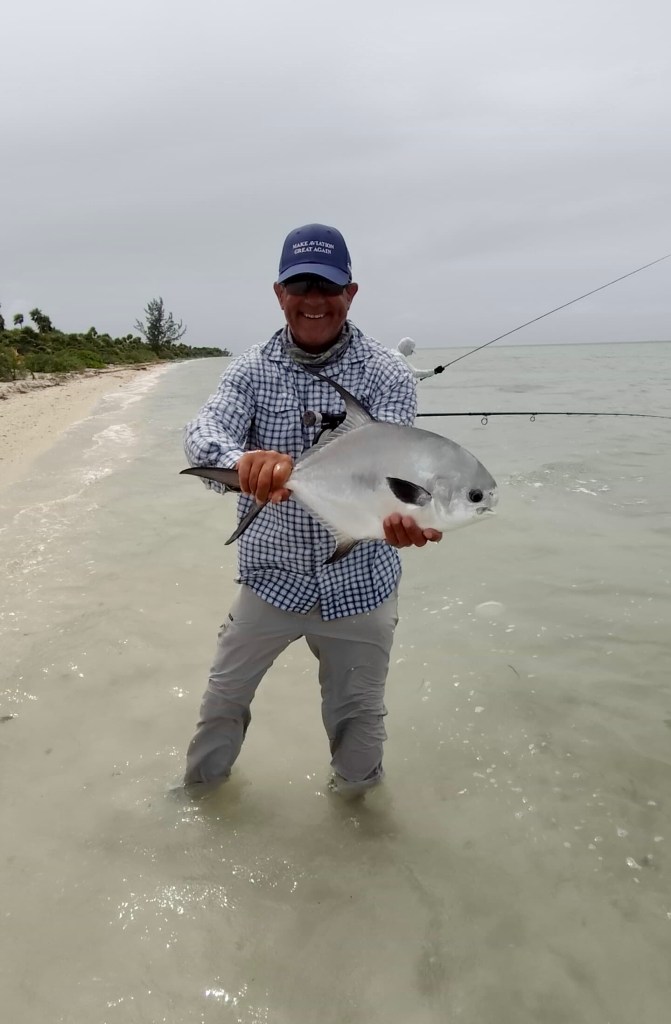
    A boy and his fish. I’m in the back, trying again. Photo by Chepo..

    The Permit school is still there, so I climb out and try again. During my first retrieve, a big barracuda slashes through the school, probably in pursuit of Bonefish. The water explodes in a sparkle of silver flashes, Permit and Bonefish bound for deep water. The fishing day is over.

    DAY 4

    My partner today is Chris. I am heeding the lesson of yesterday’s error. After casting from the foredeck in the stiff wind, I bend down or kneel for the retrieve so I can carefully pitch each curl of loose fly line back and down into the cockpit behind me where the wind can’t make mischief of it. I am using a new fly of the same pattern as yesterday, but in cream instead of white.
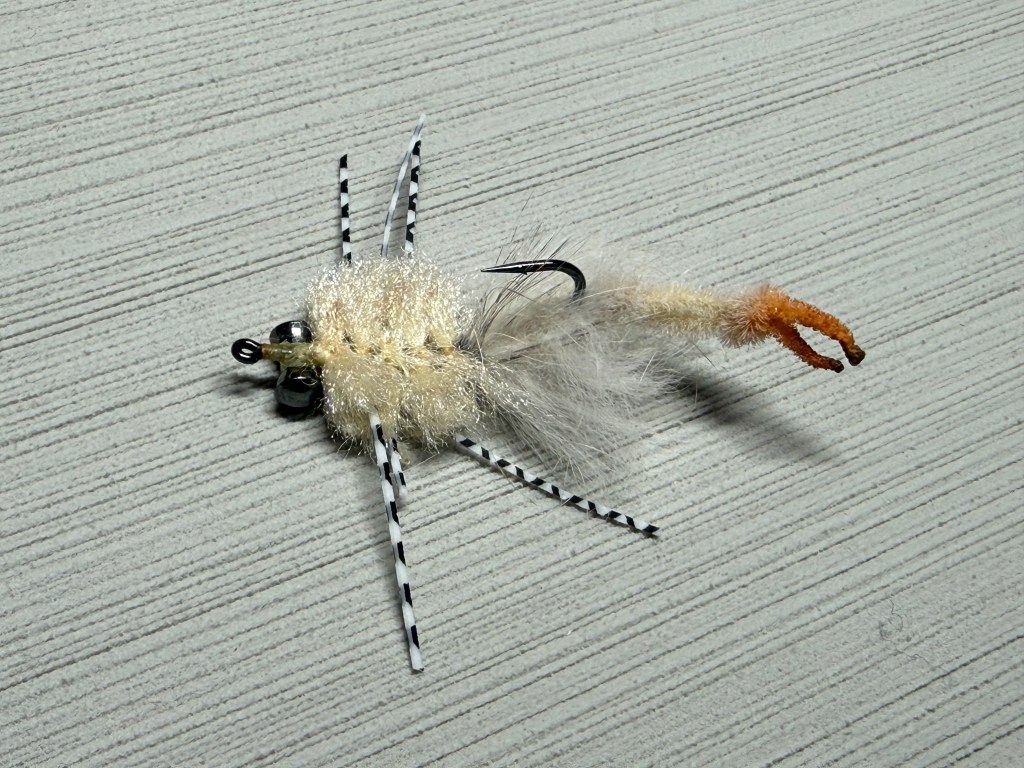
    Strong Arm Merkin, missing part of a leg, nipped off by a baby Blue Runner.

    Chris gets out to wade fish our magic afternoon spot and casts repeatedly to a Permit, but each time a succession of small Bonefish zoom in to snatch away his fly. After a catching and releasing a bunch of little squirts, he hooks into a decent Bonefish.
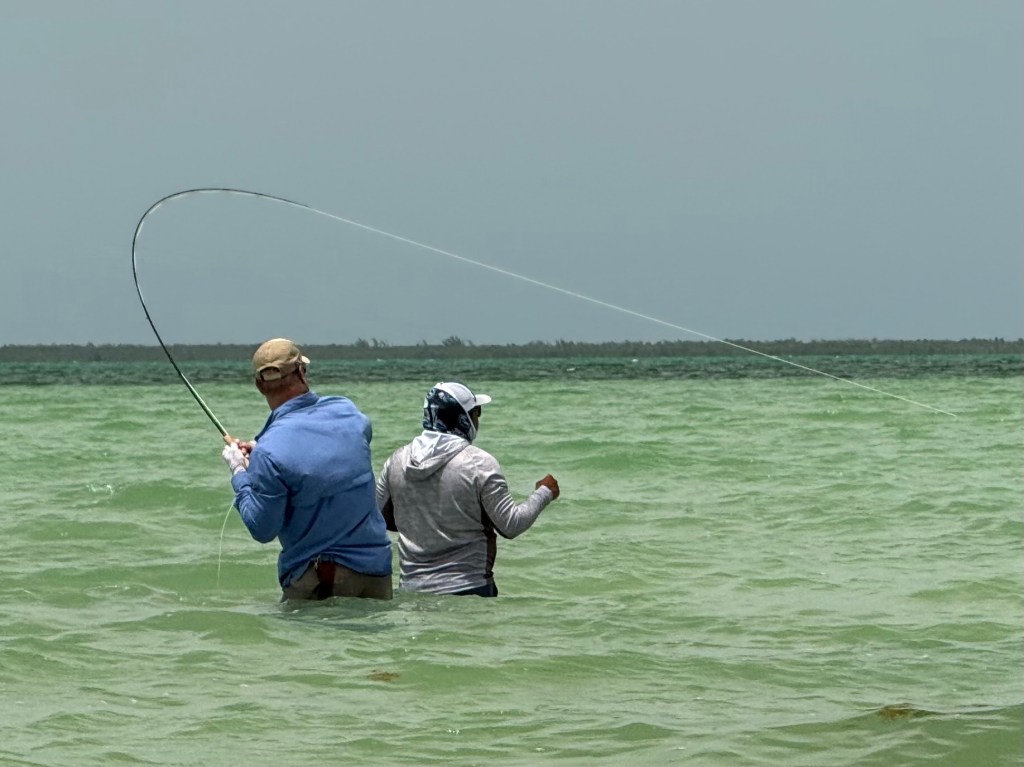
    Here Chris wrangles a pesky 4 lb Bonefish that snatched his fly from in front of the Permit.

    It does not please him. Only a missed Permit could turn a nice Bonefish into a disappointment.

    Using the two-hander, I hook up on another Permit and get it “on the reel”, meaning the line slack safely is taken up and the reel’s drag is engaged. 

    The fish runs down the beach, so I hop from the boat and wade after it to recover some line and make the fish quicker to land when it tires. Chepo wades in behind me while Chris stays with the boat and takes video.
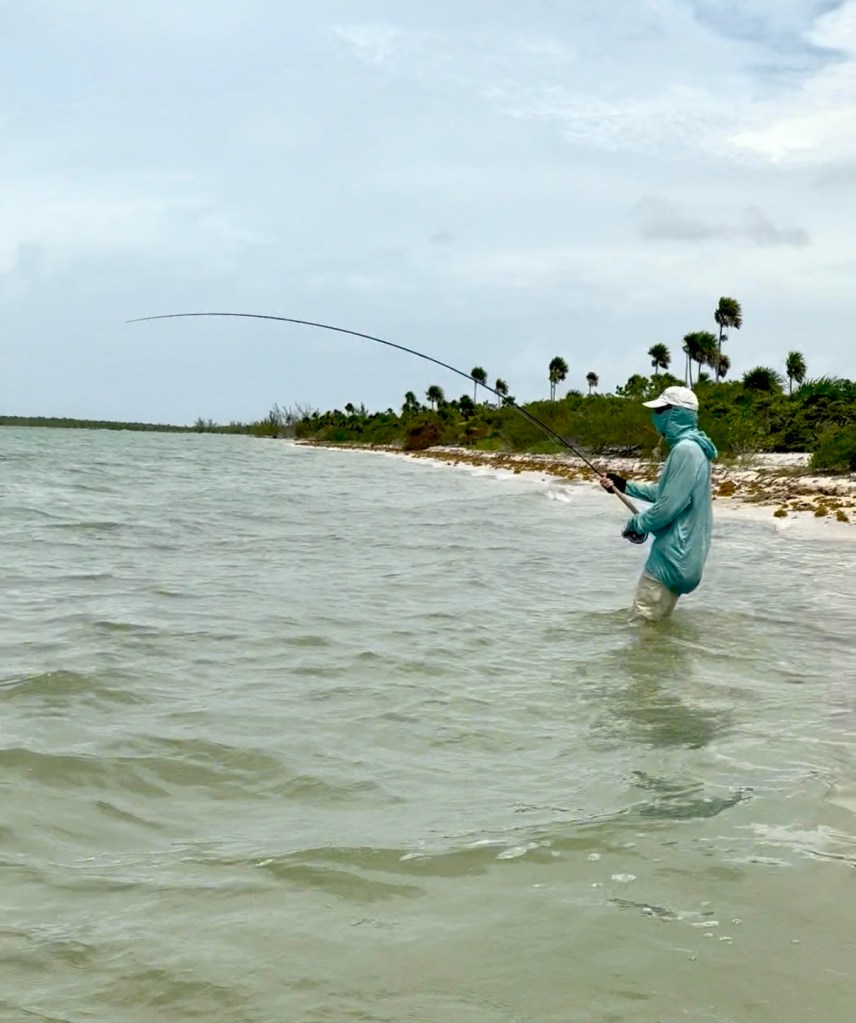
    Permit on the two-hander. Notice how little the two-hander bends compared to a single-handed rod. Photo by Chris Webb.

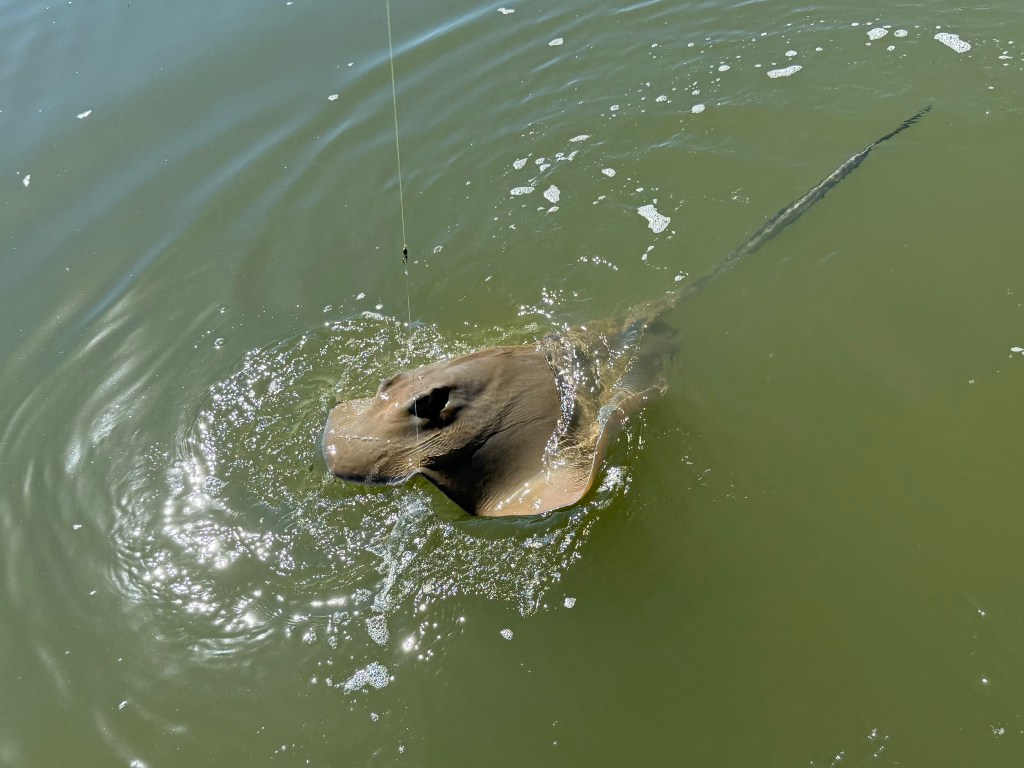
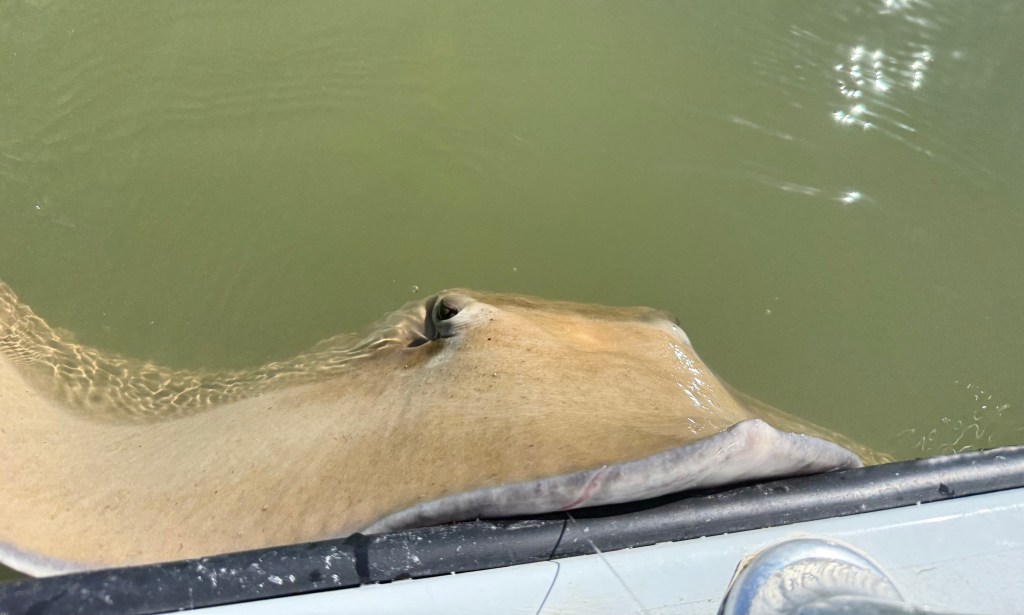
    I mostly keep my eye on the fish but glance down to avoid stepping on a sting rays in the shallows. Shuffling one’s feet is a safe practice but it stirs up the sediments.
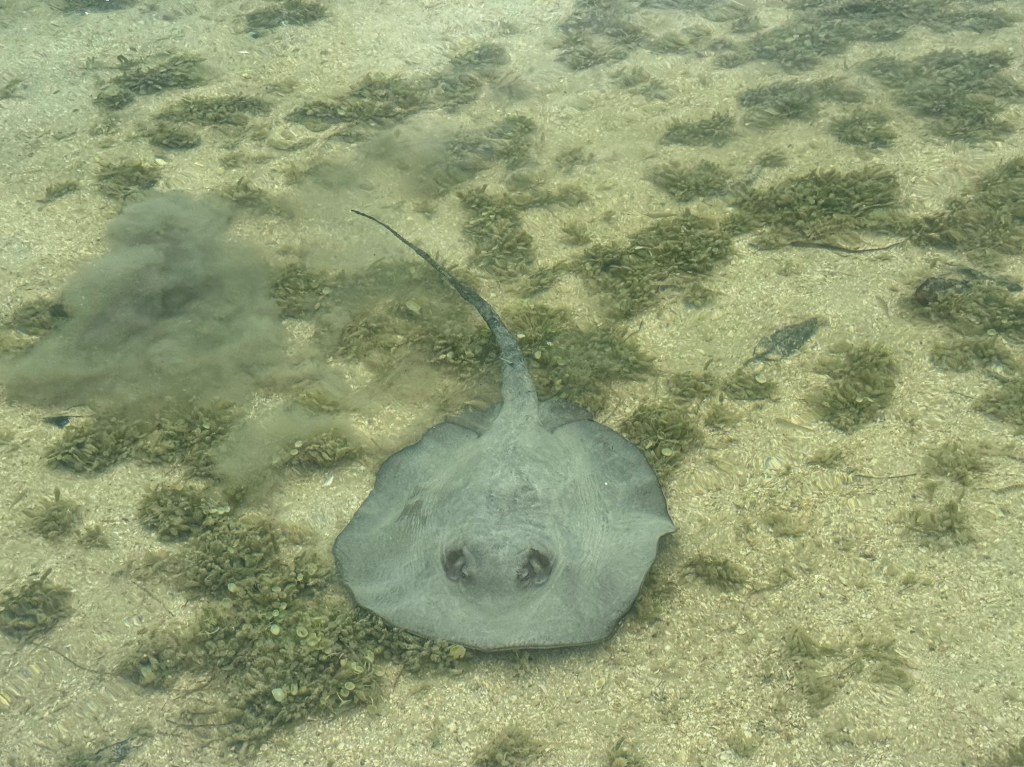
    I try not to step on one of these dudes, which are common in the shallows.

    Though I landed my first Permit myself, Chepo wants to land this one, and I let him – he likely knows something I don’t. Holding his cellphone-camera aloft in one hand, Chepo tries twice to grab the permit by its tail with his other hand, but each time the fish bolts back to deep water, forcing Chepo to duck the whizzing fly line. 
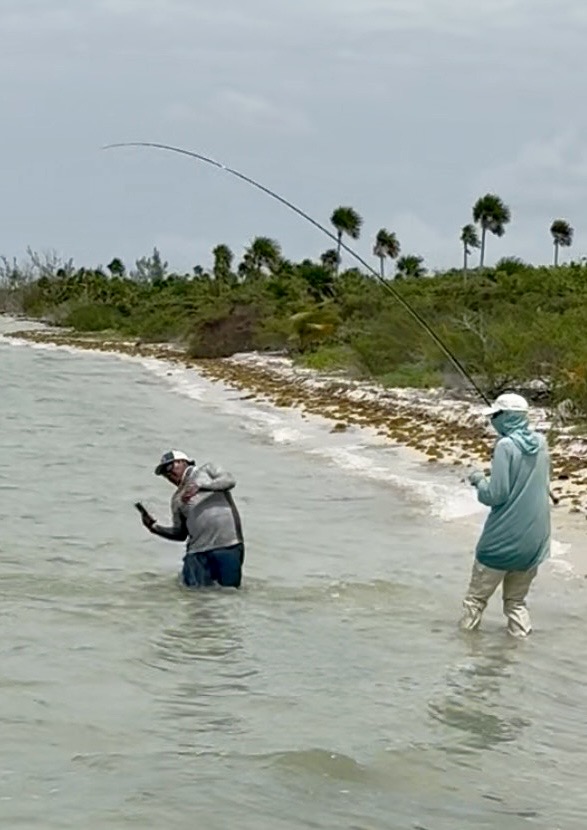
    Chepo has good reflexes. A guide doesn’t want to break off his client’s Permit.

    Third time’s a charm and we have the fish to hand.
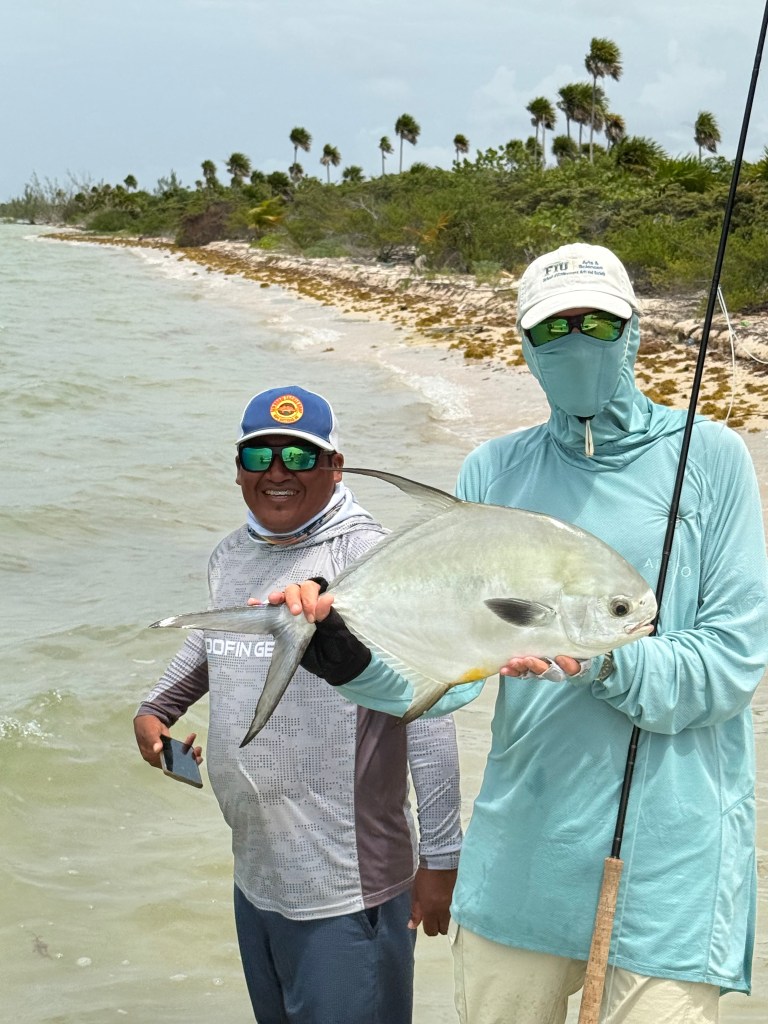
    That’s a proper Permit, not a monster, but solid. When I remove the fly from its mouth, the tippet breaks in my hand.
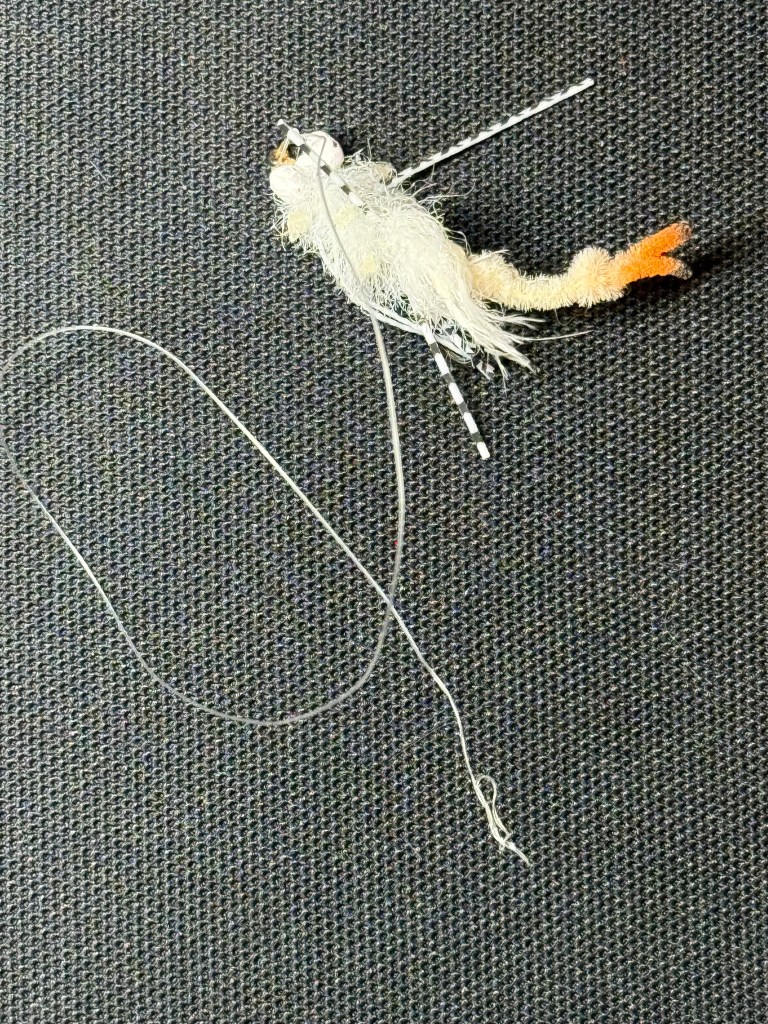
    This Permit has not only chewed my fly to a pulp, it has shredded the tippet most of the way through, probably by rubbing it against corals. I really don’t know how this fish didn’t break off before we landed it. That risk is probably why Chepo was so eager to grab the Permit as soon as possible.

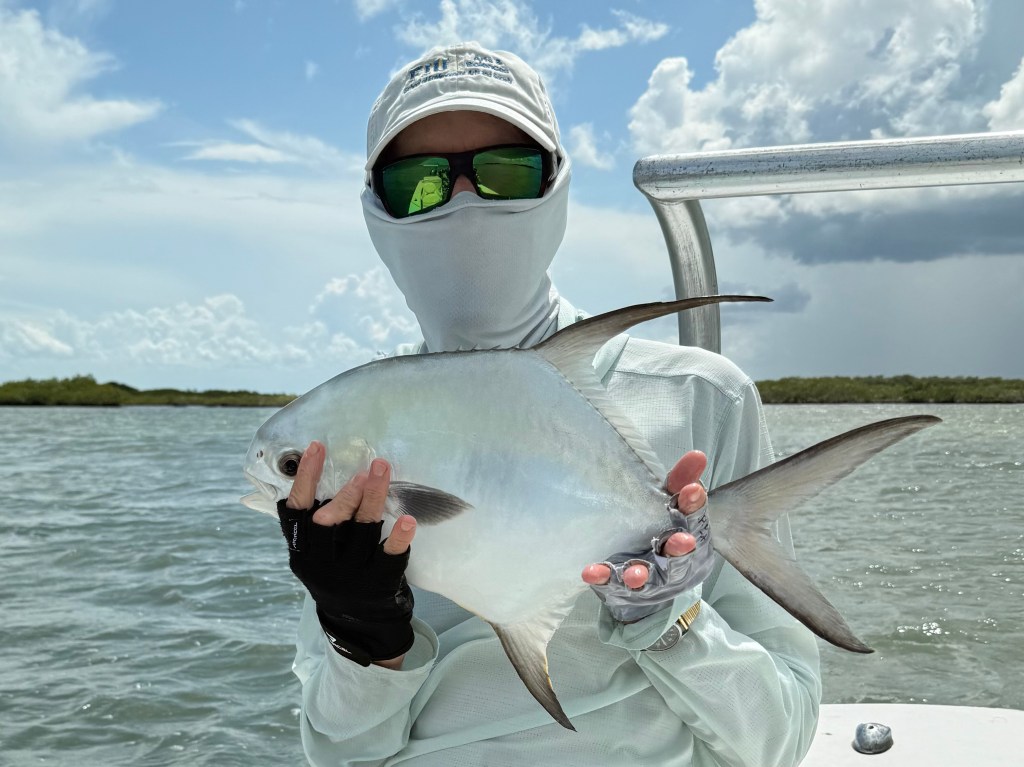
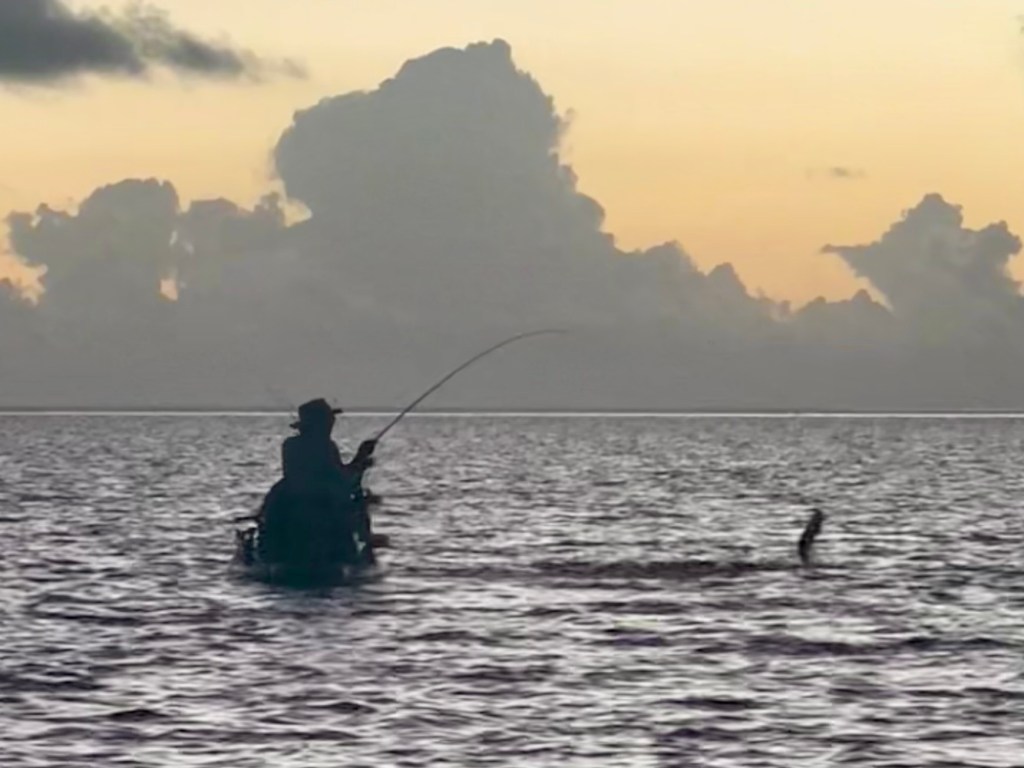
    After quick photos, I release this Permit, perhaps the first caught on a Spey rod. It hurries off to rejoin its school in the green waters of Bahia del Espiritu Santo.
  • Yucatan 3: First Day- “More longer”

    Yucatan 3: First Day- “More longer”

    Breakfast at Playa Blanca Lodge is whatever you want. I had coffee, OJ, fresh tropical fruits, an omelette, and two strips of bacon. We packed our lunches from an equally splendid spread of ceviche, fried fish, leftover roast beef or BBQ ribs, fruits, sandwich fixings, French cheeses, you name it. You want bottles of water, limeade, beer? How many?

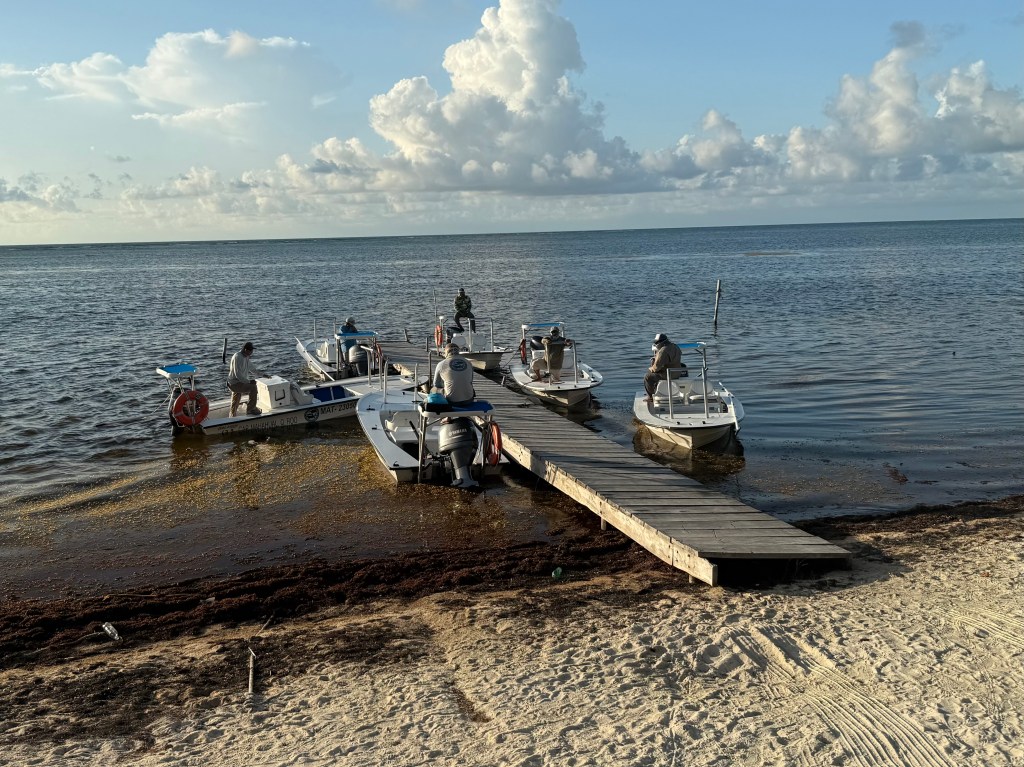
    At 07:10, fly fishing guests assembled at the truck for the 20 minute ride south to the dock. Skiffs departed the dock each day at 07:30 and returned by 16:00.

    The flats of Espiritu Santo Bay (Bahia del Espiritu Santo) are accessed by a fleet of small Dolphin skiffs. The ride south is bouncy in the waves driven by the prevailing SE trade winds, but the small craft are dry and easy for guides to pole. The guides are all local fellows from the Yucatan. My guide the first four days was a short, stocky fellow named Chepo, pronounced “Chay-Poe”. The first day on the water, I had Chepo and his boat to myself.

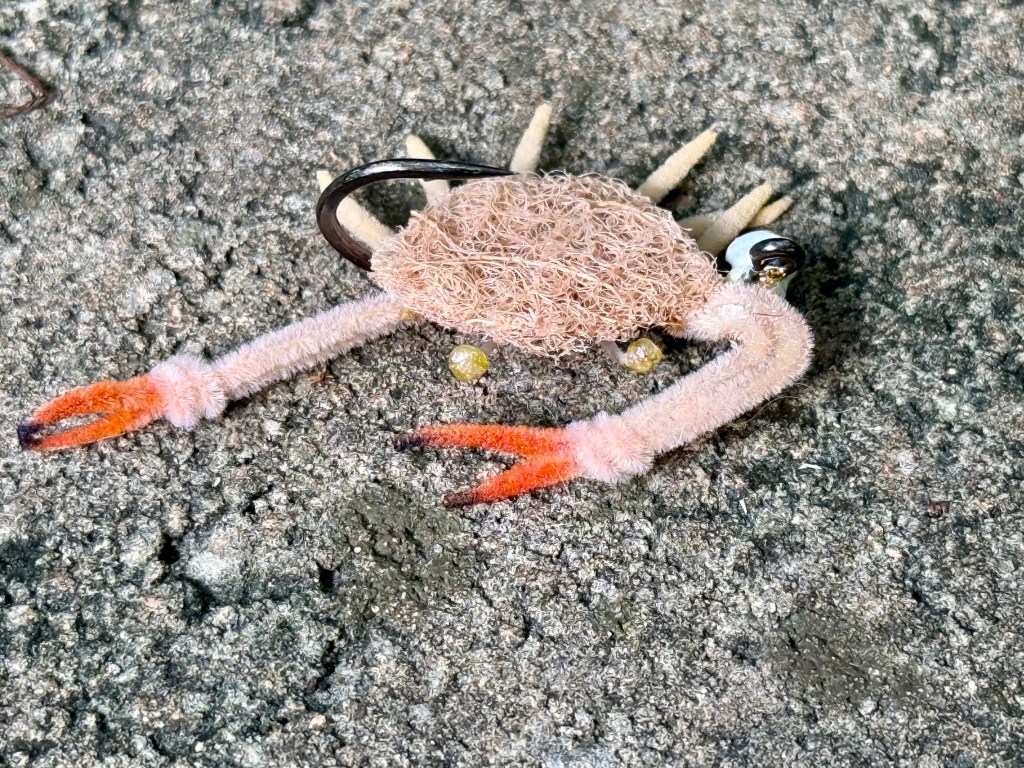
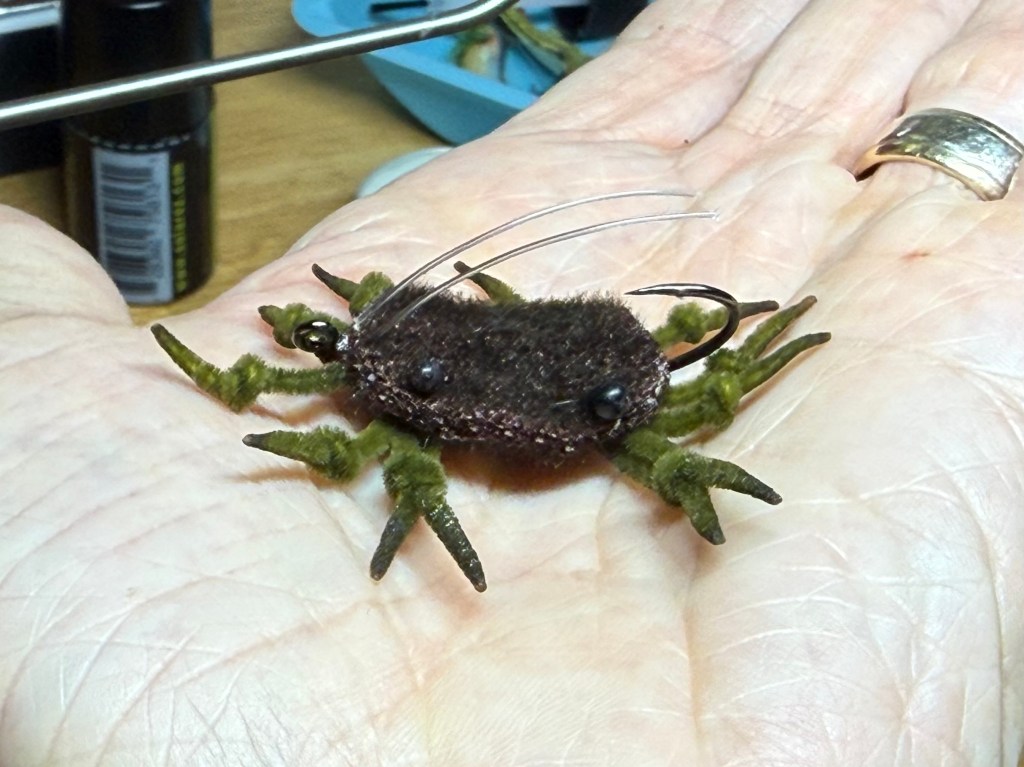
    Chepo looked in my box of permit flies and picked out a crab fly, my favorite by chance, that I’d crafted from a coconut fibre scrubbing pad and some “ultra chenille”.

    Up on the poling platform, Chepo deployed his magic flats vision, spotting fish invisible to me under the shimmering waves.

    In addition to Spanish, Chepo speaks a dialect of fly fishing English, enhanced with his own units of measure:

    “Eleven o’clock, forty feet”  means
    “Cast 45° left of center, sixty feet”.

    “White, white…”  means  
    “Wait, wait…”

    “Cast again! More longer!”  means
    Throw the fly in the same direction, but seventy feet.

    Once I learned to follow Chepo’s directions (“white” took the longest), I began to catch fish.

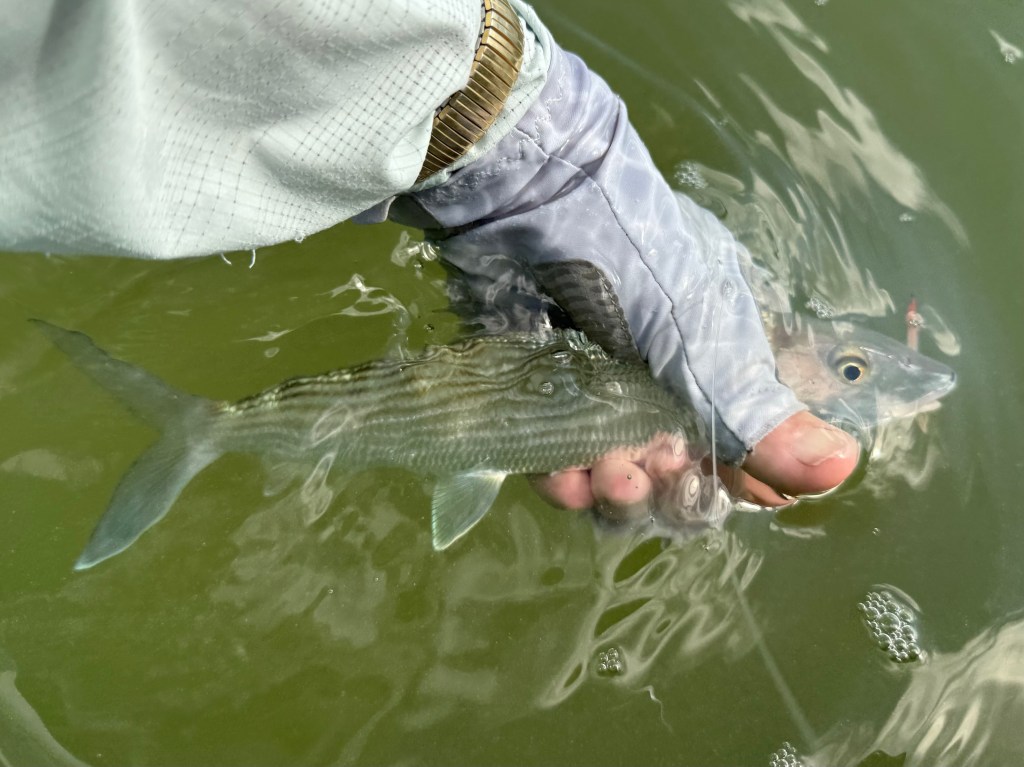
    A baby Bonefish, my smallest ever on fly, somehow managed to stuff most of that crab fly in its mouth.  

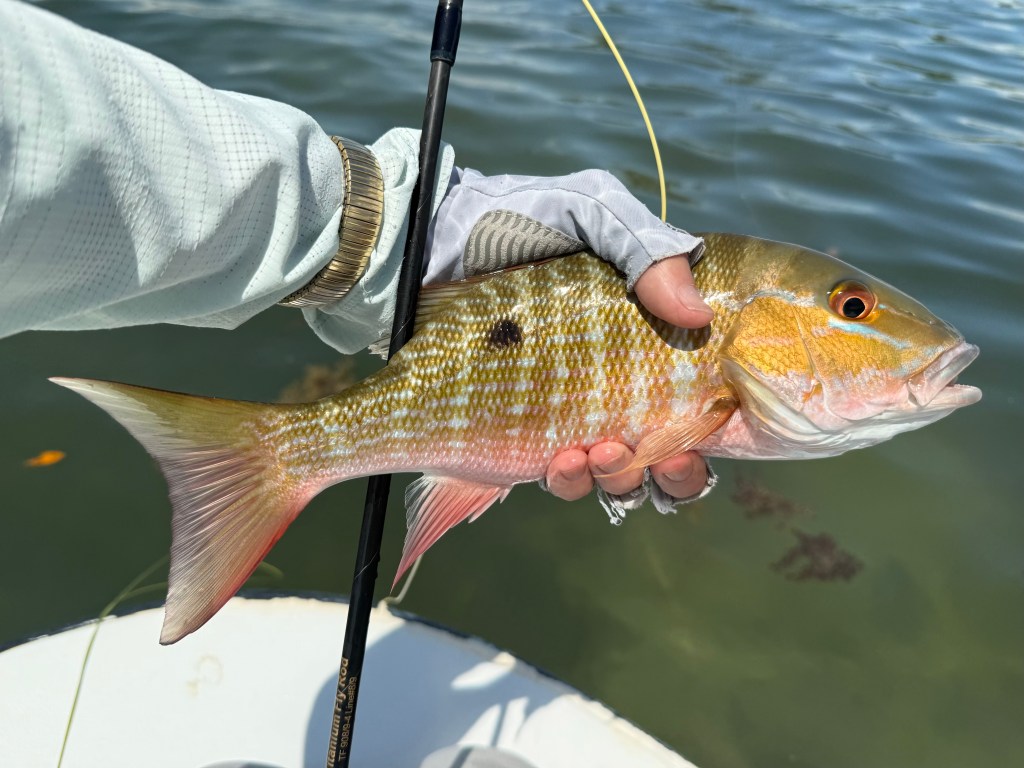
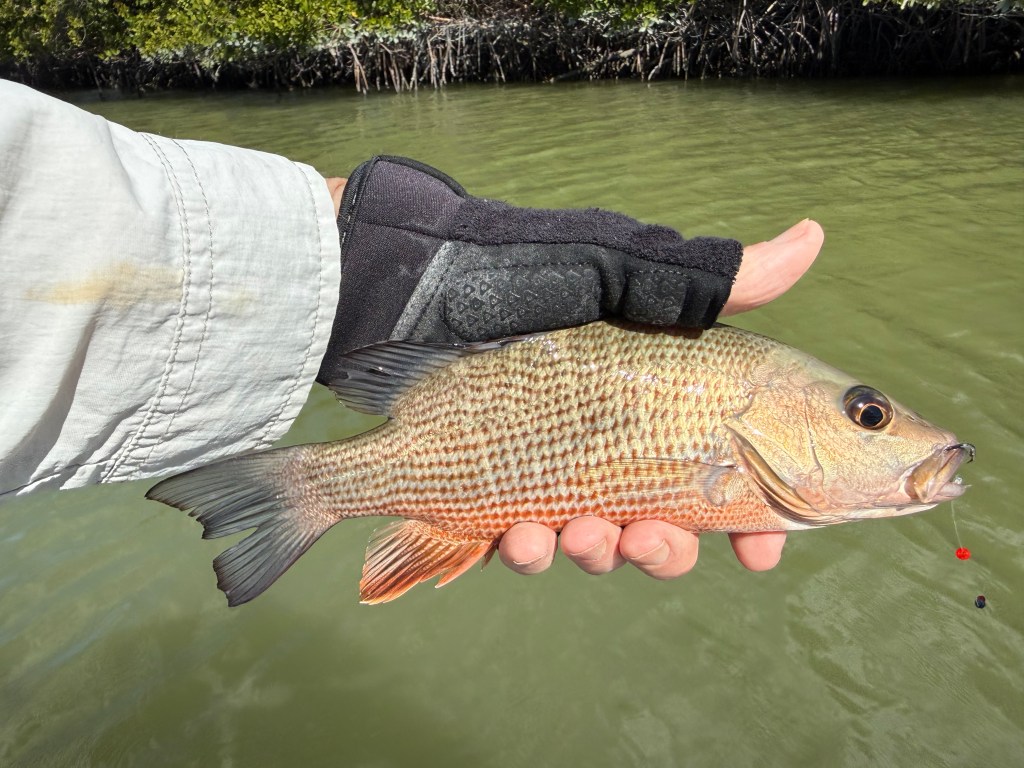
    Some juvenile Mutton Snappers likewise gulped down the crab fly, my first ones on a fly rod.

    An uncounted mess of small Blue Runners and Mangrove Snappers did their best to rip the fly to pieces, yanking loose bits of coconut fiber, and chewing the fuzz off the leading claw so it flopped pitifully.

    Finally a permit appeared, using my new rod, I cast what little remained of the fly: a small disk of coconut fiber, two eyes, and a trailing claw.

    “White, white, white…strip…strip…strip…STRIP-STRIP-STRIP!”

    The Permit connected with my bedraggled fly. I cleared the line and the reel drag sang the happy buzzing song that flats fishers so love to hear as the fly line sliced water in two.
    My first Permit on fly, not huge, but just dandy, on my first day fishing the flats of Bahia del Espiritu Santo, on the tattered remnants of a file that I tied, cast with a rod that I built. What’s better than that?
    Thank you Andy, Juan, and Chepo.

    Two ways to eat a scorpion

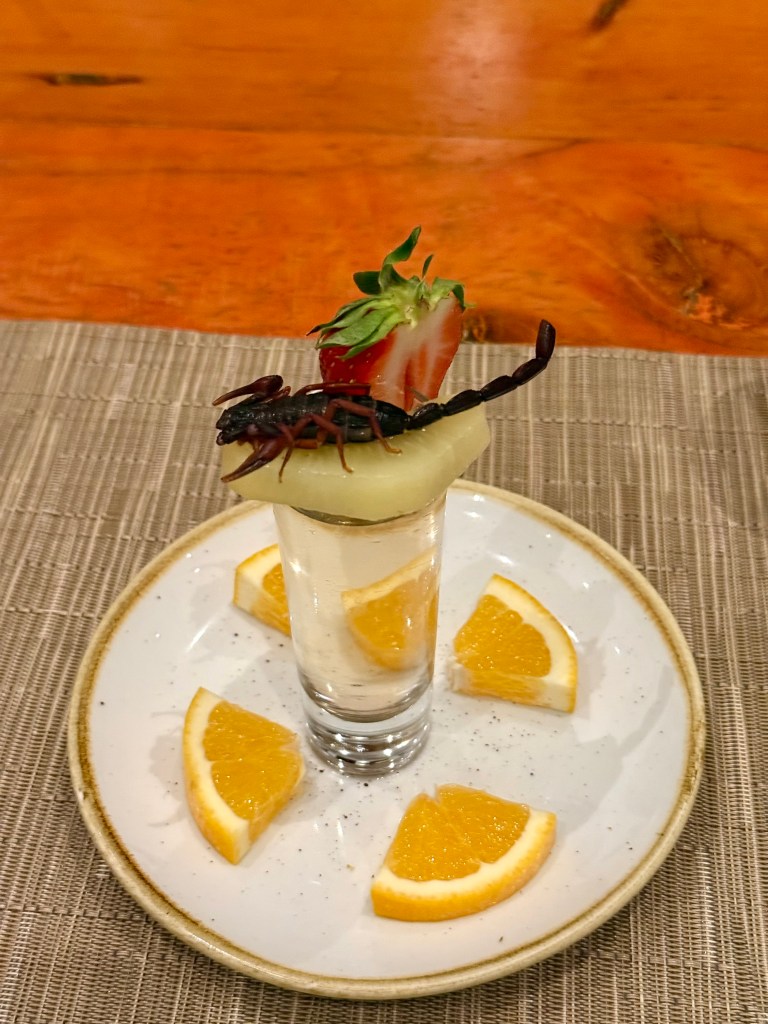
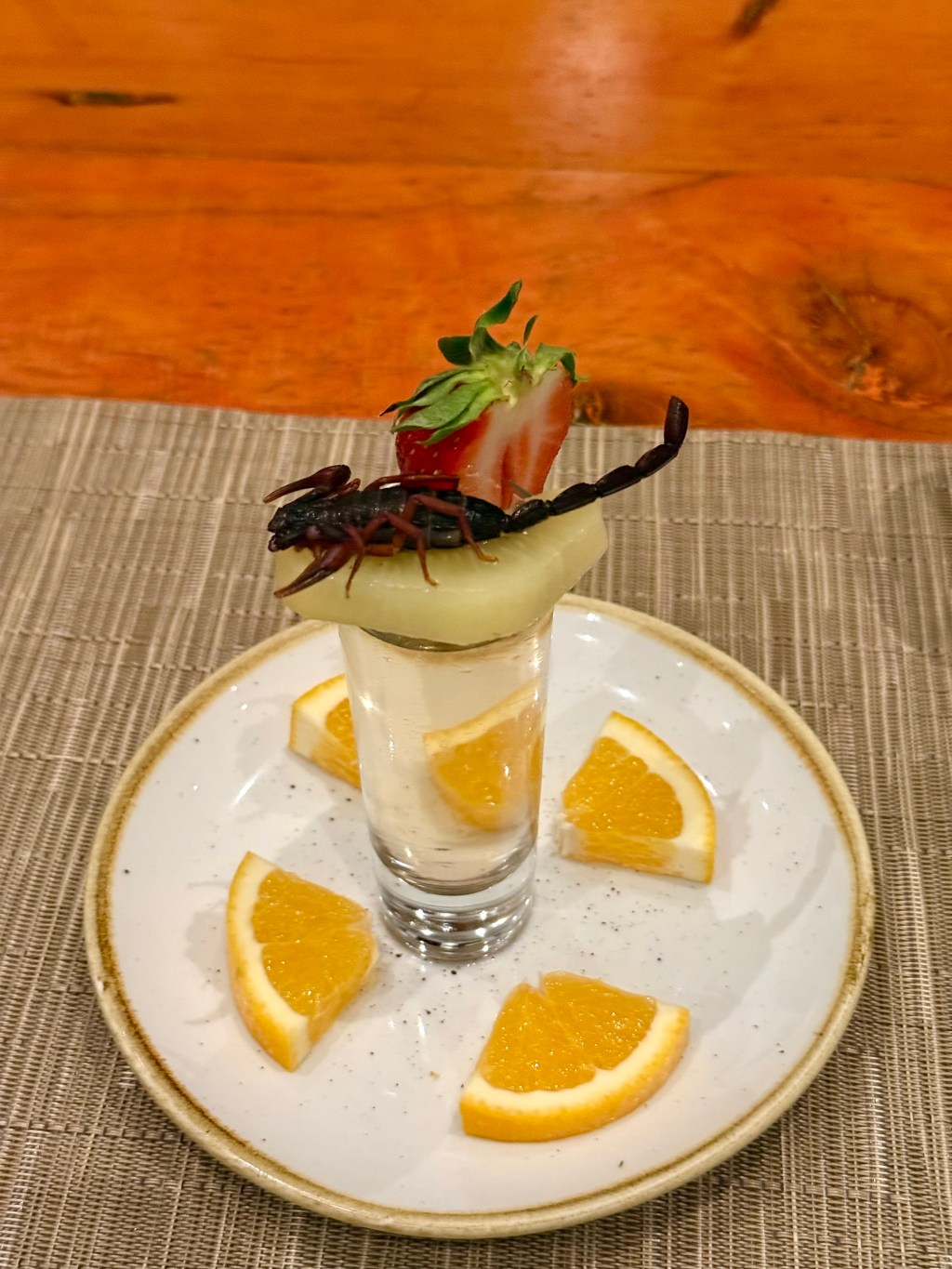
    Playa Blanca Lodge has one sacred tradition: when an angler catches his or her first Permit, he or she must eat a scorpion.

    Accordingly, after dinner that night, young Calvin and I were each served a scorpion, pickled in mescal. 

    Florida Bark Scorpion, Centruroides gracilis

    I recognized my dessert topping as a Florida Bark Scorpion, common in the Florida Keys. For years I kept one in a jar of alcohol on my desk at work. They’re big and scary when they skitter across the floor, and their sting hurts like a wasp if you are unfortunate enough to contact one, but their venom is not lethal. The terminal segment of the tail that holds the venom had already been removed.

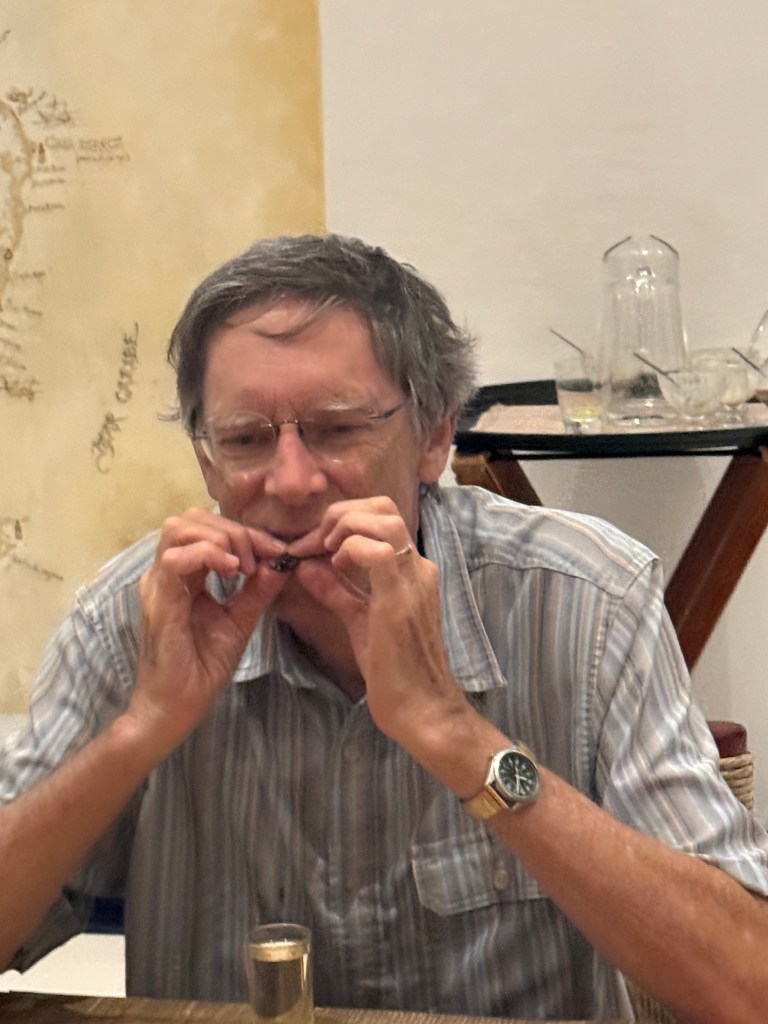
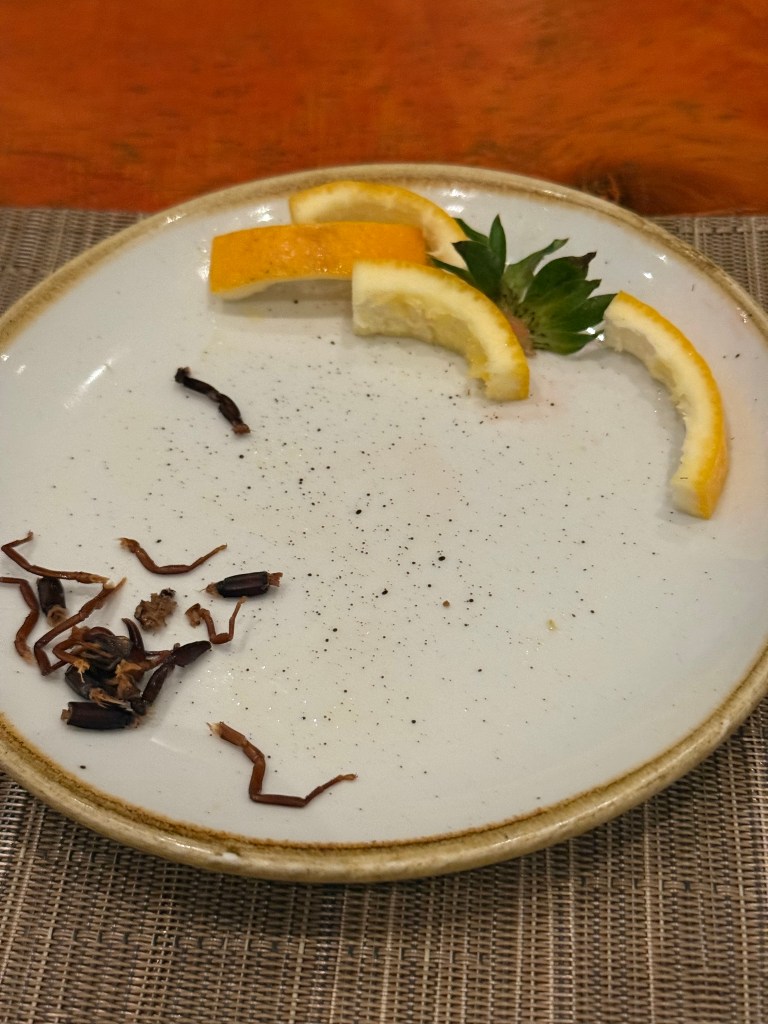
    I took my scorpion apart leg-by-leg, squeezing the meat out of each segment with my teeth like one does with the legs of a fried tarantula, a tasty Cambodian delicacy.

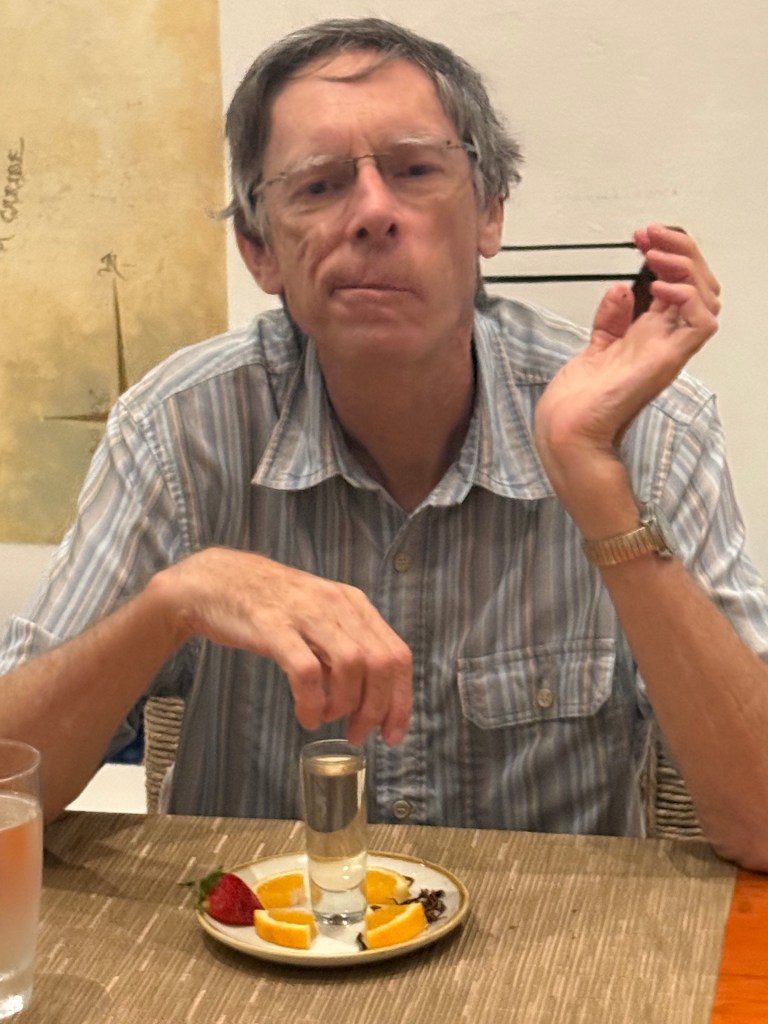
    Glancing back and forth between his own intact scorpion and me, actively nibbling my prize, Calvin looked worried. Finally, he picked up the 8-legged horror and tossed it down the hatch in one gulp, aided by the double shot of tequila.

    The chitin exoskeleton of arthropods is indigestible, so you can guess what happens, or rather, what doesn’t happen, if one swallows said arthropod without chewing. Not wanting my scorpion to reappear as a scorpion, ever, I channeled my inner squirrel monkey and thoughtfully munched it down.

    After its soak in mescal, the scorpion tasted more like mescal than the assorted terrestrial arthropods I’ve eaten on prior tropical adventures. I gave it a rating of meh-minus, but the fruit was good. I’ll happily take a deep-fried tarantula over a mescal-soaked scorpion any day.

  • Long day

    We’ve all had the odd day in which few things go right but it works out and still counts as a good day. Here’s mine.

    I rise at 3:10 am to fish the Ten Thousand Islands, where Everglades National Park meets the Gulf of Mexico. The weather forecast includes low hourly odds of light rain throughout the day, with 45% cumulative odds overall.

    Predawn boat check at the marina in Chokoloskee reveals the waterproof controller for the trolling motor isn’t working. I carry tools in the boat and the fix proves simple: disassemble, remove and reinsert batteries, reassemble.

    My first destination is Pavilion Key, a 12-mile run to the south through the maze of islands. About halfway there the wind comes up, raising waves that break on the deck of my little skiff. I turn on the bilge pump and head for the closest of approximately 10,000 mangrove keys in the vicinity. Then the sky opens. The rain is warm but I throw on my rain suit so at least my underwear stays dry.

    The mangrove key occupies less than an acre, so I entertain myself fishing back and forth along the lee mangrove edge while I wait out the squall. I know a rainbow is coming. In this wind the fly rod is outgunned, so I slum it and take out the spinning rod (oh, the shame). A small ladyfish pecks at my lure but I find no “serious” fish.

    And so goes fishing throughout the morning, substituting small saltwater catfish on the open flats for the small ladyfish near the mangroves. Whenever I feel the catfish’s telltale quiver as it nibbles the lure’s tail, I yank the lure away. In all, I catch only two of these swimming mucus bombs. In time, the storm moves north, and my clothes dry out in the sun and wind. A faint rainbow appears. I have no complaints.

    Fast forward through the morning to a nameless mangrove creek I’ve been wanting to explore, situated 15 miles south of the launch. Tight creeks like this one are buggy this time of year. Somehow the storm added a cup of saltwater to the ziplock bag holding my mosquito head net. It’s fine – wind is keeping the mosquitoes at bay, mostly.

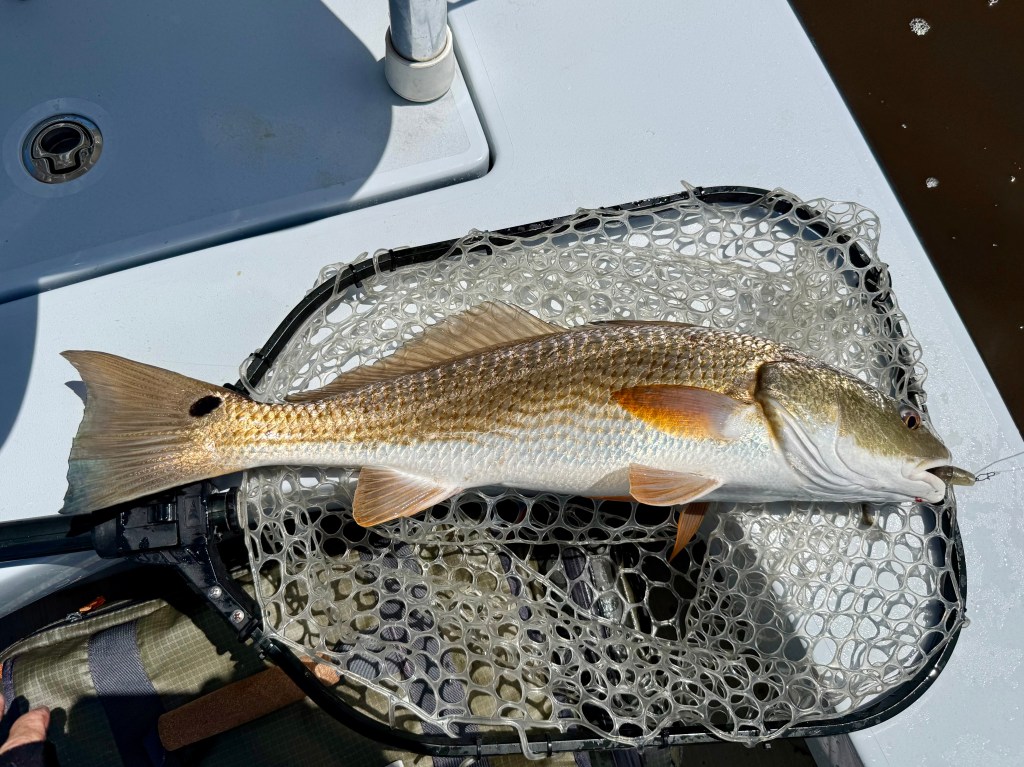
    I get out the push pole and head in at the start of the incoming tide, the wind at my back. I drift up the creek, pausing with the stick anchor to cast in front of the boat. A handsome 22 inch redfish (aka Red Drum) inhales the lure and roars down the creek for open water. A redfish counts as a “serious” fish.

    Proof of concept. I stow the spinning rod and take out a fly rod. Fly casting in a mangrove creek is like doing cartwheels through a yarn store while wearing a Velcro suit. The wind adds a stochastic element to the fly’s trajectory that wipes from the game my last vestige of skill. I pole out against the wind and current and get a proper workout.

    It’s sunny now but wind still riles the open water of the Gulf. I take the long way back, winding through the sheltered bays and rivers of the back country.

    The day has been a tour of the places in Peter Matheissen’s books Killing Mr. Watson and Shadow Country.

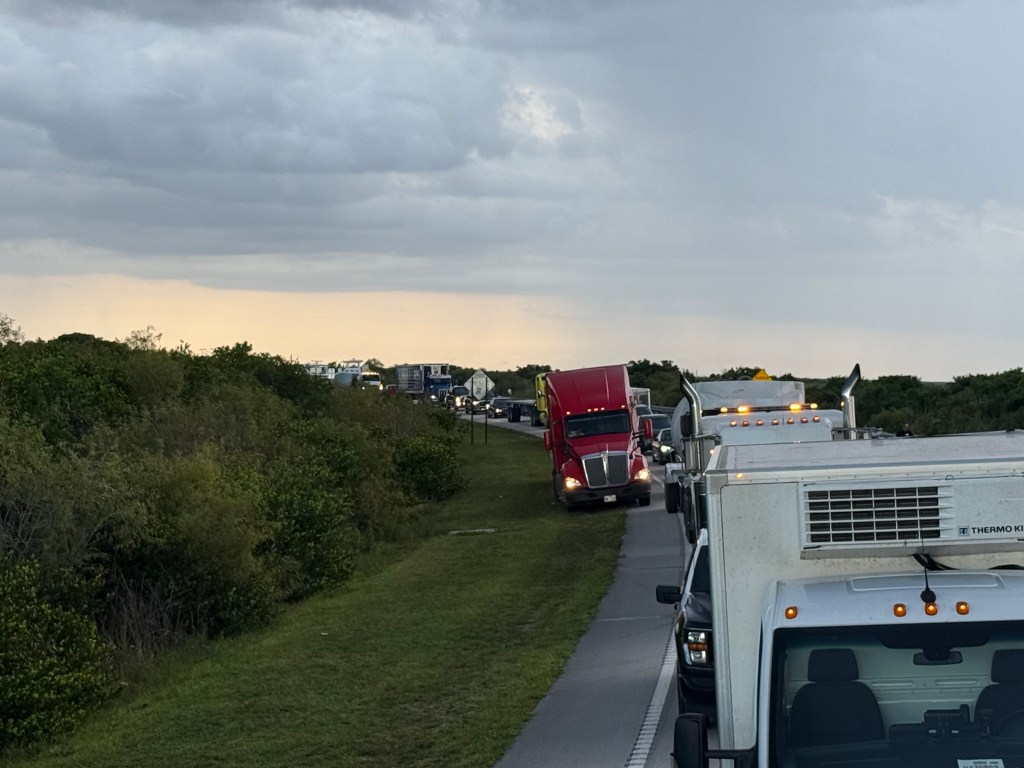
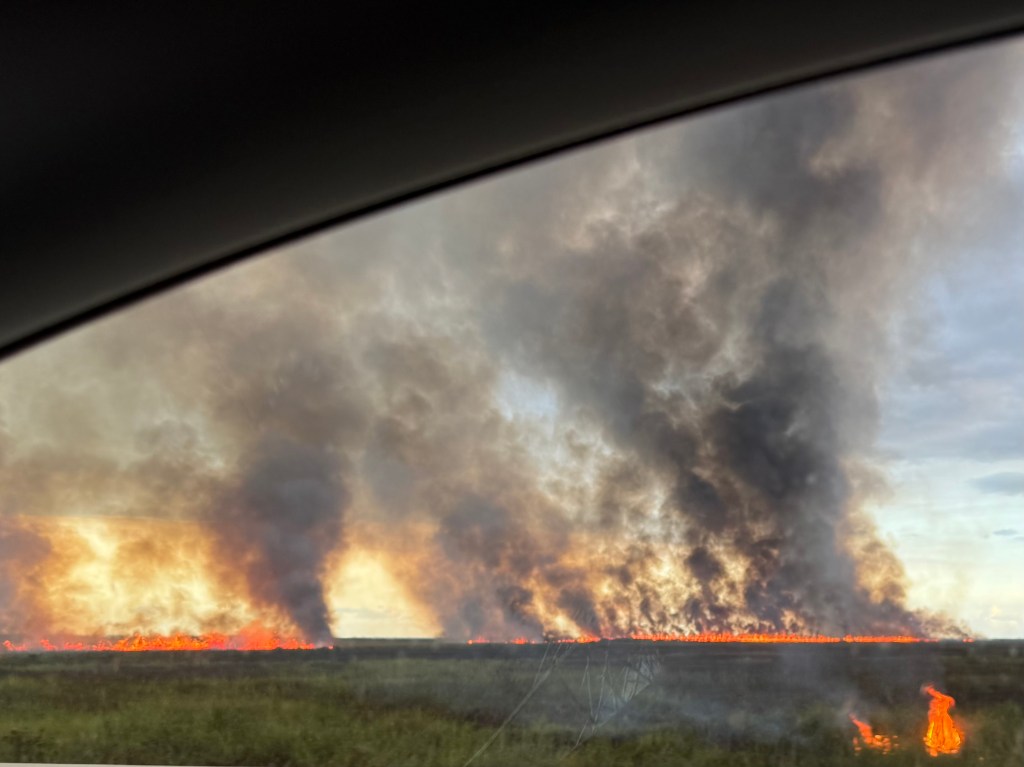
    At 3:30 pm, the Miccosukee Police stop all eastbound traffic on the Tamiami Trail. I am car #11 in a line that will, in time, extend back for miles as wildfires in the east Everglades force closure of road after road.

    A storm forms to the north, but the wind is still pushing from the south and will not direct it over the fire.

    We are parked near the Valuejet Memorial, about 40 minutes from home. I know this area – it’s a good spot for bass. I’m tempted to pull out the fly rod again, but two large alligators get the same idea, so maybe not.

    We are told our wait will be at least six hours. I invite some friendly Everglades mosquitoes into the car to keep me company.

    A mere four hours later the wind changes direction and the police let us through. The fire is impressive.

    I roll in at 8 pm. Expecting a 6+ hour wait, I had consumed an emergency granola bar for dinner, but Gray has a better menu ready for my second dinner. Bless her.

  • Snookered

    May 15, 2026. Low winds are predicted through noon with no rain forecast for the day. Ideal weather to fly fish for snook on the beaches in the SW corner of the Florida peninsula.

    When the tide starts to come in, small bait fish congregate along the shoreline. In May and June, snook move in to hunt these baitfish along the beaches of SW Florida before heading offshore to breed. In turn, Lemon Sharks ply the water a few feet out from beaches to hunt the snook.

    Sea level rise is a real thing here, and snook make the most of it, seeking out the beach stretches with “ghost forests”, woody remnants of drowned mangroves. I presume snook find some protection from hungry sharks and ospreys among the submerged stumps.

    * * *

    Mosquito season has returned to south Everglades. I don a second shirt and my head net in the car before heading outside to ready the skiff for launch. As I step out, a swarm of mosquitoes rushes inside the car to amuse me on the drive home. No kayak today; my destination is 17 miles from the put-in.

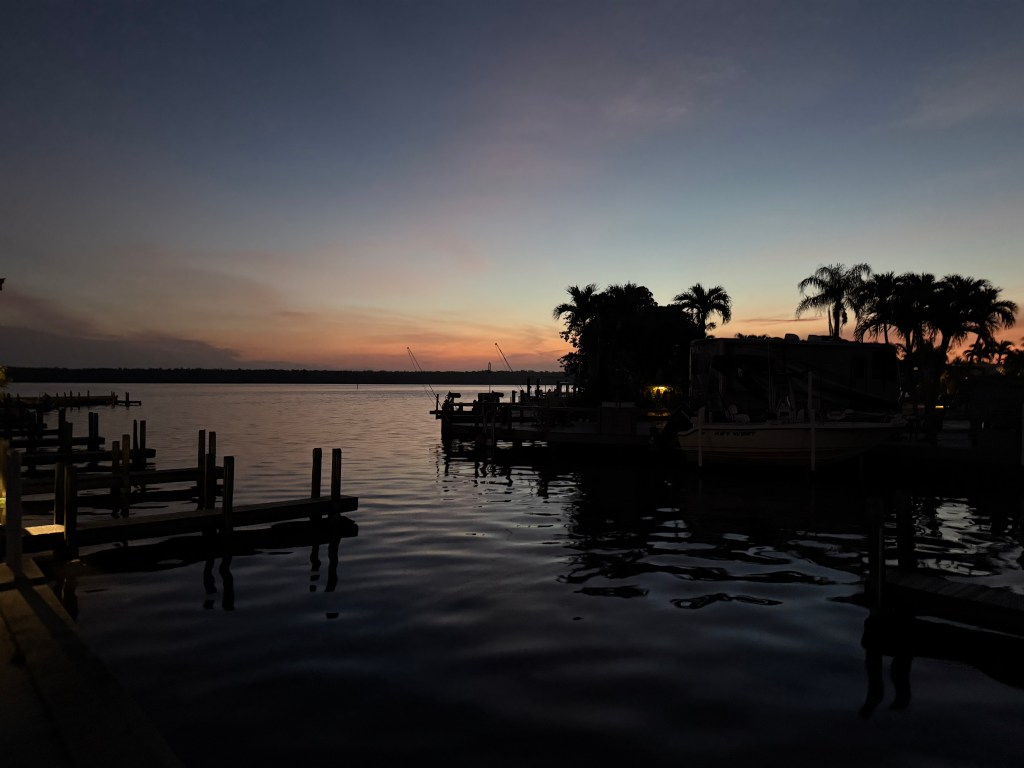
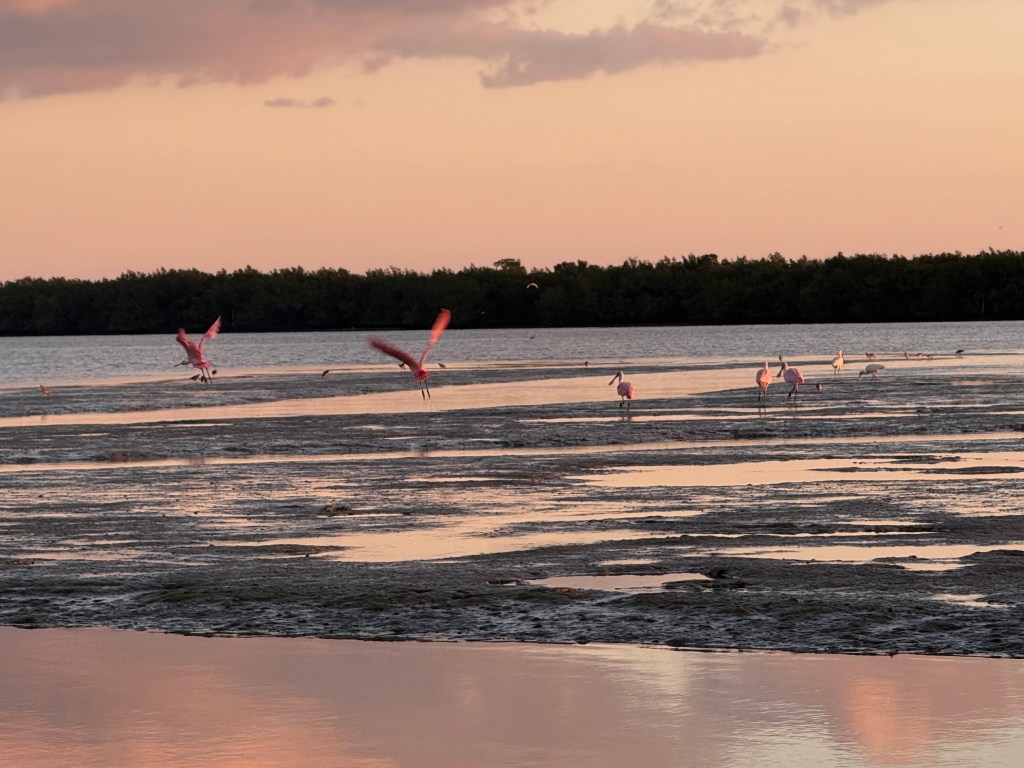
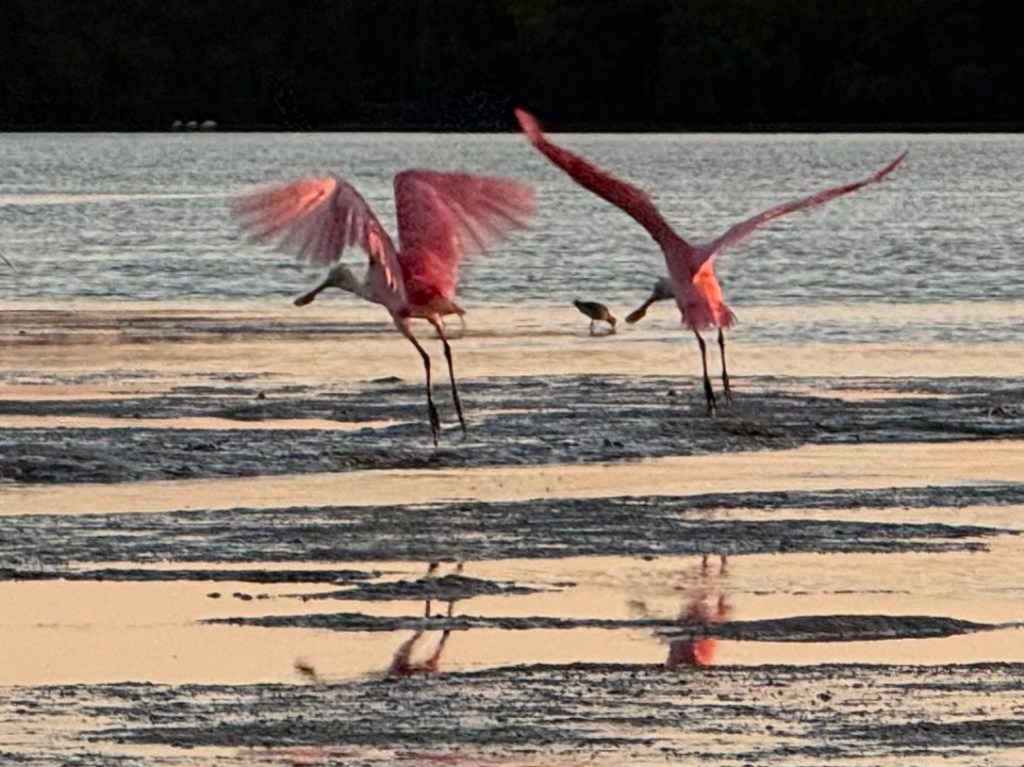
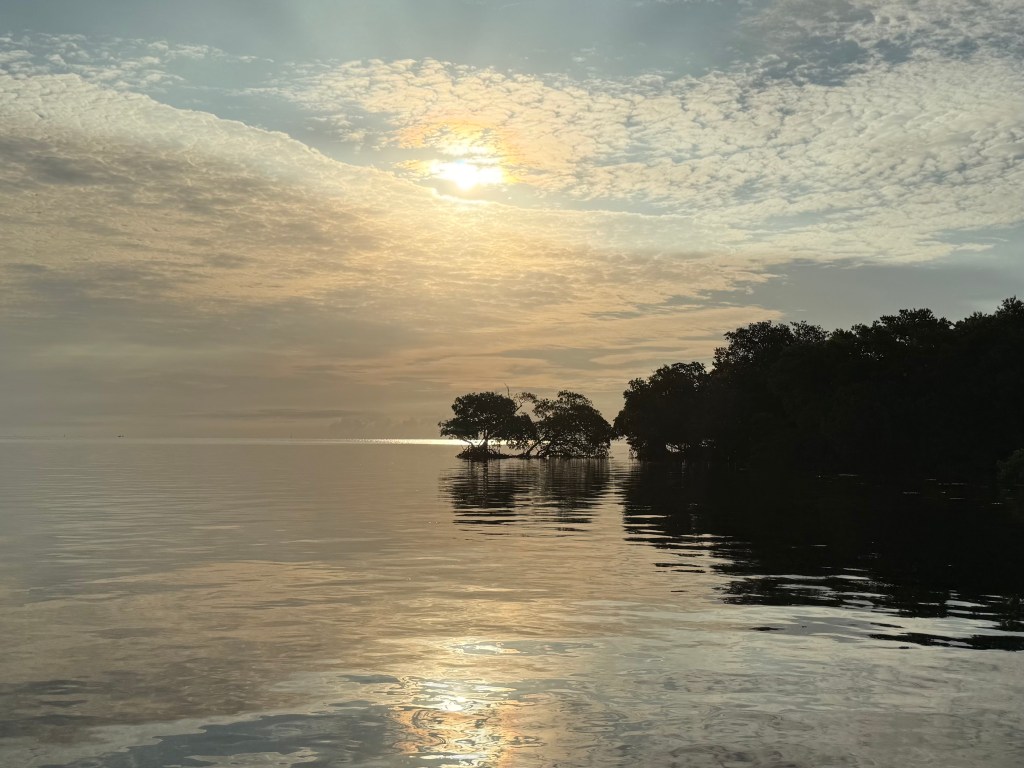
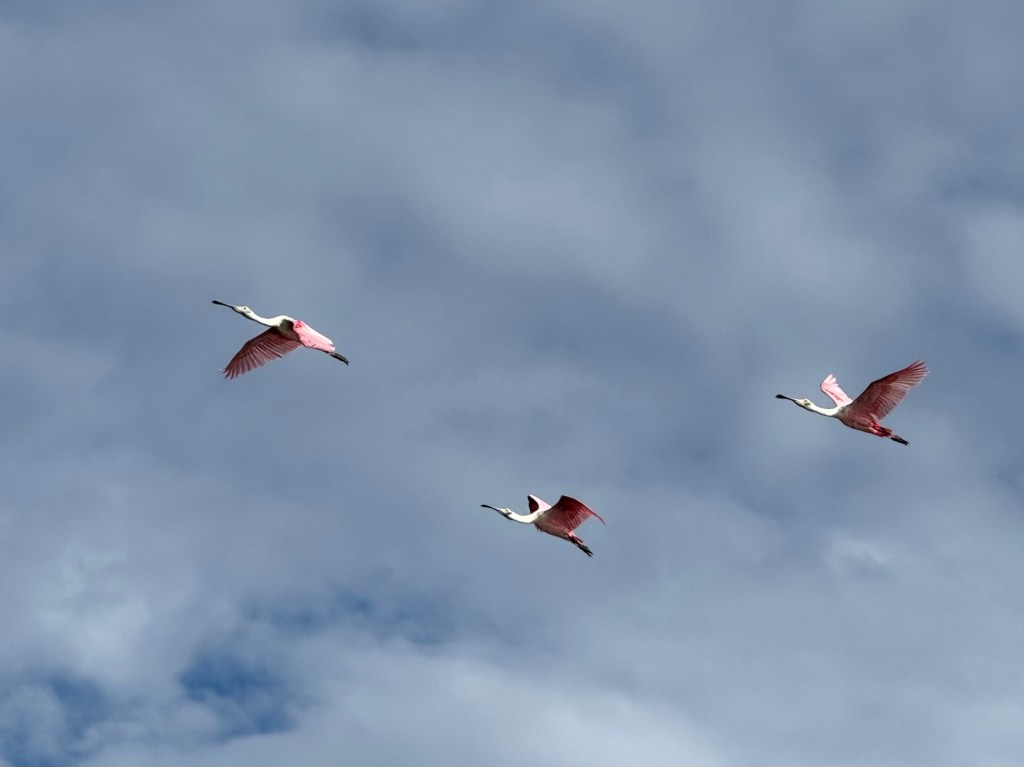
    A Chuck-Will’s-Widow sings nearby as I launch in the dark. Something splashes, but my flashlight detects no crocodile eyes. The sun peeks over the horizon turning the sky and water pink as I take the shortcut through Lake Ingraham. I stop to watch pink birds.

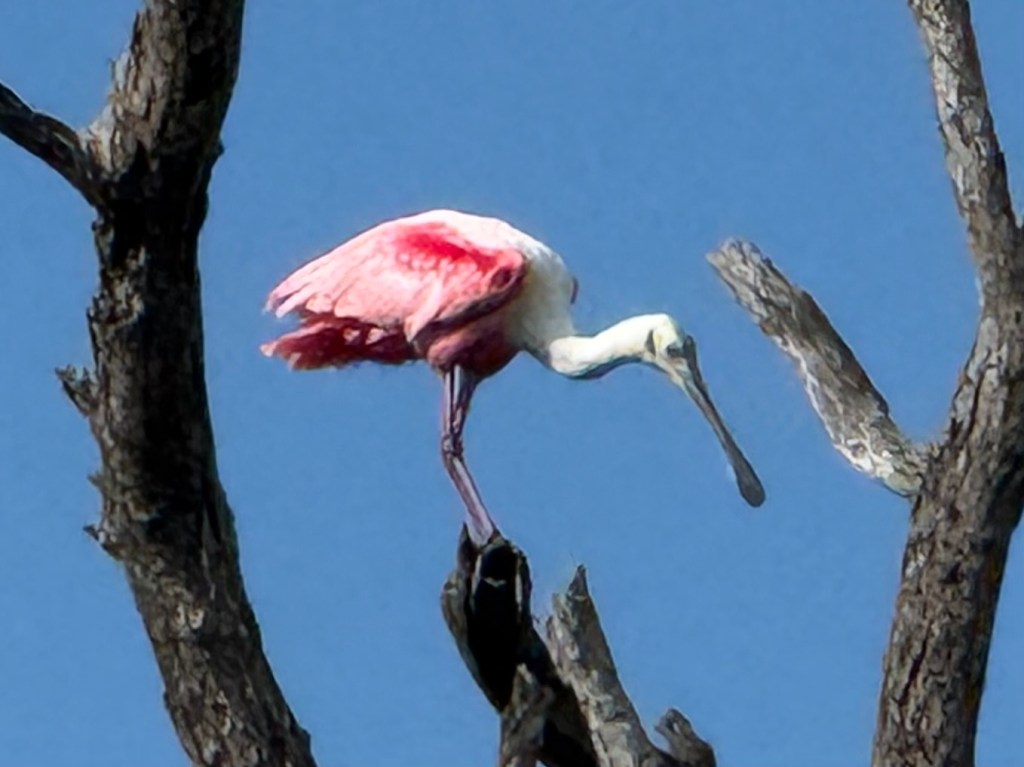
    Roseate Spoonbills on Lake Ingraham at low tide. They’re pink at all times of day.

    The tide is still going out when I arrive, so I check out the shoreline of a nearby tidal river, a spot just outside the strong current where I have found snook stacked up as they wait for the tide to change. Someone else has arrived before me to hunt for snook, with no intention of releasing them:

    Feeding caught or released fish to Lemon Sharks is against my religion, so I move on to the beach. The wind is low, as NOAA predicted it would be, and the tide chart says the tide will turn in an hour. I bide my time watching a Swallow-tailed Kite hunts lizards and dragonflies as it courses back and forth over the low coastal scrub. I never get tired of watching kites.

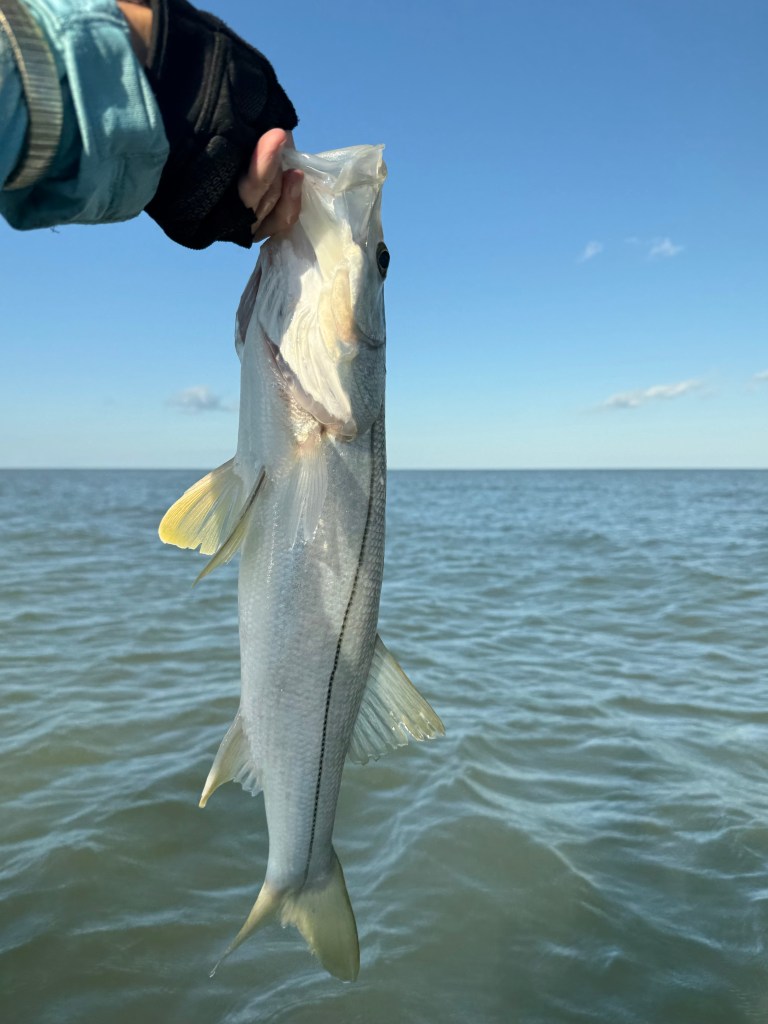
    I assemble my long, two-handed “Spey” rod, tie on a proven fly, and begin casting to the water’s edge, trying not to hook remnants of the mangrove ghost forest. At 8:30 am a snook grabs the fly and leaps into the air. It lands with a splash and leaps again. A great fish, but commotion like this broadcasts a loud “EAT ME” signal to any nearby sharks. A couple of years ago at this same spot, I broke a fly rod playing “keep away” with a Lemon Shark. I buy used fly rods, but they’re still inordinately expensive, and that particular rod was a treasured gift from my former student Manny. I have devised a plan to avoid a repeat:

    As soon as the snook hits the fly, I open the drag on the fly reel and let the fish run while I maneuver the skiff away from the beach into deeper water. When I spot-lock the trolling motor, Mr. Snook is still on the line. The ruse works – I play in the snook and net it up with no shark interference.

    With sharks on the prowl, it’s unwise to reach your hand into the water to unhook a fish.

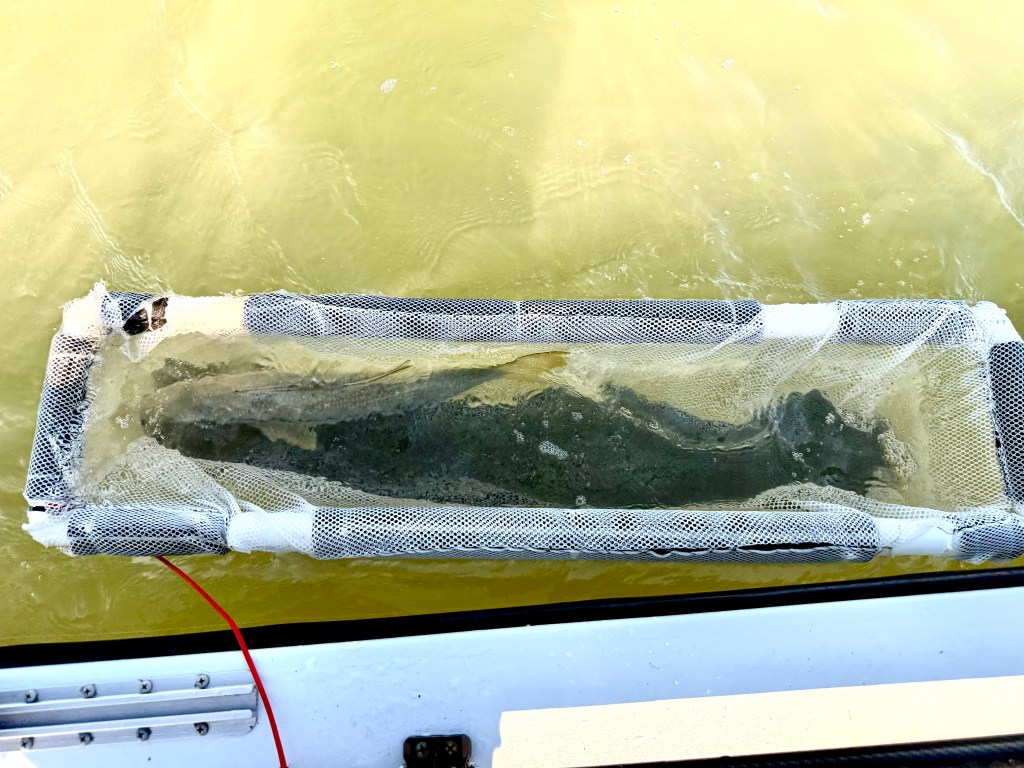
    According to a paper I read, giving caught fish a few minutes to recover before release greatly reduces the likelihood of a shark chasing them down. I unhook the snook and put him into a homemade floating recovery pen where he rests calmly for a few minutes until I release him 75m from shore.

    The snook is the gray fish-shaped thing with fins and a yellow tail on the left side of the floating pen. The long black thing is a strip of shade cloth to keep a shark from seeing the resting fish’s silhouette from below.

    The wind is picking up three hours earlier than predicted and surf is now pounding the shoreline. I fish another hour, bobbing around in the waves, but no more snook are to be found. I disassemble the rod, fold up the floating pen, and make the return run. Retracing my path through Lake Ingraham and Florida Bay I’m happy to find the water is much flatter on the lea of the peninsula than the on the windward Gulf side.

    * * *

    So where are rest of the snook today?

    1. With the strong offshore wind and crashing surf, perhaps the bait fish left the shoreline so the snook went elsewhere.
    2. Rains bring snook down from the rivers to the beaches where they congregate before heading offshore to breed. Perhaps the spring has been so dry the snook are still up-river.
    3. Maybe the recovering Lemon Shark population has reduced the snook numbers – I hope that’s not it.

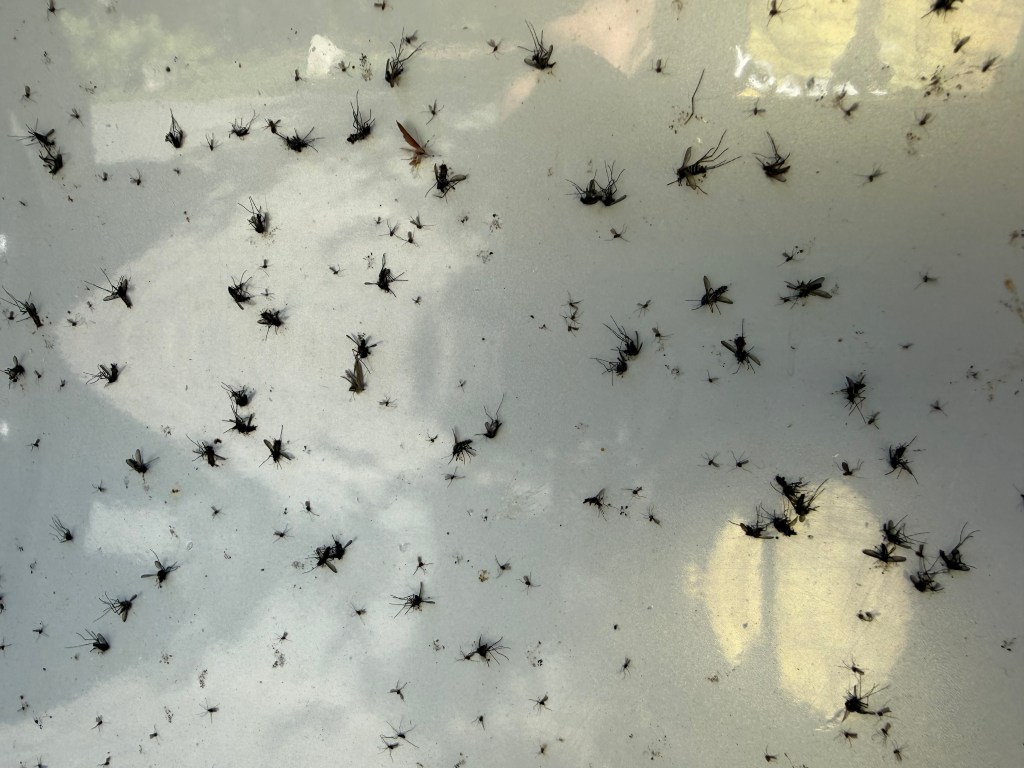
    Here’s the car’s front bumper when I get home. Even as the beach snook are missing today, Black Salt Marsh Mosquitoes have faithfully resumed their time-honored role as defenders of the south Everglades.

  • Flipper

    Not the TV dolphin, a kayak flipper.

    My kayak fisherman buddy Cesar flipped over in a shallow rill along the edge of Florida Bay. Poor guy had no choice but to thrash around waist deep in shallow water and sticky mud groping for his lost fishing gear. He paddled back to the marina soaked, muddy, and completely humiliated. 

    It’s genuinely hard to flip a rotomolded fishing kayak in flat water. These craft have high primary stability and stick tight to the water’s surface. Nor is Cesar a beginner so I don’t think the flip was his fault. Two related stories suggest possible explanations.

    In September 2015, I took my wife Gray out for a birthday paddle in Biscayne Bay. I was a couple of boat lengths ahead as we passed over a bed of lush turtle grass in two feet of water. Out of nowhere, a wave rose up another two feet above the bay’s glassy surface, racing for the shore-side of my kayak. Some large and unseen creature was coming at me, and fast. For whatever protection it could afford, I lifted my paddle blade and held it firmly between me and whatever was coming at me beneath the wave. The wave jumped out of the bay and exploded over me. In the next instant the kayak and I flew up into the air. As we fell back into the bay, I executed a low-brace to stabilize the kayak. I had reflexively turned my face away from the shower, affording me the view of a bull manatee rocketing out the other side, bound for deeper water. I was completely soaked and gallons of seawater had joined me in the cockpit, but I was upright.

    From her ringside seat, Gray enjoyed the whole show.

    An unseen bull manatee had been grazing underwater near the mangrove shore and panicked when he saw my kayak cutting off his escape route. The exploding water resulted from the hard tail flip he made to shove his body under my kayak in water the same depth as his rotund body.

    Unlike my unfortunate friend, Cesar, I had two advantages that kept me from flipping over. First, I was paddling a touring kayak designed for rough water. Such a kayak has low primary stability and high secondary stability, meaning the hull rocks a bit on flat water but exerts a significant righting force that keeps it upright when tipped between 30 and 60  degrees. Second, I had a well-practiced low brace, the paddle maneuver that prevents a flip by controlling the hull’s rotational angle on the water. The low brace couldn’t prevent a soaking, but did keep me from going over.

    Since then I have watched out for the telltale wave of a kayak-panicked bull manatee in shallow water. Several times I have had to back-paddle hard to let a bull manatee barrel through to safety. Cow manatees are more relaxed around passing kayaks. Being smaller, perhaps they don’t feel so vulnerable in the shallows.

    But I can think of another manatee-related, possibility for how Cesar flipped in flat water.

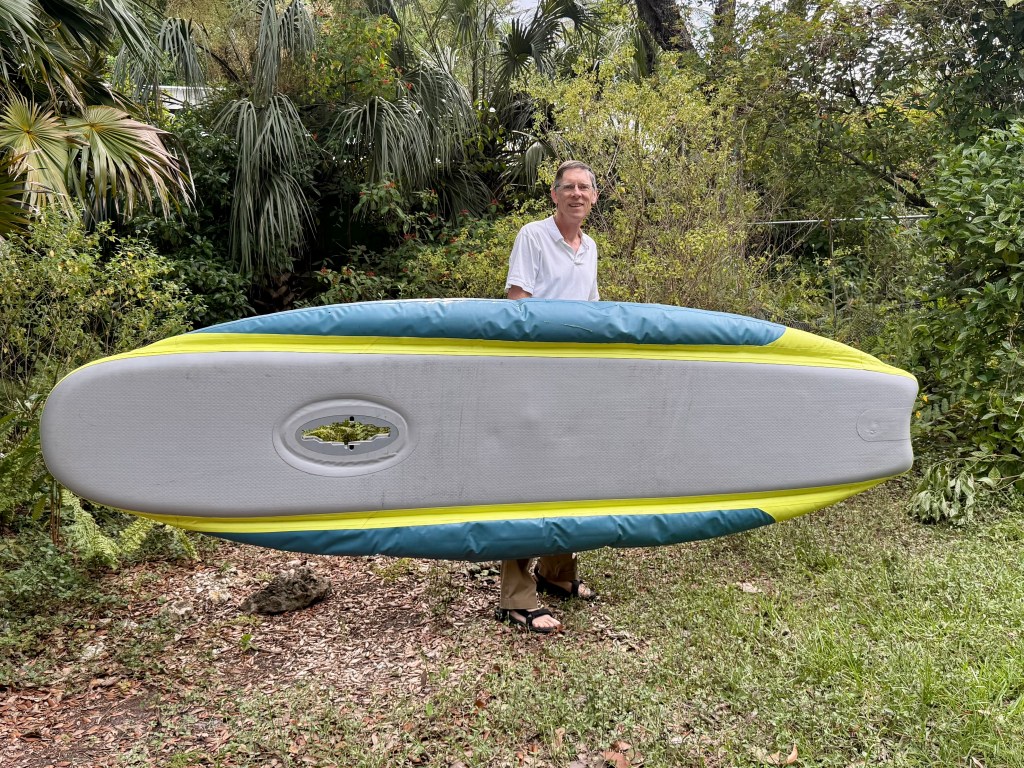
    In 2022, I purchased a Hobie iTrek 11 for inshore fishing. It’s essentially an inflatable paddleboard with a lawn chair and pedal-operated flippers. An additional inflated tube along each side provides extra primary stability. This thing is not going to flip in anything short of breaking surf. The iTrek is oval in shape and gray underneath, like a manatee. 

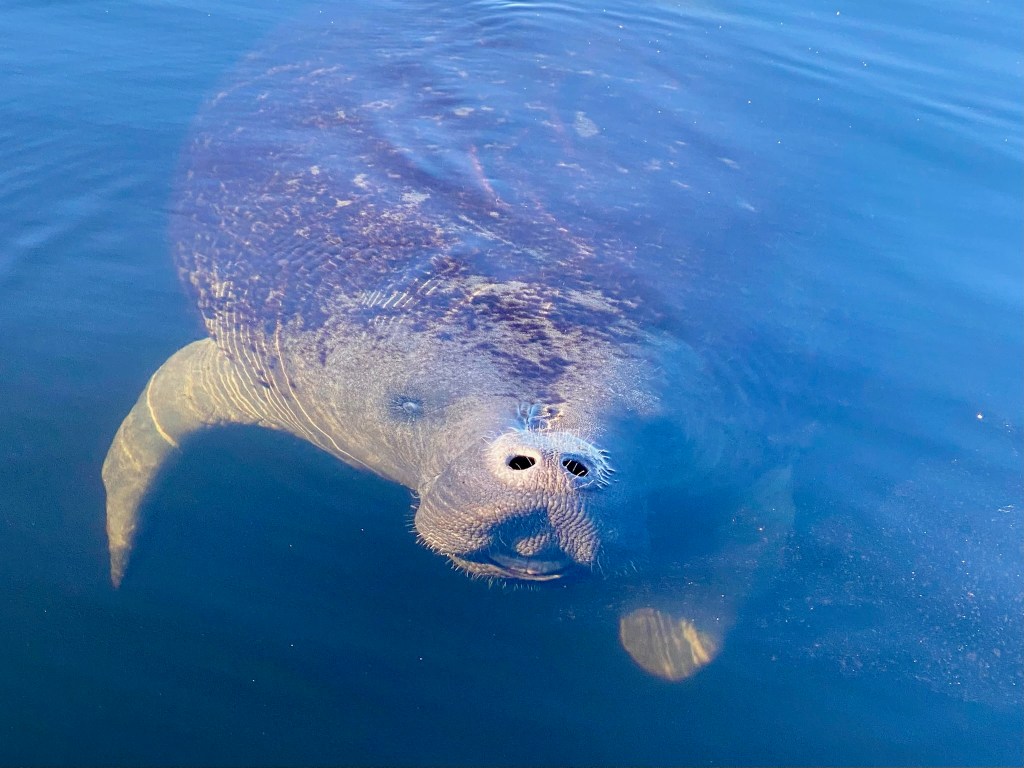
    Manatees love the iTrek. Many times I have had to reel in my fishing line when cow manatees come up to snuggle. A few times the bow of the iTrek has risen mysteriously out of the water, elevated on the nose of an amorous bull. It’s disconcerting for sure, but unlike a kayak, the iTrek stays upright while balanced at one end on a manatee’s nose, with no athletic intervention by the paddler. One morning I gave up trying to fish because a bull manatee followed me everywhere I went, nudging the boat from underneath then backing away with a silly grin.

    Hardly the worst reason to miss out on the morning’s fishing, don’t you think? And definitely better than being flipped over like my buddy Cesar.

  • Taxi Tides

    Taxi Tides

    “Time and tide wait for no man.”

    A trip by paddle craft to the coastal marshes and flats can be a breeze or a slog depending on wind and tides. It took me one arduous kayak trip to Rabbit Key and another escaping the Snake Bight flat to become a tide chart addict.

    The wind. Paddling home against a stiff headwind is somewhere between exhausting and impossible. Returning from Sandfly Pass in the Ten Thousand Islands I was stopped in my tracks by a squall that forced me to get out of the boat in the rocky shallows and wade back to the launch, pulling the kayak behind me. My favorite hat blew off and disappeared in the distance.

    Tides are the same, but more predictable. Get the tides right and you get a free ride. Get them wrong, and you fight a river, ferry-crossing back and forth to seek eddies and weaker currents.

    My purchase of a motorized skiff made it possible to move against the elements, to cover long distances, and sometimes to dodge a localized thunderstorm. Very efficient, but I missed the quiet and stealth of the pedal kayak. And the exercise. It’s the difference between a car and a bike: the motor craft is useful, the pedal craft enjoyable.

    When I itch to be on the water, I open the marine weather forecast and the tide chart phone apps, looking for happy windows of winds and tides. Living on a peninsula provides choices. My choice of location and craft is based on the forecasts. If conditions are unfavorable on the east coast, nearby Biscayne Bay or the Keys, how about Flamingo on the southern tip of the peninsula? No? Then check the west coast out of Chokoloskee / Everglades City. If all three look threatening, I may opt for the interior mangrove creeks or central Everglades marshes. If it looks horrible everywhere, I stay home and tie flies while imagining the next outing.

    A TAXI TIDE

    I normally I take the skiff into Snake Bight in Everglades National Park to escape against the incoming tide, but the tide chart for Tuesday showed the rare, magical tide cycle that’s perfect for kayak exploration. One can ride the incoming tide into Snake Bight before sunrise, fish and bird well into the morning, then ride the outgoing tide back out again.

    Snake Bight’s tides are one hour delayed from the Flamingo tide chart shown here.

    I wake at 3:30 am and check the weather report. The wind looks to remain low through the morning. Rain looks iffy – it’s supposed to rain solid until 6 am, then let up until afternoon. Hopefully the algorithm running on the National Weather Service computer gets it right today.

    Scary-hard rain pounds my drive south to the bottom of the peninsula, then stops to let me set up and launch the kayak in the dark. I can see the odd lightning flash to the south. Gradually the clouds break up and I have a lovely morning waiting for me on the water with 50 minutes to sunrise. 

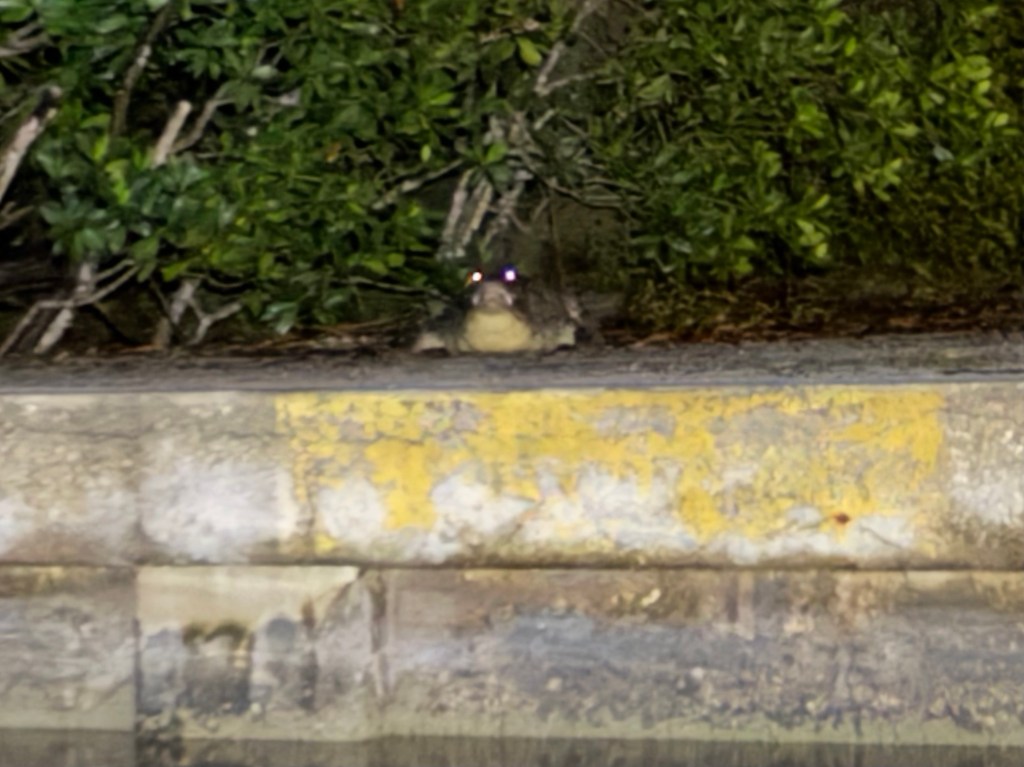
    The half moon is still blocked by clouds and it is DARK. I turn on the pole-mounted kayak light. Its #1 job is to keep me from being run over by powered craft, but as a bonus, it casts a bit of soft light in all directions. Sitting above and behind me, the light doesn’t shine in my eyes. It does, however, shine in the eyes of the crocodiles.

    American Crocodile perched on the marina wall. Amazing what the iPhone’s camera can do with the faintest of light sources.
    Here’s the same croc in motion.

    Several more crocs take umbrage at my passage and splash off in a huff.

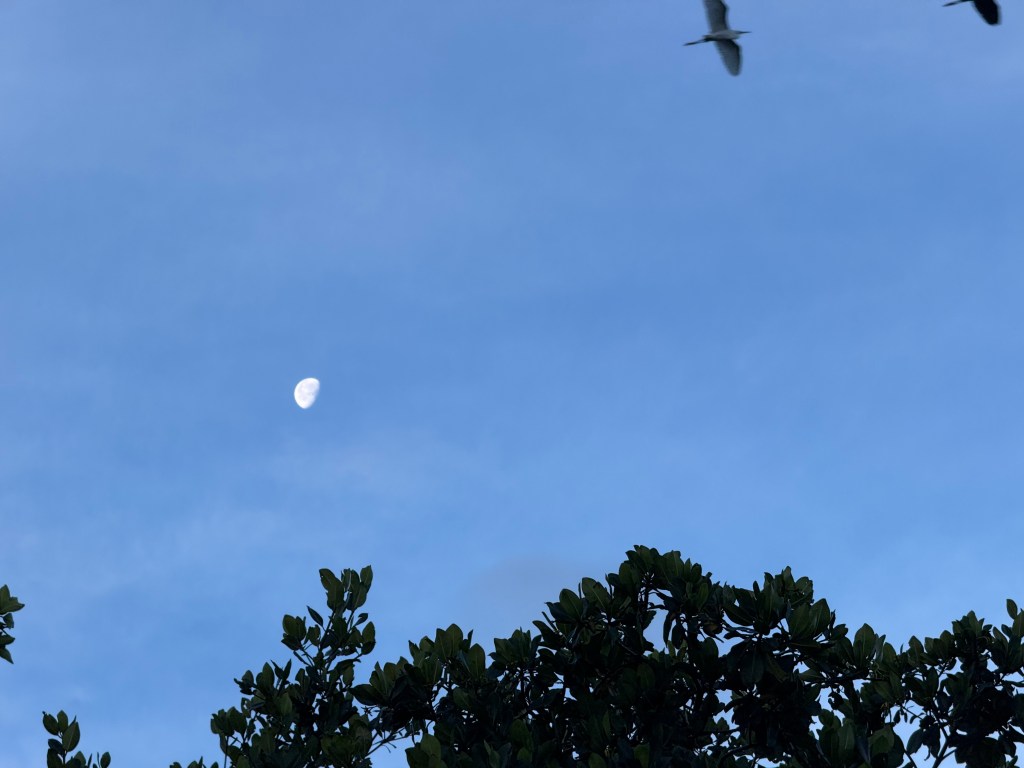
    In time, the clouds melt away, allowing the half moon to illuminate the mangrove shoreline.

    A Spotted Sandpiper perches on a fallen log, bobbing up and down. The end of the log has eyes and large teeth. Eek!

    The sun glows as I round the corner into the Snake Bight flat. The north edge of the flat has a thin line of shocking pink. Though I’m looking for fish, Roseate Spoonbills always steal the show.

    Some spoonbills fly over my kayak enroute to their favorite roost of snags by a mangrove creek.

    I spot another kayaker approaching the cove where the spoonbills are roosting. He pulls out a camera with a giant lens, then paddles in too close, spooking some of the spoonbills. If that’s not bad enough, he starts paddling in even closer – too much.

    If I can use an iPhone to get this photo without spooking the spoonbills, a kayaker with a giant lens doesn’t need to crawl down their throats.

    First rule of not spooking birds is to act like you are interested in something else. Definitely do not aim your kayak directly at them.
    I call out: “That’s close enough!” He stops, turns around, and leaves. Good thing too. In half an hour, a carefully guided kayak tour comes by specifically to see the spoonbills.

    * * *

    FISHING REPORT (stop here if fishing bores you)

    Last weekend I tied a mangrove crab fly using whatever I had lying around, with a notion to try for redfish feeding in the mangrove roots along the edge of Snake Bight. It came out pretty well.

    Never mind the fish – I think it’s adorable.

    I try it out. Crabby casts fine and stays upright while it sinks, but the legs entangle too much sea grass detritus.  I’ll try it again in the Ten Thousand Islands where there’s less sea grass.

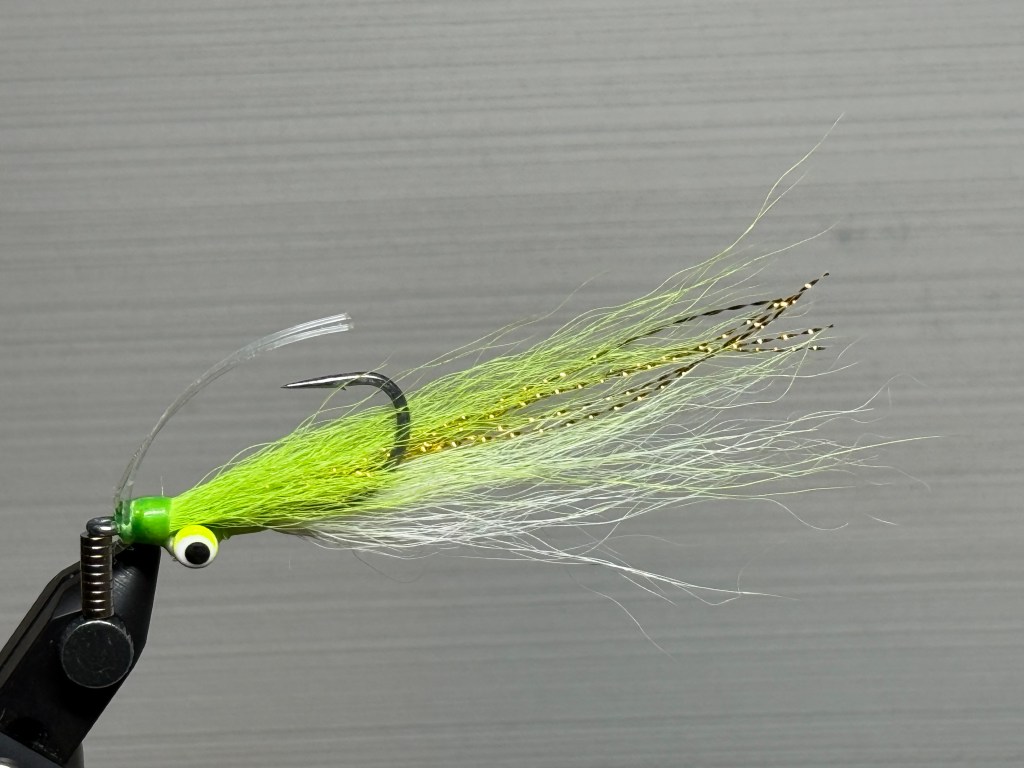
    Instead, the winning fly today is my weedless tie of the classic chartreuse-over-white Clouser Deep Minnow.

    It catches seven snook 18-22”.

    20″ male snook with Clouser fly.

    Snook in this size range are all males, turning into females when they get bigger, around 26-28”. I wonder if our Florida State legislators know that many of our prize game fish are transexual, “protandrous”, to be exact.

    Somewhere else out there lurk the female snook. Research by FIU professor Jenn Rehage indicates that most of the females are still up-river, fattening up on sunfish and cichlids for the breeding season. This rainy spell should get them moving downriver again.

    I have caught countless redfish on spinning gear but exactly zero on fly. I tied this sparkly fly in the hopes of temping a bite. Don Quixote jousts at yet another windmill.

    Snook are great but I am still hoping to catch at least one redfish today. I swap out the Clouser for a sparkly redfish attractor pattern. Instead of a redfish, it catches my biggest snook of the morning (23″) plus a pretty little sea trout.

    Lunch is leftover tamales from Moreno’s Tortilla Shop, re-heated in the sun. Gentle rain resumes on the drive home, kindly washing the saltwater drips from kayak and car. Fine morning all around.

  • Too clever by half

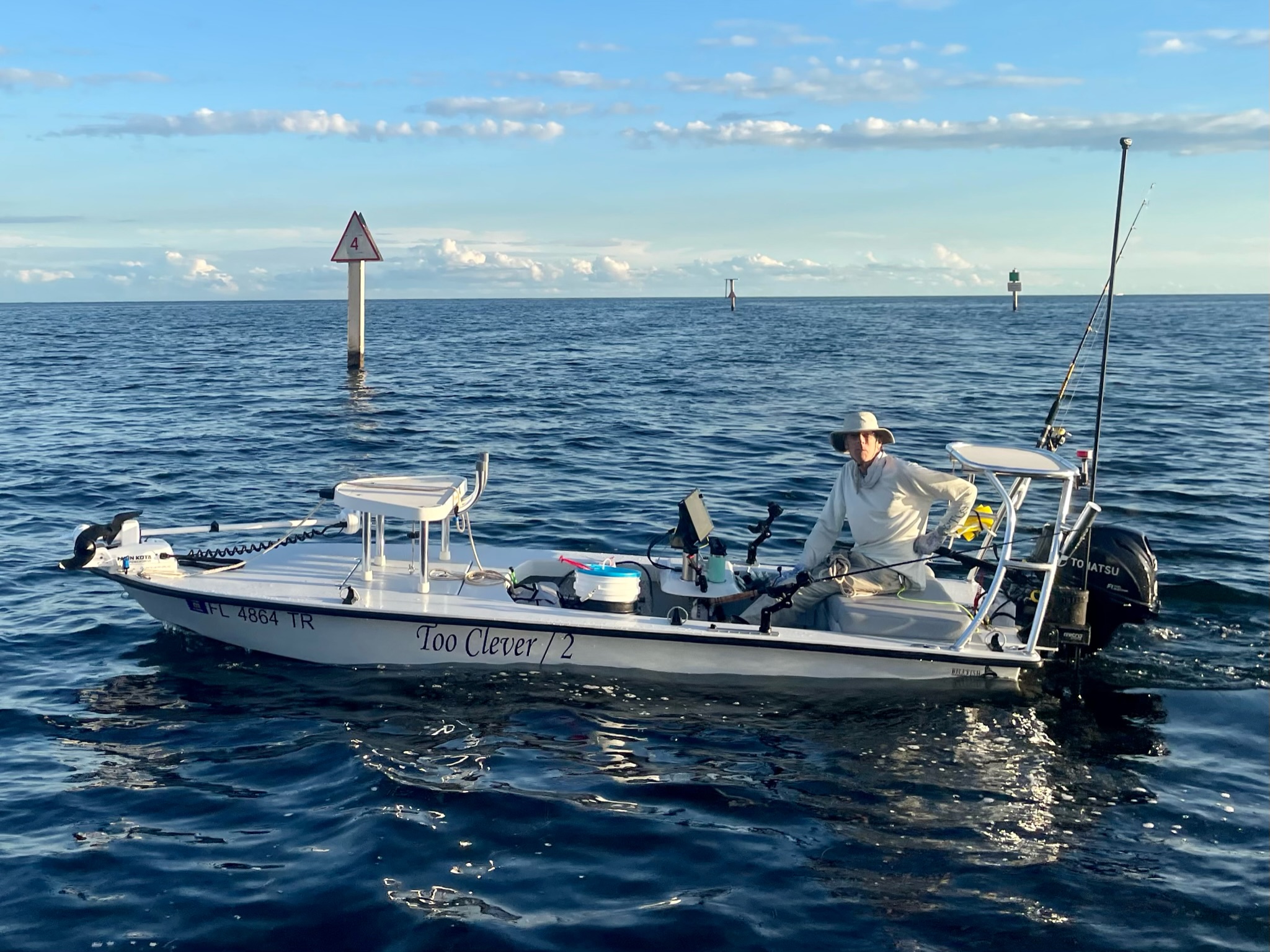
    Here’s a stupid story that also explains the name of my little flats skiff.

    * * *

    Monday morning before sunrise, I launch my skiff from the front boat ramp at the marina at Flamingo in the south end of Everglades National Park. 

    When launching the boat solo, I secure the loop of a dock line rope to the cleat on the front of the skiff and tie the other end to one of the two vertical PVC posts at the rear of the boat trailer. Then I back the trailer into the water and stop abruptly. The boat floats off the trailer into the water, tethered to the rear of the trailer by the dock line. 

    Dock lines come in 15’ and 25’ lengths, so when I got my 14.5′ skiff, I bought a pair of 15′ dock lines, one for each end of the skiff. Fifteen foot dock lines are the perfect length if I’m backing the trailer down the boat ramp and someone else is guiding the boat along the dock. Launching solo, however, a 15’ rope is just long enough to tie a clove hitch around one of the 2.5” diameter PVC pipes enclosing the risers on my boat trailer. The clove hitch is not the most secure knot one could tie onto a slick PVC pipe, but it’s the only snug hitch knot I can manage given the limited length of the dock line.

    Launching solo this morning, I remove the safety straps, tie on the dock line, back the trailer into the water, and the boat floats backwards off the trailer as planned. I ease the car forward to bring the back of the trailer onto the dry part of the boat ramp, placing the rope within my reach. 

    As the rope comes taught, its tip pulls free of the clove hitch on the trailer’s riser, the knot unwinds, and the skiff continues its backwards drift untethered.

    Expletives fly as I leap from the car. It’s early on a chilly weekday morning and nobody is on the water nearby where they might grab my skiff before it floats across the cove.

    The air is 47°F, the water is 59°F, and I am not up for a frigid swim in my fishing clothes. More to the point, I am not up for a half-hour run to Cape Sable in soaking-wet fishing clothes. I scamper down the adjacent dock, hoping I might find a way to intercept the skiff as it floats past.

    The boat’s drift takes it close to the end of the dock. Jumping from the dock into the small skiff looks possible.

    Now is a good time to tune in to my two inner voices, akin to what Terry Pratchett dubbed “first sight” and “second sight”.

    The first voice says:

    “I should make this jump OK … but it’s a moving target, I might miss, and the boat has many sharp angles and no soft surfaces.

    If I miss the jump and break a bone, neither my wife nor my orthopedist will show me any sympathy, and that’s assuming I don’t break something then fall in the cold water and drown.”

    “The internet has a thousand videos of people who injure themselves attempting to jump from docks into boats.”

    Not everybody tunes in to their second inner voice, but I heard mine state clearly:

    “Did you hear the part about broken bones and drowning? Listen to the first voice.”

    Heeding the sage advice, I abandon the jumping idea posthaste.

    Instead, I climb down from the dock onto a wooden beam just above the waterline, wrap my right arm around the nearest piling, and extend my left leg over the water as far as it will go. My toe catches the errant skiff. Whew! I ease the skiff close to the dock step onto the deck, and motor to the closest tie-up spot. My car is waiting for me on the boat ramp, the driver’s door still wide open.

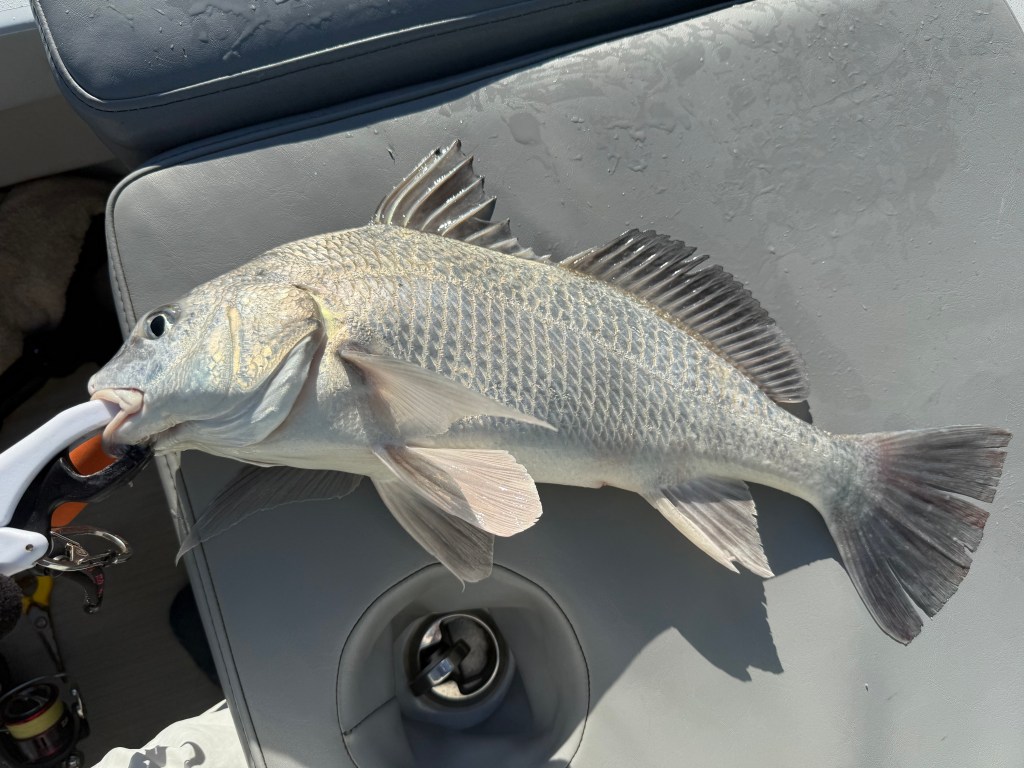
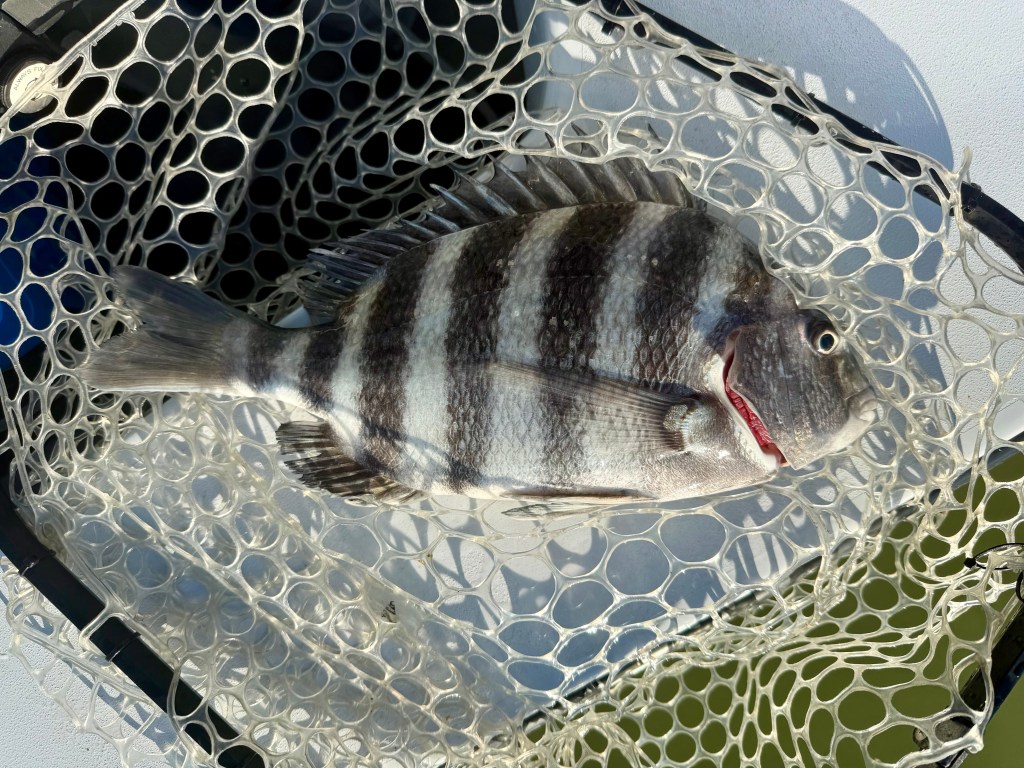
    Half an hour later, I’m 10 miles away. The water is too cold to catch fish on flies or lures, but the fish will bite shrimp soaked on the bottom. I bought three dozen live shrimp on my way to the marina this morning. Here are some of my catches:

    Black Drum
    Sheepshead
    Southern Stingray, 2 meters long nose-to-tail, and a 13 cm stinger barb.
    I did not bring the sting ray into the boat. Those inner voices again.
    a little Mangrove Snapper

    I hear a song of rising buzzes, my first Prairie Warbler of the year. A crocodile that slid from the sunlit bank is now eyeing me jealously, but keeping its distance. Good croc. A pod of dolphins spout spray as they venture past, chasing their own fish and not pestering the ones in my vicinity.

    When the fish stop biting, I watch birds and explore my way a couple of miles up a tidal creek where I eat lunch in a wild place with egrets, ibis, and rails for company, but no humans.

    Up the creek. Tide is down.

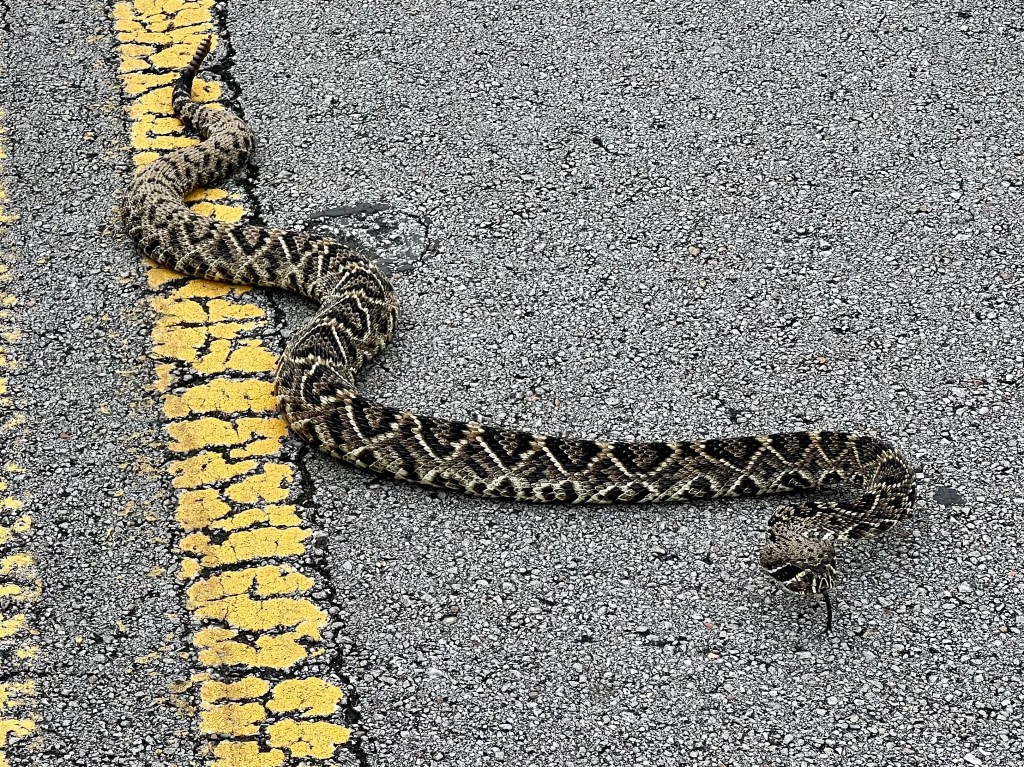
    Driving home from the marina, I spot a large Eastern Diamondback Rattlesnake crossing the Park Road.

    Eastern Diamondback Rattlesnake

    Monday morning would the SECOND time that my over-extended dock line has freed itself from the trailer during a solo launch.

    A quick trip the marine store and I am the proud owner of a 25’ dock line, long enough to tie the securest of Secret Navy Knots and then some. Of course I coulda-shoulda purchased a longer dock line the first time the boat escaped, or gee, maybe even before that. 

    Too Clever / 2.

  • Pandora’s Flats

    I’ve been grappling with a multi-way conflict: (1) trying shake the “forever cold” while (2) healing a torn rotator cuff muscle (supraspinatus) in my fly casting arm, and (3) enjoying every nice day I can on the water with a fly rod and binoculars. At least I don’t have to grade papers.

    A cold front reached South Florida, knocking down the mosquitoes and moving sharks away from the shallows. The Everglades mangrove flats beckoned me southwards.

    Entrance to the flats.

    One shallow flat in particular draws me to watch shorebirds and chase game fish.

    Birds gather on the falling tide. Snook and Redfish forage near that edge.

    To get the best experience, you have to get the tides right. Depending on the moon and tide phases, the area can be 16 square miles of water (birds wait in the trees and fish are everywhere), 15 square miles of exposed mud (birds dispersed everywhere and fish are concentrated in the channels with the sharks), or something in between (birds and fish both concentrated on the edge of the tide). If the wind comes up, water might blow onto or off the flat, superseding the tidal prediction.

    Several two mile trails lead to the edge of the flat. When my late colleague George Dalrymple took his zoology class down the Snake Bight Trail, one student had to be carried out after she fainted from the sheer horror of the Black Salt Marsh Mosquitoes. I found that pedaling my bicycle down the trail lets me keep ahead of the swarm. Just don’t stop! But the best access is in a shallow-draft boat, a kayak, canoe, or technical poling skiff.

    Coming by boat, you have access to more of the flat and can approach the edge of the tide where birds and fish are concentrated. However, it’s easy to get trapped by the falling tide, particularly when distracted by fish or shorebirds, both of which follow the rapidly moving tidal edge. If Poseidon empties the bathtub while you are far from a channel, there’s no walking out. The deep, sucking mud steals your sandals before eating you whole.

    People who get stuck sometimes phone the Park dispatch office. The ranger explains:“Yes, we see you out there, but we can’t get to you. Unless it’s an emergency and you want to pay for a helicopter, you are going to sit there until the tide comes back in.” You might spend up to eight hours waiting for the next high tide to free your boat. Hope you brought extra water and a granola bar, and good luck with the lightning.

    I have willingly allowed myself get stranded at the bottom of the outgoing tide while watching shorebirds, chasing fish, or watching shorebirds chase fish. I eat lunch then escape when the tide returns to float my boat. The show can be worth the wait.

    Tricolored Heron
    Black-necked Stilt
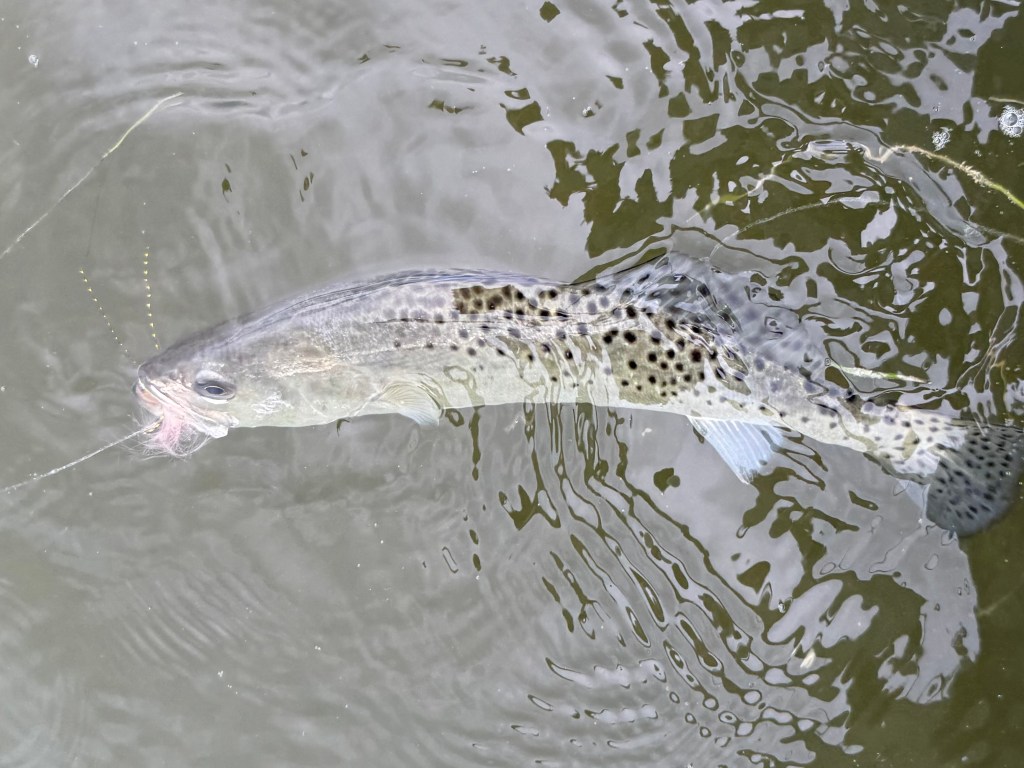
    Speckled Seatrout that took my fly.

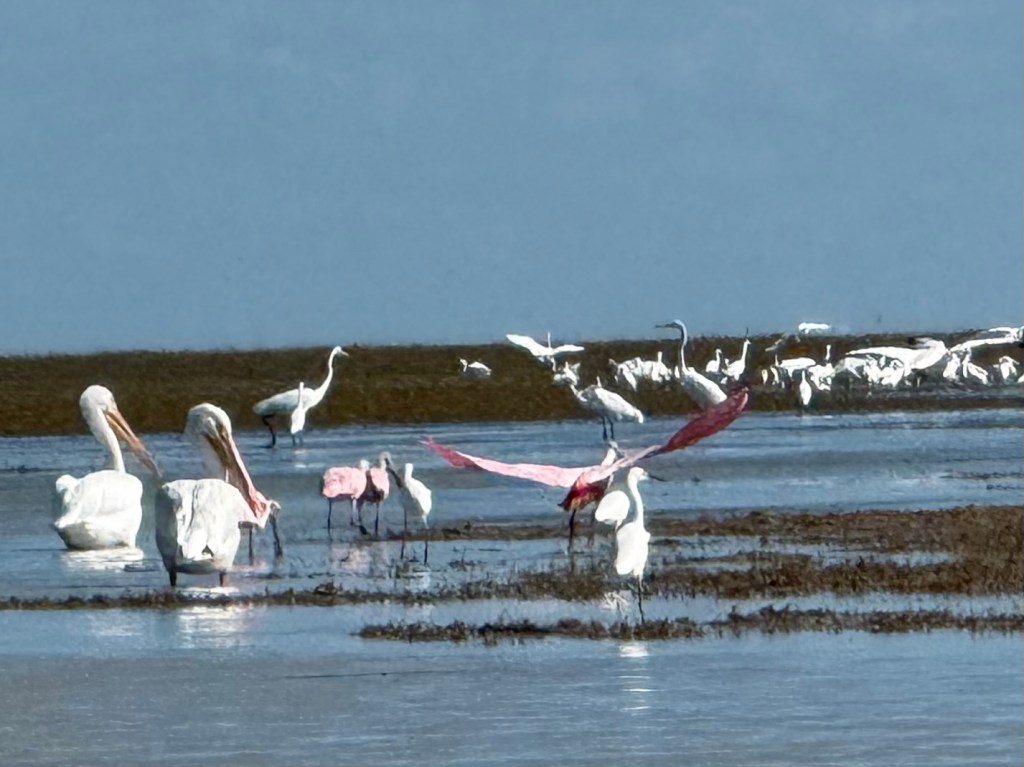
    The low tide can bring spectacular birding as it did last week when baitfish and birds filled the runouts along one of the main channels. The flats were covered with winter waterbirds: White Pelicans, Black Skimmers, all the long-legged waders, Marbled Godwits, Short-billed Dowitchers, Wilson’s Plovers, and assorted “peeps”.

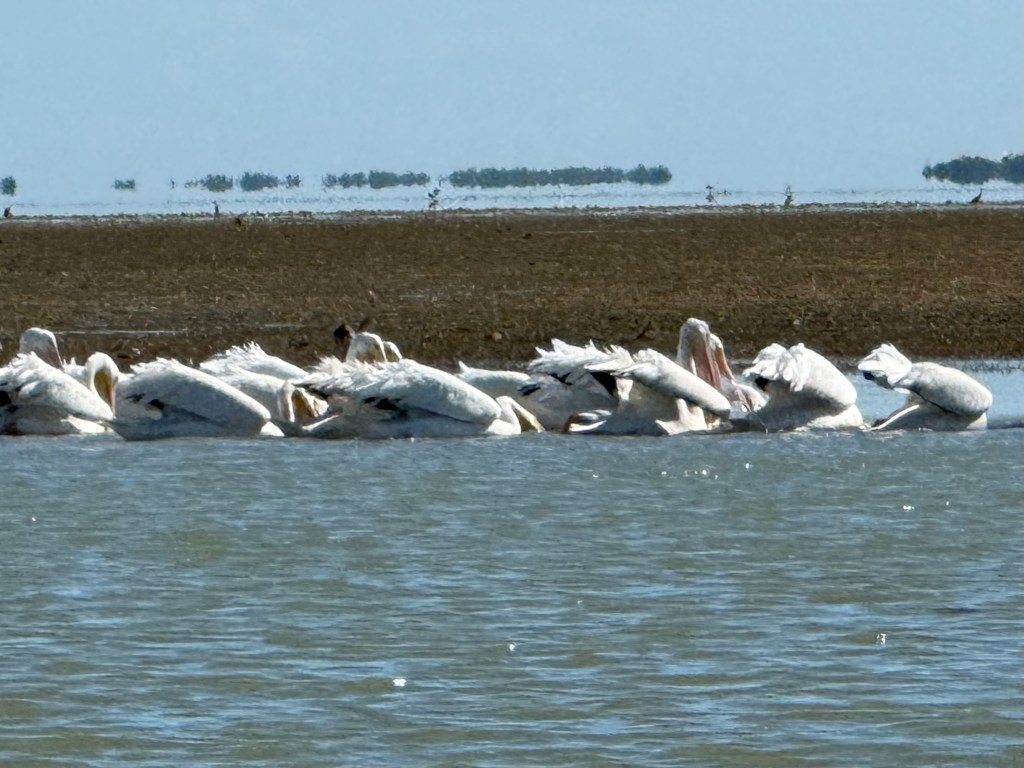
    White Pelicans fishing cooperatively for mullet.
    Black Skimmers leaving the flat as the tide rises.
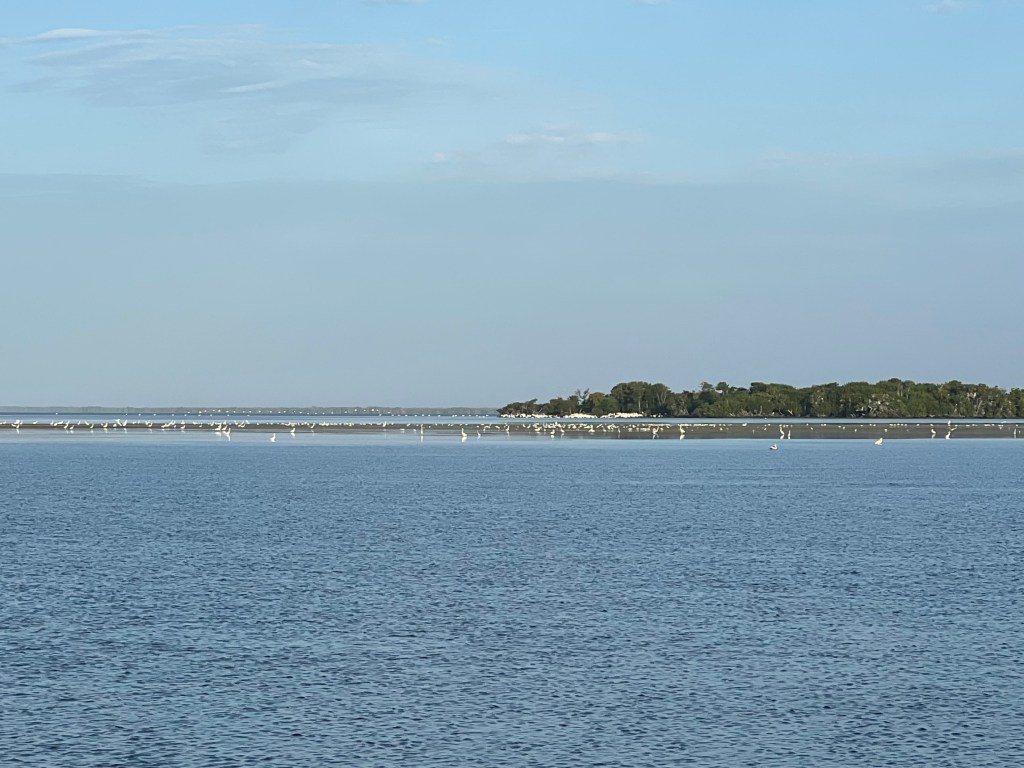
    White Pelicans, Great White Herons, Great Egrets, Roseate Spoonbills, Snowy Egrets, all fishing the shallow run-out at dead low tide.

    When the high tide pushes birds off the flats, some regroup on the highest shorelines, while others settle into the mangrove trees.

    Reddish Egret takes refuge from the high tide on a mangrove island.
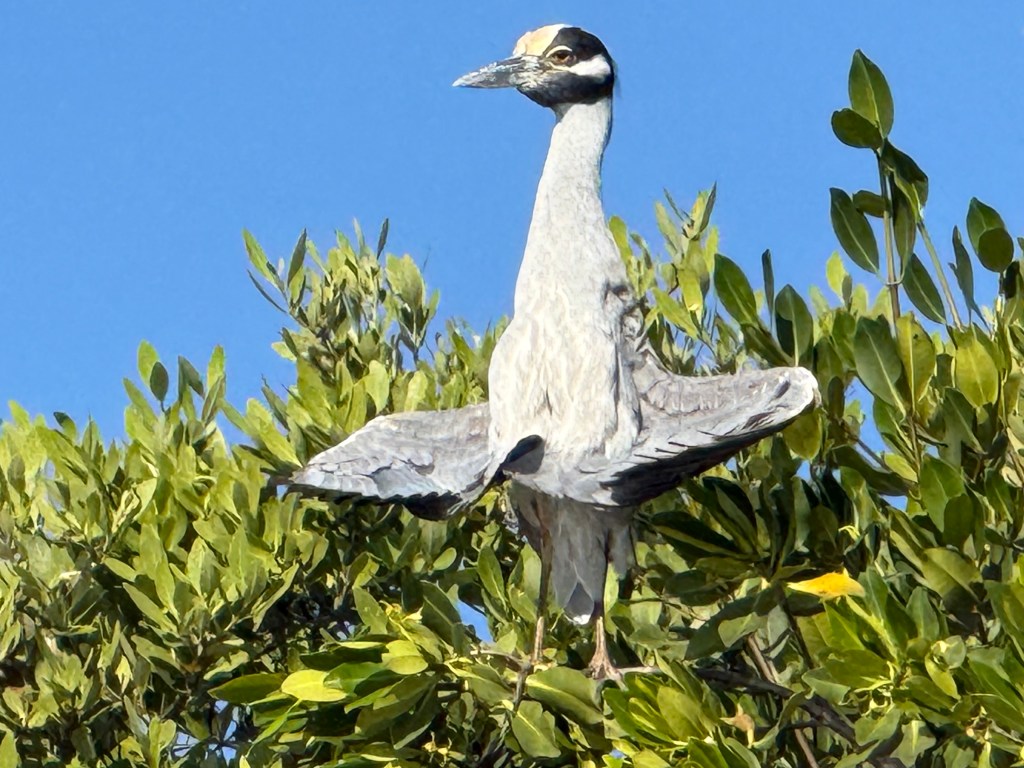
    Yellow-crowned Night heron practices the Angeli Mudra yoga pose.
    Roseate Spoonbill looks down to assess the water level while waiting for the tide to recede.
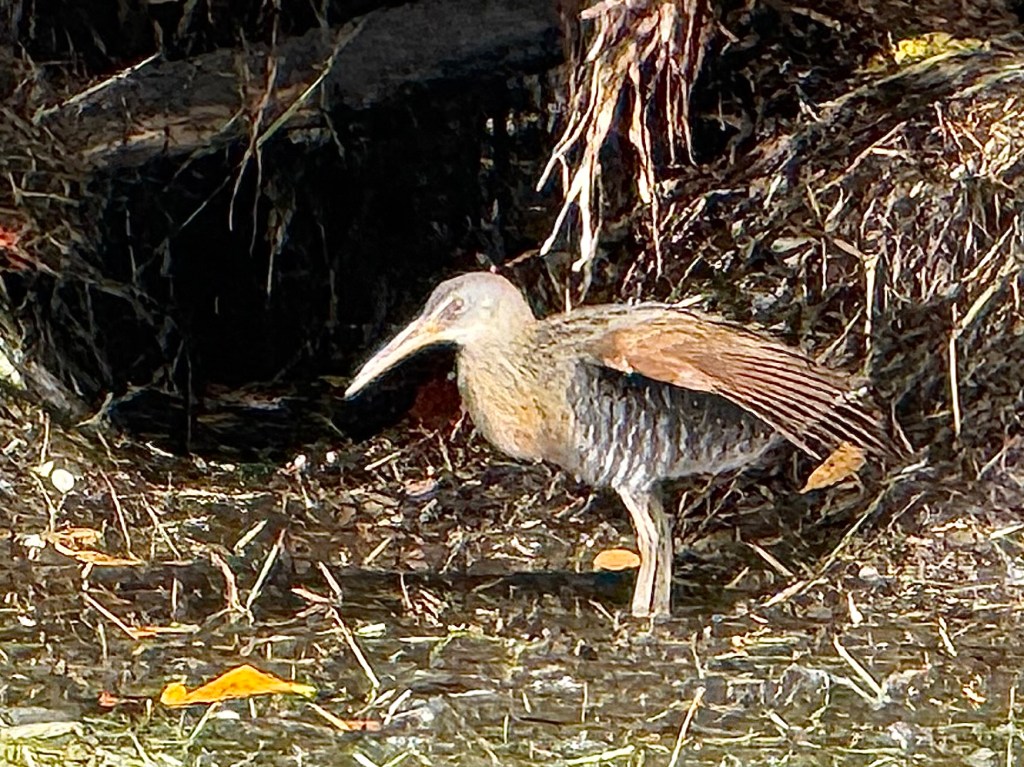
    A Mangrove Clapper Rail skulks through the matted seagrass caught in the mangrove roots.

    A couple of days prior, my friend Jay Levine had caught and released 30 Snook on fly in a channel and had zero shark hassles. But when I arrived, the water had rewarmed, the sharks were returning, and the Snook were making themselves scarce. I caught and released a couple of Snook safely but an unseen shark took the third one and I called it quits.

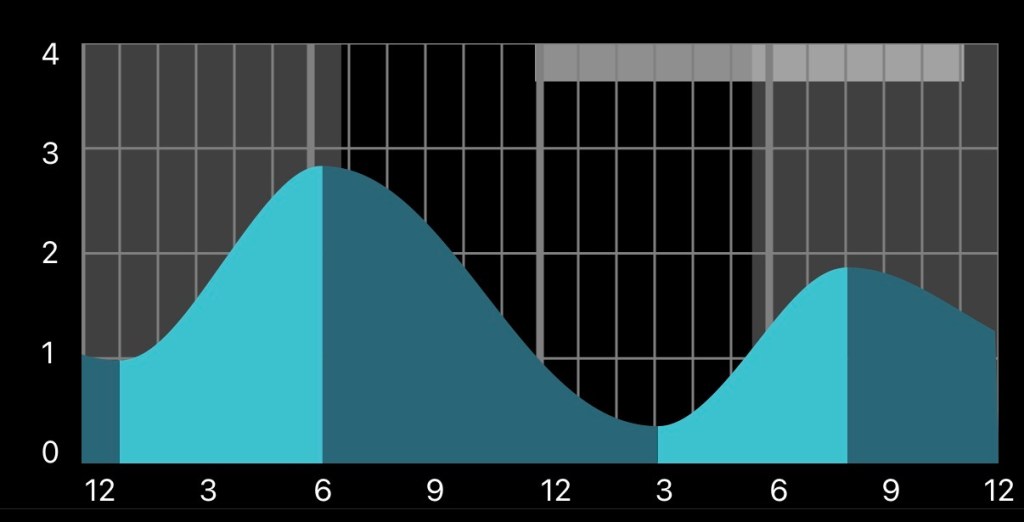
    Four days later, my fishing friend Jeremy Nawyn asked me to join him kayak fishing this same flat once again. At first I declined, but then I took a look at the tide chart: 

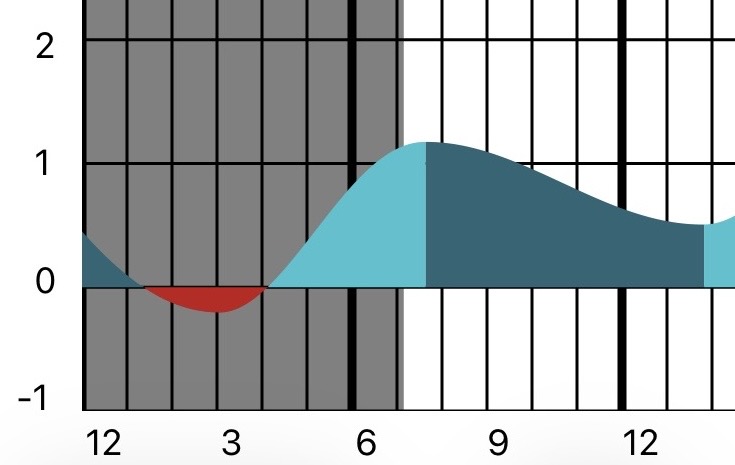
    Tide chart for Flamingo on 26 Nov 2025. The black band in the middle is daylight and the gray bar at the top is the moon. The tide on the flat we are fishing is delayed by an hour. It will fall for eight hours, from 7:45 am until 4 pm .

    I normally fish this flat by motorized skiff because it’s so exhausting to exit by kayak. If you fish the rising tide (safest) you must paddle back against the fast incoming tidal current to escape, but a long falling tide like this one is a virtual water taxi service. As a lagniappe, the wind would be at our backs coming out. I texted Jeremy that the tide chart had changed my mind. I was in.

    Jeremy’s proposal was to head out in the dark before dawn and ride the incoming tide up a narrow unmarked channel on the edge of the flat, then ride the outgoing tide back toward the marina with the wind at our backs. We faced little risk of getting stranded if we stayed in or near the narrow channel, and would not have to fight the tides or winds to escape.

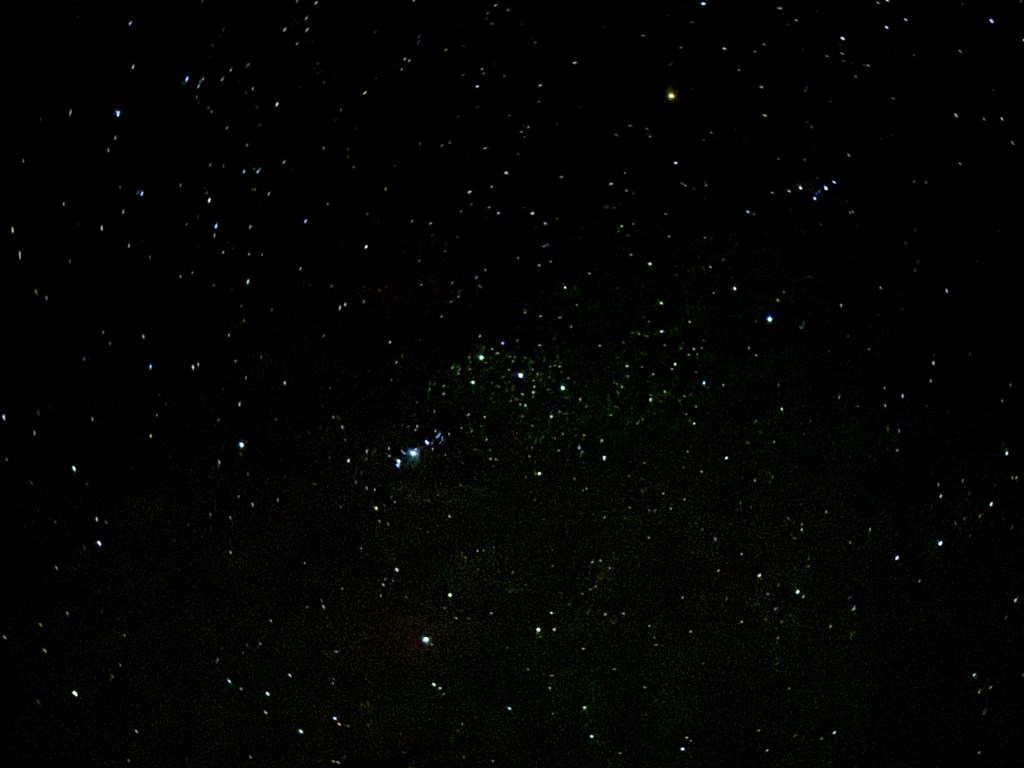
    I arrived early to enjoy the starry moonless sky.

    Orion.

    I rigged my kayak while the resident Barred Owl hooted:“Who cooks for you? Who cooks for you-all?”

    Jeremy arrived at 5:30 am with his kayak mostly rigged in the back of his pickup truck. We were on the water by 5:45 am, 70 minutes before sunrise.

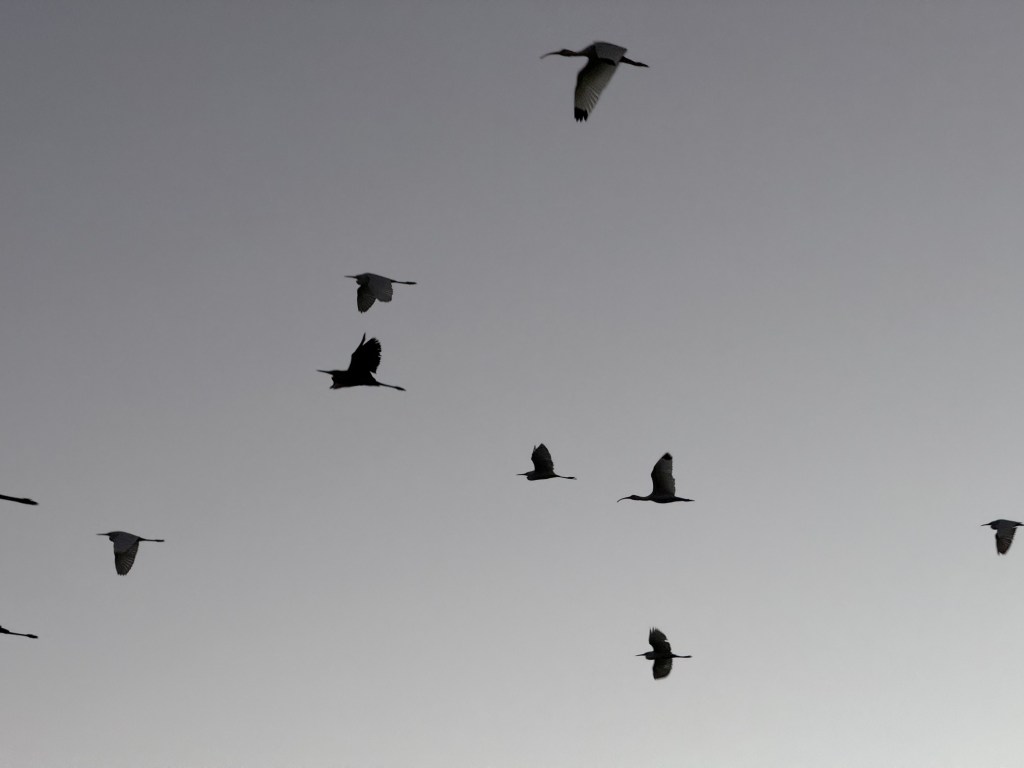
    Great Egrets and White Ibis leaving their roosts. White birds look black in the pre-dawn light.
    Jeremy in the lead. One of his teenage kids sometimes joins us, but not if we’re going out this early.

    Our fishing strategy was to paddle the narrow channel and cast toward the mangrove roots on shore where the predatory fish typically forage for crabs and small fish when the tide is up.

    I hooked a nice Snook near the mangroves then pedaled my kayak hellbent-for-leather onto the shallow flat, grounding the Hobie’s pedal flippers on the mud before stopping to work the fish to my landing net for a quick measurement and release.

    Phil with Snook in shallow water. Photo by Jeremy Nawyn

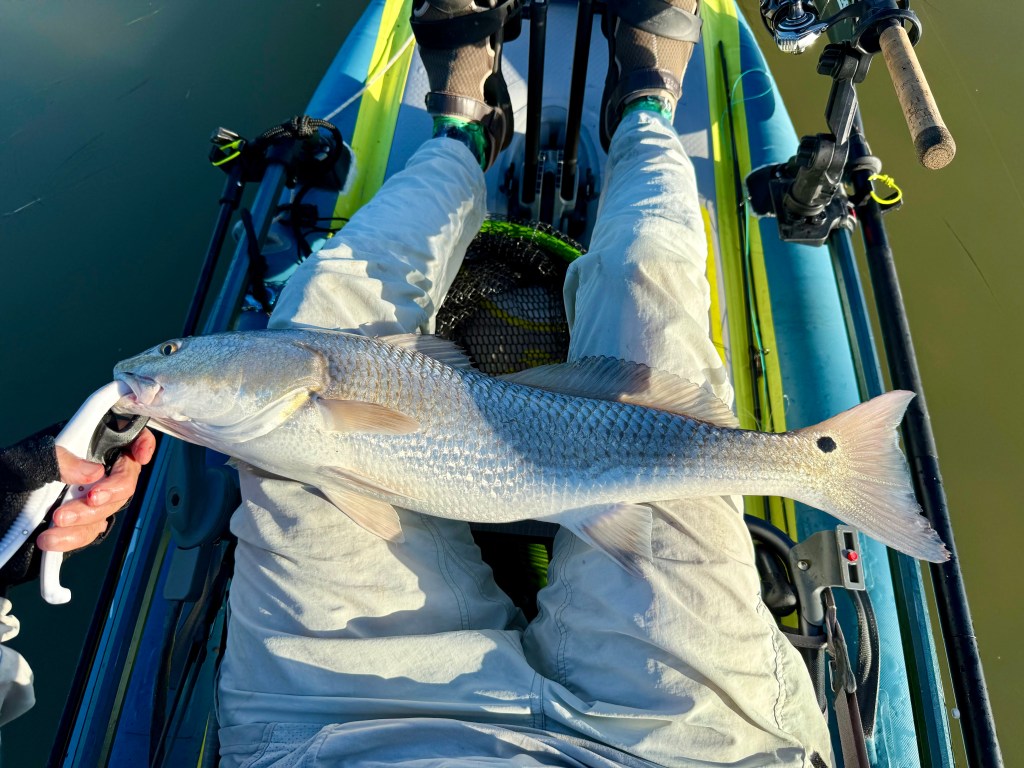
    Grounding the kayak on the flat might seem like an odd thing to do on purpose, but it prevents unseen sharks from popping up from below and grabbing the fish on my line. A Snook or Redfish hides handily in a foot of water, but a Lemon Shark or Bull Shark is conspicuous. If a shark comes for my fish in super-skinny water, I can see its approach, open the reel, and let the fish run. My trick worked this morning with a handsome Snook and a chunky Redfish.

    Snook, 24″.
    Redfish, 24.5″

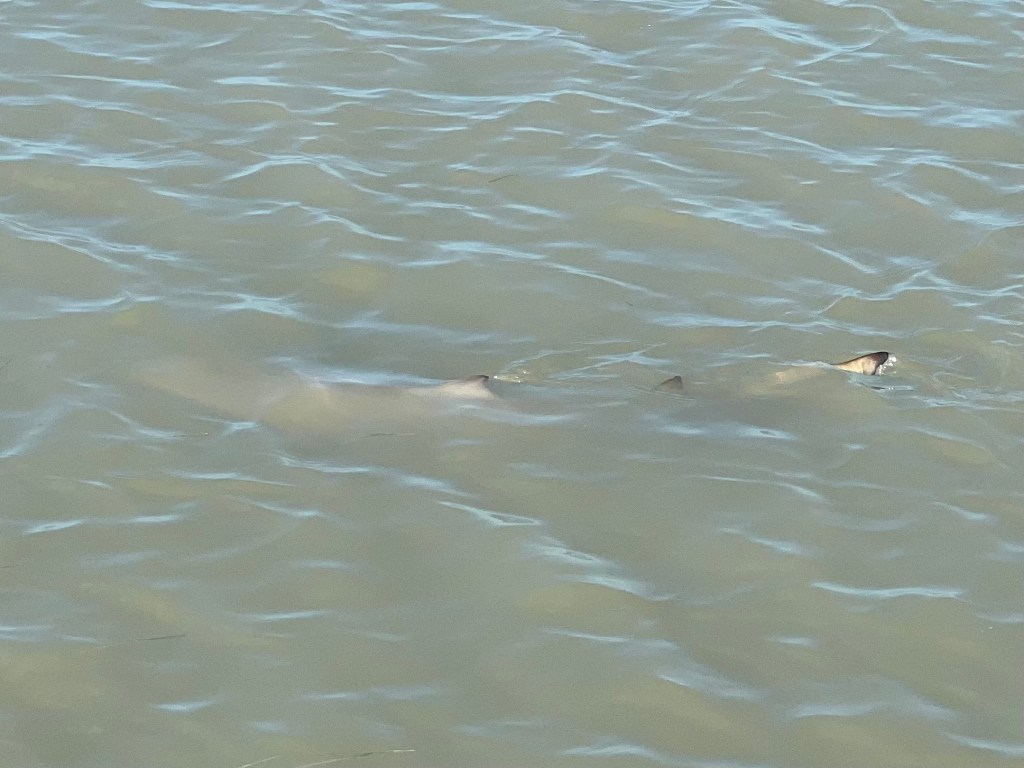
    A Lemon Shark circled my kayak looking for my redfish as I hefted it in my landing net from one side of the kayak to the other. 

    Pesky Lemon Shark circling the kayak.

    Enough already. I pedaled the kayak right at the shark to chase it away. 

    Typical of this flat, the water was opaque with sediment. One could only make out detail in the top 6”, which made it hard to spot fish. At the farthest extent of the tiny channel, a three-foot tarpon swam under my kayak, which I only saw because the water was just a foot deep… and dropping. Time to turn around.

    I stopped in at a favorite cove on the way back, wherein I often find Snook and Tarpon. A four foot Lemon Shark had gotten in ahead of me and was working over the cove, chasing all the fish up the mangrove creek – definitely time to head back. As cool as they are to see up close, I don’t want sharks hanging around my boat jonesing for my fish. Lemon Sharks at Flamingo have bitten the hands of several fishermen in the past couple of years and even dragged one careless lad overboard and into the water (YouTube video).

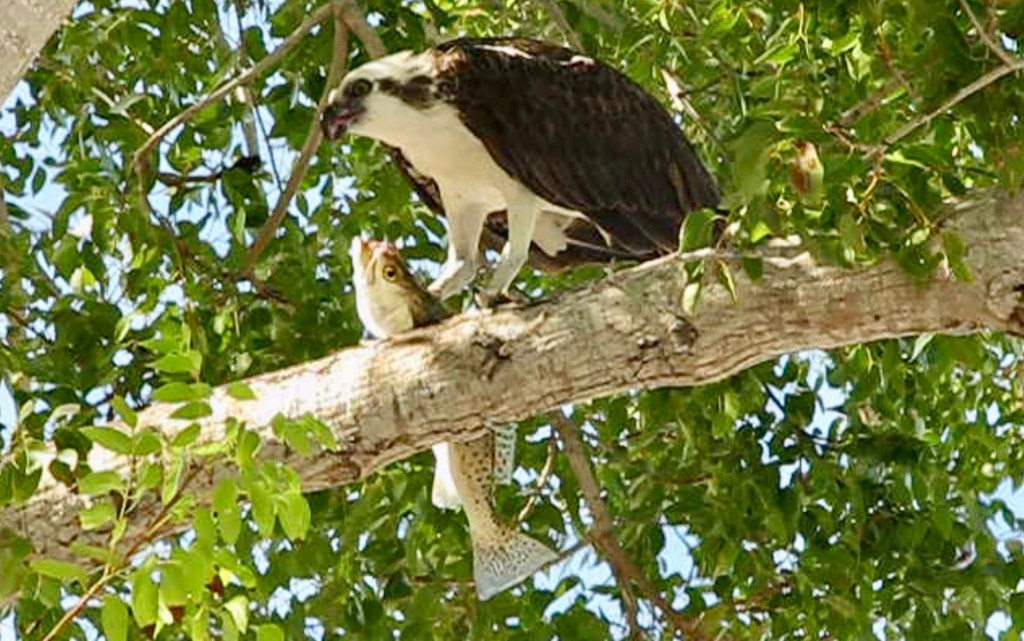
    I paused to watch eight Ospreys circle a mullet school, diving in succession, snatching hapless fish, and landing in the trees on shore to enjoy a sashimi breakfast.

    This lucky Osprey caught a yummy seatrout.

    Full of fresh fish, the Ospreys set about collecting soft material to line their stick nests. Some carried clumps of dead seagrass in their feet.

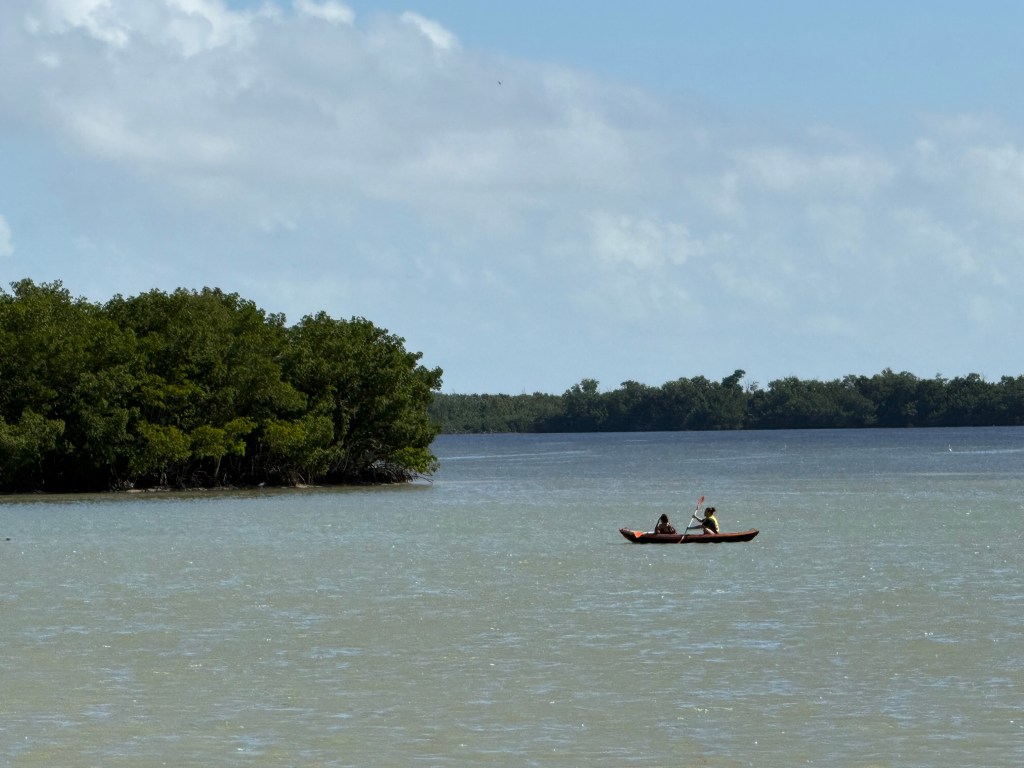
    On our way back to the marina, I spotted a young couple in an inflatable kayak paddling the opposite direction, heading toward the heart of the flat. Unless they knew what they were doing, they stood to get stranded in about 20 minutes and stuck there for the next 5 hours. Seeing neither fishing gear nor binoculars, I took them for tourists. I paddled over and asked whether they came here often. “First time” responded the young man in a British accent.

    I explained about the tides and the mud, and pointed them toward a channel marker. If they paddled directly to that marker they could spend all day watching birds, sea turtles, and marine mammals from the main channel without getting stranded.

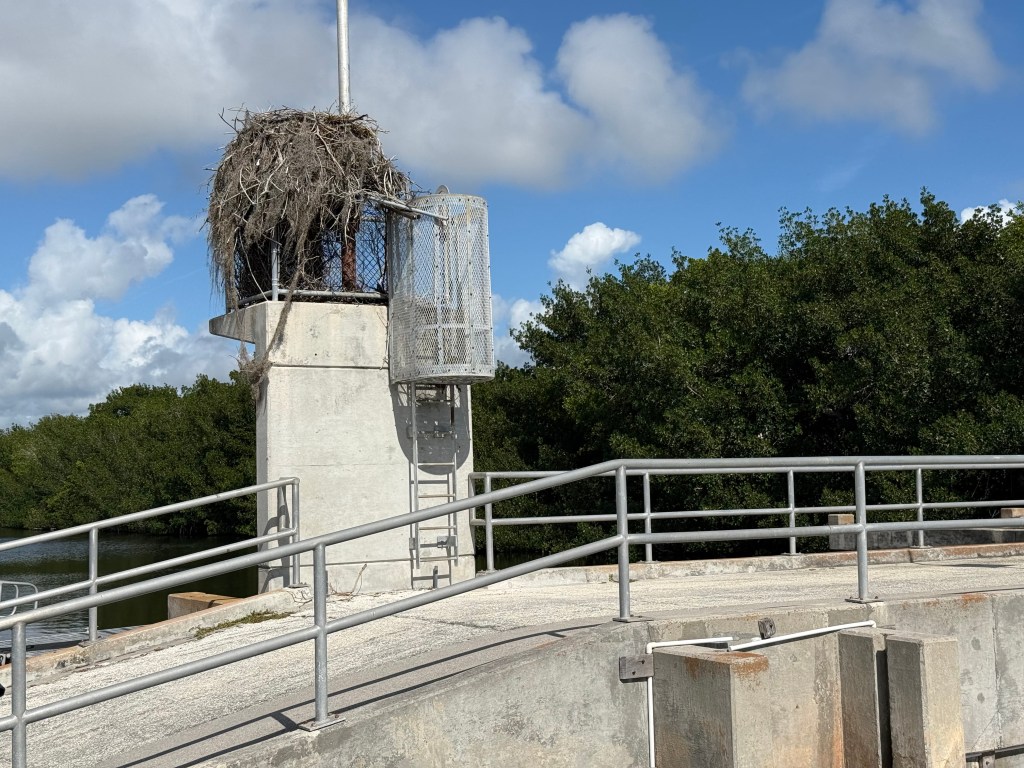
    As I packed my gear in the car, I watched another Osprey pair skimming the West Indian Mahogany trees to collect Spanish moss for their bulky nest on the water control lock that separates the Buttonwood Canal from Florida Bay. 

    Lock Moss Nesters

    I ate my lunch while overlooking Florida Bay from the refurbished visitor center. In addition to the wildlife viewing it’s entertaining to watch international visitors enjoying this National Park in their own ways.

    Keeping up with Instagram is priority anywhere you go.
    More my style.

    Hey, that’s the same couple in the kayak I saw earlier, now returning from the flats. They pulled their boat ashore and stopped by to say “hi”.

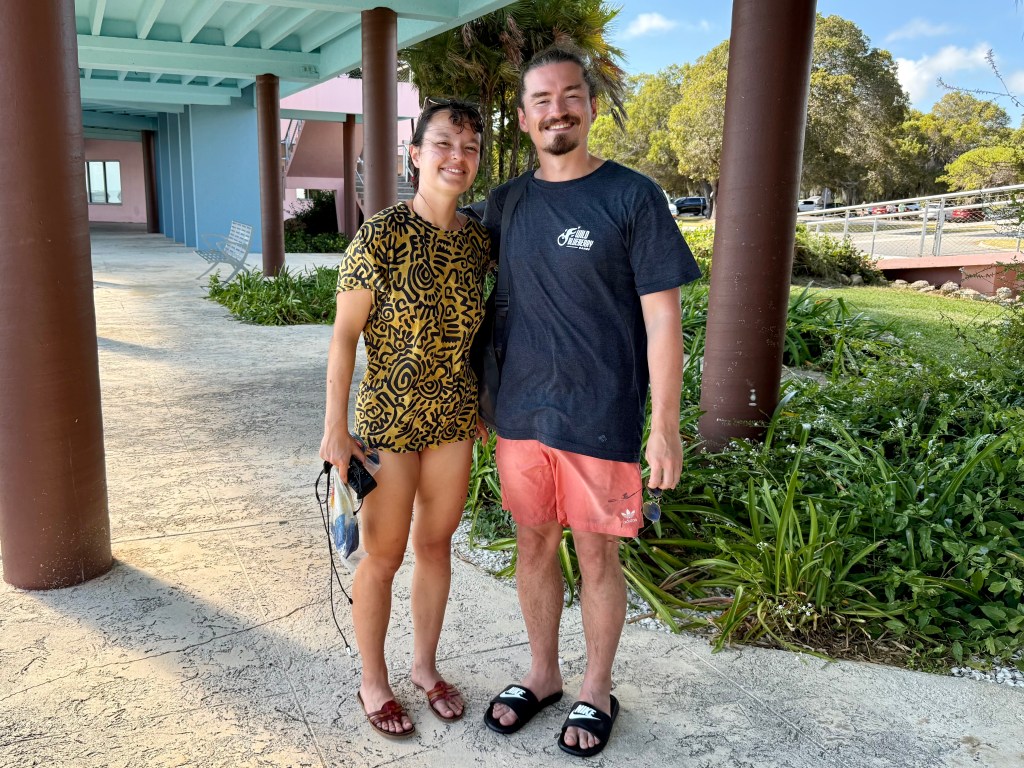
    Caroline from Strasbourg and Jason from London.

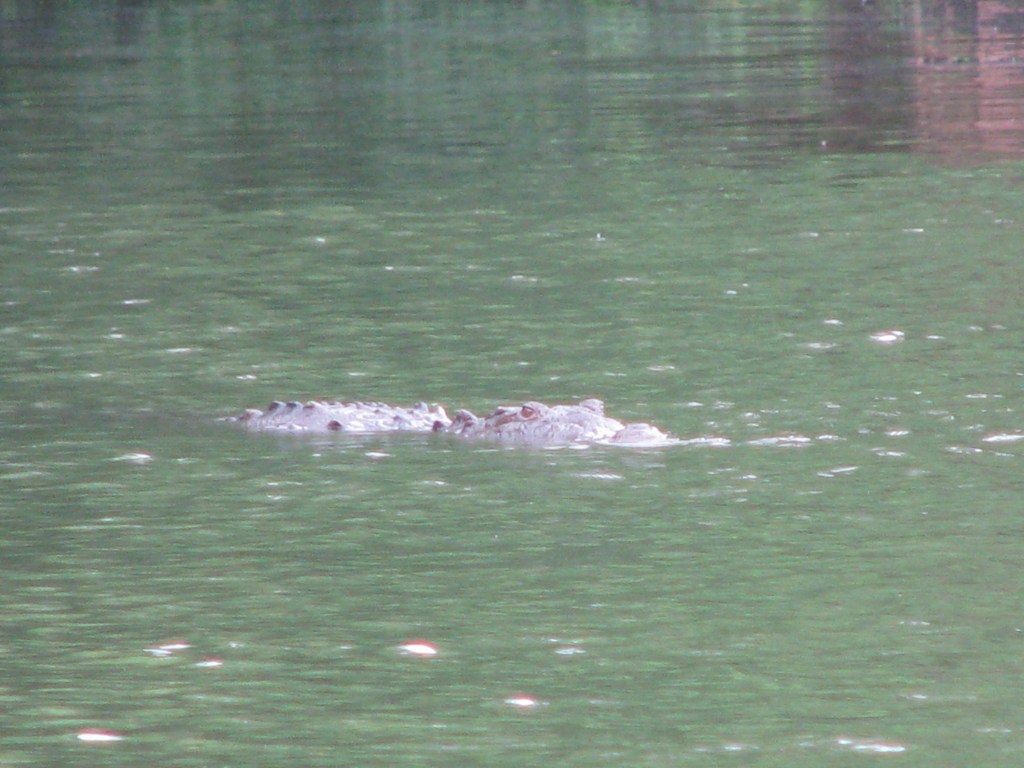
    They had decided to head back in after a large American Crocodile surfaced in the channel next to their inflatable kayak.

    My photo, not theirs, but you can see why they might have felt unsafe in an inflatable kayak.

    Until recently, I’d have told them not to worry about the normally docile American Crocodile, but last summer an experienced fly fisherman told me of a large croc at Flamingo that went airborne in its best attempt to take him off the deck of his skiff.

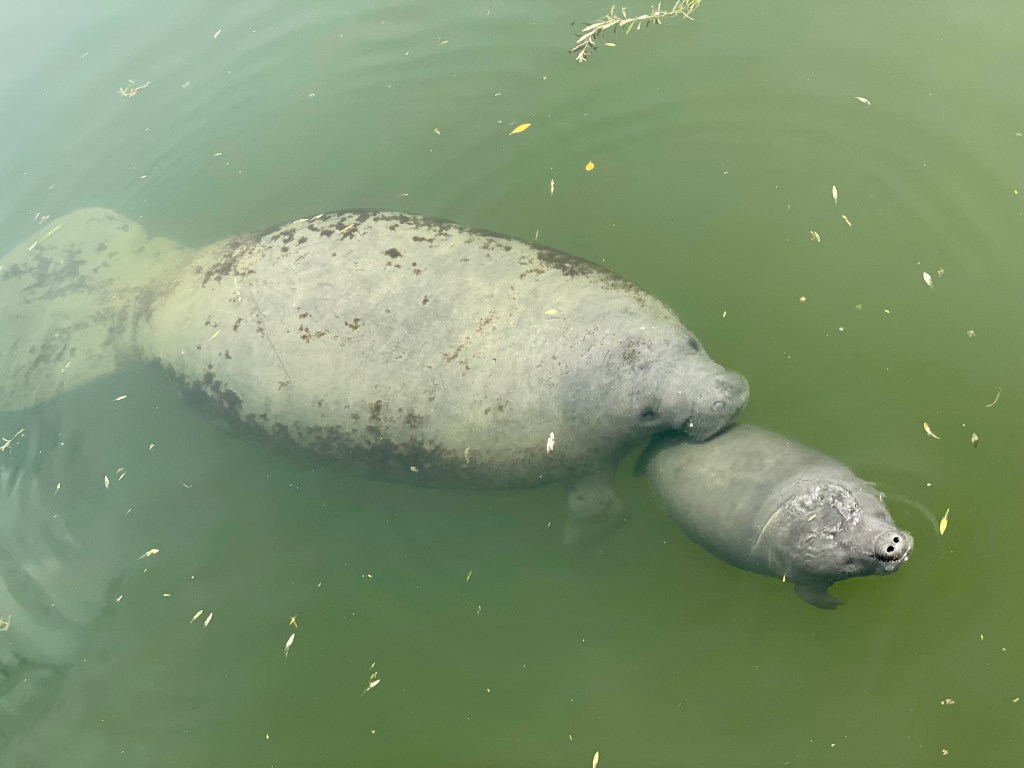
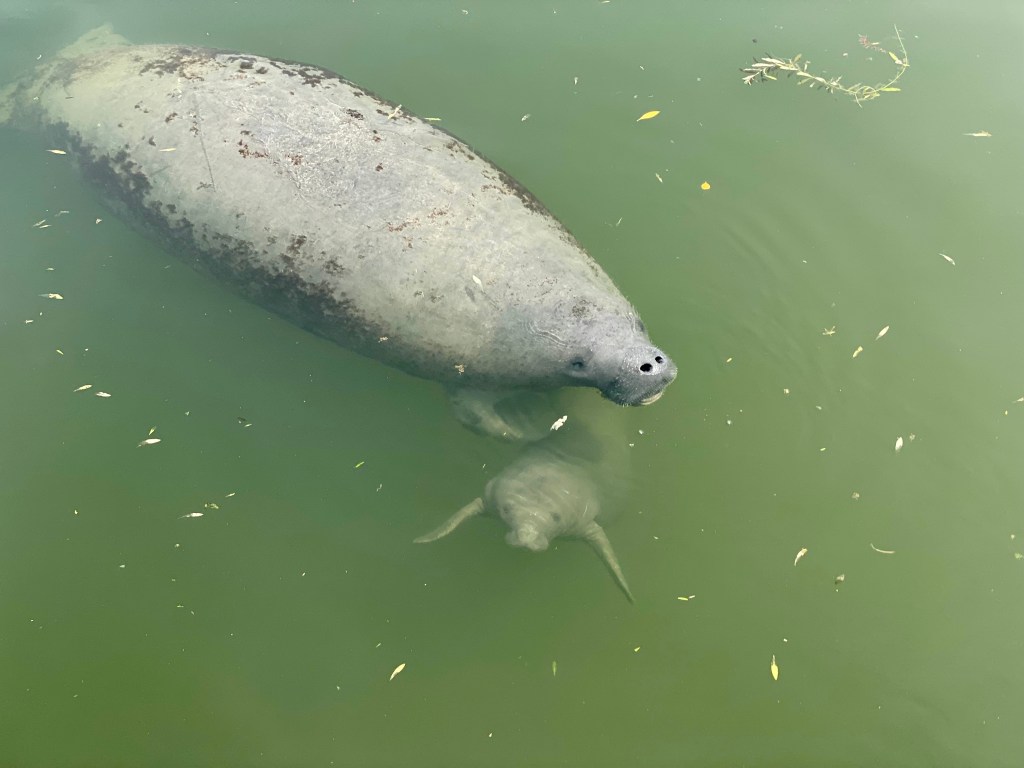
    I took Caroline and Jason over to the marina to admire the assembly of mother and baby manatees.

    Too cute.

    * * *

    Pandora’s Flats

    A couple of months back, I promised to write an essay about why you shouldn’t fish at Flamingo. The dense mosquito swarms are sufficient reason for normal people to stay away nine months of the year. Risk of stranding on the flats while exposed to sun and lightning should give pause to any sane person. We recently acquired the man-made problem of habituated sharks and crocodiles popping up at random from the opaque water below – recreational fishing boats have trained them well. If you just wanted to fish, you might find an equally productive area with fewer ancillary hazards.

    American Crocodile. Note the skinny snoot, Roman nose, and 4th tooth on the bottom that sticks up.

    All of these risks have proven insufficient to keep a certain zoologist away. The combination of birds, fish, and scenery will keep me coming back as long as my health and the rising seas allow.

  • Return to Mosquito Hell, with a most striking dawn

    Return to Mosquito Hell, with a most striking dawn

    My last few fishing trips onto the flats have been unproductive. The late summer water has been hot and low in oxygen. Maybe the fish are somewhere else, or maybe they’re just laying low. Tomorrow morning I’m venturing back into the mangrove lakes of Mosquito Hell, an area where I always find fish this time of year, assuming the Black Salt Marsh Mosquitoes (BSSMs) don’t drive me out first.

    Trip planning

    The moon is near full tonight, so the morning fishing activity is likely to be brief. I plan to arrive in the dark to maybe find a snook or two before the sun comes up. Then I’ll peddle-paddle my kayak to an area where the tarpon hang out and snook spend their day hiding in the mangroves. Occasionally, a snook wakes up for a mid-morning snack. If I find the juvenile tarpon rolling, I can see if they’ll play with me. Like snook, tarpon feed actively at night on a full moon, so they may be sated by the time I arrive.

    I’m preparing for the BSSMs the night before, putting into play a few improvements over my last trip to Mosquito Hell:

    I take my khaki fishing pants, outer shirt, and gloves to the driveway, spray them with DEET, and place them inside a 2-gallon zip-loc bag.  I lay out a towel to protect the car seat from the DEET. The rest of my special mosquito gear I place on the passenger seat: for my head, a Tilley hat and insect head net; for my feet, Simm’s neoprene wading gaiters and neoprene dive booties. Mosquitoes are not going to bite through 5 mm of neoprene.

    My scheme is to drive to the launch in the dark, and change into my stinky DEET-soaked clothes, then get out of the car to rig and launch my kayak. I will start fishing at 06:00, before the first dawn light. The nearly full moon sets at 05:49 and the sun rises at 07:06, with civil twilight starting at 06:36.

    It’s tricky fishing in total darkness, and tricker fly fishing. I only know that a snook is nearby if I hear it blow up the water while chasing mullet. Sometimes the water is silent. Other times I cast too far and hang the fly into a mangrove tree. Then I have to turn on my head lamp to untangle the line and of course the light attracts mosquitoes to my head. But other times I cast the fly near a snook and things get exciting in a much better way.  Hope springs eternal.

    My alarm is set for 3:50 am. Time for bed.

    Fishing report

    On the Mosquito Horror Scale (0-10) the morning ranks an 8, “Severe” but not “Extreme”. My mosquito gear system works perfectly. The only mosquitoes that try to bite me are 3 or 4 that go for the pads of my fingers where I have no repellant. That’s not a safe place for a mosquito to bite a human, and they are instantly dispatched with a pat of the finger. With my DEET-soaked outer clothes, mosquitoes don’t even follow me into the car.

    No mullet are splashing around the kayak launch area in the dark, so no predatory fish are there either. Too bad – sometimes the fishing is amazing right there. I light out for the far mangrove shore, about a mile’s paddle.

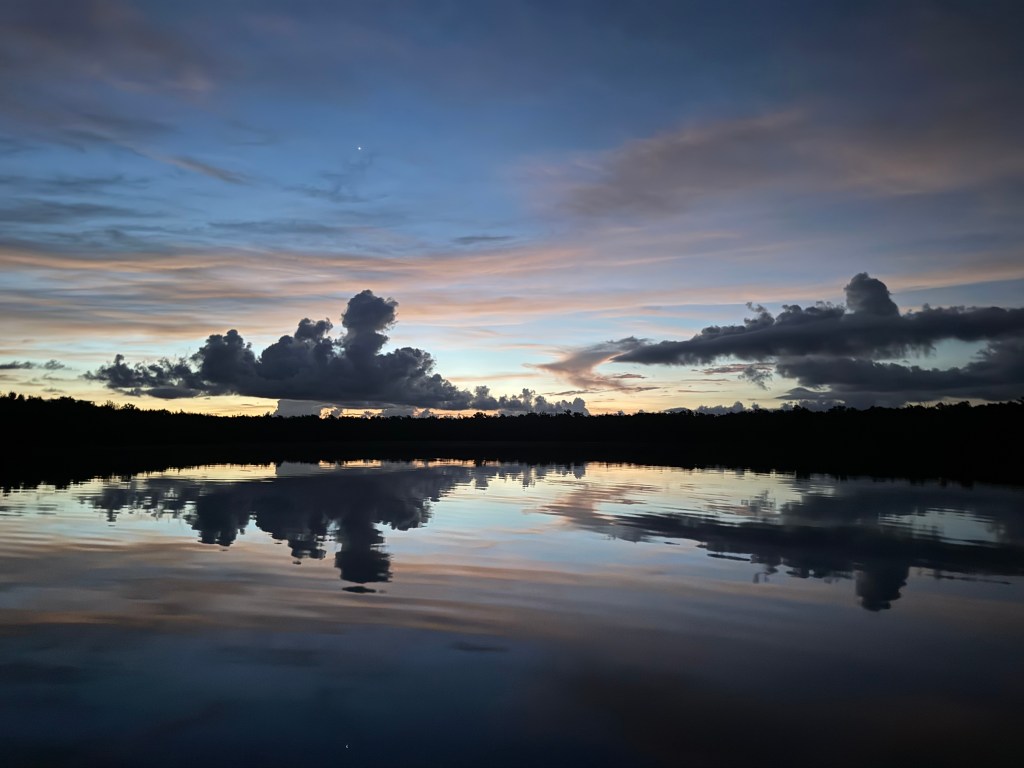
    The first traces of dawn light appear, with Venus still visible directly above the tallest thunderhead on the left.

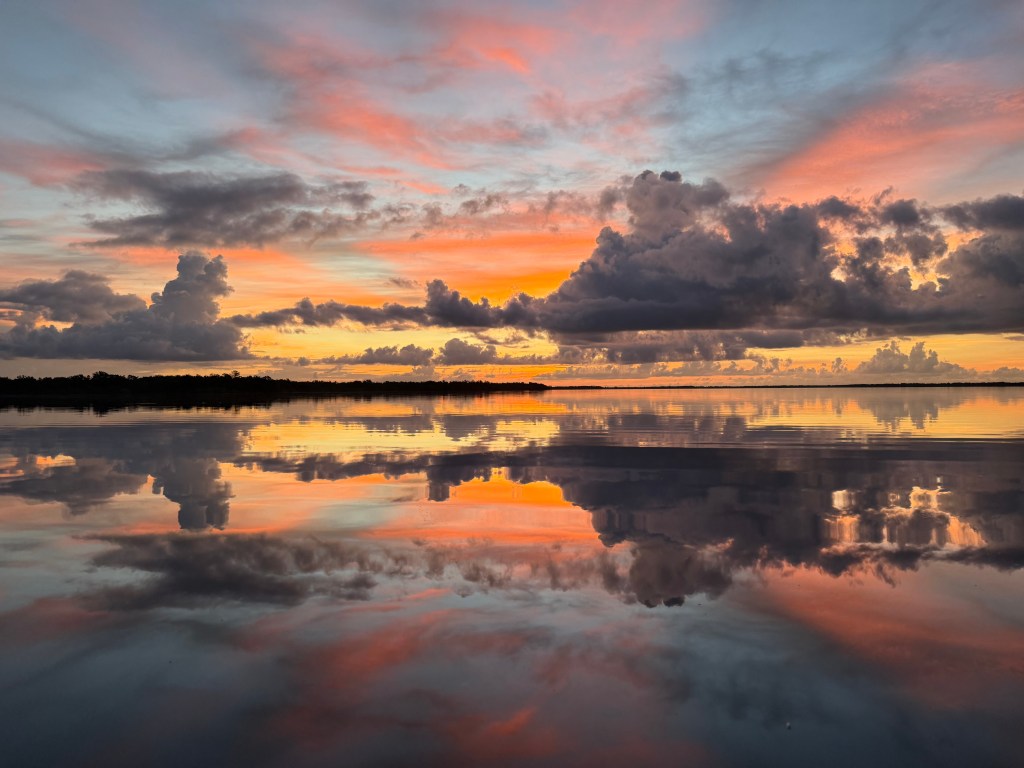
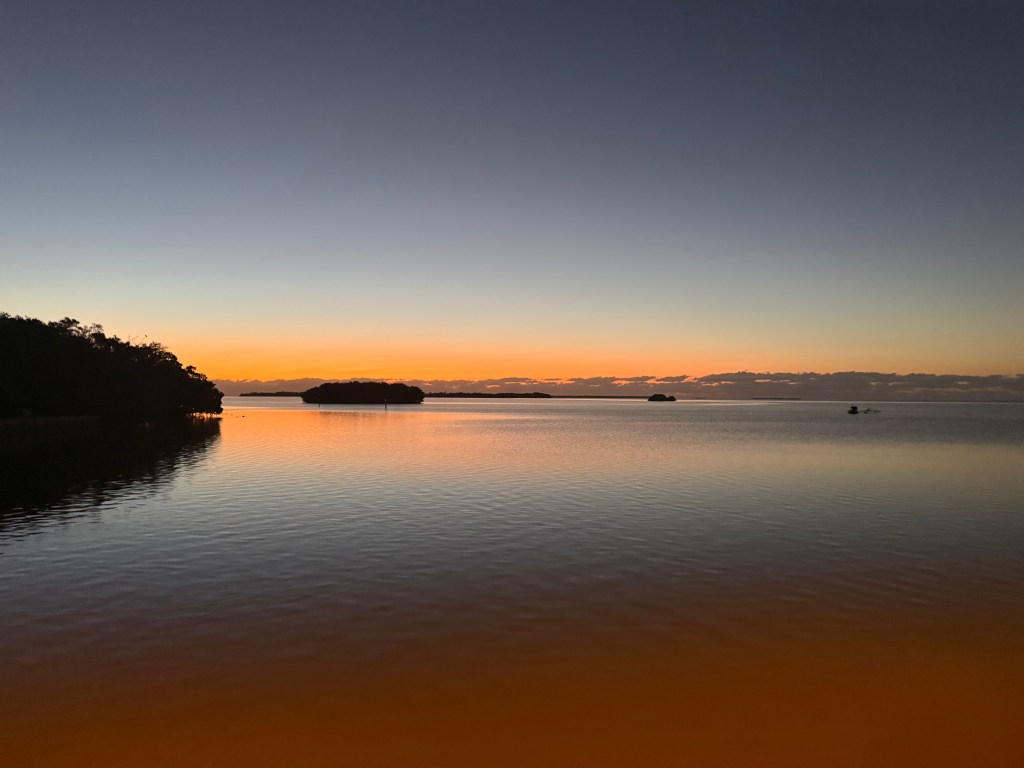
    Dawn explodes enroute. Yowza.

    I reach the other side eight minutes after sunrise. The water is extremely murky and tannic, like donut shop coffee with a tiny splash of horrid non-dairy creamer. I dip my finger in the water and taste it through the head net: slightly brackish.

    To find fish in water this opaque I need a “search bait” that’s dark, for maximum contrast when viewed from below against the sky, but with some sparkle and a lot of vibration to get a fish’s attention. I put away the fly rod and rig my spinning rod with a 4” paddletail in rootbeer & gold with a gold underspin jig – just the ticket.

    The paddletail, true to its name, wiggles its tail back and forth, and the underspin leaf twirls up a storm.

    At 7:15, my second cast is slammed by a snook in the 30″ range. It makes one jump, a brief lateral run pulling line off the reel, then runs straight for me as fast as I can take up line. It passing directly under the middle of the kayak, bending the rod hard. The  tip section of my three-piece TFO travel rod snaps, creating a brief moment of slack that pops the lure free of the fish’s mouth.

    This is the 4th time this spinning rod has broken, every time in exactly the same spot, 5″ above the ferule. Until now, I’ve blamed myself, but thinking on it, each break occurred under a different circumstance and stress geometry and I’ve never broken any other spinning rod. I’d wager the TFO Traveler is weak at the internal edge of a carbon fiber sheet wrap. I will write the company about this problem. I bought two replacement tip sections the last time one broke, so I still have one left, but I need a more reliable multi-piece spinning rod.

    Why even bring a travel rod on a local fishing trip? When kayak fishing tight to the mangroves, it helps to have the rods I am not using at the moment disassembled and stowed safely out of the way. That’s a key advantage of multi-piece rods, not to mention the obvious advantage when I travel.

    Back to fishing. Having broken the spinning rod, it’s “fly or die”. I re-assemble the 8wt fly rod and choose a black dark-water fly, this one tied from Drew Chicone’s pattern, The Devil’s Daughter. The tail is ostrich and peacock herl, the body is fluffy marabou feathers, and the head is spun deer hair. Peacock herl gives It shimmer and the ostrich and marabou make it swish enticingly in the water.

    I start with the fly in the photo and immediately hang it in a mangrove. Impatiently, I shove my kayak into the mangroves to untangle the fly, leader, and line, then tie on another I’d made with a weed guard to keep it from hanging in trees and roots.

    Predatory fish that have spent the night foraging under a bright moon generally won’t be hungry again until the afternoon. This morning fits that typical pattern, with fish ending their feeding spree shortly after sunrise, shortly as in 9 minutes. In the next hour, I get rained on briefly (feels good) and catch a couple of small juvenile tarpon on fly (they’re always hungry), while their older cousins roll on the surface for air but won’t eat.

    Fishing is over until afternoon but the shoreline holds birds, orchids, and bromeliads. I can see for miles, the mosquitoes have let up, the rain shower has cooled things off, and I have yet to spot another human. It’s has turned into a pretty fine Sunday in the Everglades wilderness, but it’s time to get out. Bigger storm clouds are assembling and I don’t want to be crossing open water in an electric storm.

    On the way home I stop by Moreno’s Tortilla shop in Florida City to pick up hot tamales and a pack of corn tortillas. Josephine greets me and knows what I want without my asking. This little hole-in-the-wall makes the best Mexican tamales and you can’t buy all-corn tortillas this good in a supermarket.

    On the drive back, I divert 10 miles to check out a canal that friend Jay and I had identified from a YouTube video. In the video, a young kayak fisher from out of town was catching lots of fish while getting bitten on the eyelids and lips by something he called “yellow flies”. As soon as I step out of the car I am engulfed by a swarm of hungry deer flies. Uh oh.

    I consider deer flies even worse than mosquitoes because they are active midday when it’s too hot for protective bug clothes, they will find the the tiniest spot of skin on which you did not apply repellant (e.g. lips and eyelids), and their bites really hurt.

    Climbing over two metal gates, swat swat swat, I find the kayak put-in, swat swat. From the vague track through the vegetation, swat swat swat, I can tell it’s rarely used. I wonder why not, swat swat.

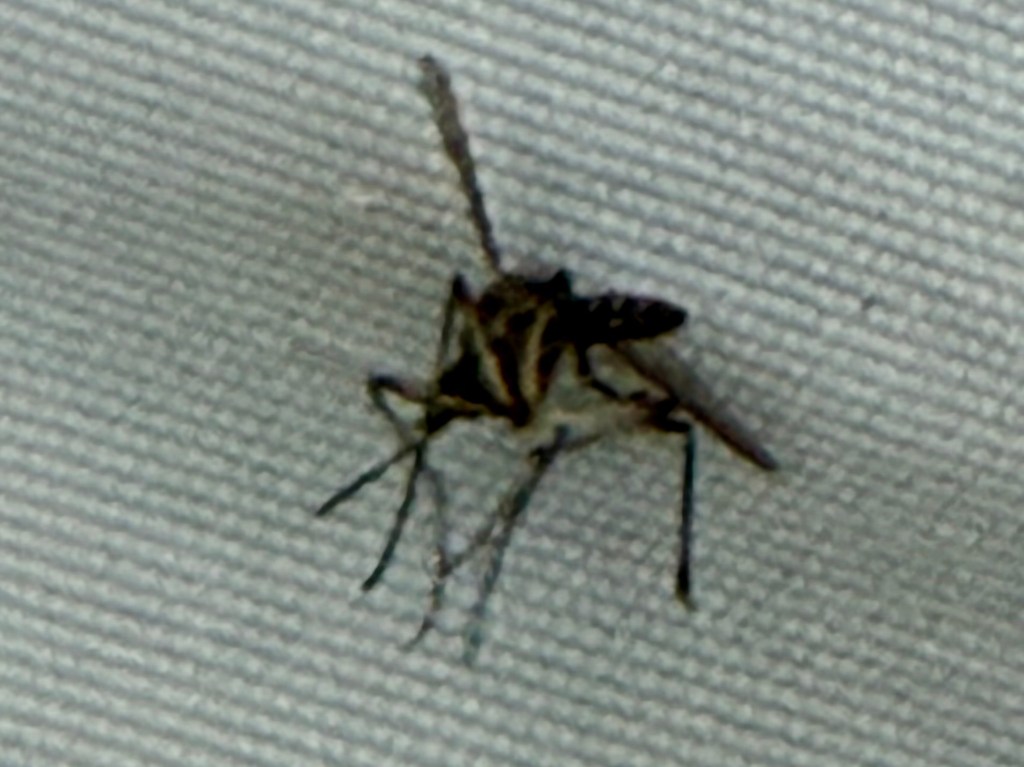
    I mash the deer flies that followed me into the car and photograph one that wasn’t too mangled.

    Serious rain slows the drive home but returns a few minutes by washing salt from the kayak and car.

    Unpacking my fishing gear, two stow-away mosquitos escape into the house. It’s still summer here in South Florida where if it’s not one nasty biting bug it’s another. I’ll bet the Wisconsin Driftless Area is getting really nice about now.

    © Philip Stoddard