May 15, 2026. Low winds are predicted through noon with no rain forecast for the day. Ideal weather to fly fish for snook on the beaches in the SW corner of the Florida peninsula.
When the tide starts to come in, small bait fish congregate along the shoreline. In May and June, snook move in to hunt these baitfish along the beaches of SW Florida before heading offshore to breed. In turn, Lemon Sharks ply the water a few feet out from beaches to hunt the snook.
Sea level rise is a real thing here, and snook make the most of it, seeking out the beach stretches with “ghost forests”, woody remnants of drowned mangroves. I presume snook find some protection from hungry sharks and ospreys among the submerged stumps.
* * *
Mosquito season has returned to south Everglades. I don a second shirt and my head net in the car before heading outside to ready the skiff for launch. As I step out, a swarm of mosquitoes rushes inside the car to amuse me on the drive home. No kayak today; my destination is 17 miles from the put-in.
A Chuck-Will’s-Widow sings nearby as I launch in the dark. Something splashes, but my flashlight detects no crocodile eyes. The sun peeks over the horizon turning the sky and water pink as I take the shortcut through Lake Ingraham. I stop to watch pink birds.
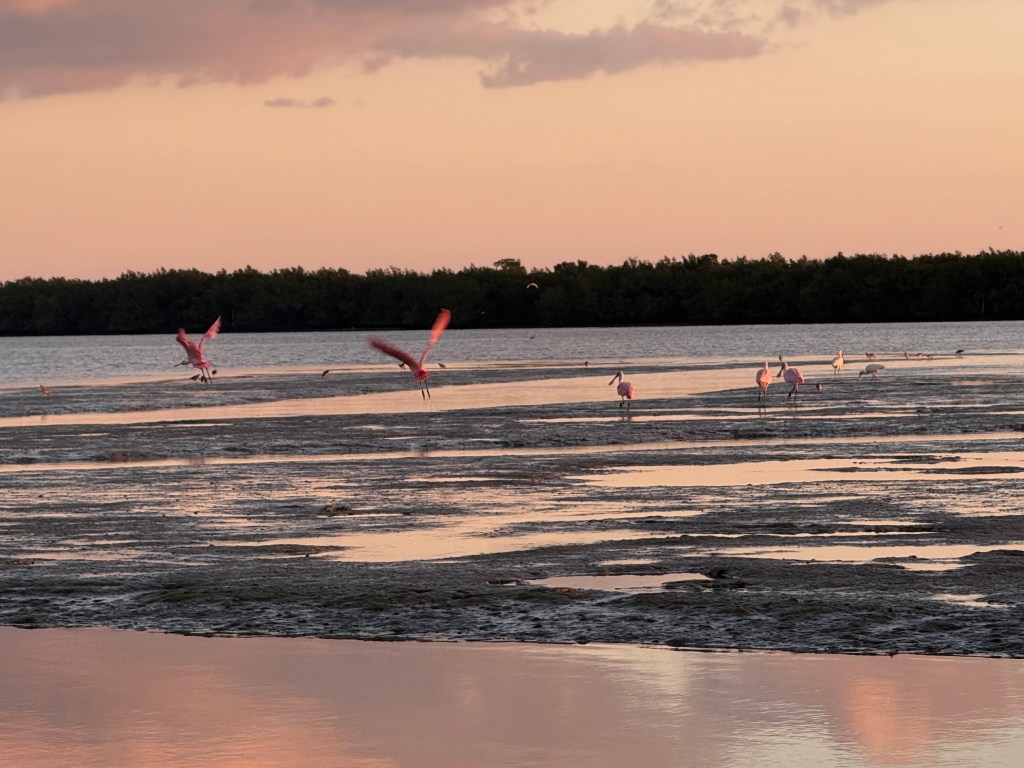
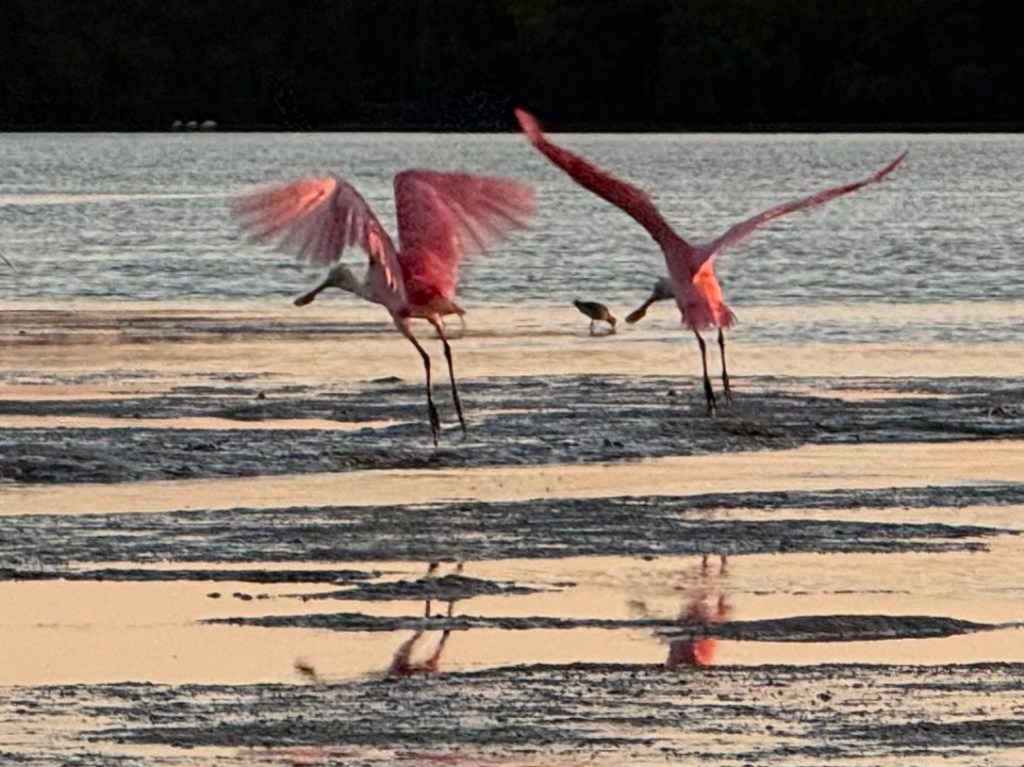
The tide is still going out when I arrive, so I check out the shoreline of a nearby tidal river, a spot just outside the strong current where I have found snook stacked up as they wait for the tide to change. Someone else has arrived before me to hunt for snook, with no intention of releasing them:

Feeding caught or released fish to Lemon Sharks is against my religion, so I move on to the beach. The wind is low, as NOAA predicted it would be, and the tide chart says the tide will turn in an hour. I bide my time watching a Swallow-tailed Kite hunts lizards and dragonflies as it courses back and forth over the low coastal scrub. I never get tired of watching kites.
I assemble my long, two-handed “Spey” rod, tie on a proven fly, and begin casting to the water’s edge, trying not to hook remnants of the mangrove ghost forest. At 8:30 am a snook grabs the fly and leaps into the air. It lands with a splash and leaps again. A great fish, but commotion like this broadcasts a loud “EAT ME” signal to any nearby sharks. A couple of years ago at this same spot, I broke a fly rod playing “keep away” with a Lemon Shark. I buy used fly rods, but they’re still inordinately expensive, and that particular rod was a treasured gift from my former student Manny. I have devised a plan to avoid a repeat:
As soon as the snook hits the fly, I open the drag on the fly reel and let the fish run while I maneuver the skiff away from the beach into deeper water. When I spot-lock the trolling motor, Mr. Snook is still on the line. The ruse works – I play in the snook and net it up with no shark interference.
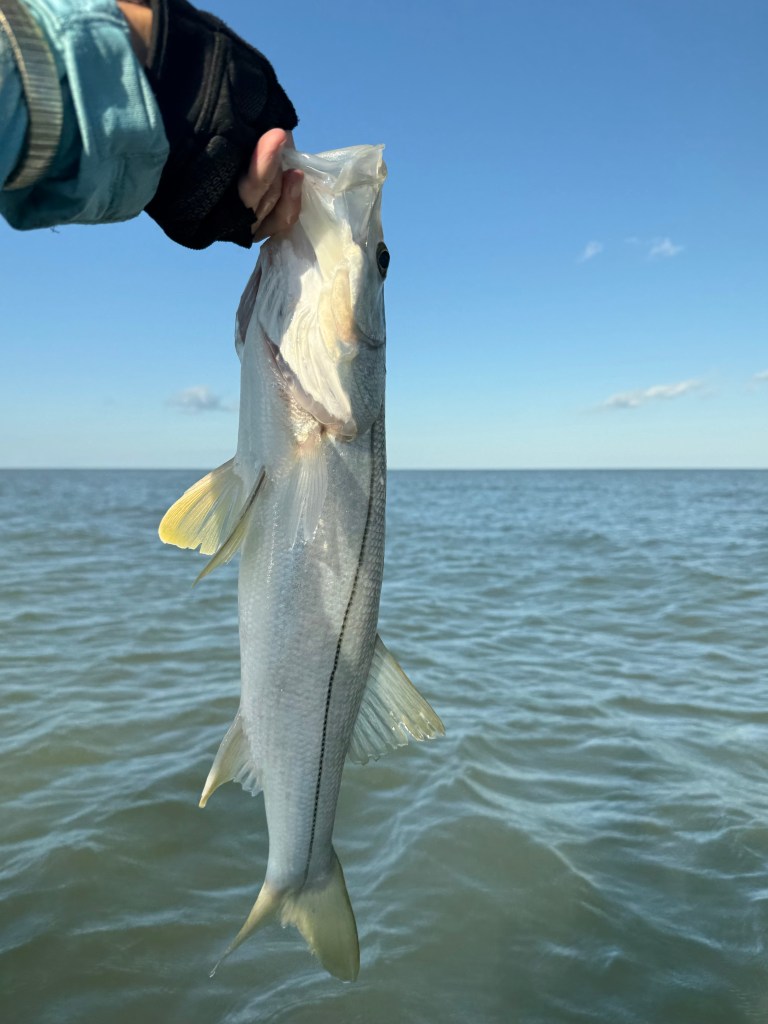
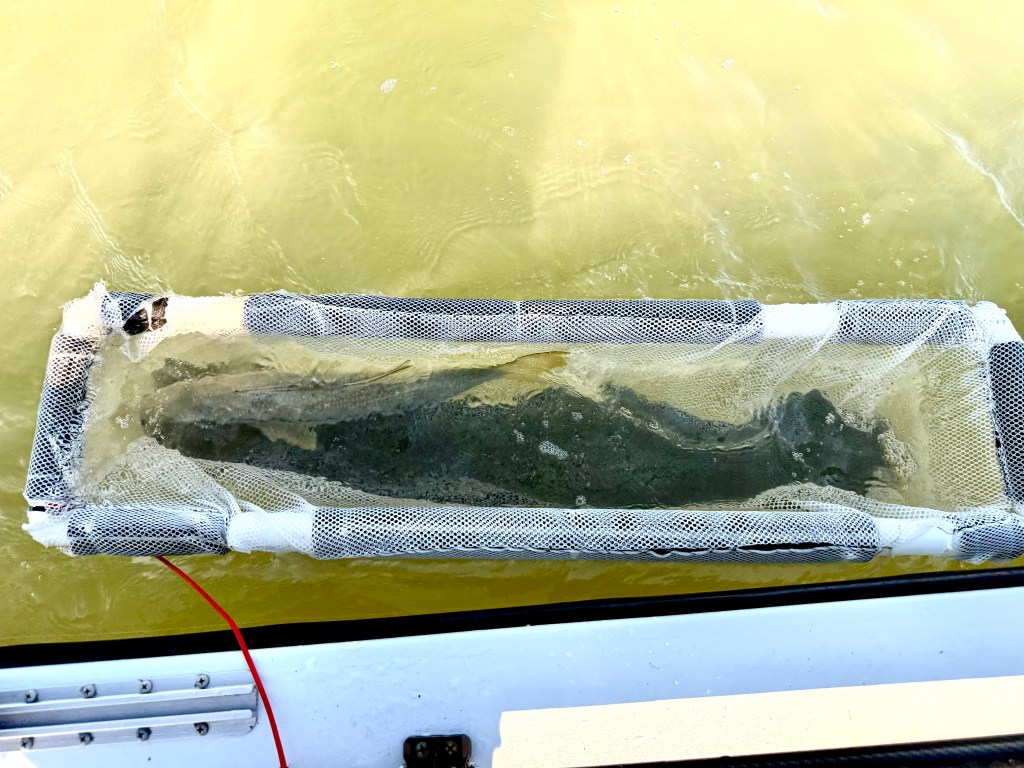
According to a paper I read, giving caught fish a few minutes to recover before release greatly reduces the likelihood of a shark chasing them down. I unhook the snook and put him into a homemade floating recovery pen where he rests calmly for a few minutes until I release him 75m from shore.
The wind is picking up three hours earlier than predicted and surf is now pounding the shoreline. I fish another hour, bobbing around in the waves, but no more snook are to be found. I disassemble the rod, fold up the floating pen, and make the return run. Retracing my path through Lake Ingraham and Florida Bay I’m happy to find the water is much flatter on the lea of the peninsula than the on the windward Gulf side.
* * *
So where are rest of the snook today?
- With the strong offshore wind and crashing surf, perhaps the bait fish left the shoreline so the snook went elsewhere.
- Rains bring snook down from the rivers to the beaches where they congregate before heading offshore to breed. Perhaps the spring has been so dry the snook are still up-river.
- Maybe the recovering Lemon Shark population has reduced the snook numbers – I hope that’s not it.
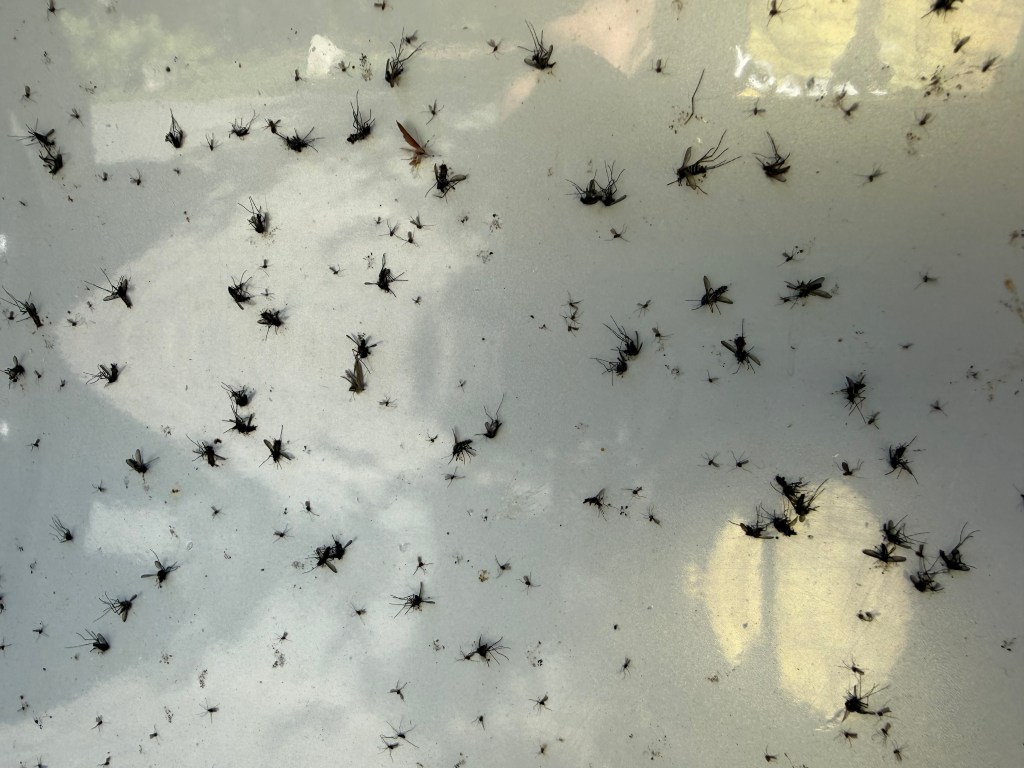
Here’s the car’s front bumper when I get home. Even as the beach snook are missing today, Black Salt Marsh Mosquitoes have faithfully resumed their time-honored role as defenders of the south Everglades.


 Eye of the Cormorant
Leave a comment