
Four days of icing and rest have rejuvenated my sore forearm, so it’s time to write up the fishing trip responsible for its unhappy condition.
In short, I wore out my arm fighting a mess of high energy fish on a fly rod. If you don’t want to read about fly fishing, you can enjoy the pretty photos and get back to swatting mosquitoes.
* * *
Last year I learned that a former FIU student of mine from 1994 had become a fishing charter captain. I looked him up and gave him a call. Capt. Mike Haines had relocated his business from Flamingo, where I fish regularly, to Jupiter Florida, two hours north of me, where I never fish. Mike mentioned that he sometimes takes fly fishers out for albies in the summer.
A small member of the tuna tribe, Euthynnus alletteratus resides in the Atlantic and Mediterranean. In New England their common name is the undignified Little Tunny. Down here in South Florida, these fish are larger, stronger, and are called False Albacore, or “albies” for short (fortunately the name “falsies” was already taken). Some fishers call them “bonito”, which they are not. Whatever you call them, albies are spectacular fish, silver with black and blue vermiculated striping on the back.

Albies swim 40 mph in pursuit of their sardine prey or when escaping fast predators such as marlin or mako sharks. They’re famous for wearing out fishermen with their long, powerful runs and their extraordinary stamina.
Summer mosquitoes have arrived in force in South Everglades, so I welcomed the news when Mike let me know the albies were on the ocean off Jupiter. We settled on a charter for July 1st and I invited my neighbor Rex to join us.
In the meantime, I read up on albies and consulted knowledgeable friends. In New England, albies feed on tiny baitfish, so small fishy flies are the ticket. Down here in Florida, albies feed on larger prey, Spanish Sardines 3-5” long.
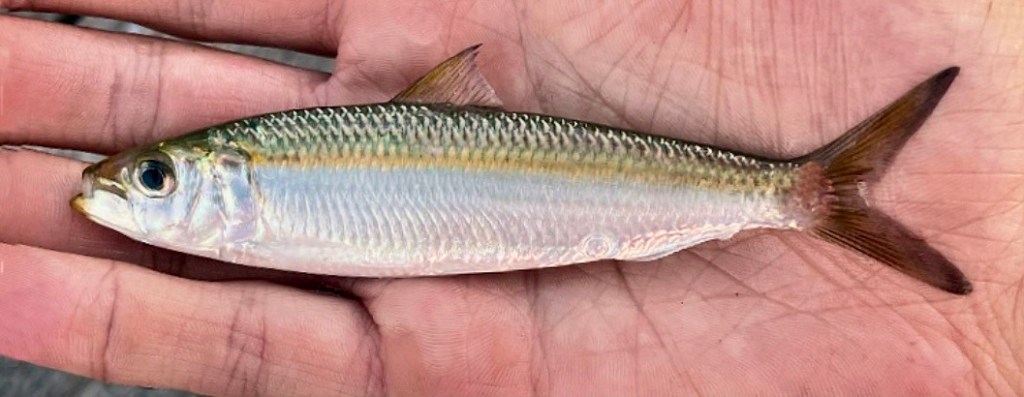
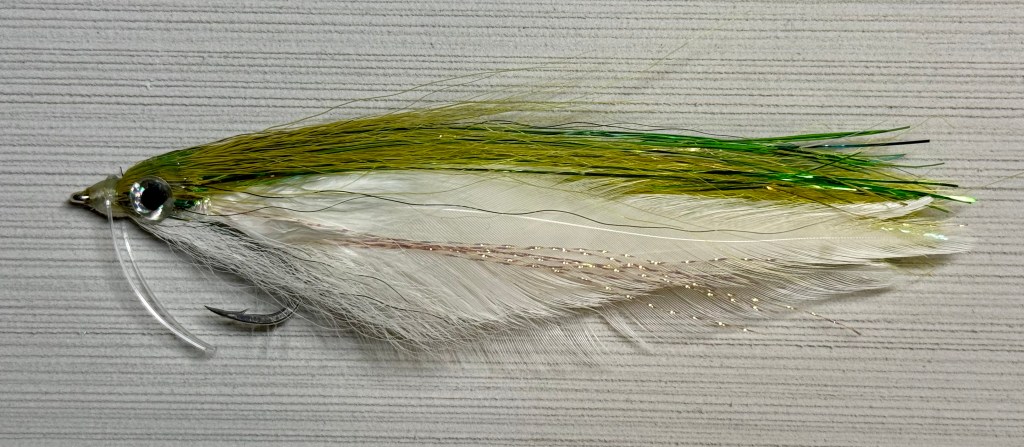
I tied up some mimics: 3-5” versions of Lefty’s Deceiver in colors that match the Spanish Sardine.
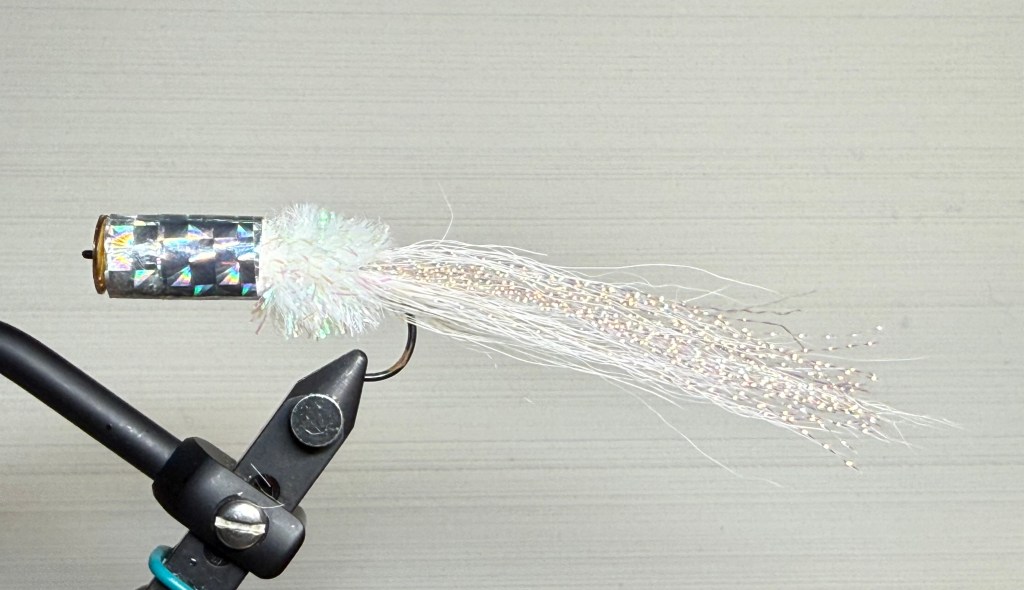
Sometimes, albies feed on the surface, so I made some sparkly poppers as well.
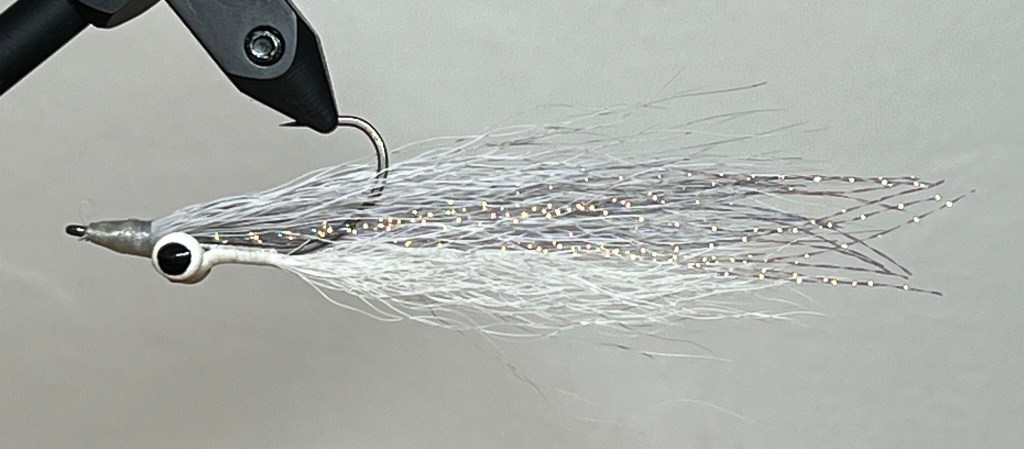
Local fly fishing friends mentioned getting albies on Clouser Deep Minnows, which I had already tied in gray over white.
For rods, I packed a conventional 9wt rigged with a floating line as well as my 7wt two-hander (13’ Spey rod) rigged with an intermediate line that sinks slowly. All my advisors recommended a sinking line when fish are feeding below the surface or when floating sargassum seaweed is present. My grumpy right elbow prefers casting the two-handed rod.
Neighbor Rex knows better than to mess with fly gear – he brought a substantial spinning rod.
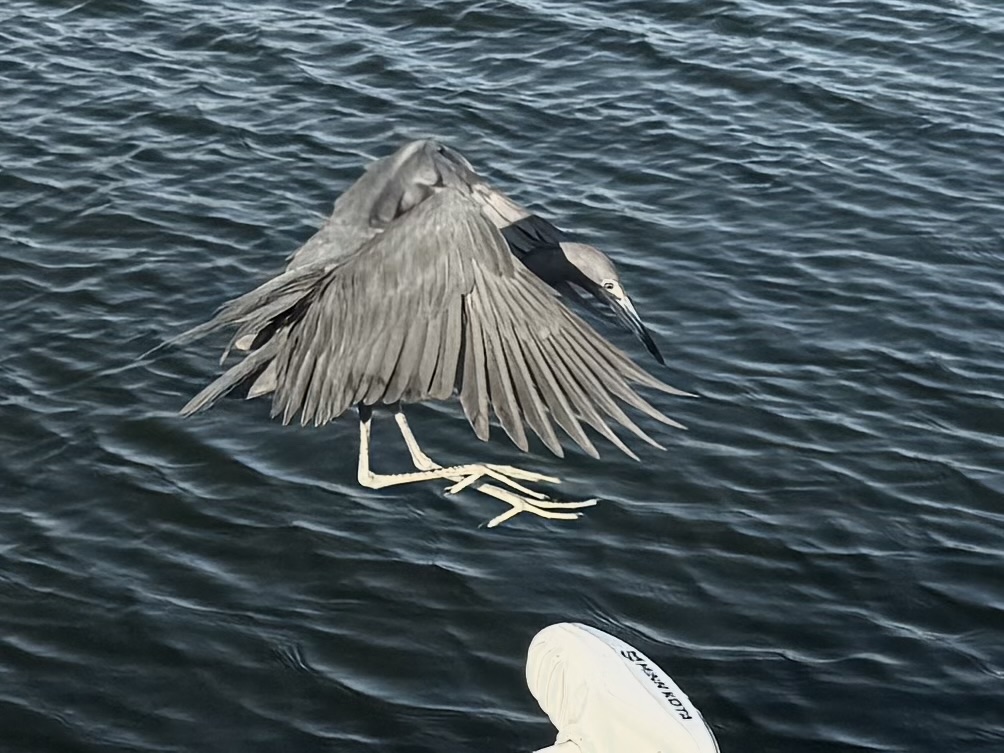
We caught up with Mike at the dock where he had some small baitfish, pilchards, in the live well of his boat. A Little Blue Heron showed up, hoping Mike had neglected to close the lid.
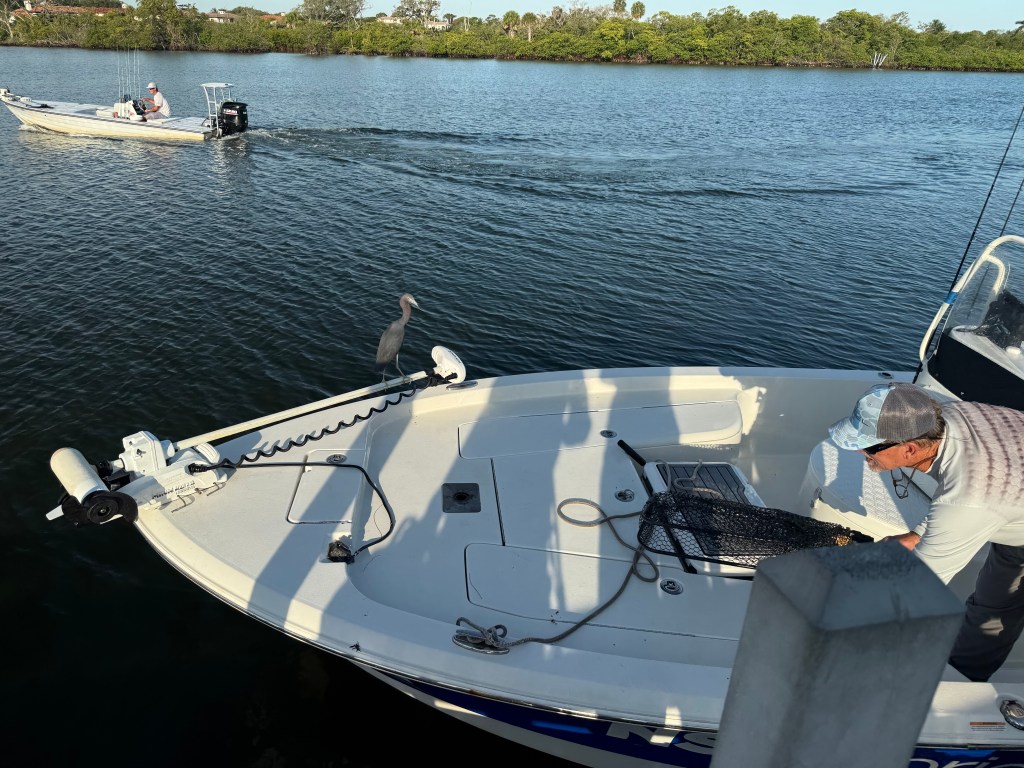
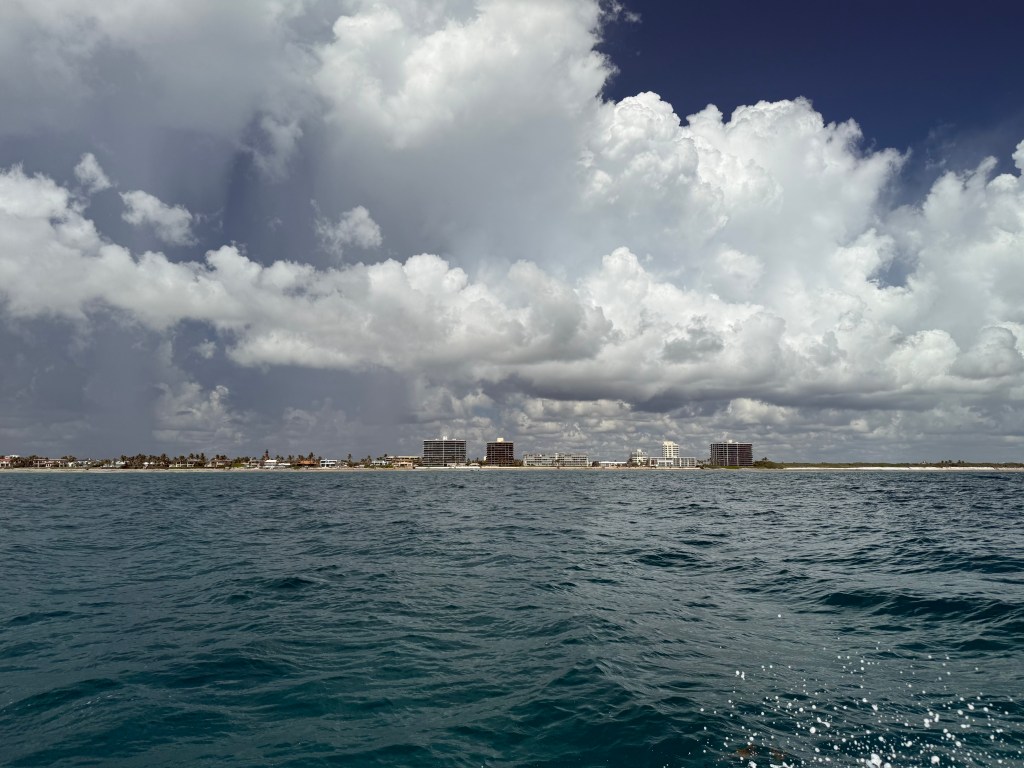
Mike cruised us out the inlet to the ocean and selected his spot about half a mile off the shore and spot-locked us in place with the trolling motor. Big fish broke the surface. Maybe albies are everywhere, or perhaps one Captain Mike Haines knows exactly where to look for them.
Mike suggested I use a smallish white fly that that would match the baitfish in his livewell. Best listen to the pro. I selected the Clouser to fish sub-surface on the two-handed setup.
While I was doodling with flies and leaders Mike tossed out half a dozen little pilchards and the water exploded. Rex cast his spinning lure over the fray and hooked up on his first albie of the day. Despite his beefy spinning rod, Rex was outgunned as that albie ran him ragged. Mike loaned him an even bigger rod for the next one.
My fly was ready, and Mike said to go ahead and cast, despite another albie on Rex’s line still racing around in the ocean. I cast my fly a short distance, let it sink five seconds, and started the retrieve. WHAM! An albie grabbed the fly and roared off, snapping the 16lb tippet. I was not even using the lightest tippet recommended. Mike informed me that, contrary to online tutorials from the New England albie fishers, the big albies in South Florida are not leader-shy, Rather than lightening the drag and risking being spooled, he suggested I scale up to 25 or 30 pound tippet instead. I went to 25 pound and sure enough, another albie roared off with the fly, pulling the remaining fly line off the reel plus a hundred yards of backing with the drag set high.
Rex and I were “doubled up”, in the lingo of boat-fishing. The two albies wove back and forth helter-skelter while Mike danced about the boat, threading Rex’s spinning rod over or under my 13’ two-handed fly rod as the fish weaves warranted. Rex has a bad knee and sensibly did not engage me in the two albie tango on a small boat.
Like some sharks, albies can’t flap their operculi to pump water over their gills, so they respire by opening their mouths as they swim, a process known as ram ventilation. Accordingly, when you release an albie, you hold it by the tail (caudal peduncle) and thrust it head first into the water to give it some speed and push water through the gills.
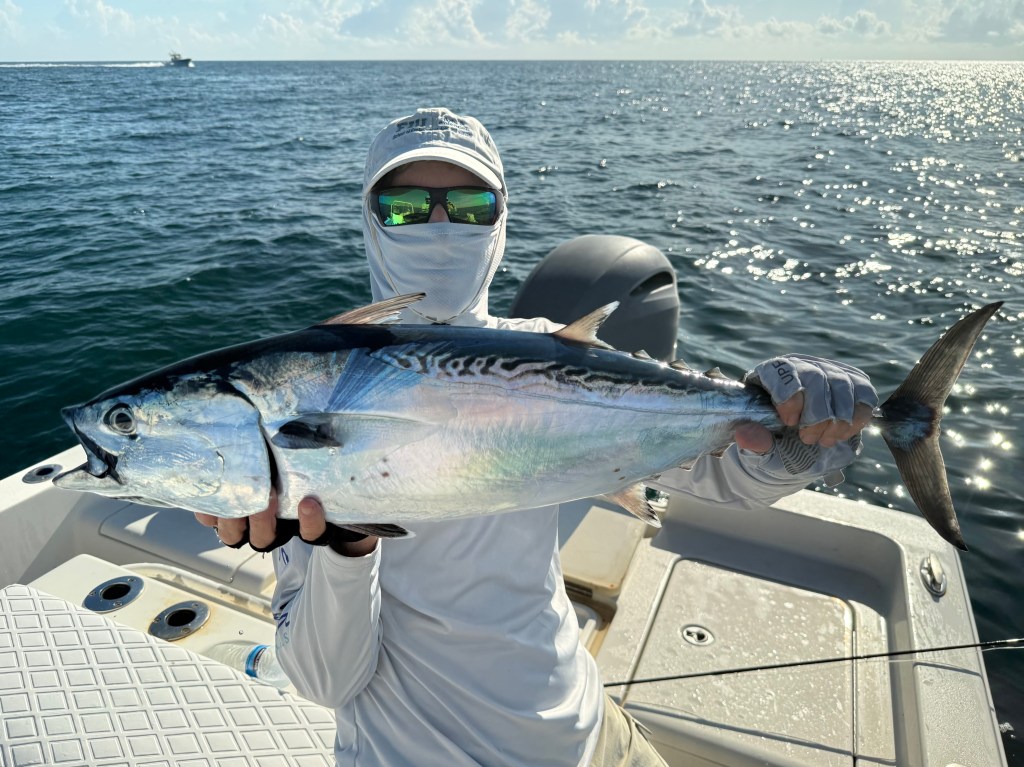
After catching and releasing couple of albies on the subsurface setup, I switched to the surface popper on the floating line for the fun of watching fish blow up a fly in plain sight.
A couple of albies and dozens of blue runners exploded on the popper in rapid succession. We watched them streak through the water and hit the fly in a blast of spray. I could shake most of the blue runners free of the popper, but the albies stuck and roared off.
After one popper eat by an albie, the fly line looped around my left hand and jammed as the fish made its run and before the loose line had fully cleared the rod guides. Fortunately the tippet broke. Without a breakable tippet in that situation, a fly fisher can lose a finger. Some people fish a straight 60 pound fluorocarbon leader for tarpon and other strong fish, but I have considered it too dangerous. This experience only solidified my decision to stick with breakable tippets. I press the barbs down on my flies so a fish can more easily rid itself of the fly after a break-off.
I tried one of my beautiful sardine flies, but the fish had no interest in it. Too big for today, I guess. I tied on a heavily chewed Clouser and the fish were back on it in an instant. Oh well, they know what they want to eat… some big fish somewhere will want those sardine flies.
I’d caught five albies and couldn’t resist tossing the fly another time. A chunky blue runner grabbed it, pulled line off the real, and shot straight down 40 feet. I bent the rod double but it refused to budge.
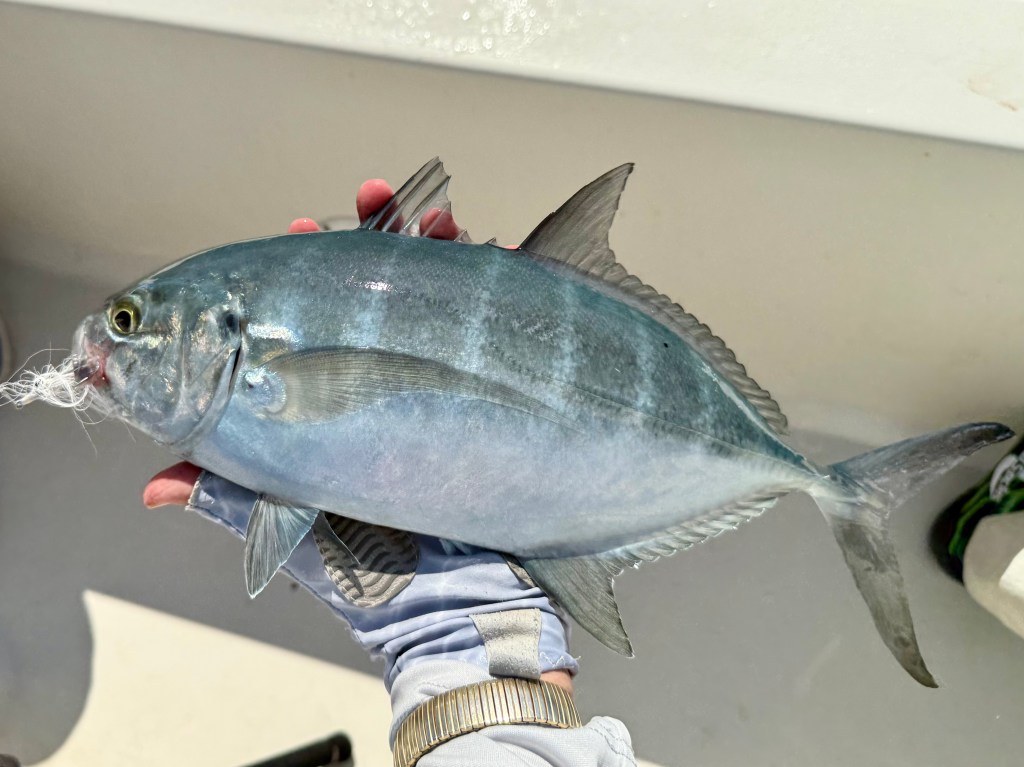
Getting that runner up to the boat to release it overworked my already tired right forearm. I wound up my line, reluctantly – sigh. It’s hard to leave when great fish are still biting. Rex was smarter and quit after his 4th albie.
We came back to the inlet and fished a dock for snook while admiring the storm clouds building.
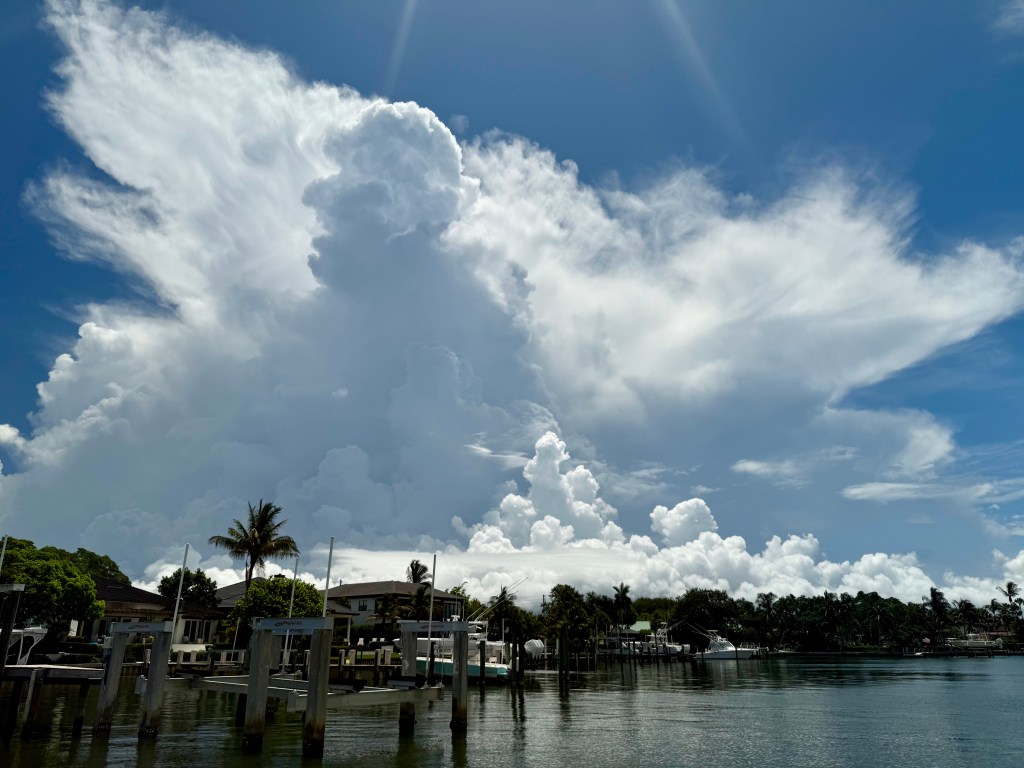
Rex caught one snook on a pilchard, but they wouldn’t take my fly. Instead, it caught a Jack Crevalle…
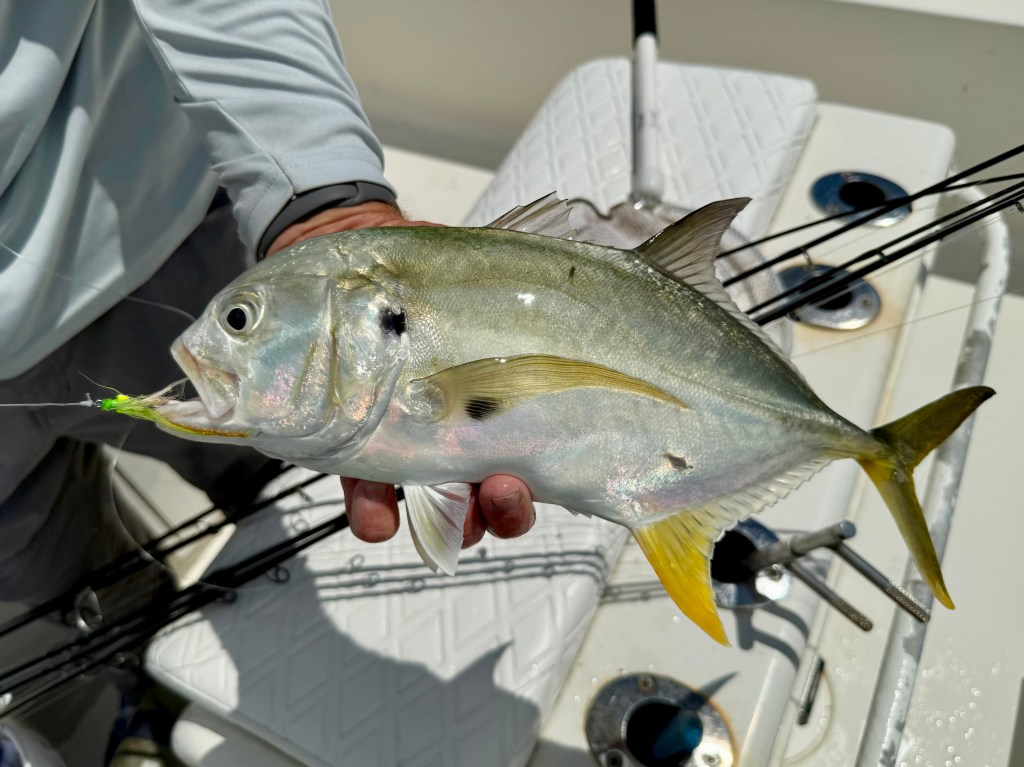
… plus a small Ladyfish that squirted poop all over me before I could release it. I’ve learned to aim Ladyfish away from me and the boat before they let loose, but this one was too fast. Another reason I carry a change of clothes in the car.
* * *
In contrast to bonefish, our #1 piscine speed demon, taking albies on fly requires more brawn than brain. They are truly gorgeous fish though, and especially thrilling when they hit on the surface. Albies are better kept in the ocean than served at the table, but blue runners are superb eating. I kept a few medium-sized runners, Mike filleted them (thanks Mike!), and I prepared a little sashimi for a snack and a big bowl of ceviche that was our dinner for the next two nights.



Leave a Reply