I seem to have sprained my hand, so no fishing report this week. I am taking this setback as a chance to see more of summer’s offerings in our wooded yard in South Miami.
In between icing my hand and tying flies for an impending fly fishing trip to the Sian Ka’an Biosphere in the Yucatan, I have snapped opportune pics of some critters in the yard. An iPhone in the pocket favors providence.
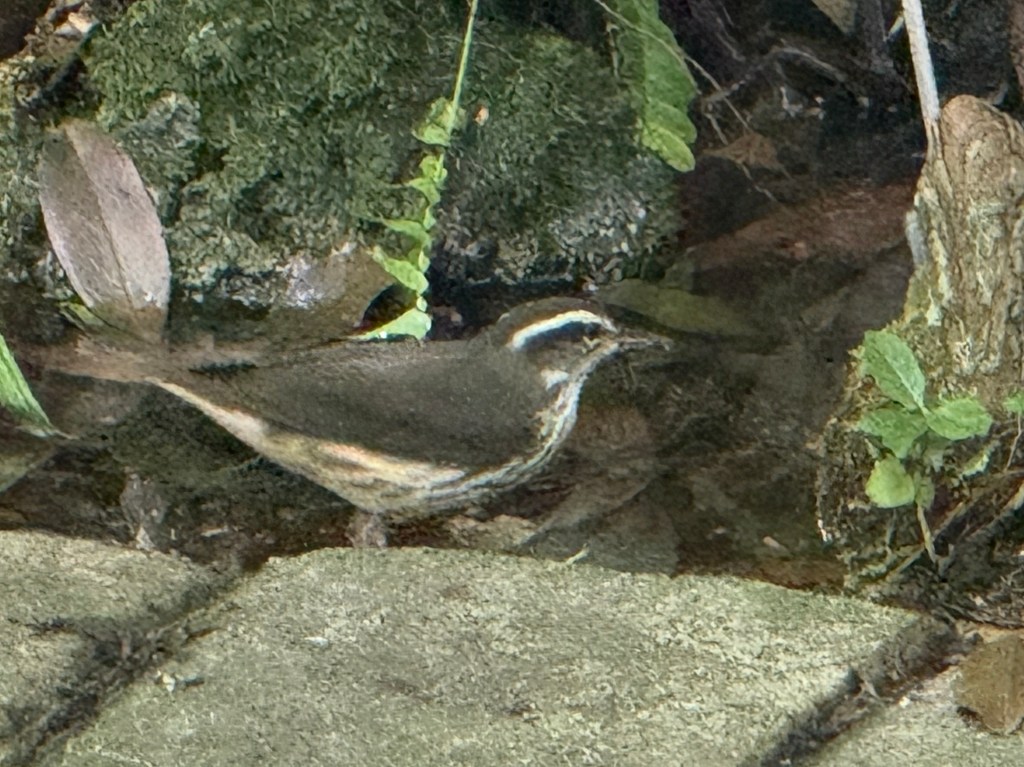
The first fall migrant warbler in our yard is always a Louisiana Waterthrush, on their way south from breeding grounds along the Appalachians’ streams. The first waterthrush of this fall’s migration appeared during breakfast today, 30 July, alerting me with its characteristically loud and bright “chip” call. It landed on a small table by the grill, then flitted down to the water’s edge to hunt for bugs, too distant for a photo. I got this grainy shot (shade + high digital magnification) later in the morning through the glass door next to my desk. Waterthrushes constantly bob their back-ends up and down, which appears here as blur.
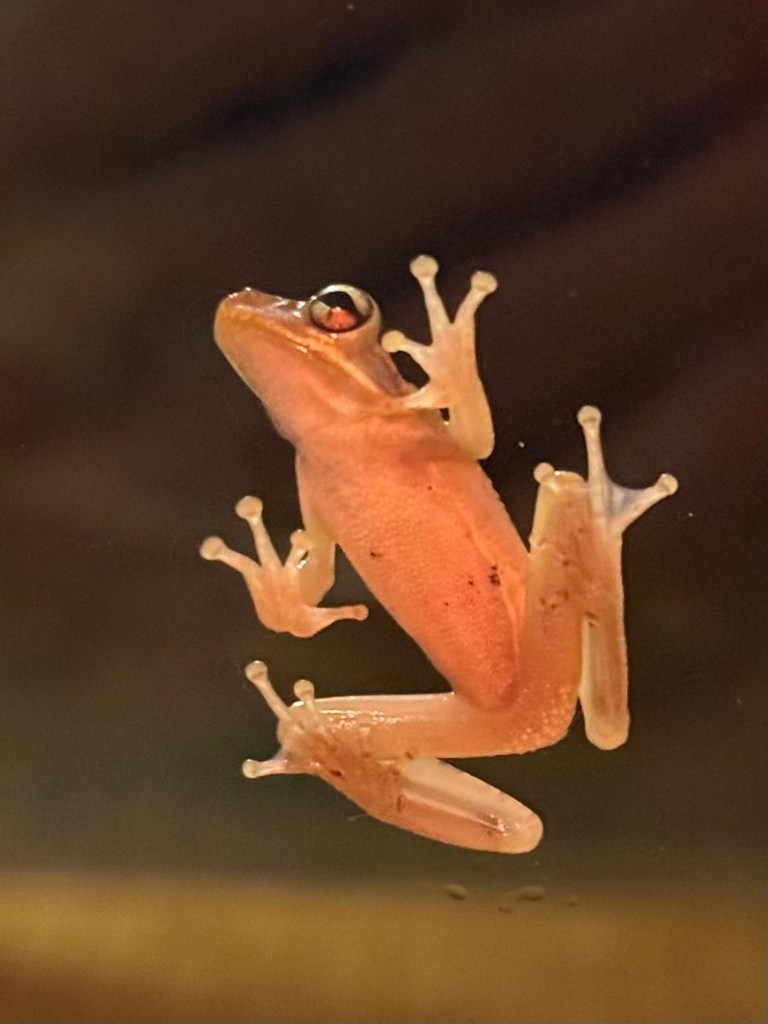
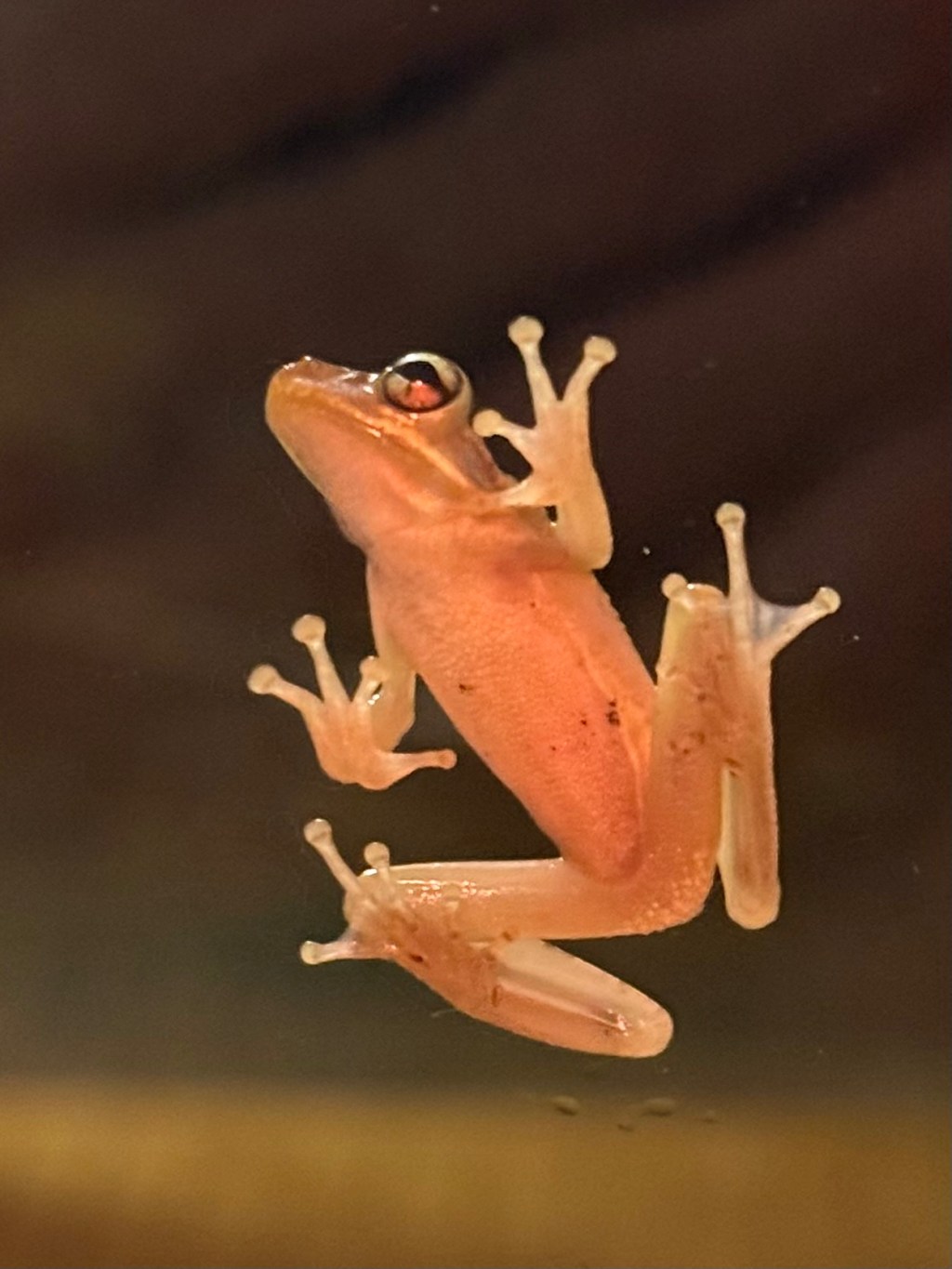
A Cuban Tree Frog was spoinking around on the glass in our front door one evening, allowing this photo, taken from inside the house. These big tree frogs ate all the native tree frogs in the suburbs, so they’re all we’ve got.
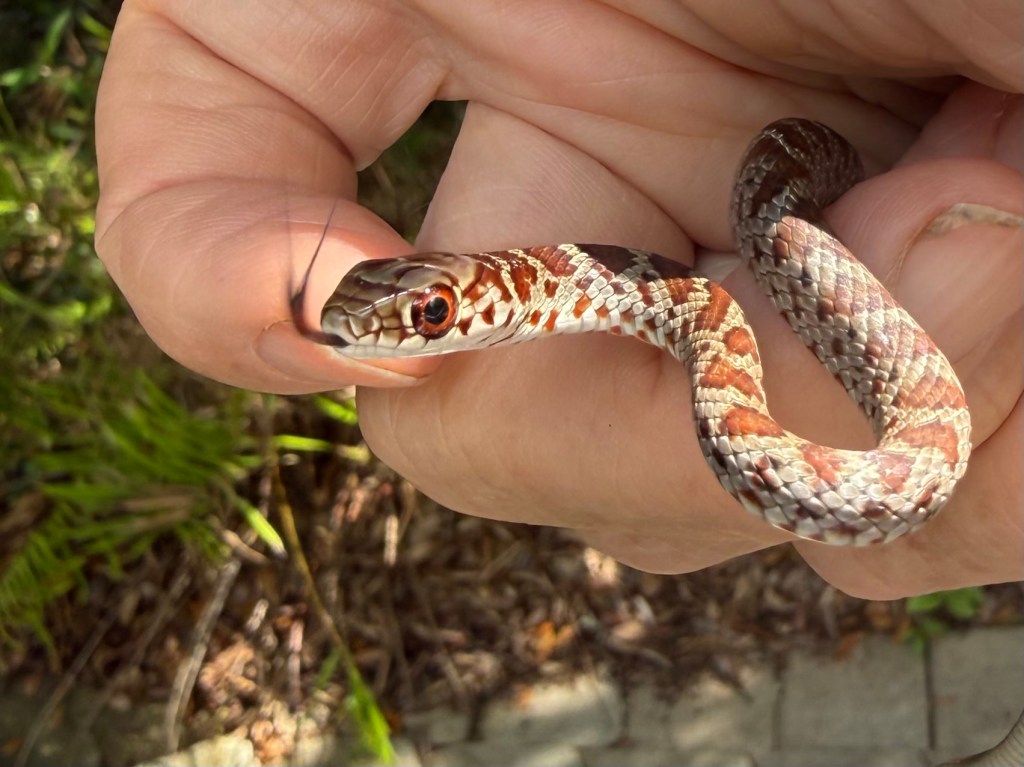
I found this sweetie on the front porch hunting bugs and baby lizards. Wikipedia accurately describes its behavior:
“Members of this species generally do not tolerate handling – even after months in captivity – and typically strike and flail wildly every time they are handled, often defecating a foul-smelling musk, a common defense against predators in snakes.”
She chewed on my finger and made a stink, but since neither defense had any deterrent effect, she settled down enough to let me snap a photo, left-handed.
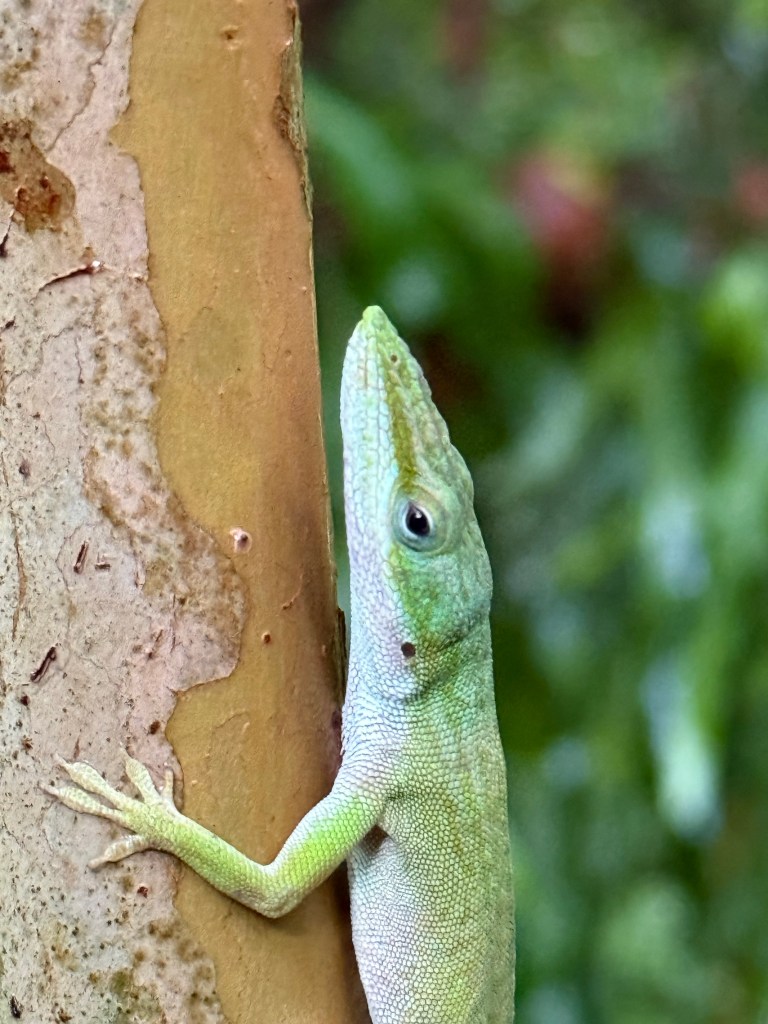
Green Anoles change color between green and brown. The Green Anoles in Miami are all hybrids between the Carolina Anole and its ancestor, the Cuban Green Anole. It coexists with the other invasive exotic anoles by holding a unique niche in the trees, often high up.
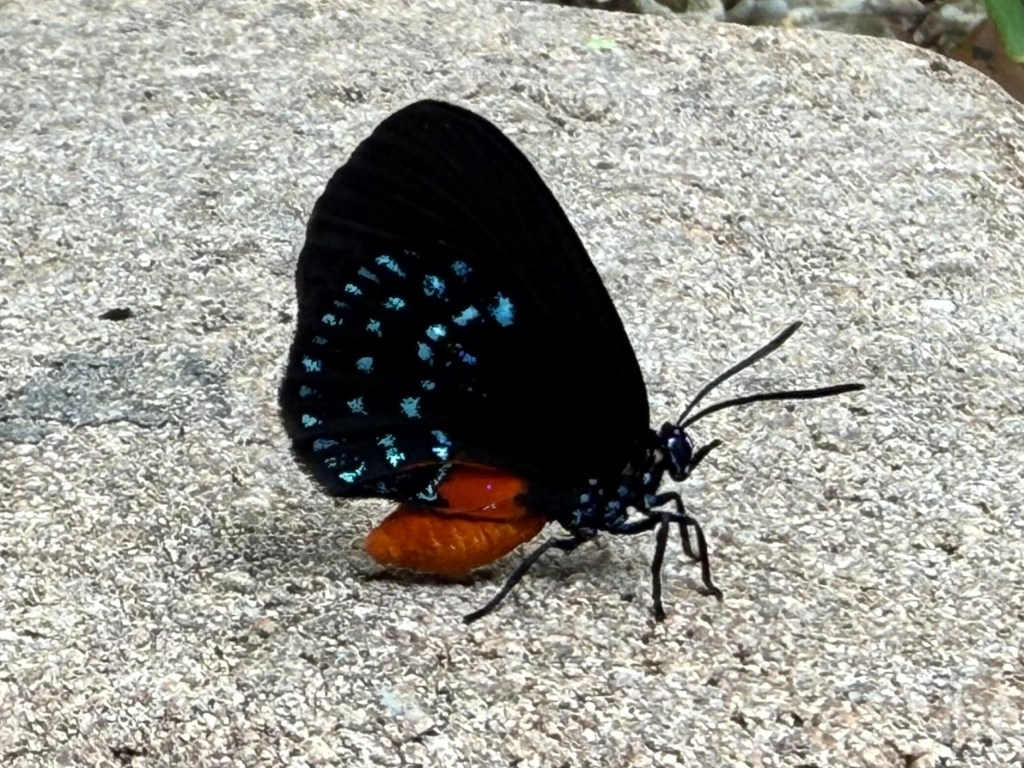
Thought to be extinct, Atalas were saved by local naturalist Roger Hammer, who stumbled onto an unexpected pocket of survivors. Roger surreptitiously introduced their larvae into the cycad collection at Fairchild Tropical Botanic Garden, to the consternation of Fairchild’s Curator of Cycads. Atalas recovered and now lay eggs on the native cycad species, the Coontie, growing in our front yard. The larvae chew our lush Coonties to a tangle of brown stems while producing a cloud of small, colorful butterflies. The Coontie stores reserves in a big, starchy root and grows back.
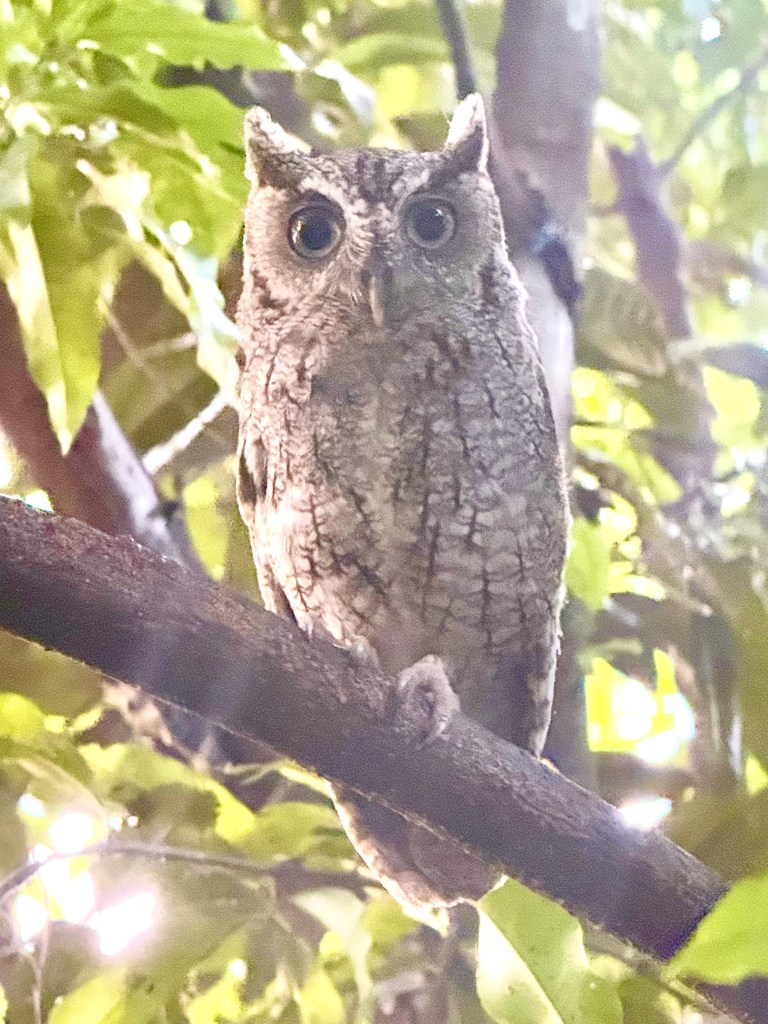
Mr. Screech Owl revealed his location by singing in the late afternoon when I ventured behind a tree to, um, water the plants. The lighting was all wrong, but it kind of worked anyway – such is the chance encounter.
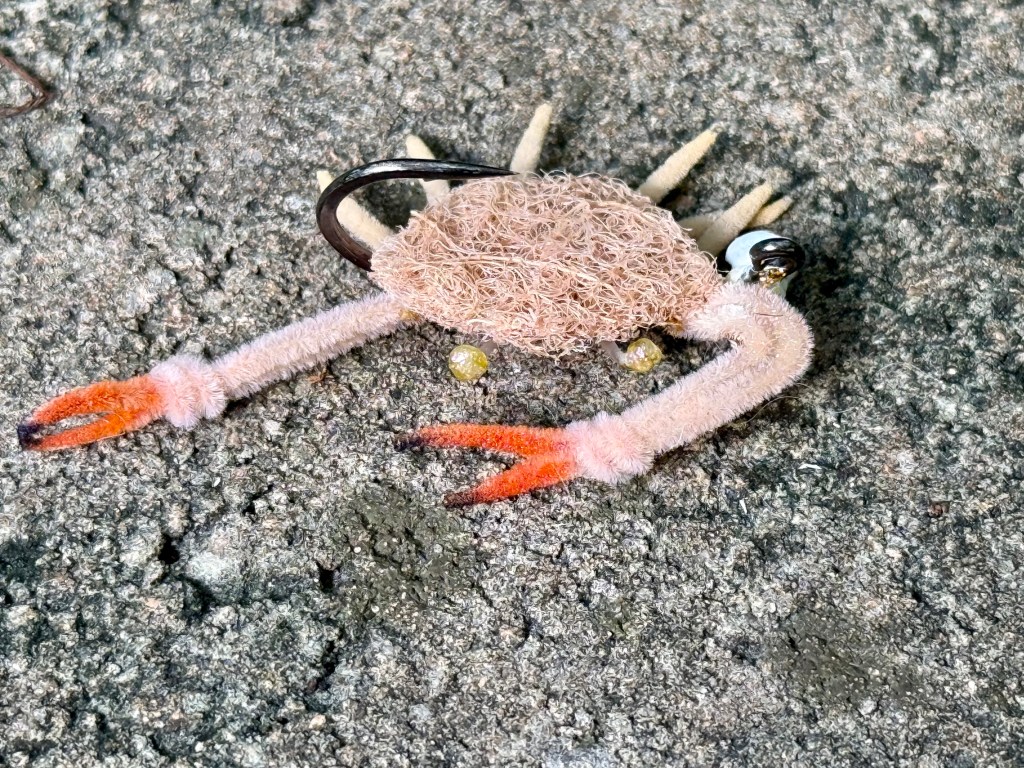
I’ve been tying a variety of crabby-looking flies in the hopes of fooling a Permit, a big tropical fish that eats crabs but which is notoriously wary, persnickety, and difficult to catch on fly. This fly is a mix of patterns that I adapted from various tyers. The body is cut from a coconut fiber kitchen scrub pad, the legs & claws I made from a fuzzy cord called “ultra chenille”, and the eyes I made from nylon monofilament and sparkly nail polish.


 Eye of the Cormorant
Leave a comment