Breakfast at Playa Blanca Lodge is whatever you want. I had coffee, OJ, fresh tropical fruits, an omelette, and two strips of bacon. We packed our lunches from an equally splendid spread of ceviche, fried fish, leftover roast beef or BBQ ribs, fruits, sandwich fixings, French cheeses, you name it. You want bottles of water, limeade, beer? How many?
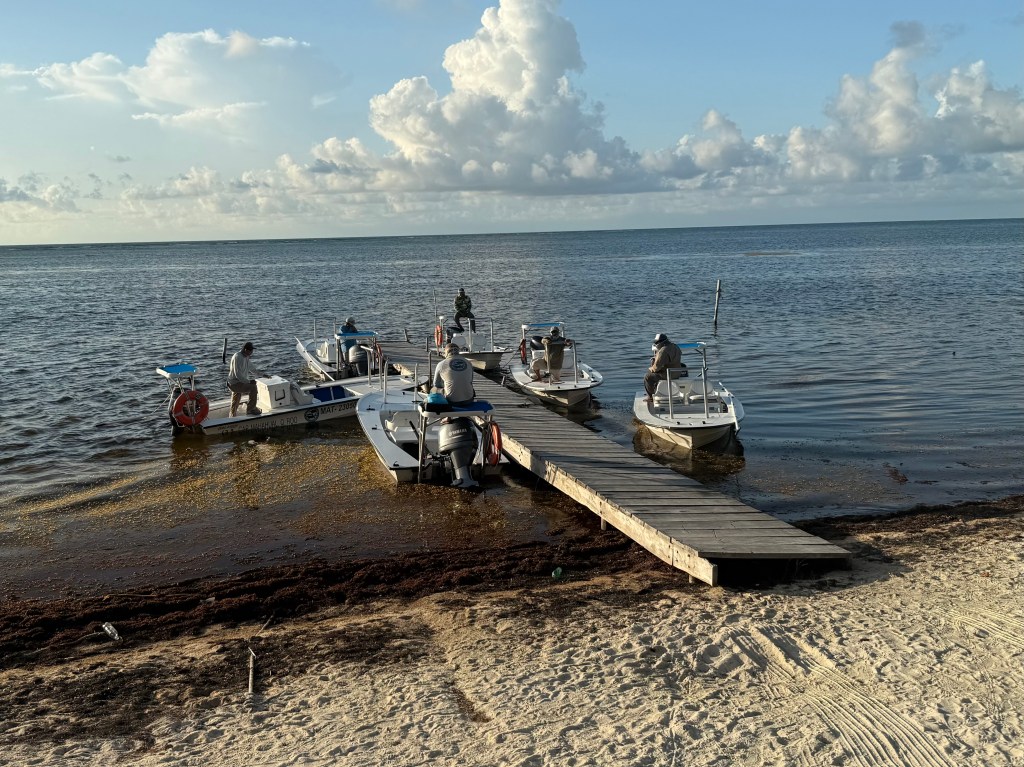
At 07:10, fly fishing guests assembled at the truck for the 20 minute ride south to the dock. Skiffs departed the dock each day at 07:30 and returned by 16:00.
The flats of Espiritu Santo Bay (Bahia del Espiritu Santo) are accessed by a fleet of small Dolphin skiffs. The ride south is bouncy in the waves driven by the prevailing SE trade winds, but the small craft are dry and easy for guides to pole. The guides are all local fellows from the Yucatan. My guide the first four days was a short, stocky fellow named Chepo, pronounced “Chay-Poe”. The first day on the water, I had Chepo and his boat to myself.
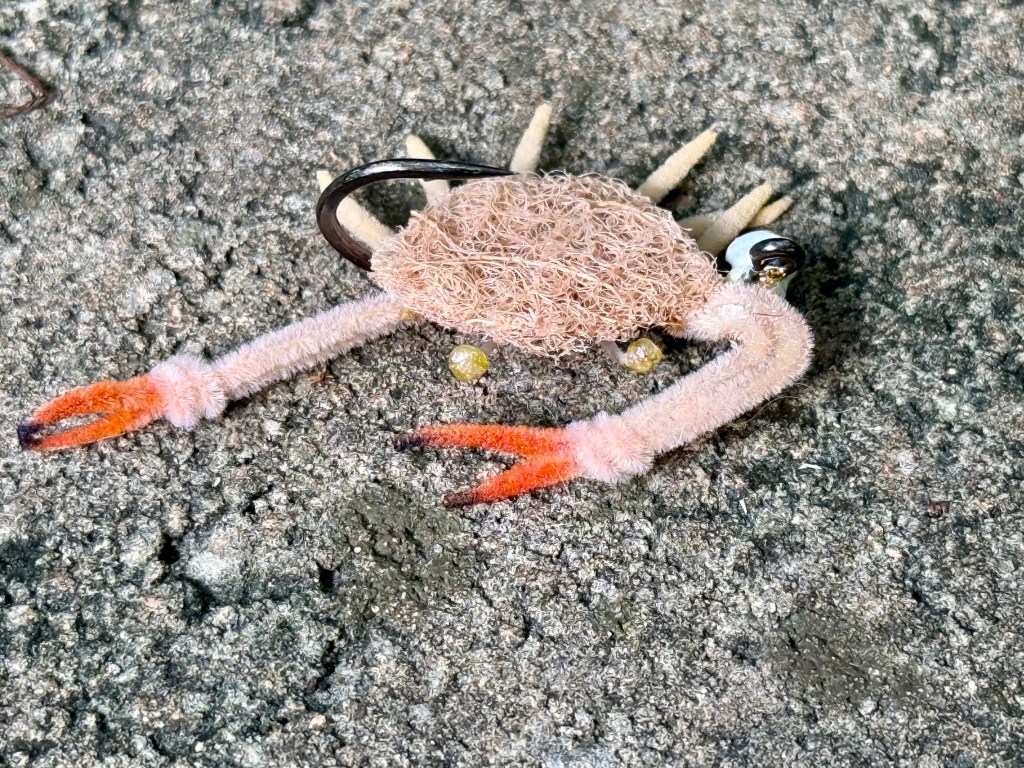
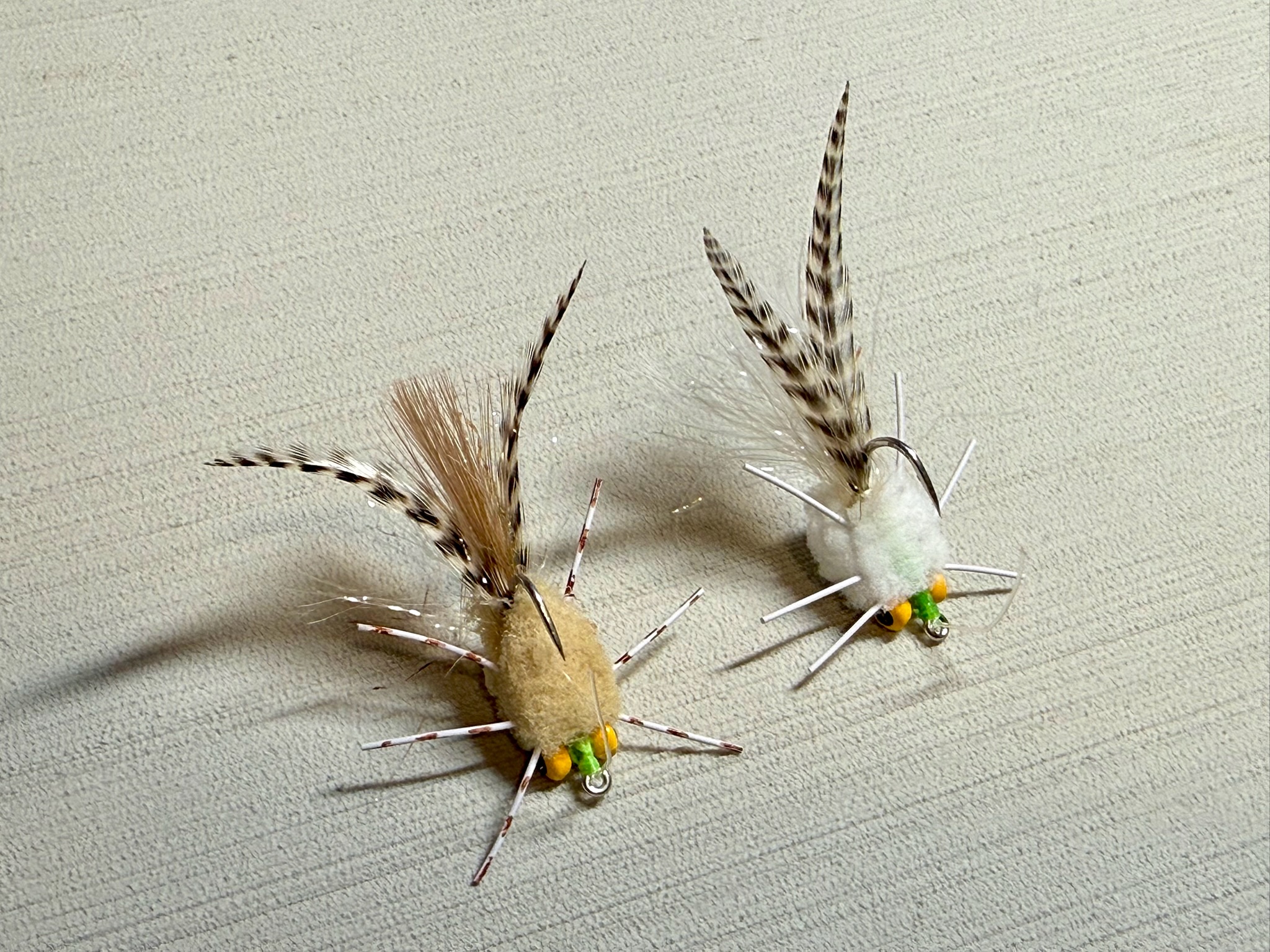
Chepo looked in my box of permit flies and picked out a crab fly, my favorite by chance, that I’d crafted from a coconut fibre scrubbing pad and some “ultra chenille”.
Up on the poling platform, Chepo deployed his magic flats vision, spotting fish invisible to me under the shimmering waves.
In addition to Spanish, Chepo speaks a dialect of fly fishing English, enhanced with his own units of measure:
“Eleven o’clock, forty feet” means “Cast 45° left of center, sixty feet”.
“White, white…” means “Wait, wait…”
“Cast again! More longer!” means “Throw the fly in the same direction, but seventy feet.”
Once I learned to follow Chepo’s directions (“white” took the longest), I began to catch fish.
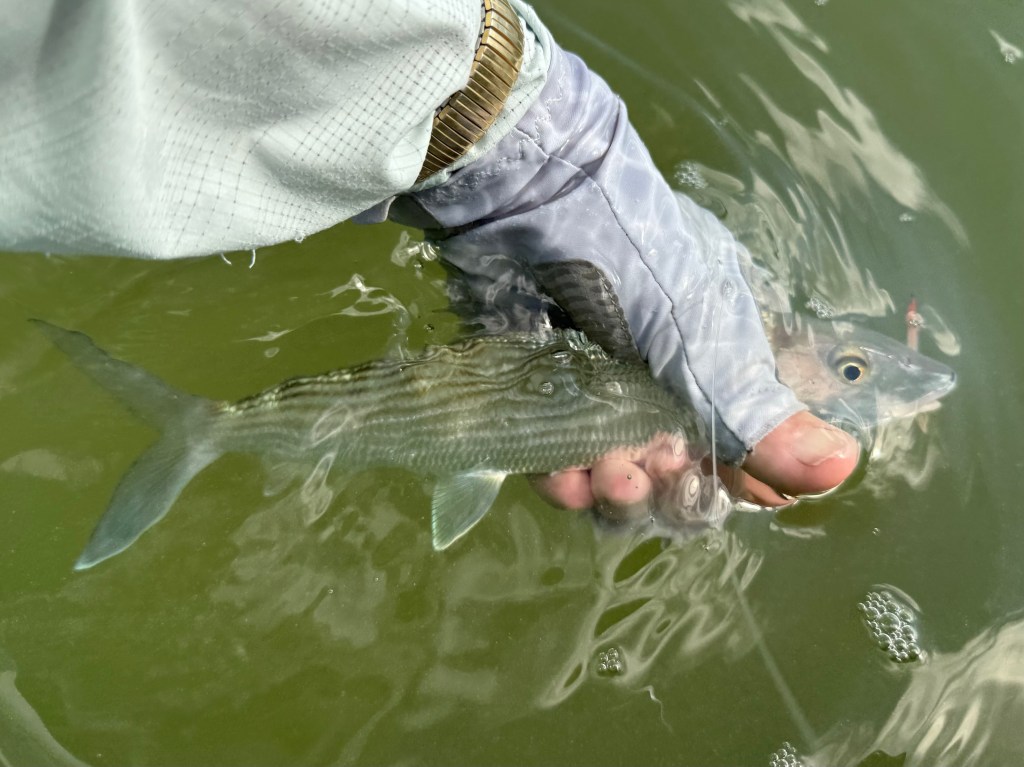
A baby Bonefish, my smallest ever on fly, somehow managed to stuff most of that crab fly in its mouth.
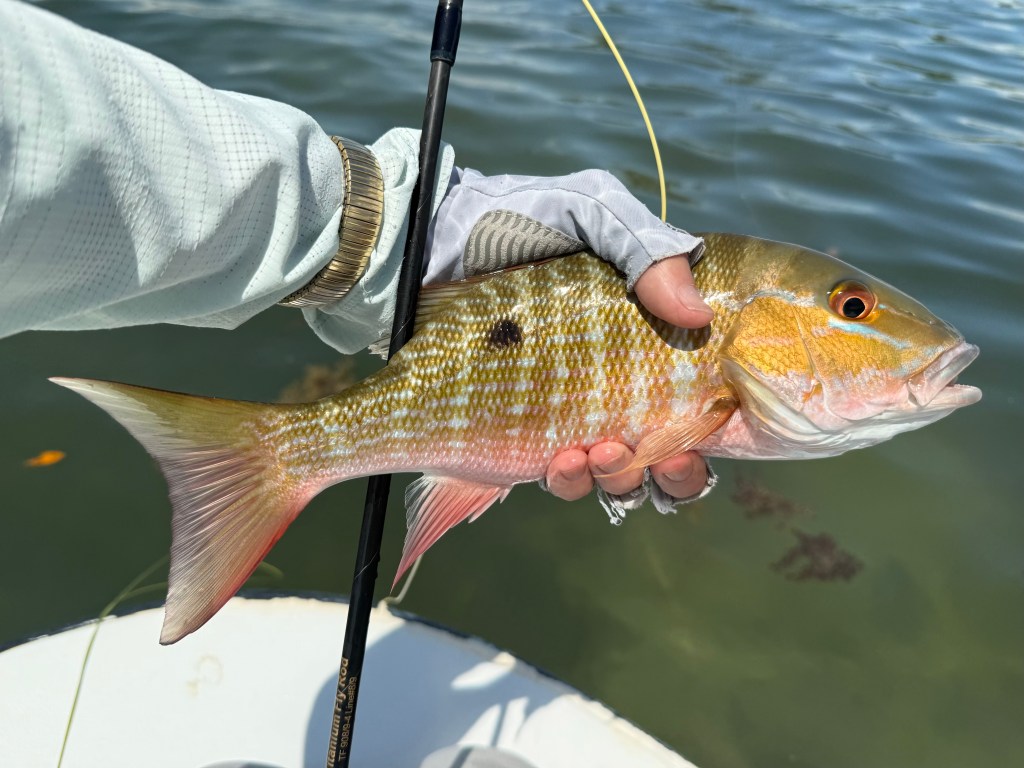
Some juvenile Mutton Snappers likewise gulped down the crab fly, my first ones on a fly rod.
An uncounted mess of small Blue Runners and Mangrove Snappers did their best to rip the fly to pieces, yanking loose bits of coconut fiber, and chewing the fuzz off the leading claw so it flopped pitifully.
Finally a permit appeared, using my new rod, I cast what little remained of the fly: a small disk of coconut fiber, two eyes, and a trailing claw.
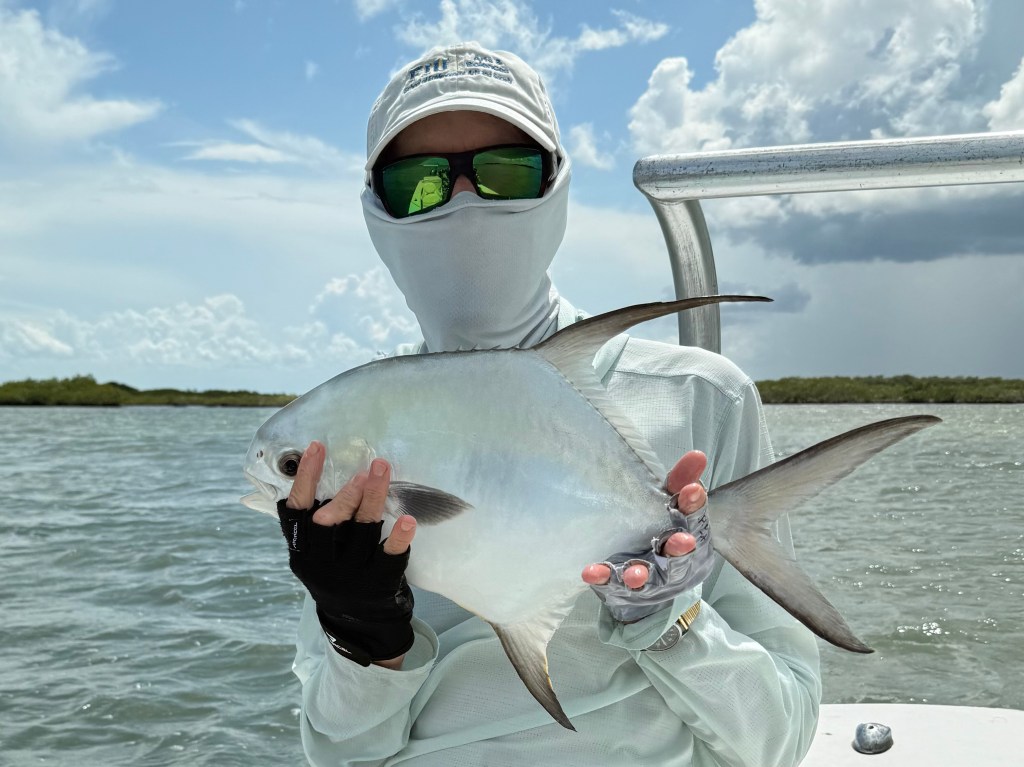
The Permit connected with my bedraggled fly. I cleared the line and the reel drag sang the happy buzzing song that flats fishers so love to hear as the fly line sliced water in two.
My first Permit on fly, not huge, but just dandy, on my first day fishing the flats of Bahia del Espiritu Santo, on the tattered remnants of a file that I tied, cast with a rod that I built. What’s better than that?
Thank you Andy, Juan, and Chepo.
Two ways to eat a scorpion
Playa Blanca Lodge has one sacred tradition: when an angler catches his or her first Permit, he or she must eat a scorpion.
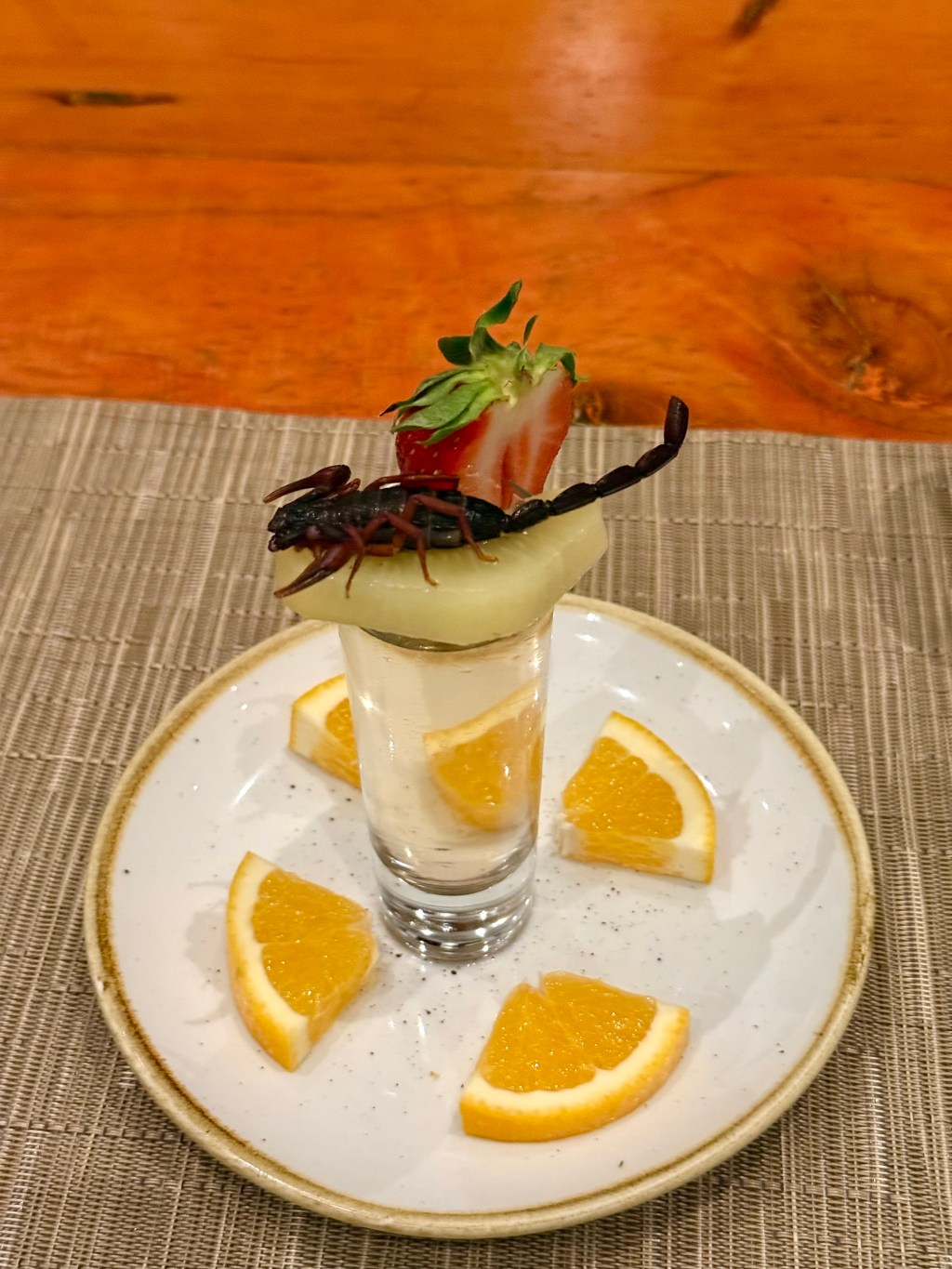
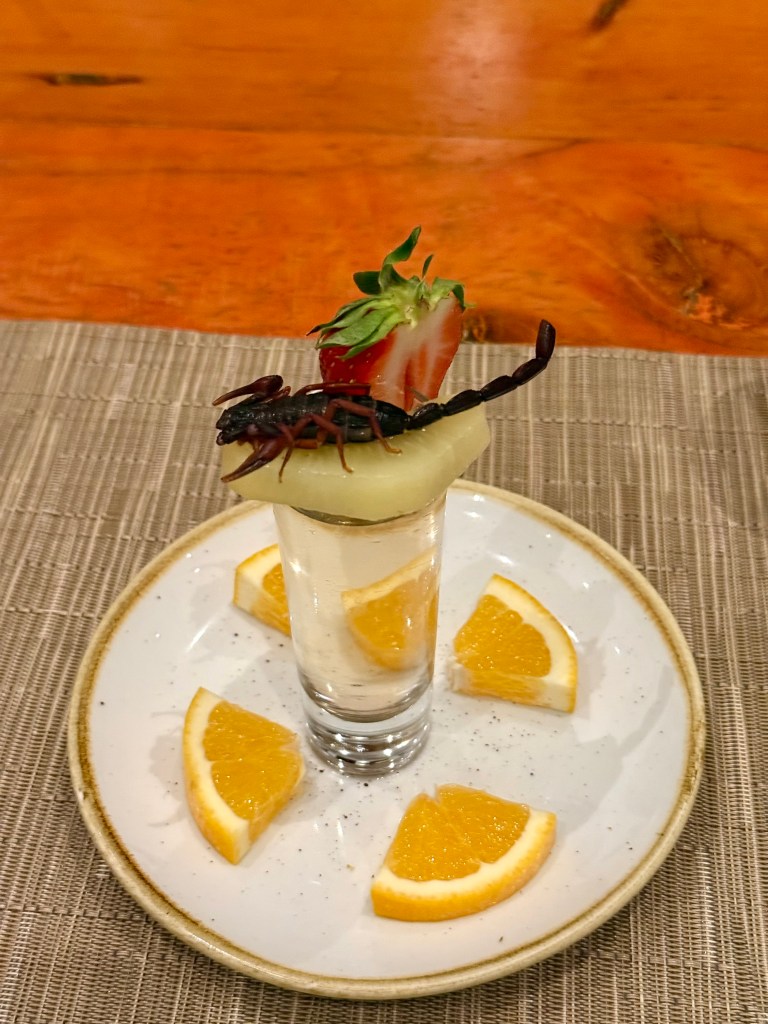
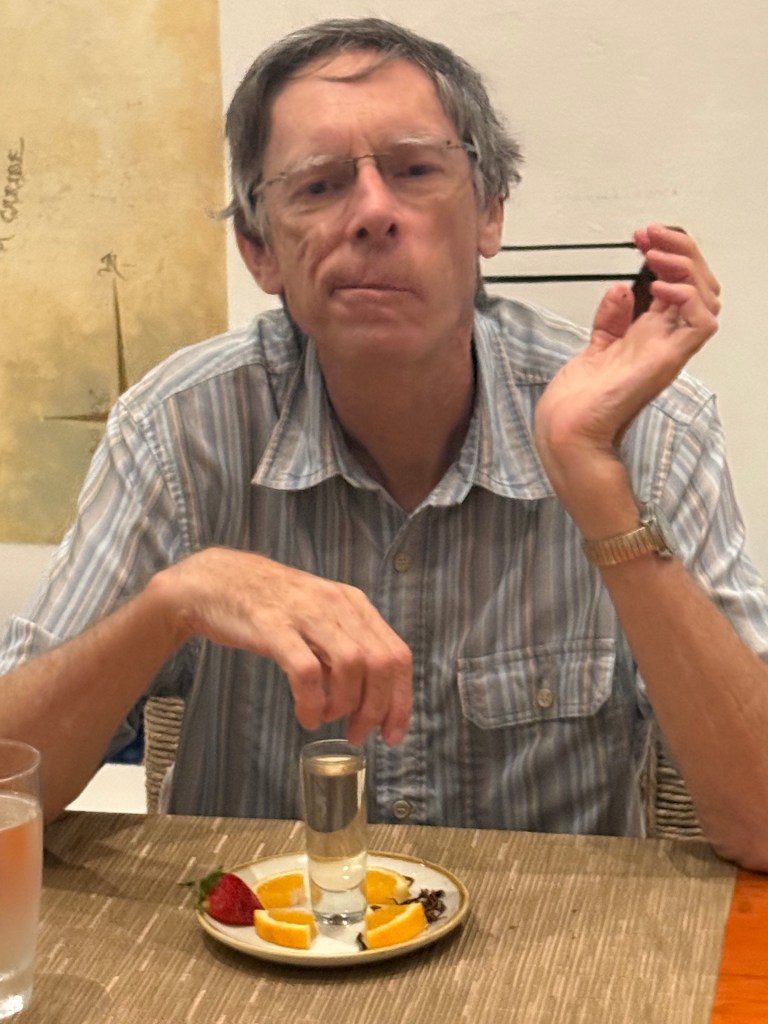
Accordingly, after dinner that night, young Calvin and I were each served a scorpion, pickled in mescal.
Florida Bark Scorpion, Centruroides gracilis
I recognized my dessert topping as a Florida Bark Scorpion, common in the Florida Keys. For years I kept one in a jar of alcohol on my desk at work. They’re big and scary when they skitter across the floor, and their sting hurts like a wasp if you are unfortunate enough to contact one, but their venom is not lethal. The terminal segment of the tail that holds the venom had already been removed.
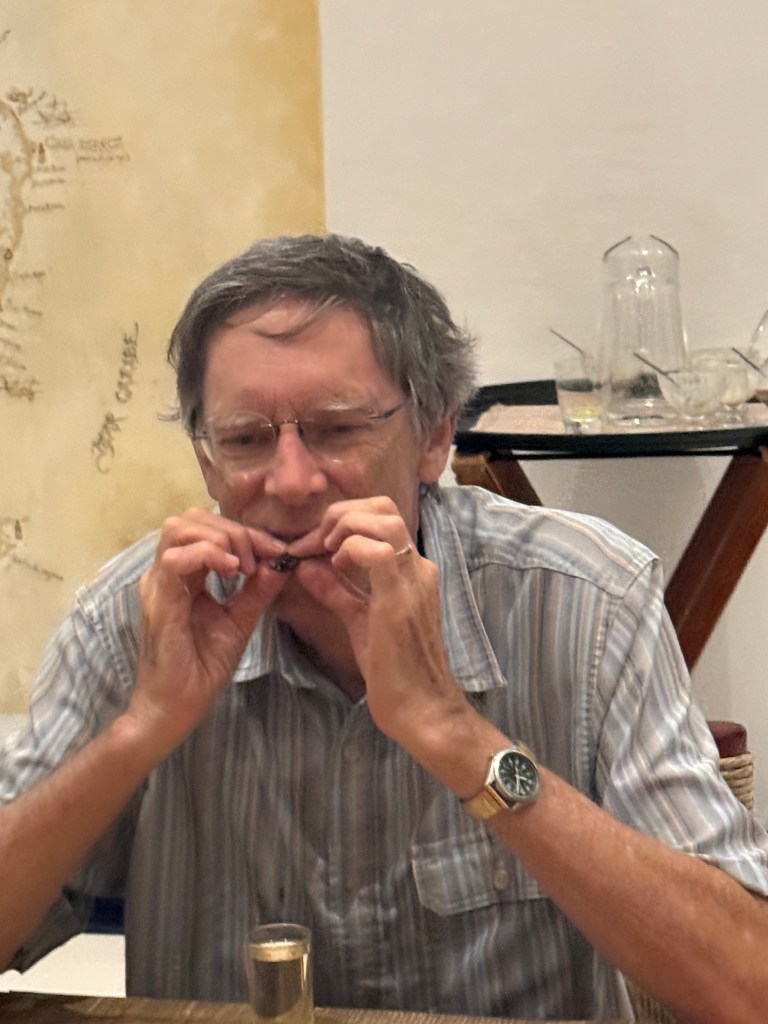
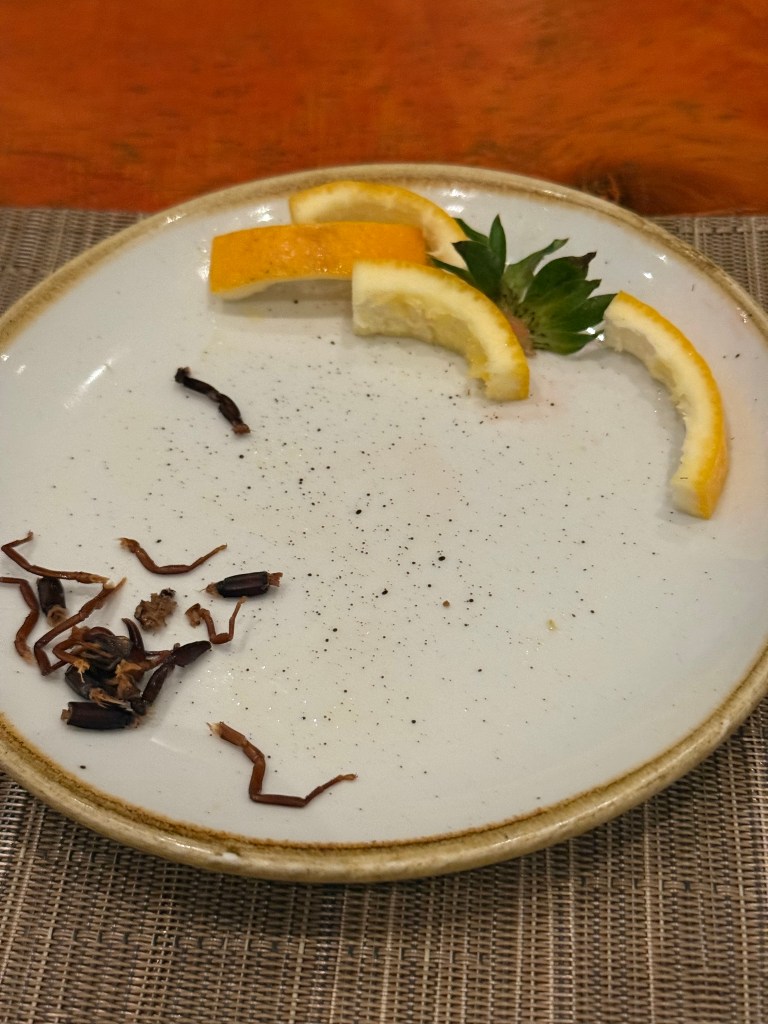
I took my scorpion apart leg-by-leg, squeezing the meat out of each segment with my teeth like one does with the legs of a fried tarantula, a tasty Cambodian delicacy.
Glancing back and forth between his own intact scorpion and me, actively nibbling my prize, Calvin looked worried. Finally, he picked up the 8-legged horror and tossed it down the hatch in one gulp, aided by the double shot of tequila.
The chitin exoskeleton of arthropods is indigestible, so you can guess what happens, or rather, what doesn’t happen, if one swallows said arthropod without chewing. Not wanting my scorpion to reappear as a scorpion, ever, I channeled my inner squirrel monkey and thoughtfully munched it down.
After its soak in mescal, the scorpion tasted more like mescal than the assorted terrestrial arthropods I’ve eaten on prior tropical adventures. I gave it a rating of meh-minus, but the fruit was good. I’ll happily take a deep-fried tarantula over a mescal-soaked scorpion any day.
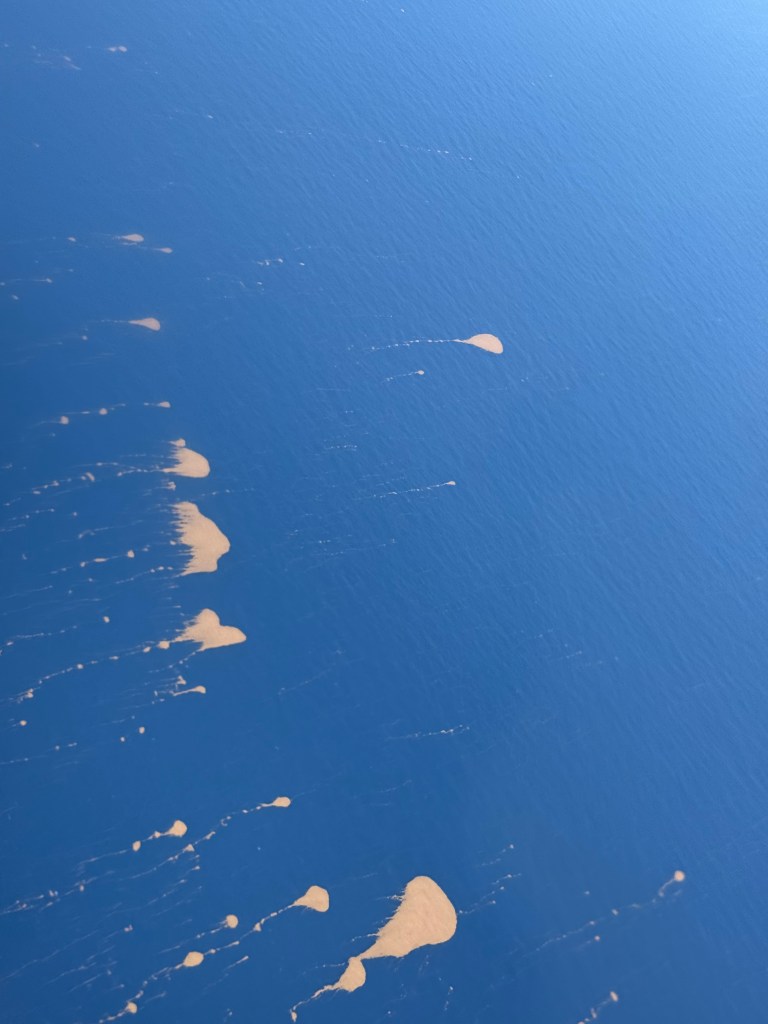
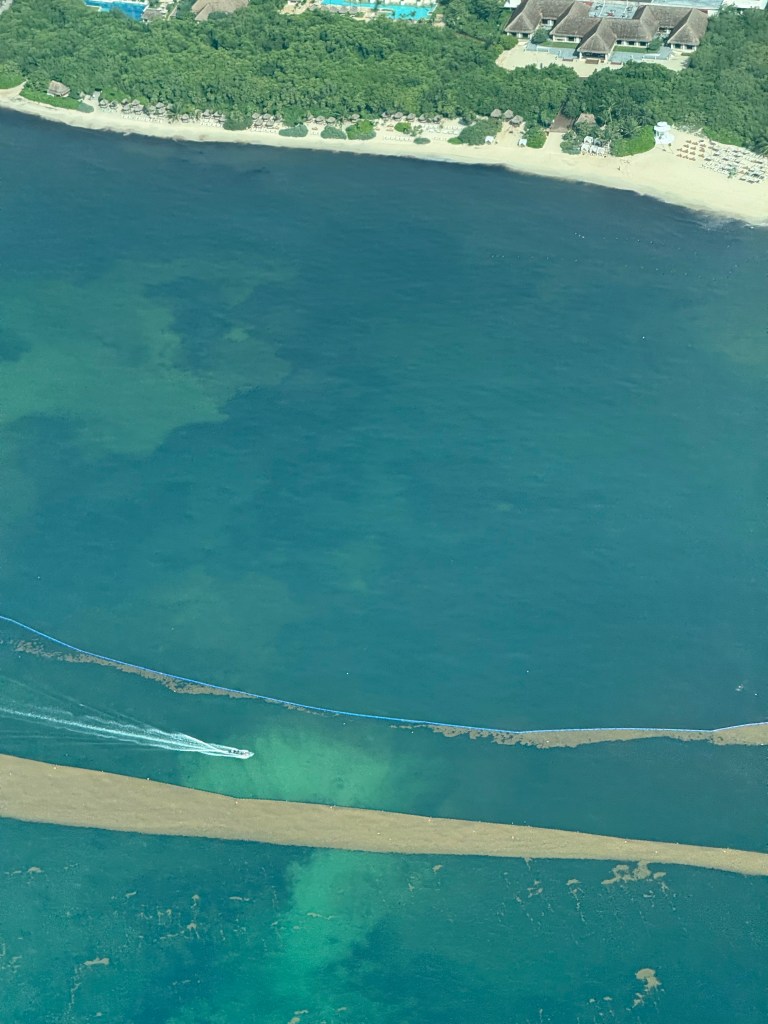
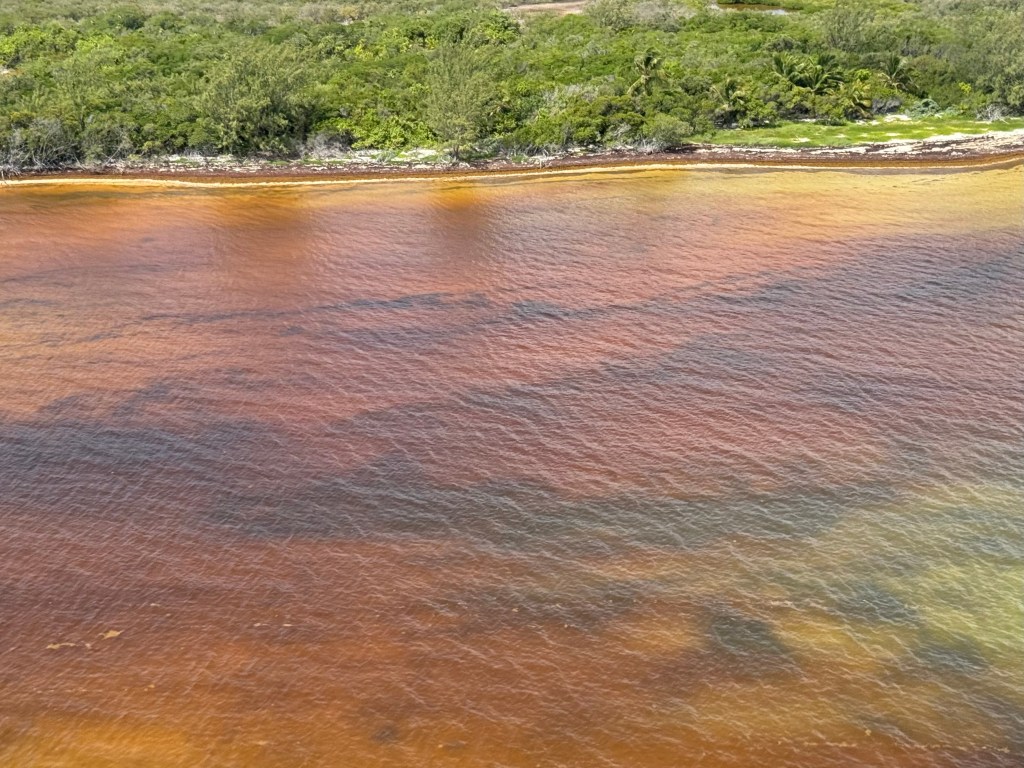
Flying over the sea from Miami to Cancún, I looked down on blobs and bands of sargassum “seaweed” floating towards the shore.
This massive sargassum outbreak is a new phenomenon, postulated to result from fertilizer run-off in the Amazon areas that have been converted to agriculture.
The resort cities across the Caribbean, including Miami, Cancún, and Tulum have been hit hard by sargassum washing up on the beaches, rotting and stinking. In Mexico, resorts are being protected by floating barriers designed to keep sargassum away. They do their best to intercept it at sea and haul it away before it can wash ashore. In the US sargassum has rights.
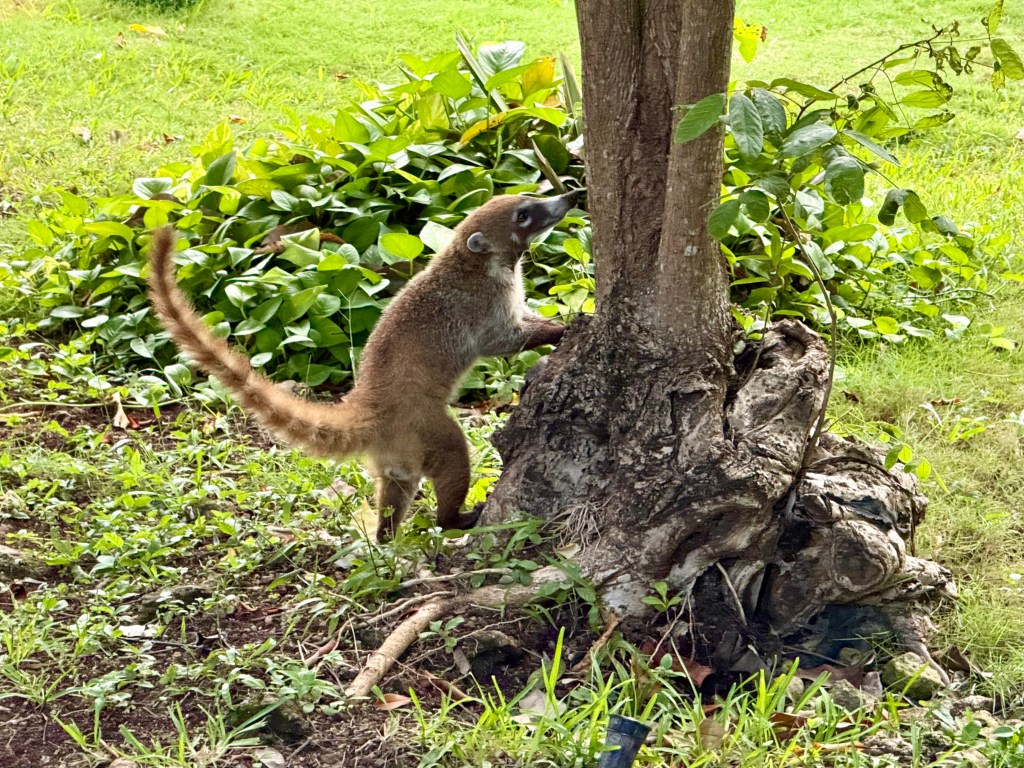
I had one night in Cancún before taking a puddle-jumper south to Punta Pajaros in the Sian Ka’an Biosphere. The outfitter that organized the trip, Yellow Dog Fly Fishing, recommended the Marriott Courtyard Hotel as clean, inexpensive, and close to the airport. What the outfitter didn’t mention is that the coconut-ginger ice cream served in the hotel restaurant is over-the-moon good, the garden is full of birds, and a resident coatimundi snuffles around the garden by the pool. It’s a truly dandy place to stay overnight.
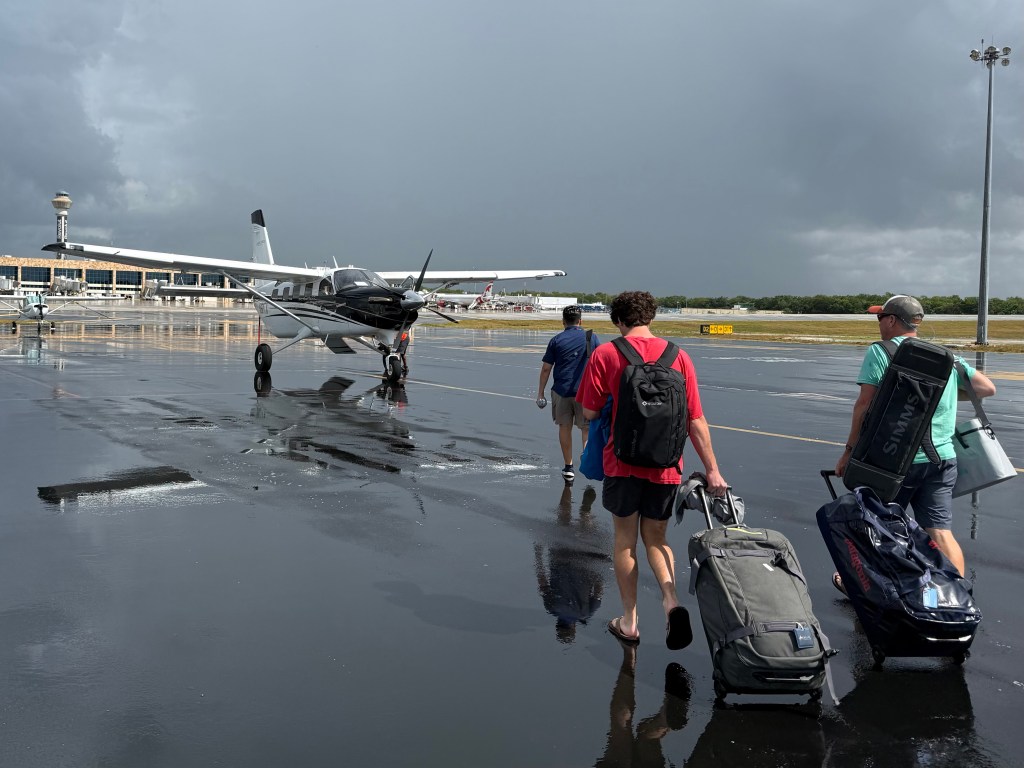
From Cancún, we took a chartered single engine plane southward 45 minutes to an airstrip at Punta Pajaros.
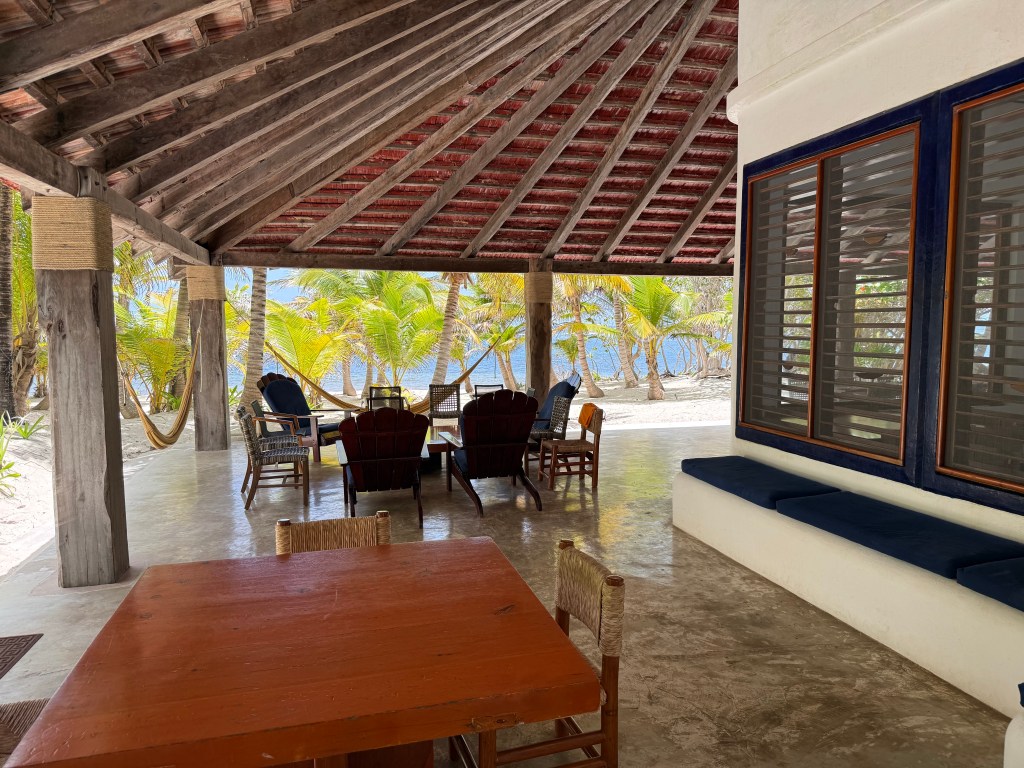
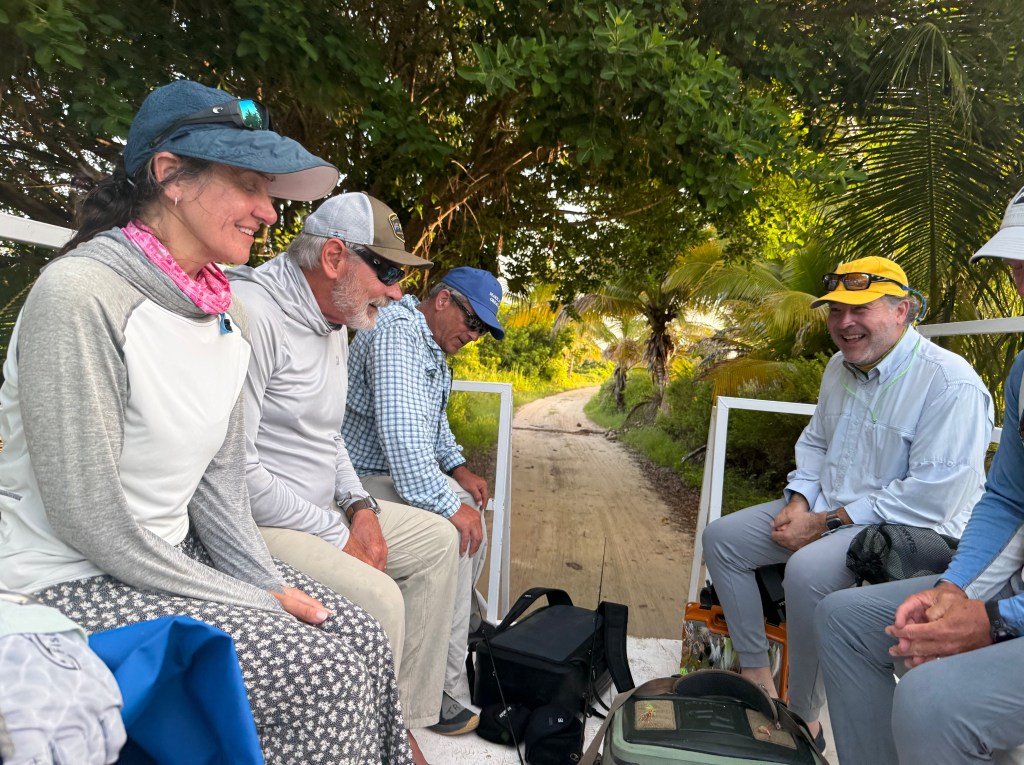
From the airstrip, we were ferried across a lagoon in a panga, like an oversized dorry, and rode in the back of a truck 40 minutes down a dirt track to Playa Blanca Lodge. That’s four means of transport to get to the lodge.
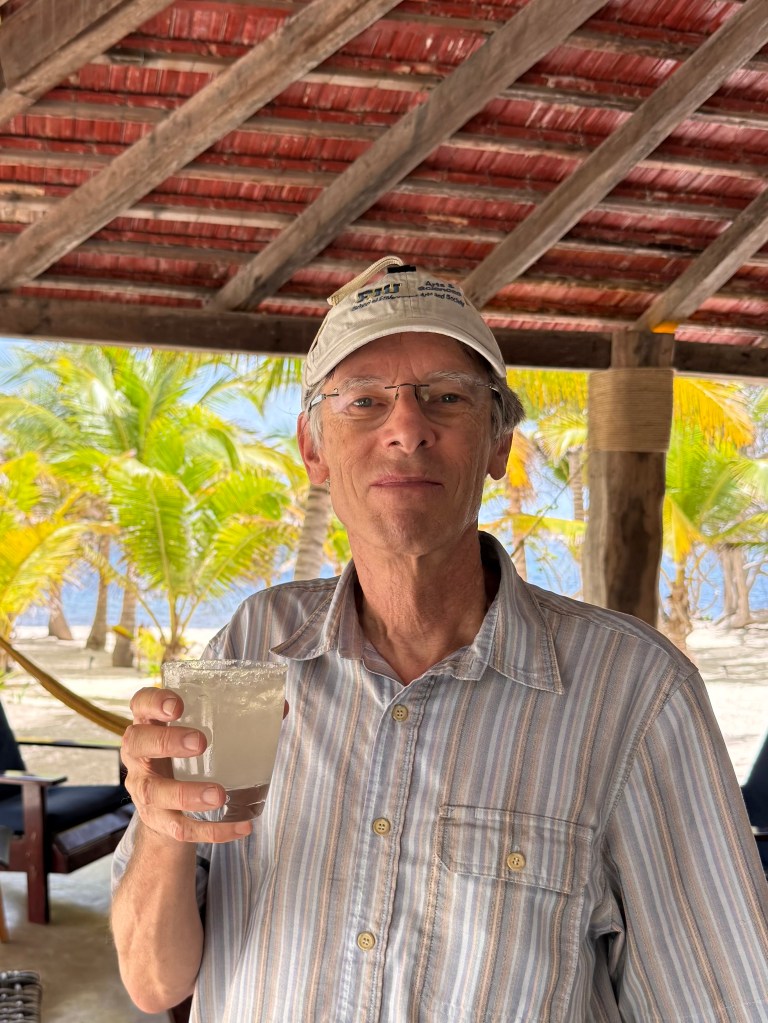
The instant we arrived at the lodge, a margarita appeared in my hand.
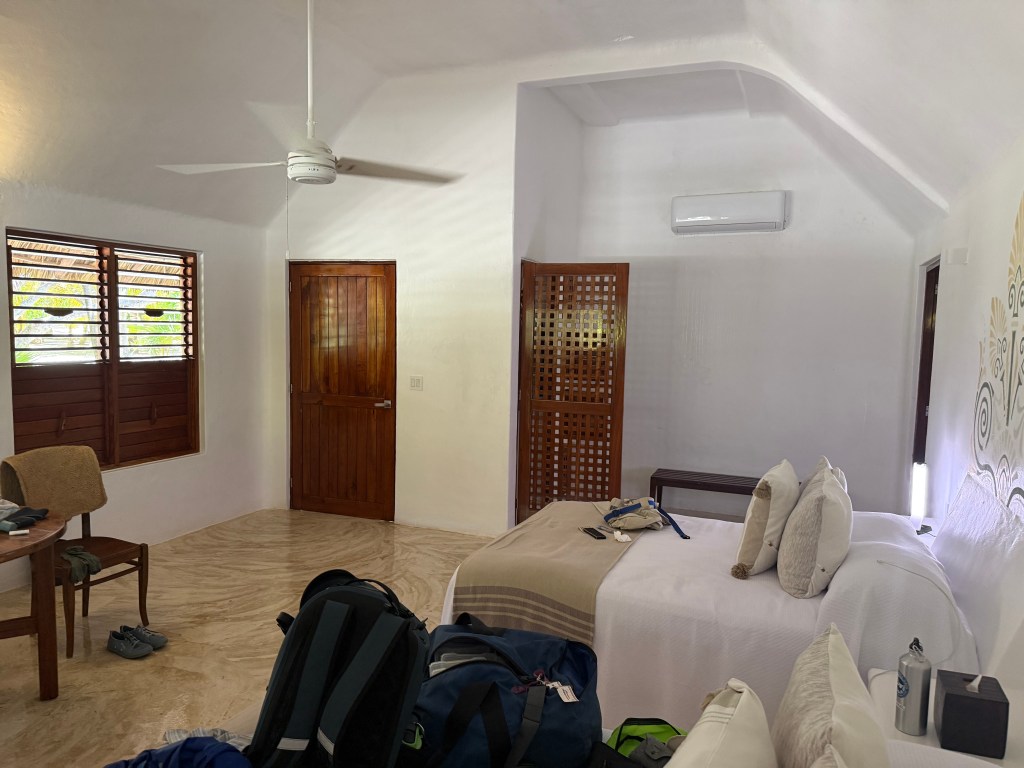
The lodge recently upgraded to solar+battery power so the mini-split AC units kept humidity low in our cottages around the clock.
More than nice enough for me. Comfortable beds too.
Water from the well is noticeably salty, but we had fresh drinking water available in our rooms, and hot, brackish water for showering.
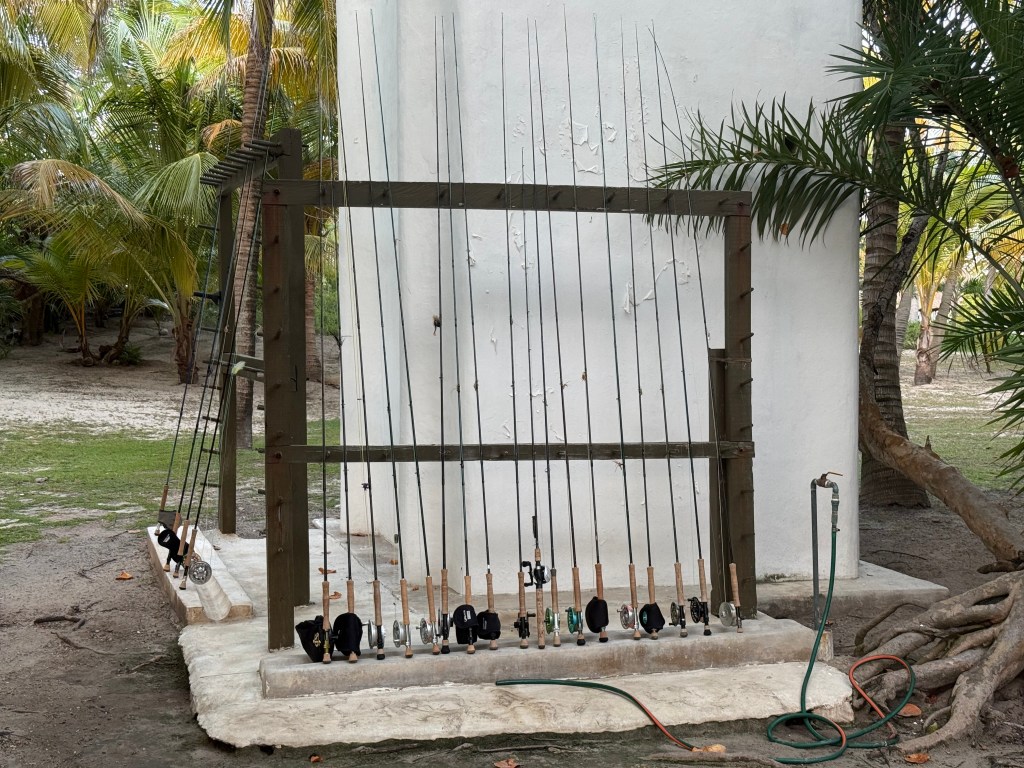
You put your rods in the rack and they get spirited to the boats before you get there, and washed down with brackish water when you return to the lodge. I removed my reels at night and cleaned the lines and reels with a cup of fresh water.
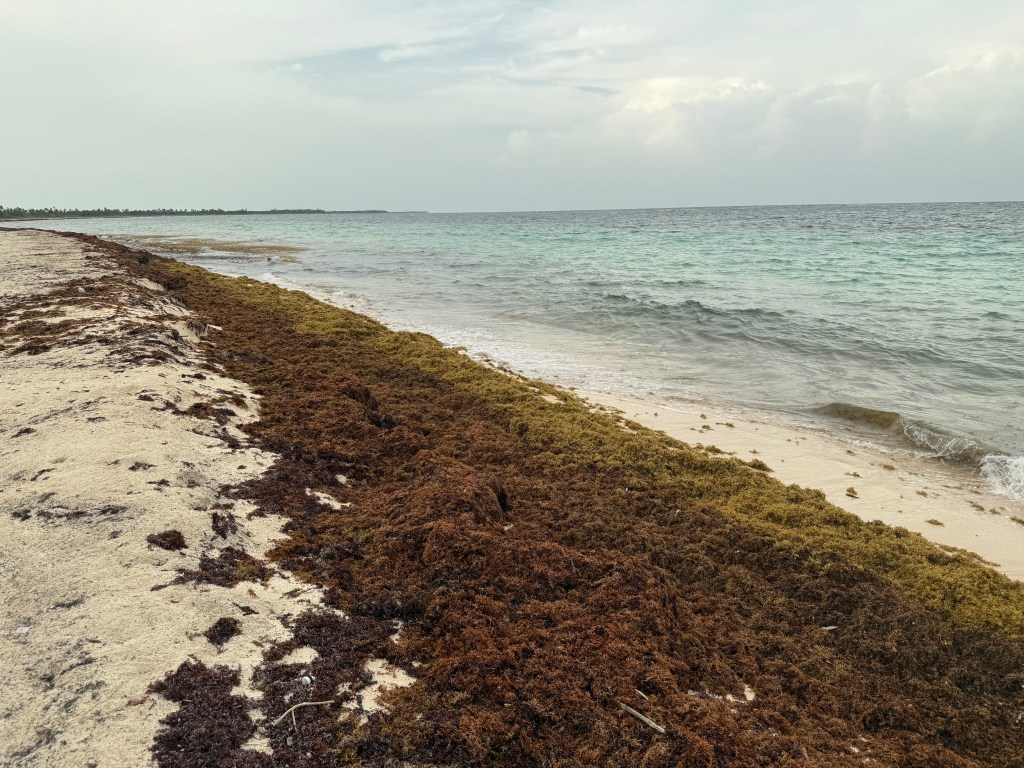
The normally white sand beach sported a thick band of sargassum, with more rolling in from the surf. The water remained clear along most shorelines, but on the shallower sections, sargassum rotted in the water, consuming dissolved oxygen, and tainting the water with stinky and toxic sulfur dioxide.
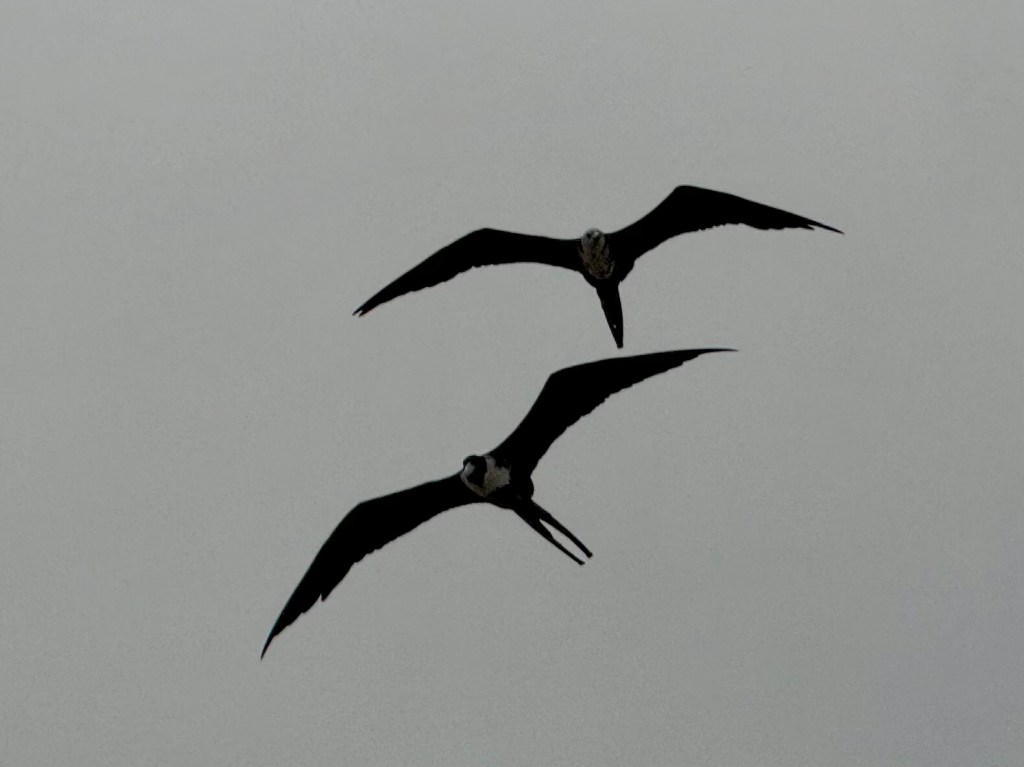
Tarpon can breath air and so hunted baitfish disabled by the anoxic water. Frigatebirds did likewise.
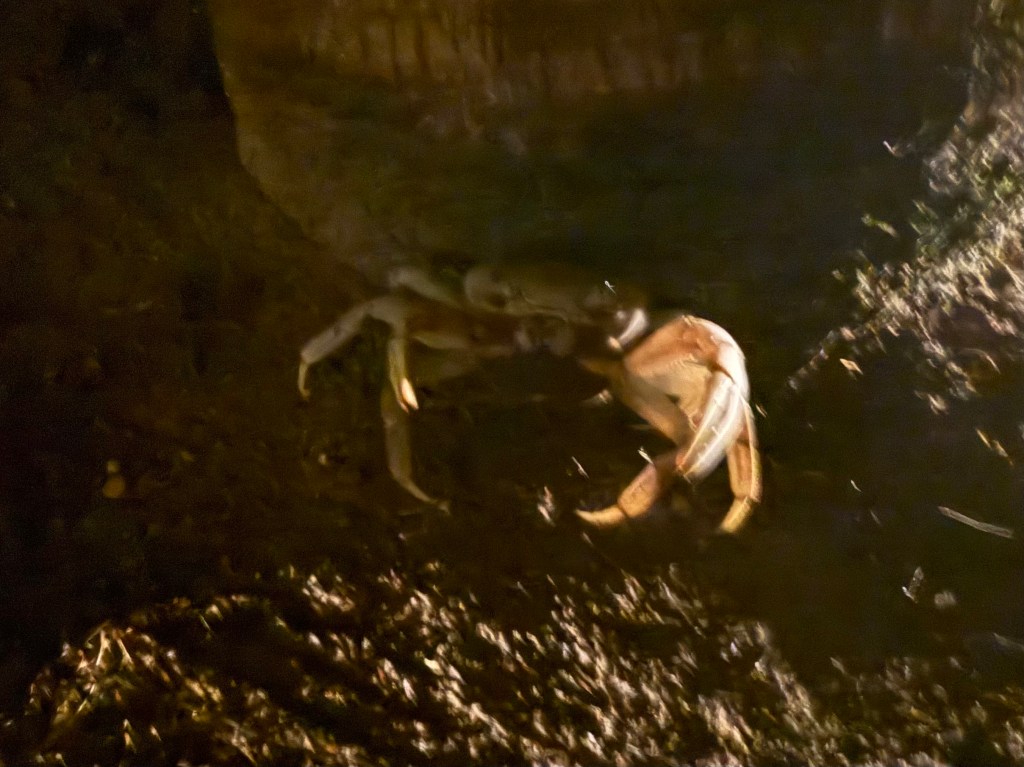
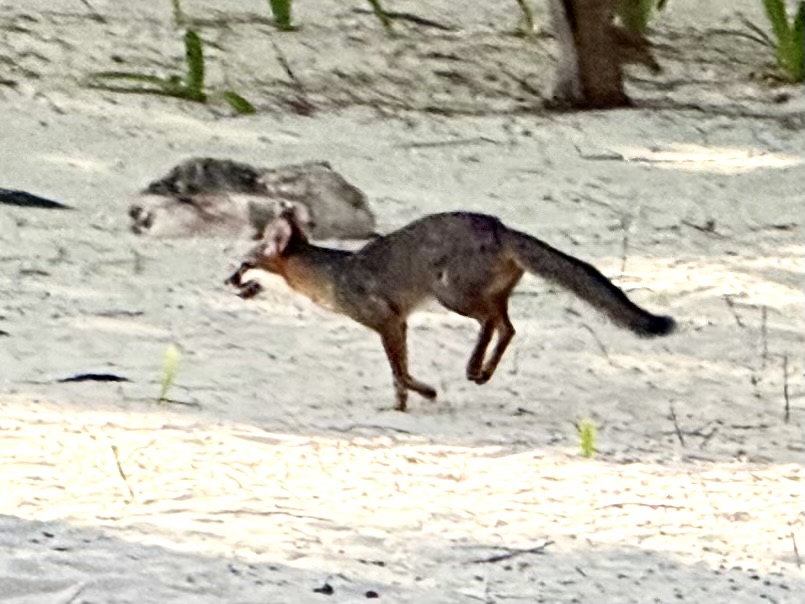
Gray Foxes are common on the grounds and surrounding woodland. In addition to the usual foxy fare of lizards, bugs, and baby birds, they munch on the assorted terrestrial crabs that wander the sandy grounds.
Our first night at the lodge, a fox stole one of two flip-flops off a cottage porch. The flip-flops belonged to Nate, a small animal vet from Idaho, who, in addition to flip-flops, had brought along his 20 year old son Calvin.
The next six days, quite a lot of fishing happened, some of which I’ll describe in subsequent posts. But for now, we’ll stick to the Lodge and its surrounds.
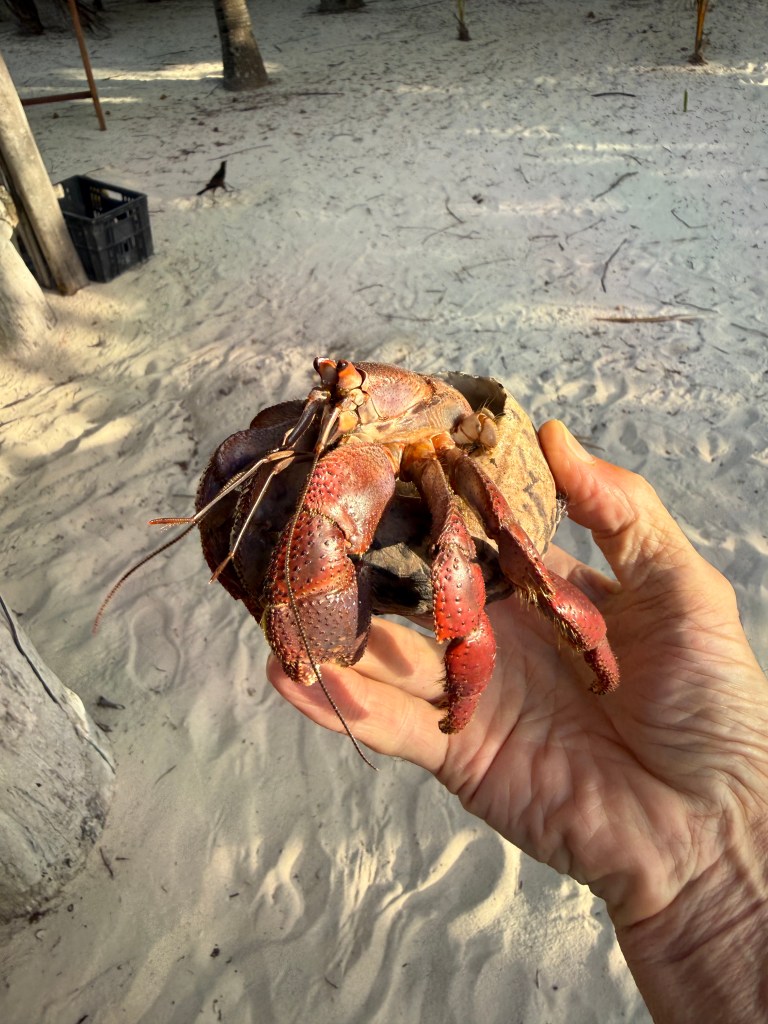
This hermit crab is so well armored no fox is going to make a dent, and might get his nose pinched if it tried. The ubiquitous Great-tailed Grackle marches across the upper left corner of the photo.
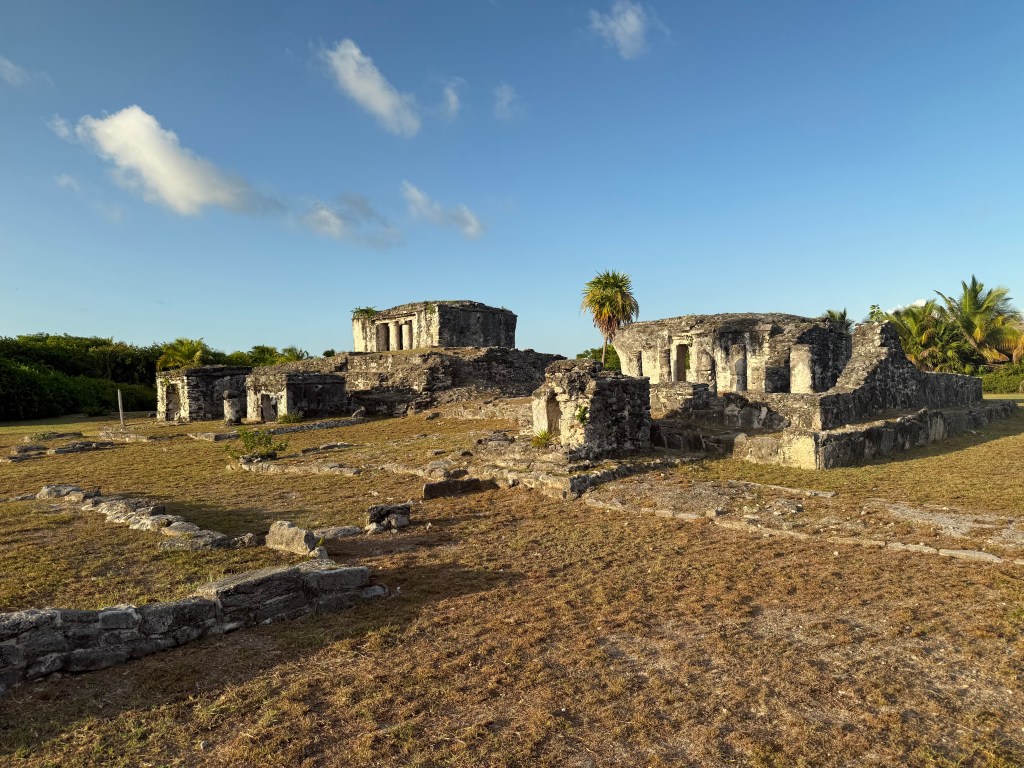
Ruins of a Mayan temple are a short walk down a mosquitoey trail through the woods.
A fox trotted down the trail ahead of me before darting into the thick woods to check on his collection of kiped footwear. A member of the staff was lucky enough to spot a jaguar on the road one night. Seeing a jaguar would have upstaged catching a Permit.
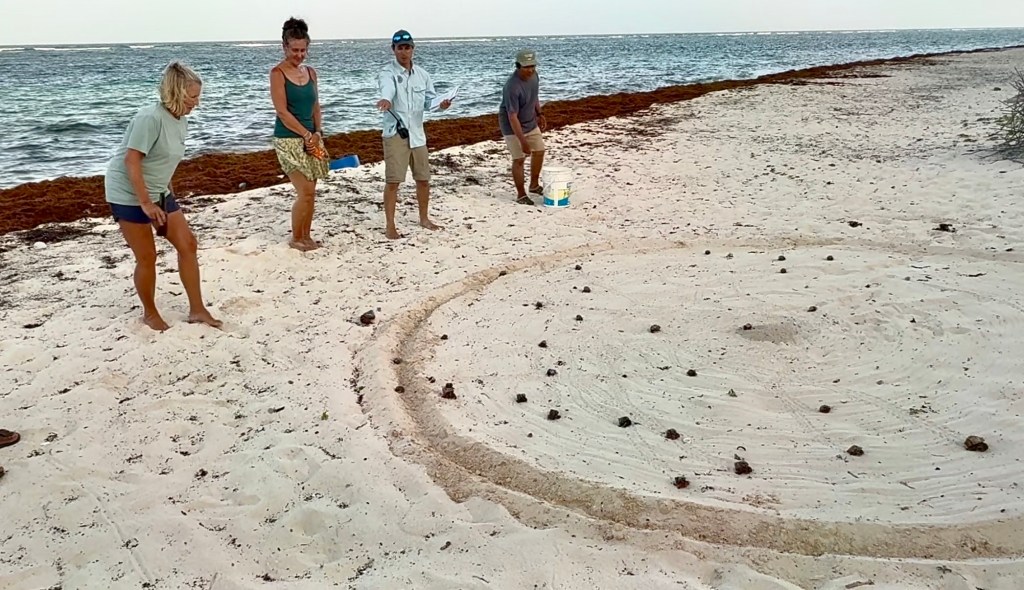
Our final evening we had a hermit crab race. The guests bet $20 each on which numbered crab of 30 would make it out of the sand ring first. My crab, #20, lost in the first elimination round. The ultimate winnings were contributed to the deserving staff who took such good care of us.
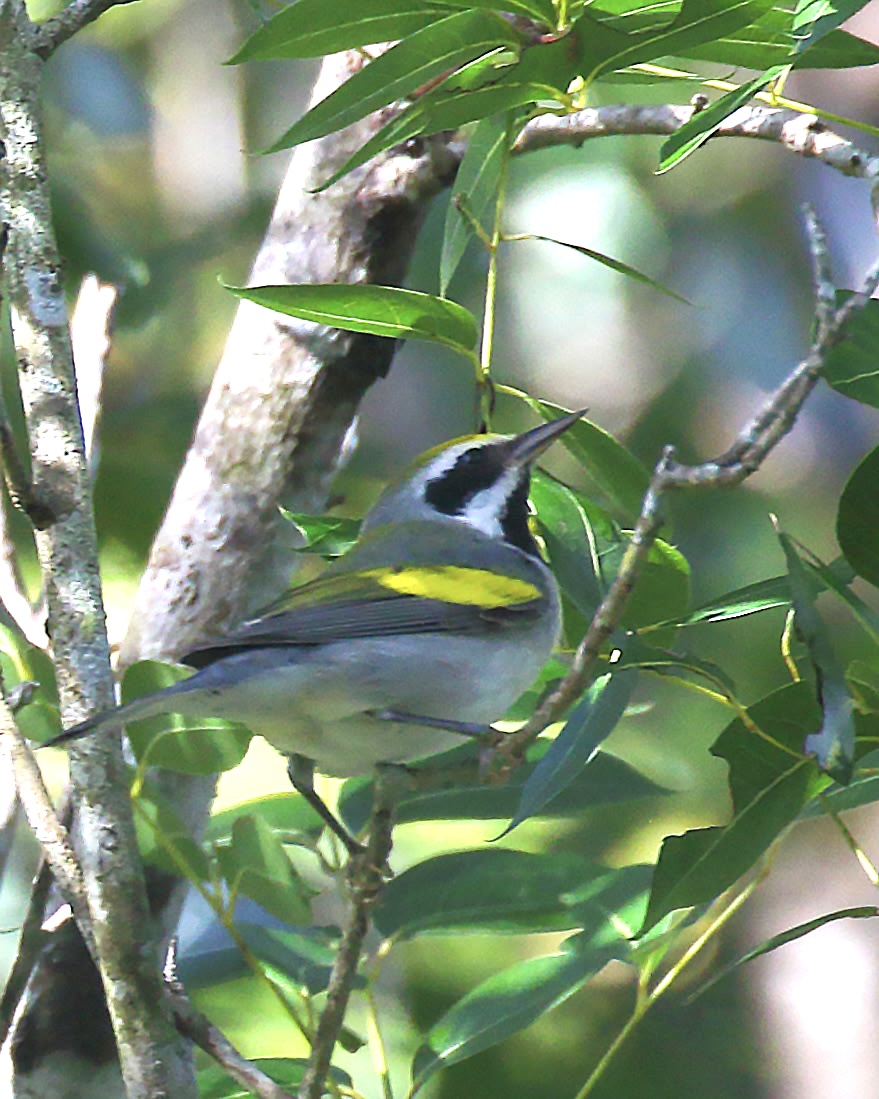
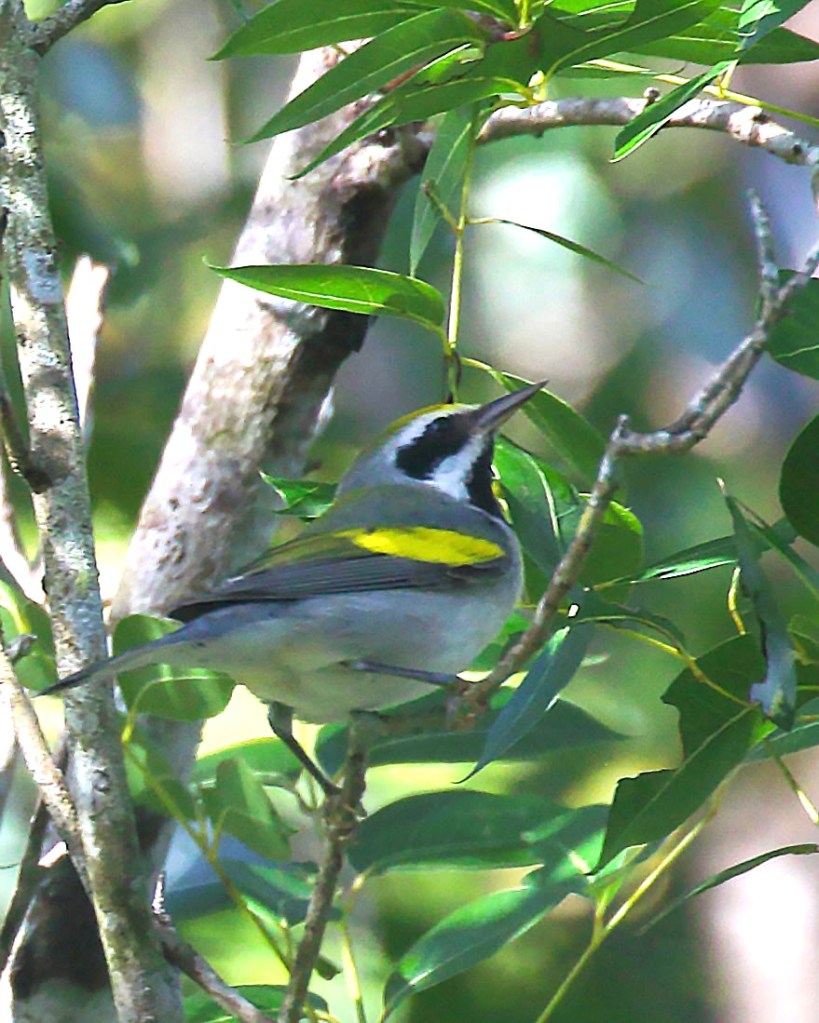
On the morning of 3 October 2025, I spotted a woman alone in the park across the street from our house. A pair of binoculars hung from her neck and she cradled a camera with a long lens. I always say ‘hi’ to birders in the park. Andrea Diamond, bubbling with excitement, told me she’d just spotted a Golden-winged Warbler, the first rare bird she had discovered on her own.
I came to know this elegant songbird during my childhood summers at a wildlife camp in West Virginia, but I had never seen one in Florida. Andrea relocated it quickly and I renewed my acquaintance with an old friend.
Golden-winged Warbler in All American Park, South Miami. Photo by local birder Himanshu Gupta.
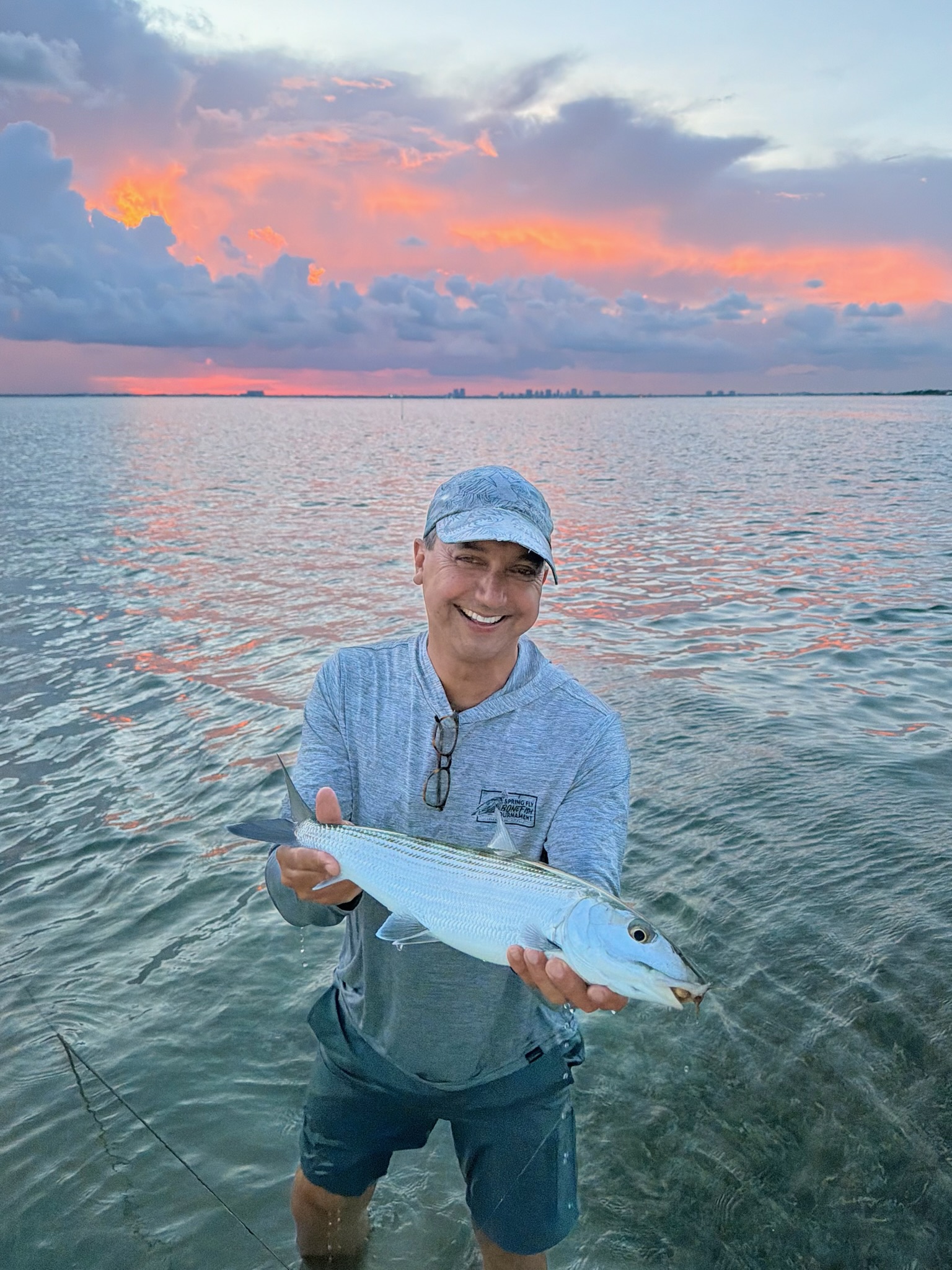
For the next three days, South Florida’s birders flocked to the park and I became the Golden-winged Warbler Ambassador. Juan Valdez, one of the many birders who came to look for the warbler, also turned out to know the native plants. I learned that he works as an art museum curator and…wait… he fly fishes Biscayne Bay. Clearly my kind of guy.
Since then I have entertained Juan through The Eye of the Cormorant and he has delighted me with photos and texts when his fly fishing skills produce a particularly splendid result.
Juan with a bonefish caught on fly in Biscayne Bay.
Fast forward to late June of this year. Juan phones me one evening to say that his friend Andy had booked a week at a fancy fly fishing lodge in the Yucatan, but cannot go. Andy offered the trip to Juan, but Juan can’t go either. In the unlikely event that I am free the second week of August the trip is mine.
Playa Blanca Lodge is the sort of place I read about online in the outfitter catalogs. I drool longingly over the descriptions, check the cost, then exhale and close the webpage. With this gifted package I just had to get myself from Miami to Cancún, cover one night in a hotel, and tip the lodge staff and fishing guides.
I am definitely free the second week in August.
Wow.
Thanks Andy! Thanks Juan!
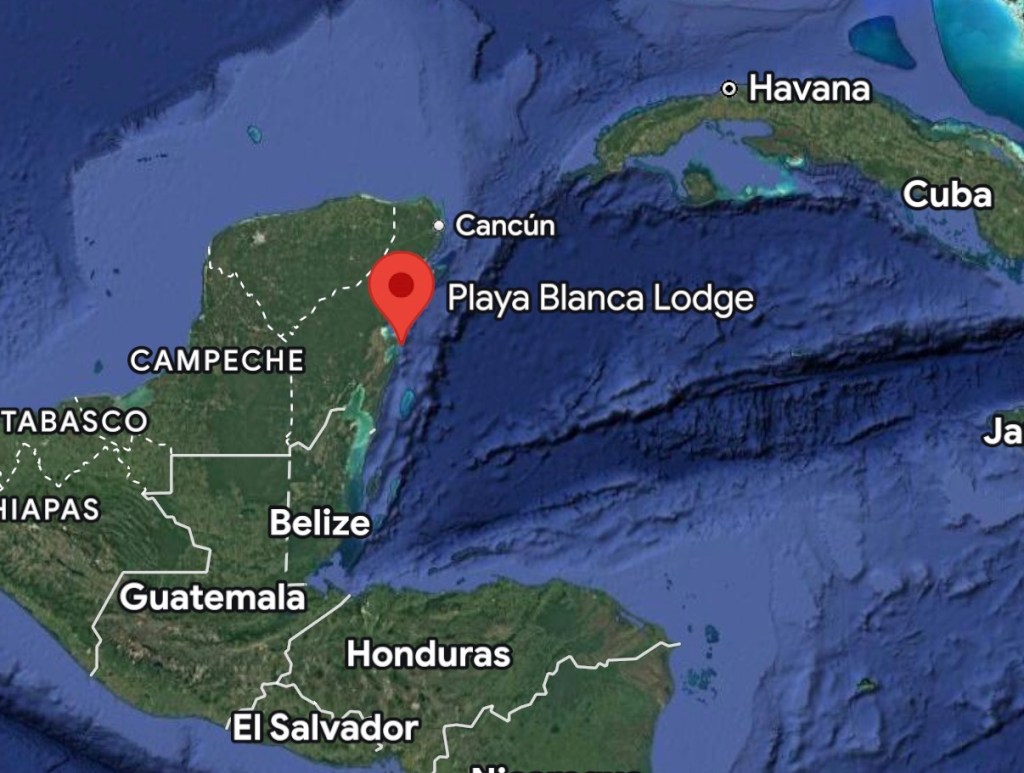
Playa Blanca Lodge is situated in the Sian Ka’an Biosphere Preserve on the Atlantic coast of the Yucatan Peninsula, located here on Google Maps.
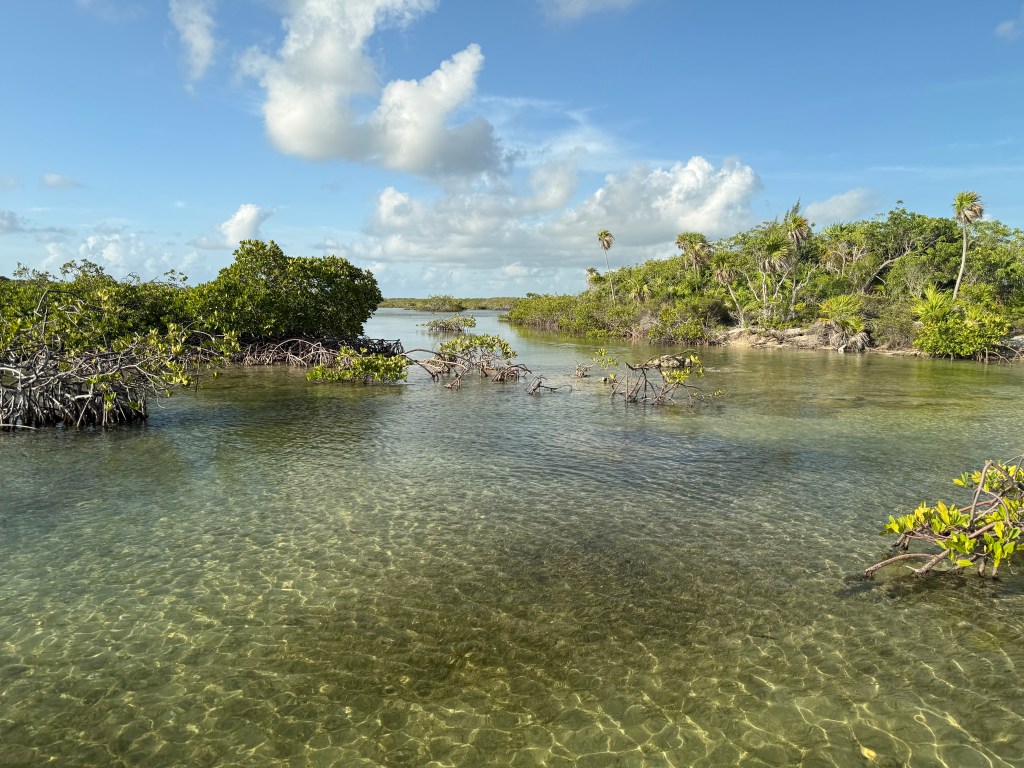
My family visited Sian Ka’an twelve years ago while on vacation in Tulum. The Biosphere Preserve is a cross between the Everglades and the Lower Florida Keys before people made such a mess of things here in Florida. The Mayans, likewise, tried their best to screw up the hydrology of Sian Ka’an, but equipped only with stone tools and manual labor for chipping canals out of the limestone bedrock, and no artificial fertilizer to aid their agriculture, the harms they wrought were far less extensive than here in Florida.
The lower reaches of Sian Ka’an Biosphere include Espiritu Santo Bay, home to a healthy population of Permit(Trachinotus falcatus), a game fish in the jack family. Permit are wary, strong, and fast. The Permit is infamous among fly fishers for its capricious behavior, often rejecting a perfectly delivered fly and, on rare occasion, grabbing a fly from a botched cast. Permit fight hard, and have a large repertoire of escape tactics: scraping off a fly on a coral, crushing or straightening a fly’s hook, or grinding through the nylon leader on the floor of the bay.
A local attorney friend has been trying to catch a Permit for years with no success.
The most accomplished fisherman in my local fishing club writes: “I have presented over 1000 flies to Permit… caught one (winning a tournament in 1988) and been skunked ever since!!! There is no way I haven’t found to lose a hooked Permit!”
Juan recently caught a nice Permit in Biscayne Bay. He is amazing.
With only four years of fly fishing under my belt, I consider Permit to be out of my league. I’ve seen Permit in Biscayne Bay and the Keys, but I’ve never caught one on fly or even set my mind to trying. Last spring I followed a massive Permit in my kayak for half an hour, but despite my advancing as slowly as possible, the Permit would never let me approach closer than 125 feet.
My benefactor, Andy, who gave me his trip reservation, sent me a brief note:
“Catch a permit for me.”
Uh oh.
I ordered materials to tie Permit flies, producing an assortment of weighted crabby and shrimpy things in proven patterns recommended by the trip outfitter.
My ties of the Raghead Crab fly.
The weighted crab flies that Permit favor are hard to cast, so I would need serious practice.
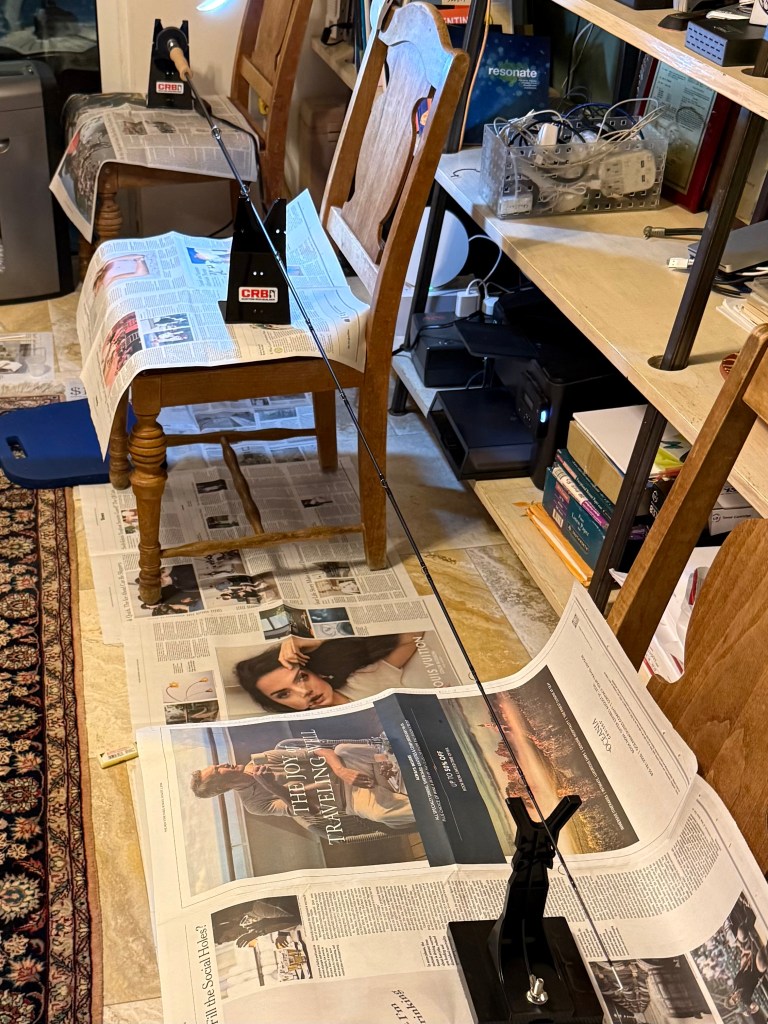
In the vain hope of not trashing my right hand by excessively casting my fast-action 9wt fly rod, I sought a rod of similar weight but with a softer action. The company I picked had 8/9wt rod blanks available, but none assembled in the size I wanted. I had never built out a rod blank before, but I figured why would Al Gore invent the internet if not for instructing a novice such as myself?
Here’s the newly built rod, getting its epoxy coating on a rotating machine that prevents drips.
I left for the airport a few hours after the epoxy dried.
When the sun sets in Miami, our nocturnal biota makes its unseen entrance. The screaming parrots retire, replaced by soft-trilling screech owls. Limpkins stalk the canal banks, emitting eerie calls into the darkness. Night herons, pondering the nature of dark matter, exclaim “Quark!”.
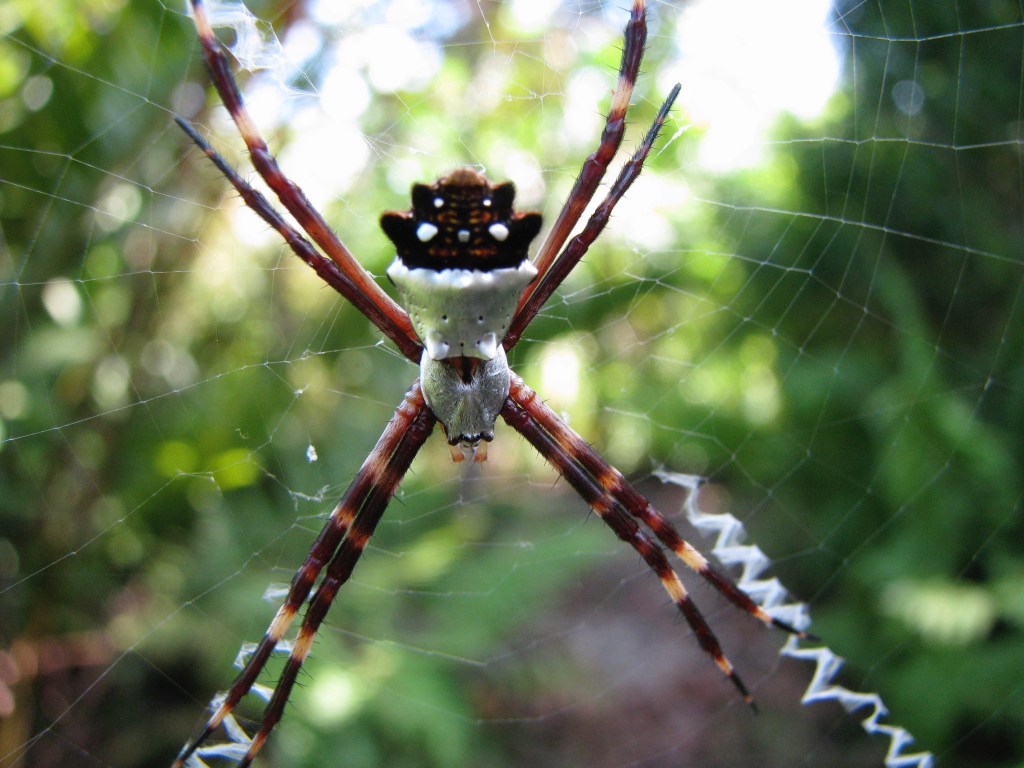
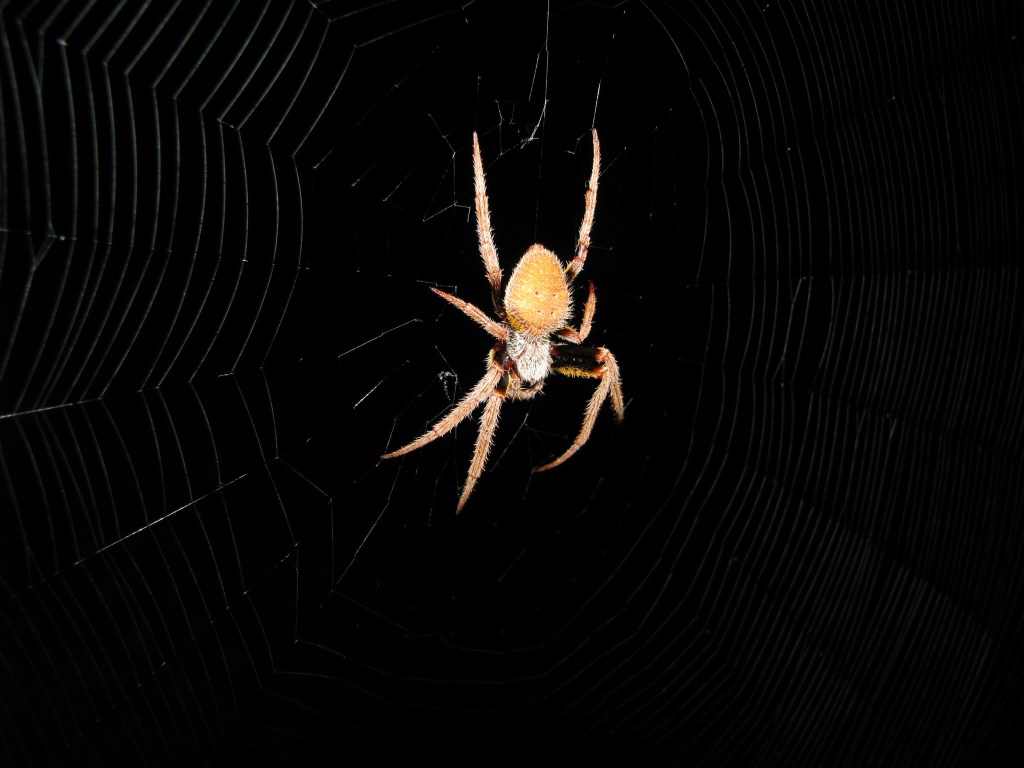
Like the birds, Miami’s invertebrate community holds its own changing of the guard: day-hunting spiders take down their webs and nocturnal spiders weave theirs.
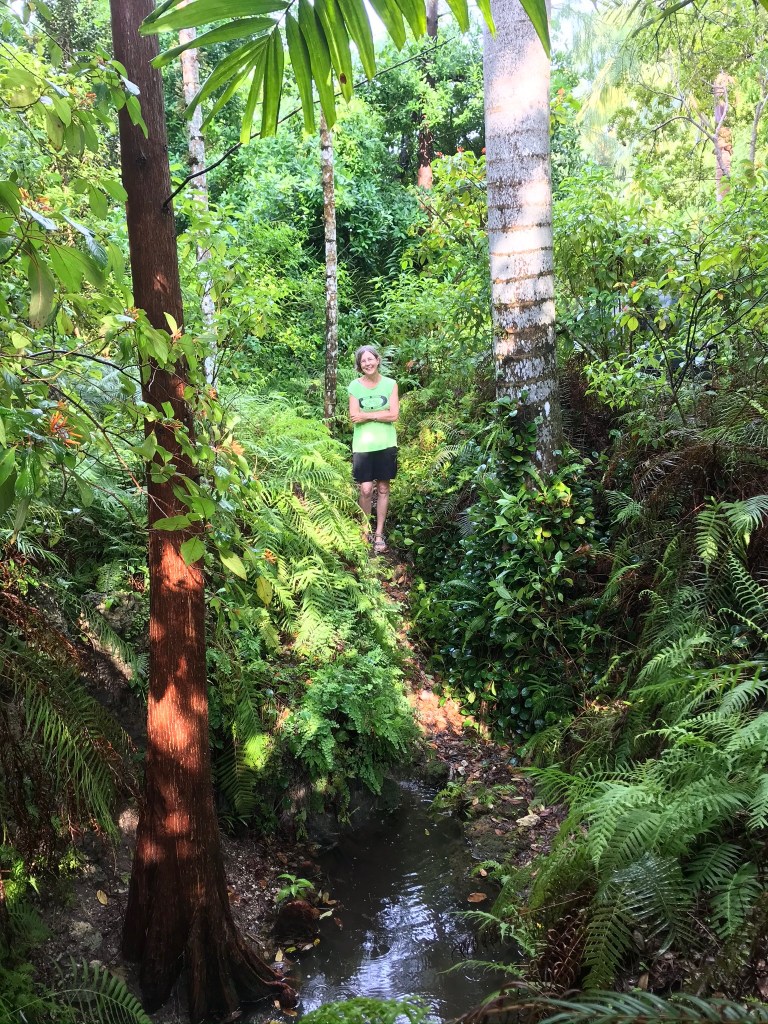
We have a grotto in the backyard where we can amble down steps cut into the limestone rock (duck the spider webs) and visit the surface of the Biscayne Aquifer sitting two meters below the level of the yard.
Starting from a grassy backyard, we cut the grotto with big yellow machines. I labored with a pickaxe to chop a stepped path into the rock wall. Having a safe way down, I planted Southern Maidenhair Ferns, pepperomia, and two tree seedlings: a cypress and a royal palm. With ready access to water, nature did the rest.
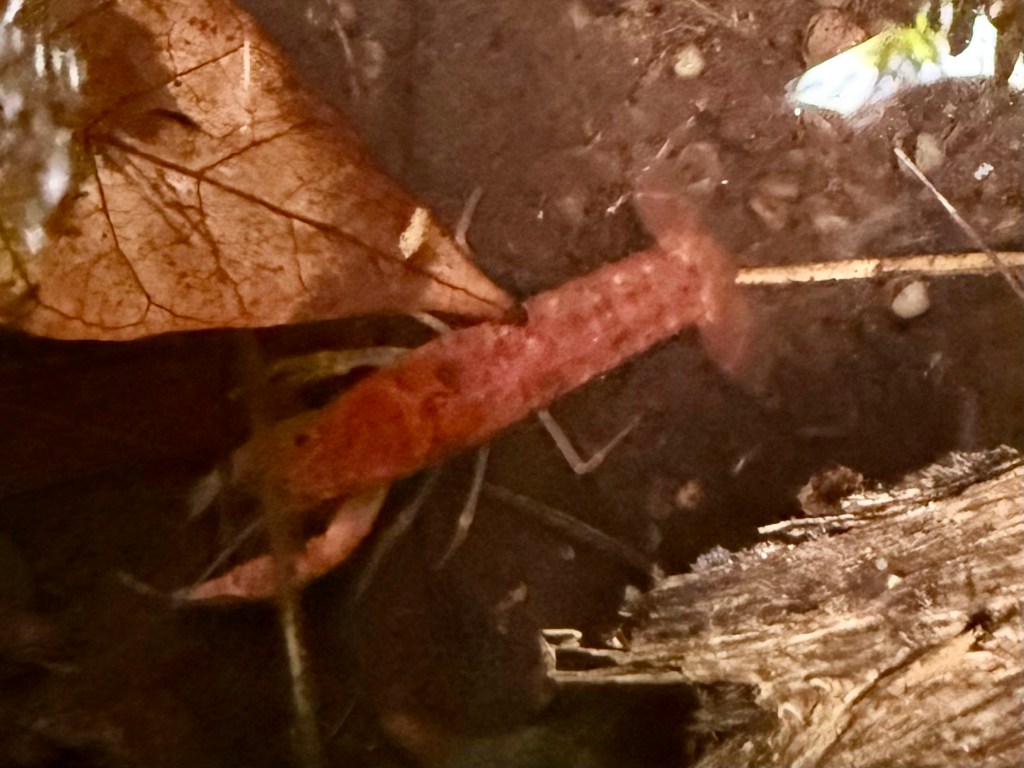
Sheltered by the geometry of its sheer walls, the grotto is a silent place. As night falls over the grotto, sometimes, just sometimes, a Miami Cave Crayfish wanders into the grotto from the top edge of the aquifer.
Miami Cave Crayfish (Procamberus milleri) in the grotto.
A few meters below the ground, the subterranean Miami Cave Crayfish (Procamberus milleri) resides in large pores within the oolitic limestone through which flows the Biscayne Aquifer. Biologists from US Fish and Wildlife Service only know this hard-to-find species from our backyard. It’s a genuine treat to see one.
The Miami Cave Crayfish was on schedule to be federally listed as “threatened”, but then, as part of Project 2025, the Trump Administration declared war on the Endangered Species Act and the process stopped. This story, in which I am deeply entangled, will be continued in a different post.
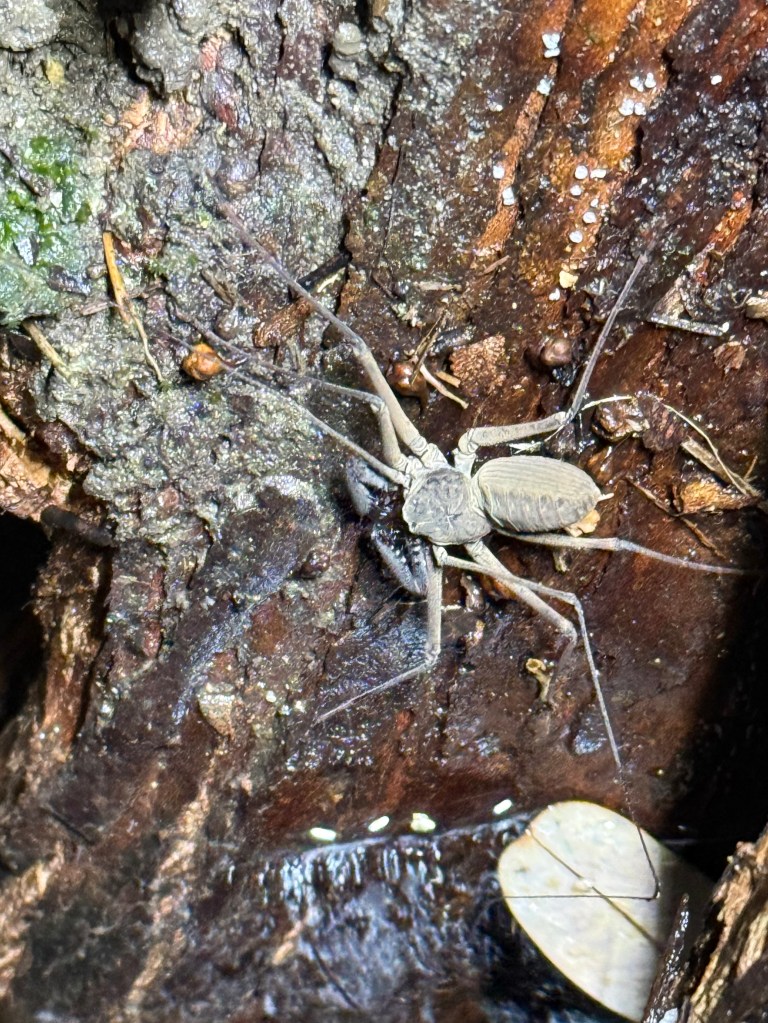
After dinner last night I was wading in the grotto in search of cave crayfish (no luck), when a movement on the rock wall caught my eye. Just above the water line, something gray, resembling a very large spider caught my eye. It had six legs, two spiked claws tucked in front, and long antennae that flicked about in all directions. It was 3” across, 7” including the antennae. Here’s the photo, taken in the light of my flashlight.
Recognize this thing? It’s a tailless whip-scorpion – my first one ever.
The Spotted Tailless Whip Scorpion (Phrynus marginemaculatus) is an arachnid in the order Amblypygi, native to South Florida, the Bahamas, Cuba, and Hispaniola. The antennae are actually modified legs and the claws are modified pedipalps. The spiked claws on this dude were sufficient inducement to keep my hands to myself.
My daughter, Vannak, received the photo by text and replied “nightmare fuel thank u”. Ever the thoughtful dad, I assured her that, although they’re large (“I was afraid of that”), they only come out at night.
I seem to have sprained my hand, so no fishing report this week. I am taking this setback as a chance to see more of summer’s offerings in our wooded yard in South Miami.
In between icing my hand and tying flies for an impending fly fishing trip to the Sian Ka’an Biosphere in the Yucatan, I have snapped opportune pics of some critters in the yard. An iPhone in the pocket favors providence.
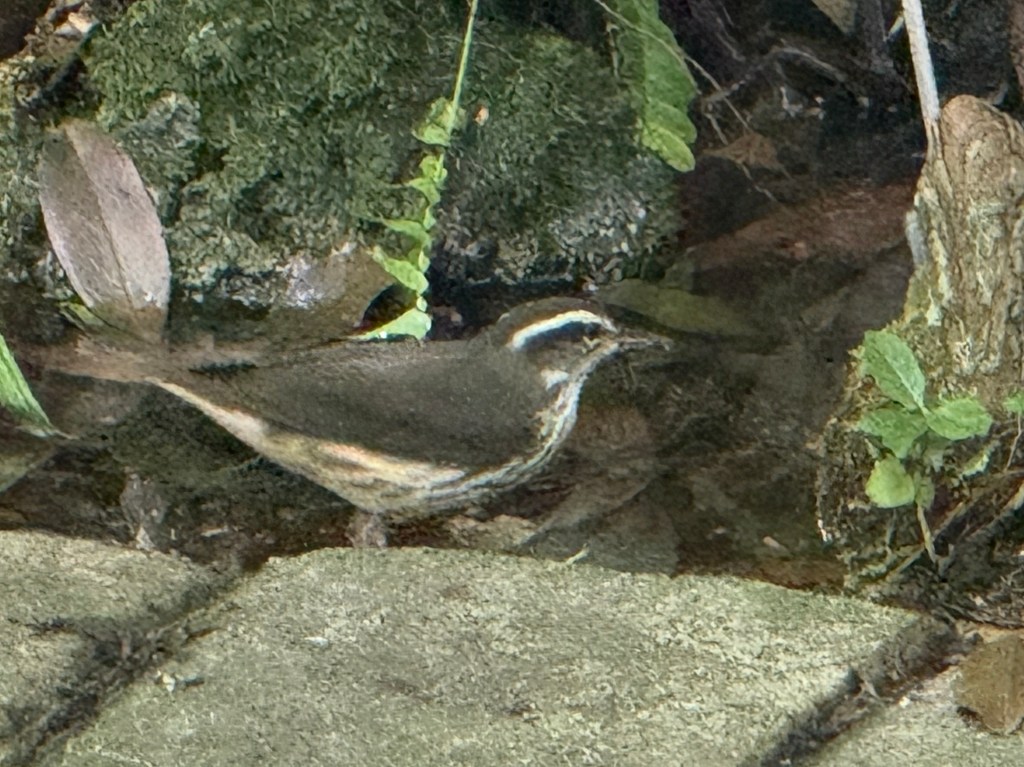
Louisiana Waterthrush (Parkesia moticilla)
The first fall migrant warbler in our yard is always a Louisiana Waterthrush, on their way south from breeding grounds along the Appalachians’ streams. The first waterthrush of this fall’s migration appeared during breakfast today, 30 July, alerting me with its characteristically loud and bright “chip” call. It landed on a small table by the grill, then flitted down to the water’s edge to hunt for bugs, too distant for a photo. I got this grainy shot (shade + high digital magnification) later in the morning through the glass door next to my desk. Waterthrushes constantly bob their back-ends up and down, which appears here as blur.
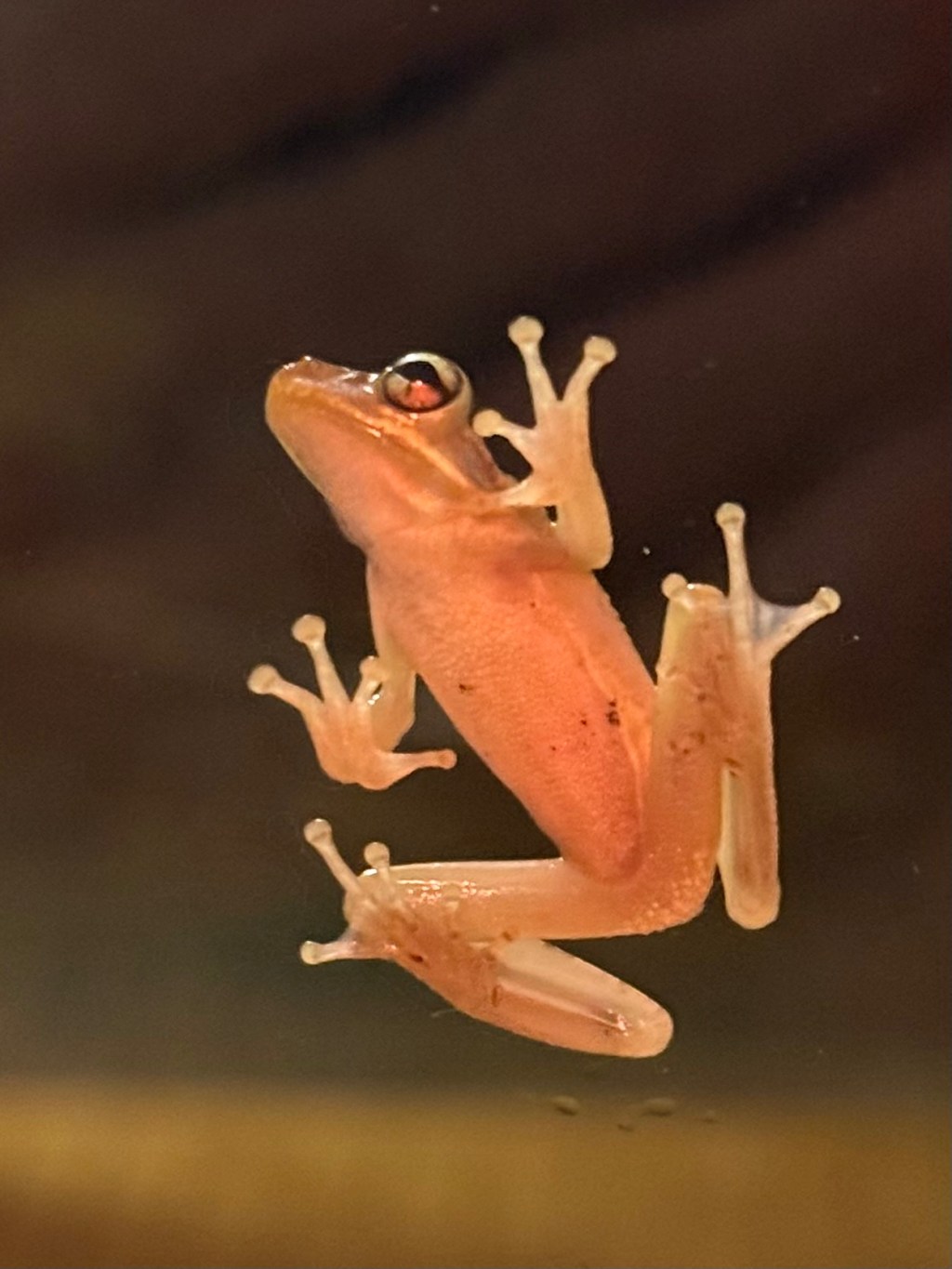
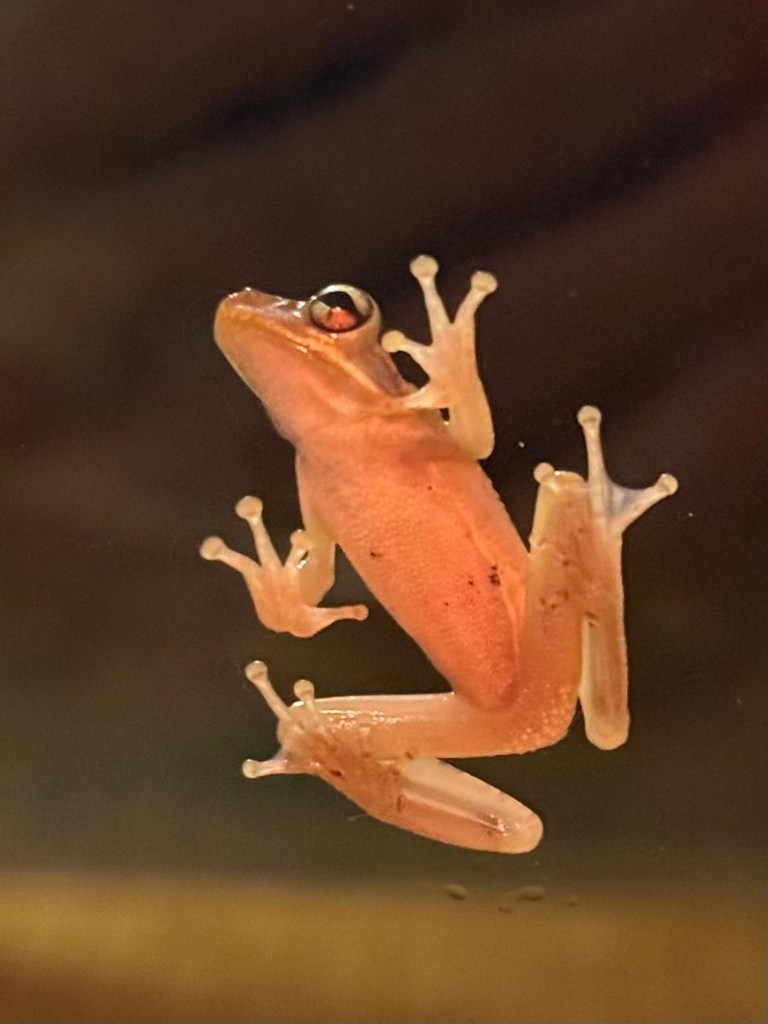
Cuban Tree Frog (Osteopilus septentrionalis).
A Cuban Tree Frog was spoinking around on the glass in our front door one evening, allowing this photo, taken from inside the house. These big tree frogs ate all the native tree frogs in the suburbs, so they’re all we’ve got.
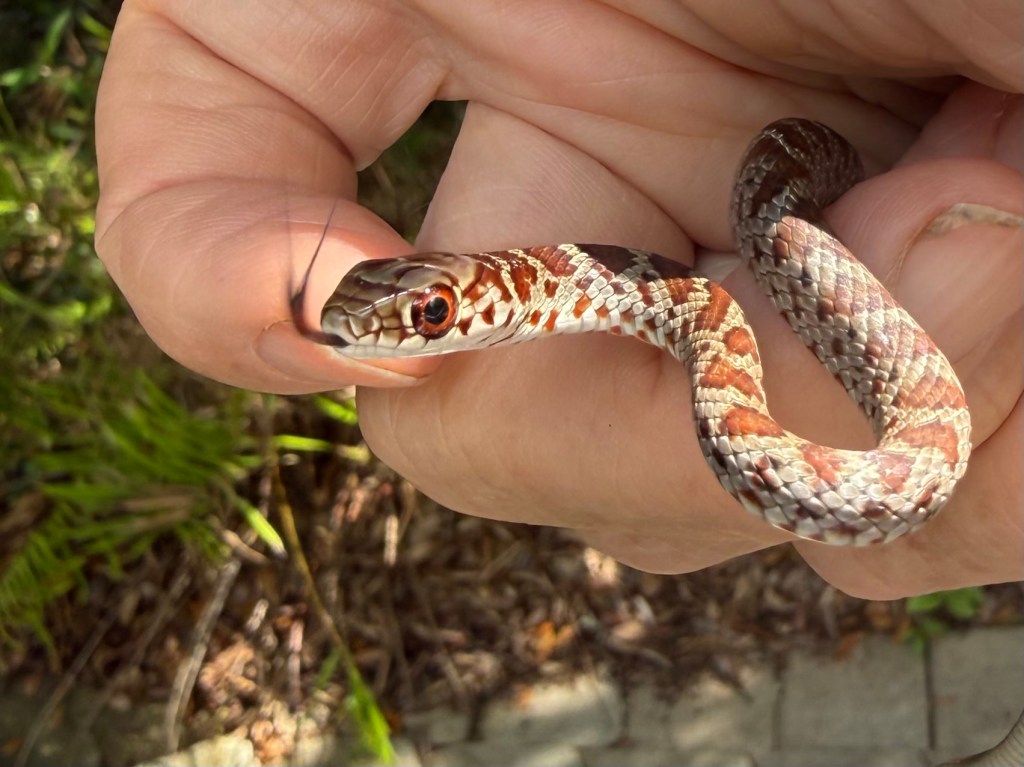
A baby Florida Racer aka Southern Black Racer (Coluber constrictor priapus).
I found this sweetie on the front porch hunting bugs and baby lizards. Wikipedia accurately describes its behavior: “Members of this species generally do not tolerate handling – even after months in captivity – and typically strike and flail wildly every time they are handled, often defecating a foul-smelling musk, a common defense against predators in snakes.” She chewed on my finger and made a stink, but since neither defense had any deterrent effect, she settled down enough to let me snap a photo, left-handed.
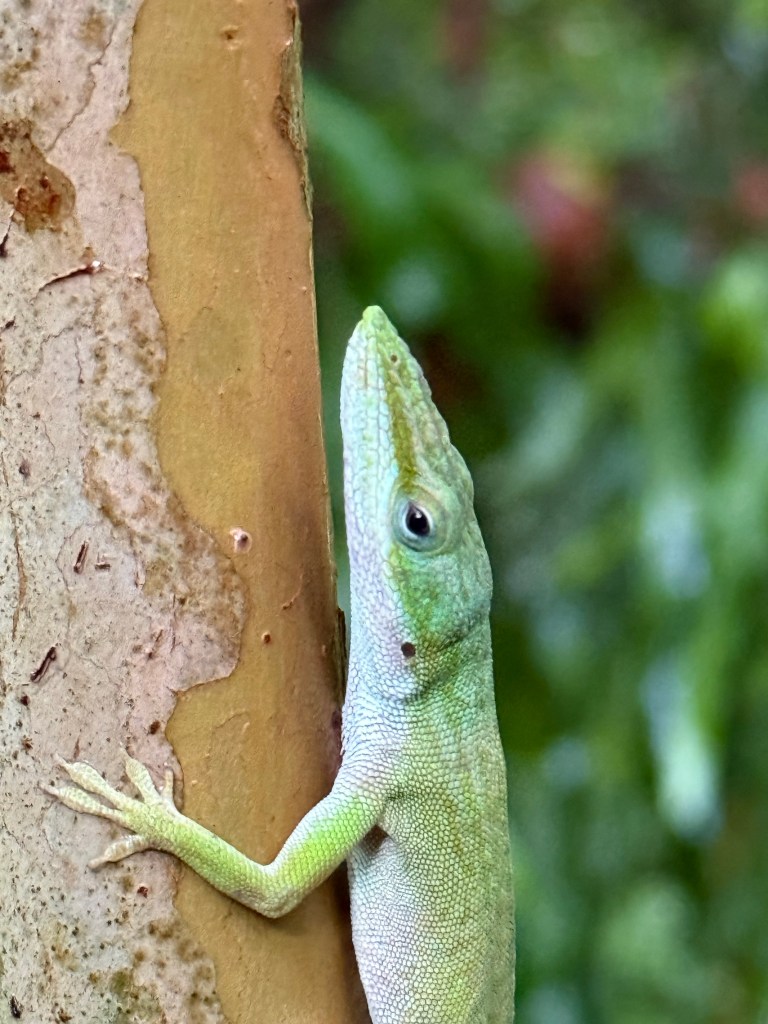
Green Anole (Anolis carolinensis x porcatus)
Green Anoles change color between green and brown. The Green Anoles in Miami are all hybrids between the Carolina Anole and its ancestor, the Cuban Green Anole. It coexists with the other invasive exotic anoles by holding a unique niche in the trees, often high up.
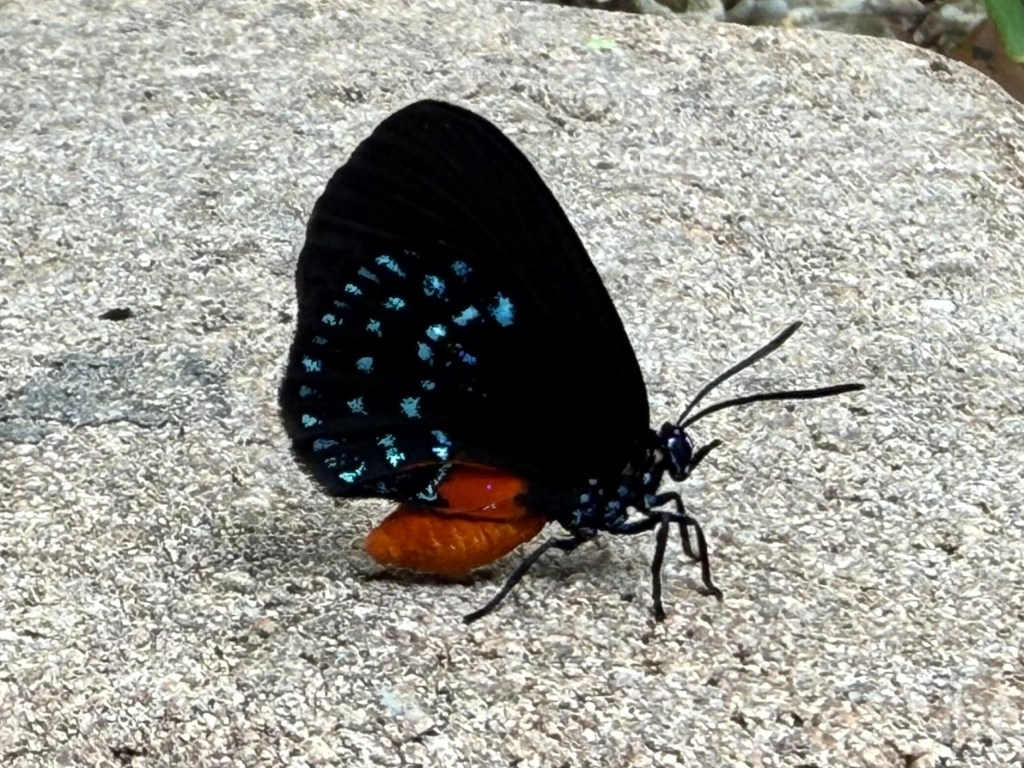
Atala Butterfly (Eumaeus atala).
Thought to be extinct, Atalas were saved by local naturalist Roger Hammer, who stumbled onto an unexpected pocket of survivors. Roger surreptitiously introduced their larvae into the cycad collection at Fairchild Tropical Botanic Garden, to the consternation of Fairchild’s Curator of Cycads. Atalas recovered and now lay eggs on the native cycad species, the Coontie, growing in our front yard. The larvae chew our lush Coonties to a tangle of brown stems while producing a cloud of small, colorful butterflies. The Coontie stores reserves in a big, starchy root and grows back.
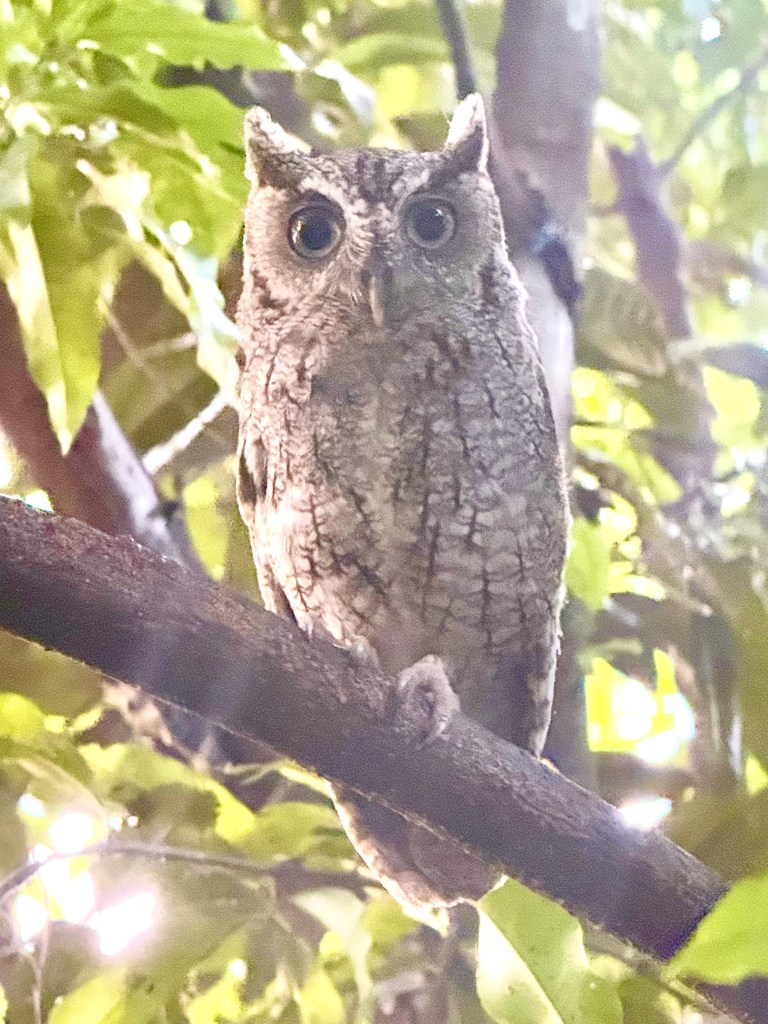
Eastern Screech Owl (Megascops asio).
Mr. Screech Owl revealed his location by singing in the late afternoon when I ventured behind a tree to, um, water the plants. The lighting was all wrong, but it kind of worked anyway – such is the chance encounter.
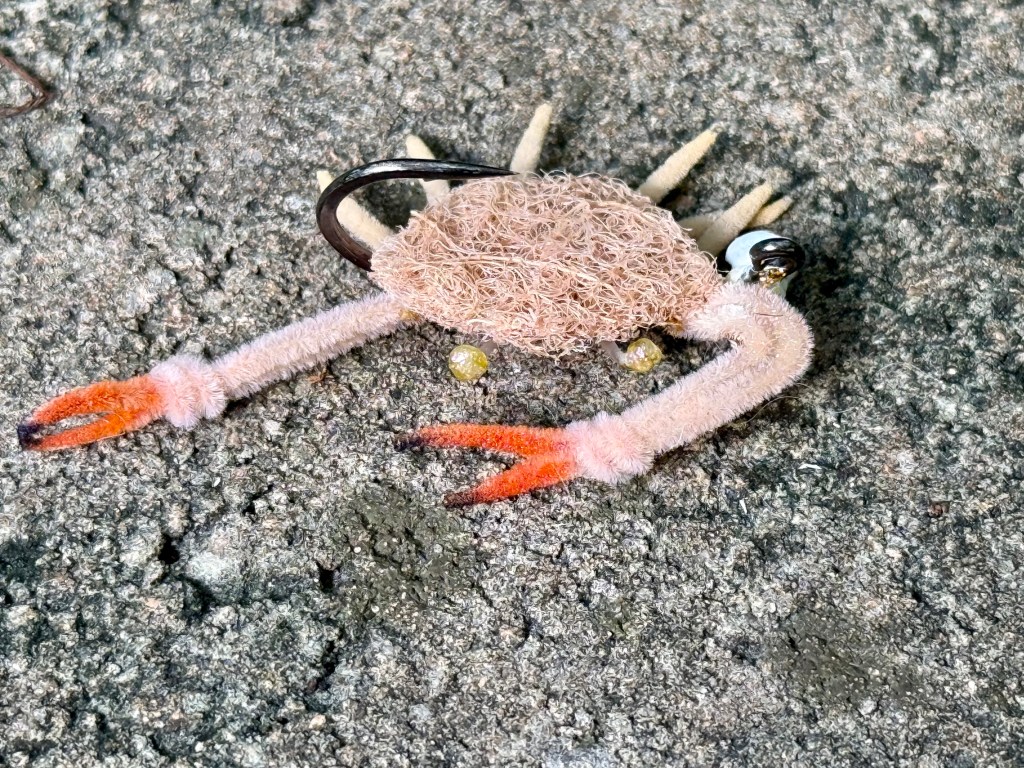
Crab Fly
I’ve been tying a variety of crabby-looking flies in the hopes of fooling a Permit, a big tropical fish that eats crabs but which is notoriously wary, persnickety, and difficult to catch on fly. This fly is a mix of patterns that I adapted from various tyers. The body is cut from a coconut fiber kitchen scrub pad, the legs & claws I made from a fuzzy cord called “ultra chenille”, and the eyes I made from nylon monofilament and sparkly nail polish.
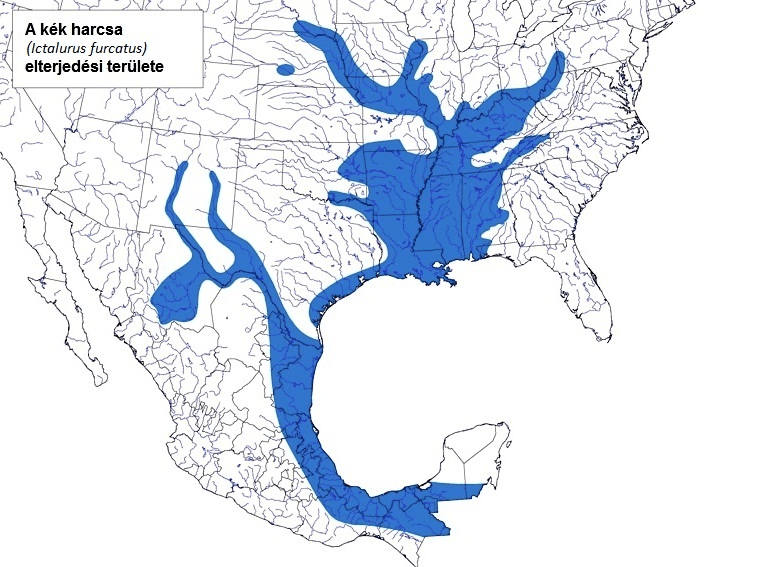
The Blue Catfish (Ictalurus furcatus), is native to the Mississippi Valley, Gulf Coast, and east coast rivers of Central America:
In 1974, the Virginia Department of Wildlife Resources introduced Blue Catfish to rivers on the western side of Chesapeake Bay. The DWR biologists assumed these catfish would remain confined to the freshwater systems. Their distribution along most of the Gulf coast should have been a hint that Blue Catfish tolerate salt water – duh.
Blue Catfish took no time moving into the saltwater and spreading throughout the Chesapeake. In the Bay they grow to over 50 pounds and devour every blue crab, clam, and menhaden in their path. The only good news is that Blue Catfish are delicious.
With fuel prices up, Gray and I took the EV north to visit family and friends, 4577 miles in all.
I squeezed in a bit of fishing, of course. Visiting Gray’s family on the Eastern Shore of Maryland gives me a chance to fish with Jon Shaw, the husband of Gray’s second cousin. We fished off the family farm dock that extends into the Chester River, a brackish tributary of the Chesapeake Bay.
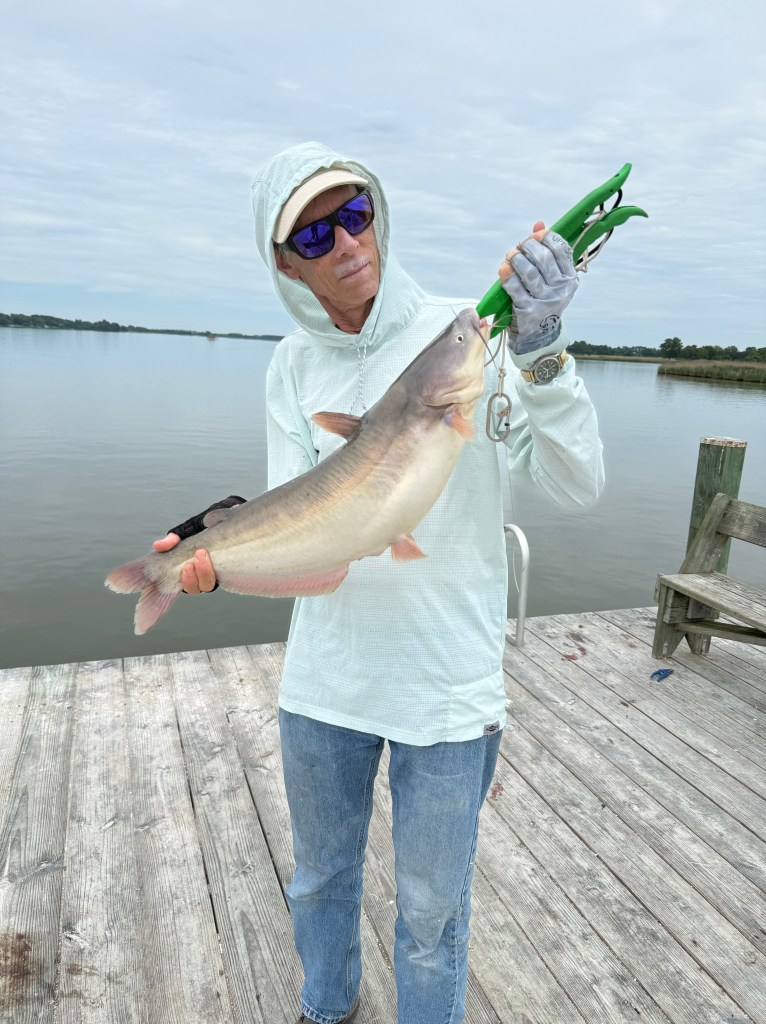
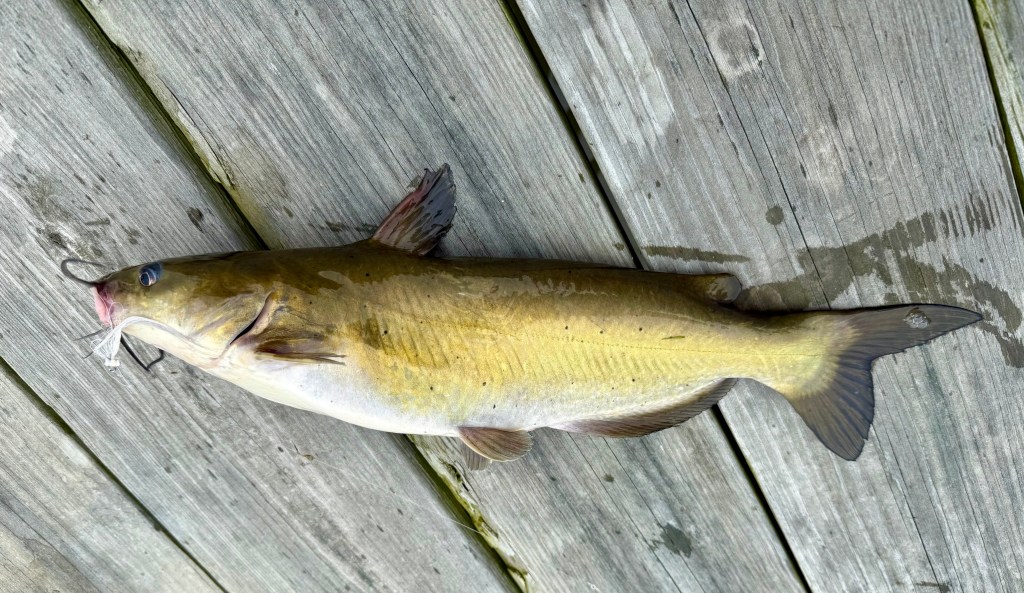
Jon and I bait-fished for a family dinner, finding 6-12 pound catfish off the end of the dock. Our first afternoon together Jon caught four catfish and I caught zero. Hmm.
To catch catfish as well Jon, I realized I’d have to ignore what he says (tie on a heavy leader and a 7/0 or 9/0 circle hook), and do what he does (tie on a light leader and a 3/0 or 5/0 circle hook). The discrepancy between his instructions and his practice should have come as no surprise to me insofar as all fishermen are liars, myself excepted. The second day I rigged my rod like his and did a lot better.
Catfish overflowed Jon’s dinky cooler, so we filleted some on the spot to make them fit.
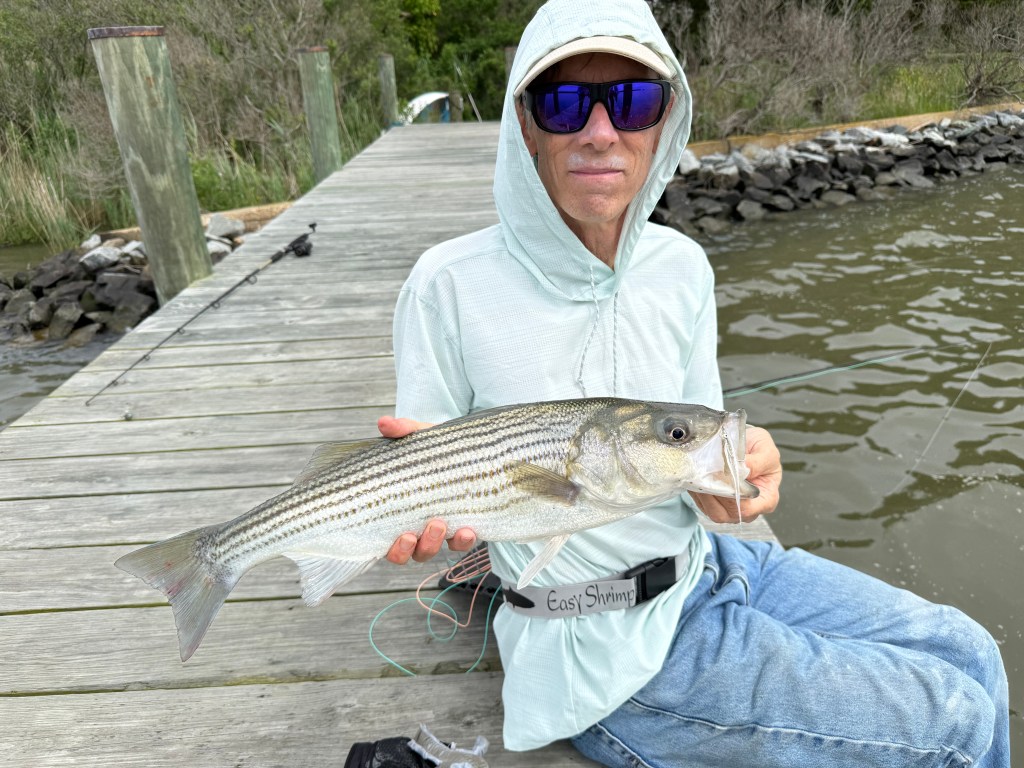
With enough catfish to feed Gray’ cousins and plenty to freeze, I switched to fly fishing. Sitting on the dock near shore, I tied on a favorite snook fly, the gray over white Clouser Deep Minnow. The water swirled under my feet, so I flipped the fly beyond the swirl- nothing – try again – boom. A perfect dinner-sized Striped Bass, known locally as rockfish.
The river was closed for rockfish for six more days of spawning season, so my catch went back in the river to make more of them.
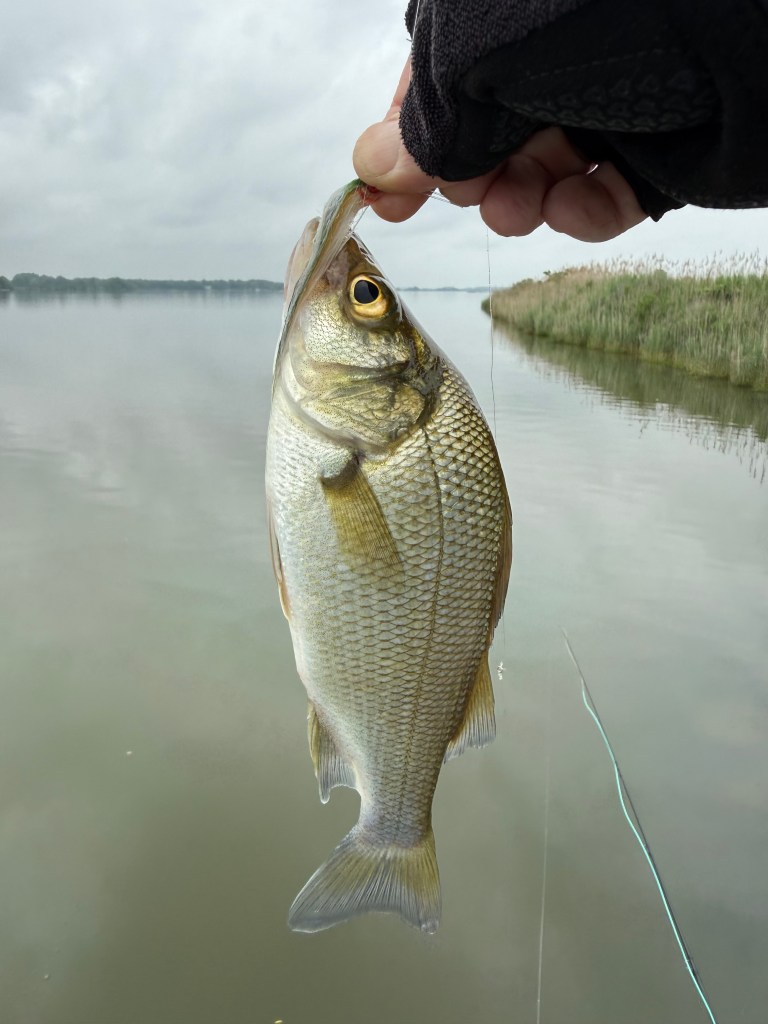
I caught a few little White Perch on fly. They also went back in the river – too small.
Another fish took the fly and fought above its weight, attempting the old run-under-the-dock-and-break-your-fly-rod-or-cut-your-line maneuver. When it flashed bronze instead of silver, I realized it was not another rockfish, but rather a Channel Catfish (Ictalurus punctatus). I’d never taken one on fly. It’s a spirited gamefish.
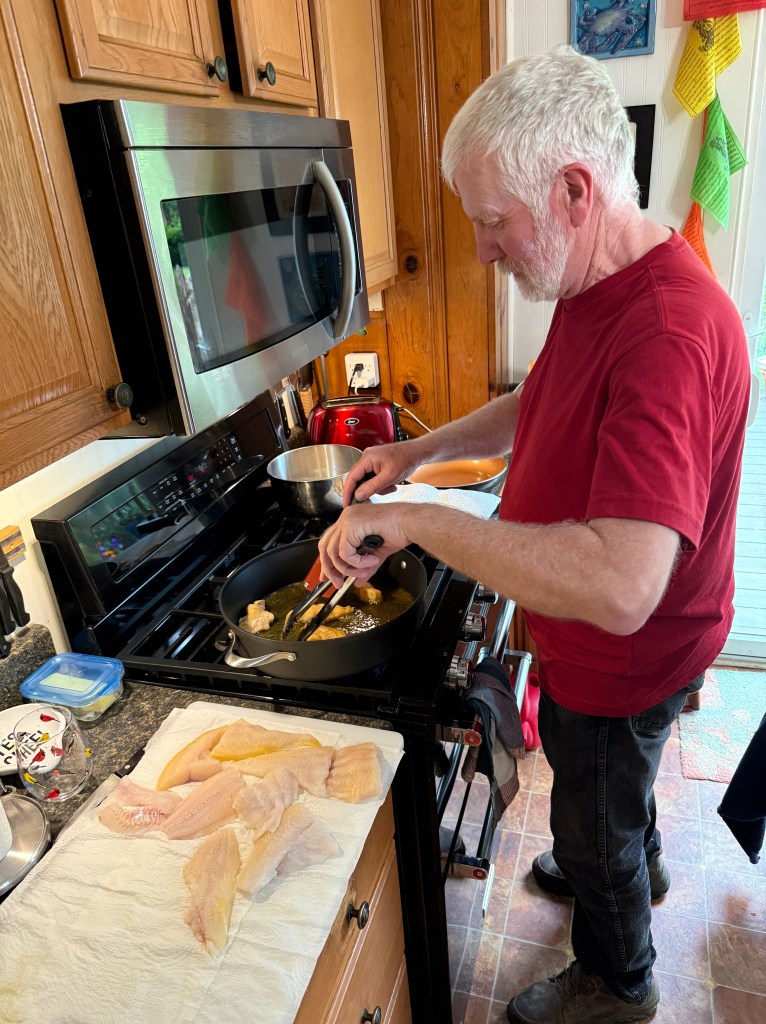
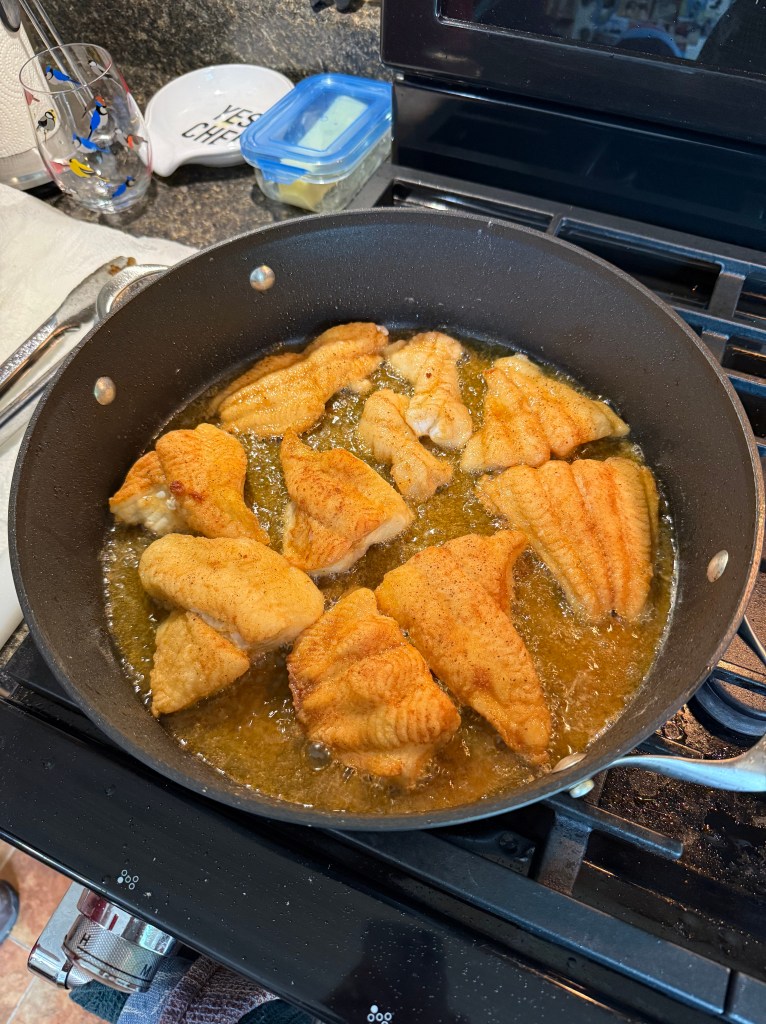
Back at the barn, Jon and I filleted Blue Catfish. The females were full of eggs and the stomach of one spilled a load of Atlantic Ribbed Mussels (Geukensia demissa). The Blue Catfish is mostly head and stomach, yielding one pound of meat for each four pounds of catch. Jon put the ample carcasses out for his resident Bald Eagles and we all had a fine dinner.
It’s the spring of 1995 and I’m onboard the R/V Bellows, anchored off the Dry Tortugas. Beside me is my host and senior colleague, Professor L. Scott Quackenbush. Quack is an expert on the endocrinology of marine invertebrates as well as a crack aquaculturist.
Dr. L. Scott Quackenbush
Our elbows propped on the rail, as we admire the sunset over the Gulf of Mexico. Quack is downwind of me enjoying a smoke, a vice that will take him out three years from now.
“Did I ever tell you about the time we tried shrimp-farming at Turkey Point?”
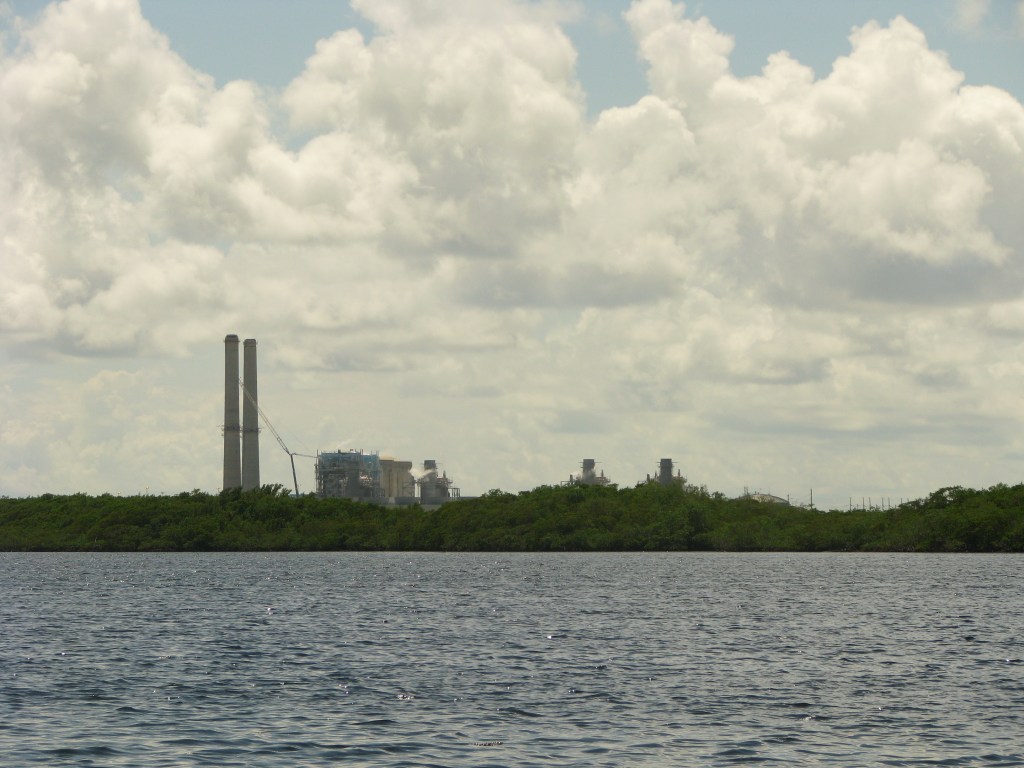
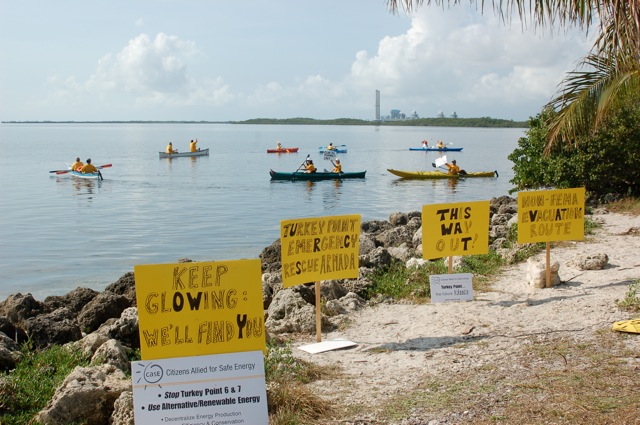
I am all ears. Turkey Point is the site of two nuclear power generators on the shore of Biscayne Bay operated by Florida Power and Light (FPL). When first opened in the early 1970s, the reactors dumped thermally hot water into the bay, scalding everything and causing a massive sea grass kill.
Look ma, no cooling towers!
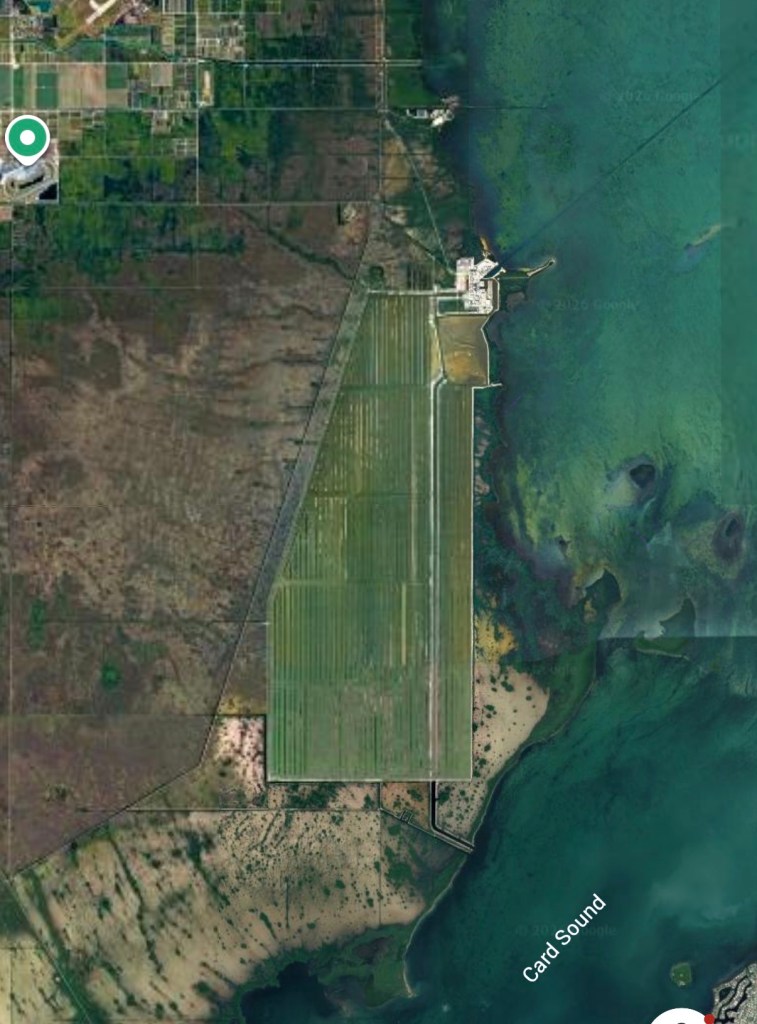
Instead of building cooling towers like those handling hot water in every other nuclear power plant on Planet Earth, FPL cheaped-out and constructed an expansive trapezoidal array of leaky cooling canals. The cooling canals cover 10 square miles of the Southeast Coastal Everglades.
The canals released giant plumes of hyper-saline water into the porous limestone rock beneath them, which expanded outward underground in all directions, including towards the well field that supplies fresh water to the Florida Keys. Most of the local biologists who are not on FPL’s payroll consider these canals an environmental disaster, which I’ll explain more about some other time. This story is about shrimp.
FPL contracted Dr. Quackenbush to determine if they could raise shrimp in the warm water of Turkey Point’s cooling canals.
Quack told me that they blocked off the ends of a couple of canal branches and he stocked them with shrimp.
The shrimp grew and thrived. But, when he harvested the shrimp, they were radioactive.
Nuclear reactors produce radioiodines, though these radioisotopes are supposed to be contained in the reactor vessels. Shrimp concentrate iodine.
“We filled in those canals and buried the whole project, and if you ever repeat this story to anyone, I will deny it.”
(FPL contracts are famous for their airtight non-disclosure agreements.)
* * *
Quack passed in 2008, so I figure it’s OK to retell his story today. Make of it what you will – I do have another witness to the telling.
As I went walking I saw a sign there, And on the sign it said “No Trespassing.” But on the other side it didn’t say nothing. That side was made for you and me.
Contrary to my religious practice, I have been off the water for two long weeks. Bunch of pressing things going on, despite which, my psyche demands TOW (time on water). Rain is predicted for Saturday afternoon but the morning looks good in the western Everglades if I stay south of the fire. The plan unfolds to shirk the day’s assorted social obligations and start the morning fly fishing for juvenile tarpon from my kayak. I’ll play it by ear after that.
I packed the car the night before, bringing a single 7-weight fly rod, a clear-tip intermediate sink-tip line, and an assortment of proven flies that I tied to entice juvenile tarpon. Going “fly or die”.
* * *
FINDING JUVENILE TARPON AFTER A COLD SNAP
A few days back, a friend reported 100 dead juvenile tarpon in my favorite Everglades tarpon fishing area, casualties of the recent cold event. The spot I chose for today, ~60 miles northwest of there, is a brackish canal network dug 20’ deep to excavate fill to create adjacent dry land for buildings. Some people still think building in the Everglades is a good idea. On the plus side, deep water makes a good thermal refuge for manatees and juvenile tarpon during a winter cold snap. I always find tarpon holed up there in the winter and especially when it’s cold.
The general area sees significant fishing pressure, evidenced by snagged fishing lures I pluck from mangrove branches and by the landing net sitting next to a kayak on the shore at a nearby residence. Pressured tarpon are hard to catch, especially on fly, and these particular ones often refuse Mike Connor’s Glades Minnow and Jay Levine’s black micro-bunny, my two best-producing flies for tarpon along the Tamiami Trail.
Water access here is controversial. There’s a public boat launch a mile away, but a clear “NO TRESPASSING” sign is posted on a buoy you’d have to pass to get to the canal network. It’s all public water but I assume someone of authority doesn’t want motor boats shattering the peace in the canal area. Some fishermen told me they were issued a $125 fine plus administrative fees when they were caught on the wrong side of that sign by an officer from the Florida Wildlife Commission.
Florida Statutes Ch 810.011 states that No Trespassing signs must be “…placed conspicuously at all places where entry to the property is normally expected or known to occur.”
When I approach the canal system in a kayak from the tidal creek on other side, the only posted sign says not to feed the alligators. By my read of the statute and the signage, a person can lawfully enter by kayak or canoe from this creek (nix the paddleboard – see below). To honor the implied intent, I paddle solo and fish in silence.
While no sign prohibits entry from the creek, a militia of large alligators guards a shallow area in the creek outflow. It’s such a good spot to snap up a passing fish that only the biggest gators can command a seat at the table. They allowed me to pass hassle-free on prior trips, but I always treat them with respect and get past them quickly lest they think up some excuse to engage.
* * *
THE WEE HOURS
Dream after dream has me looking for a bathroom. At 1:35 am, my conscious brain integrates the repeated hints that I need to get up to pee. Sleep is over. The alarm is set for 3:30 am, but lying awake at 3:05 I give up and start my day. Dress, shave, sunscreen, pet the cat, coffee, granola, Heather Cox Richardson, pack the cooler, and hit the road to cross the Tamiami Trail in the dark.
A dense fog in the Everglades blocks the full moon and lowers my driving speed to 35 mph. Ninety minutes later, I am parked a short walk from the creek mouth. It’s pitch dark. Fifty minutes to sunrise, and twenty to the start of civil twilight.
* * *
GATOR GAUNTLET
Water levels are very low this winter. The gators’ usual ambush spot in the shallow portion of the creek bed is high and dry. Seeing no gator eyes glowing in the beam of my headlamp, I haul my kayak overland in the dark to the rocky exposed creek bed. The eastern sky shows the very first glow of dawn as I launch in the fog.
Dark water explodes into spray around my kayak. The gators hadn’t gone far. Huge bodies, black and cream, churn in front of me and to either side. So much for silence.
Waves subside and I can see the glassy water is dotted with dead cichlids killed by the cold, mostly tilapia. I’m sure the gators have been feasting on them. Just past the gators, foot-long mullet begin leaping into the air and crashing onto their sides. Nobody knows why mullet jump, but I’m pretty confident it’s a courtship display. Fifty yards further, a dorsal fin and tail nick the surface. Tarpon can breathe air and come up to the surface for a quick gulp in a behavior known as “rolling”.
Tarpon are alive and rolling. The morning holds promise.
* * *
FLIES
In very tannic or murky water, tarpon will bite dark-colored flies, but in clear water they prefer white flies. The water today is clear but somewhat tannic, so it’s anybody’s guess what shade of fly will do best. I start with a black baitfish fly that’s been super-effective for tarpon and snook in dark water.
I pull some fly line off the reel and make my first cast in front of three rolling tarpon. Nice to have my right arm working again after four months of physical therapy for a torn muscle in my rotator cuff.
The tarpon ignore this black fly over the next dozen casts. That means they won’t take Jay’s black micro-bunny either. I switch to a white micro-bunny fly. They like that one better, but not enough. They nip and pull its tail, “short-strikes” in fly fishing parlance. I begin counting short strikes.
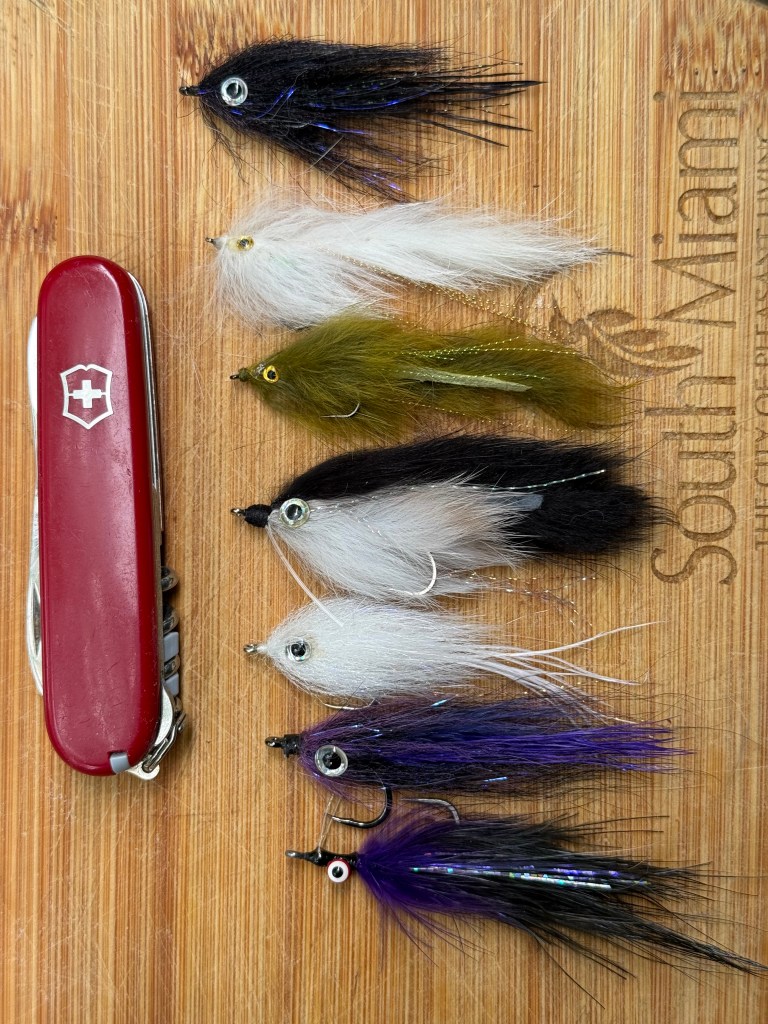
Since they don’t want black or white, how about olive? I try an olive micro-bunny. Nothing. Black & white bunny? Nope. White baitfish with swishy peacock herl tail? Nope. Black & purple tie of Paul Nocifora’s BMF? It gets a bunch more short strikes, but no eats. I see them charge the fly, rolling onto their silver sides to rip off bits of the BMF’s purple tail, but they don’t want to eat it, even after I snip off the weed guard. How about a black & purple tie of Chico Fernandez’s Marabou Madness, weighted to get down deeper? Nope.
Seven proven tarpon flies that did not catch tarpon today.
I have been on the water for the best two hours of the day. I have pitched a hundred casts at rolling tarpon, swapped through seven flies, two of which received 13 short strikes between them but zero eats. Mangroves lining the canals have been more eager than the tarpon, grabbing my flies on the errant backcasts. My newly rehabilitated rotator cuff is starting to complain.
I suppose it’s possible the tarpon, though plentiful, just won’t bite today.The water feels coolish but not cold, maybe 68°.
Not catching fish is hardly the worst thing on a spring morning in the western Everglades. A bull manatee is swimming back and forth underneath me, probably curious about my kayak. Chortling songs of Purple Martins grace the air. Mullet sploosh nonstop under the watch of Great Blue Herons waiting in ambush on the odd bit of open shoreline. Anhingas and cormorants dry in the trees overhead as they digest their breakfasts. Alligators rise and sink as I pedal-paddle past.
* * *
THE DEVIL’S DAUGHTER
Master fly designer Drew Chicone of Ft. Myers publishes an email newsletter with detailed instructions for tying his more successful fly designs.
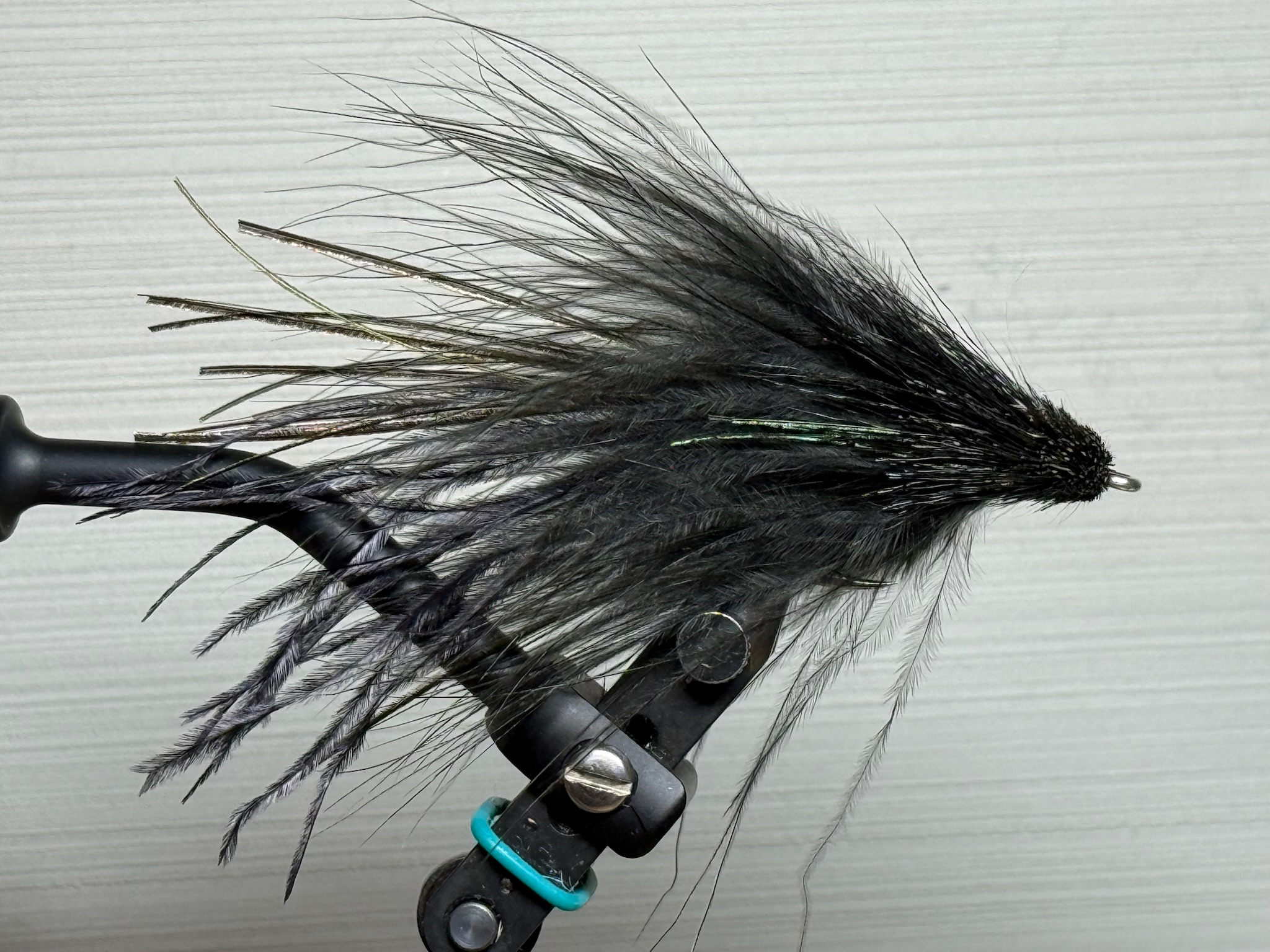
Drew invented “The Devil’s Daughter”, a big black fly for targeting those overfished snook and juvenile tarpon that have wised to every fly in the box. It’s a complicated tie as saltwater flies go, combining shimmering peacock herl, swishy ostrich herl, and fluffy marabou feathers into a pulsating body, with a head of spun black deer hair and peacock herl that displaces water as the fly moves. The fly is light for its size, lands softly, wets quickly, swishes enticingly, and pushes water to announce its passage. I had tied one and used it only once, but it caught a 40 pound canal tarpon.
Devil’s Daughter, freshly tied and before being gnawed by a lot of tarpon.
This fly is in my collection today so I throw it in front of the rolling tarpon and move it through the water, mostly steady with tiny twitches to make it quiver. The fly stops and I give the line a tug…
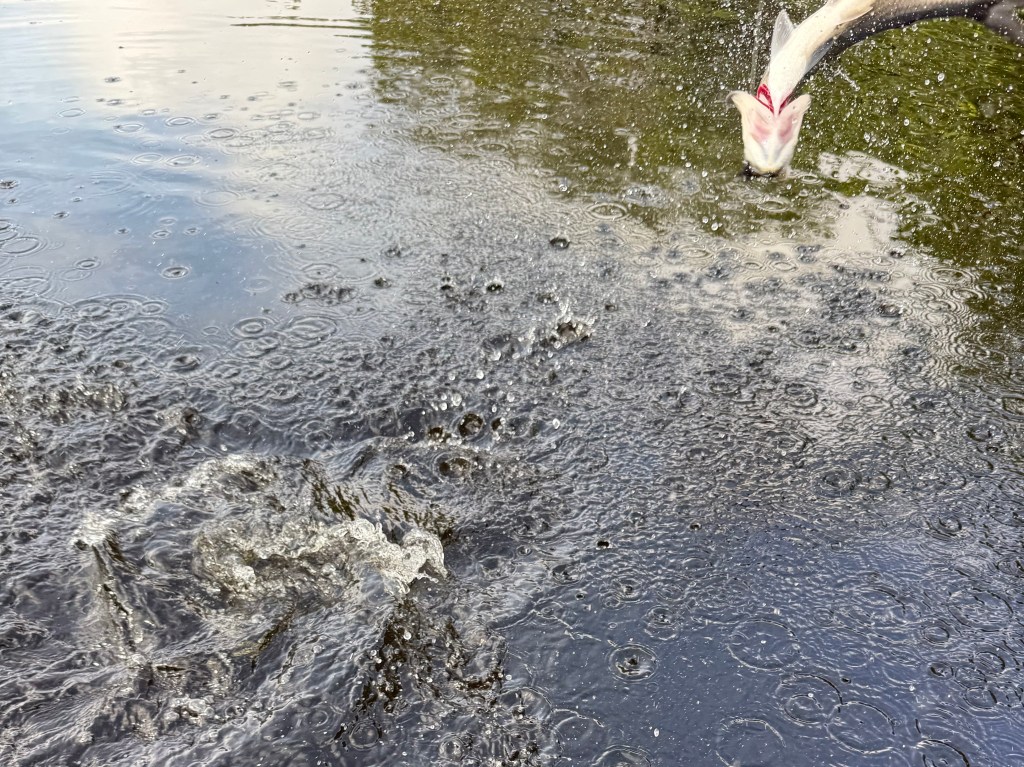
Line rips out of my hand and screams off the reel. I take back line and a five pound tarpon goes airborne. They always do and it’s always a splendid show of athleticism.
The pink and lavender iridescence leaves me awestruck.
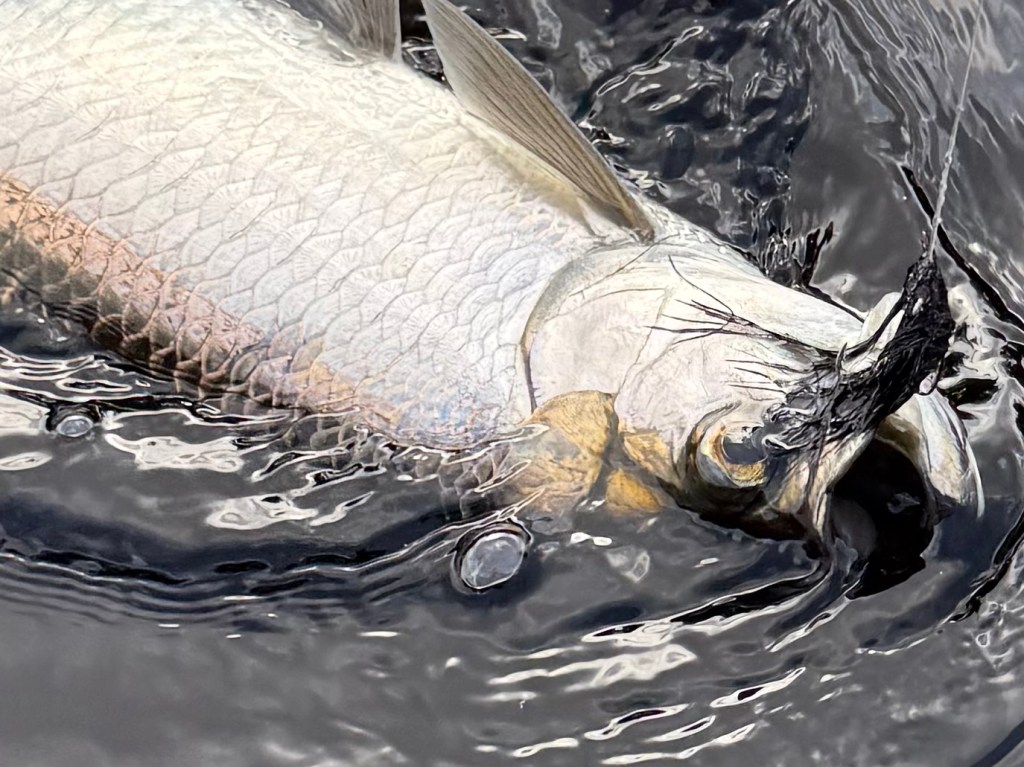
Over the next two hours I catch and release eight tarpon ranging from 3 to 10 pounds. Two manage to toss the fly and six have to be unhooked in the net.
After being unhooked, this ten pound tarpon chose not to stick around for the photo op.
Expert wisdom has it that the fly design matters much less than how you move the fly in the water. True enough, but this morning’s fishing success has hinged on one black fly designed by Drew Chicone. Both times I’ve fished it, a third of tarpon contacts resulted in hook-ups: two nips then an eat. Heck of a fly, Drew.
* * *
The sky opens up as I pull into our driveway. I could use a nap.
One last nod to the enduring spirit of Woody Guthrie. Roll on sweet tarpon, roll on.
It took a week, but the Arctic blast freezing tootsies across the US finally made its way to Miami on Saturday night, dropping to 34°F by dawn Sunday.
Most cold fronts stall before reaching South Florida, so our exotic people and critters are not adapted to temperatures below 50°F.
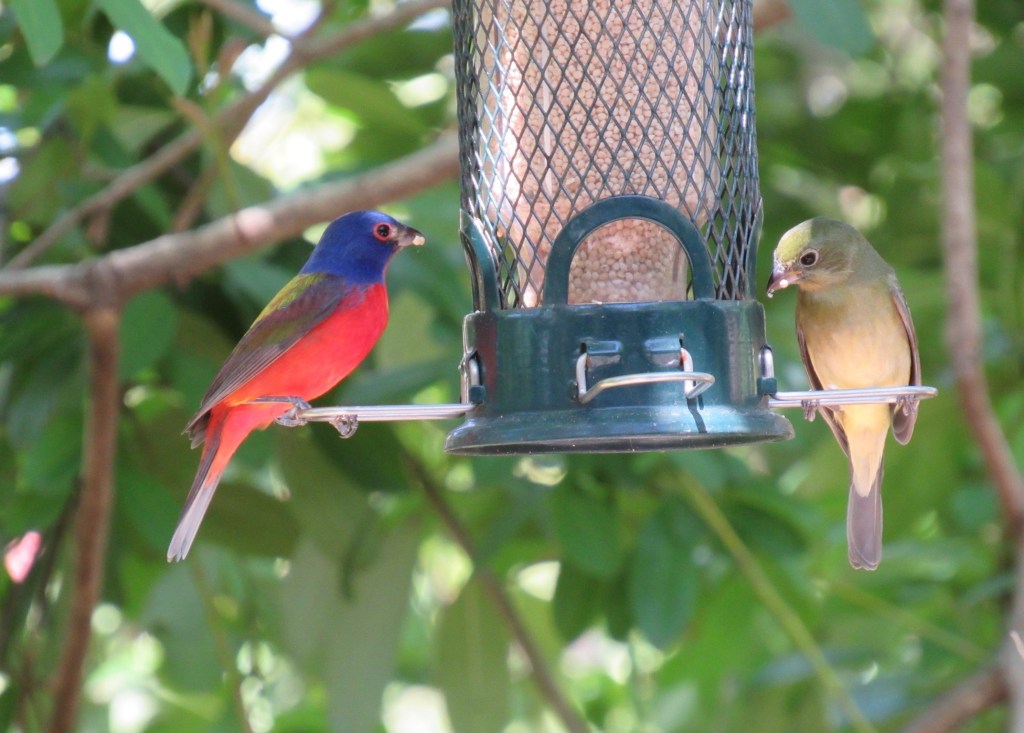
A chill like this brings Painted Buntings into our bird feeders and moves the manatees out of Biscayne Bay and into the urban canals.
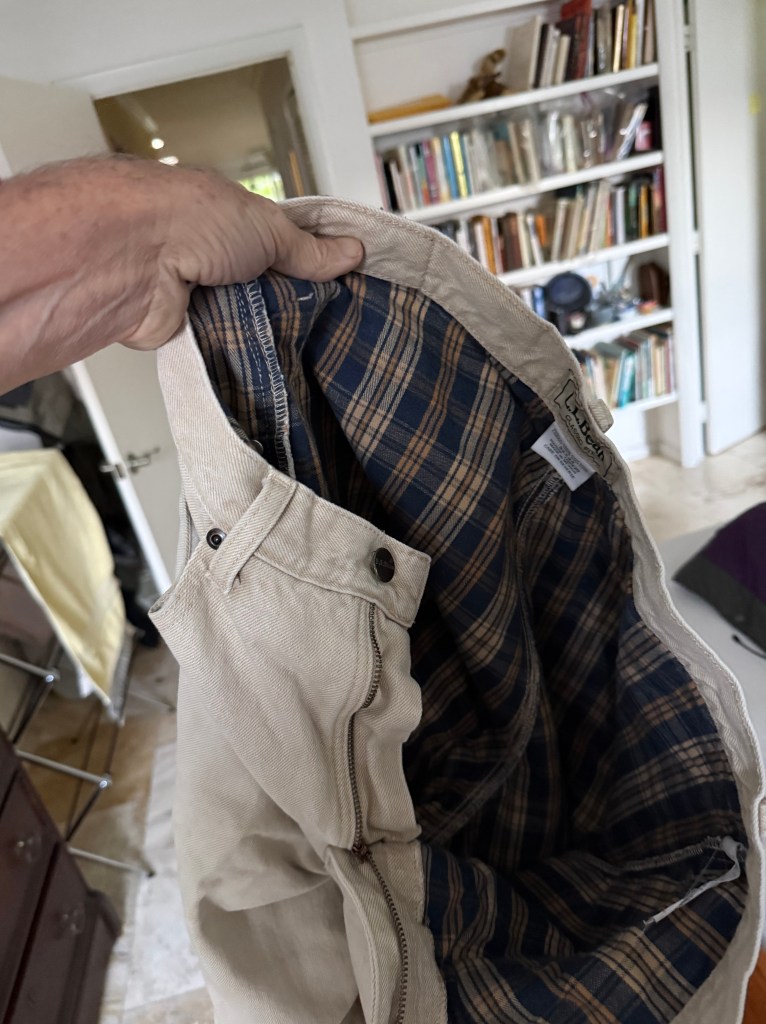
Displaced northerners walk around shouting “Yes! Yes!” Teenage girls across Miami break out the boots with the fur. I unearth the LL Bean flannel-lined jeans and my 40 year old fleece jacket, recently refurbished by Patagonia at no charge. Everybody else wearing a too-thin jacket mutters profanity beneath their frosty breath.
LL Bean flannel-lined jeans. Love ’em!
The long, hard freeze of 2010 clobbered our native bonefish, snook, tarpon, and shark populations. A hard cold snap also kills-off many invasive exotic tropical fish and reptiles, but never gets them all.
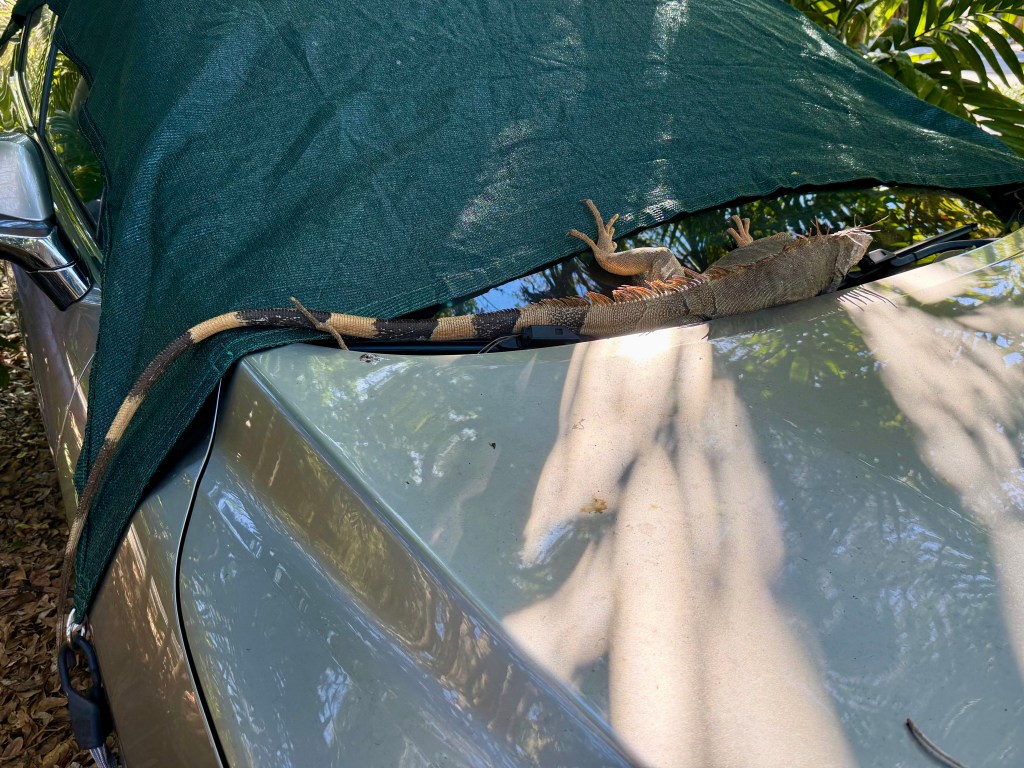
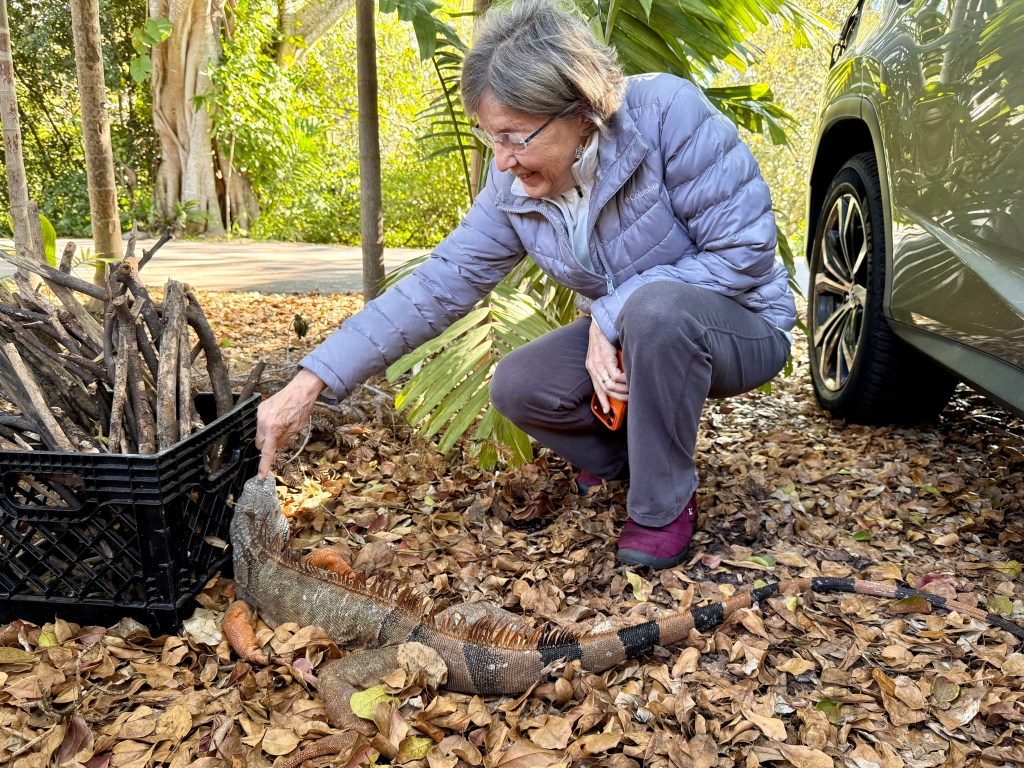
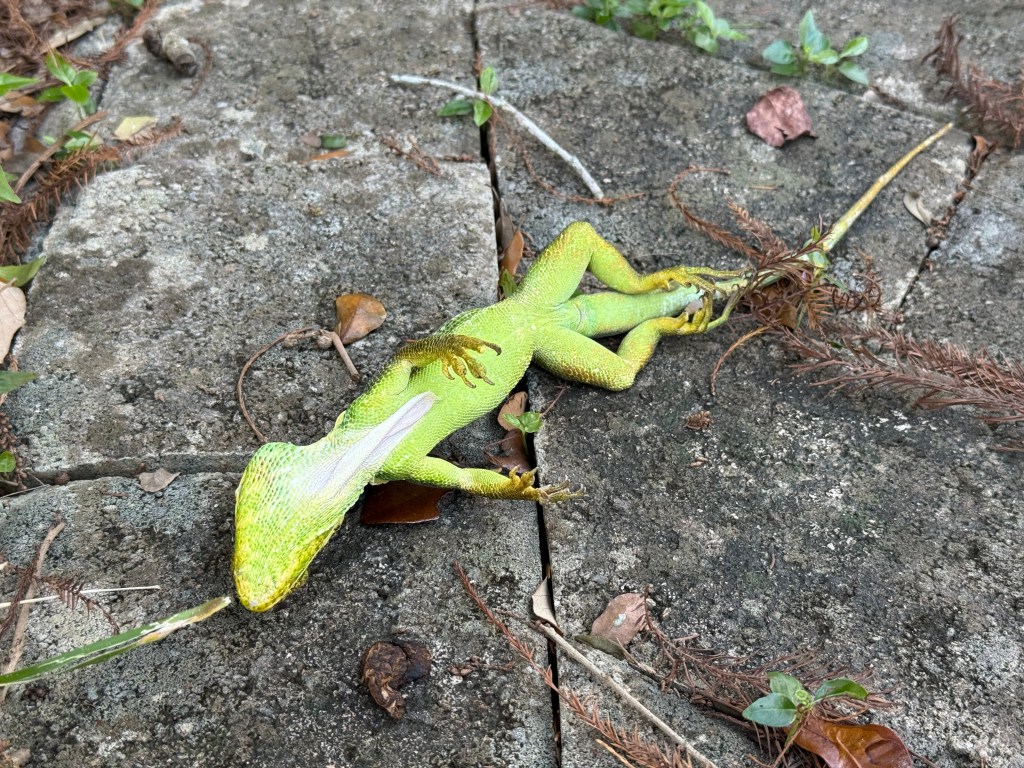
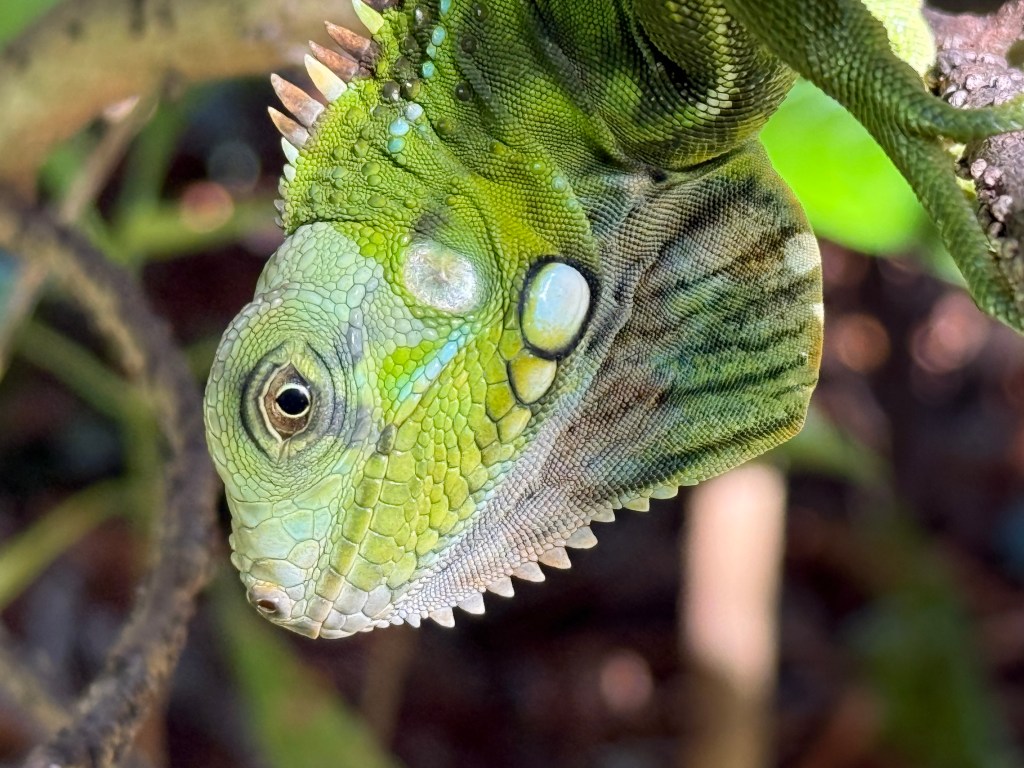
When the temperature drops below 40°F, local news organizations issue Falling Iguana Alerts. The Falling Iguana Alert is kind of a joke down here, except it’s a real thing. All over our neighborhood, fallen iguanas littered the ground.
This Iguana fell onto the windshield of a neighbor’s car.This one made it all the way to the ground.
The bigger they come, the harder they fall – neither iguana in the photos survived. Had either of these bad boys landed on someone walking their dog, it could have done some damage.
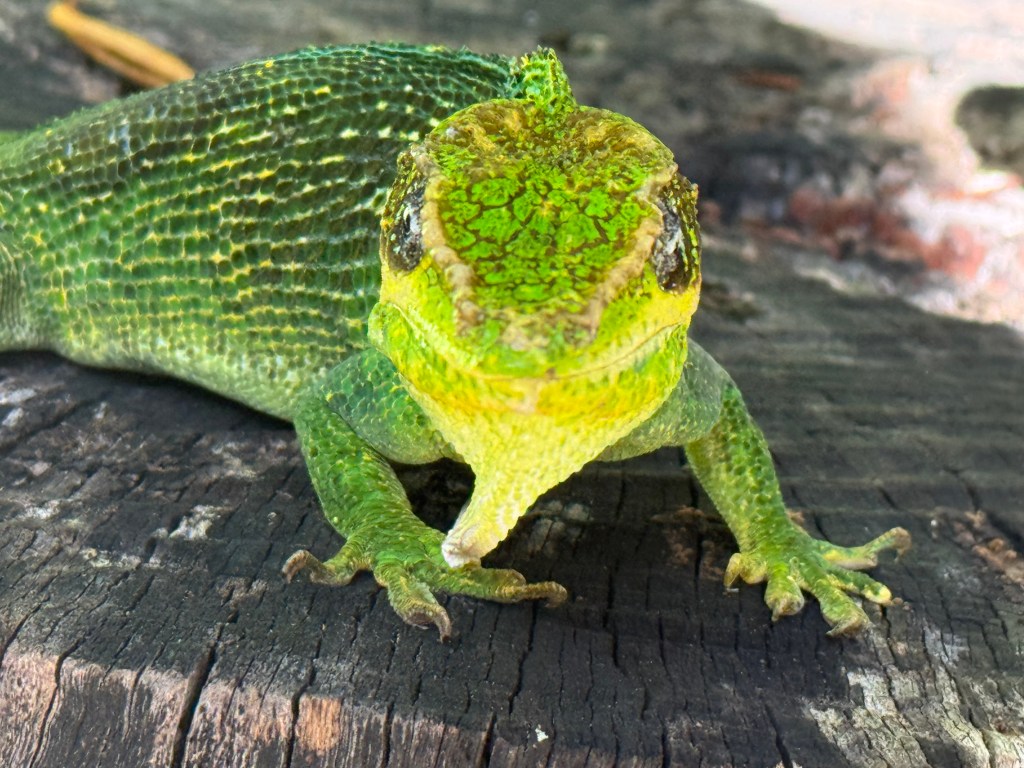
Don’t be fooled, this frigid Cuban Knight Anole is not dead.
A Cuban Knight Anole fell onto the patio near our backyard pond. Good-intentioned folks who don’t know better sometimes bring a cold-stunned Knight Anole indoors to warm it up. Remember the velociraptors that chased people around the lab in Jurassic Park?
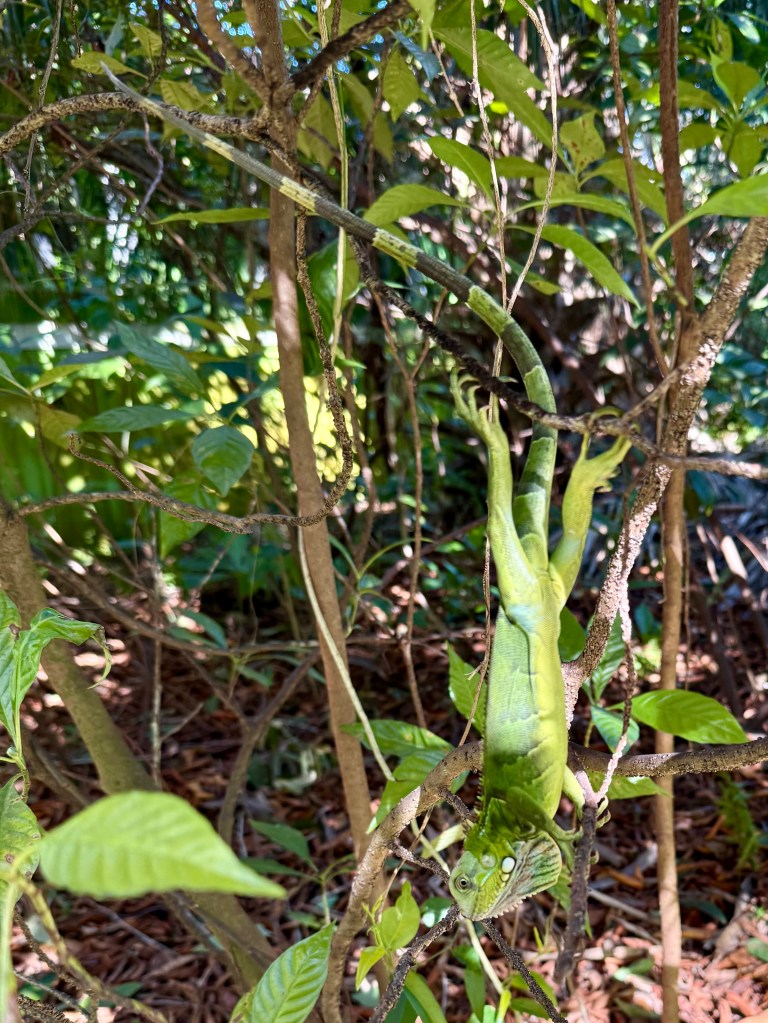
I moved Señor Knight Anole to a sunny spot by the front patio and he took care of the rest on his own.This little iguana only partially lost its footing and was found hanging upside down in a bush outside our front door.Cute little guy, huh?
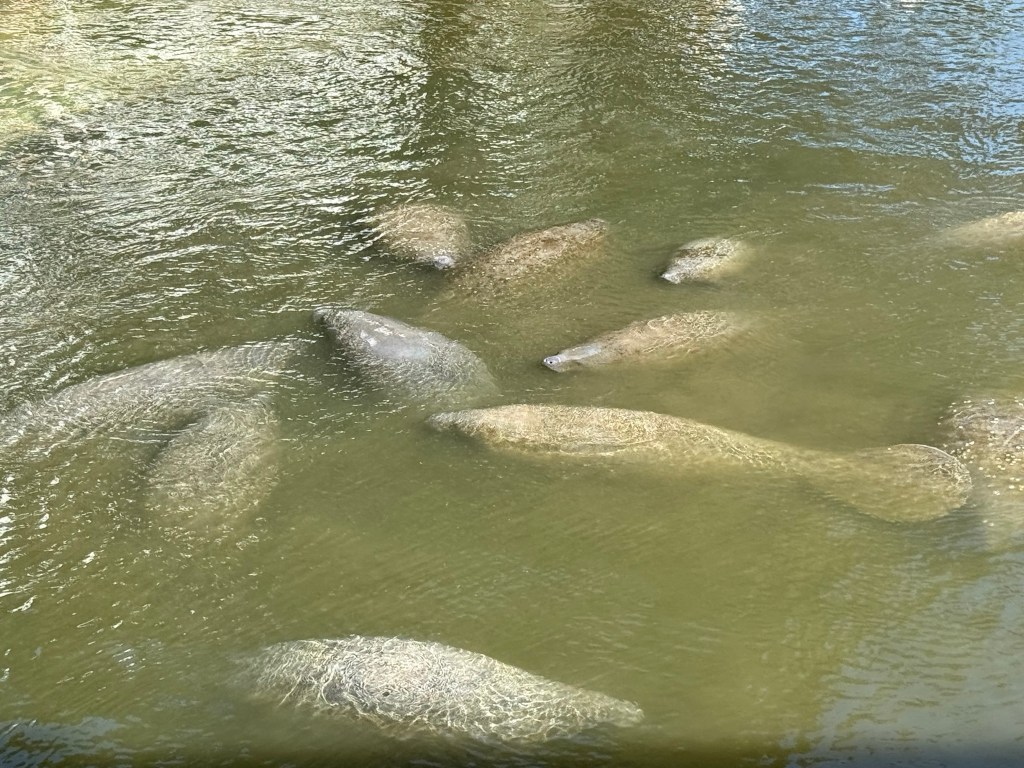
In the afternoon, Gray and I bundled up and biked over to check on the manatees at a nearby marina on US 1.
I counted 31 altogether. One big male kept rolling onto his back and waving his flippers in the air.
Several bulls were quite frisky.
It’s dropping into the 30s again tonight, perfect weather for snuggling around an outdoor fire.
Vetoed. Both Gray and our neighbors agree that it’s too cold tonight for an outdoor anything. Sheesh. Somebody I know will be getting flannel-lined jeans for Christmas.
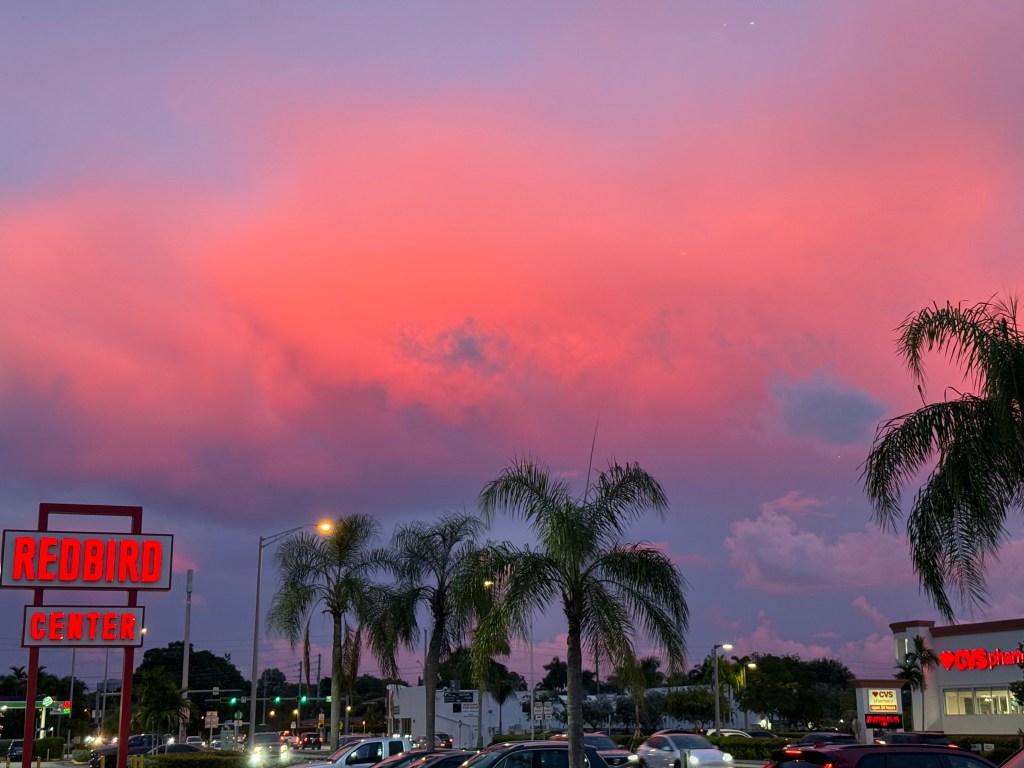
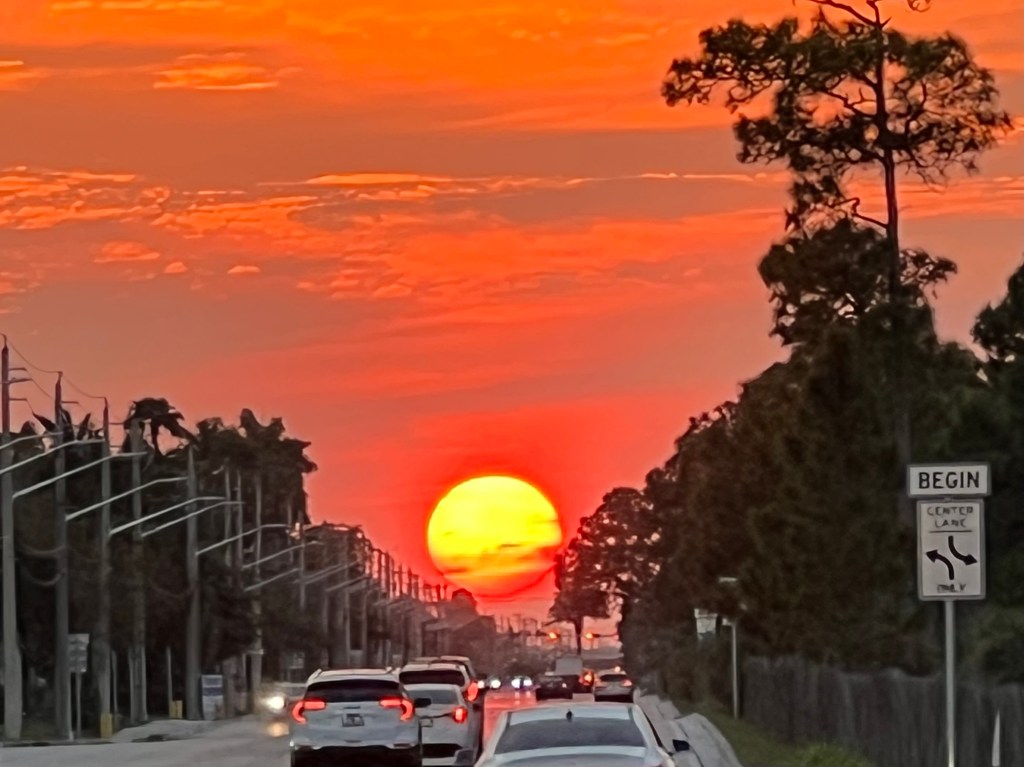
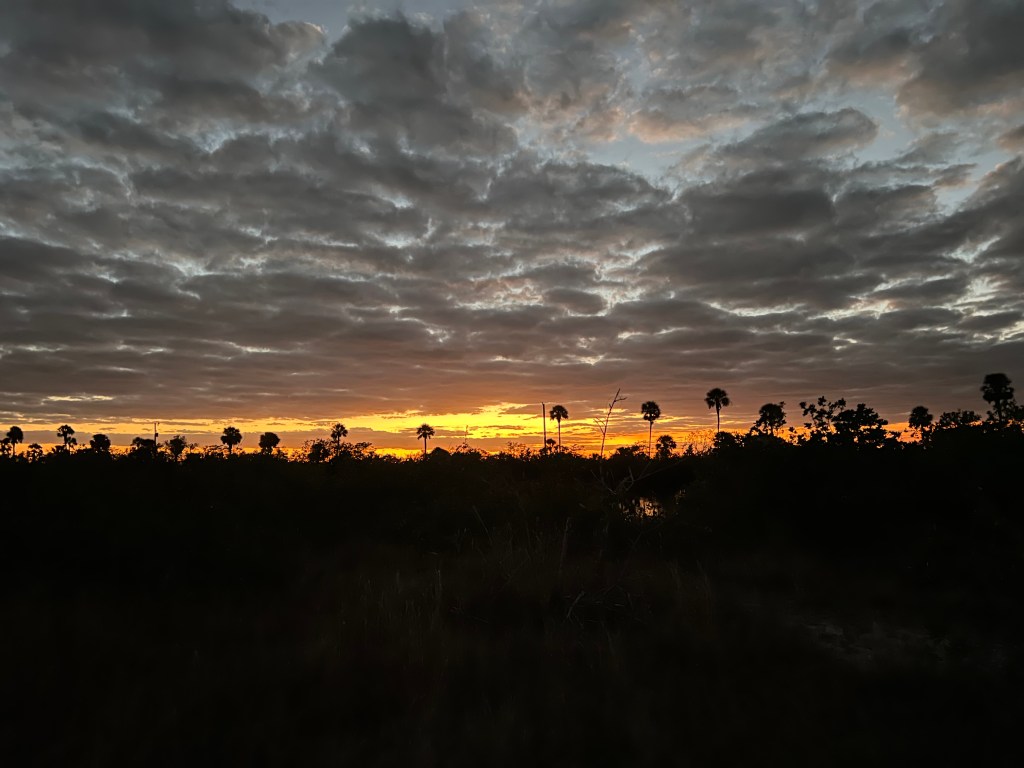
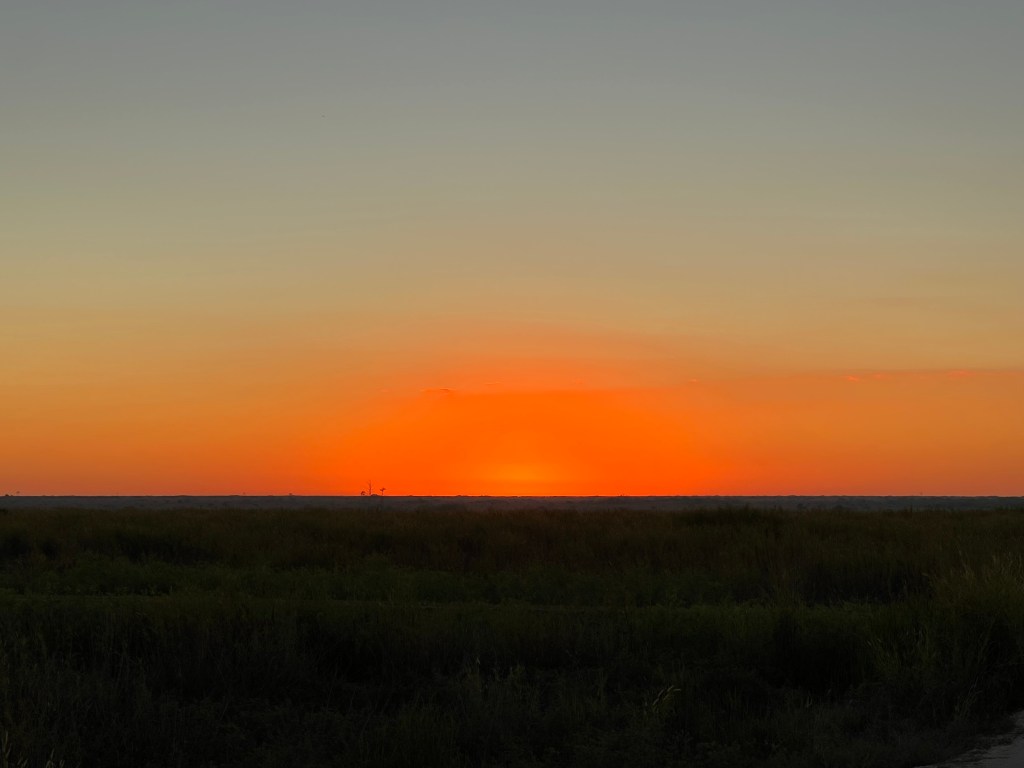
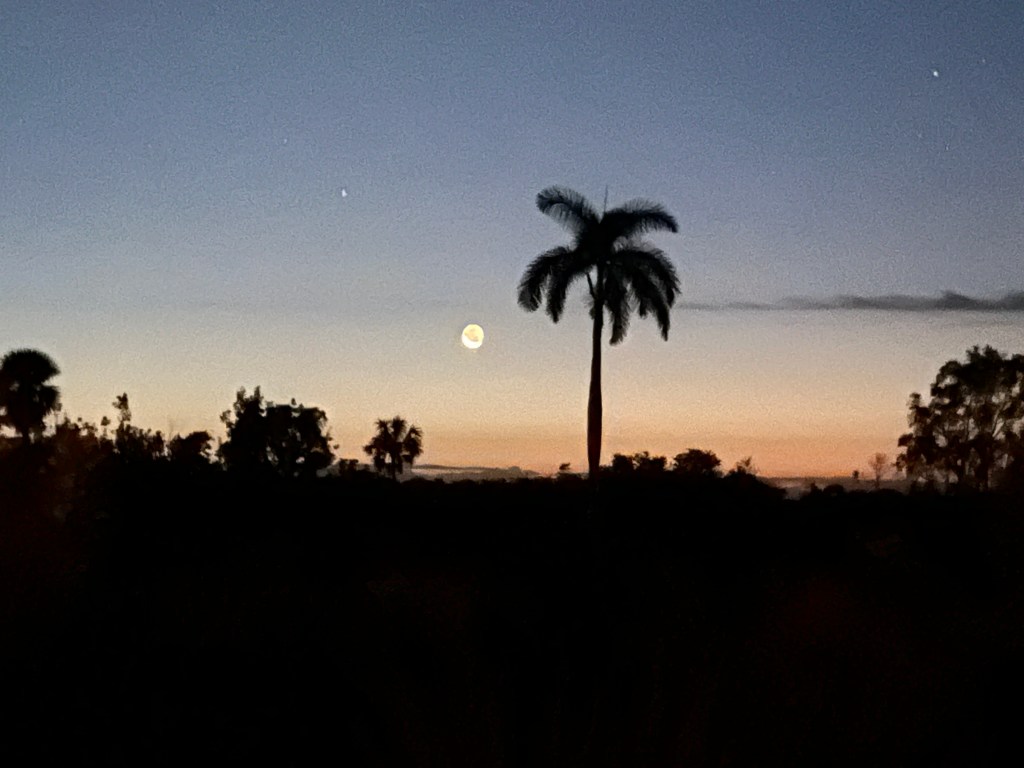
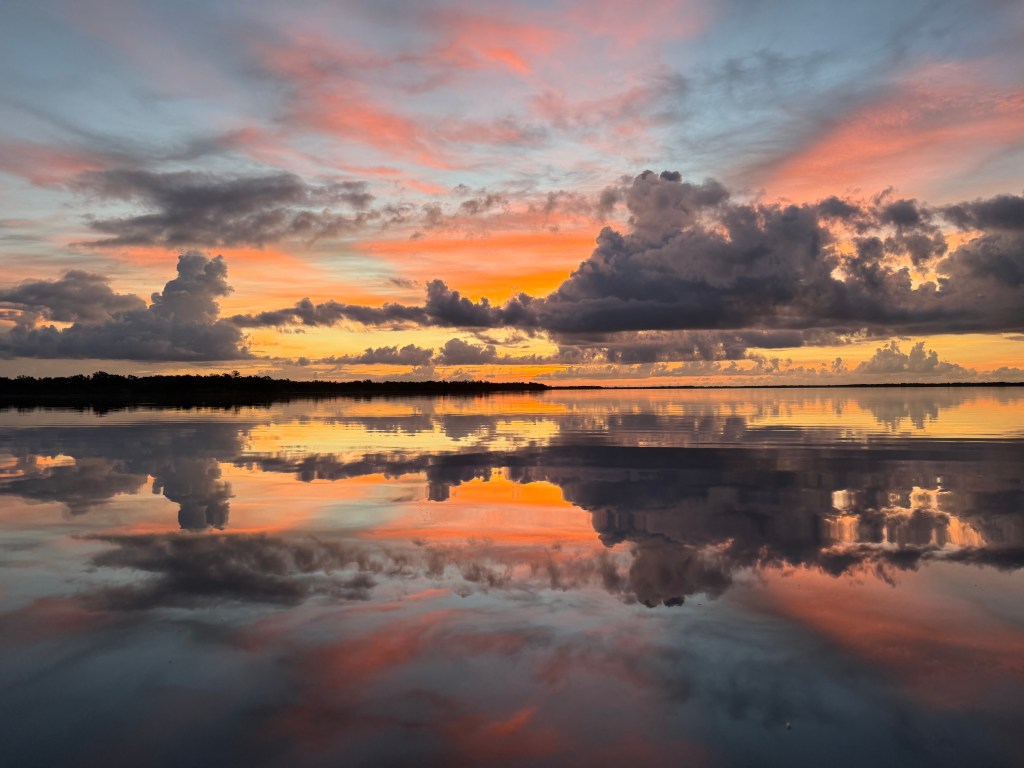
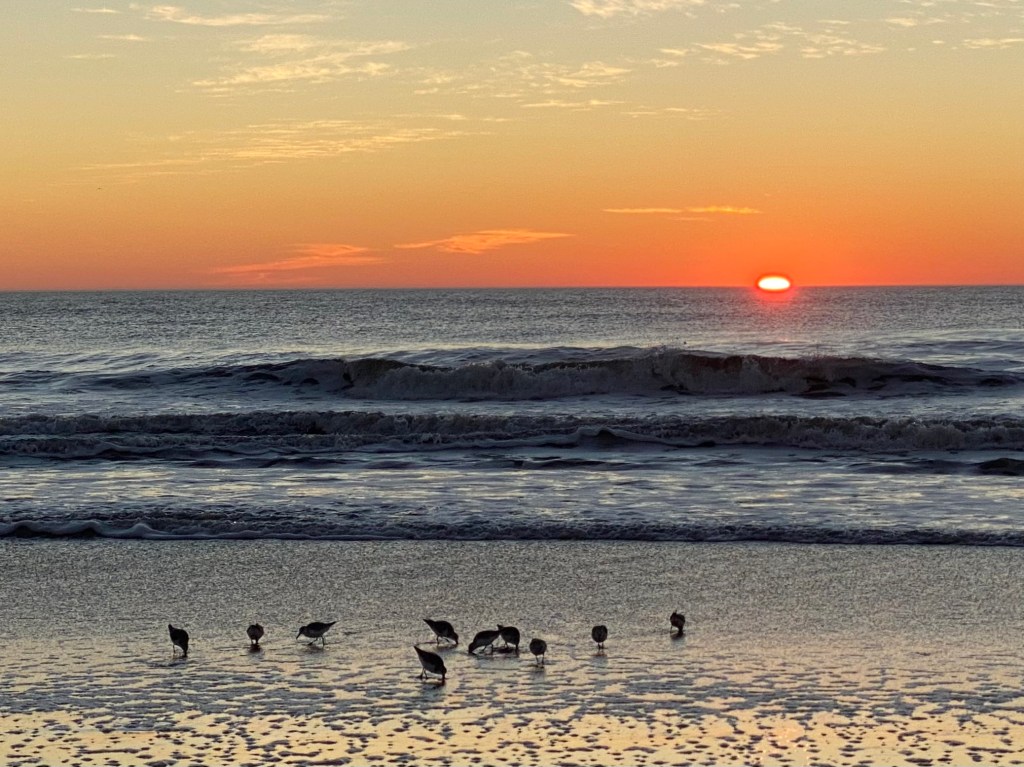
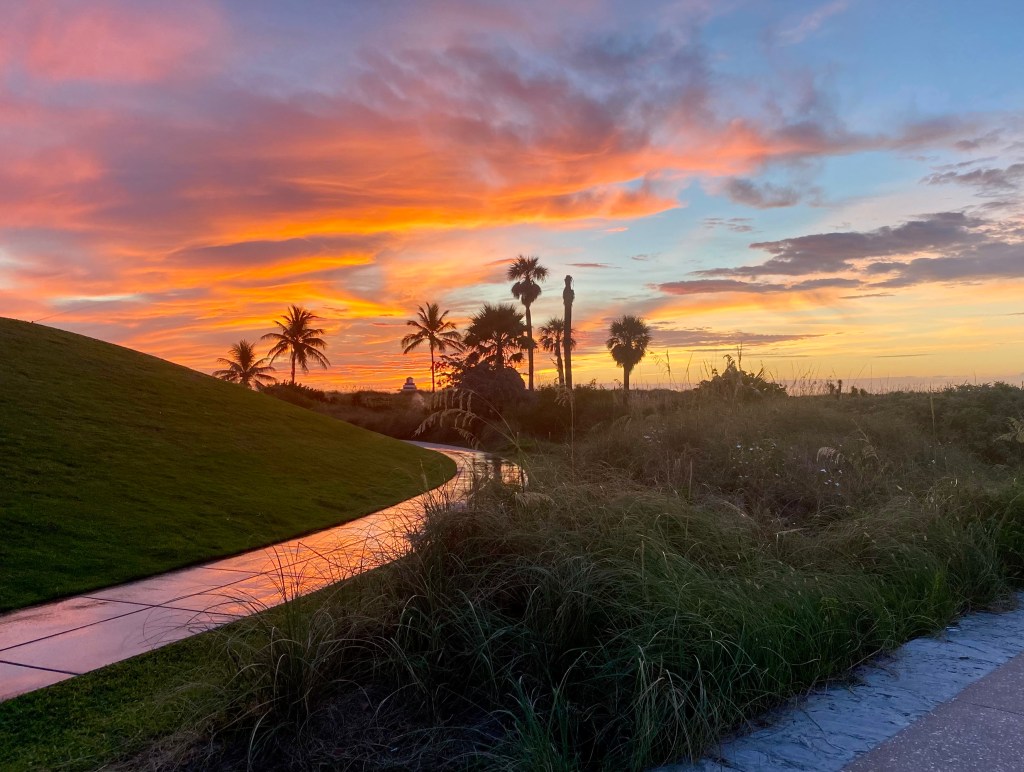
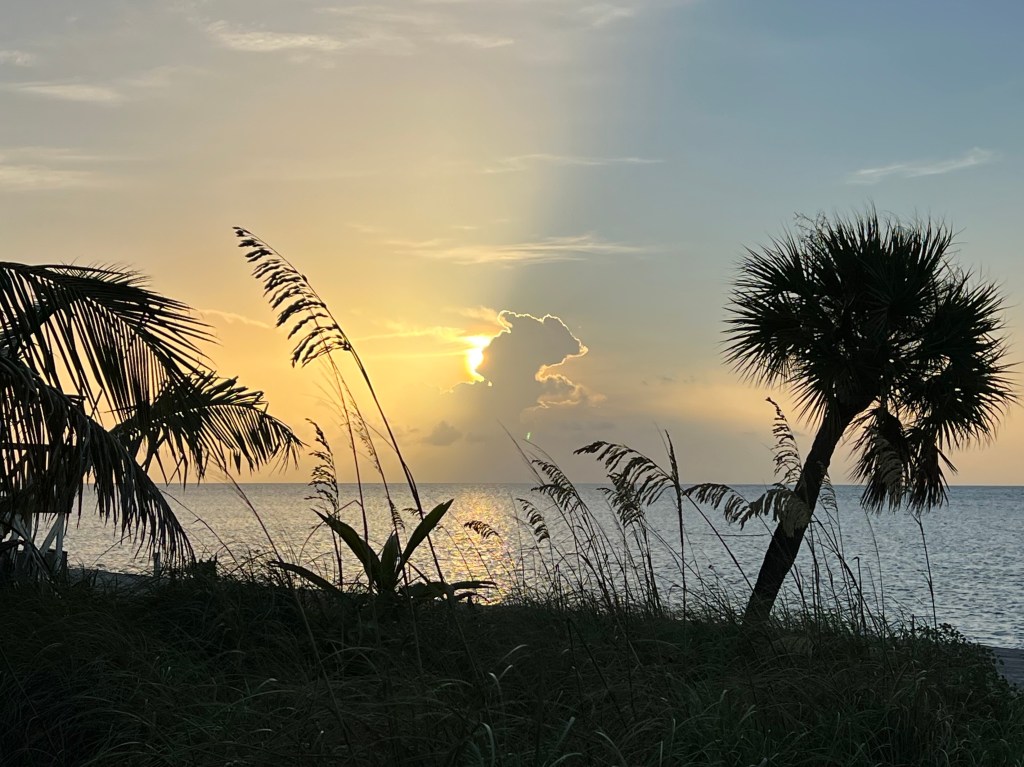
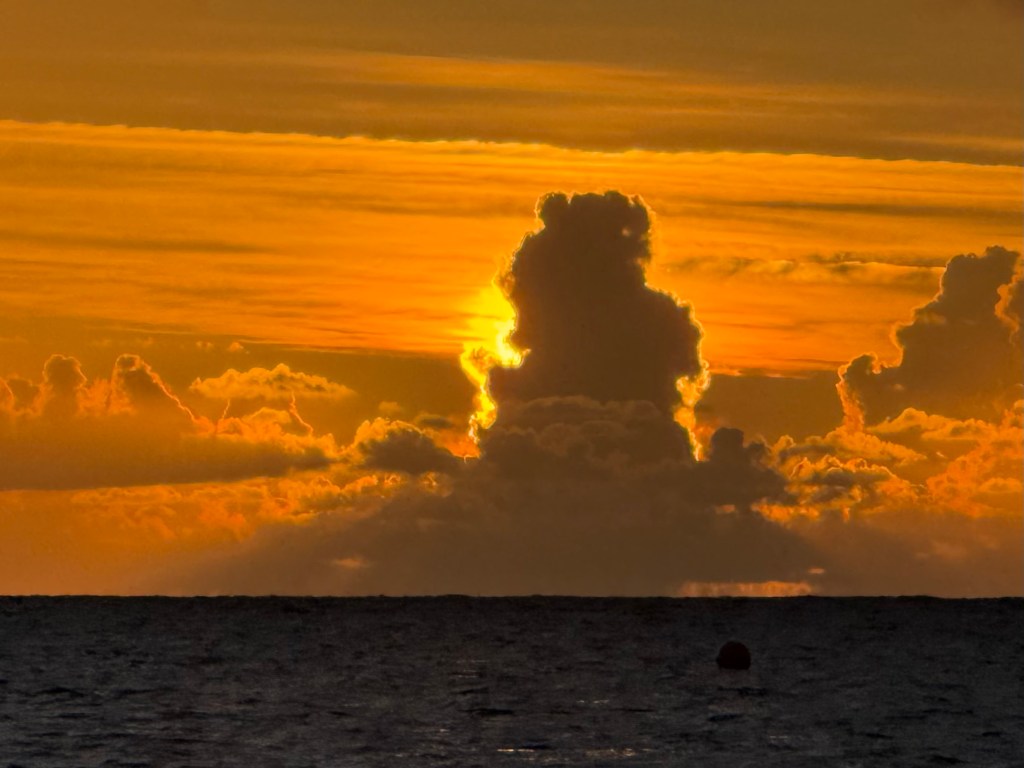
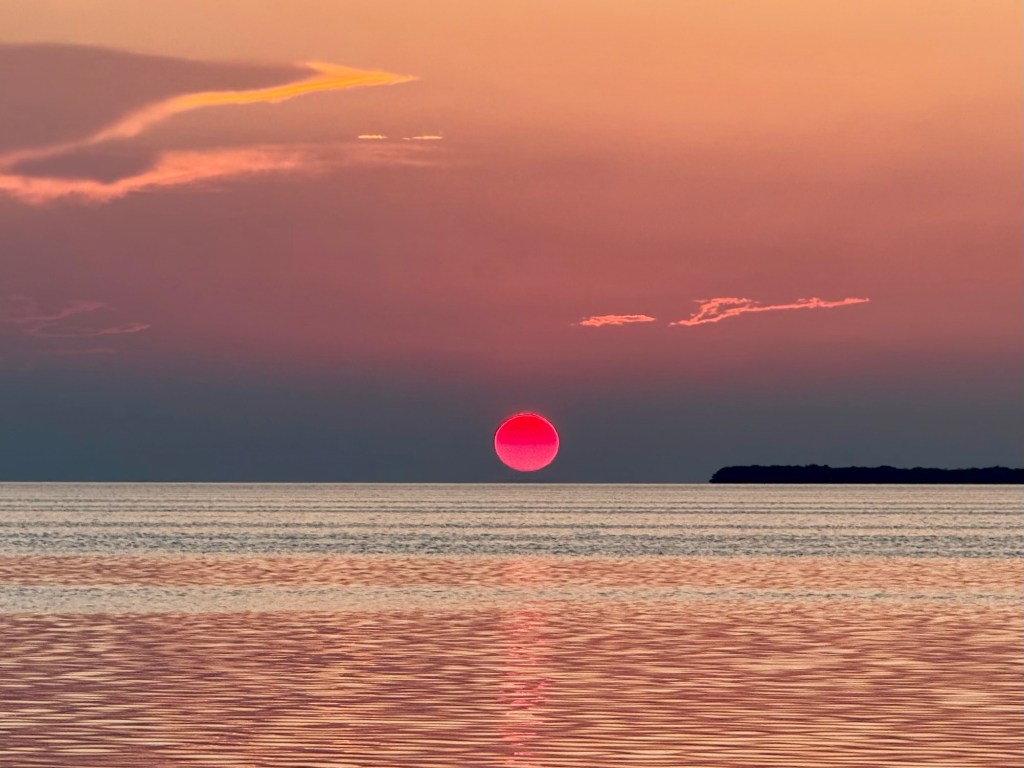
Dave Barry once noted that he’d seen more spectacular sunsets in his first year in Miami than his entire life in Philadelphia. Having an iPhone in my pocket helps to illustrate his point. Sunsets are splendid, though as a fisherperson, I’m partial to sunrises.
Dusk
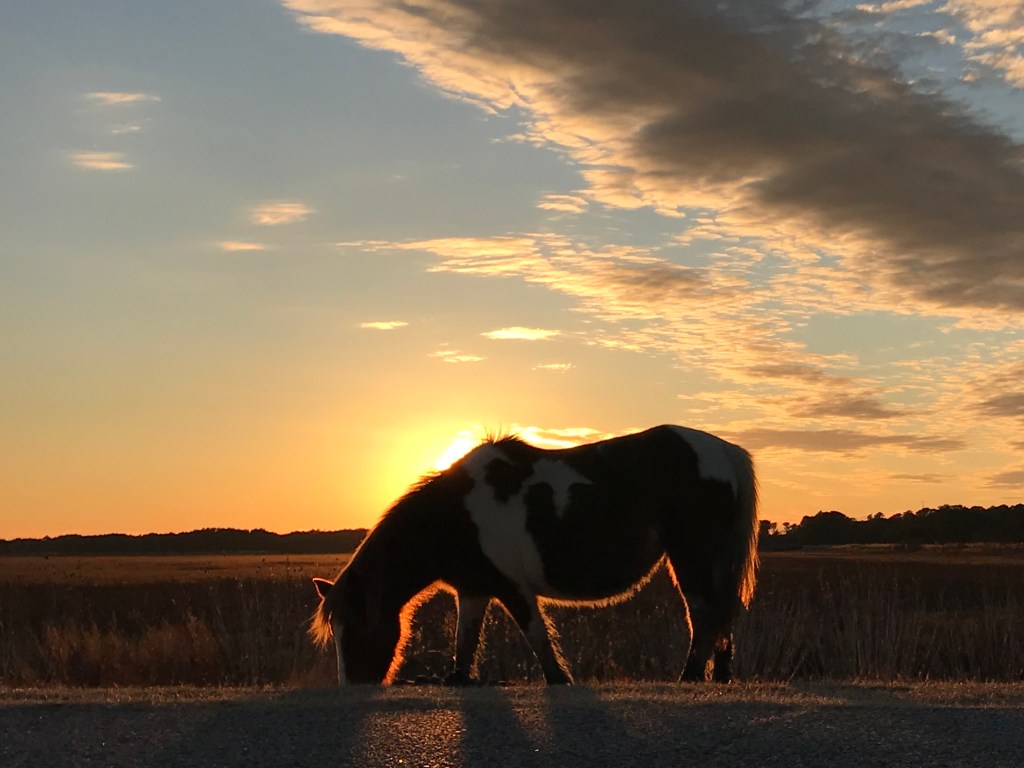
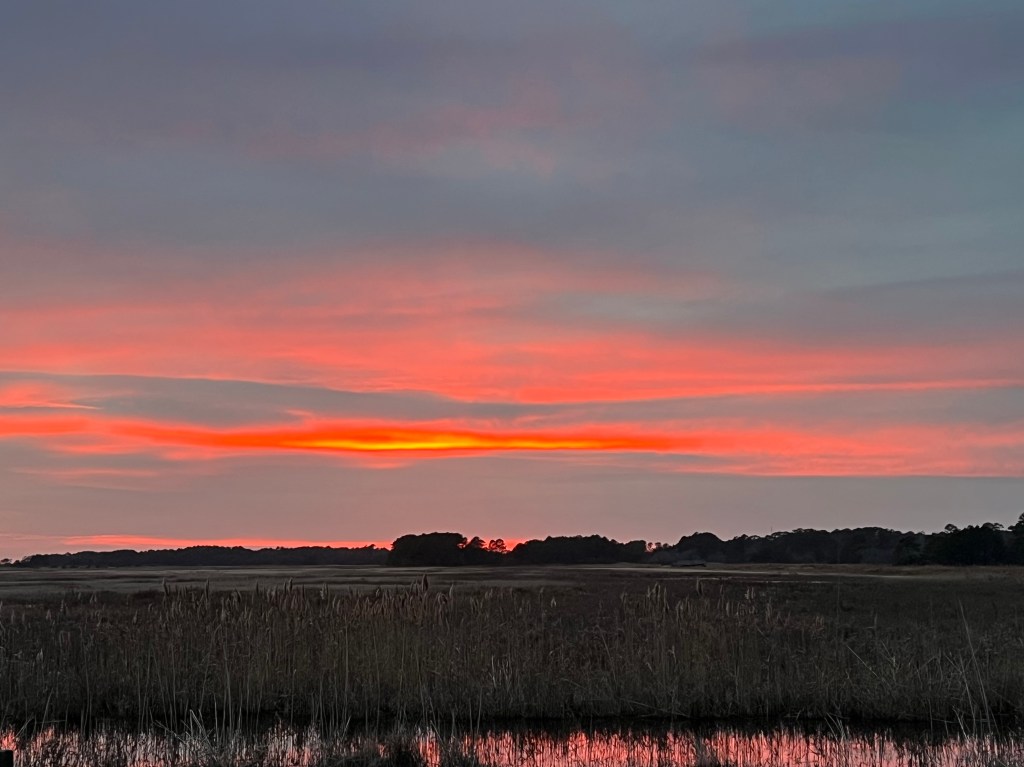
Wild pony, Assateague Island, VAAssateague Island, VASpring equinox, Southwest Miami-Dade County, FLTarpon rise (lower right), Ochopee, FLWomenfolk on Rabbit Key, Everglades National ParkOchopee, FLEast Everglades, Miami
Dawn
Fly fishing at the start of civil twilight, West Lake, Everglades National ParkTwo planets and a moon, Everglades National Park entrance roadWest Lake, Everglades National ParkAssateague Island, VASouth Pointe Park, Miami BeachCrandon Park, Key BiscayneKey Biscayne, FLLittle Duck Key, FLPalm Key, Everglades National Park
P.S. Last sunset of 2025
Assateague Island, VA.
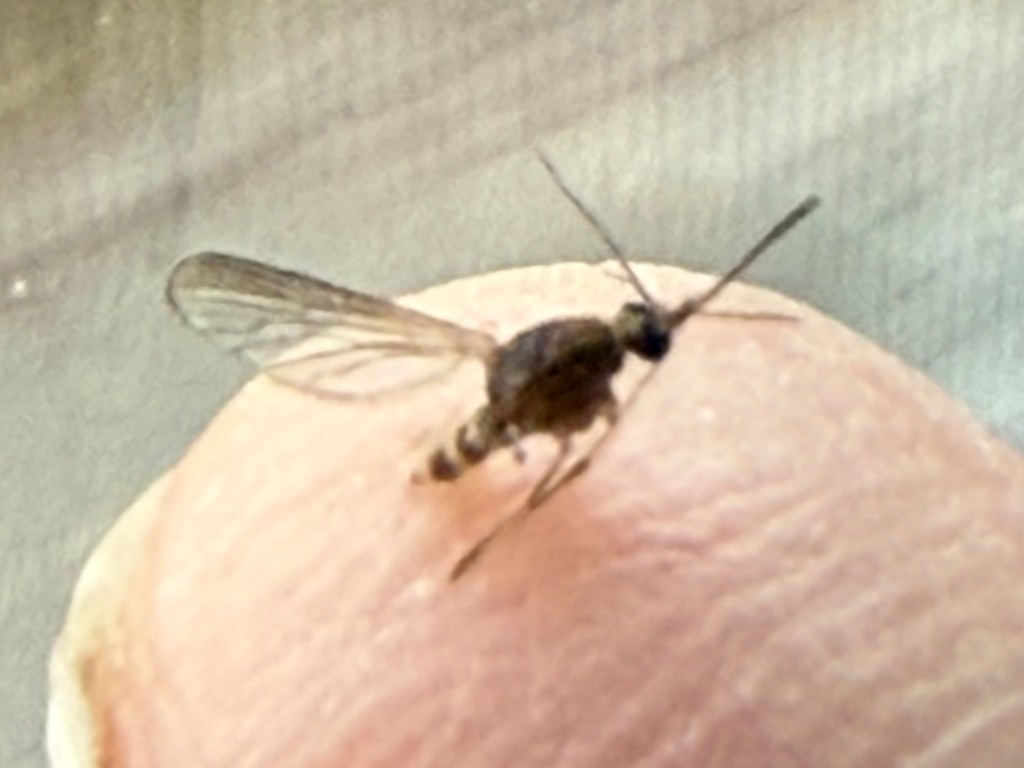
P.P.S. First mosquito of 2026
Remnants of a mosquito that entered through the heat vent at our rental house in Chincoteague VA, assisted by raccoons who partially dismantled the heating ducts under the house.





 Eye of the Cormorant