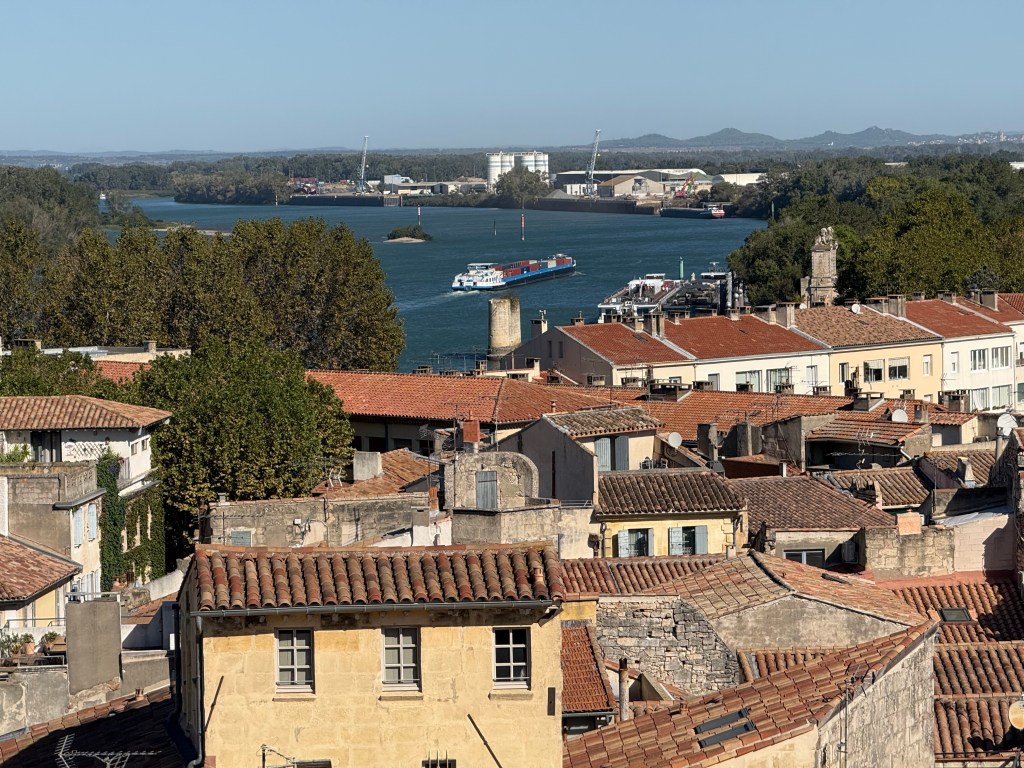
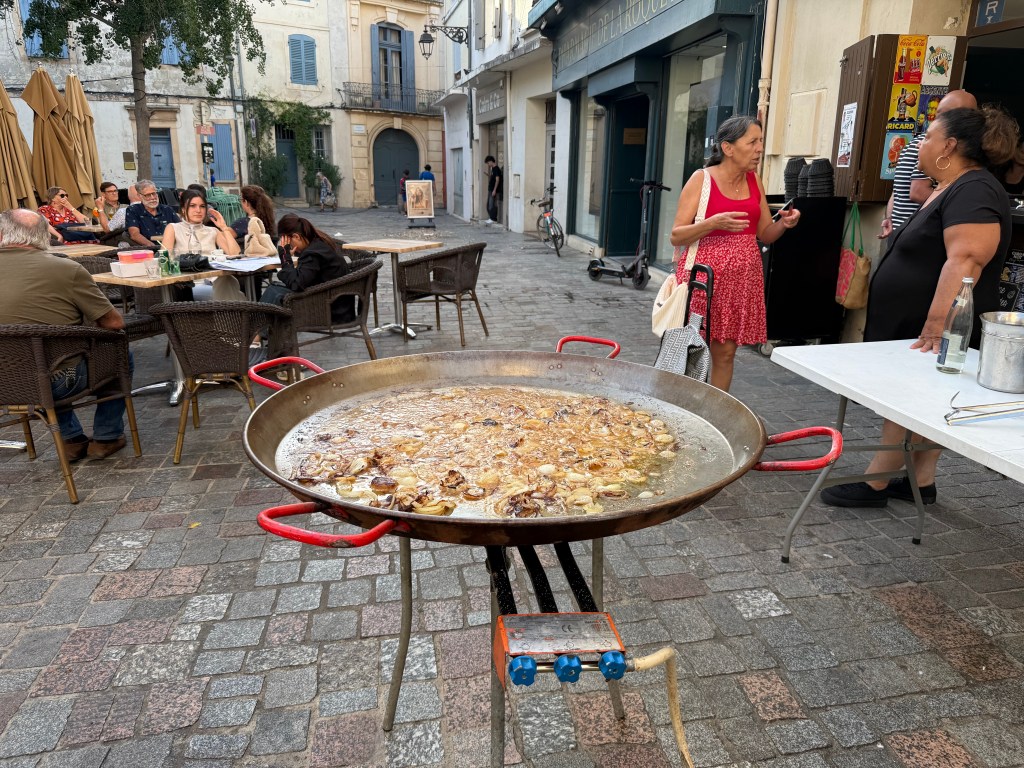
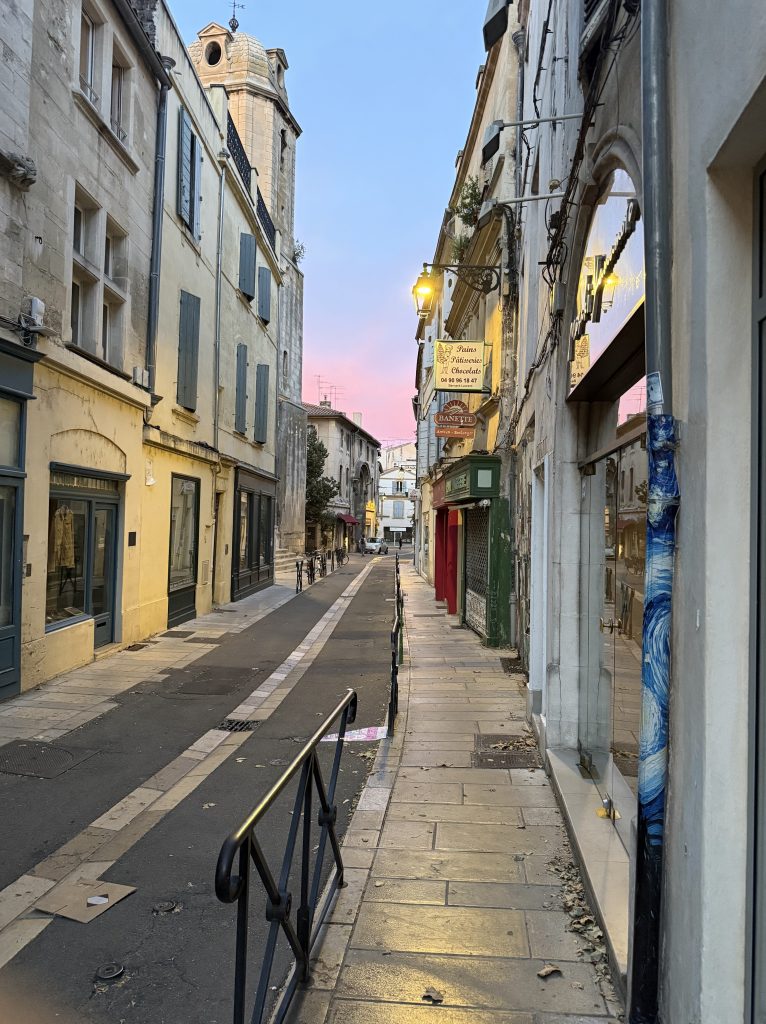
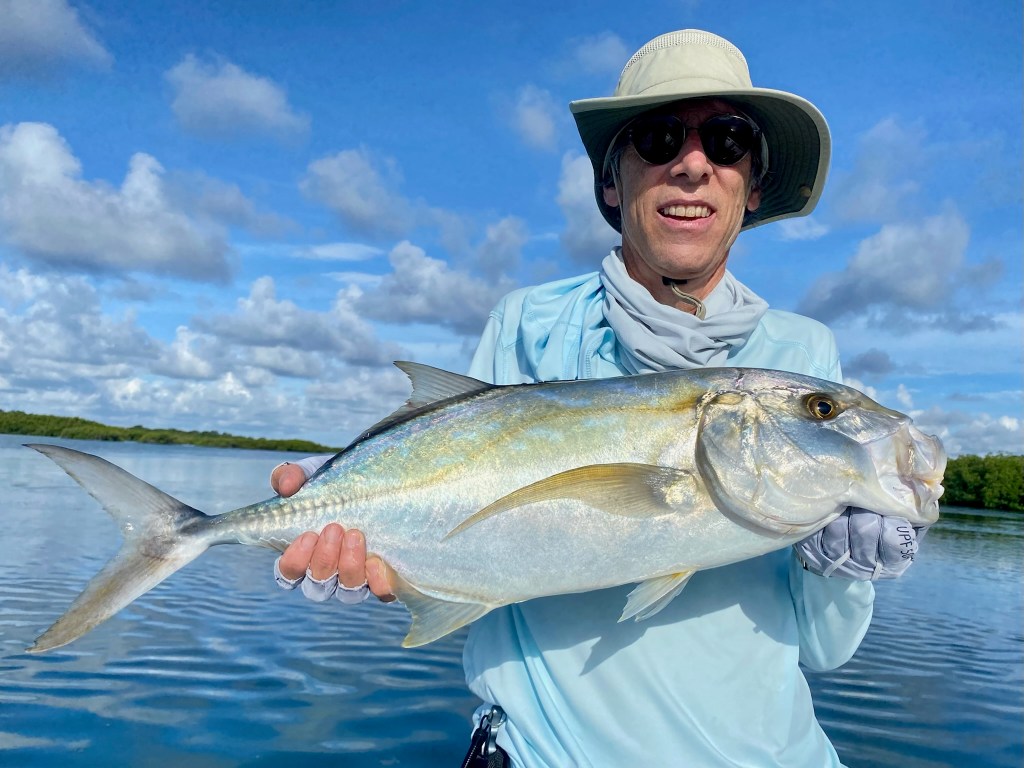
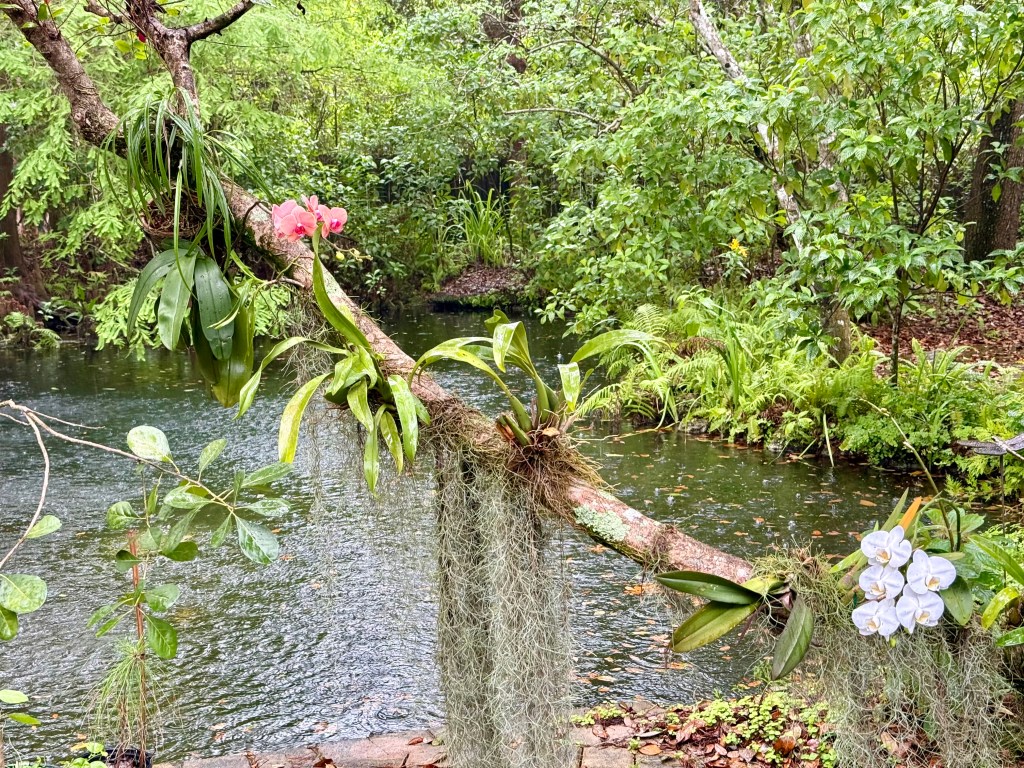
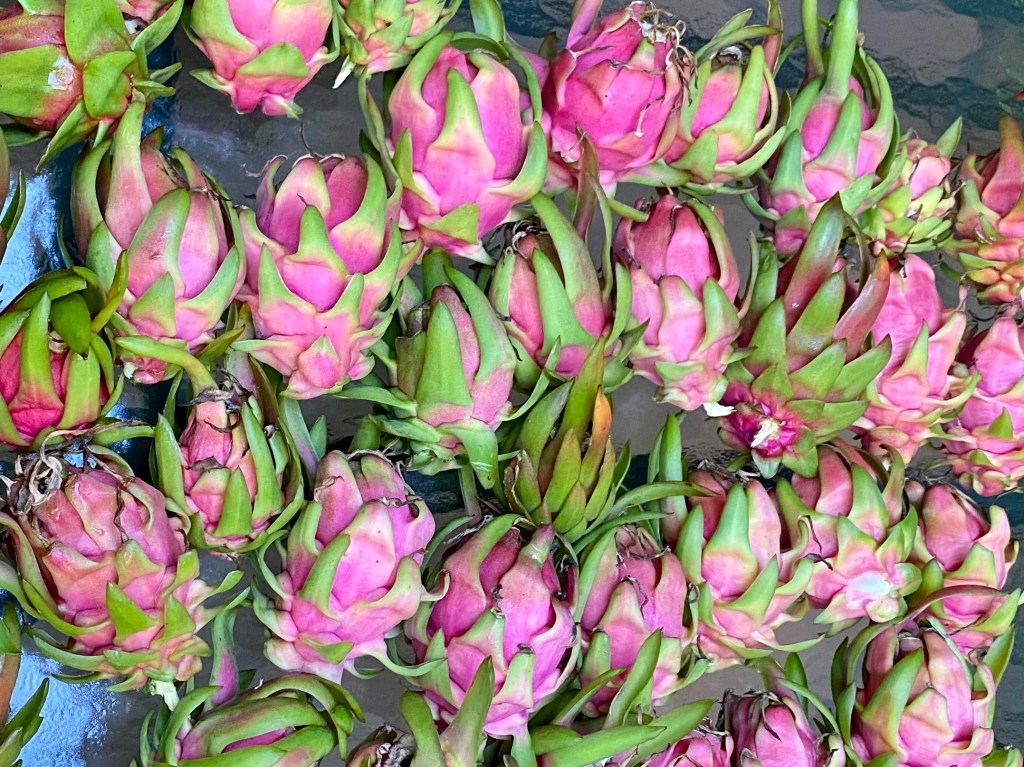
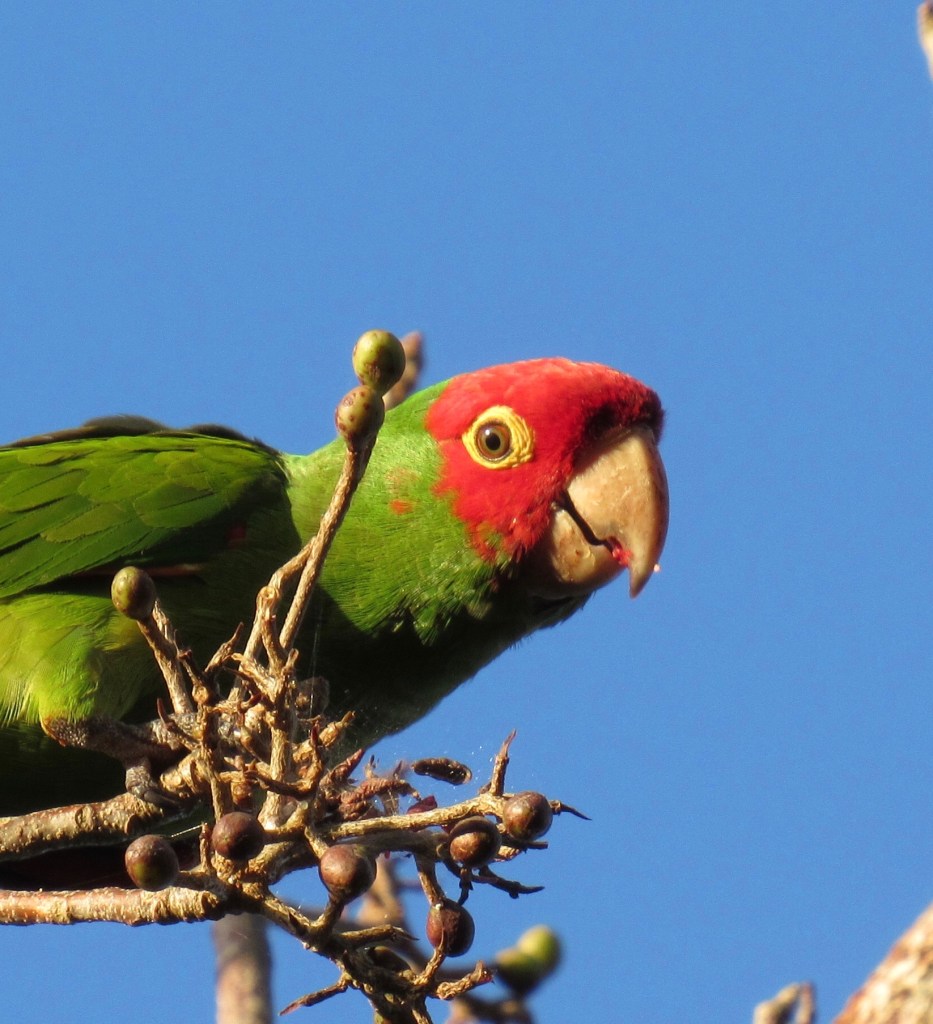
The city of Arles in the south of France dates to pre-Roman times. Built at the mouth of the Rhône, three millennia of silt deposition has left the city ~50 km inland of its original situation on the Mediterranean.
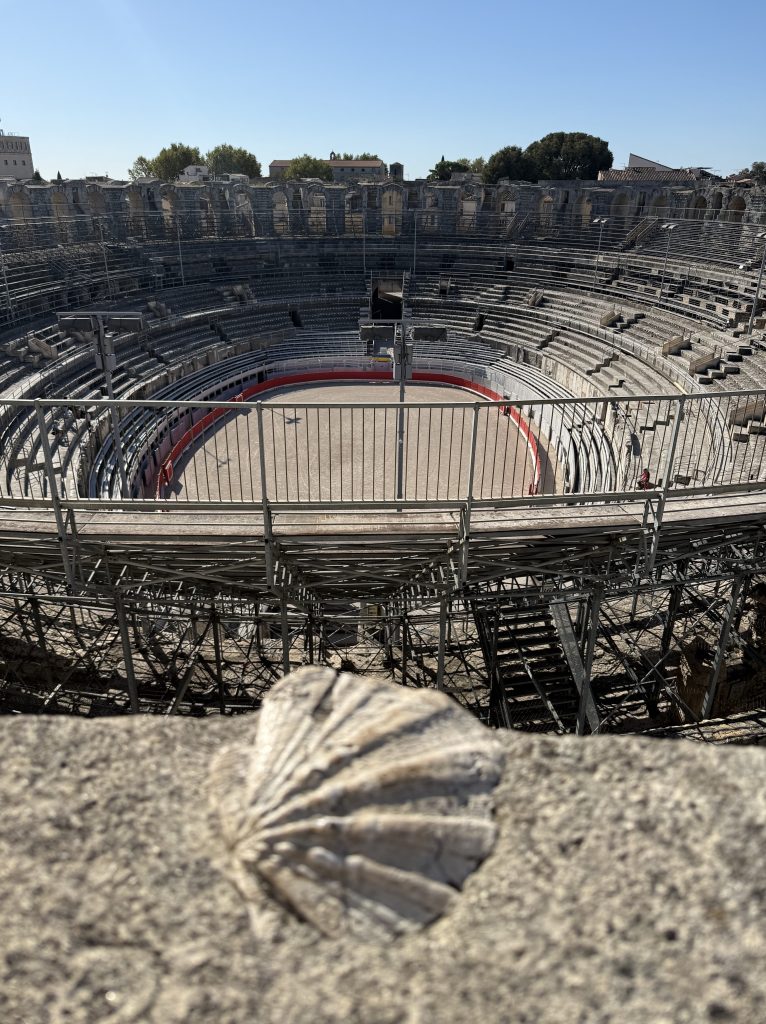
Romans took control of the city and built an arena to entertain their new subjects with gladiator fights. The arena has been partially restored. Incongruous metal bleachers with safety rails were added to accommodate modern audiences in the highest places where the original stone seating could not be supported. Ascending and descending the steep stone stairways in the strong Mistral wind of the Rhône valley, we appreciated the new iron hand rails.
Not wishing to restrict entertainment to the martial arts, the Romans followed up their arena with an elegant semicircular amphitheater next door. It has been partially reconstructed as well. While we sat in the top row, one of a group of Japanese tourists stepped up to the stage at the coaxing of his friends. Here’s a snippet of what happened next:
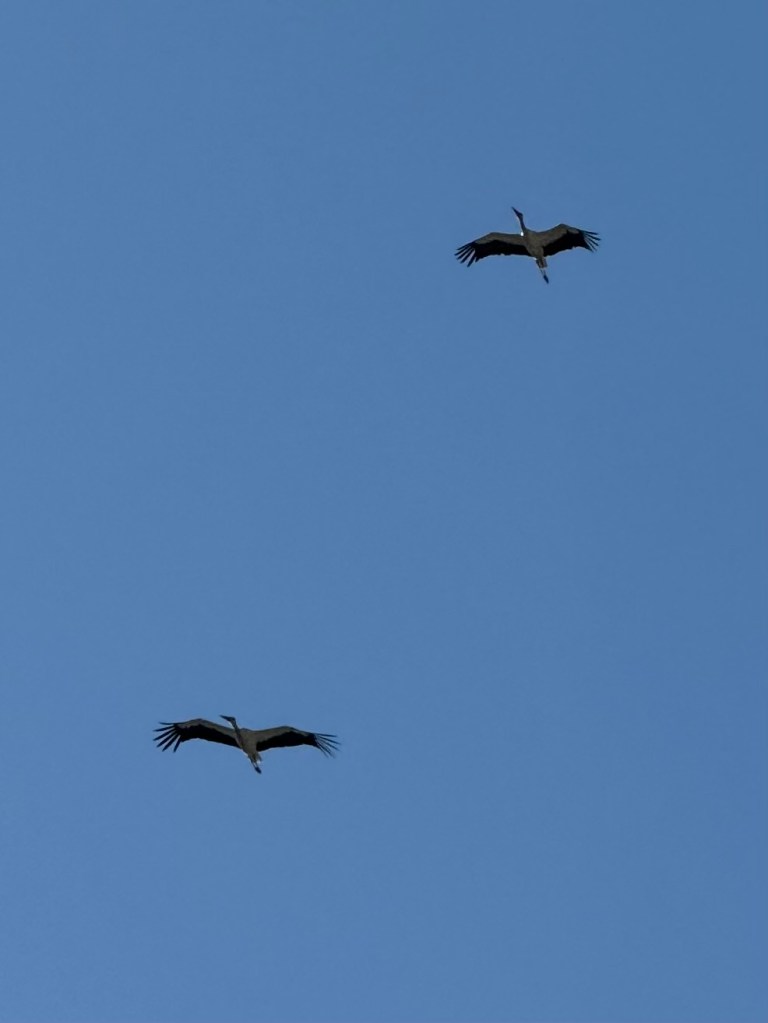
Wherever I go, I seek out nature the way a beagle hunts a dropped slice of pepperoni. Accordingly, I spotted wild things on the periphery of the urban hardscape. High atop the rim of the ancient arena, I watched White Storks catching thermals to assist their migration southward to sub-Saharan Africa.
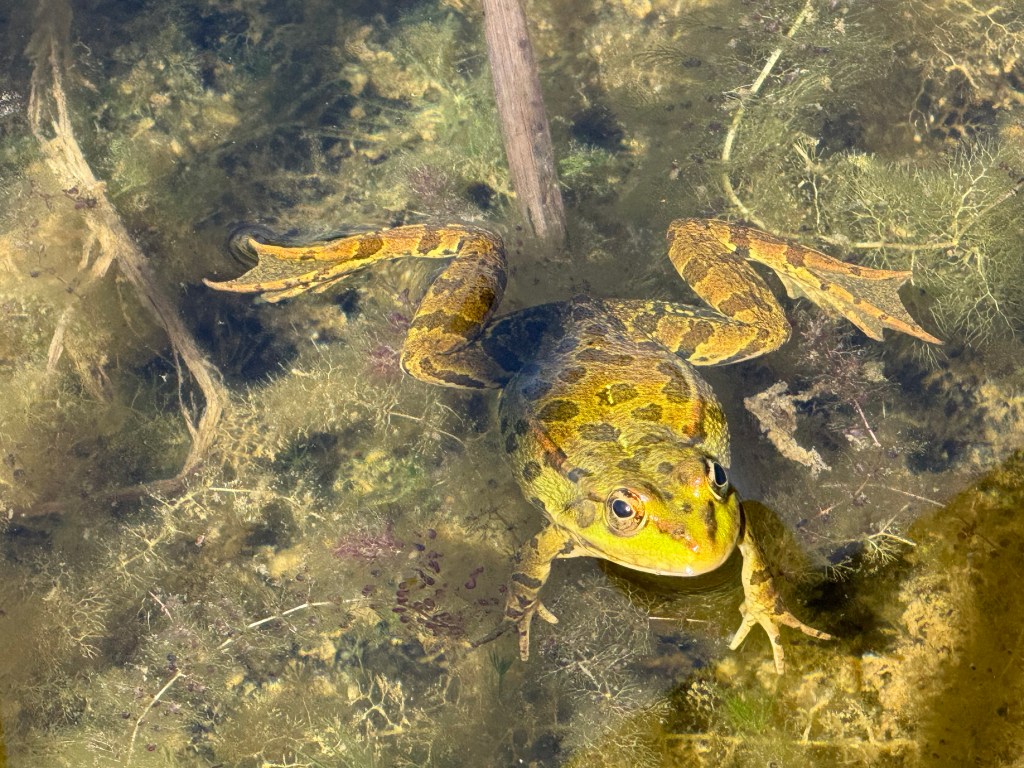
In the marsh of a finely landscaped park next to Frank Gehry’s shiny LUMA tower, I found happy frogs of Arles celebrating the departure of the hungry storks.
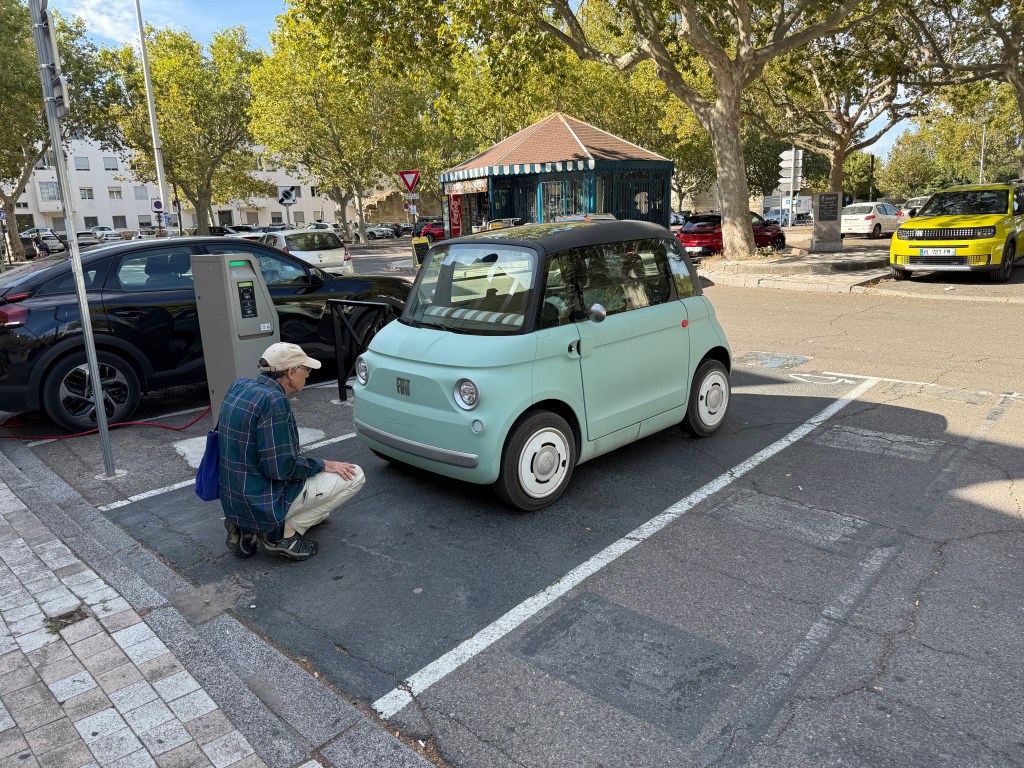
Does a tiny Fiat Topolino (“little mouse”) EV count as animal, vegetable, or mineral?
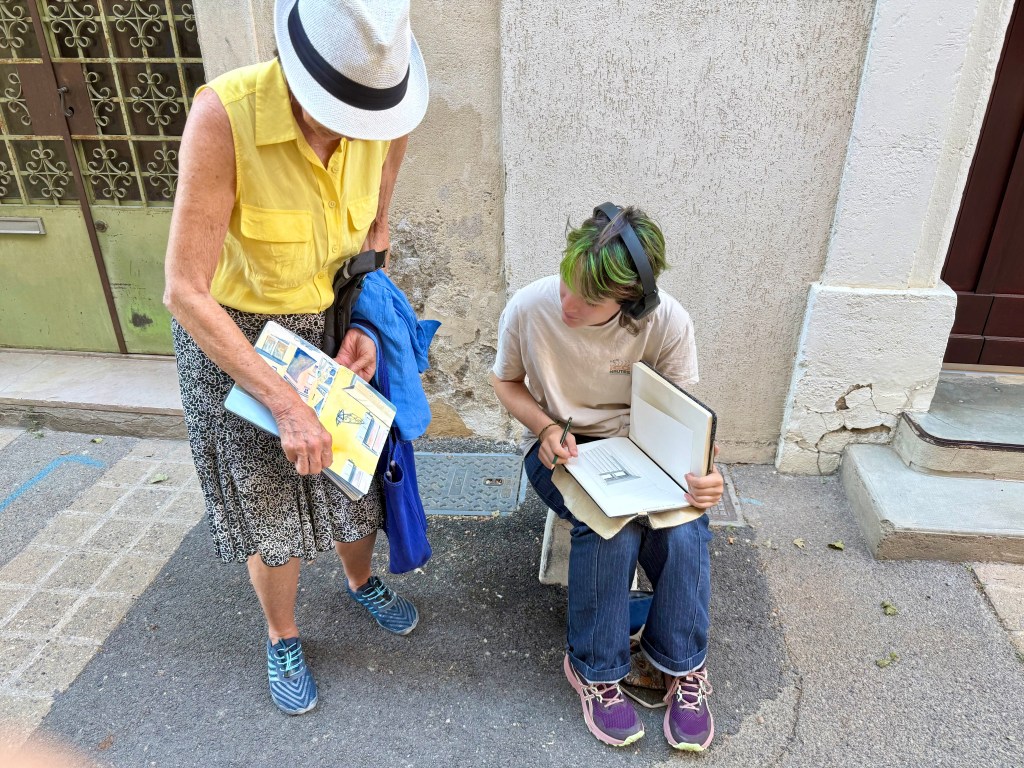
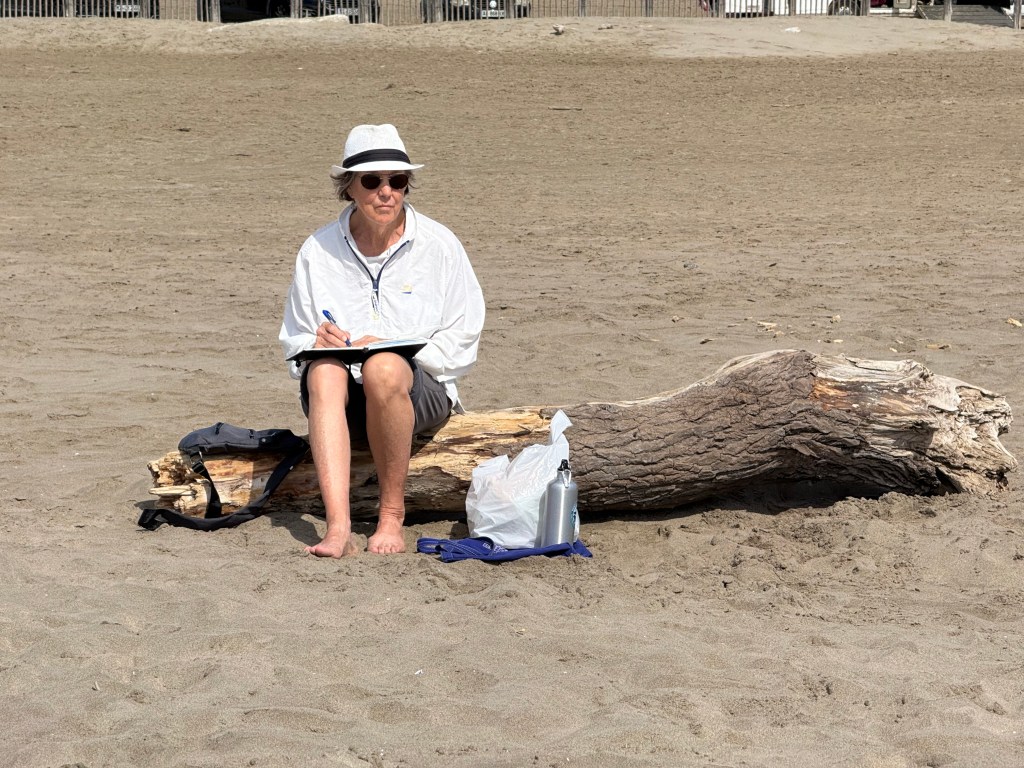
Vincent van Gogh, during his 16 month stay in Arles, produced 300 paintings. Gray, sketchbook and watercolor set in hand, cooed in ecstasy our entire week in Arles.
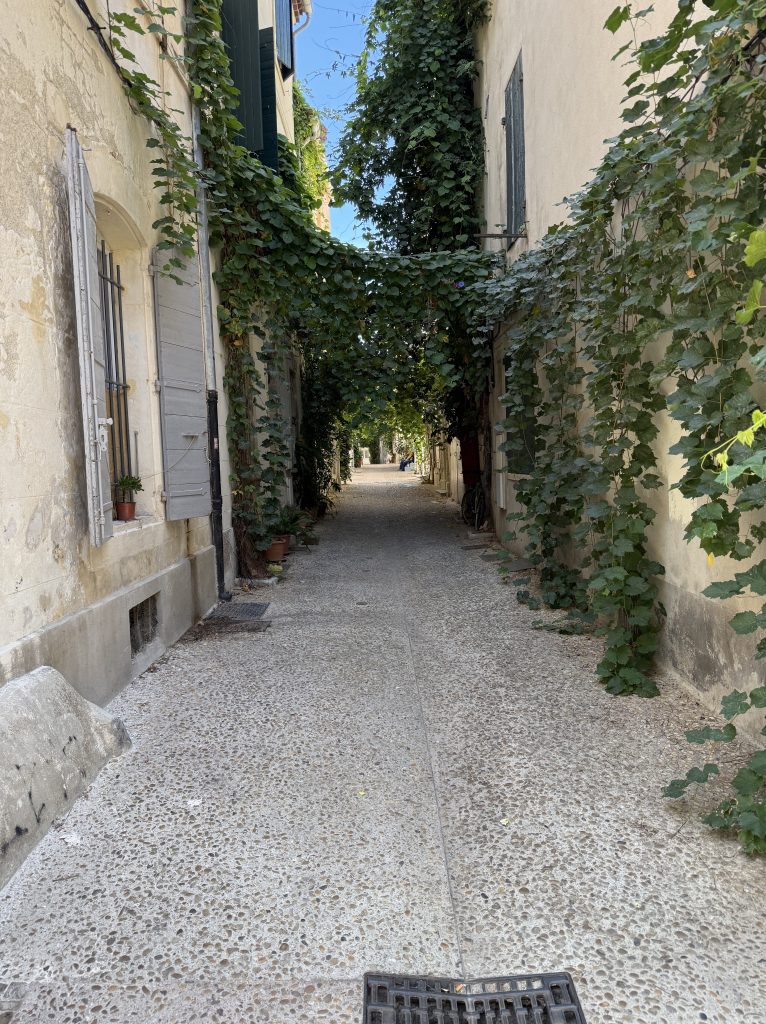
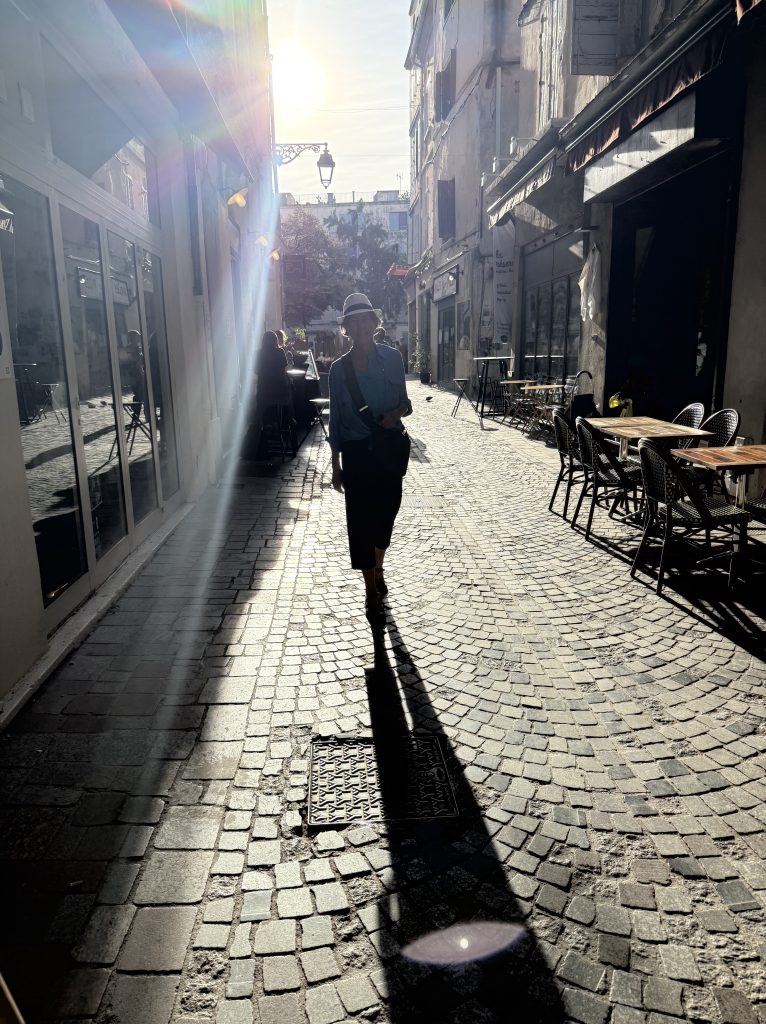
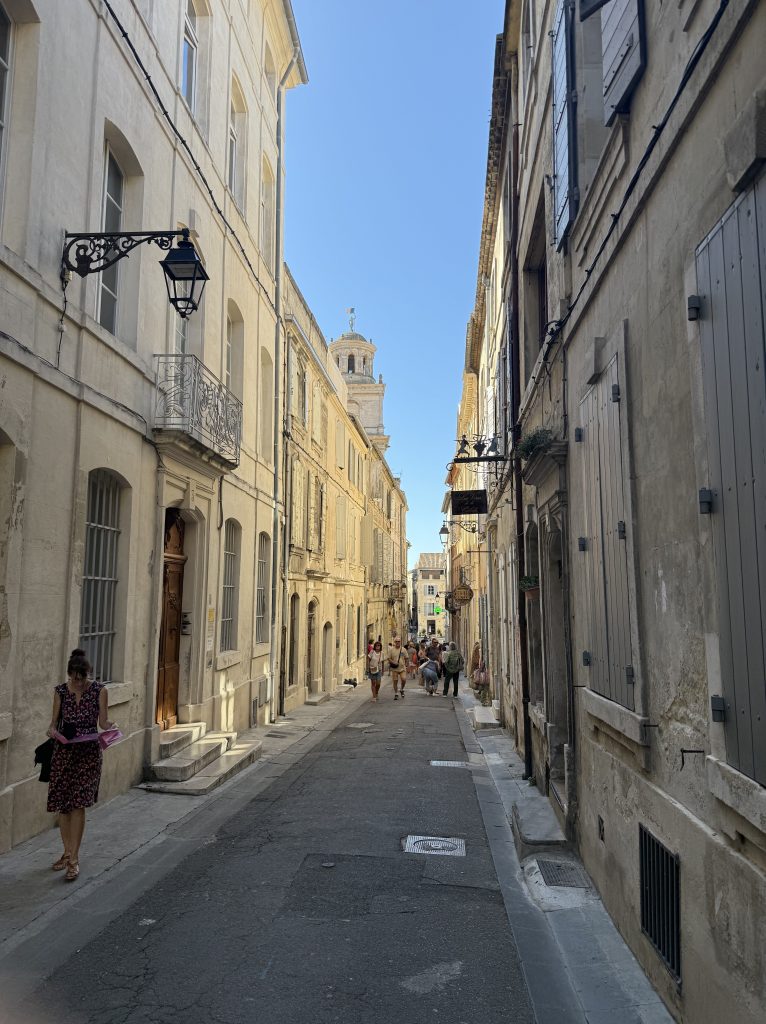
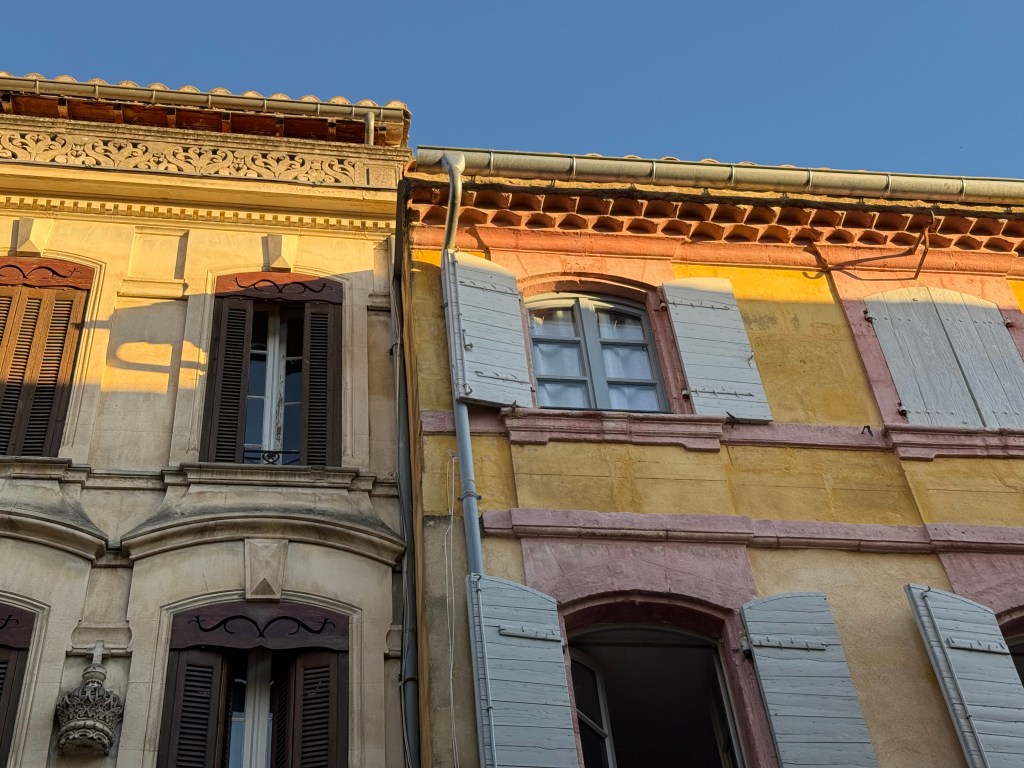
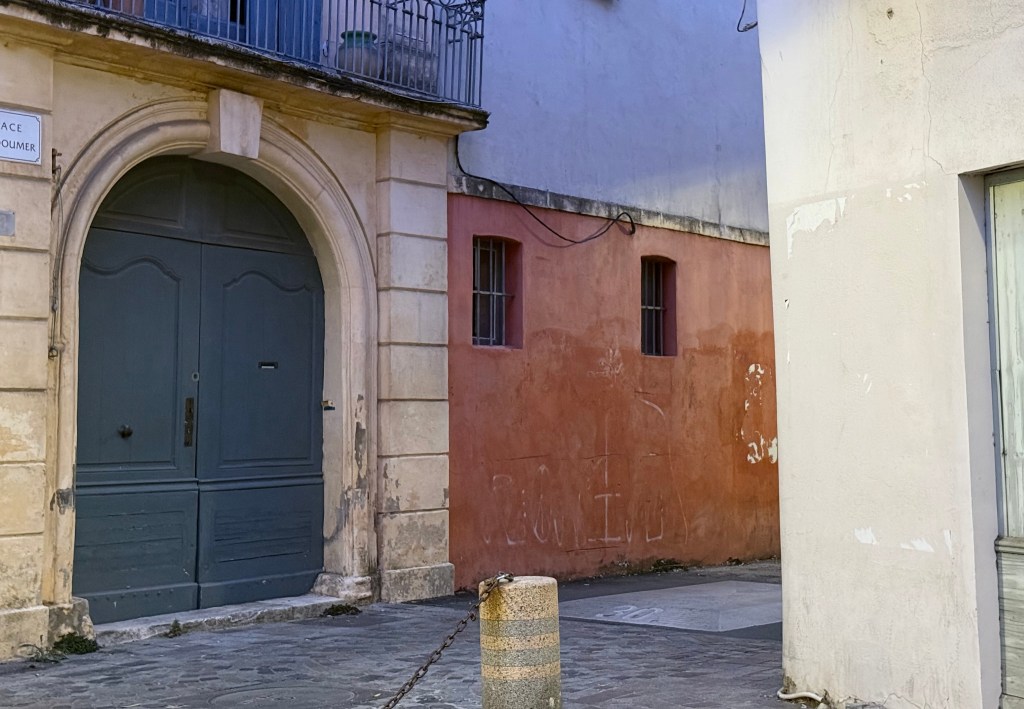
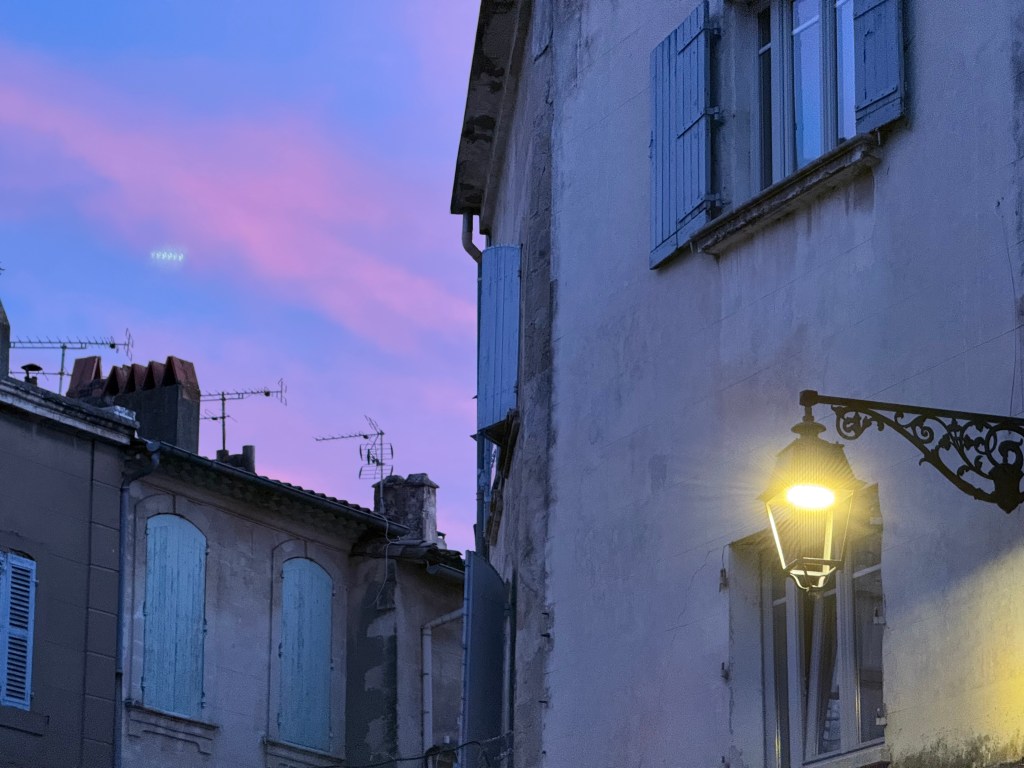
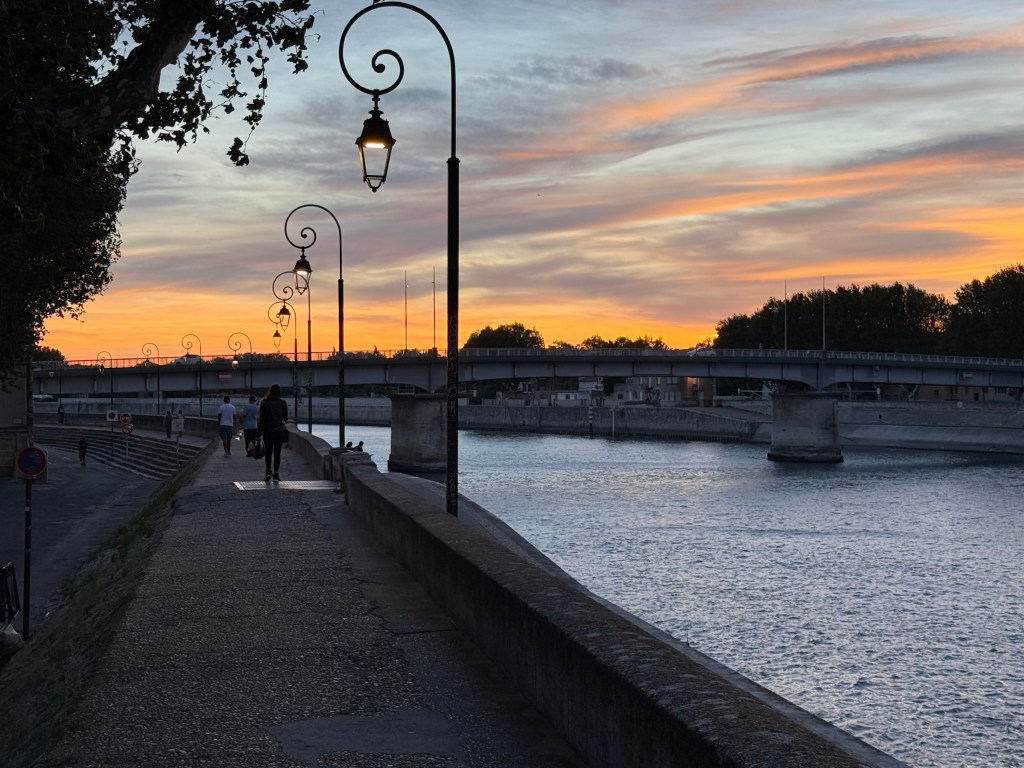
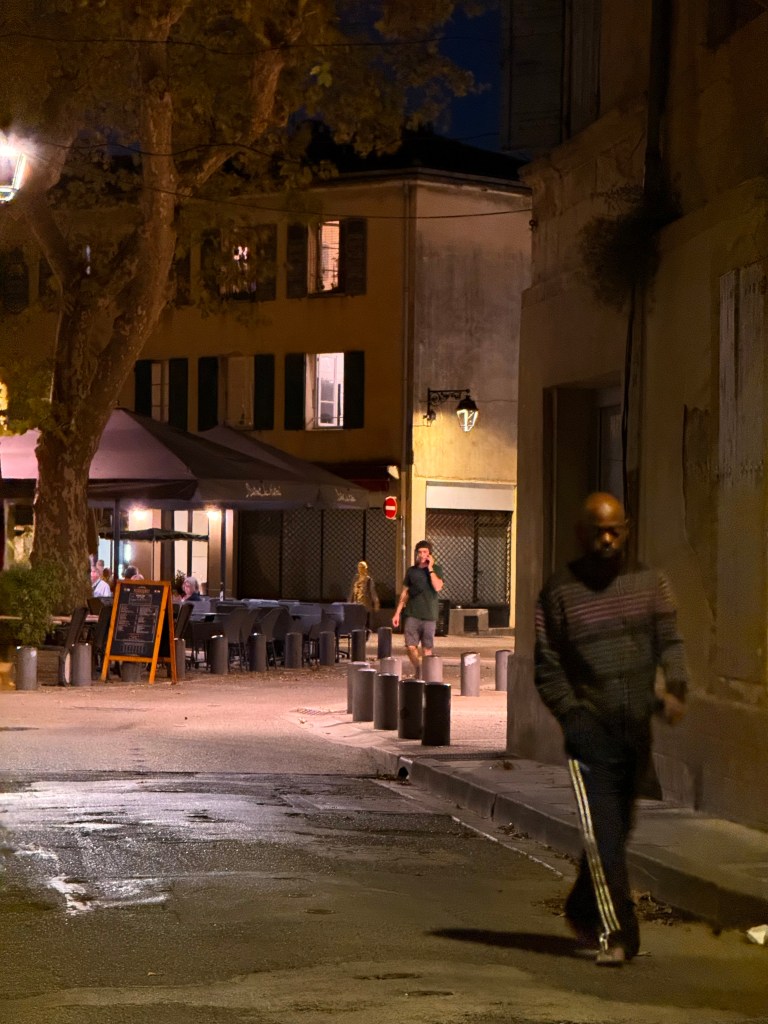
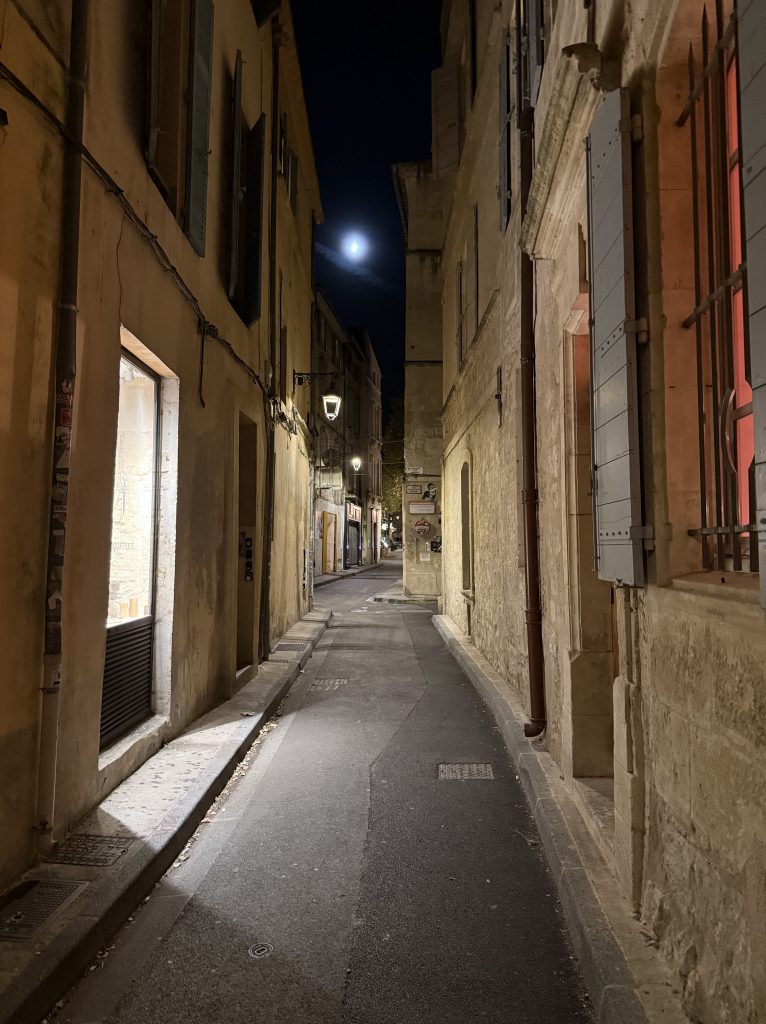
Gray’s excitement over the painting possibilities was contagious. As sun angles dropped each day, my eye was increasingly drawn to the glow and shadow of buildings along narrow streets of the old city.
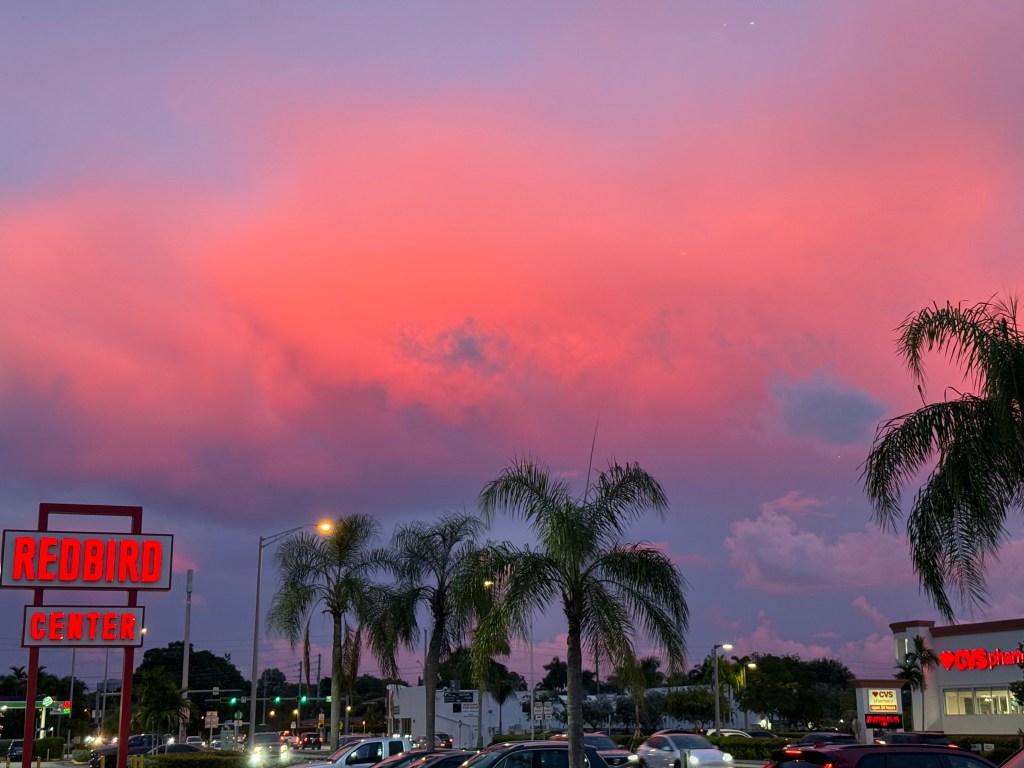
I finish with a progression of photos showing the changing light through the afternoon and into the night. I promise I did not enhance the colors.
The Camargue is the floodplain delta of the Rhône, situated between the city of Arles, where we are staying, and the Mediterranean Sea. The terrain is flat and marshy, checkered with rice fields, brackish pools, small canals, salt ponds, and tidal estuaries. On the advice of my cousin Judy, we rented a car to visit the Camargue.
DAY 1
Our first afternoon with wheels we headed down the west side of the Camargue to the Parc Ornithologique.
Enroute, we picked up a sweet young couple who were hitch-hiking, and drove them a bit beyond our turn-off to a better spot where they could find their next ride.
The Parc Ornithologique is much like Chincoteague National Wildlife Refuge on Assateague Island, Virginia, but better in important ways. Impoundments are well-maintained and are teaming with water birds. The maze of trails is for walking only. Observation benches and blinds are situated close to the birds.
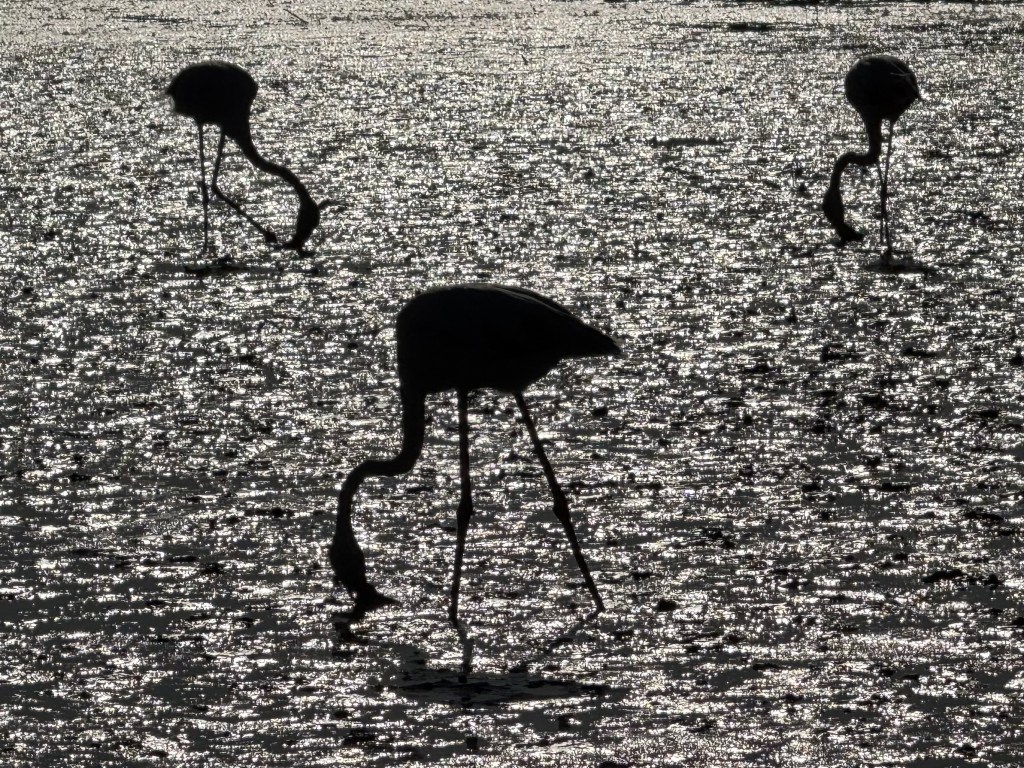
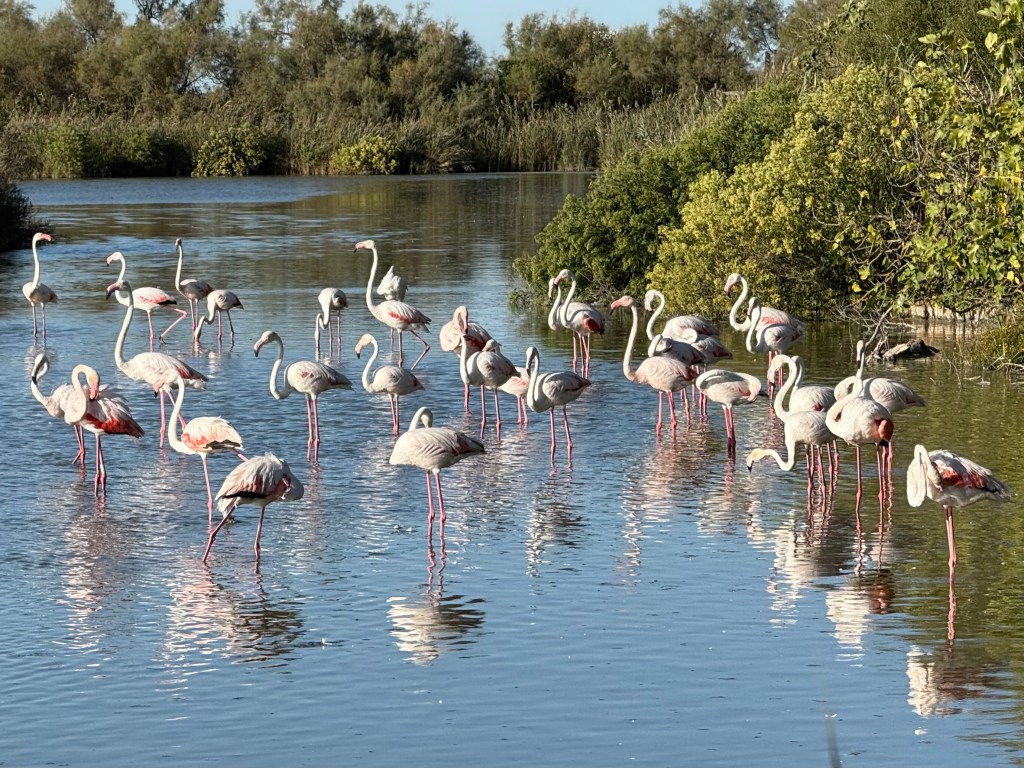
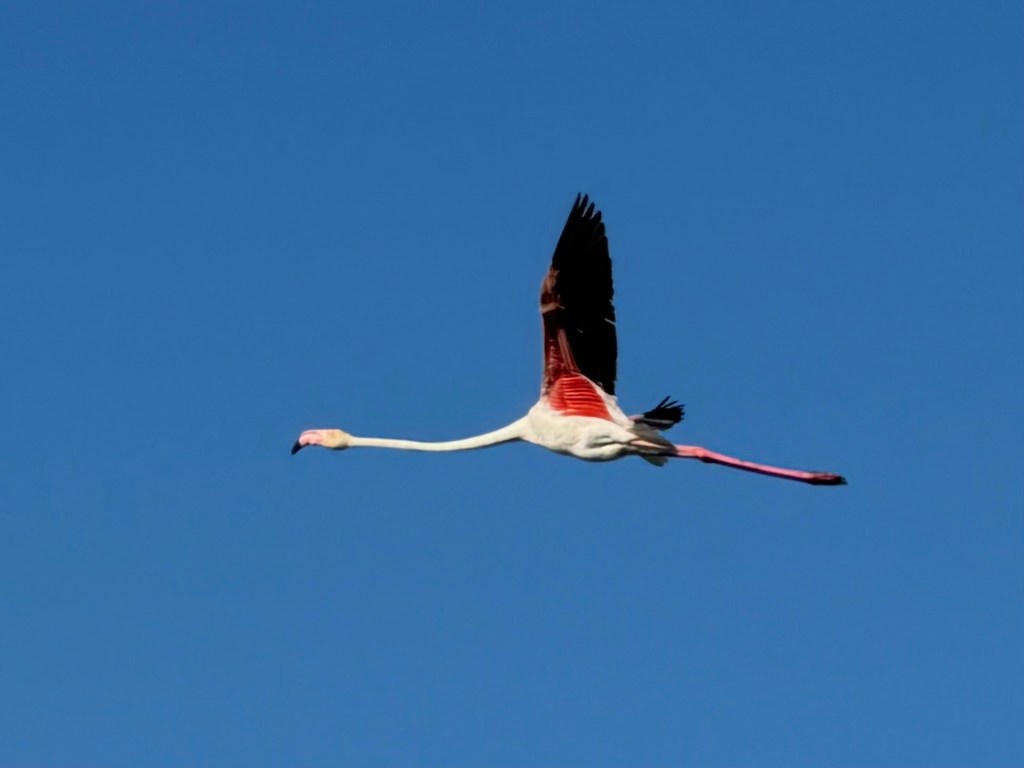
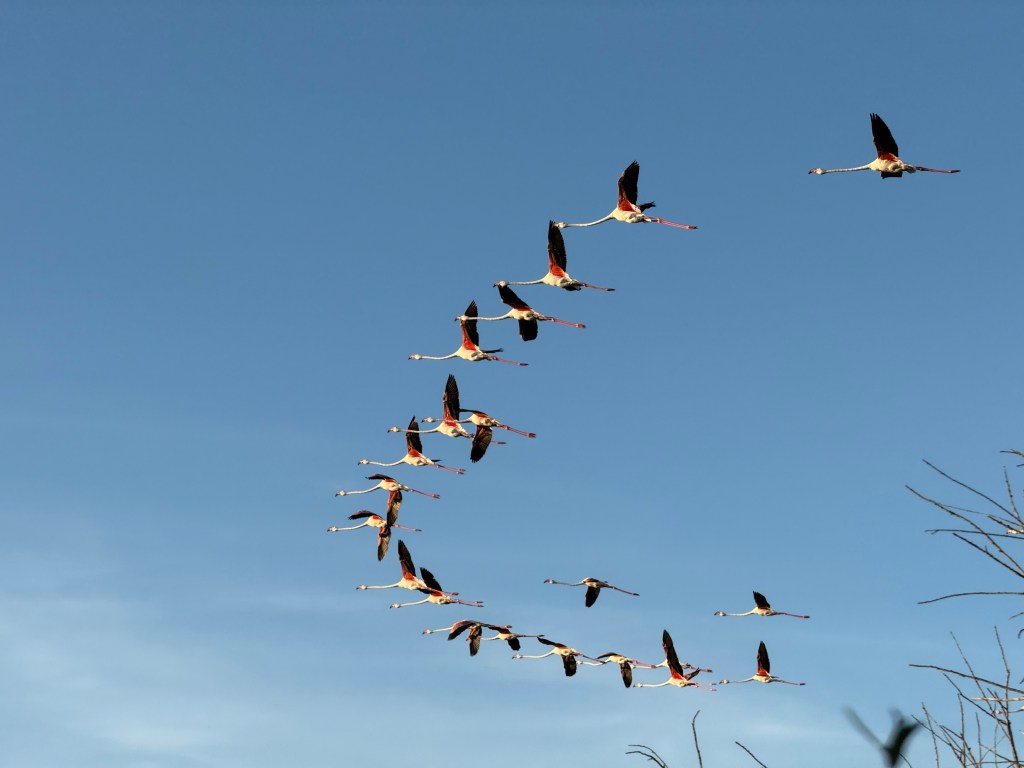
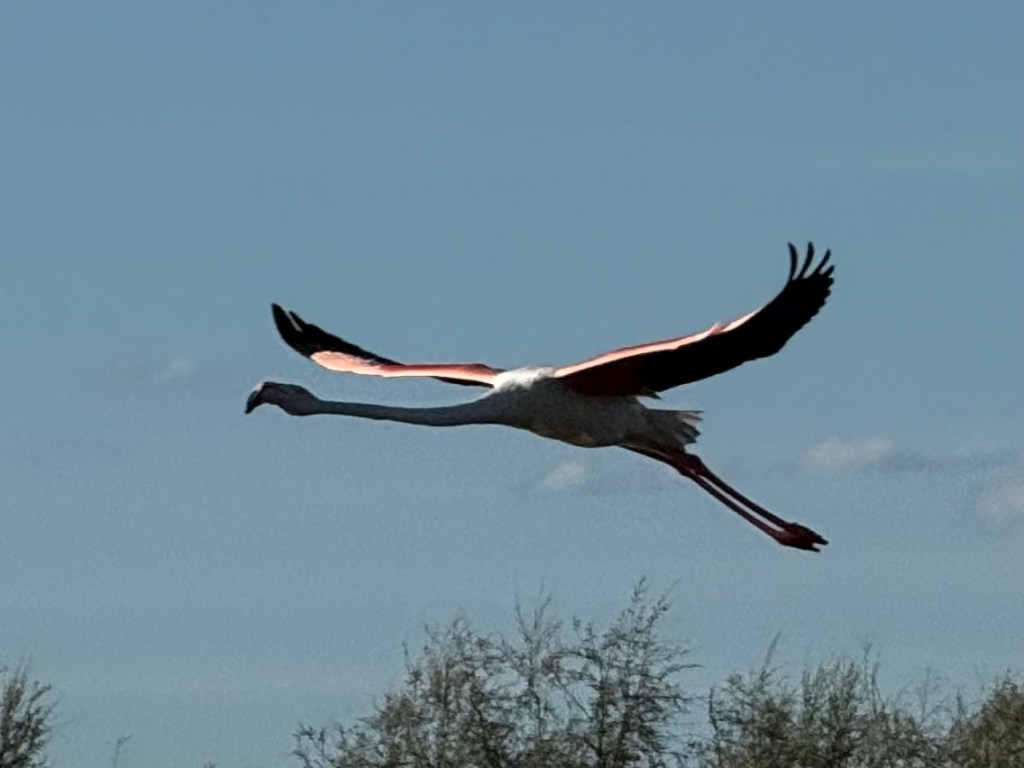
Greater Flamingos are everywhere.
The multilingual signage is informative, even for an old pro like me. For instance, banding results show the flamingoes roam the Mediterranean, but particular individuals return to this park year after year.
I learned that Cetti’s Warbler is one of the few polygynous passerines. My bird book told me that Cetti’s Warbler sings from concealed spots, moving quickly from spot-to-spot. My Merlin phone app played me the song. Ah ha!
I had been hearing the beautiful liquid song of Cetti’s Warblers everywhere and getting only the odd peak at its sources (nondescript brown-backed jobs with a faint white eye-line) hiding in the dense vegetation. Cetti’s Warbler, and the handsome European Dipper I encountered while trout fishing, were my new birds for the trip.
In contrast to the solid orange-pink of the American Flamingos, the Greater Flamingos are pinkish white, with their crimson wing coverts and axillaries visible mainly in flight.
Photo by Gray Read
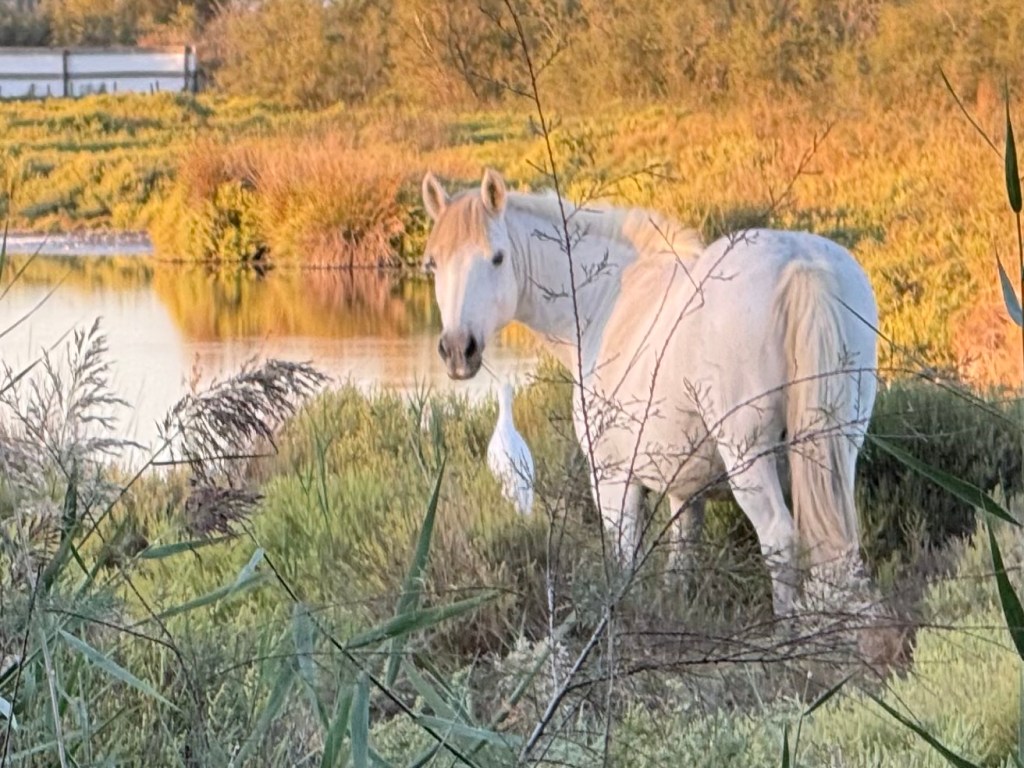
Hearing whinnies from across the thick reed beds, we finally saw the sources. As on Assateague Island, wild horses roam the marshy terrain of Camargue, accompanied by faithful Cattle Egrets, which sometimes rode on their backs.
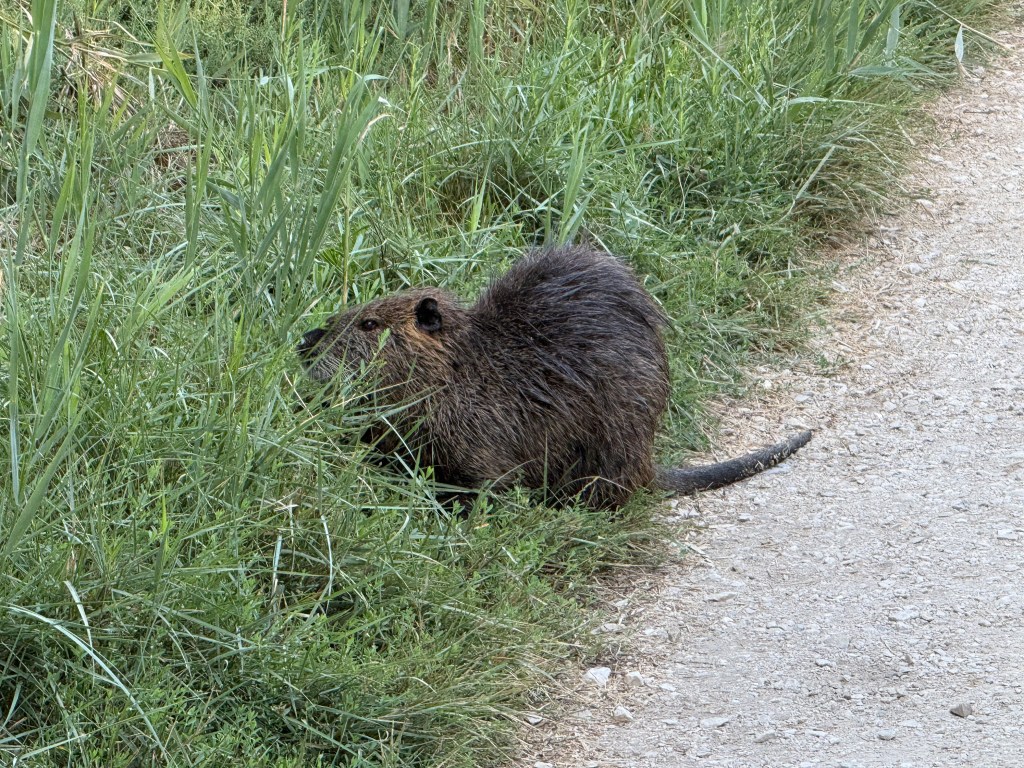
Nutria, introduced from South America, don’t seem to be doing so much damage to embankments as they did in the southeastern US.
Park staff told us we could remain after the park closed for the evening, letting ourselves out via the revolving gate. It’s been very dry of late – we saw just one mosquito and one no-see-um – so we stayed until dusk, watching the day birds put themselves away for the night.
As night herons emerged against a pink and purpling sky, we enjoyed a picnic supper of Brillat-Savarin cheese and guacamole on gluten-free toast accompanied by fresh plums and figs. Pas mal.
DAY 2
Having parked the car overnight near our apartment in Arles for half a Euro, we spent the next morning exploring the east side of the Camargue.
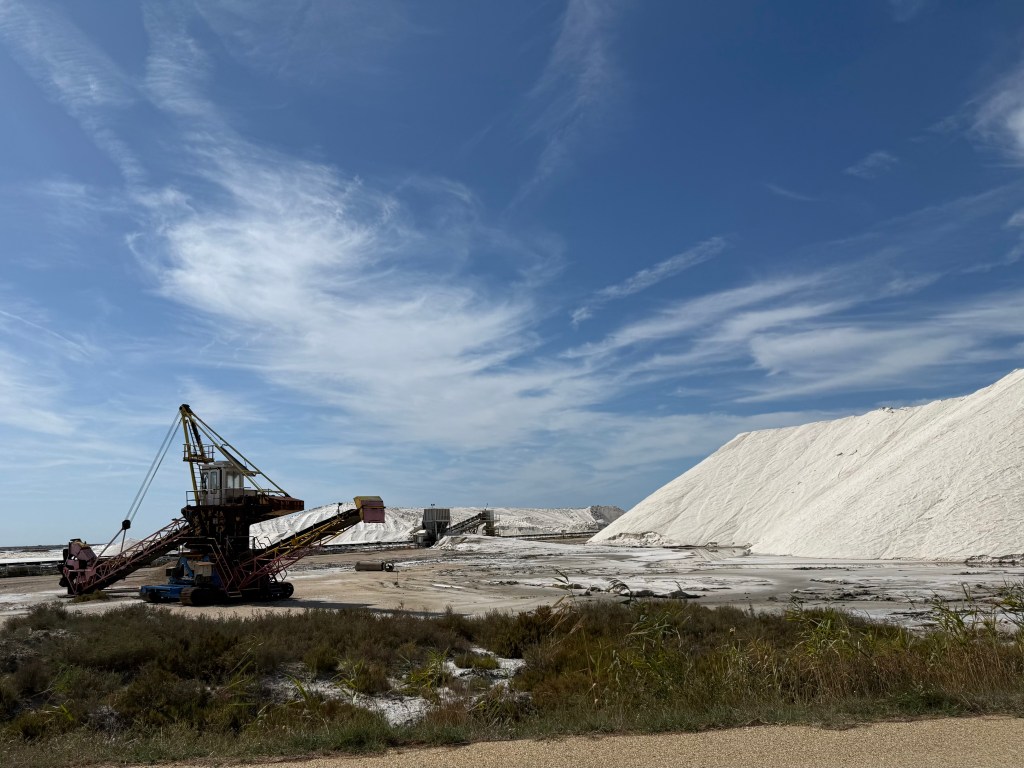
We drove into the Reserve Nationale Camargue where sea salt has been evaporated and harvested from salt ponds at least since Roman times. Now it’s done with big machines instead of slaves.
Sel de Camargue is found in all the local salt shakers. It’s good on fried potatoes and would go well with rice, if you could find rice.
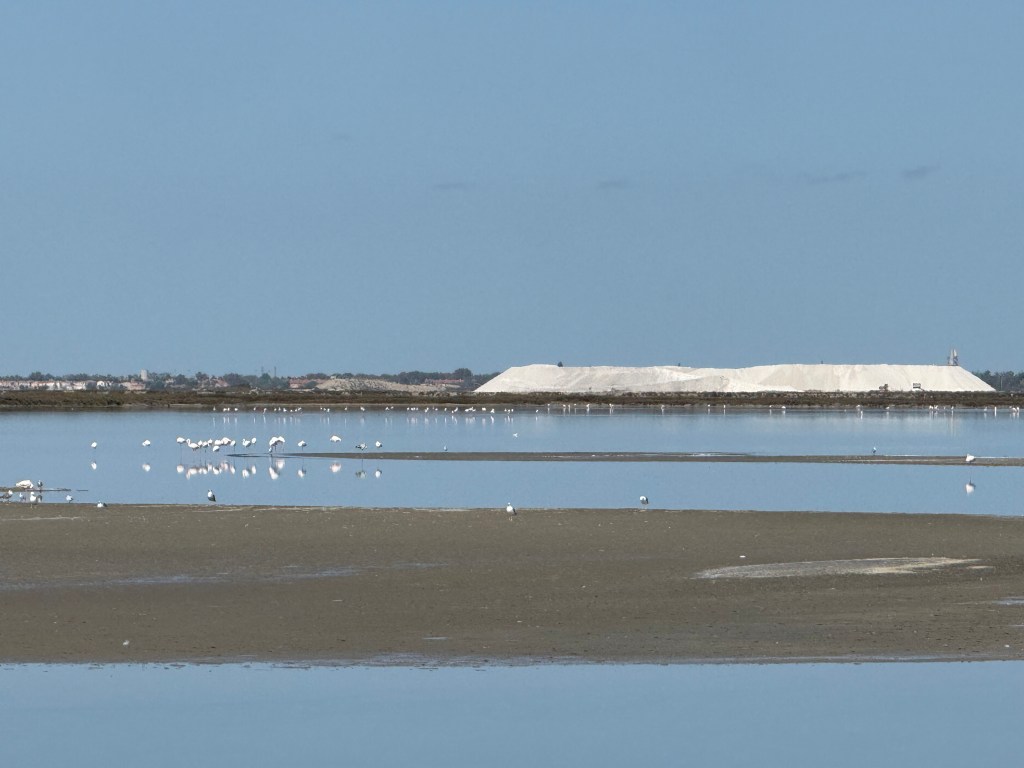
White dots in front of the salt mesa are flamingoes.
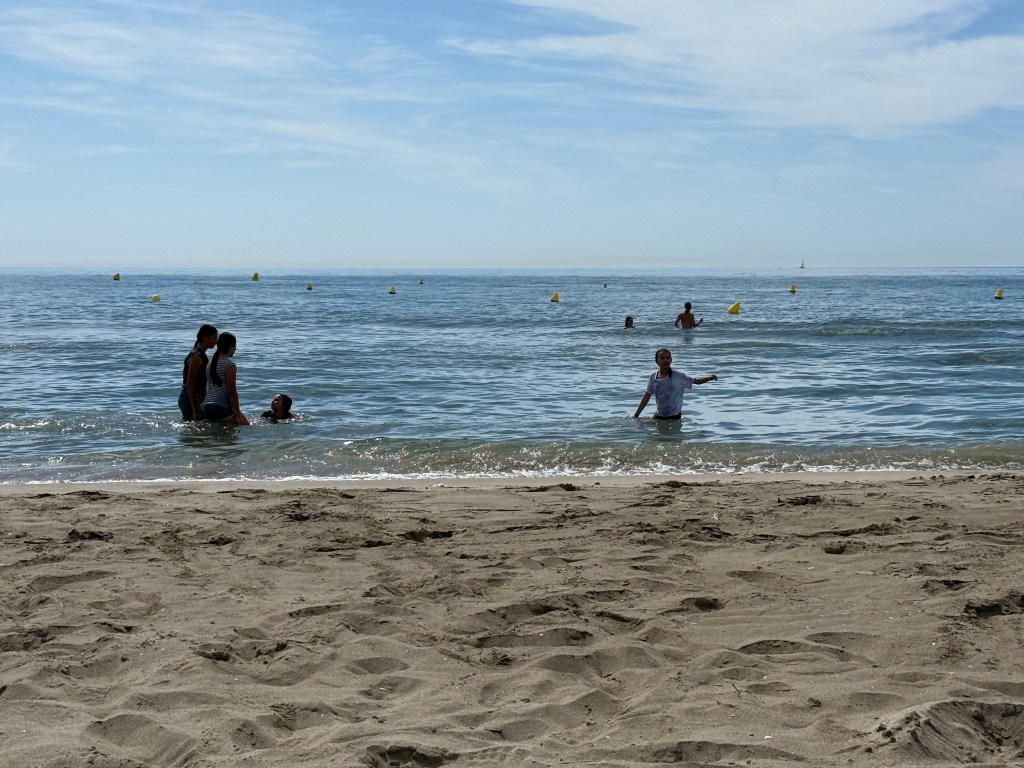
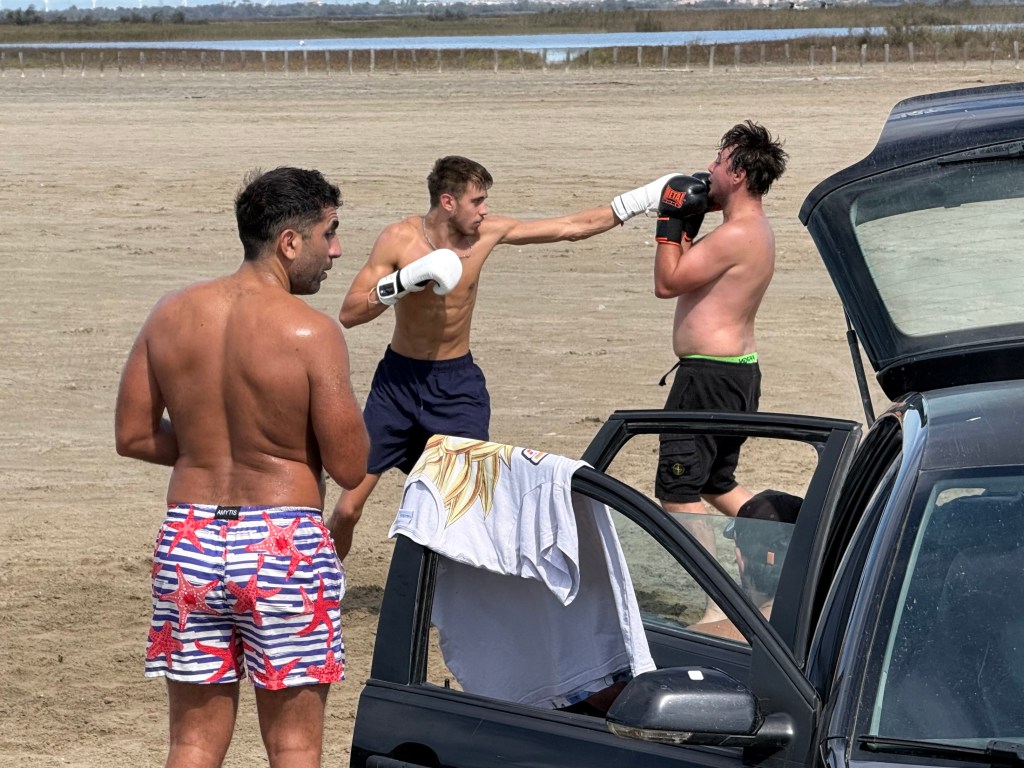
We finally made it to the Mediterranean, where gleeful children splashed in the warm water and sweaty young Frenchmen enjoyed the manly art of hitting each other in the face.
When the sun sets in Miami, our nocturnal biota makes its unseen entrance. The screaming parrots retire, replaced by soft-trilling screech owls. Limpkins stalk the canal banks, emitting eerie calls into the darkness. Night herons, pondering the nature of dark matter, exclaim “Quark!”.
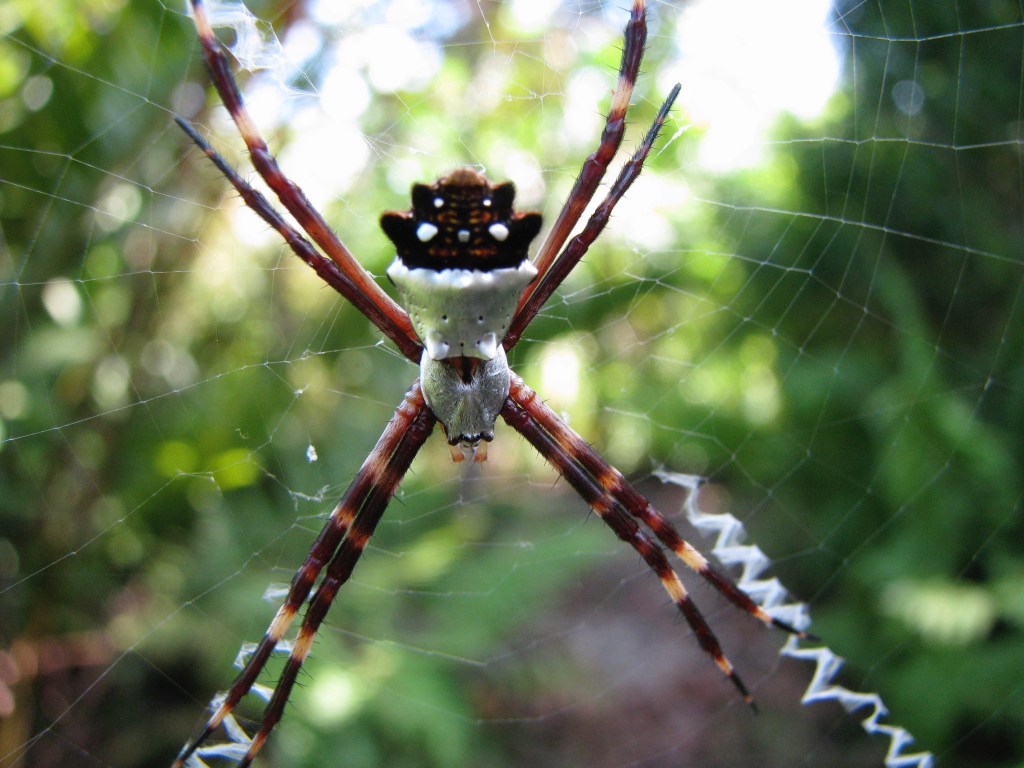
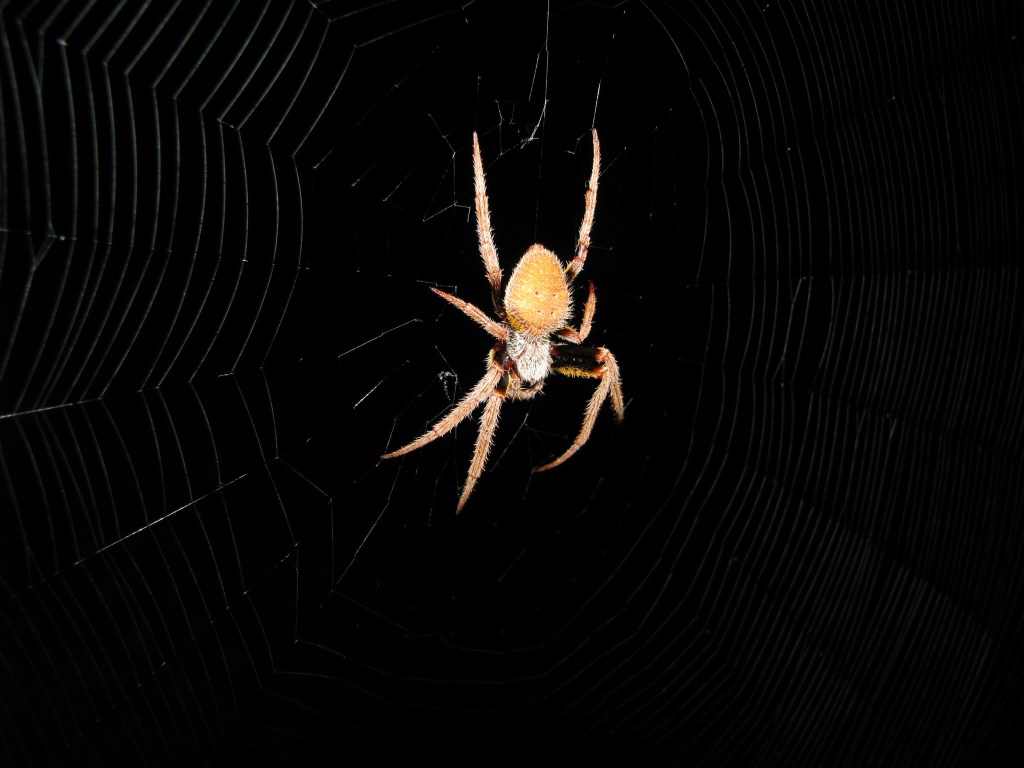
Like the birds, Miami’s invertebrate community holds its own changing of the guard: day-hunting spiders take down their webs and nocturnal spiders weave theirs.
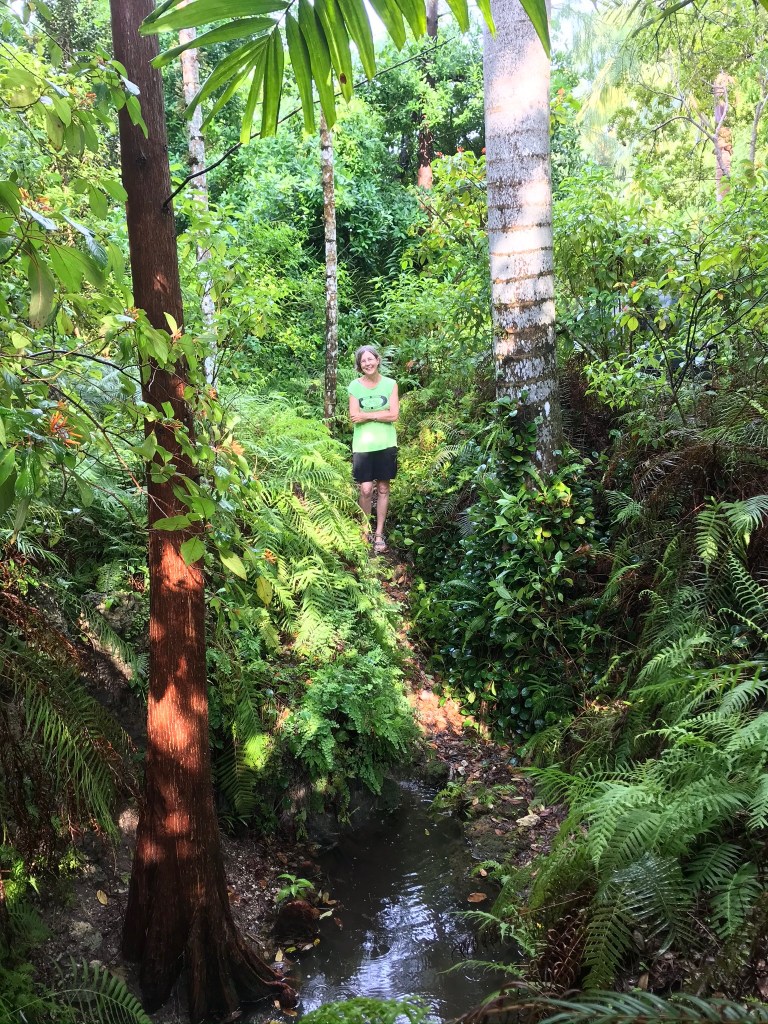
We have a grotto in the backyard where we can amble down steps cut into the limestone rock (duck the spider webs) and visit the surface of the Biscayne Aquifer sitting two meters below the level of the yard.
Starting from a grassy backyard, we cut the grotto with big yellow machines. I labored with a pickaxe to chop a stepped path into the rock wall. Having a safe way down, I planted Southern Maidenhair Ferns, pepperomia, and two tree seedlings: a cypress and a royal palm. With ready access to water, nature did the rest.
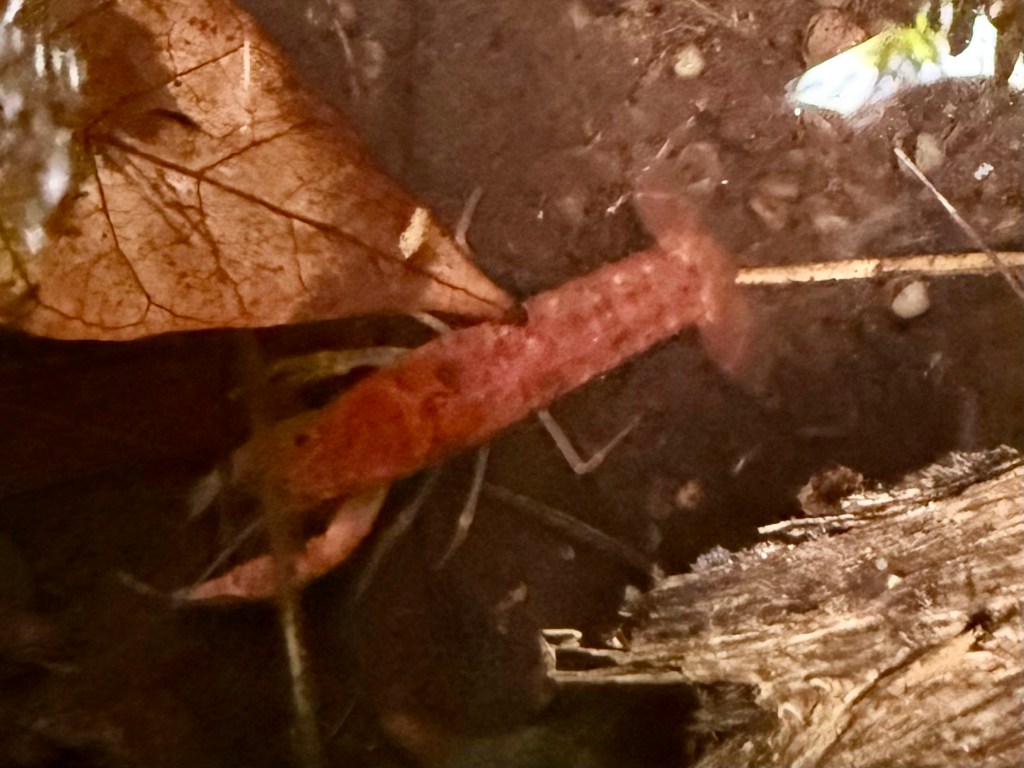
Sheltered by the geometry of its sheer walls, the grotto is a silent place. As night falls over the grotto, sometimes, just sometimes, a Miami Cave Crayfish wanders into the grotto from the top edge of the aquifer.
Miami Cave Crayfish (Procamberus milleri) in the grotto.
A few meters below the ground, the subterranean Miami Cave Crayfish (Procamberus milleri) resides in large pores within the oolitic limestone through which flows the Biscayne Aquifer. Biologists from US Fish and Wildlife Service only know this hard-to-find species from our backyard. It’s a genuine treat to see one.
The Miami Cave Crayfish was on schedule to be federally listed as “threatened”, but then, as part of Project 2025, the Trump Administration declared war on the Endangered Species Act and the process stopped. This story, in which I am deeply entangled, will be continued in a different post.
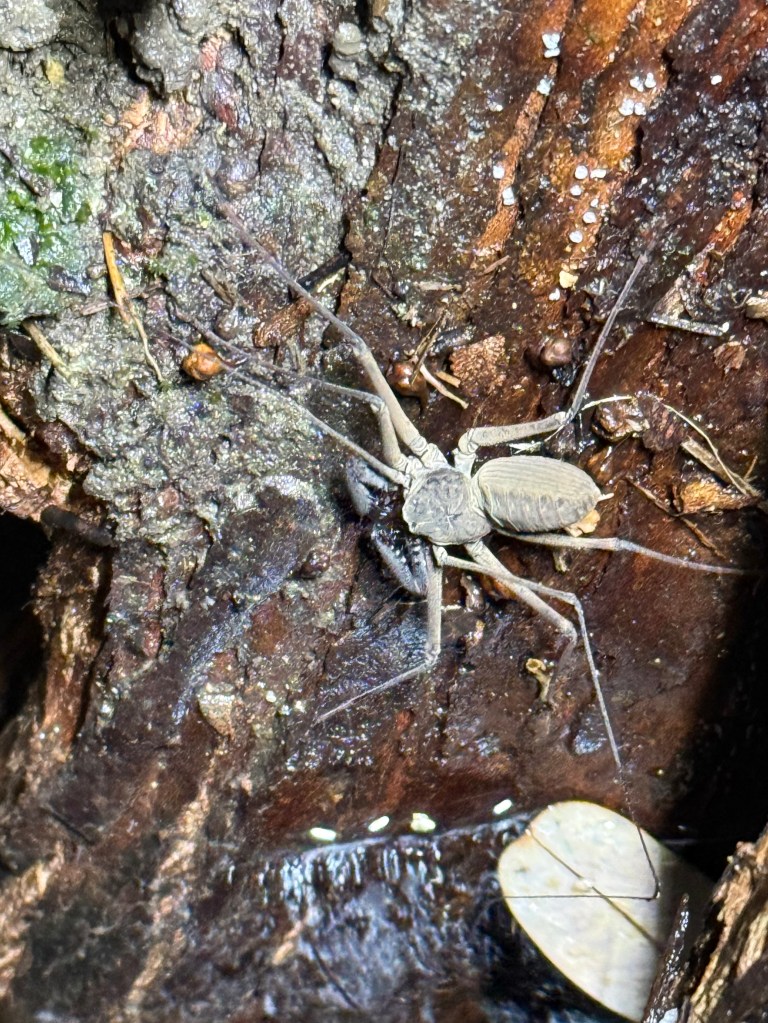
After dinner last night I was wading in the grotto in search of cave crayfish (no luck), when a movement on the rock wall caught my eye. Just above the water line, something gray, resembling a very large spider caught my eye. It had six legs, two spiked claws tucked in front, and long antennae that flicked about in all directions. It was 3” across, 7” including the antennae. Here’s the photo, taken in the light of my flashlight.
Recognize this thing? It’s a tailless whip-scorpion – my first one ever.
The Spotted Tailless Whip Scorpion (Phrynus marginemaculatus) is an arachnid in the order Amblypygi, native to South Florida, the Bahamas, Cuba, and Hispaniola. The antennae are actually modified legs and the claws are modified pedipalps. The spiked claws on this dude were sufficient inducement to keep my hands to myself.
My daughter, Vannak, received the photo by text and replied “nightmare fuel thank u”. Ever the thoughtful dad, I assured her that, although they’re large (“I was afraid of that”), they only come out at night.
I seem to have sprained my hand, so no fishing report this week. I am taking this setback as a chance to see more of summer’s offerings in our wooded yard in South Miami.
In between icing my hand and tying flies for an impending fly fishing trip to the Sian Ka’an Biosphere in the Yucatan, I have snapped opportune pics of some critters in the yard. An iPhone in the pocket favors providence.
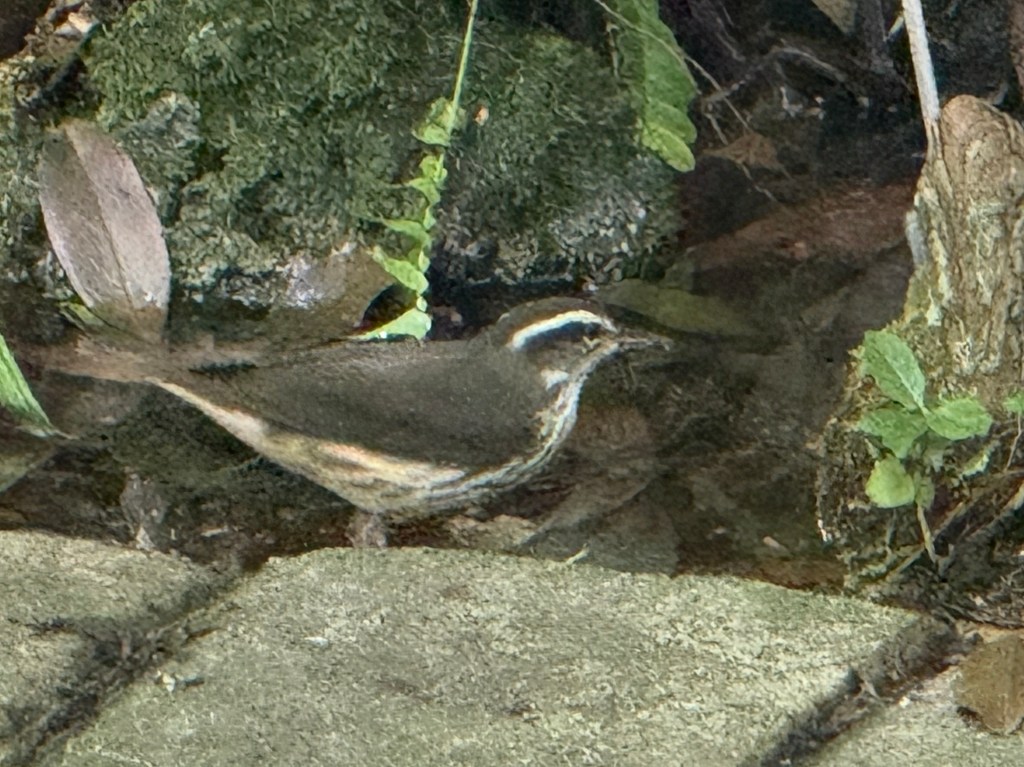
Louisiana Waterthrush (Parkesia moticilla)
The first fall migrant warbler in our yard is always a Louisiana Waterthrush, on their way south from breeding grounds along the Appalachians’ streams. The first waterthrush of this fall’s migration appeared during breakfast today, 30 July, alerting me with its characteristically loud and bright “chip” call. It landed on a small table by the grill, then flitted down to the water’s edge to hunt for bugs, too distant for a photo. I got this grainy shot (shade + high digital magnification) later in the morning through the glass door next to my desk. Waterthrushes constantly bob their back-ends up and down, which appears here as blur.
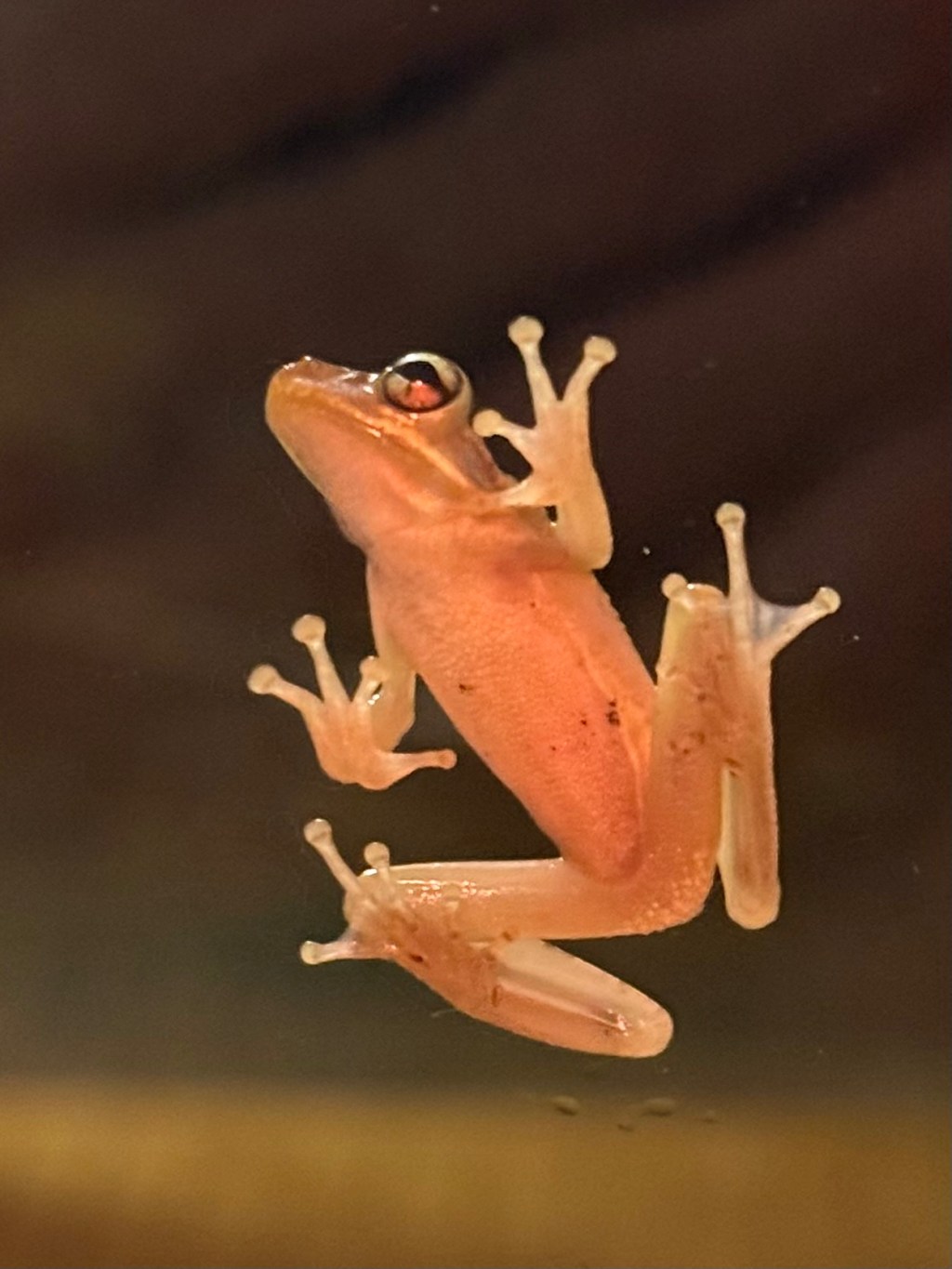
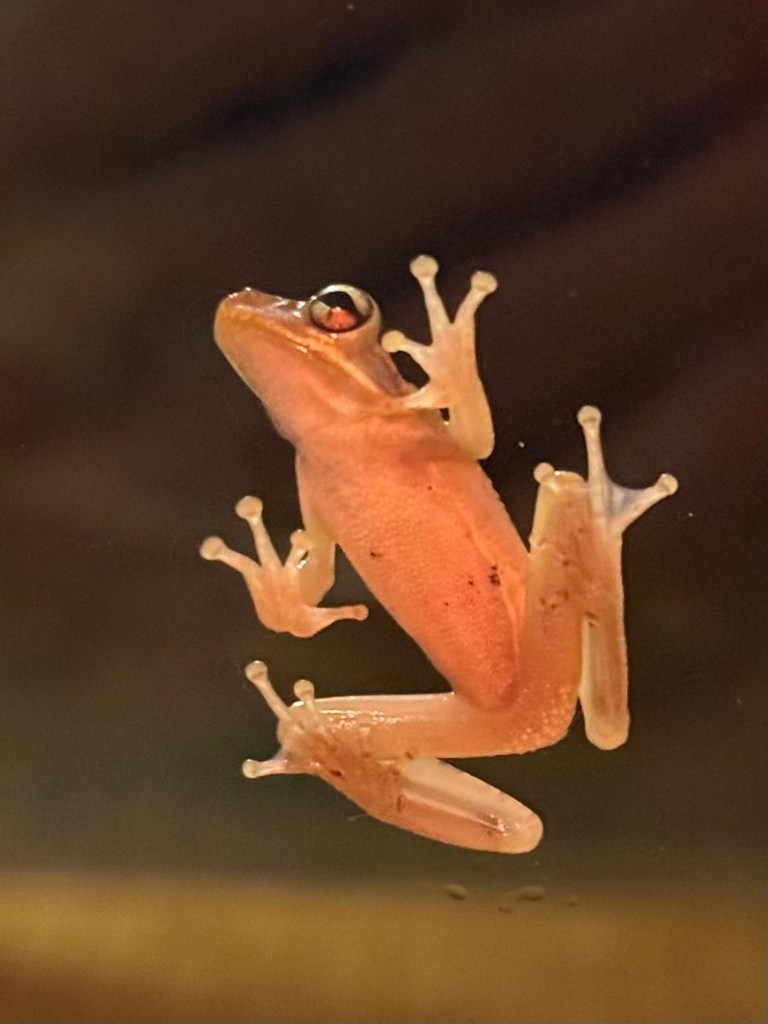
Cuban Tree Frog (Osteopilus septentrionalis).
A Cuban Tree Frog was spoinking around on the glass in our front door one evening, allowing this photo, taken from inside the house. These big tree frogs ate all the native tree frogs in the suburbs, so they’re all we’ve got.
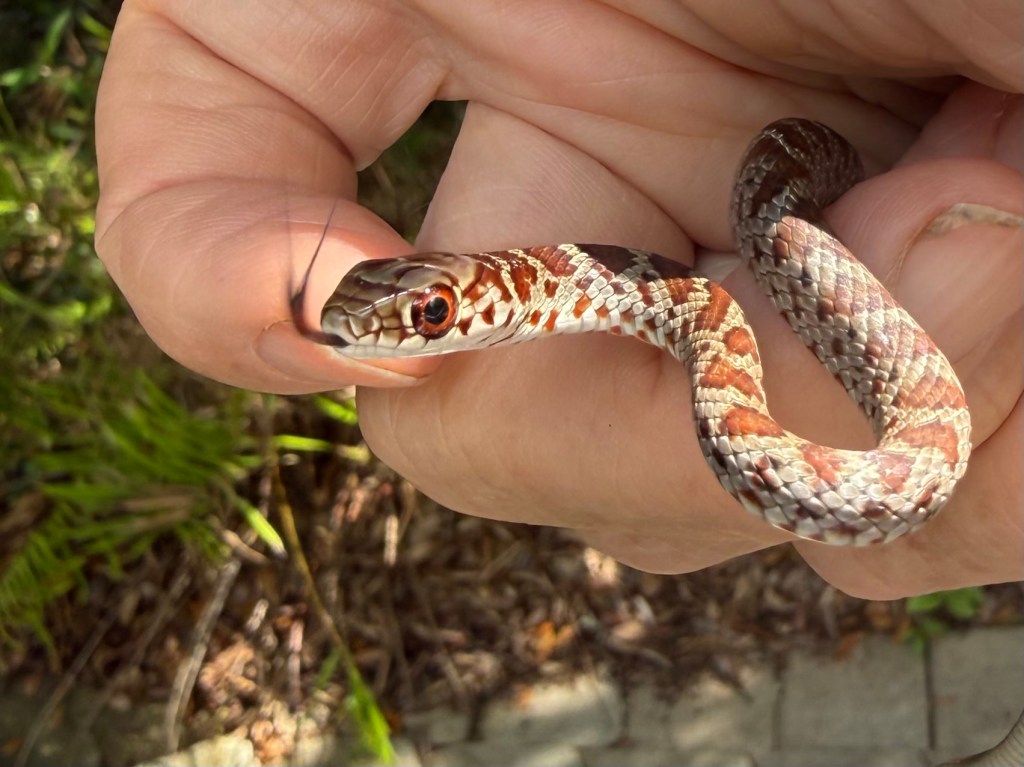
A baby Florida Racer aka Southern Black Racer (Coluber constrictor priapus).
I found this sweetie on the front porch hunting bugs and baby lizards. Wikipedia accurately describes its behavior: “Members of this species generally do not tolerate handling – even after months in captivity – and typically strike and flail wildly every time they are handled, often defecating a foul-smelling musk, a common defense against predators in snakes.” She chewed on my finger and made a stink, but since neither defense had any deterrent effect, she settled down enough to let me snap a photo, left-handed.
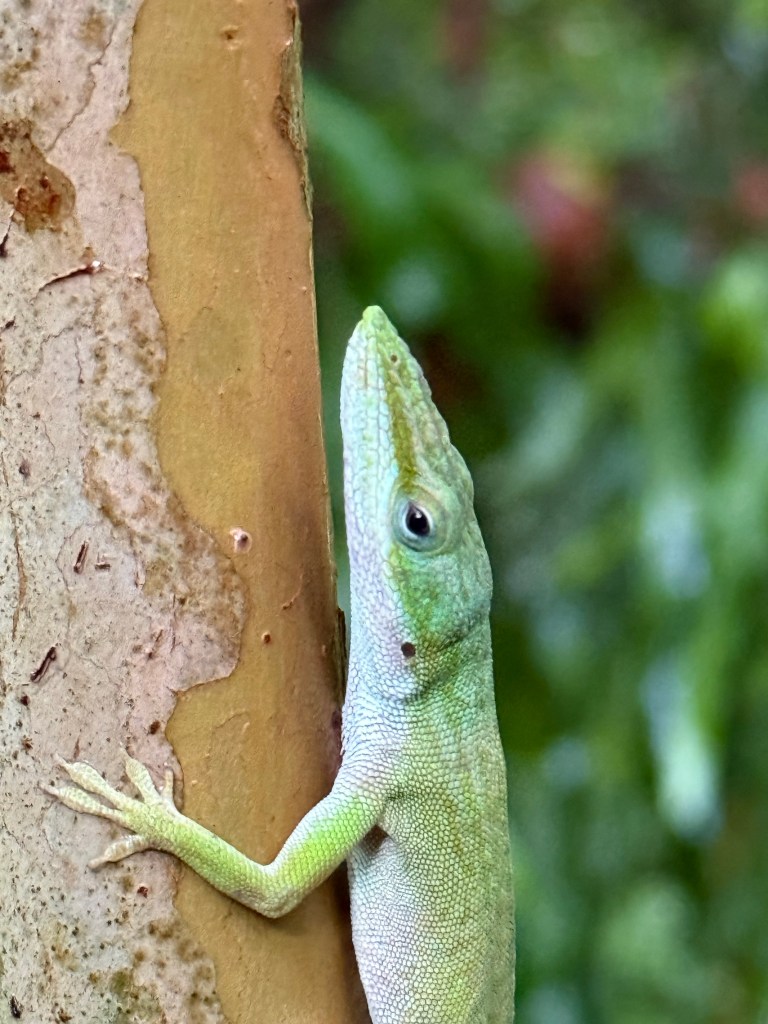
Green Anole (Anolis carolinensis x porcatus)
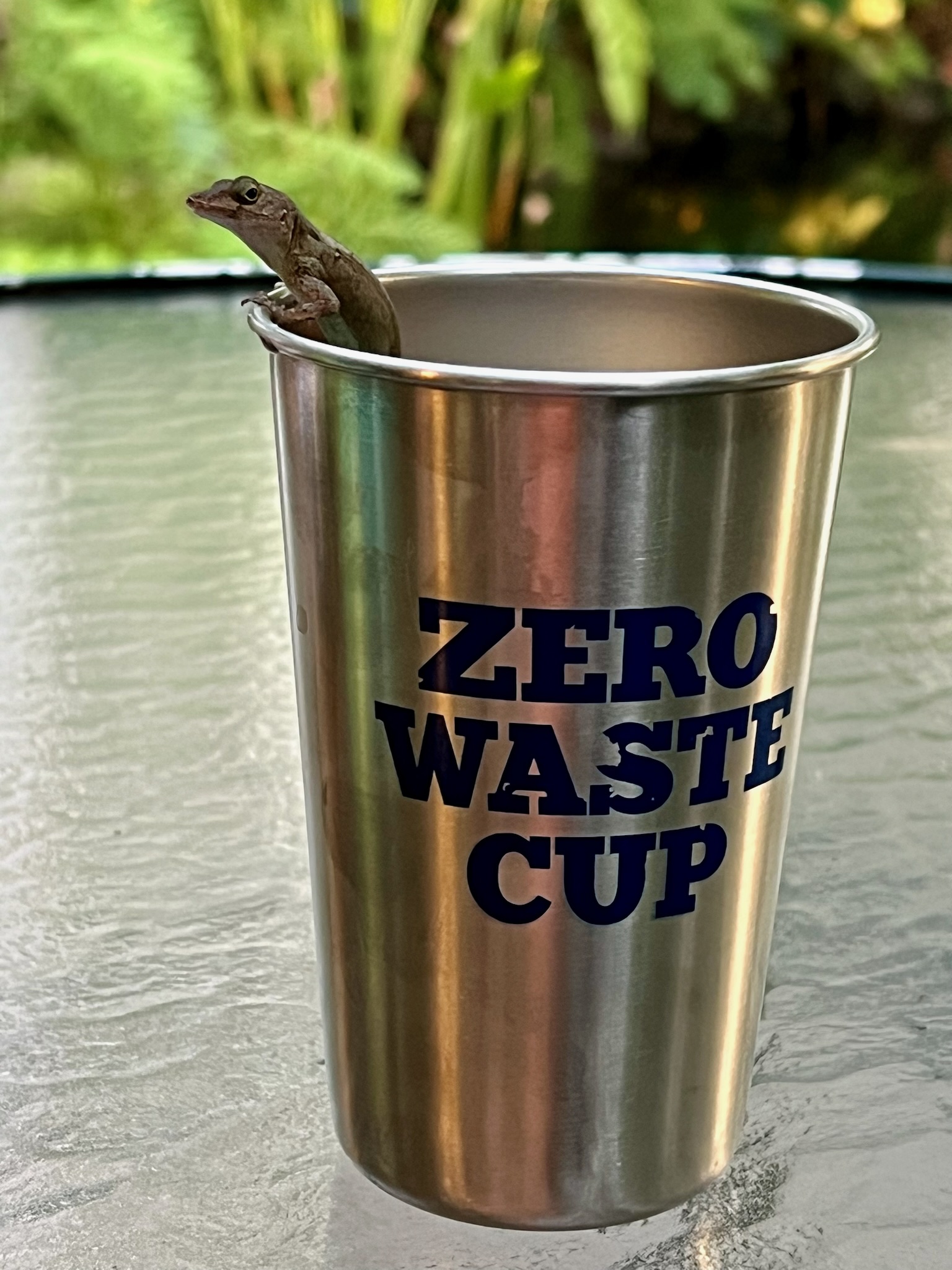
Green Anoles change color between green and brown. The Green Anoles in Miami are all hybrids between the Carolina Anole and its ancestor, the Cuban Green Anole. It coexists with the other invasive exotic anoles by holding a unique niche in the trees, often high up.
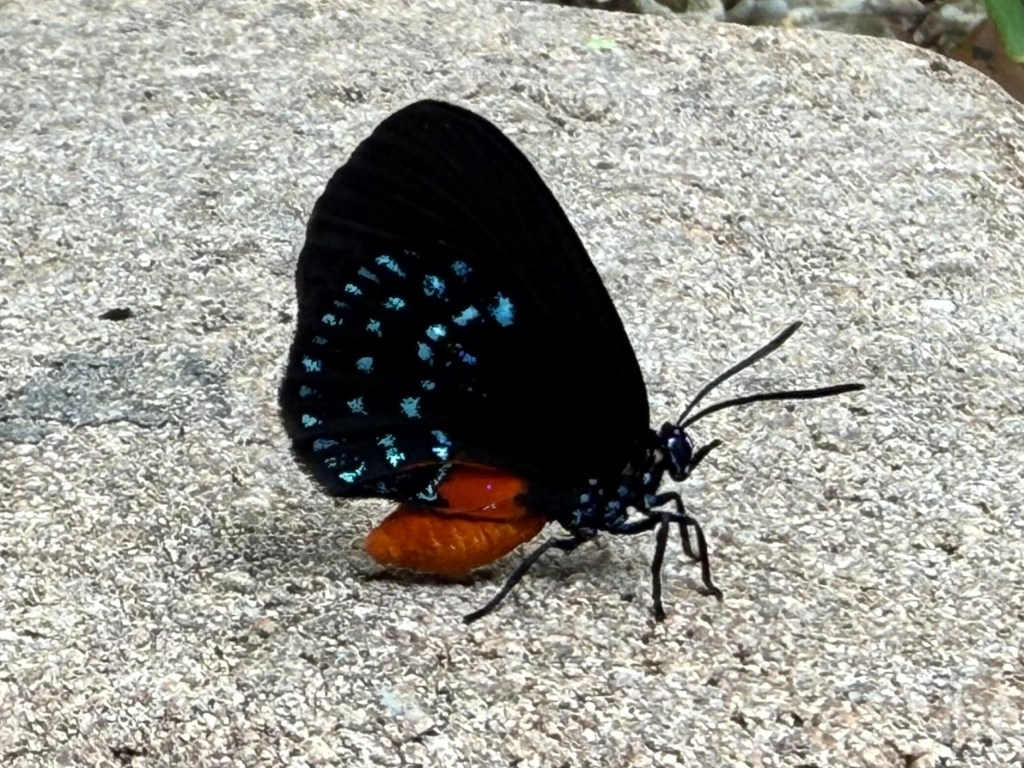
Atala Butterfly (Eumaeus atala).
Thought to be extinct, Atalas were saved by local naturalist Roger Hammer, who stumbled onto an unexpected pocket of survivors. Roger surreptitiously introduced their larvae into the cycad collection at Fairchild Tropical Botanic Garden, to the consternation of Fairchild’s Curator of Cycads. Atalas recovered and now lay eggs on the native cycad species, the Coontie, growing in our front yard. The larvae chew our lush Coonties to a tangle of brown stems while producing a cloud of small, colorful butterflies. The Coontie stores reserves in a big, starchy root and grows back.
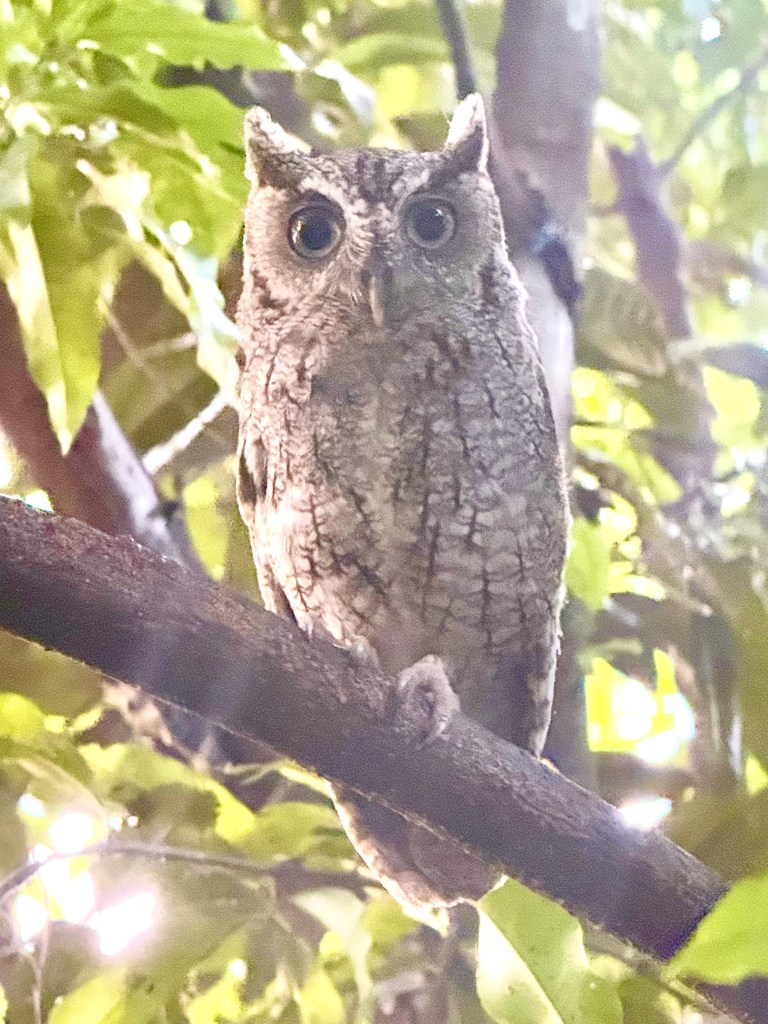
Eastern Screech Owl (Megascops asio).
Mr. Screech Owl revealed his location by singing in the late afternoon when I ventured behind a tree to, um, water the plants. The lighting was all wrong, but it kind of worked anyway – such is the chance encounter.
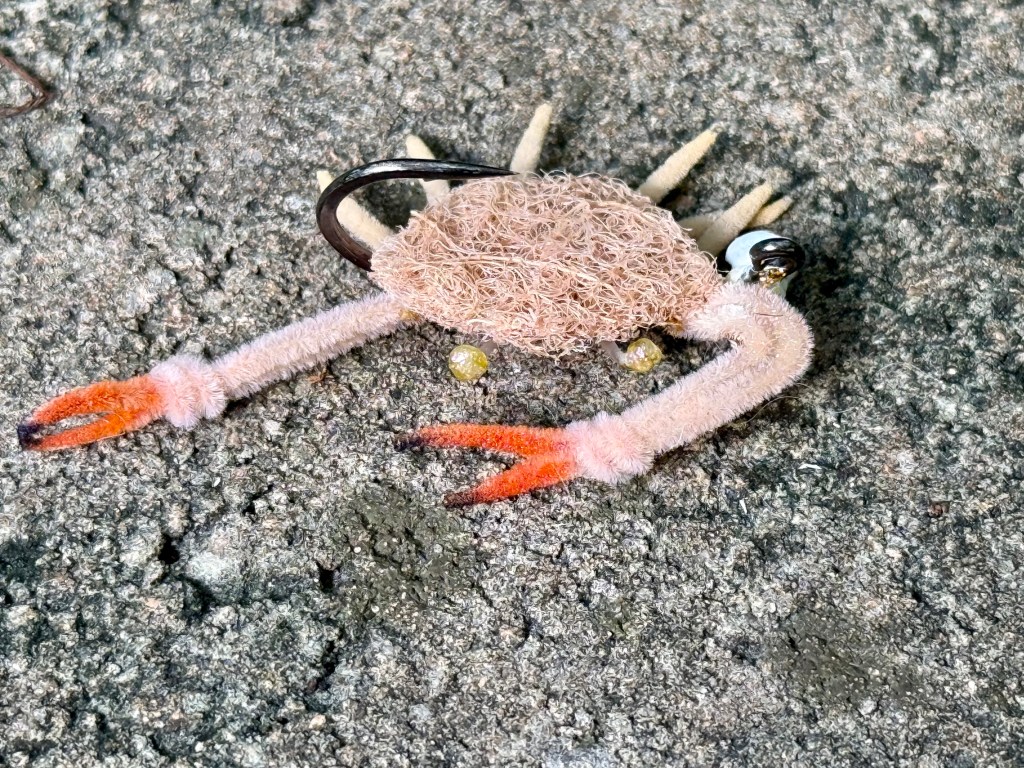
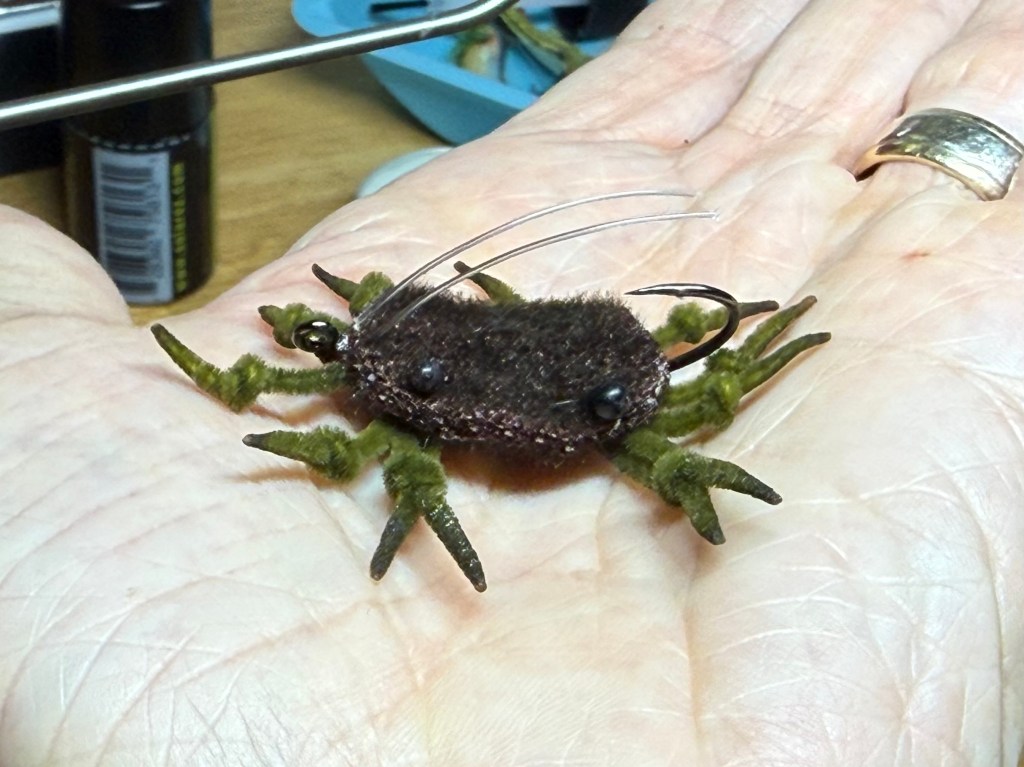
Crab Fly
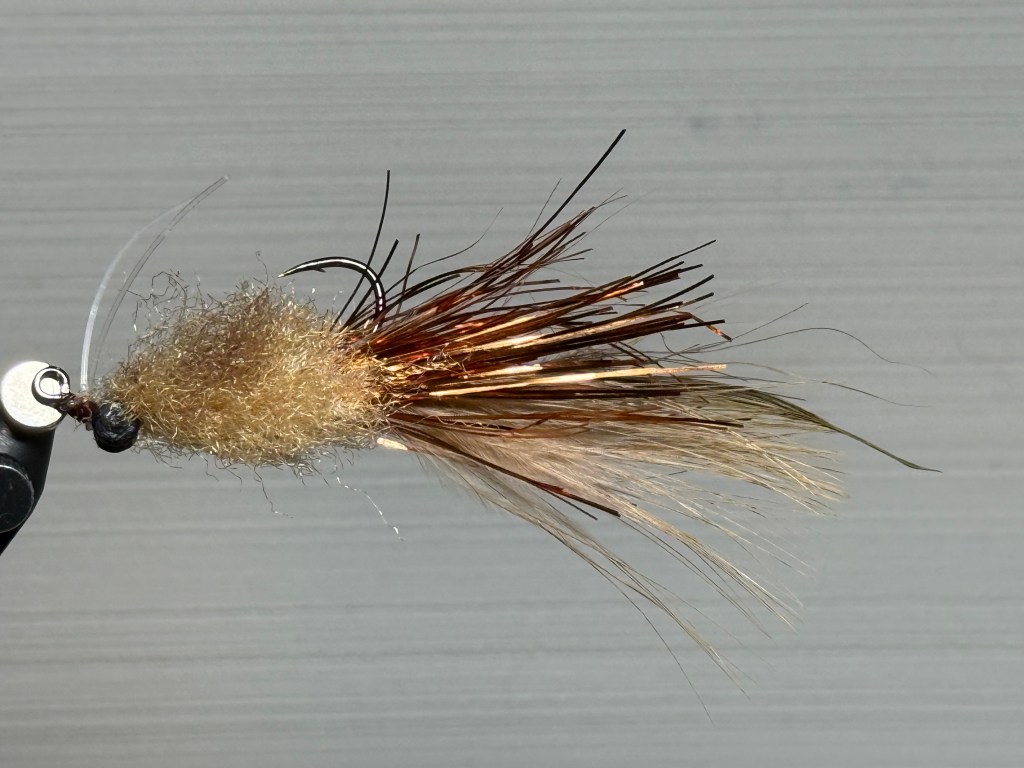
I’ve been tying a variety of crabby-looking flies in the hopes of fooling a Permit, a big tropical fish that eats crabs but which is notoriously wary, persnickety, and difficult to catch on fly. This fly is a mix of patterns that I adapted from various tyers. The body is cut from a coconut fiber kitchen scrub pad, the legs & claws I made from a fuzzy cord called “ultra chenille”, and the eyes I made from nylon monofilament and sparkly nail polish.
May 15, 2026. Low winds are predicted through noon with no rain forecast for the day. Ideal weather to fly fish for snook on the beaches in the SW corner of the Florida peninsula.
When the tide starts to come in, small bait fish congregate along the shoreline. In May and June, snook move in to hunt these baitfish along the beaches of SW Florida before heading offshore to breed. In turn, Lemon Sharks ply the water a few feet out from beaches to hunt the snook.
Sea level rise is a real thing here, and snook make the most of it, seeking out the beach stretches with “ghost forests”, woody remnants of drowned mangroves. I presume snook find some protection from hungry sharks and ospreys among the submerged stumps.
* * *
Mosquito season has returned to south Everglades. I don a second shirt and my head net in the car before heading outside to ready the skiff for launch. As I step out, a swarm of mosquitoes rushes inside the car to amuse me on the drive home. No kayak today; my destination is 17 miles from the put-in.
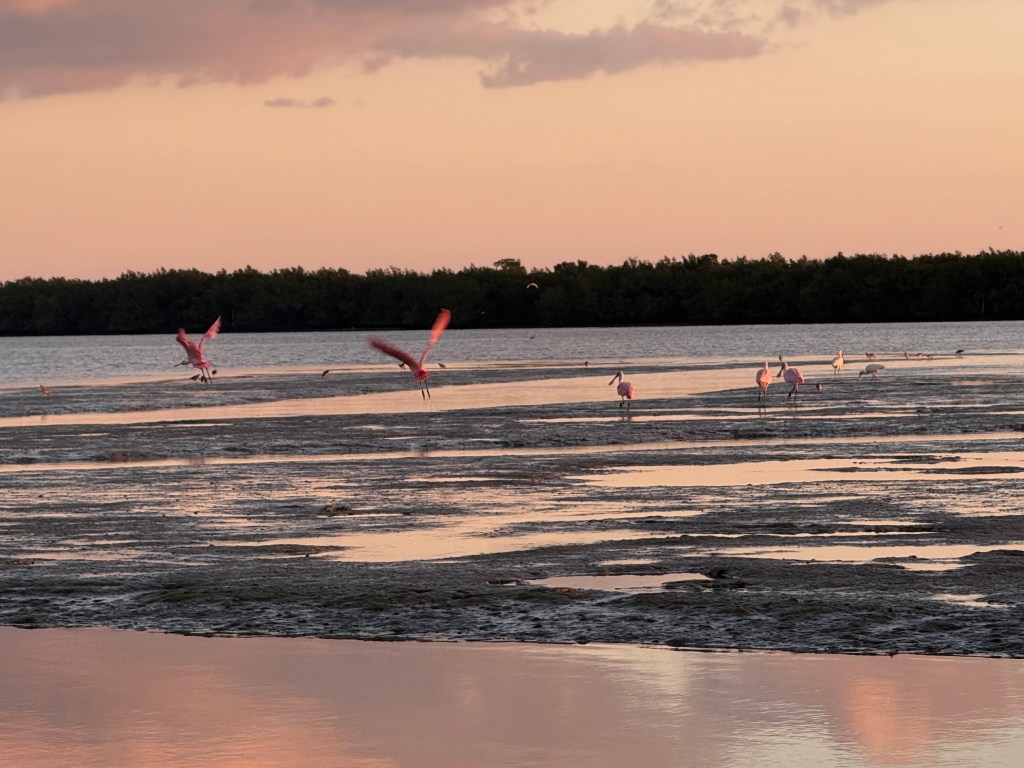
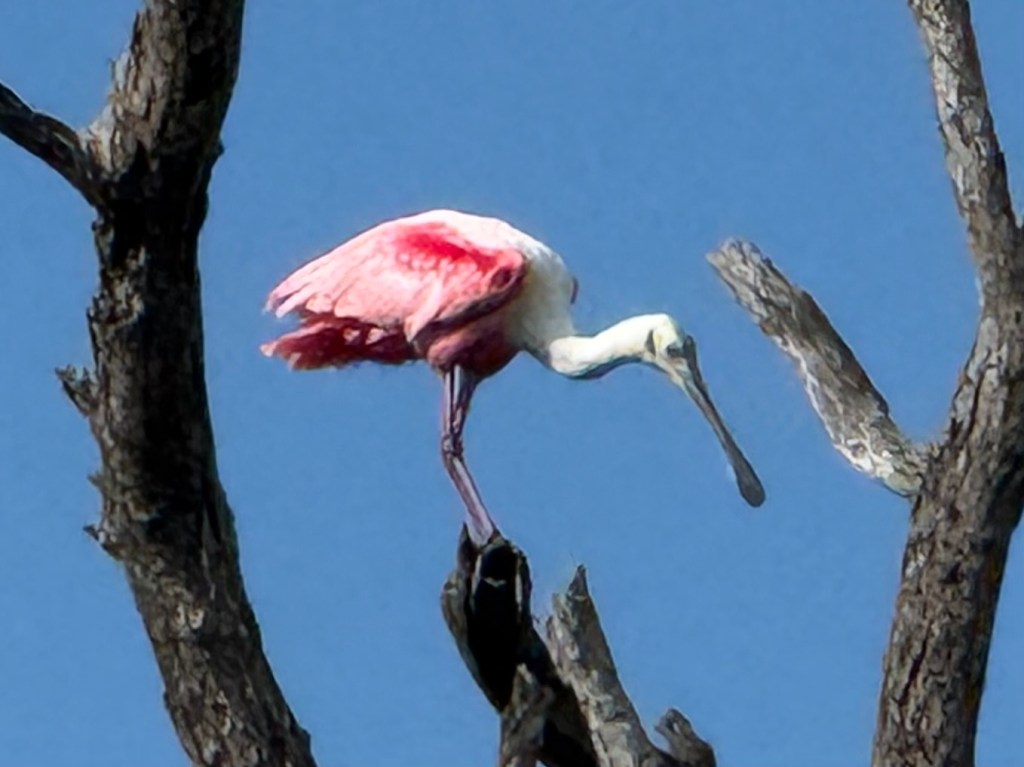
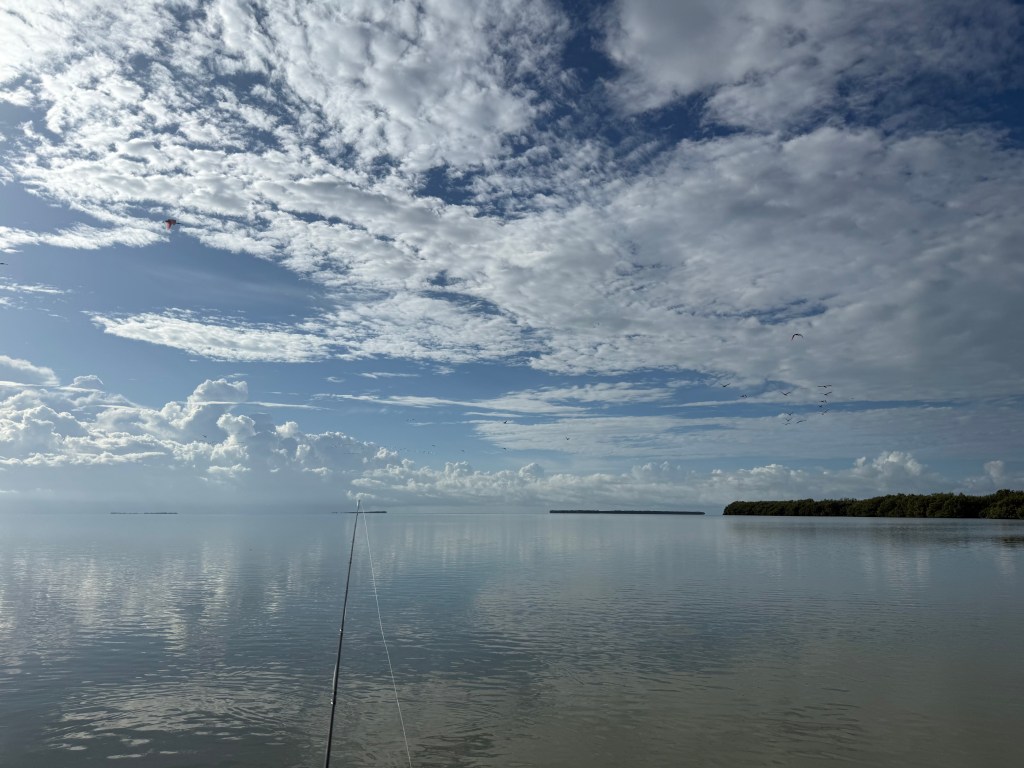
A Chuck-Will’s-Widow sings nearby as I launch in the dark. Something splashes, but my flashlight detects no crocodile eyes. The sun peeks over the horizon turning the sky and water pink as I take the shortcut through Lake Ingraham. I stop to watch pink birds.
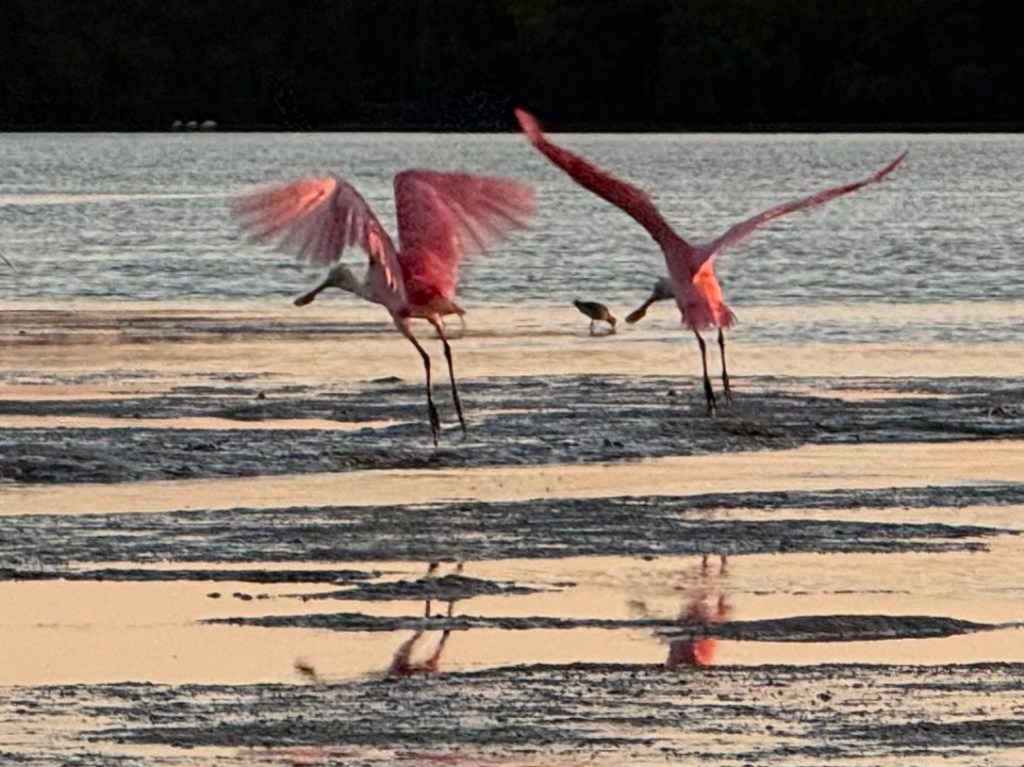
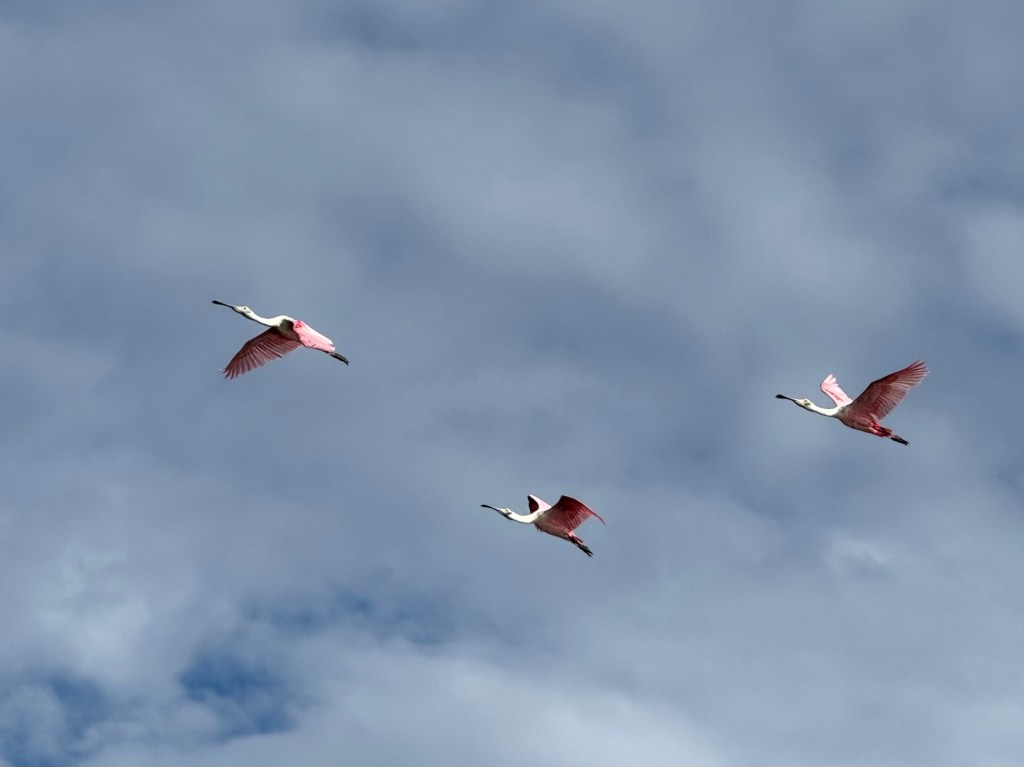
Roseate Spoonbills on Lake Ingraham at low tide. They’re pink at all times of day.
The tide is still going out when I arrive, so I check out the shoreline of a nearby tidal river, a spot just outside the strong current where I have found snook stacked up as they wait for the tide to change. Someone else has arrived before me to hunt for snook, with no intention of releasing them:
Feeding caught or released fish to Lemon Sharks is against my religion, so I move on to the beach. The wind is low, as NOAA predicted it would be, and the tide chart says the tide will turn in an hour. I bide my time watching a Swallow-tailed Kite hunts lizards and dragonflies as it courses back and forth over the low coastal scrub. I never get tired of watching kites.
I assemble my long, two-handed “Spey” rod, tie on a proven fly, and begin casting to the water’s edge, trying not to hook remnants of the mangrove ghost forest. At 8:30 am a snook grabs the fly and leaps into the air. It lands with a splash and leaps again. A great fish, but commotion like this broadcasts a loud “EAT ME” signal to any nearby sharks. A couple of years ago at this same spot, I broke a fly rod playing “keep away” with a Lemon Shark. I buy used fly rods, but they’re still inordinately expensive, and that particular rod was a treasured gift from my former student Manny. I have devised a plan to avoid a repeat:
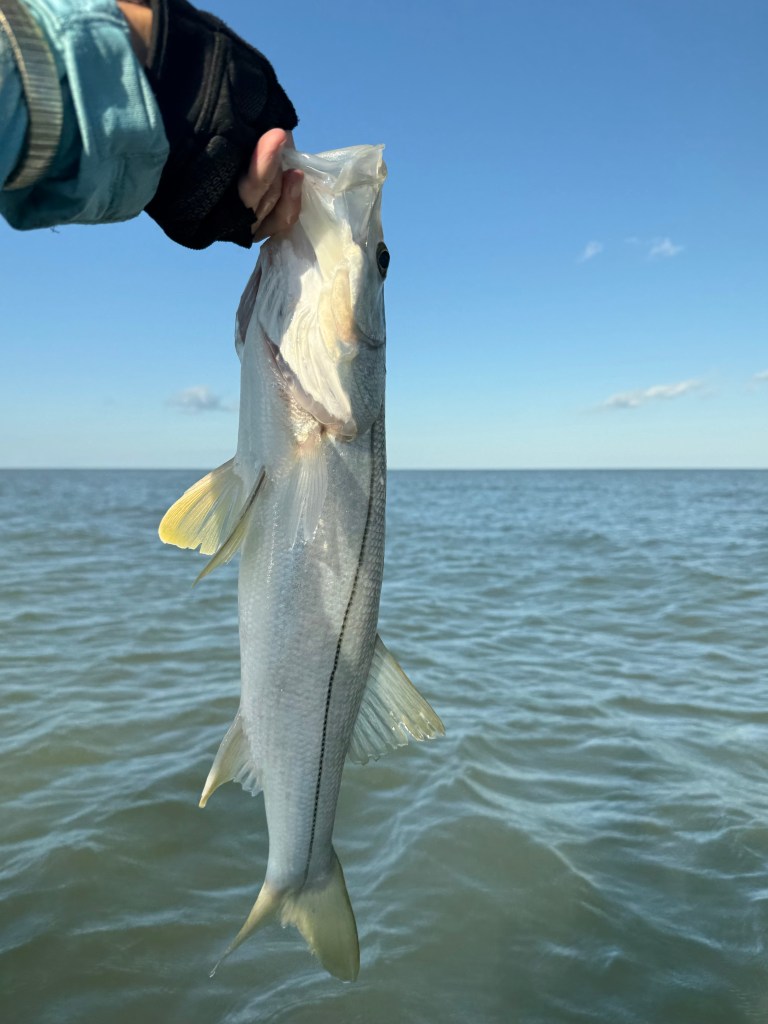
As soon as the snook hits the fly, I open the drag on the fly reel and let the fish run while I maneuver the skiff away from the beach into deeper water. When I spot-lock the trolling motor, Mr. Snook is still on the line. The ruse works – I play in the snook and net it up with no shark interference.
With sharks on the prowl, it’s unwise to reach your hand into the water to unhook a fish.
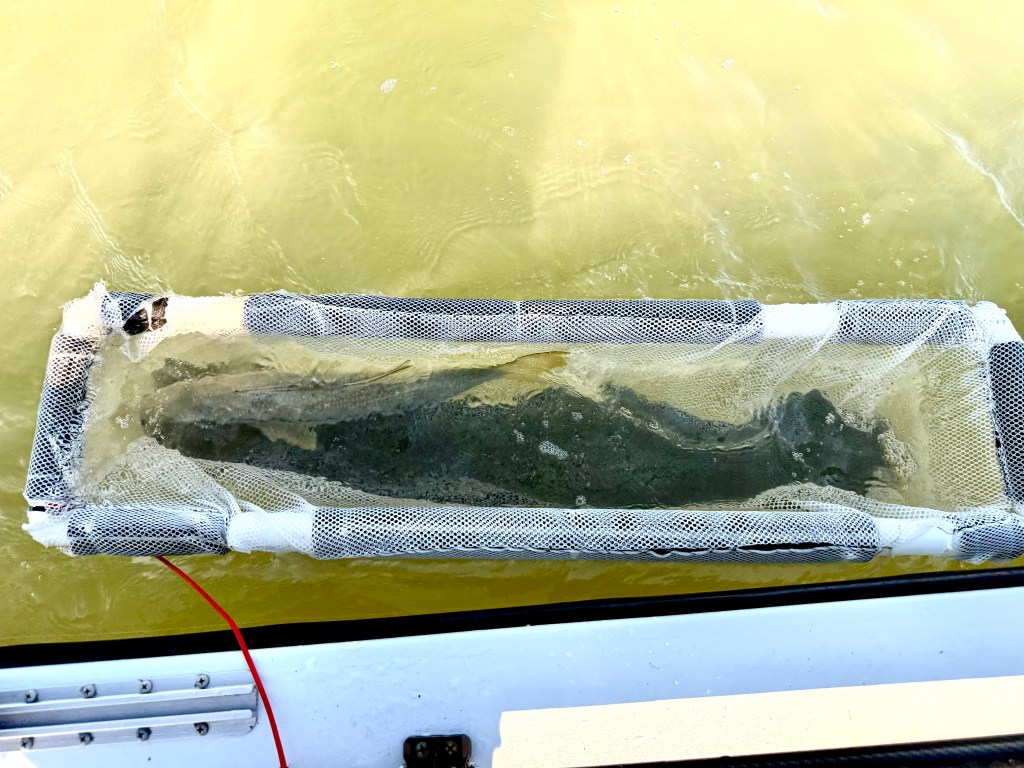
According to a paper I read, giving caught fish a few minutes to recover before release greatly reduces the likelihood of a shark chasing them down. I unhook the snook and put him into a homemade floating recovery pen where he rests calmly for a few minutes until I release him 75m from shore.
The snook is the gray fish-shaped thing with fins and a yellow tail on the left side of the floating pen. The long black thing is a strip of shade cloth to keep a shark from seeing the resting fish’s silhouette from below.
The wind is picking up three hours earlier than predicted and surf is now pounding the shoreline. I fish another hour, bobbing around in the waves, but no more snook are to be found. I disassemble the rod, fold up the floating pen, and make the return run. Retracing my path through Lake Ingraham and Florida Bay I’m happy to find the water is much flatter on the lea of the peninsula than the on the windward Gulf side.
* * *
So where are rest of the snook today?
With the strong offshore wind and crashing surf, perhaps the bait fish left the shoreline so the snook went elsewhere.
Rains bring snook down from the rivers to the beaches where they congregate before heading offshore to breed. Perhaps the spring has been so dry the snook are still up-river.
Maybe the recovering Lemon Shark population has reduced the snook numbers – I hope that’s not it.
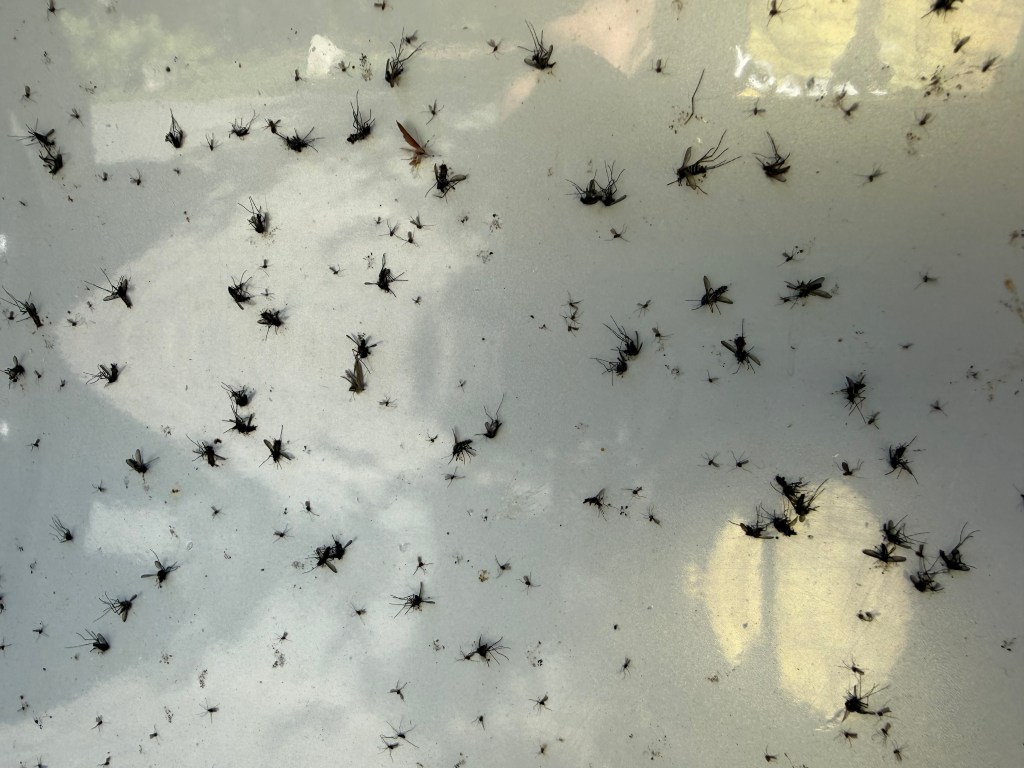
Here’s the car’s front bumper when I get home. Even as the beach snook are missing today, Black Salt Marsh Mosquitoes have faithfully resumed their time-honored role as defenders of the south Everglades.
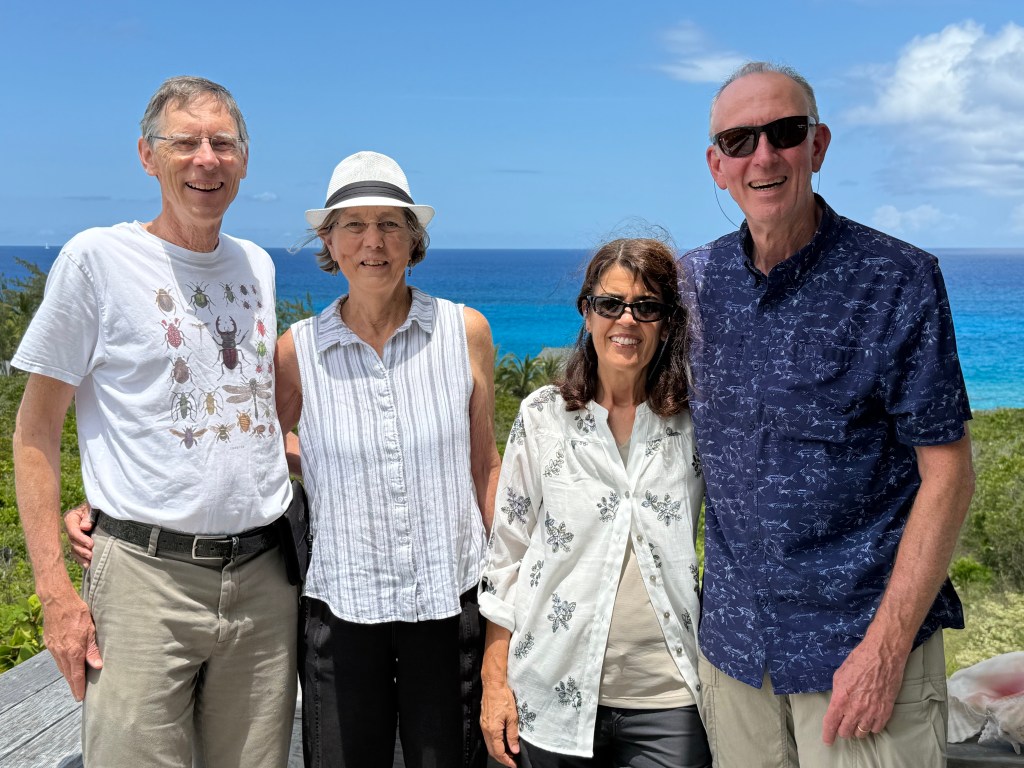
When I moved to Miami in 1992, I assumed I’d take frequent trips to The Bahamas – they are so close. Thirty-four years later, I finally made my first trip. We spent an enchanted week on Long Island, 335 miles ESE of Miami. “We” includes my wife Gray and our retired zoologist friends Chris and Marcia from the Keys.
* * *
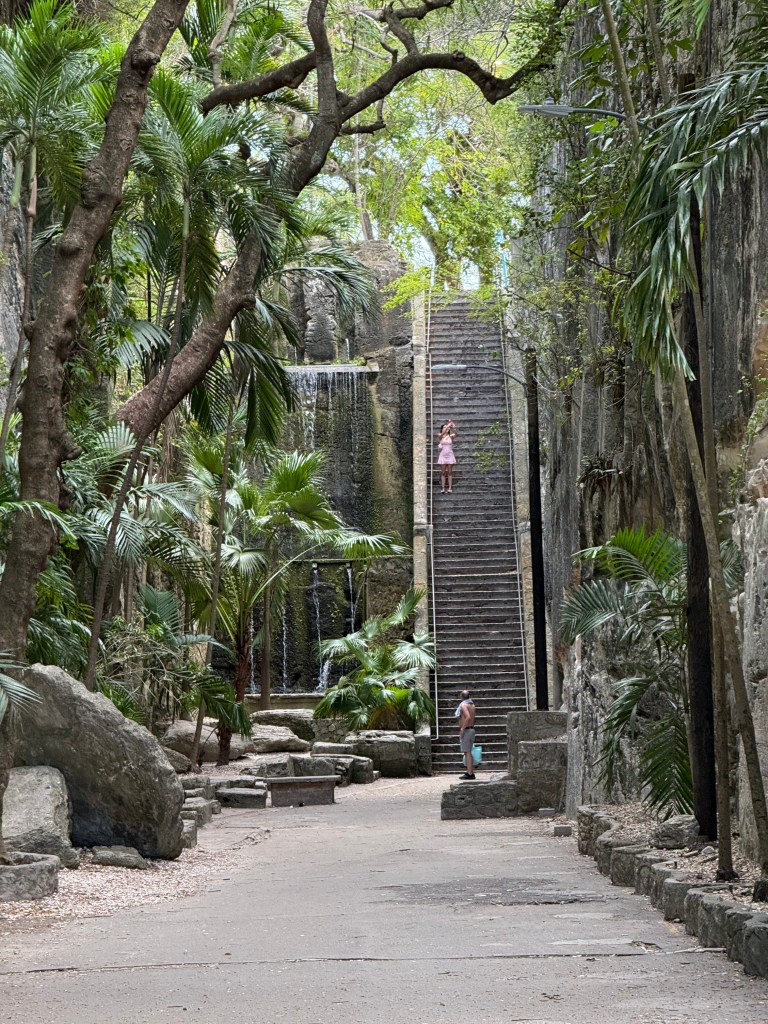
Flights being what they are, we stay over in Nassau before flying to Long Island. We spend the afternoon poking around the downtown, the best part of which is the walk up and down the Queen’s Steps at the end of a former limestone quarry turned tropical garden.
The Queen’s Steps, Nassau
As I sit on a stone wall to take in the view, a black rat (Rattus rattus) pops out from behind a rock, runs across the space in broad daylight, and scrambles onto my left foot. I shake my left foot reflexively and Miss Rat deftly leaps onto my right foot. I snap my right leg straight and propel her back across the narrow quarry, where she scoots back into her hole in the rock face. Rats rule the Queen’s Steps, or fancy they do.
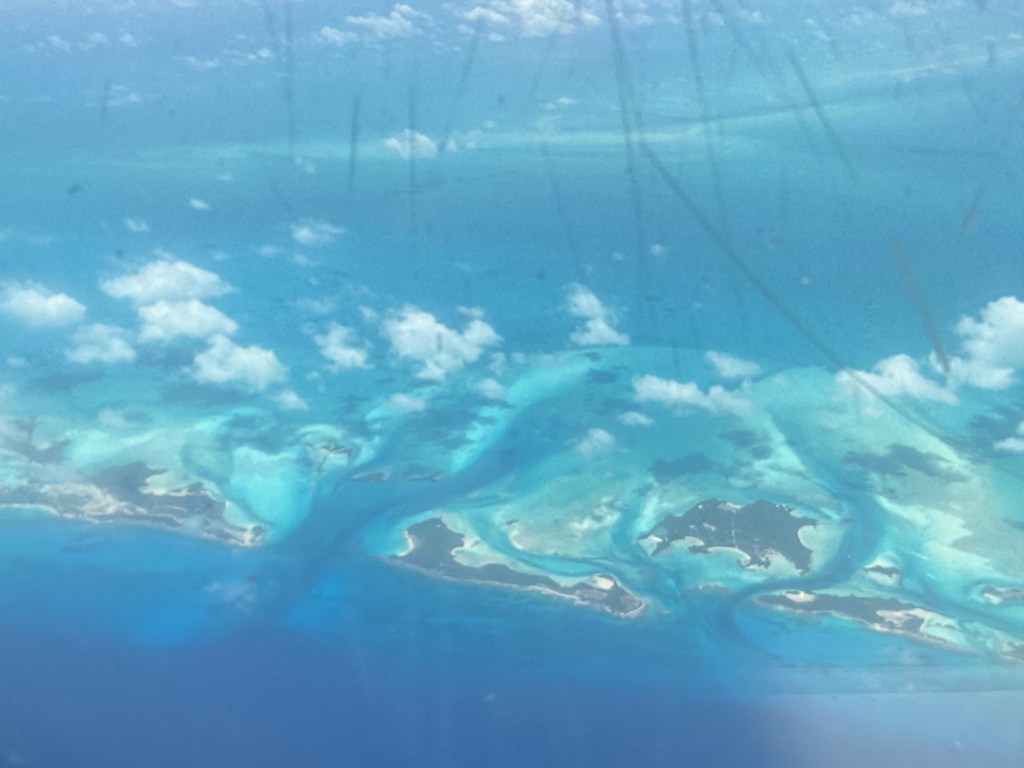
The next day we take a turboprop to Long Island, passing over infinite turquoise flats visible through the scratched window.
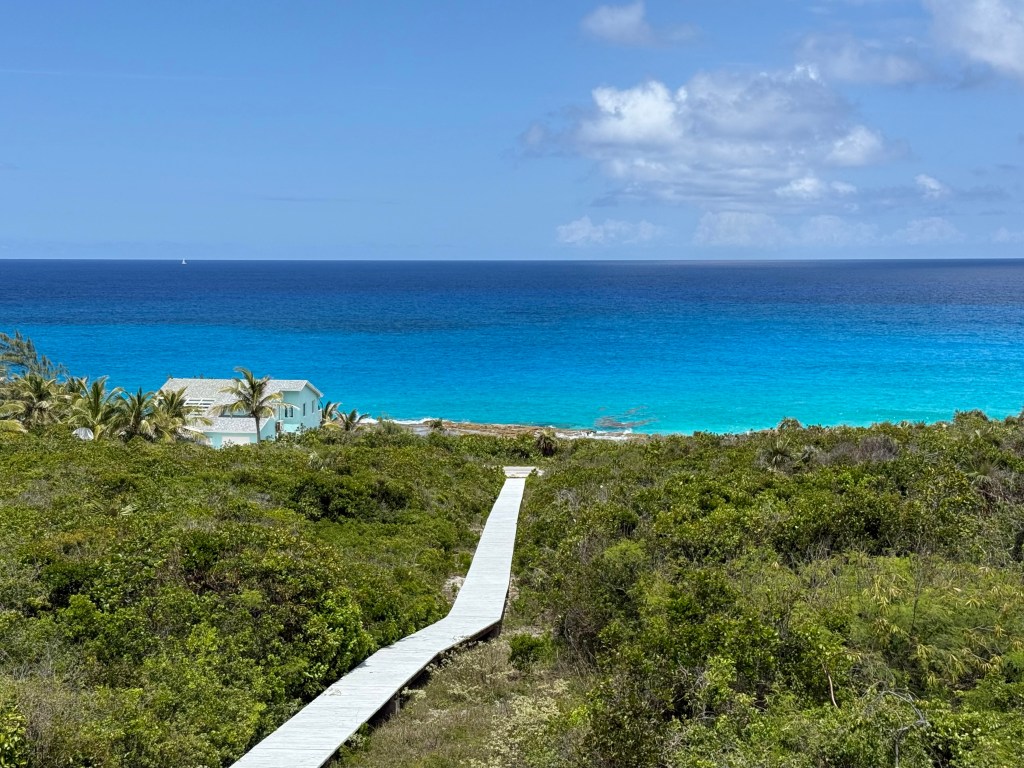
As per its name, Long Island is long, about 80 miles end-to-end, and narrow, a mile wide in most places. It’s heavily vegetated in dense hurricane-pruned coastal hammock and scrub.
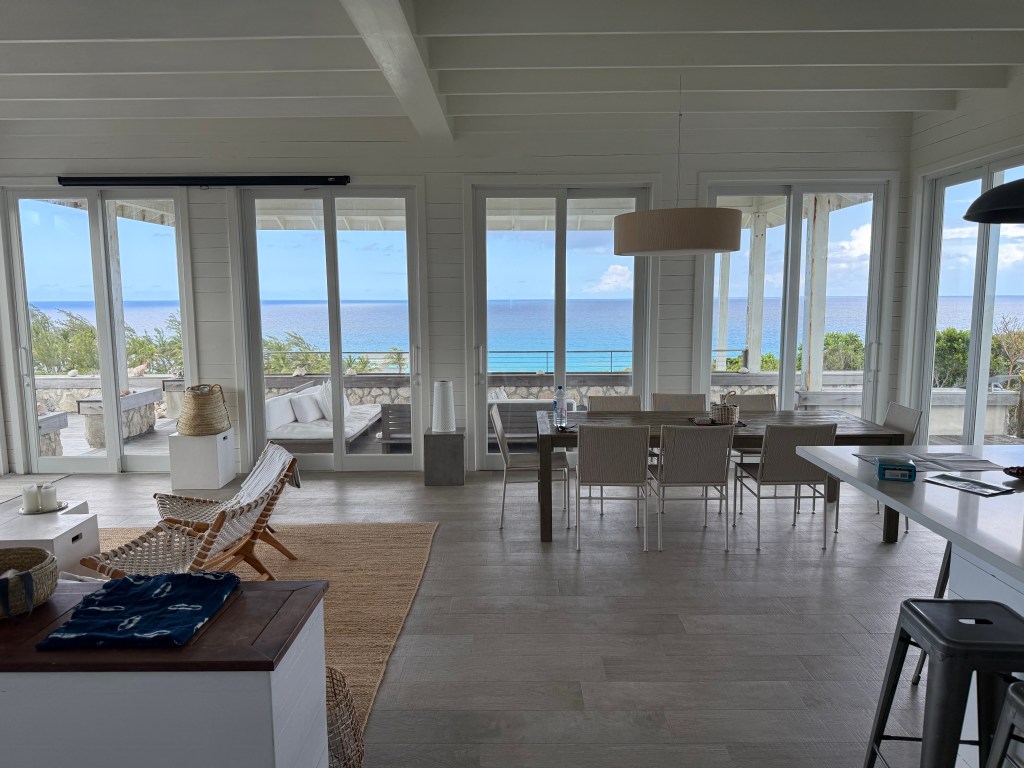
One road, The Queen’s Highway, runs the length of the island (are you sensing the Bahamian “Queen” theme yet?) Some sections had been paved at one time or another and everybody drives on the left side of the pitted road. We lodge at the north end, in Stella Maris where our digs are a Home Exchange house on a hilltop overlooking the Atlantic.
Chris is a far more experienced fly fisherman than I, and equally enthusiastic. For two months, Chris and I have been planning to fish for bonefish on fly. We even caught them in our dreams.
Slipping into bed on our first evening in Long Island, Gray asks me in a warning tone:
“You’re NOT going to spend the WHOLE time fishing, are you?”
“Oh no”, I reassure her.
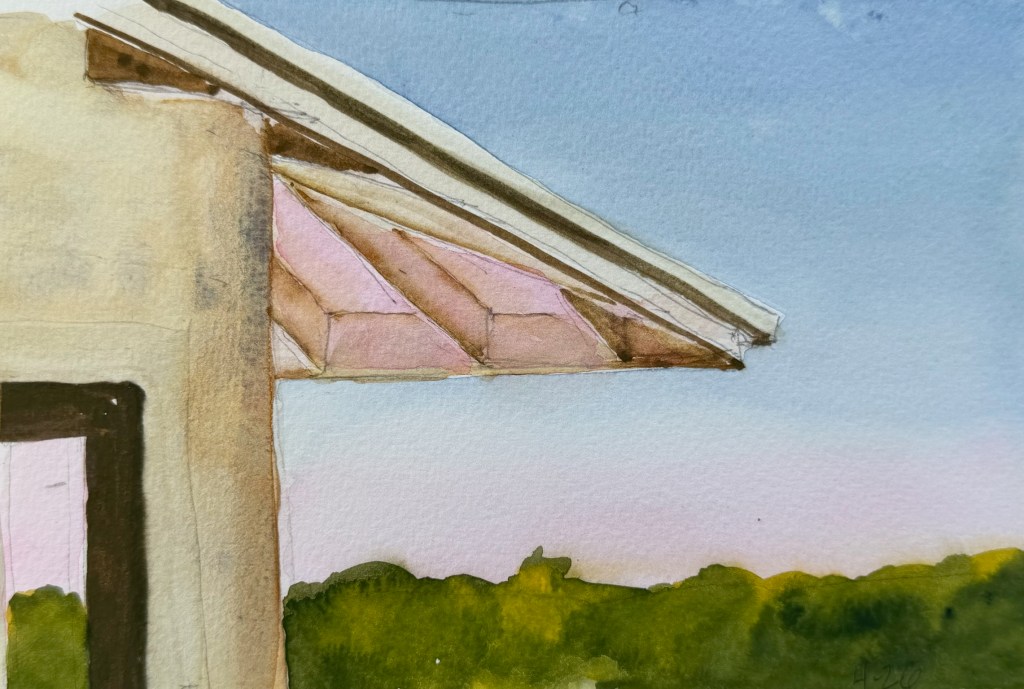
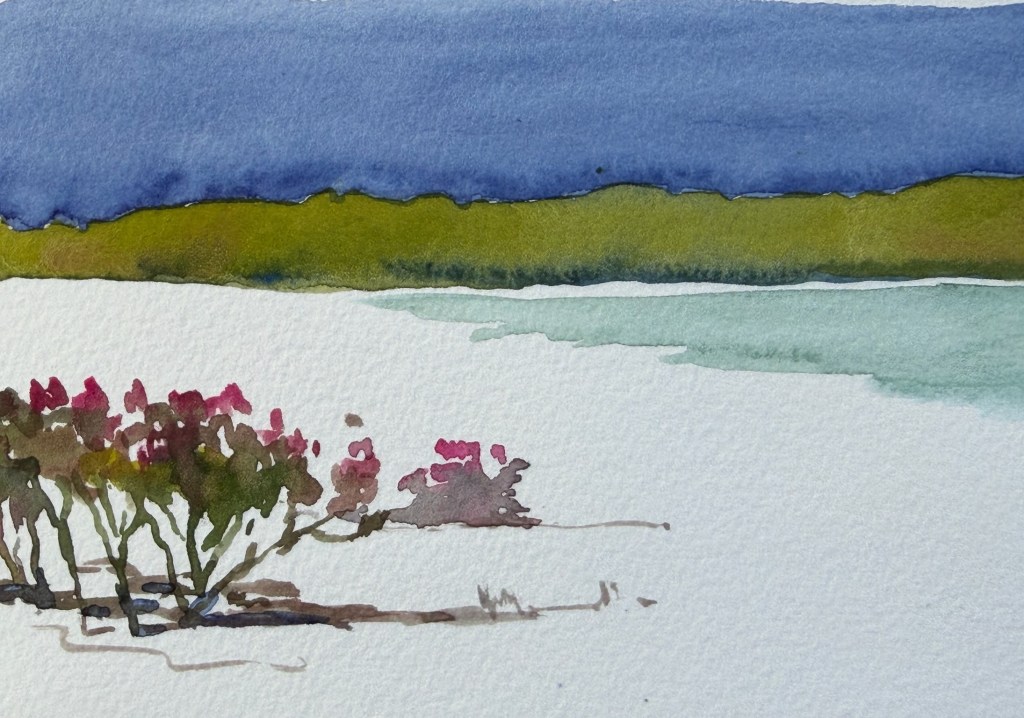
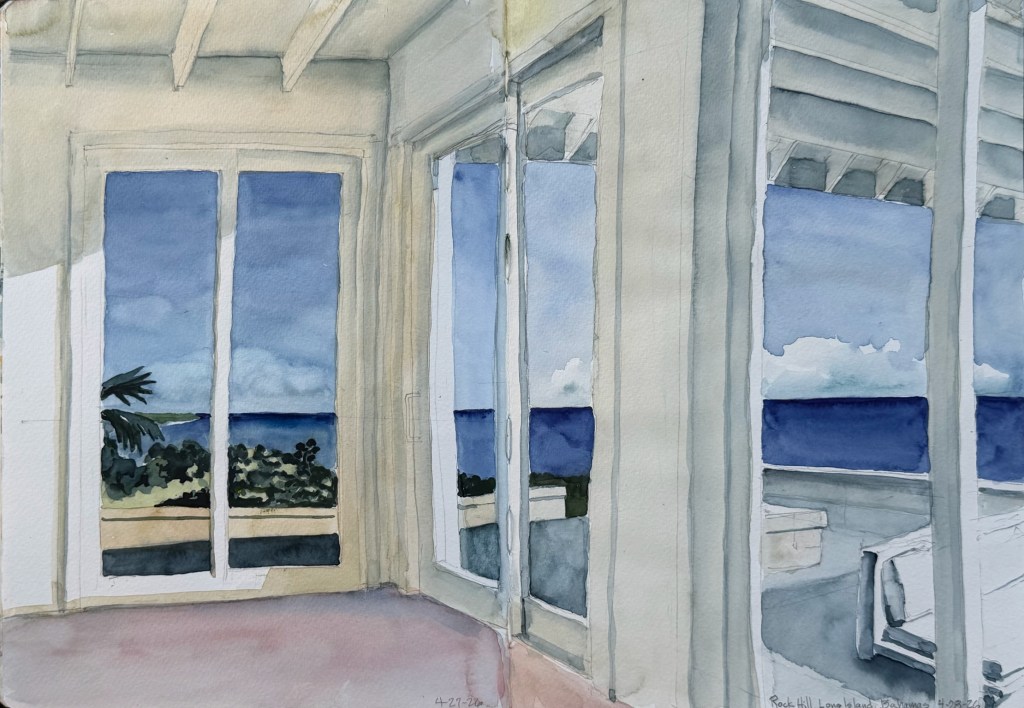
Fishermen never lie; it’s hard to see bonefish at night. For her part, Gray spends every possible moment painting lovely watercolors of everything around her. I don’t complain. Why would I? I am delighted by her painting and seeing her enjoy it so.
Having forgotten to pack her tube of turquoise, Gray struggles to capture the exact color of the water.
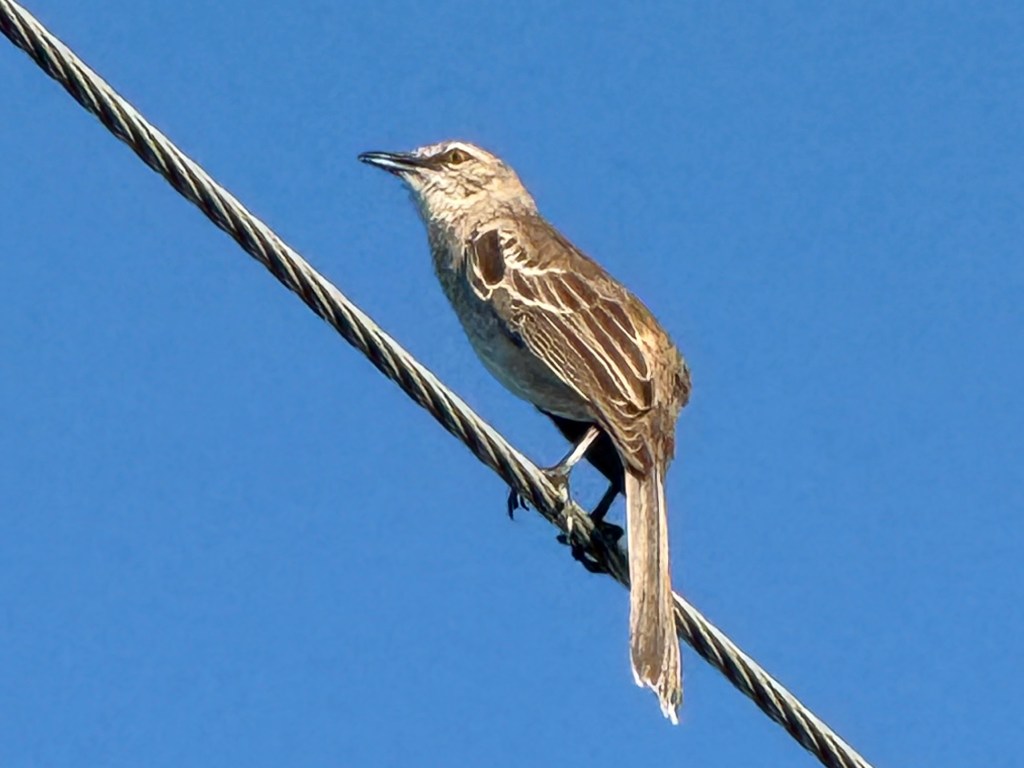
Marcia borrows my binoculars and watches birds. While tricky to spot in the dense, low thicket that covers the windswept island, you can often hear their songs.
The Bahamas Mockingbird does not imitate other birds, but it sings its own lovely songs with the same enthusiasm.
A Bananaquit and a Bahama Mockingbird take baths in the gutter under the eave. Mangrove Cuckoos growl from the vegetation “kuk-kuk-kuk-kuk…”, but are largely invisible – only Marcia manages to spot one.
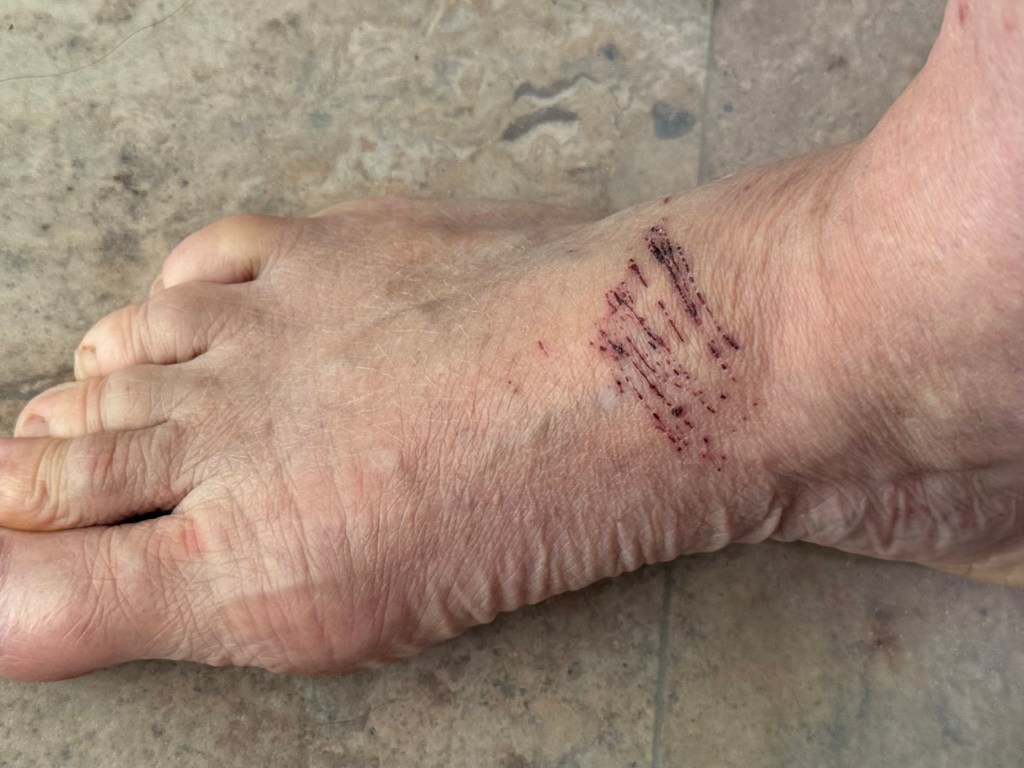
I discover thin vines with tiny thorns running along the ground through the scrub. Ouch.
If you venture off the path, nix the sandals – boots advised.
The property manager tells us that the recent hurricane last November took a heavy toll on the birds and butterflies. Hopefully they recover soon.
Food and supplies, such as they are, cost about twice what you’d pay on the mainland. Provisions arrive once a week at the town of Salt Pond, 20 miles south of our place, via the mail boat. The Regatta was held at a different island last week. Sailing being the national sport, lots of locals attend the Regatta, so the mail boat went there instead of Salt Pond. As a result, we find the produce shelves sparser than usual at the local food stores and the ATM empty of cash. The only fish we find for sale are canned tuna, tins of sardines, and frozen salmon. I’ll be darned if I’m going to The Bahamas and eating canned fish or frozen salmon. We innovated with the menu and didn’t starve. I’d brought good coffee and granola from home and a spinning rod that might prove handy for grocery fishing.
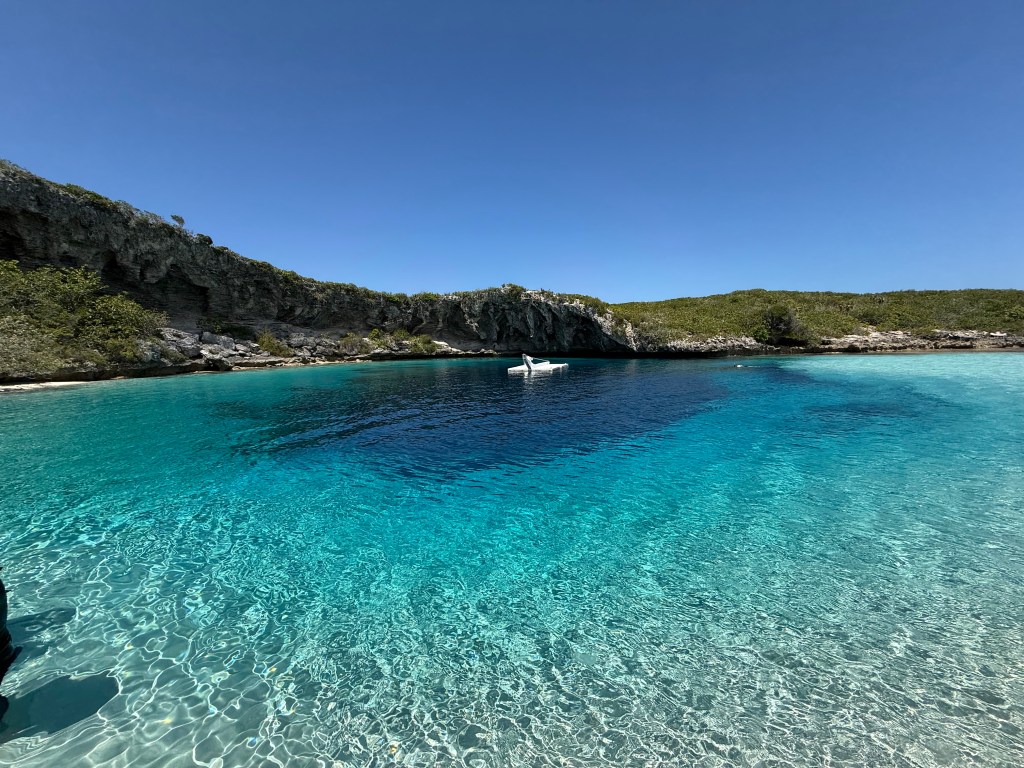
The four of us drive an hour south to Dean’s Blue Hole. At 663 feet deep, it’s the second deepest blue hole on the planet.
Dean’s Blue Hole. The white thing in the middle is a platform for divers, secured by four long steel cables.
The hole’s shallow perimeter is lined with live coral, hosting oodles of tropical fish and the odd sea turtle. Gray and I snorkel around the cool water to soak in the splendor.
* * *
FISHING REPORT
Chris and I wade fish on our own for two days, after which we conclude that the author of the do-it-yourself bonefishing book maybe hadn’t actually fished all the places he recommended. A mangrove creek where, he wrote, one could spend a full day fishing for bonefish would have taken us a full day to free ourselves from the deep, sucking mud. It looks promising on Google Earth, right?
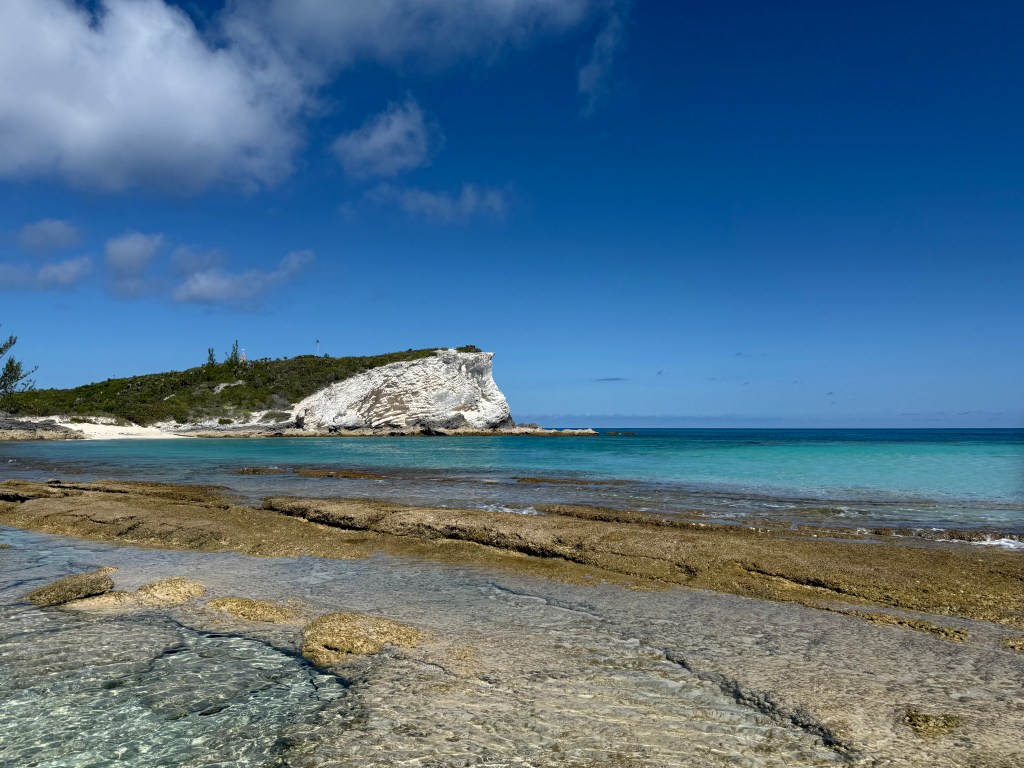
The most interesting wade-fishing spot we find is the lagoon by the Columbus Monument / Lucayan Memorial at the north tip of the island. This lagoon is ringed by the prettiest flats I’ve seen anywhere.
Columbus Monument / Lucayan Memorial. Good old Christopher Columbus enslaved the Lucayans but they died. All of them.
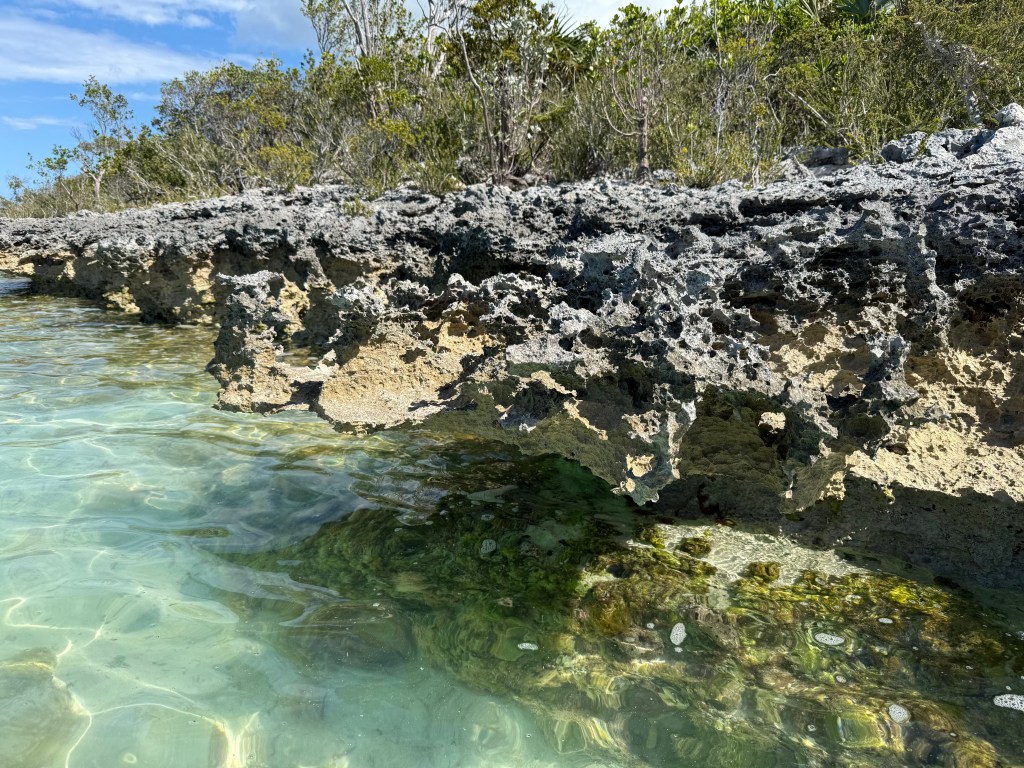
Chris wears his new Simms flats boots, cumbersome affairs that do an excellent job traversing the frighteningly sharp eroded limestone that lines the shore. These boots would be good footwear for birding off-trail, as well. I tippy-toe over the crags in my rubber-soled dive booties. They’re better-suited for sand.
One slip here and you’d be raw hamburger.
We see lots of young Green Turtles and Lemon Sharks, a few schools of small mullet, and the odd passing bonefish.
The next morning we walk the edge of Aderley Bay, also pretty, and filled with critters.
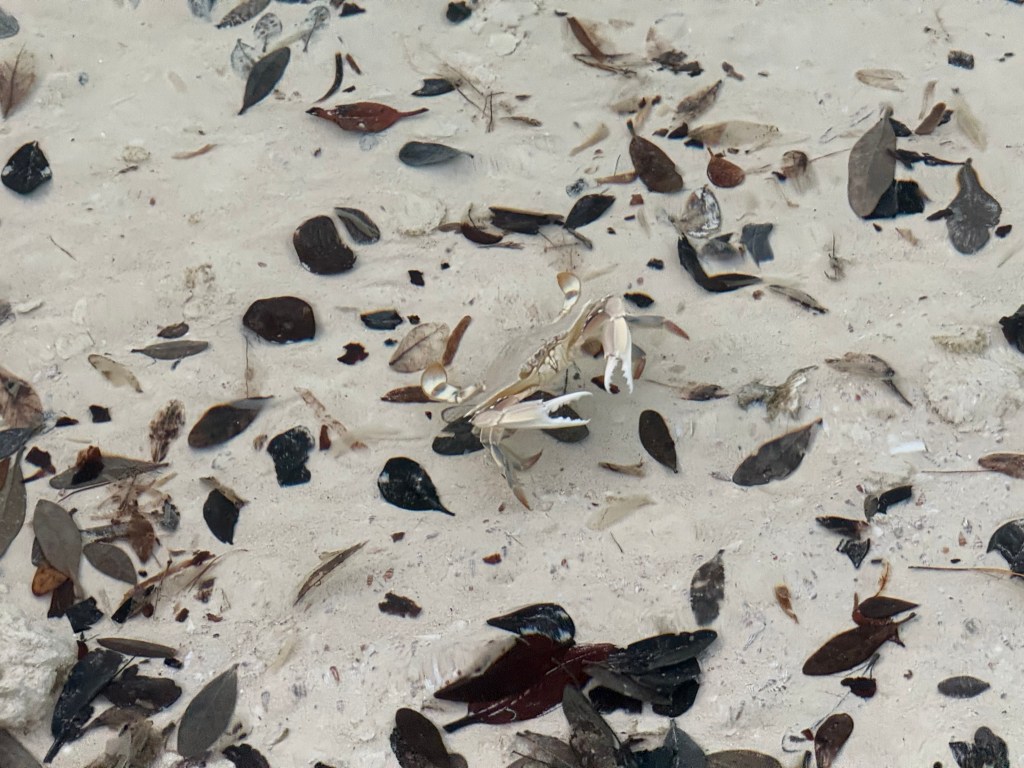
These sand-colored portunid crabs are everywhere in the shallows of Aderley Bay.
We catch little snappers and Chris catches a baby Nassau Grouper that grabs his fly before diving into its hiding hole, but we don’t see a bonefish.
Returning to the lagoon at the Monument/Memorial late morning, a 10 pound bonefish swims up to Chris before he has prepared his line for casting. Oops. I see another bonefish approach. It sees me too and veers back into deep water. That’s it for bonefish today. Wading mile after hopeful mile, Chris and I rub our toes raw inside our neoprene wading socks. [Note to self: acquire snug synthetic liner socks].
This week the moon is waxing full, allowing the bonefish to stay up all night feeding on sand worms and other invertebrate party snacks. Having a full tummy come morning presumably lets them hang out in deep water and reduce daytime exposure to aerial Osprey attacks. Tide swings are steeper on the new and full moons which move bonefish faster through their circuit between the mangrove creeks and deep water. These faster movements, in turn, shorten our accessible fishing time on the flats. Neither nocturnal feeding nor fast transit over the flats is ideal for finding hungry bonefish by daylight.
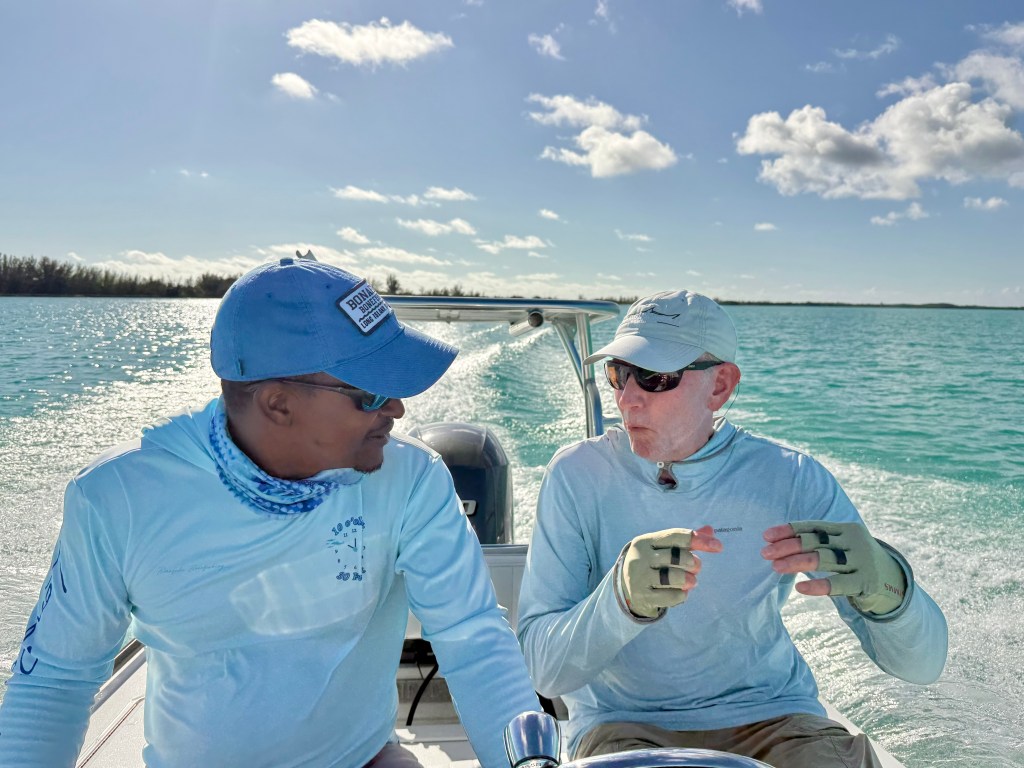
Fortunately, Chris has booked us a day with James “Docky” Smith, owner of Bonafide Bonefishing. The locals tell us that Docky can put us on bonefish under any conditions.
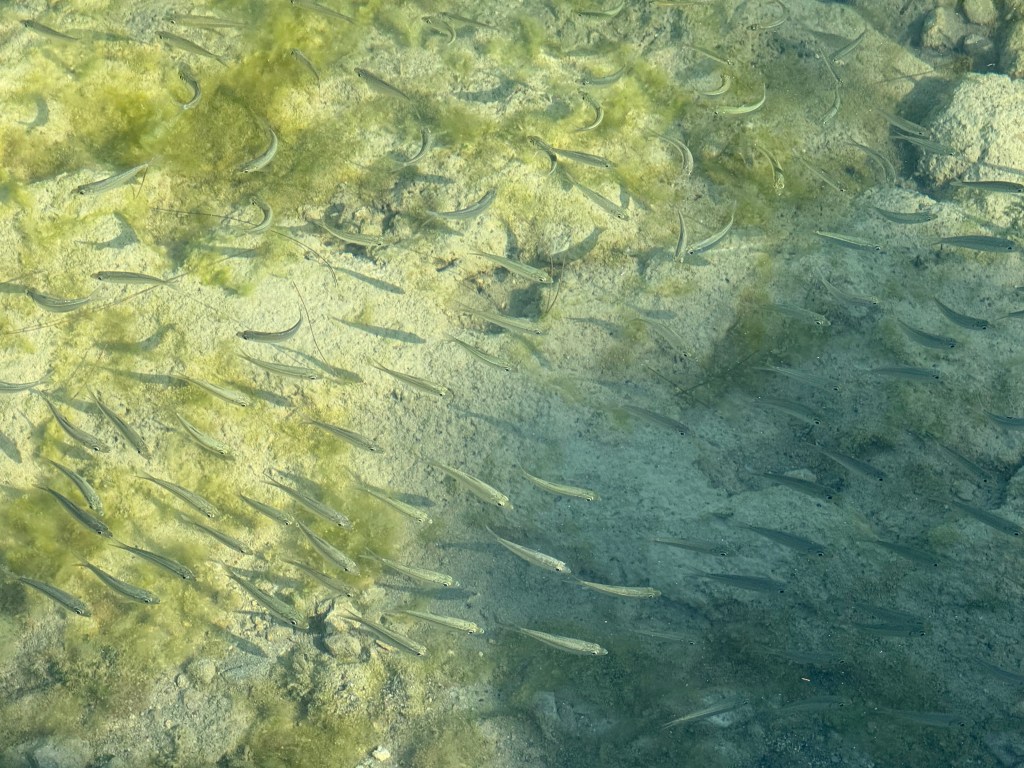
The following morning, as we wait at the marina for Docky to show up, Chris chats with Docky’s brother “Big Dog”, who is fiddling with something on a large fishing boat. I watch a school of baby tarpon evading a hopeful barracuda and scout the water for snappers as a possible future dinner alternative to dining out.
A gazillion Baby tarpon. So cute!
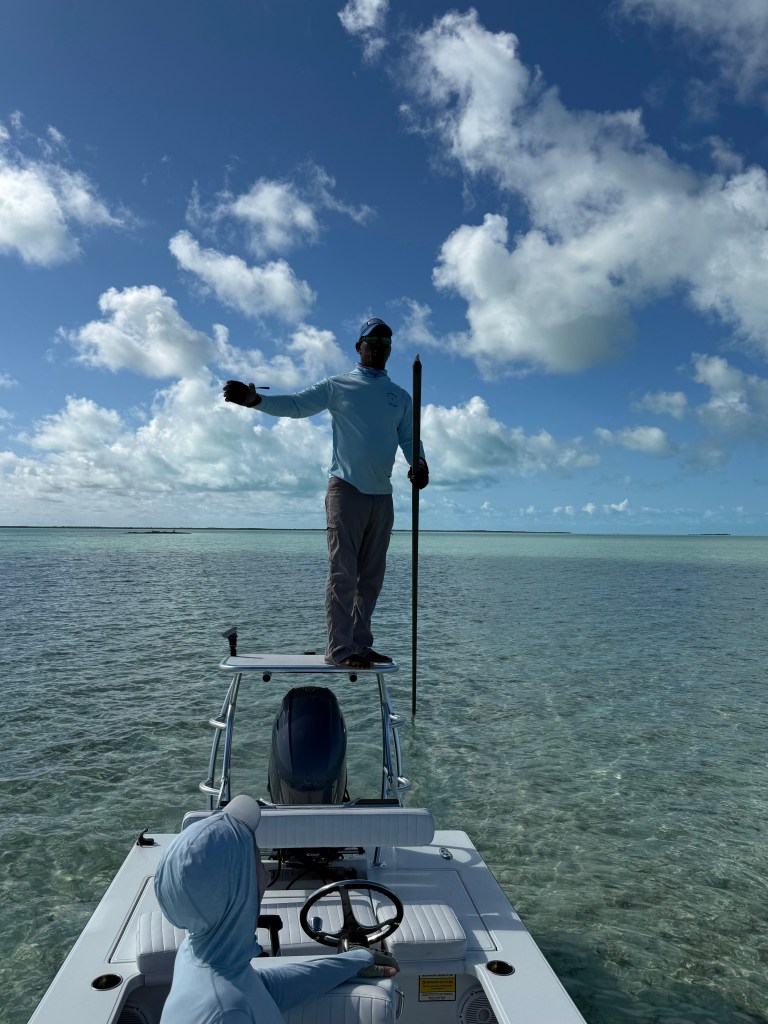
Docky motors up in his flats skiff, a Kevlar Hell’s Bay Professional that poles in 5″ of water.
In 20 minutes we are on a beautiful flat, completely inaccessible to fishers lacking a shallow-draft flats boat. Docky cuts the motor and asks us to make a few practice casts so he can gauge our skill levels. My humble casting skills have room for improvement. Docky says to slow down my rod and speed up my left hand line haul. I try and it makes the casts longer and easier (thanks, Docky!). I can tell Chris is very excited – I’ve seen him make a hundred casts better than these.
Docky selects a fly from my collection, Chicone’s Crusher Legs Gotcha, tied with fur from our friend Laura’s Australian Shepherd. Docky directs me to the bow, and begins poling his skiff slowly across the flat in less than a foot of water.
“They are here, we just have to find them.”
Docky’s scheme is to intercept bonefish as the falling tide pushes them to deeper water. Wind riffles the water, better for fishing but harder for seeing fish. At least that’s the case for me. Docky has 30 years experience spotting these flats ghosts, and like all good flats guides, easily spots fish twice as far away as a normal human can.
Docky: “There … 11 o’clock, 80 feet. See them?” Me: “No.” Docky: “Sixty feet. See them?” Me: “No.” Docky: “Forty feet. See them?” Me: “Yep!” Docky: “Start casting!”
Twenty bonefish are swimming side-by-side straight toward us. I cast where Docky says. The fish don’t like my cast and leave. I need to angle my cast more downward so the fish cannot see the fly line. Try again.
Docky finds more fish and says “Start casting.” I cast and the fish turn away. When Docky says to start casting, he doesn’t mean for me to cast. He wants me to false cast until he likes the angle of my fly line and the distance of my fly, and then only to let it go when he says to. Ohh-kay. Not what I’m used to, but I’ll follow the master today.
The next school holds 25 bonefish, including a few large ones. Docky tells me to cast right in front of the middle of the school… wait, now! With a clearer understanding of his directions, I make a satisfactory cast, wait for the fish to get close enough to see the fly, then start the long, slow strips that mimic the behavior of a small shrimp fleeing encroaching bonefish. A dozen fish advance curiously to check out the escaping fly. Each bonefish, in turn, takes a quick look and swims away. Then the biggest one, a nine pounder, breaks out of the school and swims up to the fly. This big bonefish keeps following, following, following, then nope! It turns away too. They all think something is wrong with the fly. I suspect the fur is too long and offer to trim it shorter, but Docky says to pick a different fly entirely. I ask which one? “Doesn’t matter, choose one.”
I let Chris have the bow and go back into my fly box for something different. I pick the #6 Bone Appétit, with a shorter “wing” of tan rabbit fur. It’s a Crazy Charlie variant that Drew Chicone designed for the white sands of Andros Island. The sand here is white as well. I also switch from my 8 weight setup to my 9 weight, which will handle the wind a little better.
My tie of the Bone Appétit, a bonefish pattern by Drew Chicone.
Chris explores the numerous ways to scare bonefish. He shifts his body weight during the cast, rocking the boat maybe an inch, just enough to push out a subtle wave that makes the bonefish anxious. He repositions his sock-clad foot after the cast; somehow the bonefish sense it and depart. He casts his fly to land upwind of a bonefish school but the wind curves the belly of the fly line in front of the fish, scaring them away. Having corrected all his errors, Chris finally hooks up with a nice-sized bonefish that gives him several good runs before randomly tossing the fly. Hard-mouthed fish are good at that. Here’s a photo of the bonefish before it got away.
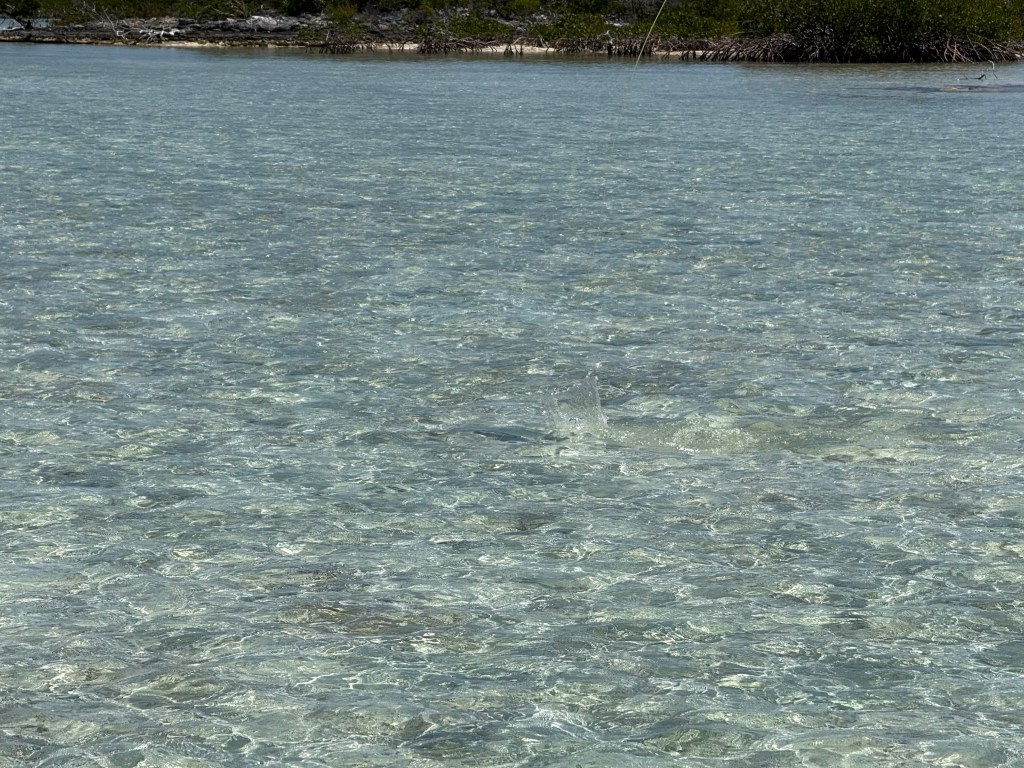
It’s not you; this hooked bonefish is invisible to normal humans. Even if you zoom in, all you can see is the nylon leader and disturbed water. Bonefish match and reflect the background color, but they are opaque, so one can track them by their moving shadows if clouds don’t block the sun.
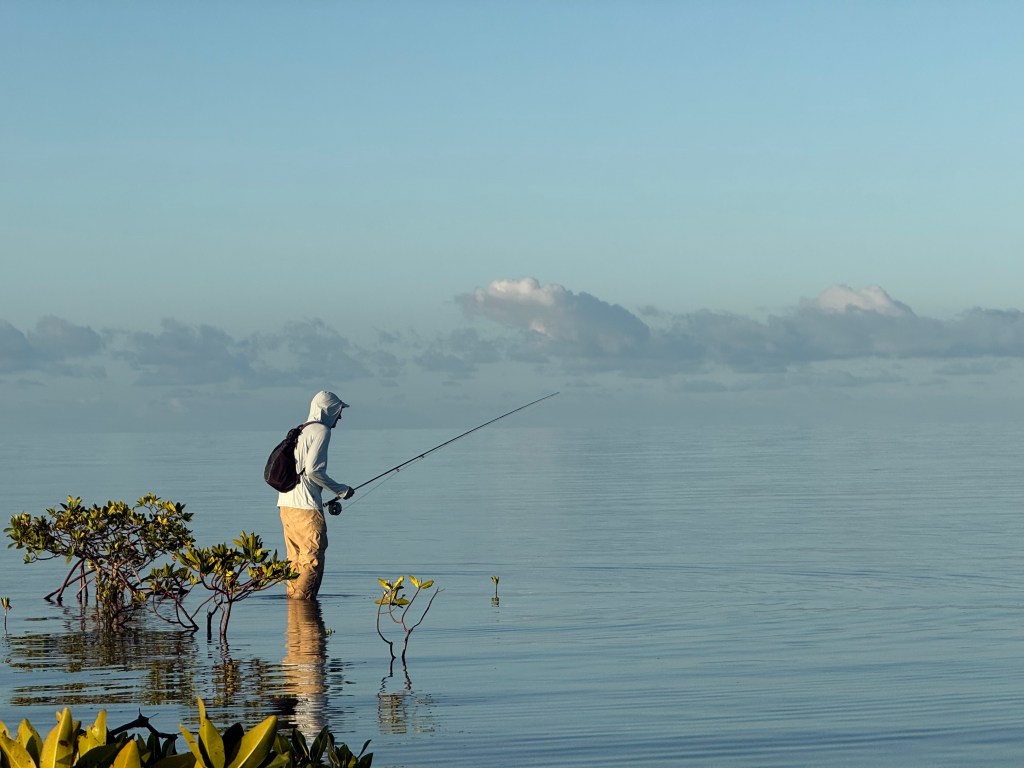
At the next spot, Docky directs us to hop out and wade. As I walk beside him, Docky instructs me in bonefish behavior. I had a career studying animal behavior, but have only fly fished saltwater gamefish for four years. This lesson alone would be worth the price of the guide day, but it gets better. Docky spots a school of several dozen bonefish. As we get closer we can see them moving slowly away from us, transparent dorsal fins and tails glinting in the sunlight. I am beside myself. Wade fishing is my favorite pursuit. We follow the fish quietly, out of disturbance range. In time, they pause, turn, and come back towards us. I drop the new fly in their path, wait for the fish to get close, and begin the fleeing shrimp retrieve. A four pound bonefish pounces on the fly. I set the hook, and the bonefish takes off, zipping line off the reel.
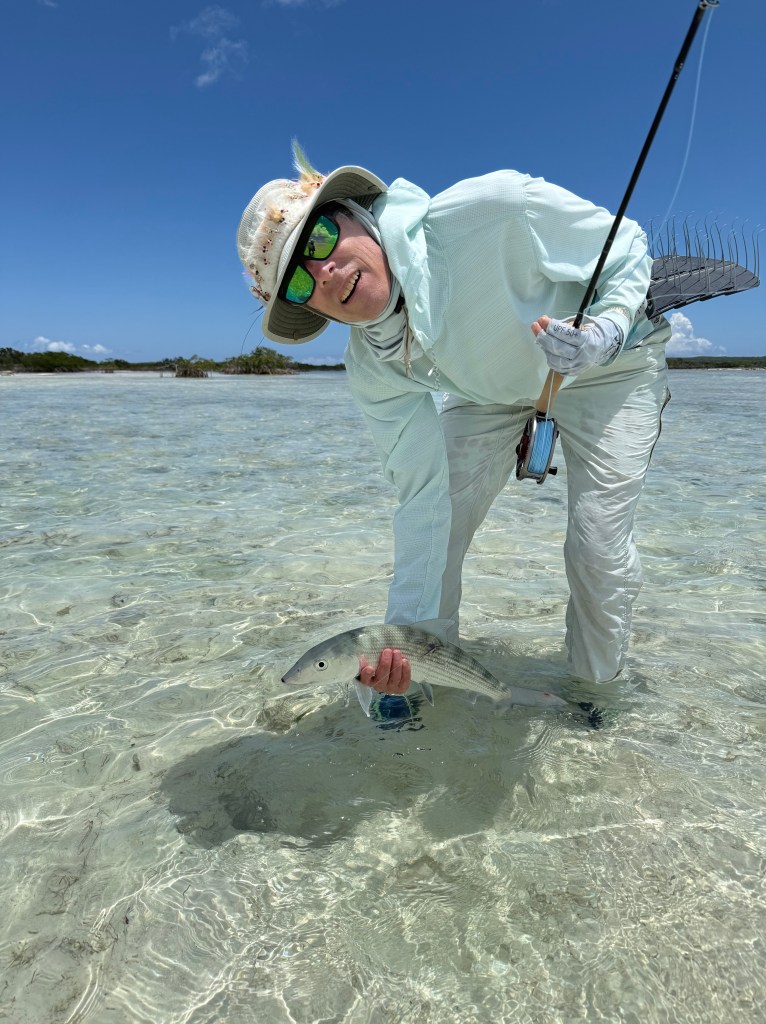
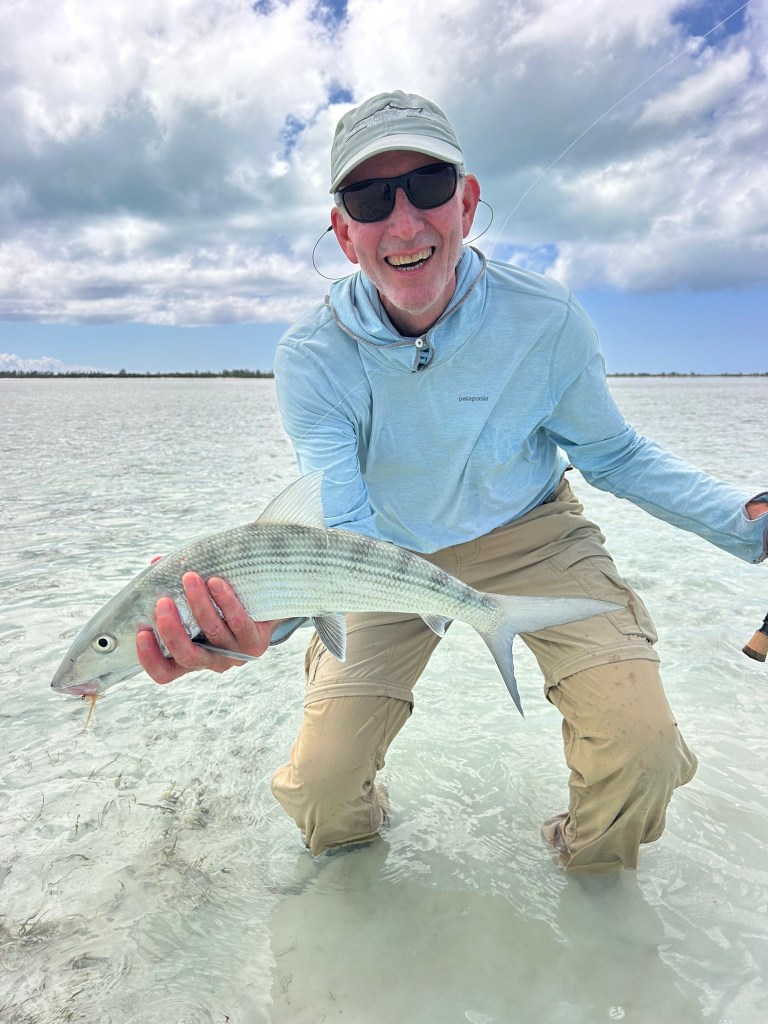
I have caught many bonefish on spinning gear, but had just two “eats” on fly, neither of which I landed. This one is my first bonefish on fly brought to hand. I lift it briefly from the water for a quick pic and it’s off to rejoin its friends.
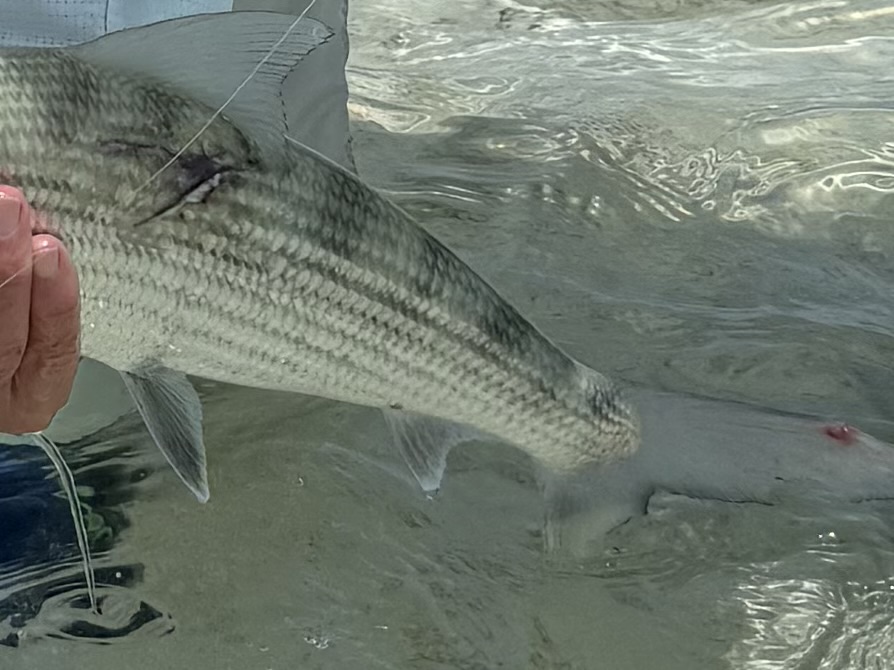
Close inspection of the photo shows recent injuries from Osprey attacks. No way an Osprey can lift a fish this big from the water, but it tried. Ospreys are the reason bonefish are so skittish, fleeing when anything disturbs the water or casts a shadow.
This bonefish has multiple injuries from Osprey attacks, a big V-shaped gash on its back and a nick on its tail. Adding insult to injury, it had the bad luck to eat my fly and get dragged in. This fish lives a rough life but thus far has always gotten away.
Chris hooks up again, more good runs, and the fish breaks off.
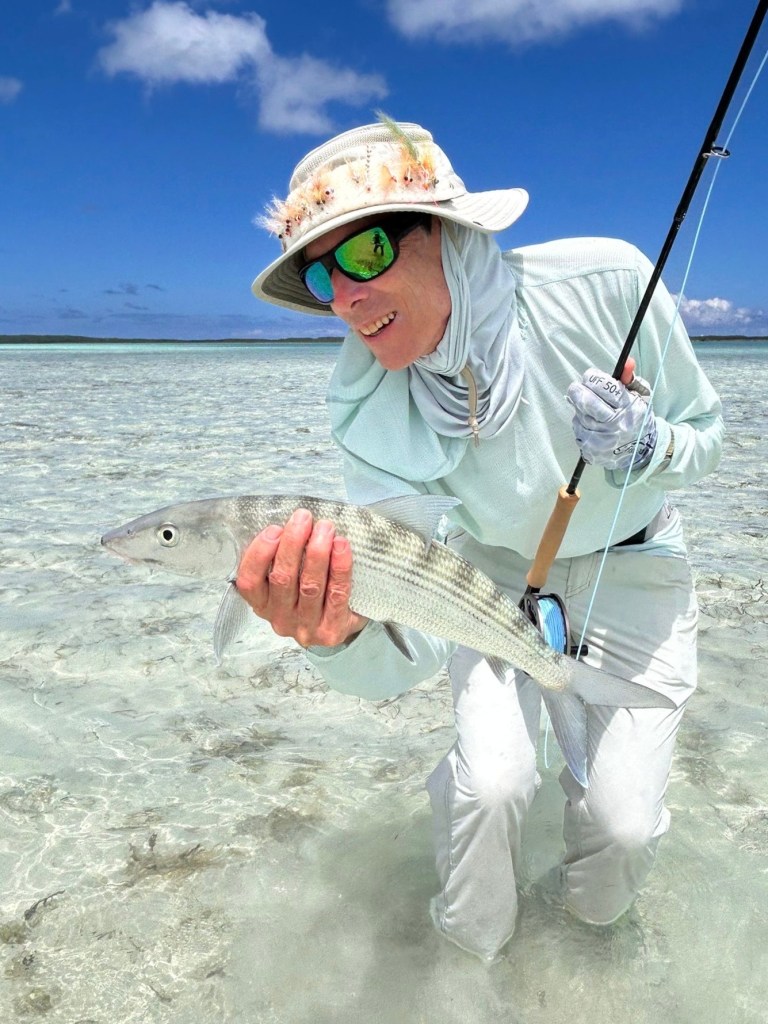
I catch a second bonefish, a little smaller than the first, about 3 pounds. I’d keep this fish in the water to unhook and release it, but oblige Docky who wants a quick photo.
I’m not happy, or anything, am I? Now quick, back in the water. Bye fish, and thank you.
Chris gets a third eat and manages to land this one.
You’d think this was Chris’ first bonefish. It’s not. They’re that cool to catch.
On the way back to the marina, Docky stops to have us compare the feel of different fly rods as he gives us some final coaching in flats casting. Chris asks what rod is HIS favorite and Docky pulls out a titanium-wrapped ADG fly rod, cautioning “be careful with my girl.” It casts like a dream, farther and with less effort than Chris’ Orvis Recon or my Sage X.
Despite the worst possible moon and tides, Docky has put us in front of nine bonefish schools today, ranging from 20 to 200 fish each. I’ve seen more bonefish today than altogether over the past five years in South Florida and I’ve learned as much again about bonefish behavior. We’ve hooked up five times and brought three bonefish to hand. I’ve had a such a fine day that when I back out of the lot at Docky’s fly shop and knock over his shop sign, the humiliation cannot put a dent in my elation. I happily pay a neighborhood carpenter to remount the sign – gotta support the local tradesmen.
After five days on Long Island we still have not seen fresh fish for sale. With a notion to catch something fresh for dinner, I drive back to a spot where I saw some respectable Mangrove Snappers. I cast some shrimp flies and get no reaction. Nuts to that. I pull out my cheap Okuma travel spinning rod and tie on the irresistible snapper lure, a sparkly 2.5” rubber shrimp made by MonsterUSA. I rigged it with a fly hook, lightly weighted. Tossed where the flies were ignored, a bunch of snappers zoom over to check it out. Some of them are big enough for dinner but none will eat this proven lure. Throwing caution to the wind, I cut off the protective barracuda-proof wire bite tippet and re-tie the shrimp lure directly to the 20 pound monofilament leader. I try again in a slightly different spot but get the same refusals as before. Snappers are notoriously leader shy, so I add to the leader two feet of Rio high strength 1X fluorocarbon tippet. This precious stuff is just one quarter of a millimeter in diameter and tests close to 15 pounds. I move a bit further and try a third time. I see a quick flash of silver and wham! My rod bends double and the drag screams as line peels off the reel. The barely-seen fish, whatever it is, has dashed back through the dock pilings whence it came.
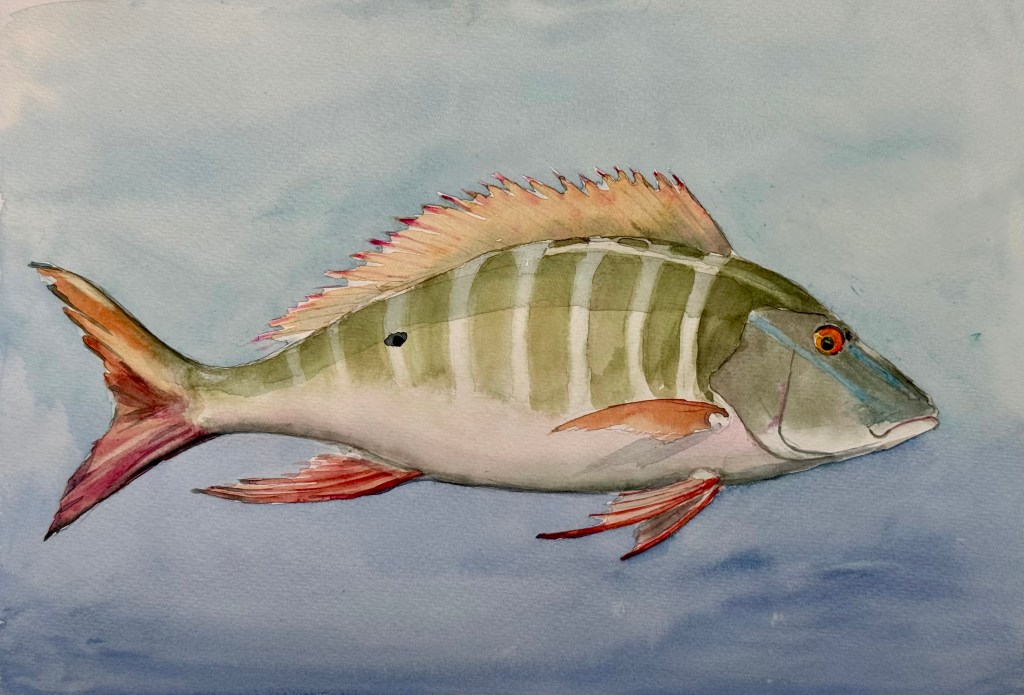
I assume it’s a big barracuda, but the thin tippet holds. Definitely not a barracuda. Maybe a grouper(?). The 15 pound braided line is stretched taught against the pilings, humming audibly, yet amazingly, does not fray and break. We go back and forth, each of us gaining and losing line until the balance tips in my favor and the fish comes into view. I spy the characteristic black spot and red tail of a Mutton Snapper. With no one to help me land the fish, I grasp the leader in my right hand, lie on my stomach, and nab the fish with my left hand. Sometimes it’s good to be built like a gibbon.
Mutton Snapper by Gray Read, 8″x12″. If you want this painting, make her an offer.
The snapper measures 22″. I’d cook it whole, but it won’t fit on the grill. Filleted, it makes a fine dinner for the four of us with two pieces saved out for the property manager and his wife.
* * *
Long Island has been a lovely place to visit for a week, enjoyed in the best of company. We’ll happily go back.
* * *
Postscript: the bonefish mug
Four years ago, retired Miami attorney and fly fisherman Joel Rosenthal spotted me returning to the Black Point marina in my kayak. Joel recognized me as the former mayor of South Miami and asked “How did you do today?” Two bonefish and an overslot snook. “Fly or spin?” Spin.
Joel asked if I’d like to learn how to fly cast and I jumped at the offer. Since I was 12 years old, I have imagined I would learn fly fishing as a retirement project. With just two years to go before retiring, why not get a head start? Naive question. Like watercolor painting, fly-fishing requires true obsession to develop competence, except the gear costs much, much more. If you are cash-strapped, take up watercolors instead.
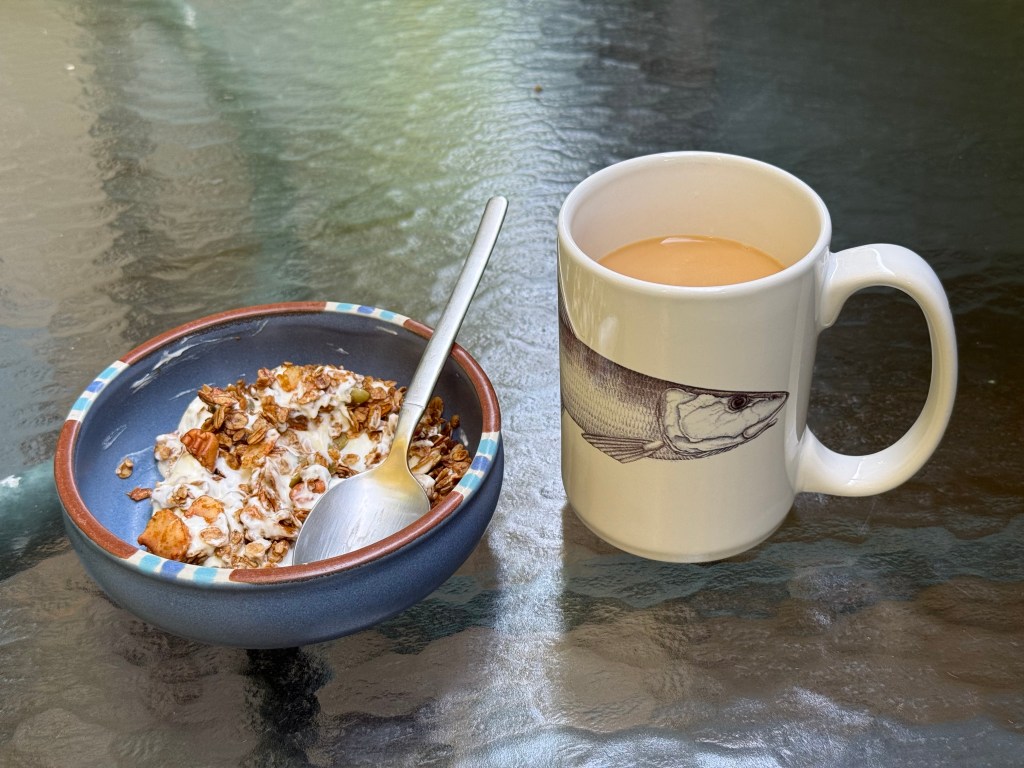
When I could throw a fly line 70 feet, Joel gave me a mug adorned with a drawing of a bonefish, but with the proviso that I could not use the mug until I’d caught a bonefish on fly. Oh, and the bonefish had to be brought to hand – “no photo and it didn’t happen.” I found a big gulf between casting a fly line on the grass and (1) convincing a moving, skittish, and largely invisible bonefish on the flats to eat a fly, (2) seeing it eat so I can quickly set the hook before the fish crushes the fly and spits it out, and (3) getting the hooked bonefish to hand without losing it. This morning the mug finally joins me for breakfast.
A trip by paddle craft to the coastal marshes and flats can be a breeze or a slog depending on wind and tides. It took me one arduous kayak trip to Rabbit Key and another escaping the Snake Bight flat to become a tide chart addict.
The wind. Paddling home against a stiff headwind is somewhere between exhausting and impossible. Returning from Sandfly Pass in the Ten Thousand Islands I was stopped in my tracks by a squall that forced me to get out of the boat in the rocky shallows and wade back to the launch, pulling the kayak behind me. My favorite hat blew off and disappeared in the distance.
Tides are the same, but more predictable. Get the tides right and you get a free ride. Get them wrong, and you fight a river, ferry-crossing back and forth to seek eddies and weaker currents.
My purchase of a motorized skiff made it possible to move against the elements, to cover long distances, and sometimes to dodge a localized thunderstorm. Very efficient, but I missed the quiet and stealth of the pedal kayak. And the exercise. It’s the difference between a car and a bike: the motor craft is useful, the pedal craft enjoyable.
When I itch to be on the water, I open the marine weather forecast and the tide chart phone apps, looking for happy windows of winds and tides. Living on a peninsula provides choices. My choice of location and craft is based on the forecasts. If conditions are unfavorable on the east coast, nearby Biscayne Bay or the Keys, how about Flamingo on the southern tip of the peninsula? No? Then check the west coast out of Chokoloskee / Everglades City. If all three look threatening, I may opt for the interior mangrove creeks or central Everglades marshes. If it looks horrible everywhere, I stay home and tie flies while imagining the next outing.
A TAXI TIDE
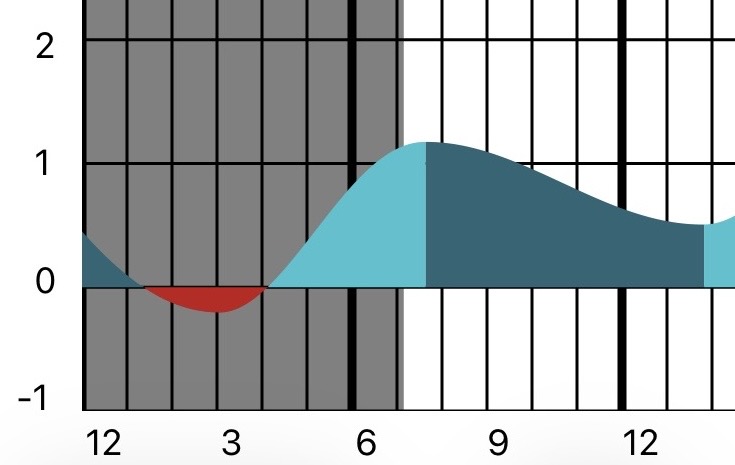
I normally I take the skiff into Snake Bight in Everglades National Park to escape against the incoming tide, but the tide chart for Tuesday showed the rare, magical tide cycle that’s perfect for kayak exploration. One can ride the incoming tide into Snake Bight before sunrise, fish and bird well into the morning, then ride the outgoing tide back out again.
Snake Bight’s tides are one hour delayed from the Flamingo tide chart shown here.
I wake at 3:30 am and check the weather report. The wind looks to remain low through the morning. Rain looks iffy – it’s supposed to rain solid until 6 am, then let up until afternoon. Hopefully the algorithm running on the National Weather Service computer gets it right today.
Scary-hard rain pounds my drive south to the bottom of the peninsula, then stops to let me set up and launch the kayak in the dark. I can see the odd lightning flash to the south. Gradually the clouds break up and I have a lovely morning waiting for me on the water with 50 minutes to sunrise.
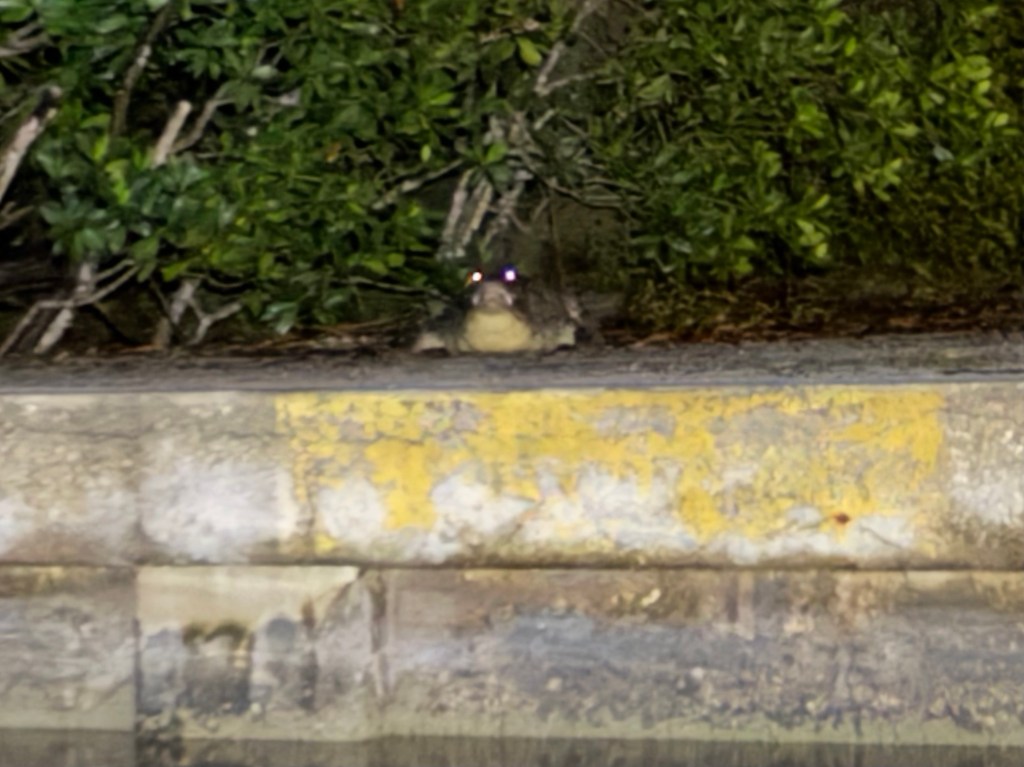
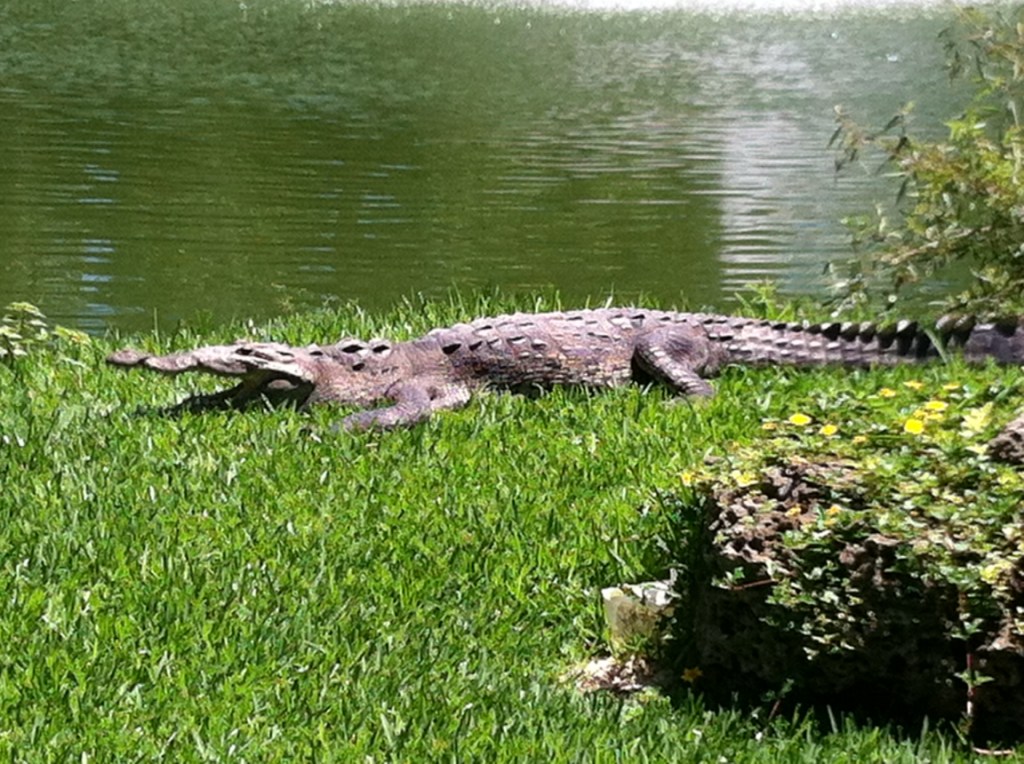
The half moon is still blocked by clouds and it is DARK. I turn on the pole-mounted kayak light. Its #1 job is to keep me from being run over by powered craft, but as a bonus, it casts a bit of soft light in all directions. Sitting above and behind me, the light doesn’t shine in my eyes. It does, however, shine in the eyes of the crocodiles.
American Crocodile perched on the marina wall. Amazing what the iPhone’s camera can do with the faintest of light sources.Here’s the same croc in motion.
Several more crocs take umbrage at my passage and splash off in a huff.
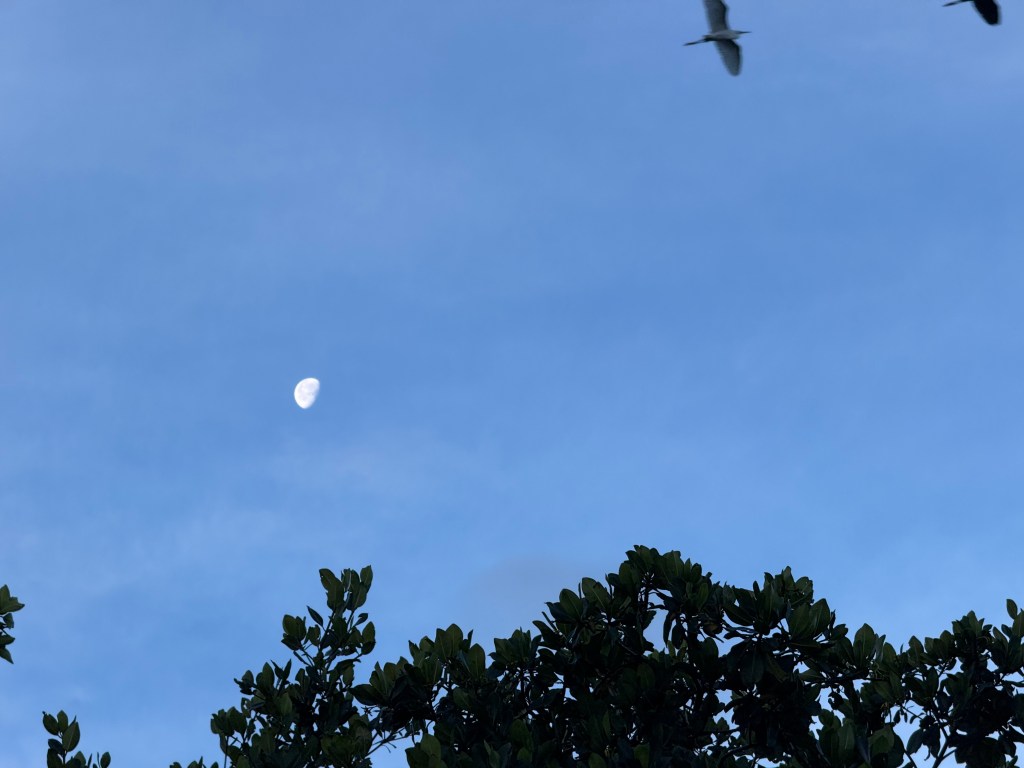
In time, the clouds melt away, allowing the half moon to illuminate the mangrove shoreline.
A Spotted Sandpiper perches on a fallen log, bobbing up and down. The end of the log has eyes and large teeth. Eek!
The sun glows as I round the corner into the Snake Bight flat. The north edge of the flat has a thin line of shocking pink. Though I’m looking for fish, Roseate Spoonbills always steal the show.
Some spoonbills fly over my kayak enroute to their favorite roost of snags by a mangrove creek.
I spot another kayaker approaching the cove where the spoonbills are roosting. He pulls out a camera with a giant lens, then paddles in too close, spooking some of the spoonbills. If that’s not bad enough, he starts paddling in even closer – too much.
If I can use an iPhone to get this photo without spooking the spoonbills, a kayaker with a giant lens doesn’t need to crawl down their throats.
First rule of not spooking birds is to act like you are interested in something else. Definitely do not aim your kayak directly at them. I call out: “That’s close enough!” He stops, turns around, and leaves. Good thing too. In half an hour, a carefully guided kayak tour comes by specifically to see the spoonbills.
* * *
FISHING REPORT (stop here if fishing bores you)
Last weekend I tied a mangrove crab fly using whatever I had lying around, with a notion to try for redfish feeding in the mangrove roots along the edge of Snake Bight. It came out pretty well.
Never mind the fish – I think it’s adorable.
I try it out. Crabby casts fine and stays upright while it sinks, but the legs entangle too much sea grass detritus. I’ll try it again in the Ten Thousand Islands where there’s less sea grass.
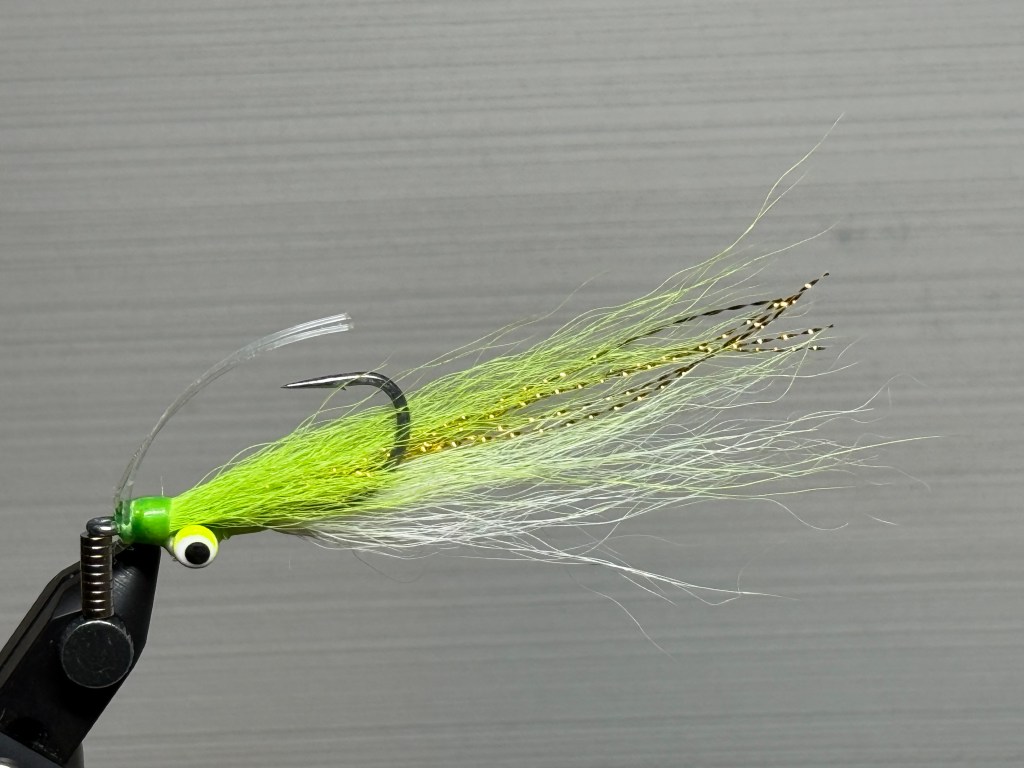
Instead, the winning fly today is my weedless tie of the classic chartreuse-over-white Clouser Deep Minnow.
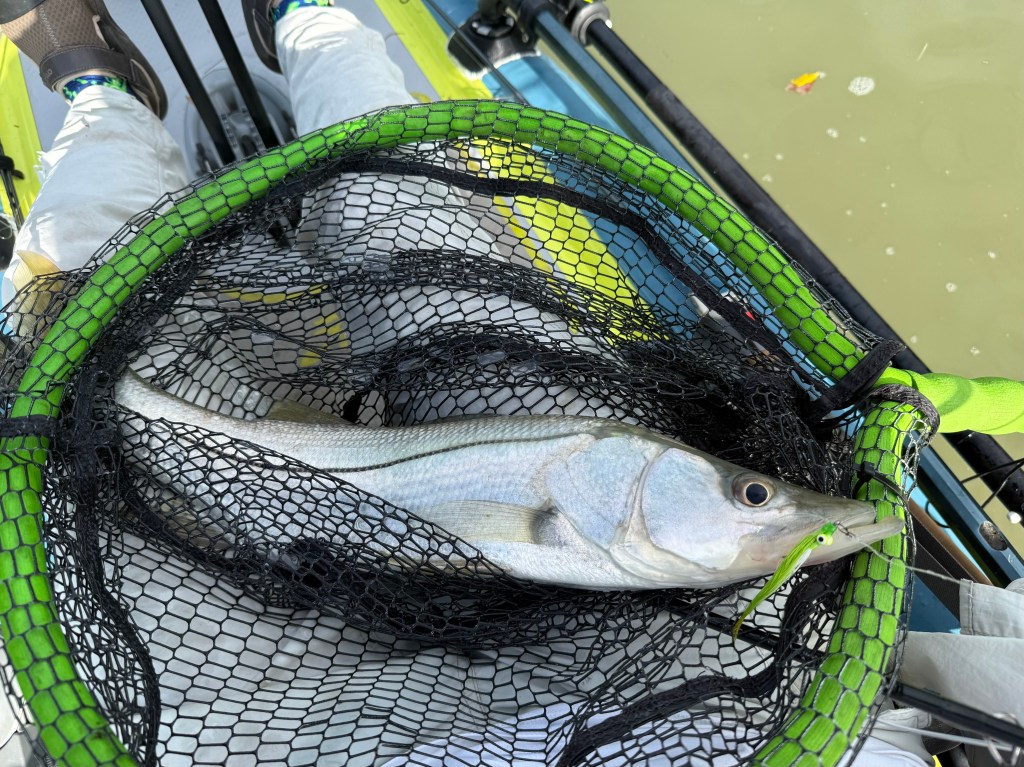
It catches seven snook 18-22”.
20″ male snook with Clouser fly.
Snook in this size range are all males, turning into females when they get bigger, around 26-28”. I wonder if our Florida State legislators know that many of our prize game fish are transexual, “protandrous”, to be exact.
Somewhere else out there lurk the female snook. Research by FIU professor Jenn Rehage indicates that most of the females are still up-river, fattening up on sunfish and cichlids for the breeding season. This rainy spell should get them moving downriver again.
I have caught countless redfish on spinning gear but exactly zero on fly. I tied this sparkly fly in the hopes of temping a bite. Don Quixote jousts at yet another windmill.
Snook are great but I am still hoping to catch at least one redfish today. I swap out the Clouser for a sparkly redfish attractor pattern. Instead of a redfish, it catches my biggest snook of the morning (23″) plus a pretty little sea trout.
Lunch is leftover tamales from Moreno’s Tortilla Shop, re-heated in the sun. Gentle rain resumes on the drive home, kindly washing the saltwater drips from kayak and car. Fine morning all around.
I have lived in Miami for 34 years and have never been to the Bahamas. We are going to spend a week on Long Island, Bahamas with friends in the end of April. Yay for retirement!
Of course I have been thinking of bonefish. “Ghosts of the flats” are so ubiquitous and celebrated in the Bahamas that they are depicted on Bahamian currency.
I have caught a few bonefish around here, but most on spinning gear rather than fly. I’d rather catch one fish on the fly rod than five on a spinning rod. That’s about my rate for bonefish thus far.
To fly fish for bonefish in the Bahamas, the standard advice includes the same three components: 1) a rod and fly line that can cast into a stiff wind. 2) the ability to cast accurately into a stiff wind. 3) assorted flies that appeal to local bonefish.
A rod for the wind. 9-weight fly rods are basic wind-casting fare, ideally 4-piece for air travel. After a few weeks of looking, I found a suitable used 9wt advertised online, a 4-piece Sage X. Add money and stir. I already had the right line and reel for it. My light skeleton fares best casting rods 7wt and lighter, and definitely doesn’t appreciate the higher forces required by the fastest-action fly rods currently in vogue. Sage X is a previous model with more moderate action than Sage’s latest models. I have used the 8wt Sage X for bonefish, snook, juvenile tarpon, and jacks: it loads a titch slower than newer models and takes a little less force to accelerate. I broke my first one, a lovely two-piece given to me by former student Manny Molina, while successfully horsing a Snook away from an incoming Lemon Shark.
Ability. No substitute for practice. My friend Omar hired a Bahamian fishing guide to pursue bonefish on fly. After Omar missed a few shots, the guide exclaimed “You need more TOW, man!” “What?” “TOW, TOW!” The word “TOW” turned out to be Bahamian guidespeak for “Time On Water”. Having taken up fly fishing only four years ago, I definitely need more TOW, especially on windy days when I am inclined to forgo fly casting in favor of the more forgiving spinning gear. Gray and I will give a talk in Key West next week and plan to stay over in the Lower Keys for a few days with friends Chris & Marcia, who will join us in the Bahamas. It’s supposed to blow a steady 20 mph the whole time we’re there, so Chris and I can practice fly casting into the wind. “TOW, TOW!”
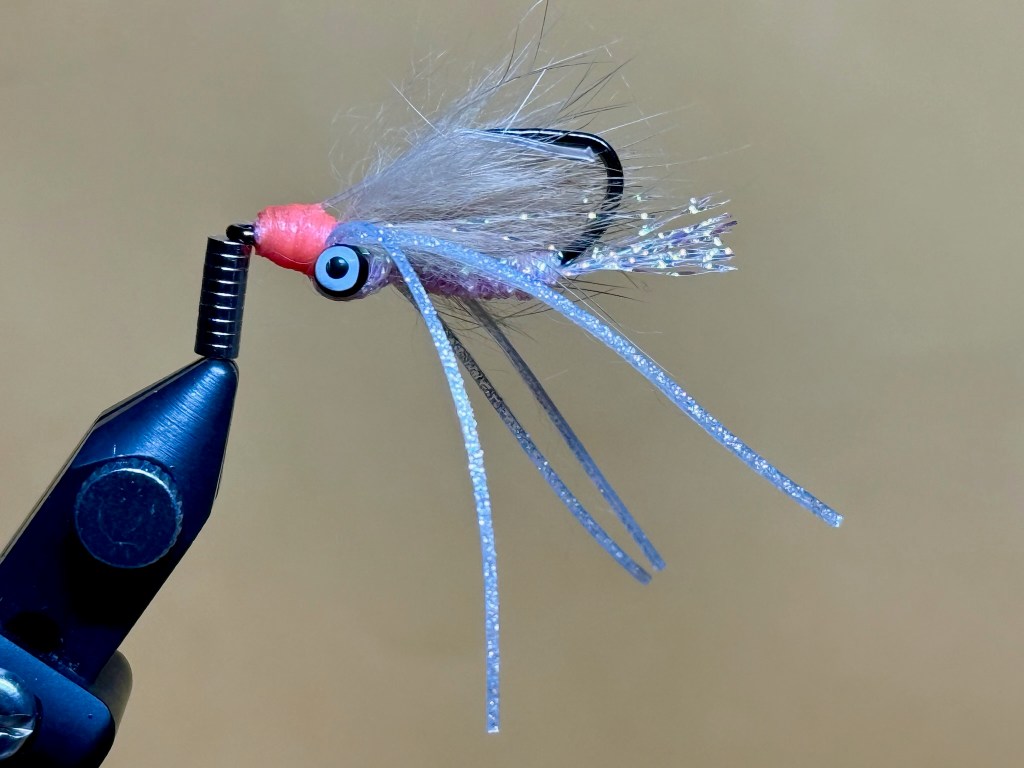
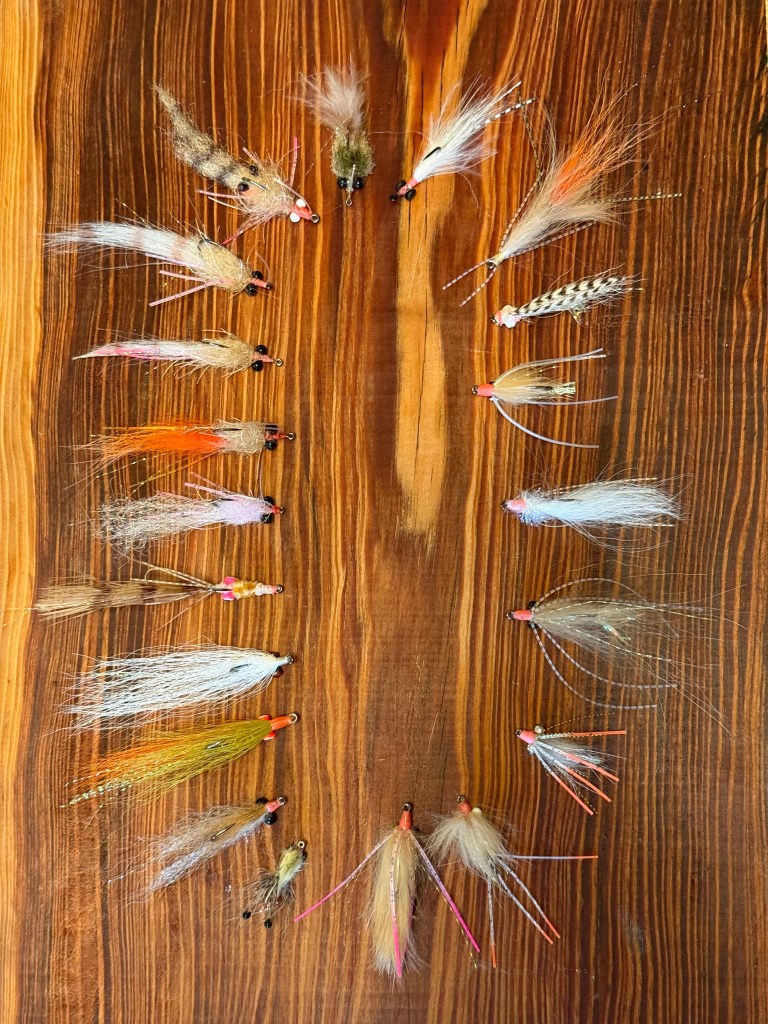
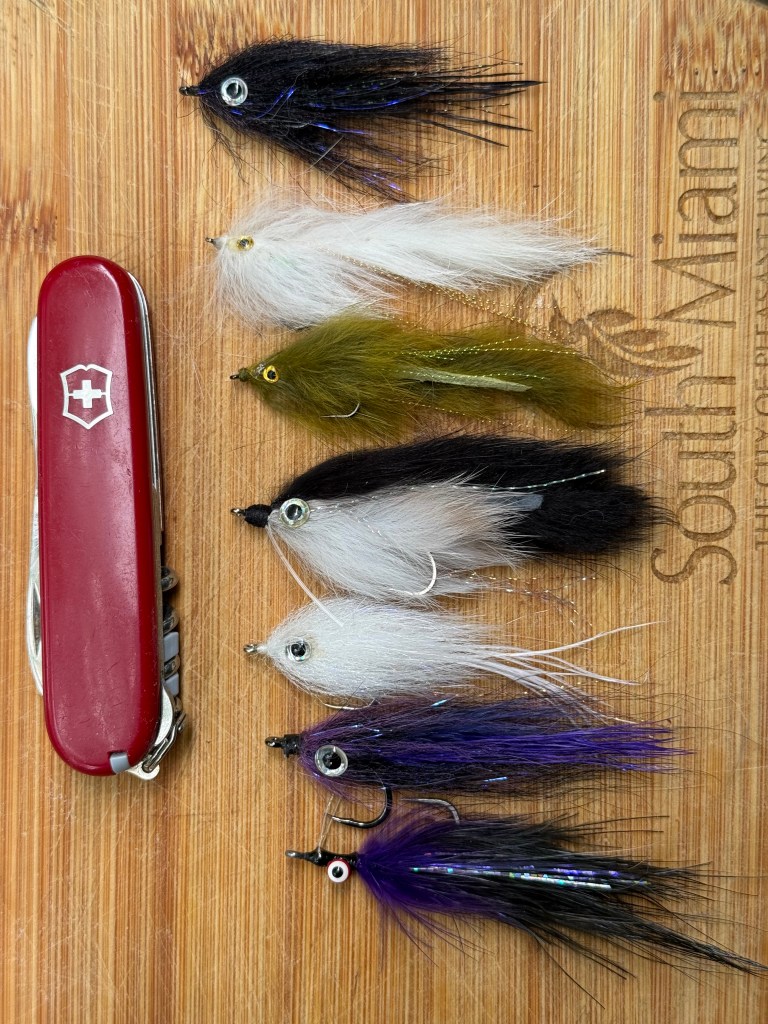
Flies. One can buy excellent bonefish flies for $3-10 a pop, but if I can’t be fishing, I like to tie my own flies. It’s fun in small doses and the resulting flies are high quality and adorable to boot. Here’s what I’ve been tying in the odd moments this month when I haven’t felt like doing something more useful to others…
The collection thus far, arrayed on a board of Dade County Pine given to me by the late Bob Welsh.
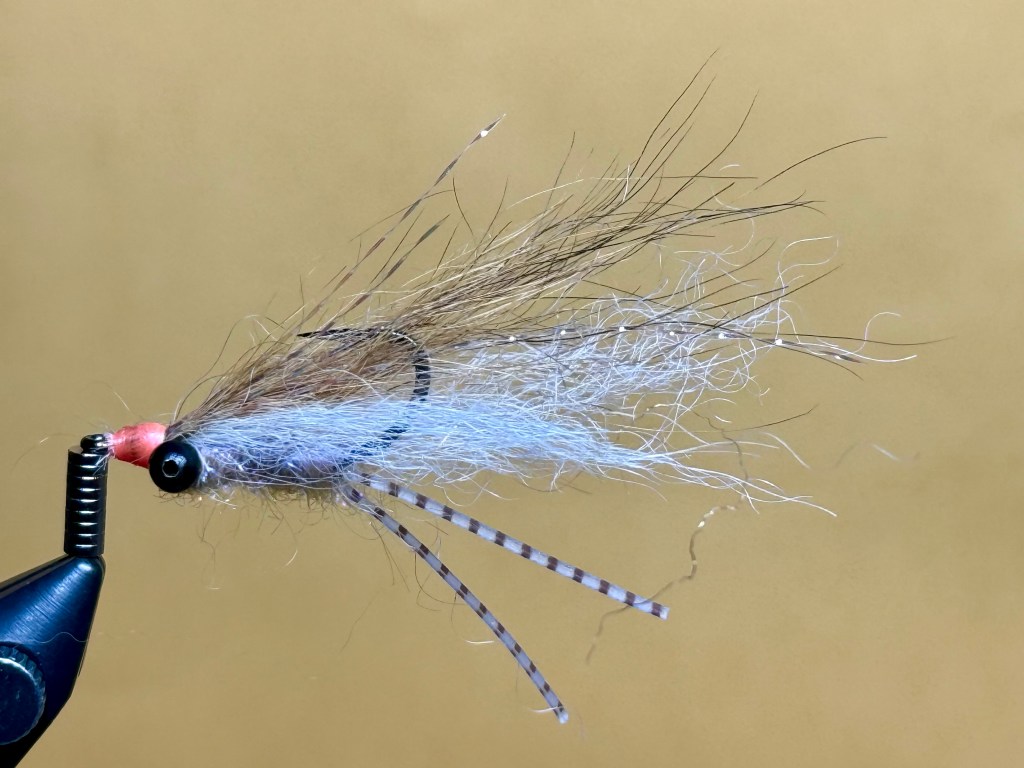
Here are a few of them close up:
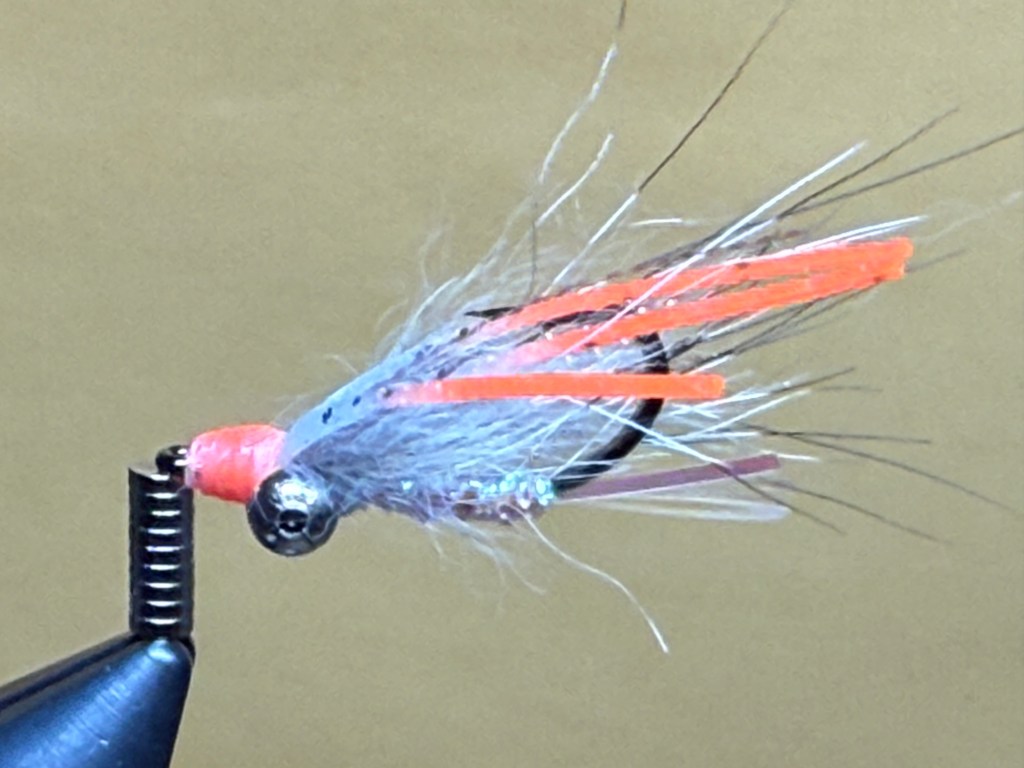
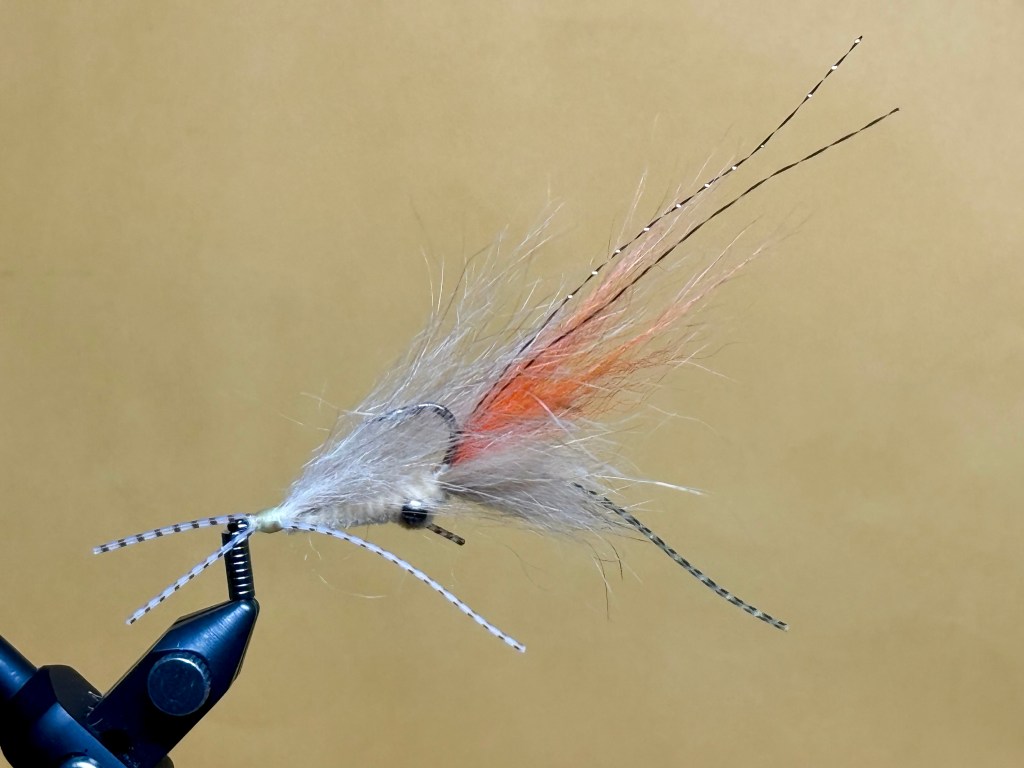
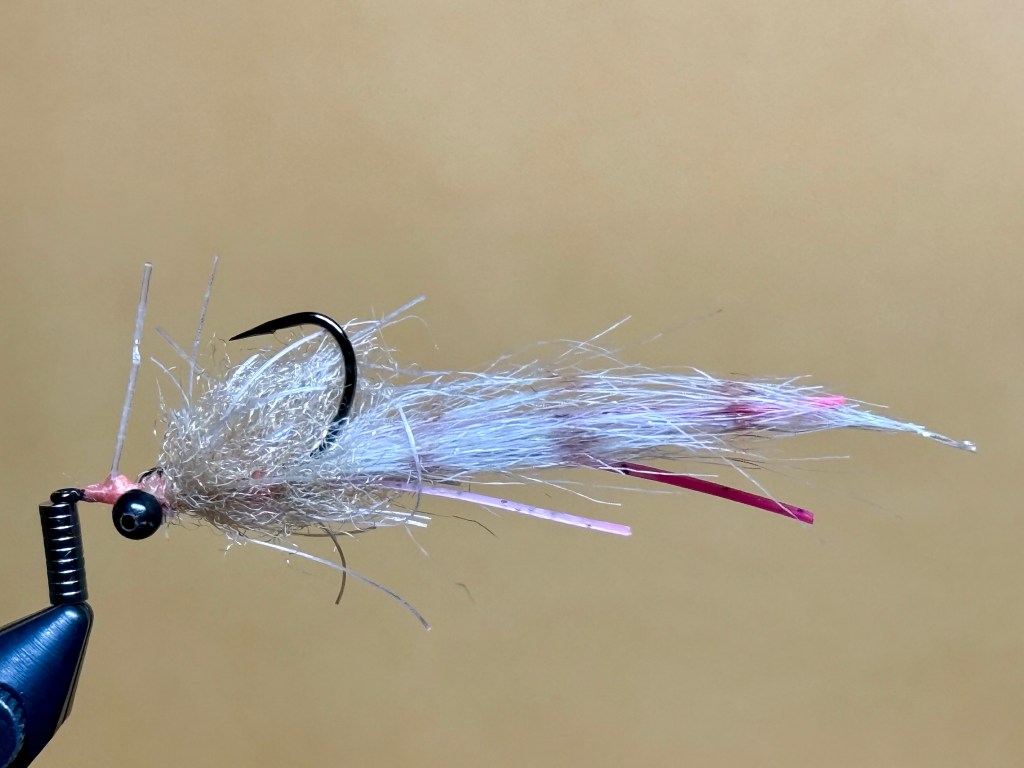
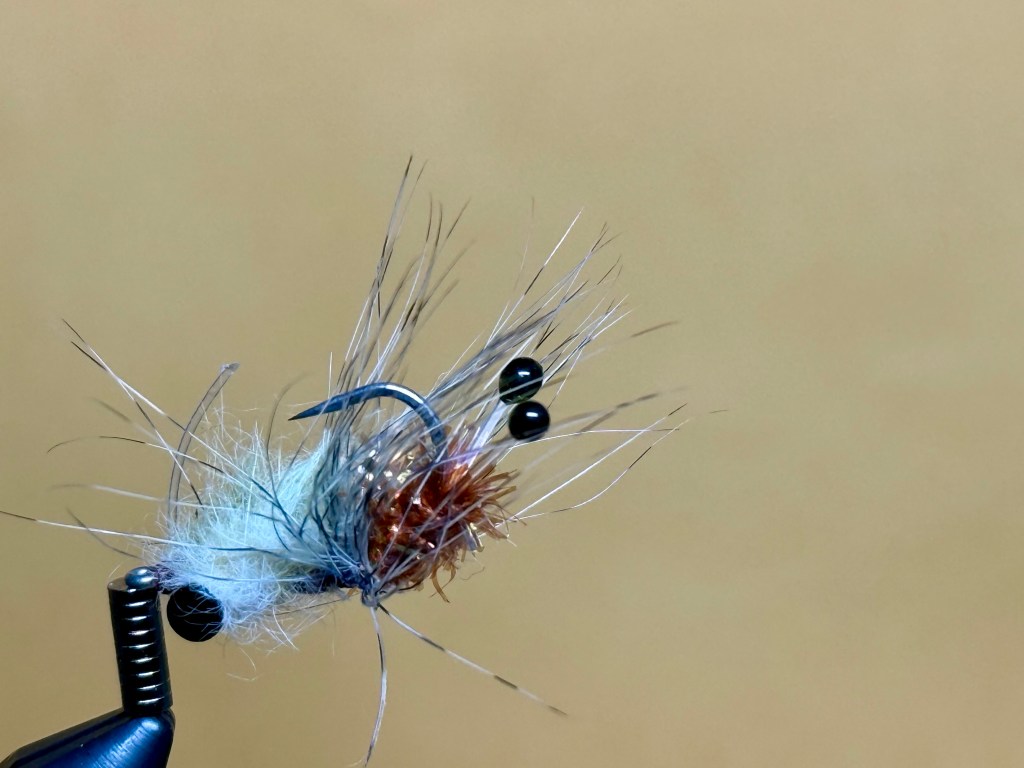
McKee’s Cacos Critter, tied with white fur from the butt of a blond Australian Shepherd named Jasper and darker fur from the underside of a coyote tail. Jasper and coyote furs have turned out good flies for all kinds of fish. I like the action of natural fur versus the synthetics specified in Dave McKee’s original fly recipe.Crazy Charlie variant tied with coyote fur and orange-tipped silicone legs.Spawning Squimp. Haven’t tried it but it looks tasty.Variant on Eric Estrada’s Biscayne Bay bonefish fly, a shrimpy affair I’ve found effective on bonefish locally. In fact, every fish in the Bay eats this fly. Several times I’ve had a Laughing Gull or Royal Tern pick it from the water and make off with it – very odd to see the fly line peeling off the water into the sky. Fortunately, the birds grab the fly in the middle and don’t get hooked.Little hackle crab, maybe the cutest fly in my collection. This fly is a re-tie of one that enticed an eat from a bonefish in the Content Keys. The bonefish mashed the fly in its crushers, instantly snapping the hook at the bend before I got a hook set. Try again.
In a motel breakfast room in Jacksonville last week, a woman learned I was from Miami and told me: “I don’t like Miami. I visited once and it didn’t seem like a nice place.”
So right she is.
In Miami…
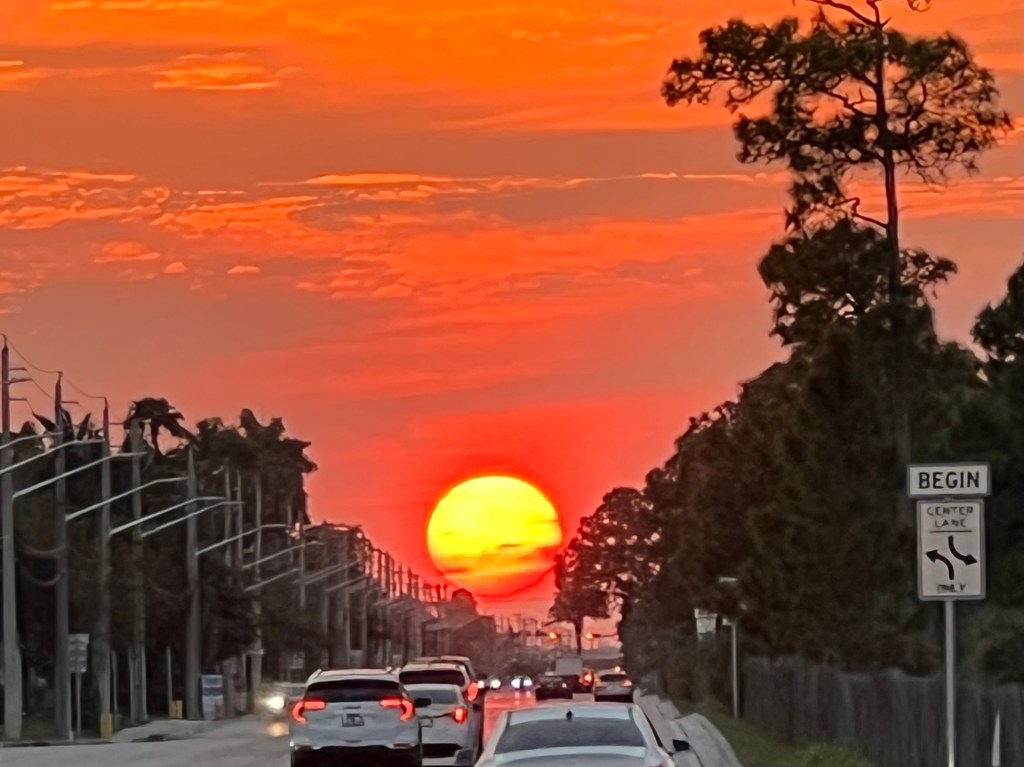
…the Sun gets in your eyes.
* * *
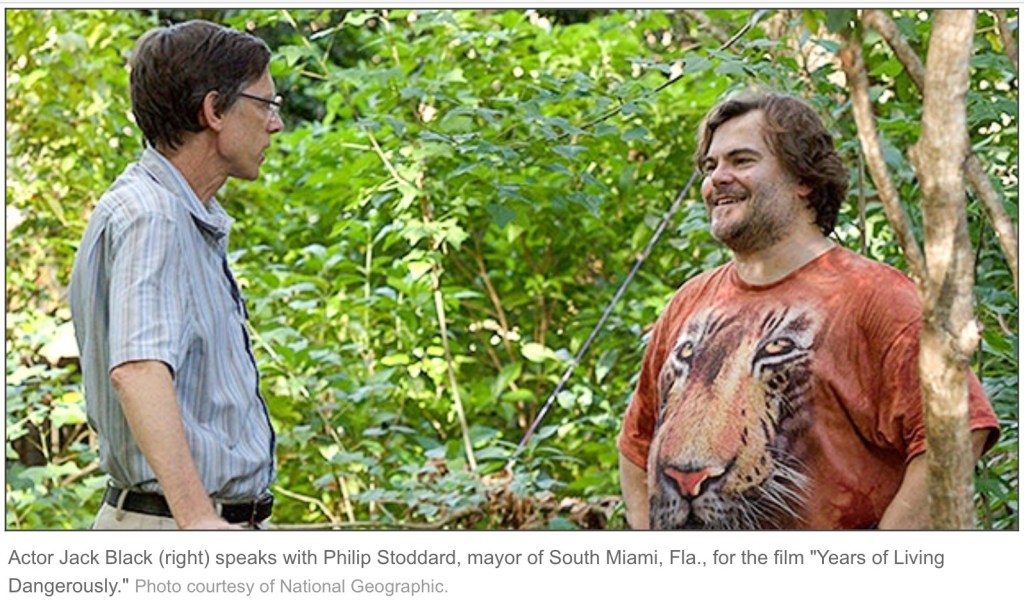
You might encounter a stranger wandering in your yard,
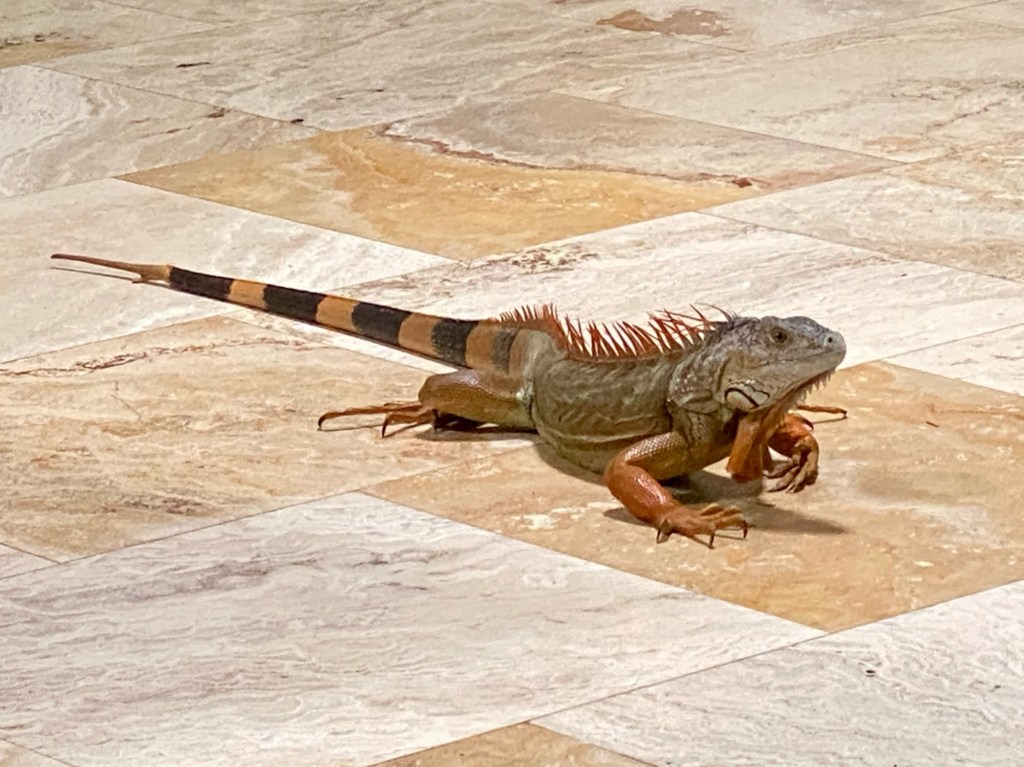
while wild reptiles invade your home,
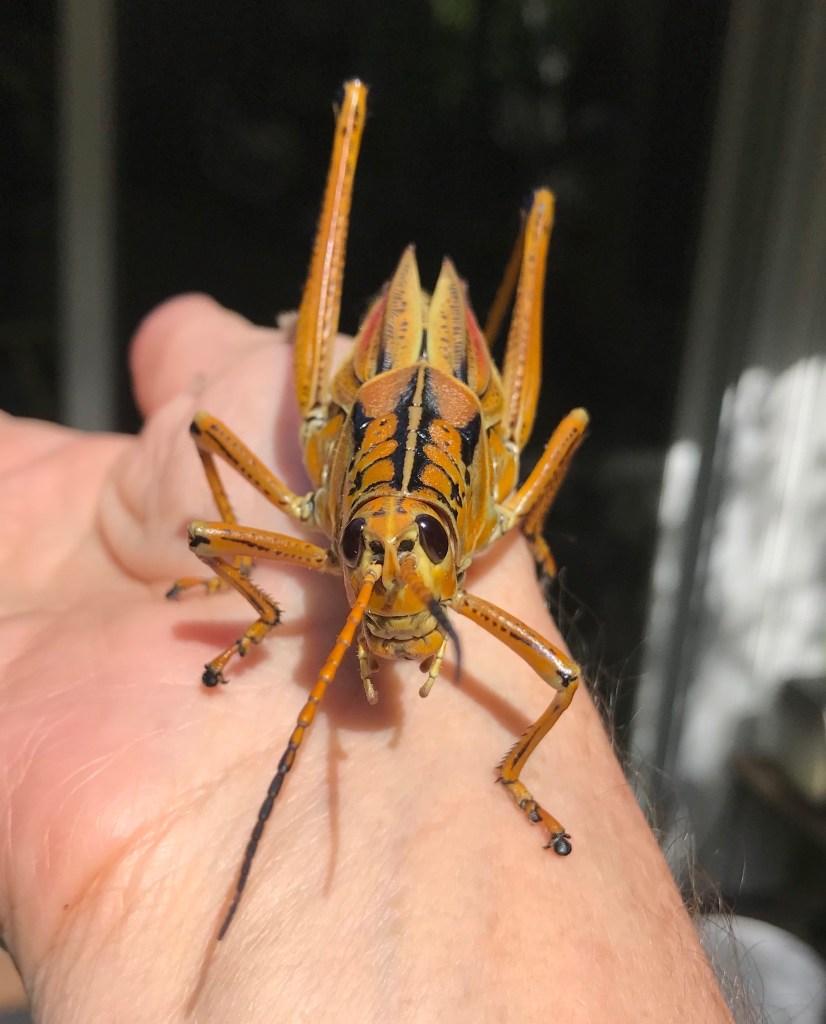
and grotesquely large bugs walk on you.
* * *
The water is too warm for trout fishing…
… but the sideshow can be too distracting to fish at all.
* * *
It rains on the weekend,
yet you can’t grow a decent apple.
* * *
Flocks of noisy birds disturb the peace,
it’s not safe to drink the water,
and you have to watch your step.
* * *
The Guardian 11-July-2014 / Talking Points Memo 12-July-2024
People in Miami can be so rude.
* * *
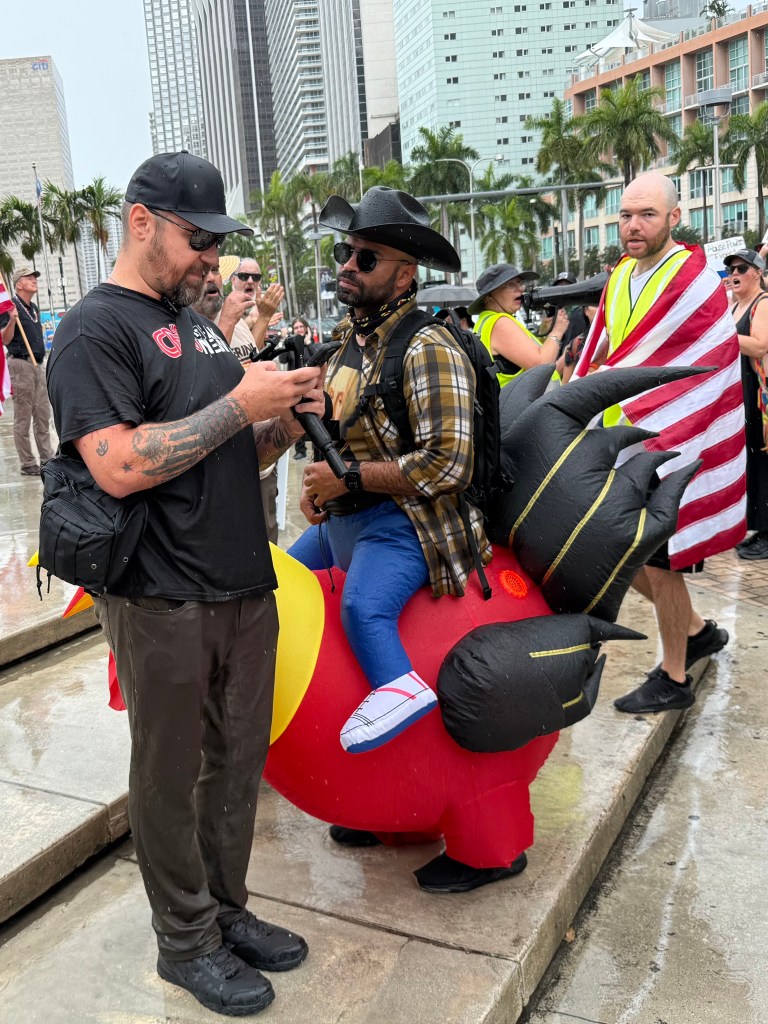
Proud Boys leader Enrique Tario.
Convicted felons wander the streets, disguised as clowns.
As I went walking I saw a sign there, And on the sign it said “No Trespassing.” But on the other side it didn’t say nothing. That side was made for you and me.
Contrary to my religious practice, I have been off the water for two long weeks. Bunch of pressing things going on, despite which, my psyche demands TOW (time on water). Rain is predicted for Saturday afternoon but the morning looks good in the western Everglades if I stay south of the fire. The plan unfolds to shirk the day’s assorted social obligations and start the morning fly fishing for juvenile tarpon from my kayak. I’ll play it by ear after that.
I packed the car the night before, bringing a single 7-weight fly rod, a clear-tip intermediate sink-tip line, and an assortment of proven flies that I tied to entice juvenile tarpon. Going “fly or die”.
* * *
FINDING JUVENILE TARPON AFTER A COLD SNAP
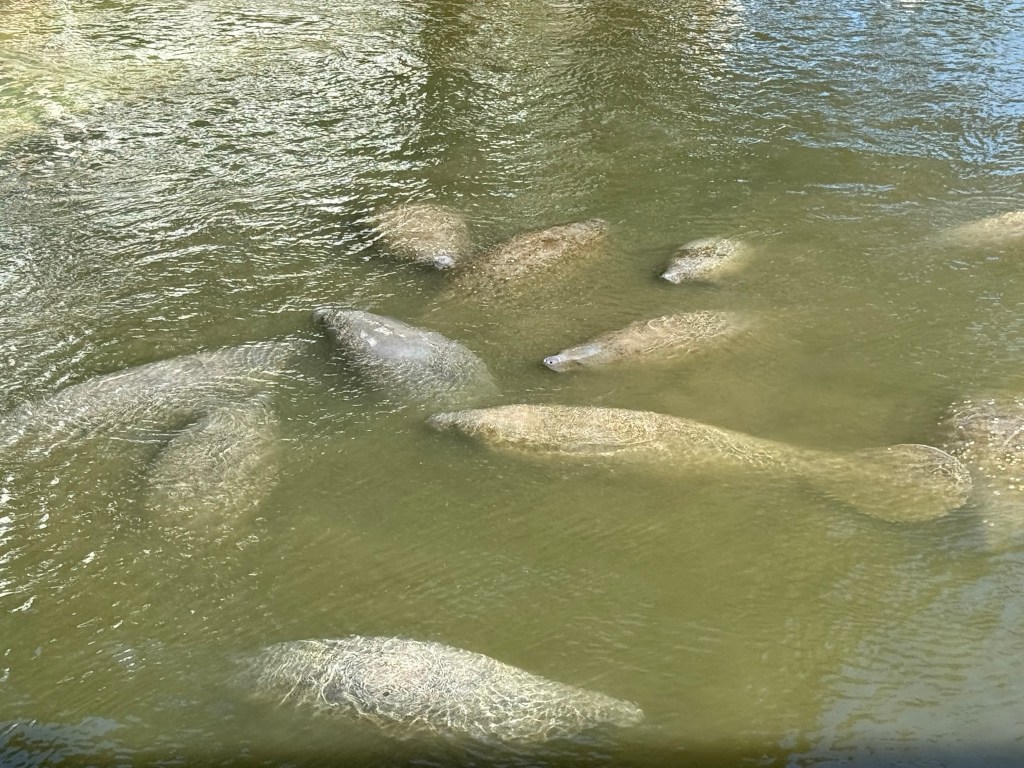
A few days back, a friend reported 100 dead juvenile tarpon in my favorite Everglades tarpon fishing area, casualties of the recent cold event. The spot I chose for today, ~60 miles northwest of there, is a brackish canal network dug 20’ deep to excavate fill to create adjacent dry land for buildings. Some people still think building in the Everglades is a good idea. On the plus side, deep water makes a good thermal refuge for manatees and juvenile tarpon during a winter cold snap. I always find tarpon holed up there in the winter and especially when it’s cold.
The general area sees significant fishing pressure, evidenced by snagged fishing lures I pluck from mangrove branches and by the landing net sitting next to a kayak on the shore at a nearby residence. Pressured tarpon are hard to catch, especially on fly, and these particular ones often refuse Mike Connor’s Glades Minnow and Jay Levine’s black micro-bunny, my two best-producing flies for tarpon along the Tamiami Trail.
Water access here is controversial. There’s a public boat launch a mile away, but a clear “NO TRESPASSING” sign is posted on a buoy you’d have to pass to get to the canal network. It’s all public water but I assume someone of authority doesn’t want motor boats shattering the peace in the canal area. Some fishermen told me they were issued a $125 fine plus administrative fees when they were caught on the wrong side of that sign by an officer from the Florida Wildlife Commission.
Florida Statutes Ch 810.011 states that No Trespassing signs must be “…placed conspicuously at all places where entry to the property is normally expected or known to occur.”
When I approach the canal system in a kayak from the tidal creek on other side, the only posted sign says not to feed the alligators. By my read of the statute and the signage, a person can lawfully enter by kayak or canoe from this creek (nix the paddleboard – see below). To honor the implied intent, I paddle solo and fish in silence.
While no sign prohibits entry from the creek, a militia of large alligators guards a shallow area in the creek outflow. It’s such a good spot to snap up a passing fish that only the biggest gators can command a seat at the table. They allowed me to pass hassle-free on prior trips, but I always treat them with respect and get past them quickly lest they think up some excuse to engage.
* * *
THE WEE HOURS
Dream after dream has me looking for a bathroom. At 1:35 am, my conscious brain integrates the repeated hints that I need to get up to pee. Sleep is over. The alarm is set for 3:30 am, but lying awake at 3:05 I give up and start my day. Dress, shave, sunscreen, pet the cat, coffee, granola, Heather Cox Richardson, pack the cooler, and hit the road to cross the Tamiami Trail in the dark.
A dense fog in the Everglades blocks the full moon and lowers my driving speed to 35 mph. Ninety minutes later, I am parked a short walk from the creek mouth. It’s pitch dark. Fifty minutes to sunrise, and twenty to the start of civil twilight.
* * *
GATOR GAUNTLET
Water levels are very low this winter. The gators’ usual ambush spot in the shallow portion of the creek bed is high and dry. Seeing no gator eyes glowing in the beam of my headlamp, I haul my kayak overland in the dark to the rocky exposed creek bed. The eastern sky shows the very first glow of dawn as I launch in the fog.
Dark water explodes into spray around my kayak. The gators hadn’t gone far. Huge bodies, black and cream, churn in front of me and to either side. So much for silence.
Waves subside and I can see the glassy water is dotted with dead cichlids killed by the cold, mostly tilapia. I’m sure the gators have been feasting on them. Just past the gators, foot-long mullet begin leaping into the air and crashing onto their sides. Nobody knows why mullet jump, but I’m pretty confident it’s a courtship display. Fifty yards further, a dorsal fin and tail nick the surface. Tarpon can breathe air and come up to the surface for a quick gulp in a behavior known as “rolling”.
Tarpon are alive and rolling. The morning holds promise.
* * *
FLIES
In very tannic or murky water, tarpon will bite dark-colored flies, but in clear water they prefer white flies. The water today is clear but somewhat tannic, so it’s anybody’s guess what shade of fly will do best. I start with a black baitfish fly that’s been super-effective for tarpon and snook in dark water.
I pull some fly line off the reel and make my first cast in front of three rolling tarpon. Nice to have my right arm working again after four months of physical therapy for a torn muscle in my rotator cuff.
The tarpon ignore this black fly over the next dozen casts. That means they won’t take Jay’s black micro-bunny either. I switch to a white micro-bunny fly. They like that one better, but not enough. They nip and pull its tail, “short-strikes” in fly fishing parlance. I begin counting short strikes.
Since they don’t want black or white, how about olive? I try an olive micro-bunny. Nothing. Black & white bunny? Nope. White baitfish with swishy peacock herl tail? Nope. Black & purple tie of Paul Nocifora’s BMF? It gets a bunch more short strikes, but no eats. I see them charge the fly, rolling onto their silver sides to rip off bits of the BMF’s purple tail, but they don’t want to eat it, even after I snip off the weed guard. How about a black & purple tie of Chico Fernandez’s Marabou Madness, weighted to get down deeper? Nope.
Seven proven tarpon flies that did not catch tarpon today.
I have been on the water for the best two hours of the day. I have pitched a hundred casts at rolling tarpon, swapped through seven flies, two of which received 13 short strikes between them but zero eats. Mangroves lining the canals have been more eager than the tarpon, grabbing my flies on the errant backcasts. My newly rehabilitated rotator cuff is starting to complain.
I suppose it’s possible the tarpon, though plentiful, just won’t bite today.The water feels coolish but not cold, maybe 68°.
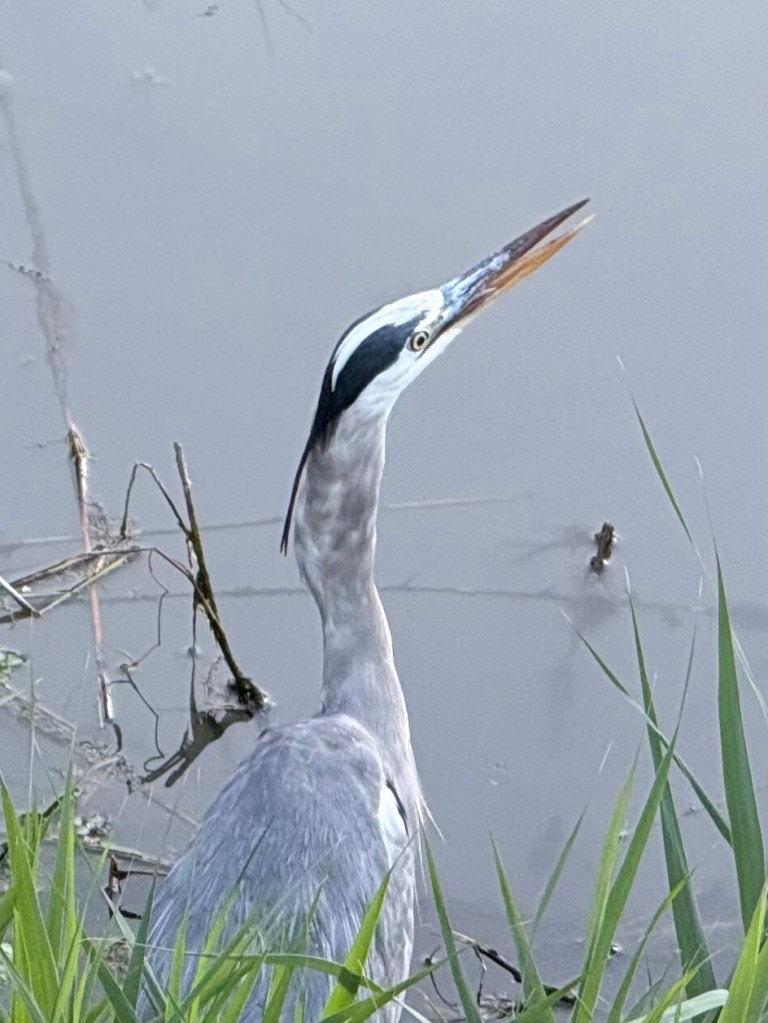
Not catching fish is hardly the worst thing on a spring morning in the western Everglades. A bull manatee is swimming back and forth underneath me, probably curious about my kayak. Chortling songs of Purple Martins grace the air. Mullet sploosh nonstop under the watch of Great Blue Herons waiting in ambush on the odd bit of open shoreline. Anhingas and cormorants dry in the trees overhead as they digest their breakfasts. Alligators rise and sink as I pedal-paddle past.
* * *
THE DEVIL’S DAUGHTER
Master fly designer Drew Chicone of Ft. Myers publishes an email newsletter with detailed instructions for tying his more successful fly designs.
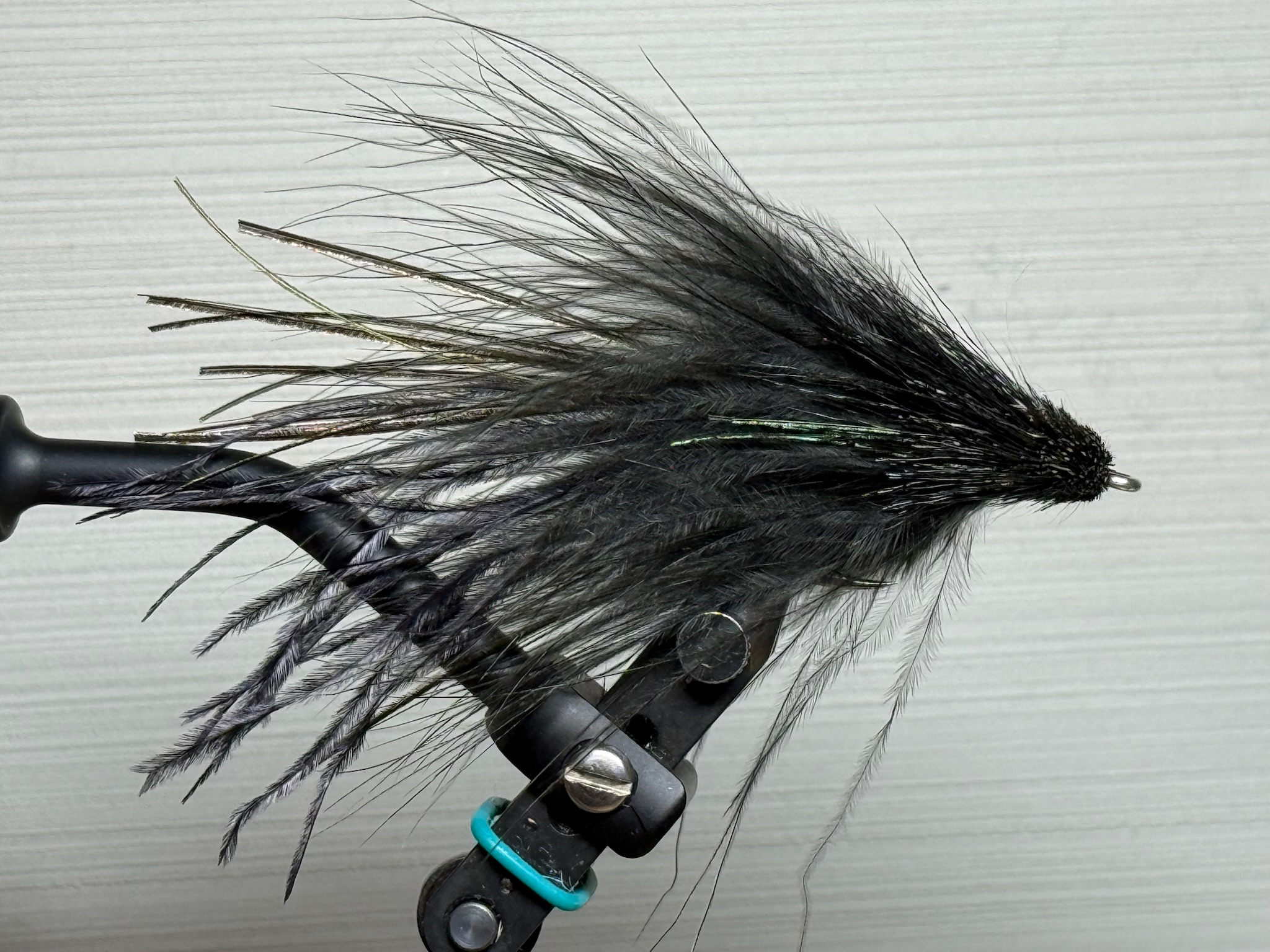
Drew invented “The Devil’s Daughter”, a big black fly for targeting those overfished snook and juvenile tarpon that have wised to every fly in the box. It’s a complicated tie as saltwater flies go, combining shimmering peacock herl, swishy ostrich herl, and fluffy marabou feathers into a pulsating body, with a head of spun black deer hair and peacock herl that displaces water as the fly moves. The fly is light for its size, lands softly, wets quickly, swishes enticingly, and pushes water to announce its passage. I had tied one and used it only once, but it caught a 40 pound canal tarpon.
Devil’s Daughter, freshly tied and before being gnawed by a lot of tarpon.
This fly is in my collection today so I throw it in front of the rolling tarpon and move it through the water, mostly steady with tiny twitches to make it quiver. The fly stops and I give the line a tug…
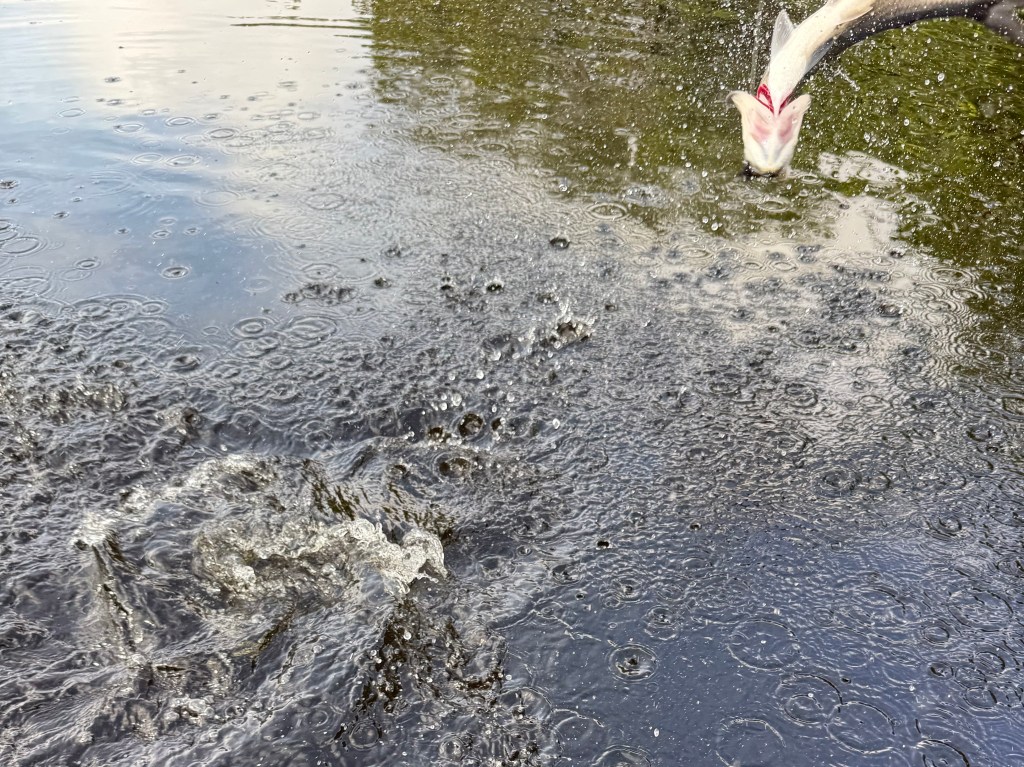
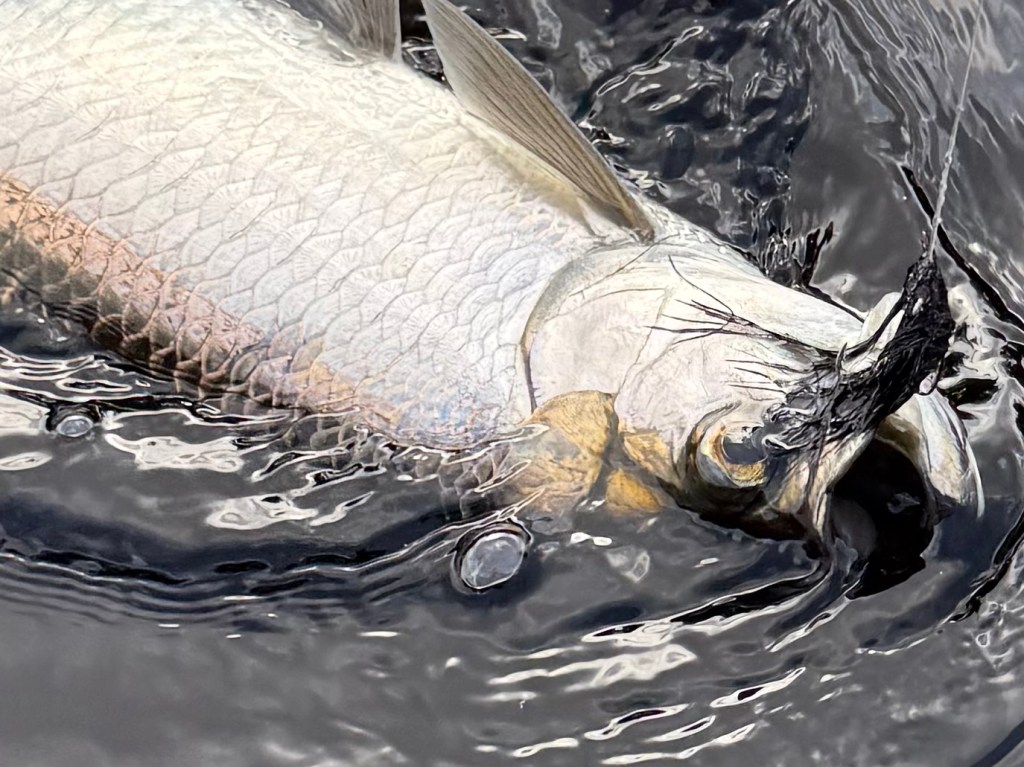
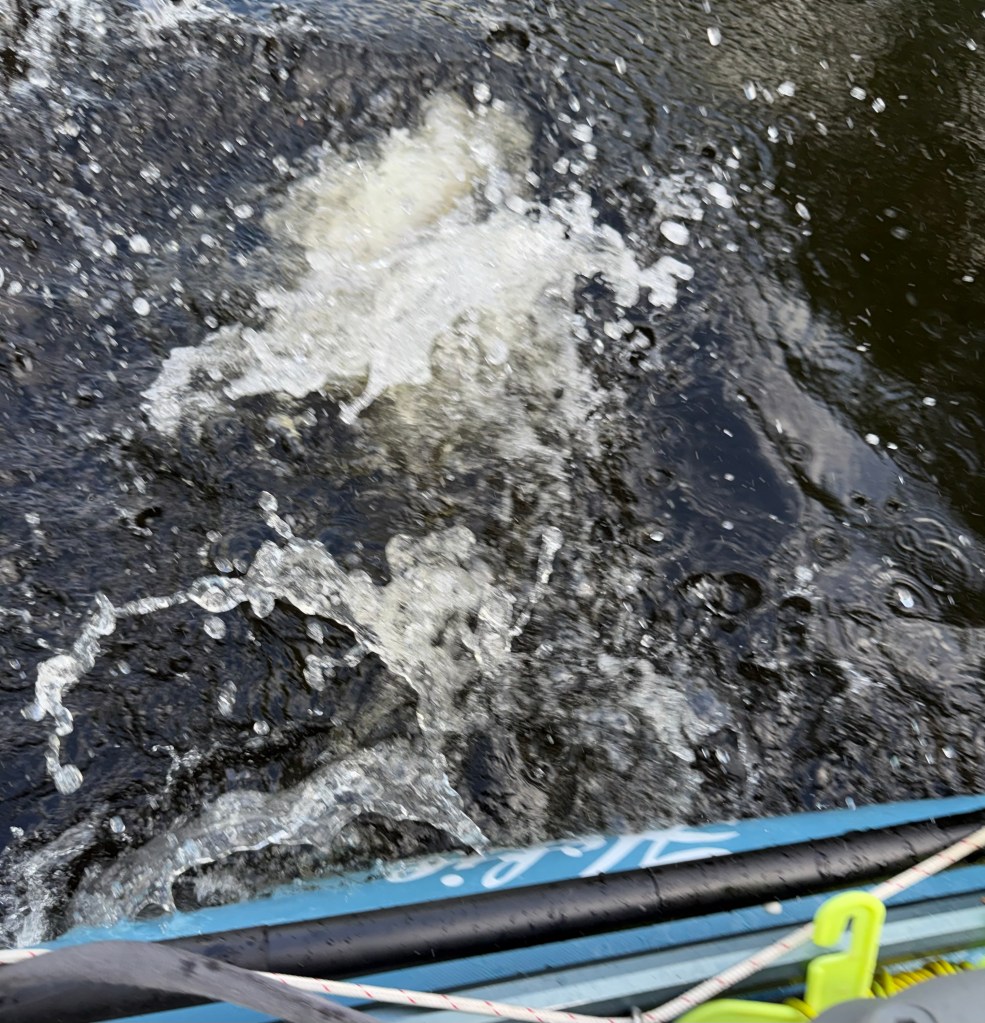
Line rips out of my hand and screams off the reel. I take back line and a five pound tarpon goes airborne. They always do and it’s always a splendid show of athleticism.
The pink and lavender iridescence leaves me awestruck.
Over the next two hours I catch and release eight tarpon ranging from 3 to 10 pounds. Two manage to toss the fly and six have to be unhooked in the net.
After being unhooked, this ten pound tarpon chose not to stick around for the photo op.
Expert wisdom has it that the fly design matters much less than how you move the fly in the water. True enough, but this morning’s fishing success has hinged on one black fly designed by Drew Chicone. Both times I’ve fished it, a third of tarpon contacts resulted in hook-ups: two nips then an eat. Heck of a fly, Drew.
* * *
The sky opens up as I pull into our driveway. I could use a nap.
One last nod to the enduring spirit of Woody Guthrie. Roll on sweet tarpon, roll on.