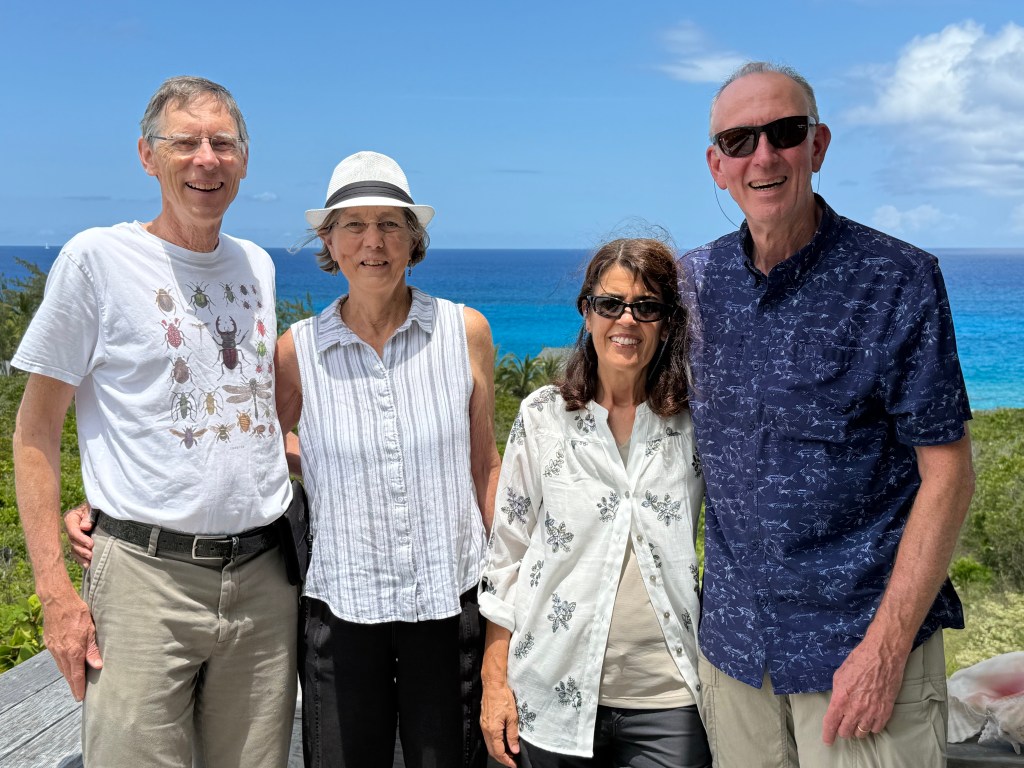
When I moved to Miami in 1992, I assumed I’d take frequent trips to The Bahamas – they are so close. Thirty-four years later, I finally made my first trip. We spent an enchanted week on Long Island, 335 miles ESE of Miami. “We” includes my wife Gray and our retired zoologist friends Chris and Marcia from the Keys.
* * *
Flights being what they are, we stay over in Nassau before flying to Long Island. We spend the afternoon poking around the downtown, the best part of which is the walk up and down the Queen’s Steps at the end of a former limestone quarry turned tropical garden.
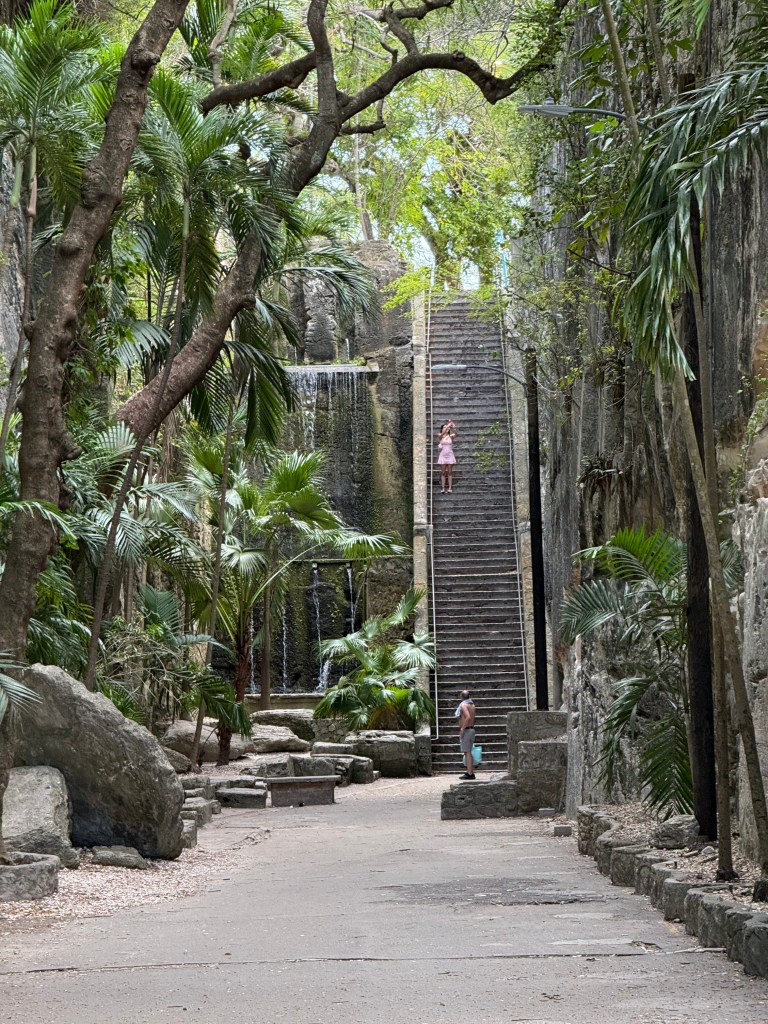
As I sit on a stone wall to take in the view, a black rat (Rattus rattus) pops out from behind a rock, runs across the space in broad daylight, and scrambles onto my left foot. I shake my left foot reflexively and Miss Rat deftly leaps onto my right foot. I snap my right leg straight and propel her back across the narrow quarry, where she scoots back into her hole in the rock face. Rats rule the Queen’s Steps, or fancy they do.
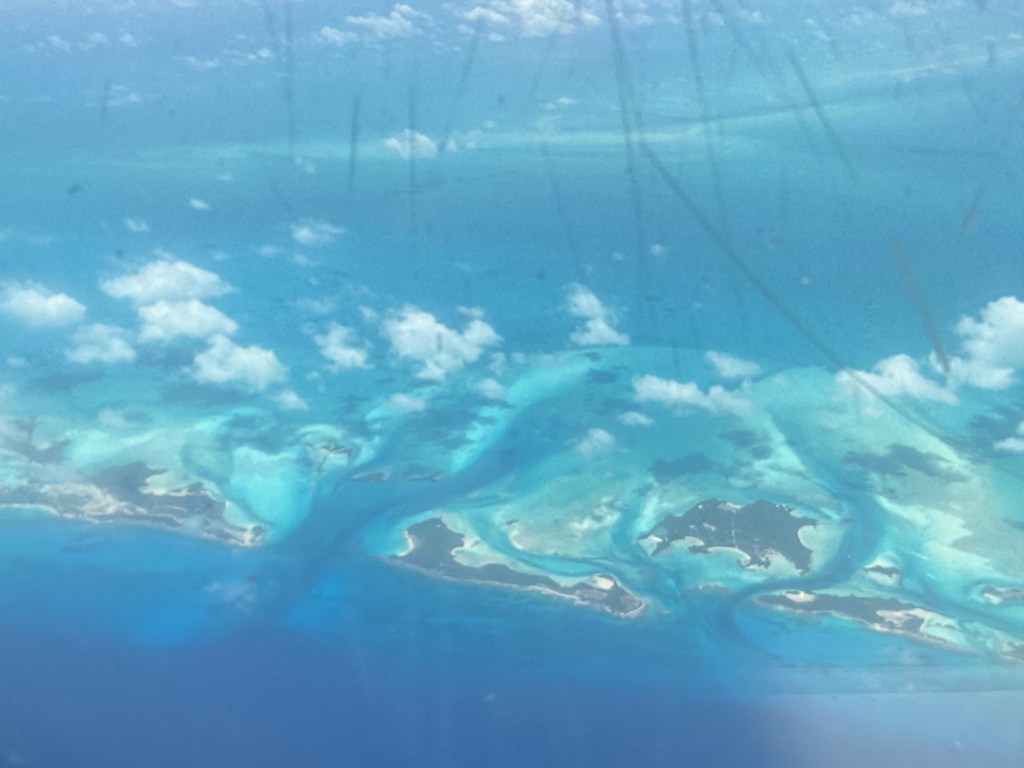
The next day we take a turboprop to Long Island, passing over infinite turquoise flats visible through the scratched window.
As per its name, Long Island is long, about 80 miles end-to-end, and narrow, a mile wide in most places. It’s heavily vegetated in dense hurricane-pruned coastal hammock and scrub.
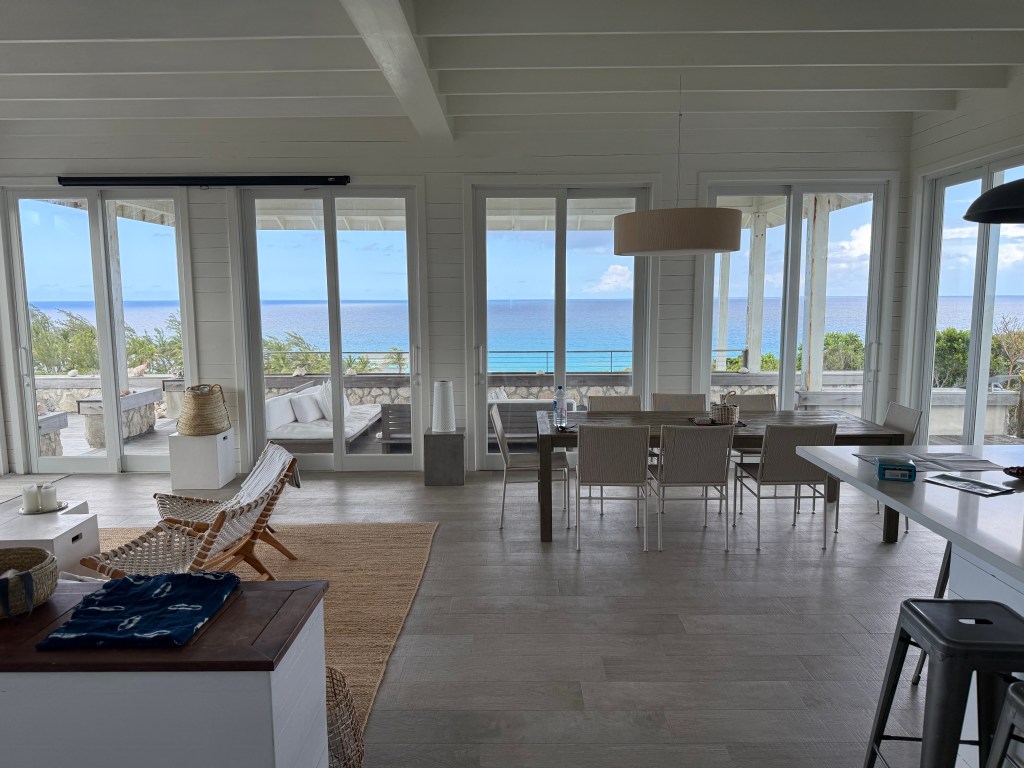
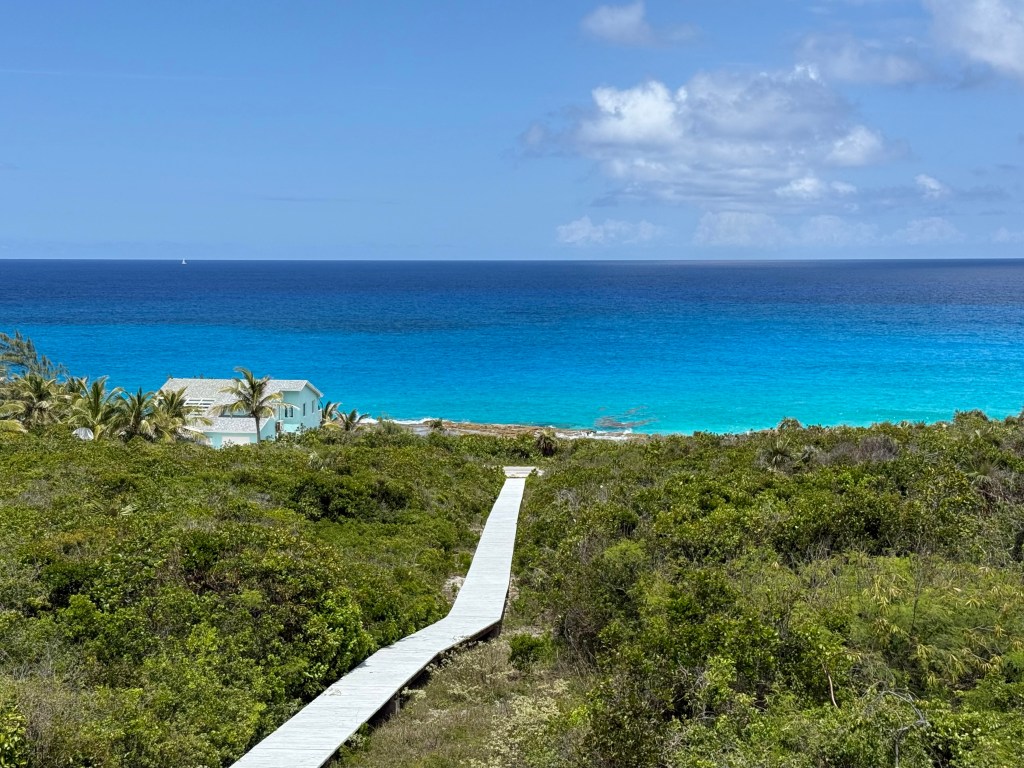
One road, The Queen’s Highway, runs the length of the island (are you sensing the Bahamian “Queen” theme yet?) Some sections had been paved at one time or another and everybody drives on the left side of the pitted road. We lodge at the north end, in Stella Maris where our digs are a Home Exchange house on a hilltop overlooking the Atlantic.
Chris is a far more experienced fly fisherman than I, and equally enthusiastic. For two months, Chris and I have been planning to fish for bonefish on fly. We even caught them in our dreams.
Slipping into bed on our first evening in Long Island, Gray asks me in a warning tone:
“You’re NOT going to spend the WHOLE time fishing, are you?”
“Oh no”, I reassure her.
Fishermen never lie; it’s hard to see bonefish at night. For her part, Gray spends every possible moment painting lovely watercolors of everything around her. I don’t complain. Why would I? I am delighted by her painting and seeing her enjoy it so.
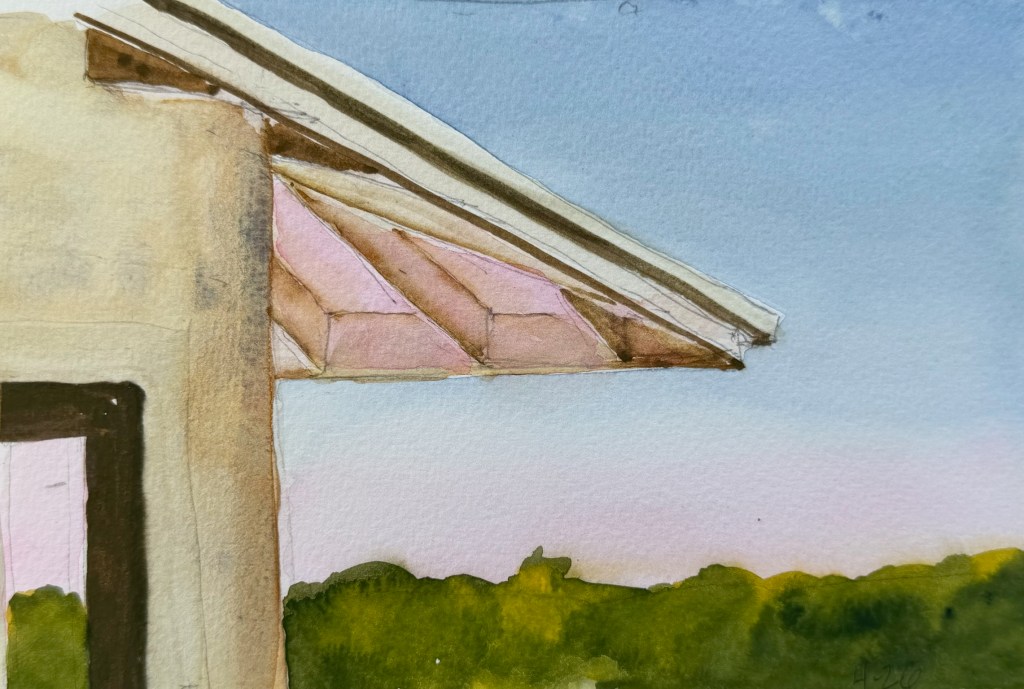
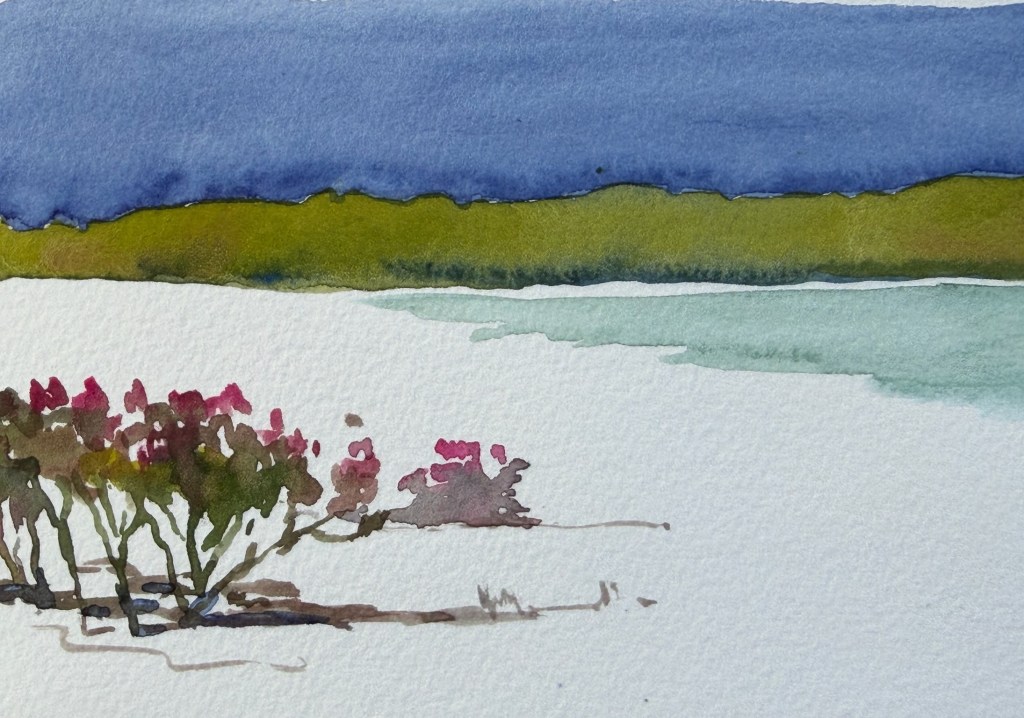
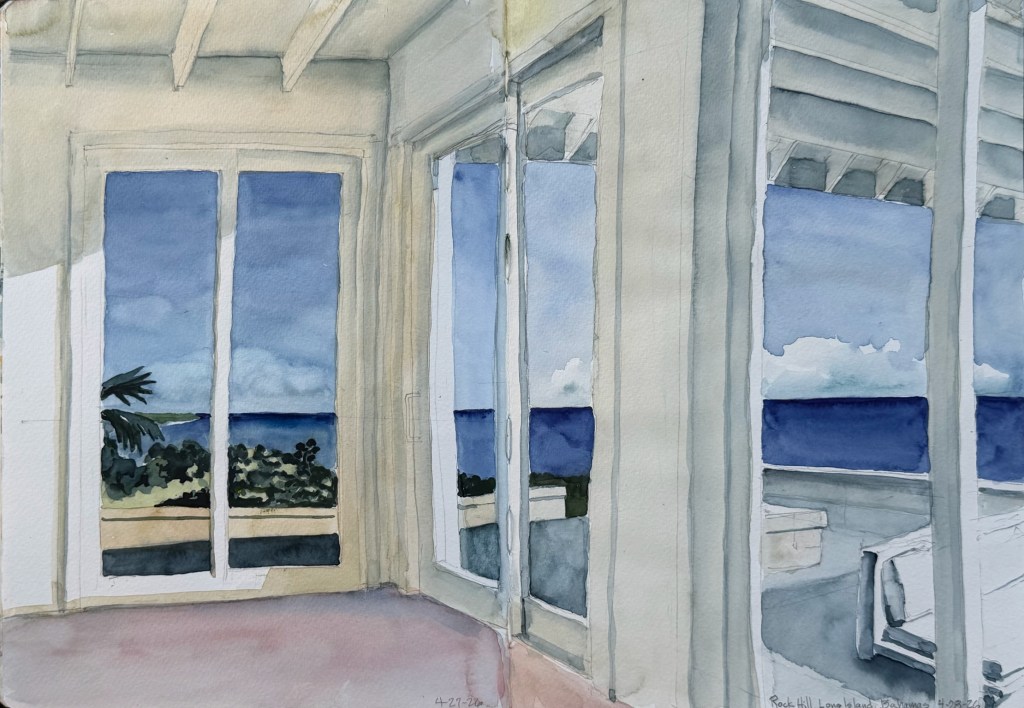
Marcia borrows my binoculars and watches birds. While tricky to spot in the dense, low thicket that covers the windswept island, you can often hear their songs.
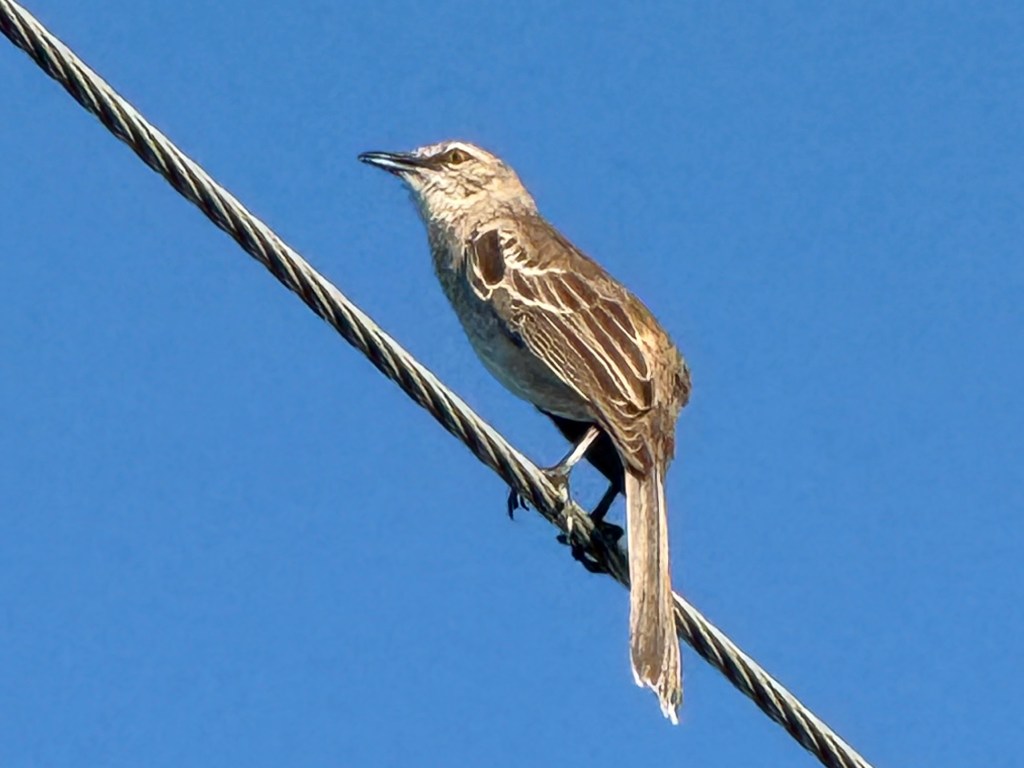
A Bananaquit and a Bahama Mockingbird take baths in the gutter under the eave. Mangrove Cuckoos growl from the vegetation “kuk-kuk-kuk-kuk…”, but are largely invisible – only Marcia manages to spot one.
I discover thin vines with tiny thorns running along the ground through the scrub. Ouch.
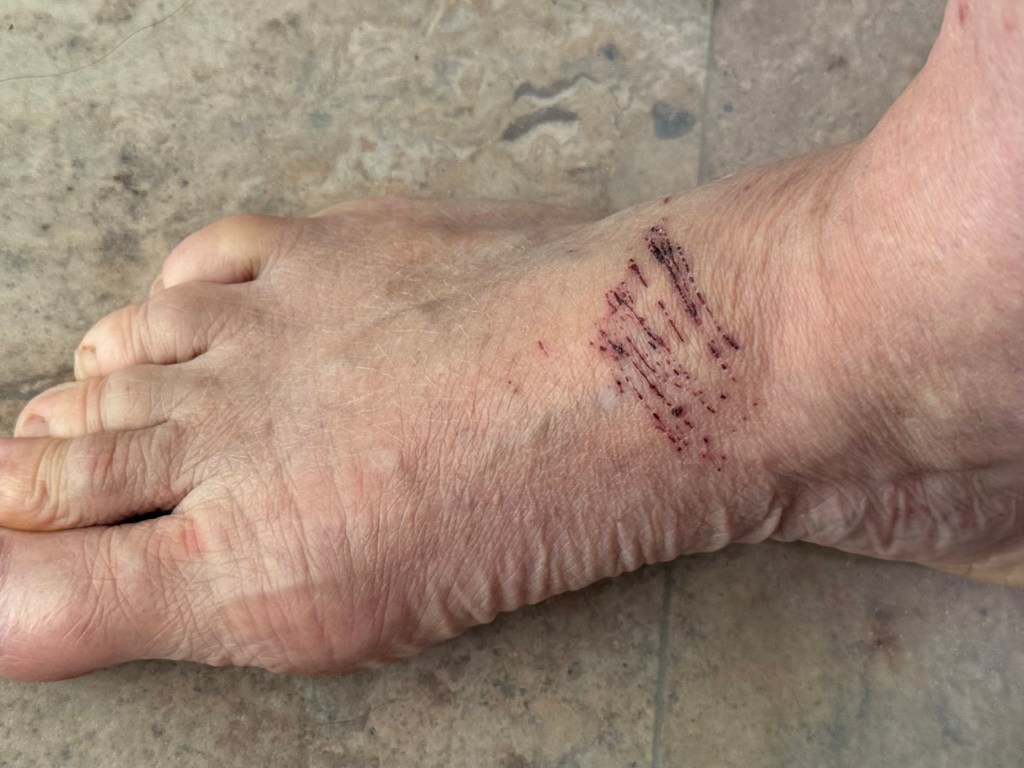
The property manager tells us that the recent hurricane last November took a heavy toll on the birds and butterflies. Hopefully they recover soon.
Food and supplies, such as they are, cost about twice what you’d pay on the mainland. Provisions arrive once a week at the town of Salt Pond, 20 miles south of our place, via the mail boat. The Regatta was held at a different island last week. Sailing being the national sport, lots of locals attend the Regatta, so the mail boat went there instead of Salt Pond. As a result, we find the produce shelves sparser than usual at the local food stores and the ATM empty of cash. The only fish we find for sale are canned tuna, tins of sardines, and frozen salmon. I’ll be darned if I’m going to The Bahamas and eating canned fish or frozen salmon. We innovated with the menu and didn’t starve. I’d brought good coffee and granola from home and a spinning rod that might prove handy for grocery fishing.
The four of us drive an hour south to Dean’s Blue Hole. At 663 feet deep, it’s the second deepest blue hole on the planet.
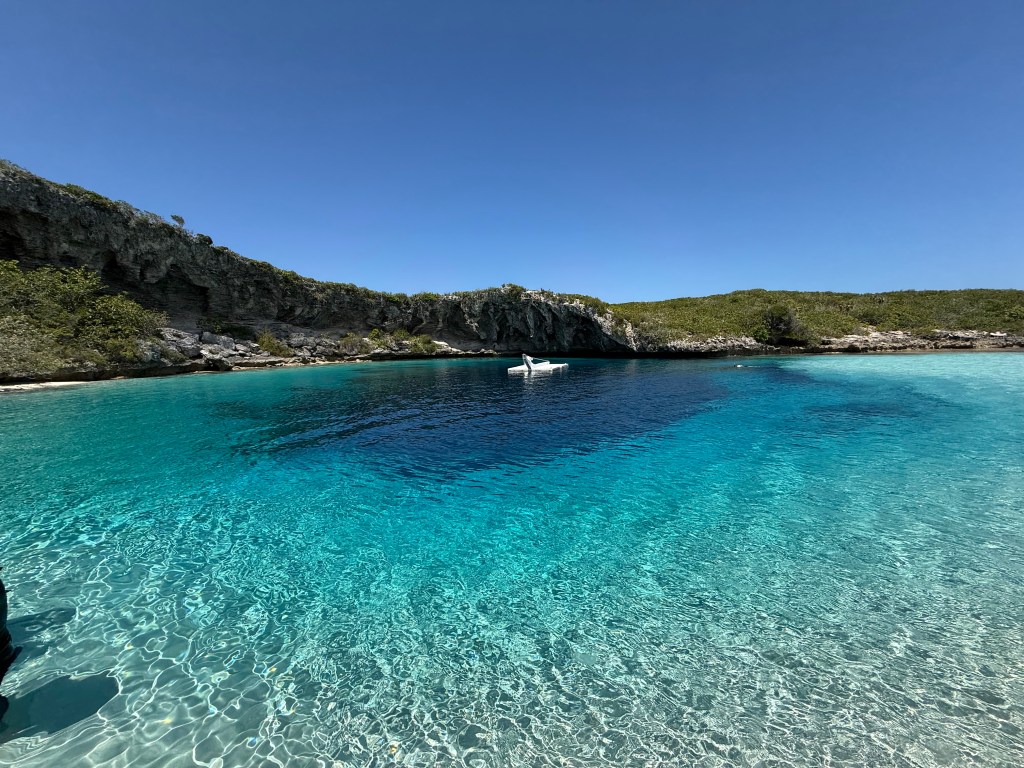
The hole’s shallow perimeter is lined with live coral, hosting oodles of tropical fish and the odd sea turtle. Gray and I snorkel around the cool water to soak in the splendor.
* * *
FISHING REPORT
Chris and I wade fish on our own for two days, after which we conclude that the author of the do-it-yourself bonefishing book maybe hadn’t actually fished all the places he recommended. A mangrove creek where, he wrote, one could spend a full day fishing for bonefish would have taken us a full day to free ourselves from the deep, sucking mud. It looks promising on Google Earth, right?
The most interesting wade-fishing spot we find is the lagoon by the Columbus Monument / Lucayan Memorial at the north tip of the island. This lagoon is ringed by the prettiest flats I’ve seen anywhere.
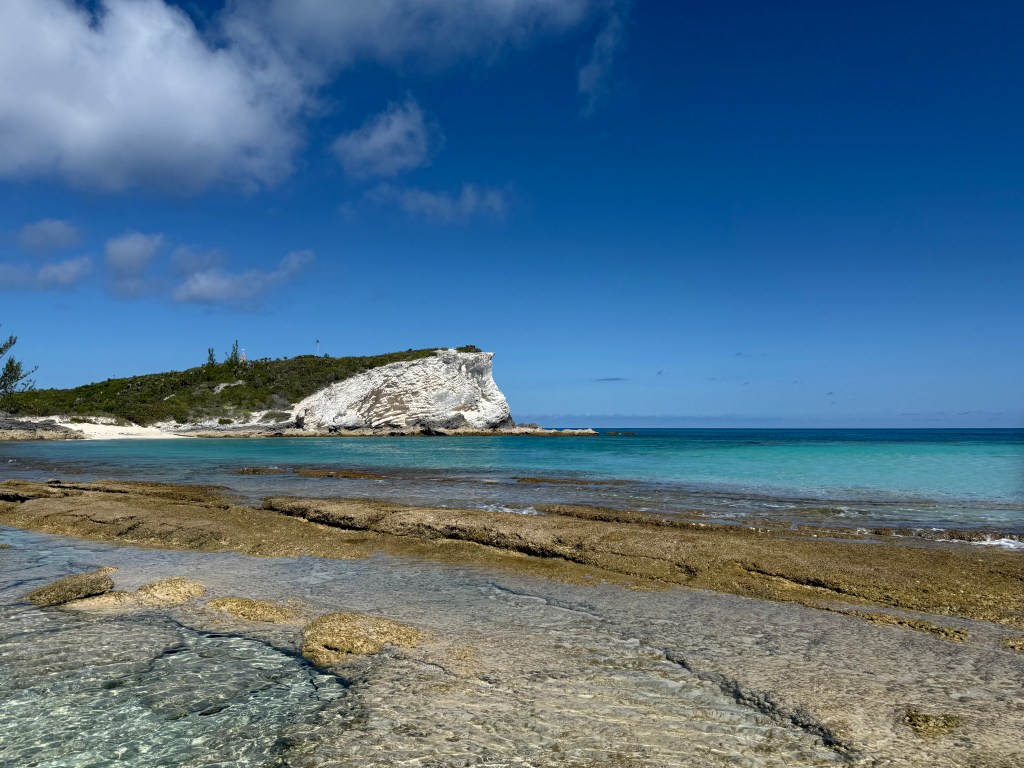
Chris wears his new Simms flats boots, cumbersome affairs that do an excellent job traversing the frighteningly sharp eroded limestone that lines the shore. These boots would be good footwear for birding off-trail, as well. I tippy-toe over the crags in my rubber-soled dive booties. They’re better-suited for sand.
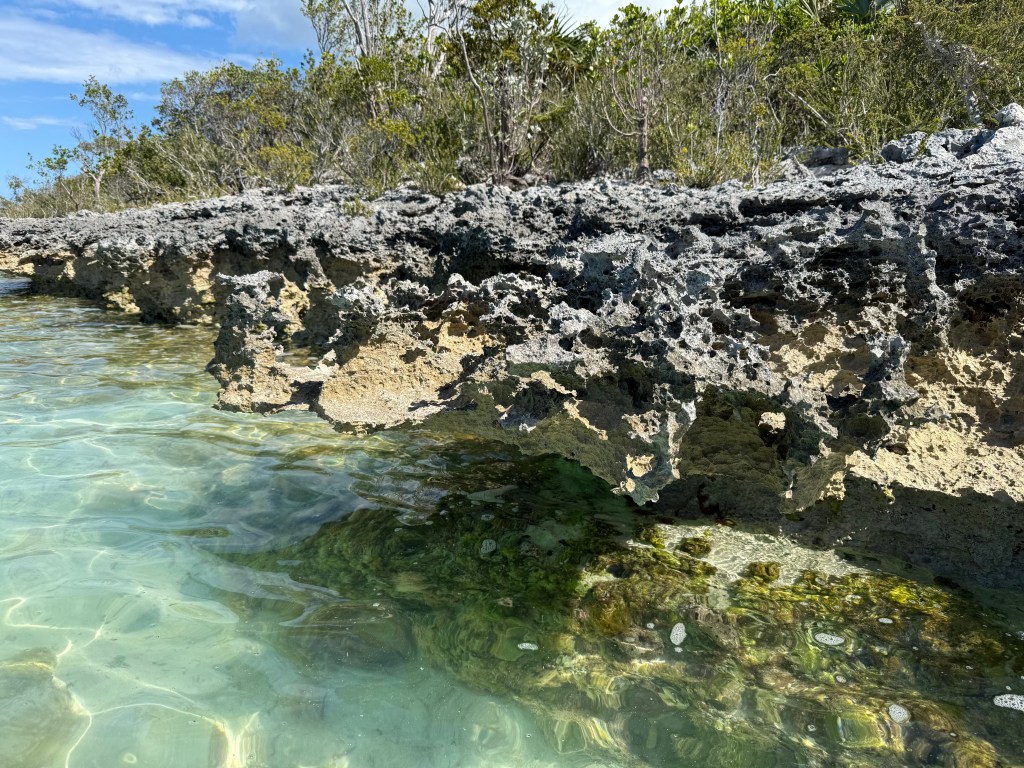
We see lots of young Green Turtles and Lemon Sharks, a few schools of small mullet, and the odd passing bonefish.
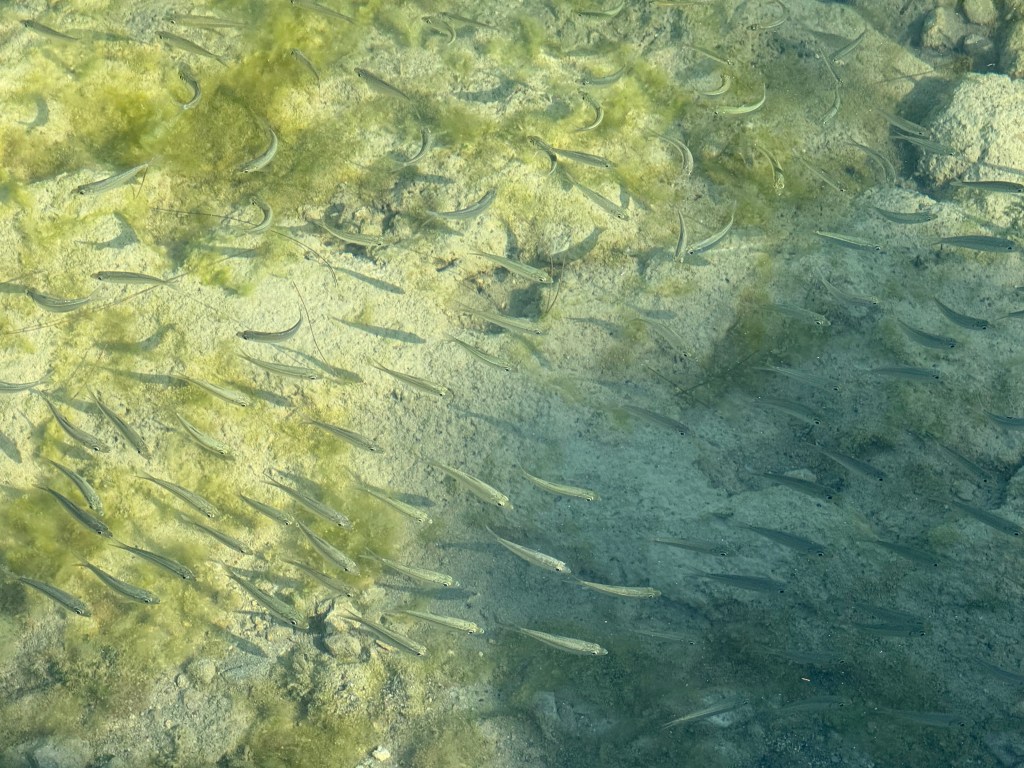
The next morning we walk the edge of Aderley Bay, also pretty, and filled with critters.
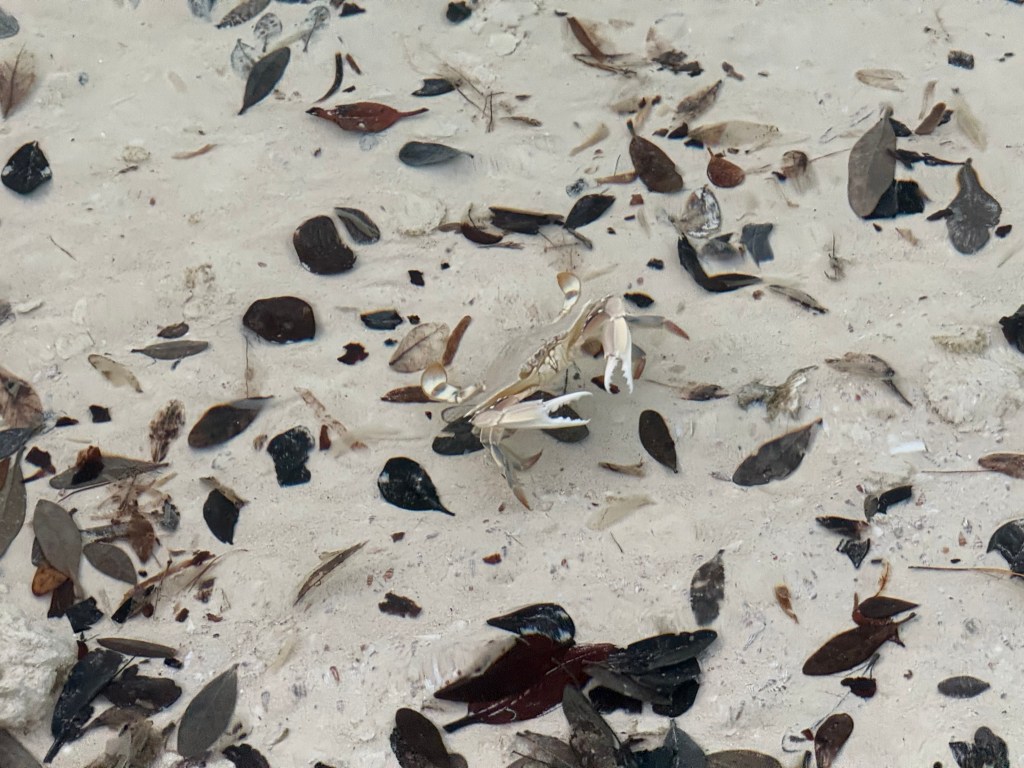
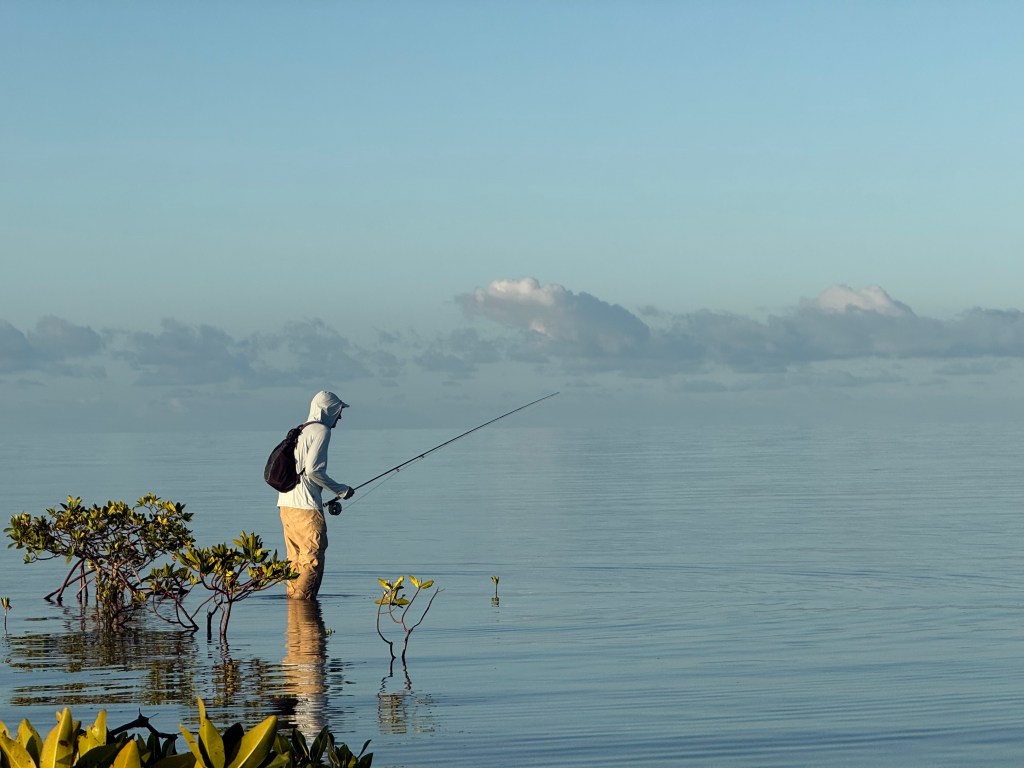
We catch little snappers and Chris catches a baby Nassau Grouper that grabs his fly before diving into its hiding hole, but we don’t see a bonefish.
Returning to the lagoon at the Monument/Memorial late morning, a 10 pound bonefish swims up to Chris before he has prepared his line for casting. Oops. I see another bonefish approach. It sees me too and veers back into deep water. That’s it for bonefish today. Wading mile after hopeful mile, Chris and I rub our toes raw inside our neoprene wading socks. [Note to self: acquire snug synthetic liner socks].
This week the moon is waxing full, allowing the bonefish to stay up all night feeding on sand worms and other invertebrate party snacks. Having a full tummy come morning presumably lets them hang out in deep water and reduce daytime exposure to aerial Osprey attacks. Tide swings are steeper on the new and full moons which move bonefish faster through their circuit between the mangrove creeks and deep water. These faster movements, in turn, shorten our accessible fishing time on the flats. Neither nocturnal feeding nor fast transit over the flats is ideal for finding hungry bonefish by daylight.
Fortunately, Chris has booked us a day with James “Docky” Smith, owner of Bonafide Bonefishing. The locals tell us that Docky can put us on bonefish under any conditions.
The following morning, as we wait at the marina for Docky to show up, Chris chats with Docky’s brother “Big Dog”, who is fiddling with something on a large fishing boat. I watch a school of baby tarpon evading a hopeful barracuda and scout the water for snappers as a possible future dinner alternative to dining out.
Docky motors up in his flats skiff, a Kevlar Hell’s Bay Professional that poles in 5″ of water.
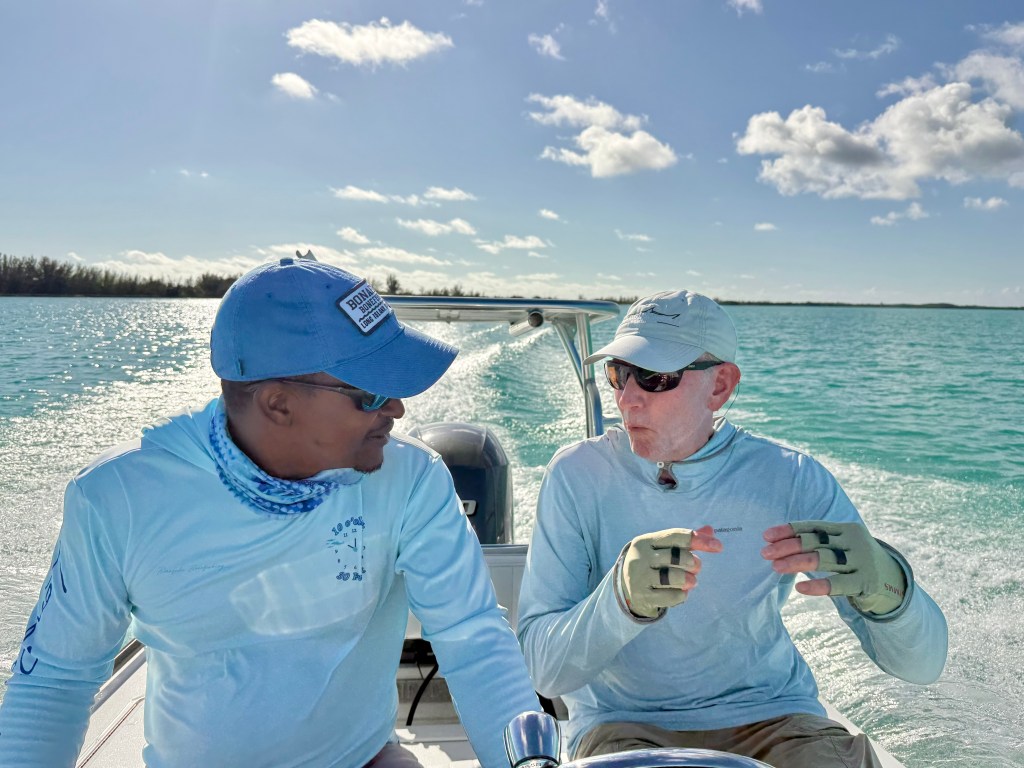
In 20 minutes we are on a beautiful flat, completely inaccessible to fishers lacking a shallow-draft flats boat. Docky cuts the motor and asks us to make a few practice casts so he can gauge our skill levels. My humble casting skills have room for improvement. Docky says to slow down my rod and speed up my left hand line haul. I try and it makes the casts longer and easier (thanks, Docky!). I can tell Chris is very excited – I’ve seen him make a hundred casts better than these.
Docky selects a fly from my collection, Chicone’s Crusher Legs Gotcha, tied with fur from our friend Laura’s Australian Shepherd. Docky directs me to the bow, and begins poling his skiff slowly across the flat in less than a foot of water.
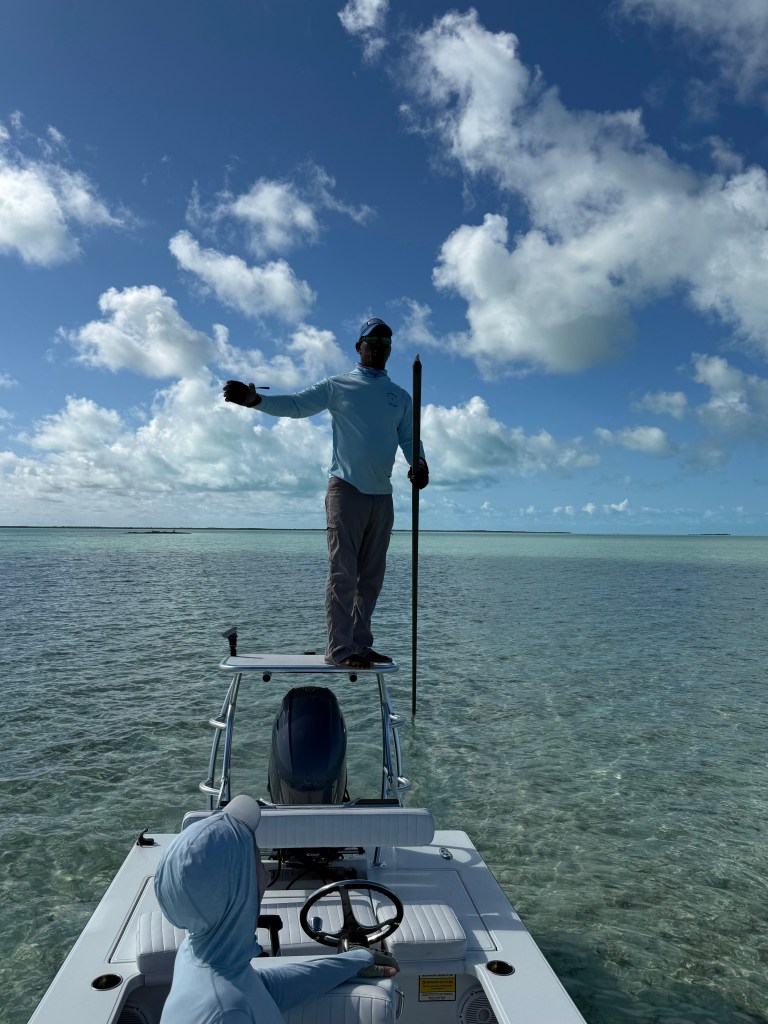
Docky’s scheme is to intercept bonefish as the falling tide pushes them to deeper water. Wind riffles the water, better for fishing but harder for seeing fish. At least that’s the case for me. Docky has 30 years experience spotting these flats ghosts, and like all good flats guides, easily spots fish twice as far away as a normal human can.
Docky: “There … 11 o’clock, 80 feet. See them?”
Me: “No.”
Docky: “Sixty feet. See them?”
Me: “No.”
Docky: “Forty feet. See them?”
Me: “Yep!”
Docky: “Start casting!”
Twenty bonefish are swimming side-by-side straight toward us. I cast where Docky says. The fish don’t like my cast and leave. I need to angle my cast more downward so the fish cannot see the fly line. Try again.
Docky finds more fish and says “Start casting.” I cast and the fish turn away. When Docky says to start casting, he doesn’t mean for me to cast. He wants me to false cast until he likes the angle of my fly line and the distance of my fly, and then only to let it go when he says to. Ohh-kay. Not what I’m used to, but I’ll follow the master today.
The next school holds 25 bonefish, including a few large ones. Docky tells me to cast right in front of the middle of the school… wait, now! With a clearer understanding of his directions, I make a satisfactory cast, wait for the fish to get close enough to see the fly, then start the long, slow strips that mimic the behavior of a small shrimp fleeing encroaching bonefish. A dozen fish advance curiously to check out the escaping fly. Each bonefish, in turn, takes a quick look and swims away. Then the biggest one, a nine pounder, breaks out of the school and swims up to the fly. This big bonefish keeps following, following, following, then nope! It turns away too. They all think something is wrong with the fly. I suspect the fur is too long and offer to trim it shorter, but Docky says to pick a different fly entirely. I ask which one? “Doesn’t matter, choose one.”
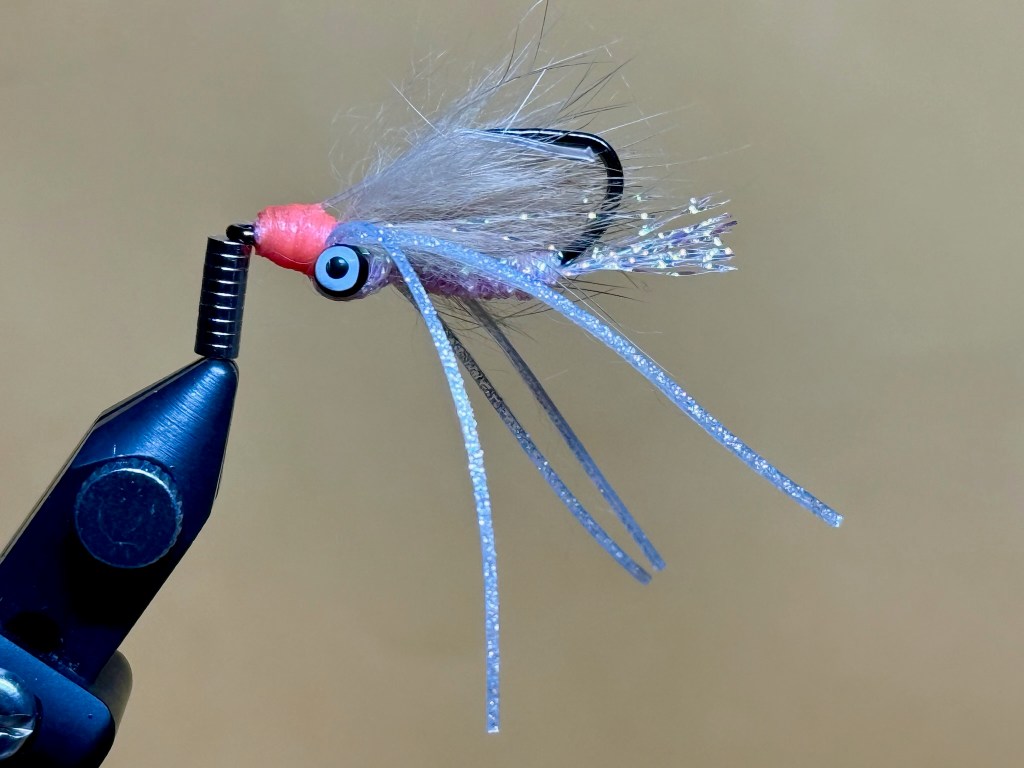
I let Chris have the bow and go back into my fly box for something different. I pick the #6 Bone Appétit, with a shorter “wing” of tan rabbit fur. It’s a Crazy Charlie variant that Drew Chicone designed for the white sands of Andros Island. The sand here is white as well. I also switch from my 8 weight setup to my 9 weight, which will handle the wind a little better.
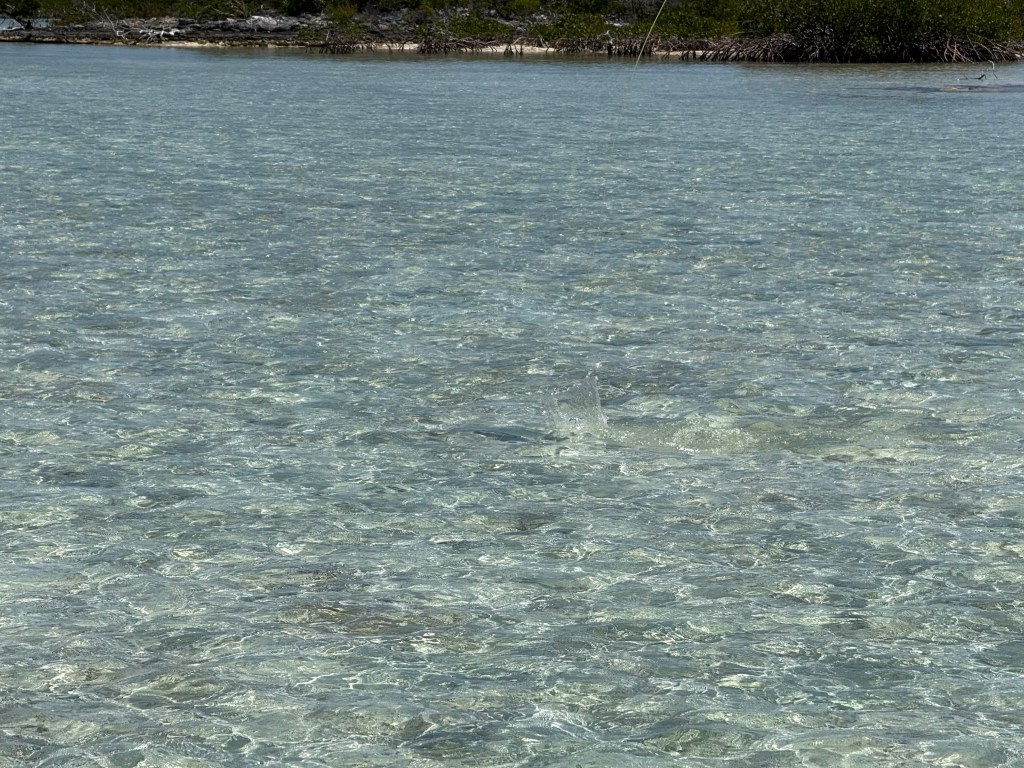
Chris explores the numerous ways to scare bonefish. He shifts his body weight during the cast, rocking the boat maybe an inch, just enough to push out a subtle wave that makes the bonefish anxious. He repositions his sock-clad foot after the cast; somehow the bonefish sense it and depart. He casts his fly to land upwind of a bonefish school but the wind curves the belly of the fly line in front of the fish, scaring them away. Having corrected all his errors, Chris finally hooks up with a nice-sized bonefish that gives him several good runs before randomly tossing the fly. Hard-mouthed fish are good at that. Here’s a photo of the bonefish before it got away.
At the next spot, Docky directs us to hop out and wade. As I walk beside him, Docky instructs me in bonefish behavior. I had a career studying animal behavior, but have only fly fished saltwater gamefish for four years. This lesson alone would be worth the price of the guide day, but it gets better. Docky spots a school of several dozen bonefish. As we get closer we can see them moving slowly away from us, transparent dorsal fins and tails glinting in the sunlight. I am beside myself. Wade fishing is my favorite pursuit. We follow the fish quietly, out of disturbance range. In time, they pause, turn, and come back towards us. I drop the new fly in their path, wait for the fish to get close, and begin the fleeing shrimp retrieve. A four pound bonefish pounces on the fly. I set the hook, and the bonefish takes off, zipping line off the reel.
I have caught many bonefish on spinning gear, but had just two “eats” on fly, neither of which I landed. This one is my first bonefish on fly brought to hand. I lift it briefly from the water for a quick pic and it’s off to rejoin its friends.
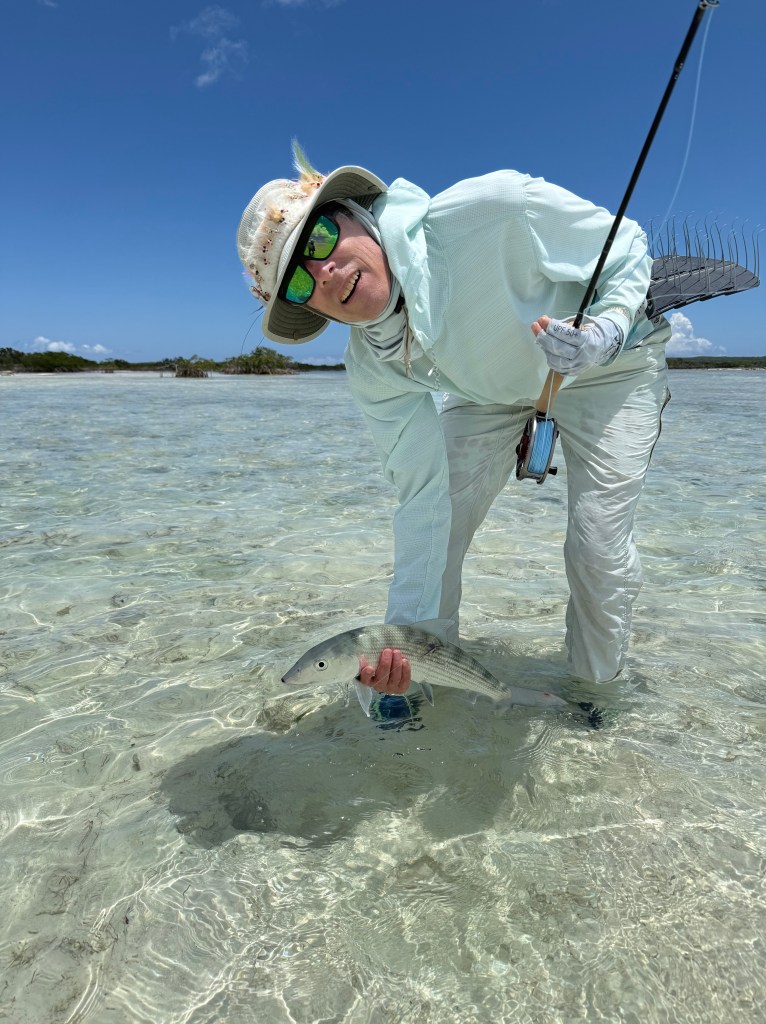
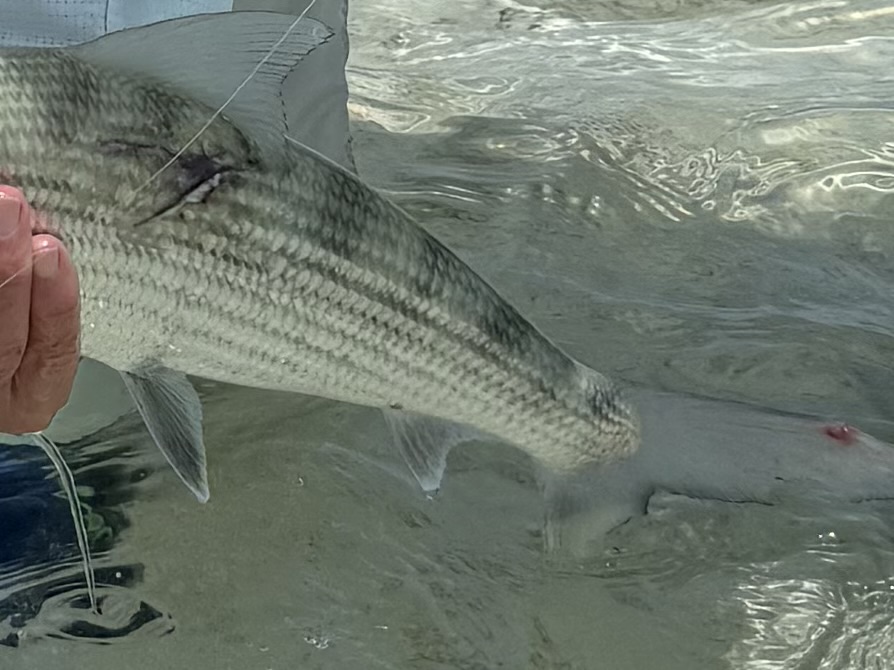
Close inspection of the photo shows recent injuries from Osprey attacks. No way an Osprey can lift a fish this big from the water, but it tried. Ospreys are the reason bonefish are so skittish, fleeing when anything disturbs the water or casts a shadow.
Chris hooks up again, more good runs, and the fish breaks off.
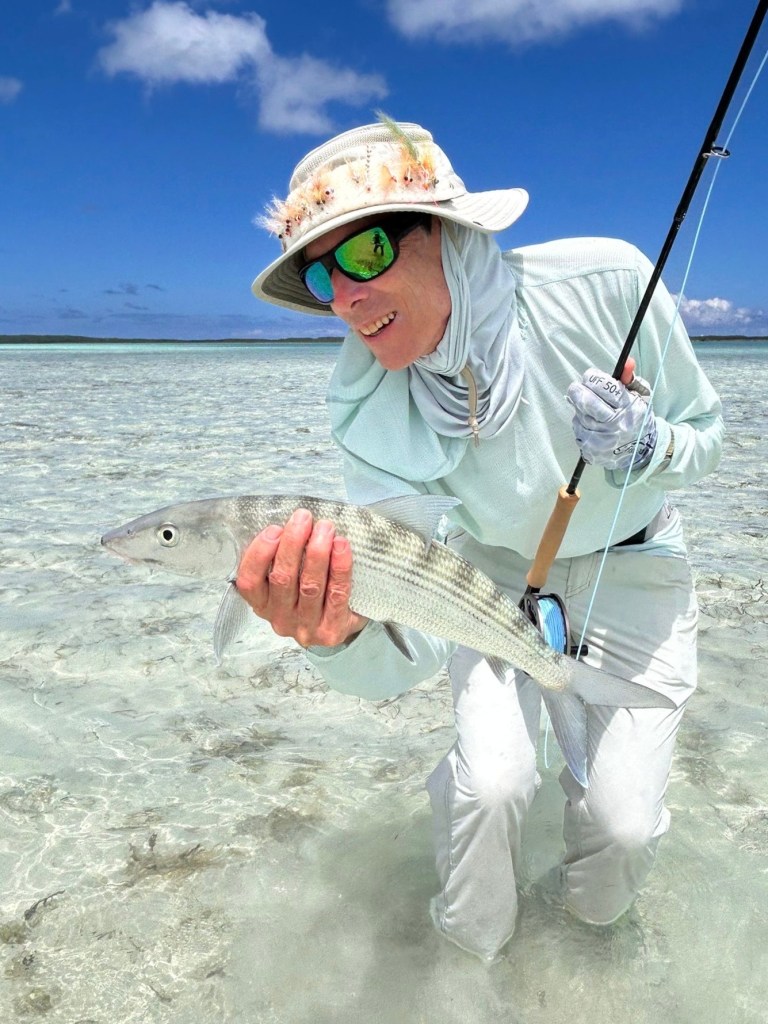
I catch a second bonefish, a little smaller than the first, about 3 pounds. I’d keep this fish in the water to unhook and release it, but oblige Docky who wants a quick photo.
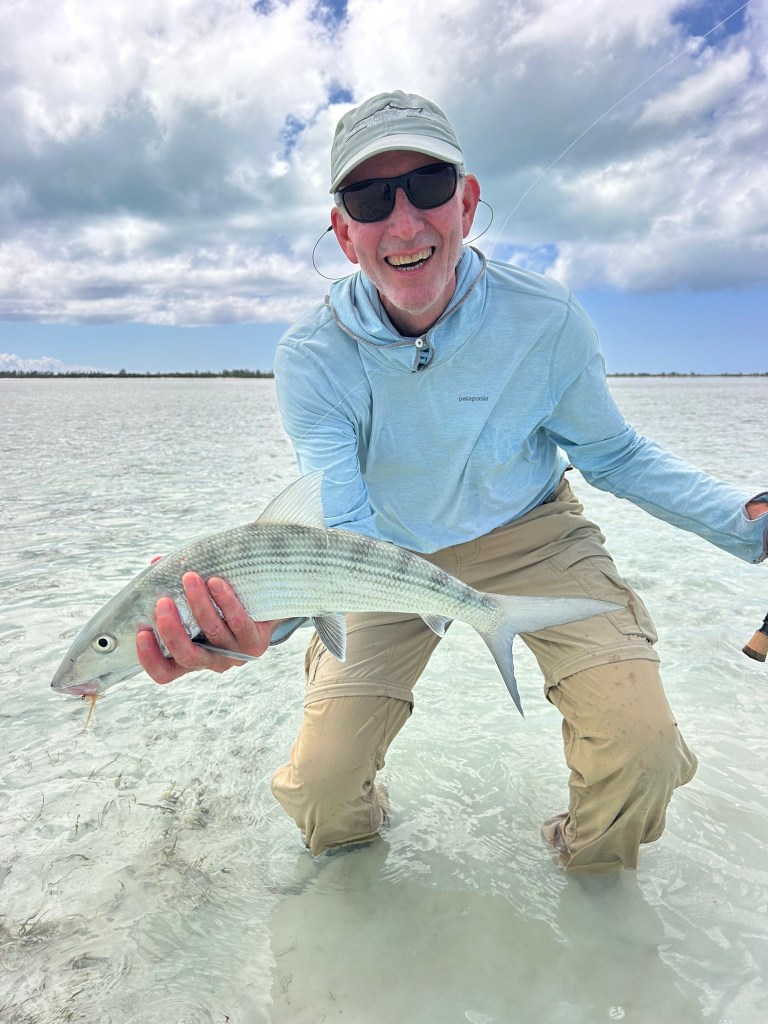
Chris gets a third eat and manages to land this one.
On the way back to the marina, Docky stops to have us compare the feel of different fly rods as he gives us some final coaching in flats casting. Chris asks what rod is HIS favorite and Docky pulls out a titanium-wrapped ADG fly rod, cautioning “be careful with my girl.” It casts like a dream, farther and with less effort than Chris’ Orvis Recon or my Sage X.
Despite the worst possible moon and tides, Docky has put us in front of nine bonefish schools today, ranging from 20 to 200 fish each. I’ve seen more bonefish today than altogether over the past five years in South Florida and I’ve learned as much again about bonefish behavior. We’ve hooked up five times and brought three bonefish to hand. I’ve had a such a fine day that when I back out of the lot at Docky’s fly shop and knock over his shop sign, the humiliation cannot put a dent in my elation. I happily pay a neighborhood carpenter to remount the sign – gotta support the local tradesmen.
After five days on Long Island we still have not seen fresh fish for sale. With a notion to catch something fresh for dinner, I drive back to a spot where I saw some respectable Mangrove Snappers. I cast some shrimp flies and get no reaction. Nuts to that. I pull out my cheap Okuma travel spinning rod and tie on the irresistible snapper lure, a sparkly 2.5” rubber shrimp made by MonsterUSA. I rigged it with a fly hook, lightly weighted. Tossed where the flies were ignored, a bunch of snappers zoom over to check it out. Some of them are big enough for dinner but none will eat this proven lure. Throwing caution to the wind, I cut off the protective barracuda-proof wire bite tippet and re-tie the shrimp lure directly to the 20 pound monofilament leader. I try again in a slightly different spot but get the same refusals as before. Snappers are notoriously leader shy, so I add to the leader two feet of Rio high strength 1X fluorocarbon tippet. This precious stuff is just one quarter of a millimeter in diameter and tests close to 15 pounds. I move a bit further and try a third time. I see a quick flash of silver and wham! My rod bends double and the drag screams as line peels off the reel. The barely-seen fish, whatever it is, has dashed back through the dock pilings whence it came.
I assume it’s a big barracuda, but the thin tippet holds. Definitely not a barracuda. Maybe a grouper(?). The 15 pound braided line is stretched taught against the pilings, humming audibly, yet amazingly, does not fray and break. We go back and forth, each of us gaining and losing line until the balance tips in my favor and the fish comes into view. I spy the characteristic black spot and red tail of a Mutton Snapper. With no one to help me land the fish, I grasp the leader in my right hand, lie on my stomach, and nab the fish with my left hand. Sometimes it’s good to be built like a gibbon.
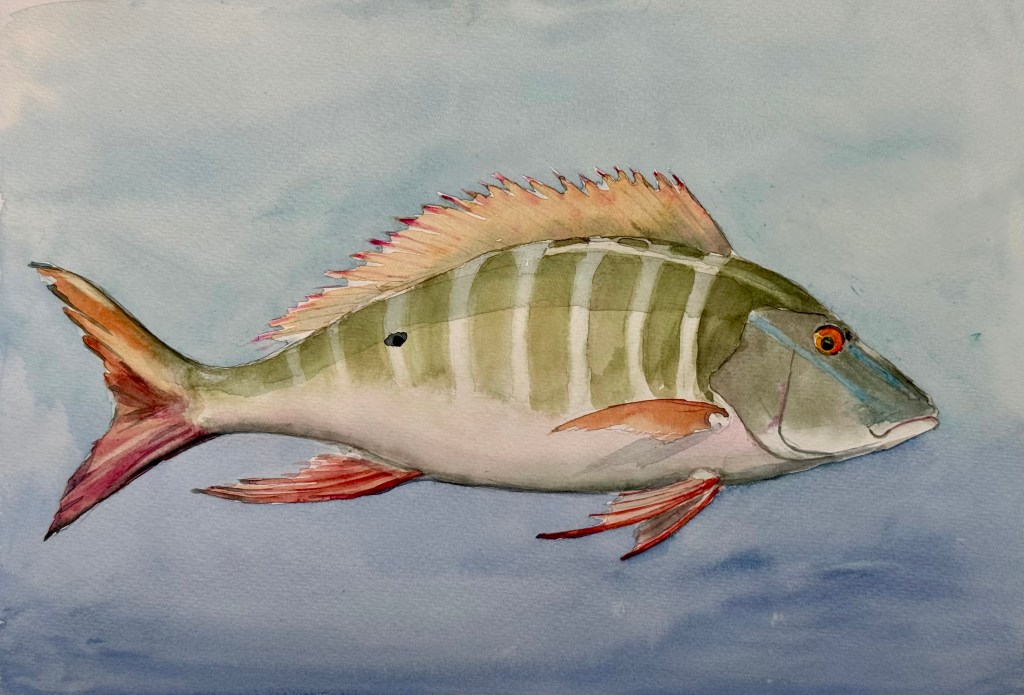
The snapper measures 22″. I’d cook it whole, but it won’t fit on the grill. Filleted, it makes a fine dinner for the four of us with two pieces saved out for the property manager and his wife.
* * *
Long Island has been a lovely place to visit for a week, enjoyed in the best of company. We’ll happily go back.
* * *
Postscript: the bonefish mug
Four years ago, retired Miami attorney and fly fisherman Joel Rosenthal spotted me returning to the Black Point marina in my kayak. Joel recognized me as the former mayor of South Miami and asked “How did you do today?” Two bonefish and an overslot snook. “Fly or spin?” Spin.
Joel asked if I’d like to learn how to fly cast and I jumped at the offer. Since I was 12 years old, I have imagined I would learn fly fishing as a retirement project. With just two years to go before retiring, why not get a head start? Naive question. Like watercolor painting, fly-fishing requires true obsession to develop competence, except the gear costs much, much more. If you are cash-strapped, take up watercolors instead.
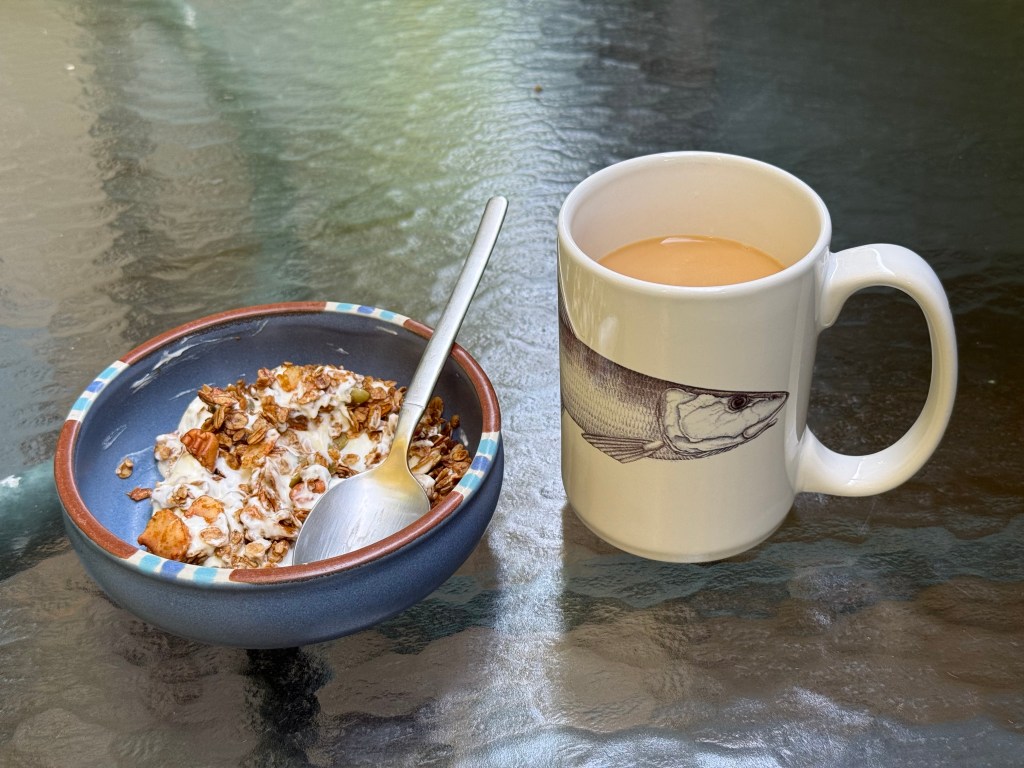
When I could throw a fly line 70 feet, Joel gave me a mug adorned with a drawing of a bonefish, but with the proviso that I could not use the mug until I’d caught a bonefish on fly. Oh, and the bonefish had to be brought to hand – “no photo and it didn’t happen.” I found a big gulf between casting a fly line on the grass and (1) convincing a moving, skittish, and largely invisible bonefish on the flats to eat a fly, (2) seeing it eat so I can quickly set the hook before the fish crushes the fly and spits it out, and (3) getting the hooked bonefish to hand without losing it. This morning the mug finally joins me for breakfast.


 Eye of the Cormorant
Leave a comment