“Phil, I get the draw of fly fishing in Wyoming, but Wisconsin?”
email from friend in Miami
”Someday I want to go fly fishing in the Driftless.”
overheard on train to car rental at Chicago O’Hare
The Driftless area of Wisconsin was not glaciated, so it has some big rocks sticking up, topography conducive to springs and formation cool water trout streams. It’s pretty countryside, with cornfields in the flatter areas framed by woodlands in the dolomite and limestone ridges and valleys.

The nearby town of Viroqua was described to us as a college town without a college. Many of its local businesses are named for the Driftless area, e.g., the Driftless Cafe, Driftless Books and Music, Driftless Angler, even the Driftless Humane Society. At the Viroqua Food Co-op you can buy Driftless Coffee.
Brook Trout are native to the Driftless streams and Brown Trout are naturalized.
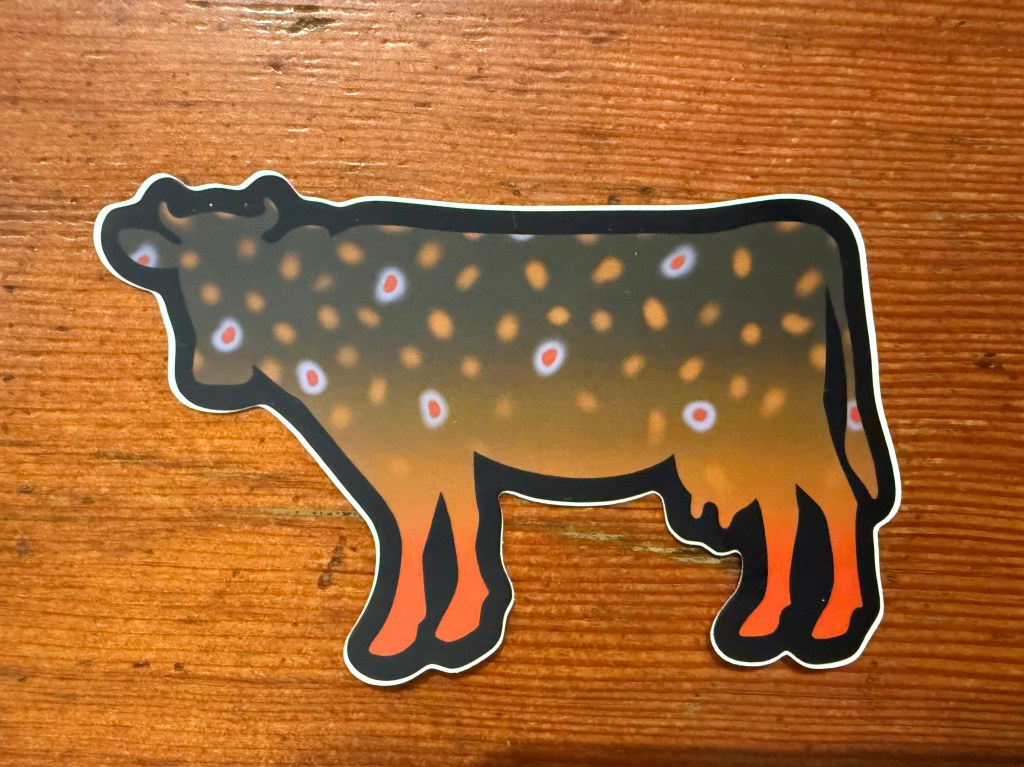
In addition to these self-sustaining trout populations, the Wisconsin DNR stocks streams with Rainbow Trout so the googans armed with spinning rods and barbed treble-hook spinners have something to catch on opening day. Any rainbows that survive that onslaught provide the big brown trout with something to snack on the other 364 days of the year, aside from their own offspring and hapless field mice. The Driftless streams grow some big browns, big like 30”. Fishing at night, when these leviathans are out feeding, is disallowed most of the year.
In my week of fishing, I saw hundreds of brown trout and brookies, but not a single rainbow. No monster browns either – the largest was about 18”, a nice trout by my standards.
Our first Drifltess afternoon we were joined by Adrian Livangood, a fishing guide from the outfitter Extreme Driftless. Adrian had spent five hours the day before scouting streams to find one with cool enough water, not higher than 65°F.

Adrian finally chose his home stream, one he’d fished since he was a kid. Not surprisingly, he knows every ripple and sand ridge, and how they change with each rain storm.
The stream, like many in the Driftless area, is accessed via a fishing easement, a strip of private land on which the owner has received a tax break for allowing access for trout fishing.
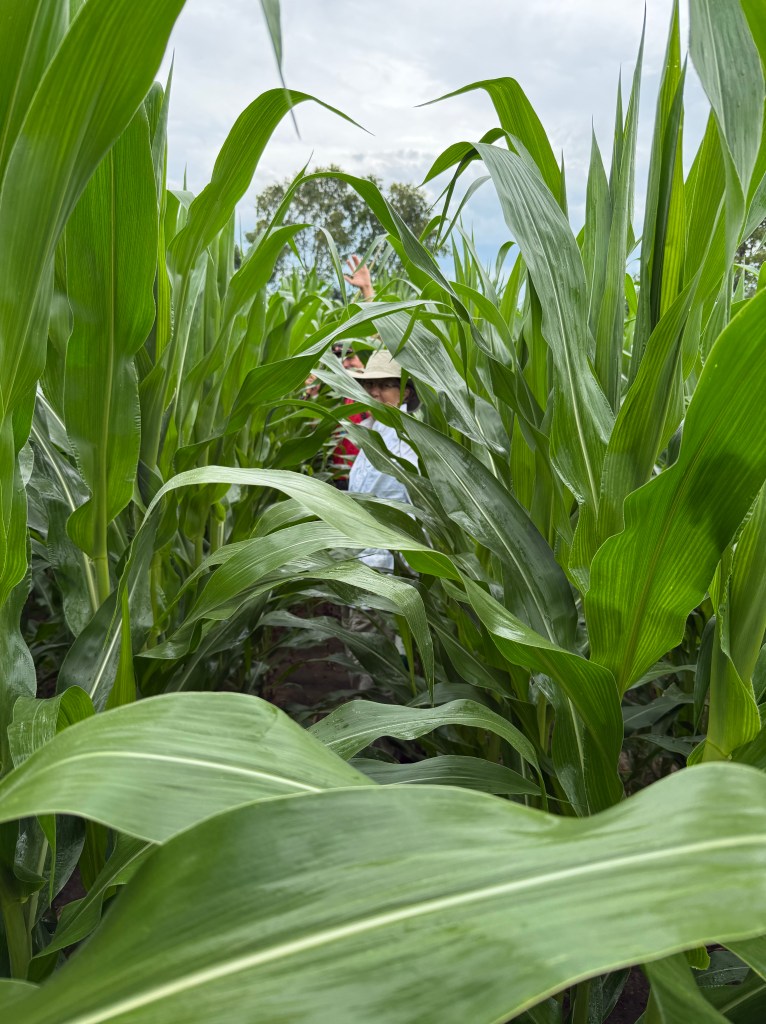
Following Adrian, we tunneled through 100 yards of tall corn, crossed under a barbed wire fence, then stepped out onto a cow pasture through which flowed a beautiful cool stream.
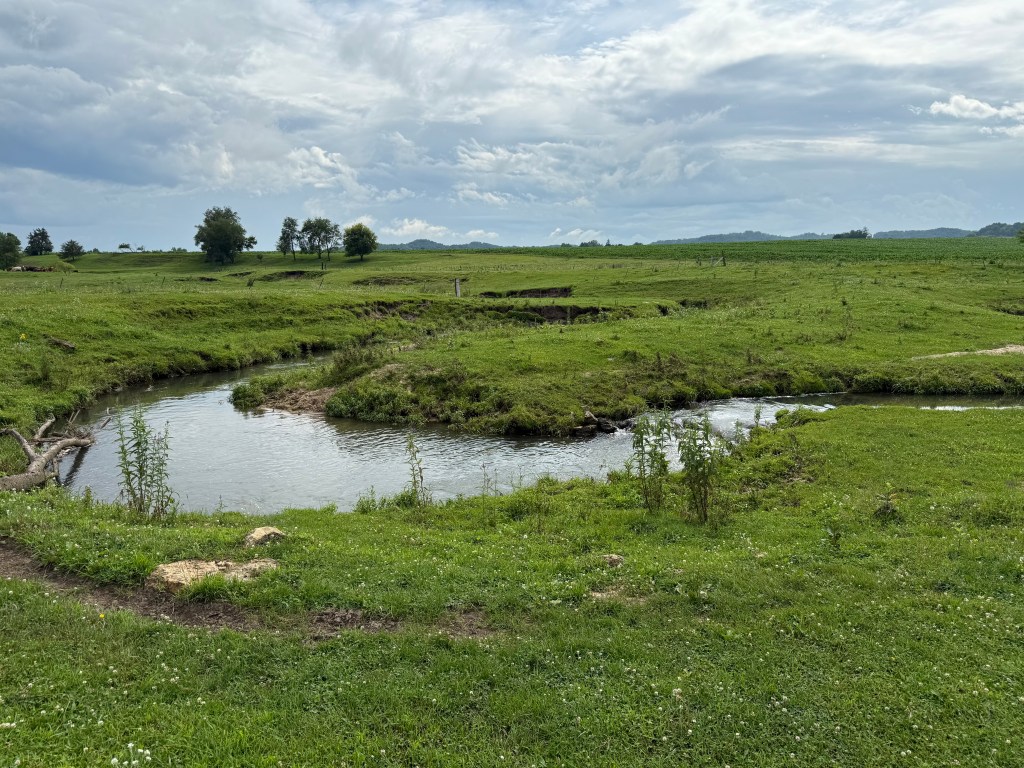
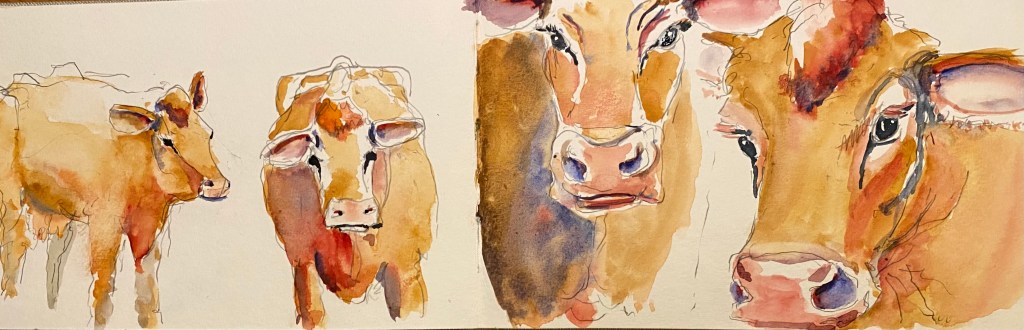
As Adrian and I stalked the stream bank for trout, Gray sat in the pasture and drew. A herd of dairy cows and their attendant bull kept their distance from Gray at first, but grew increasingly curious. They hadn’t seen an artist before.
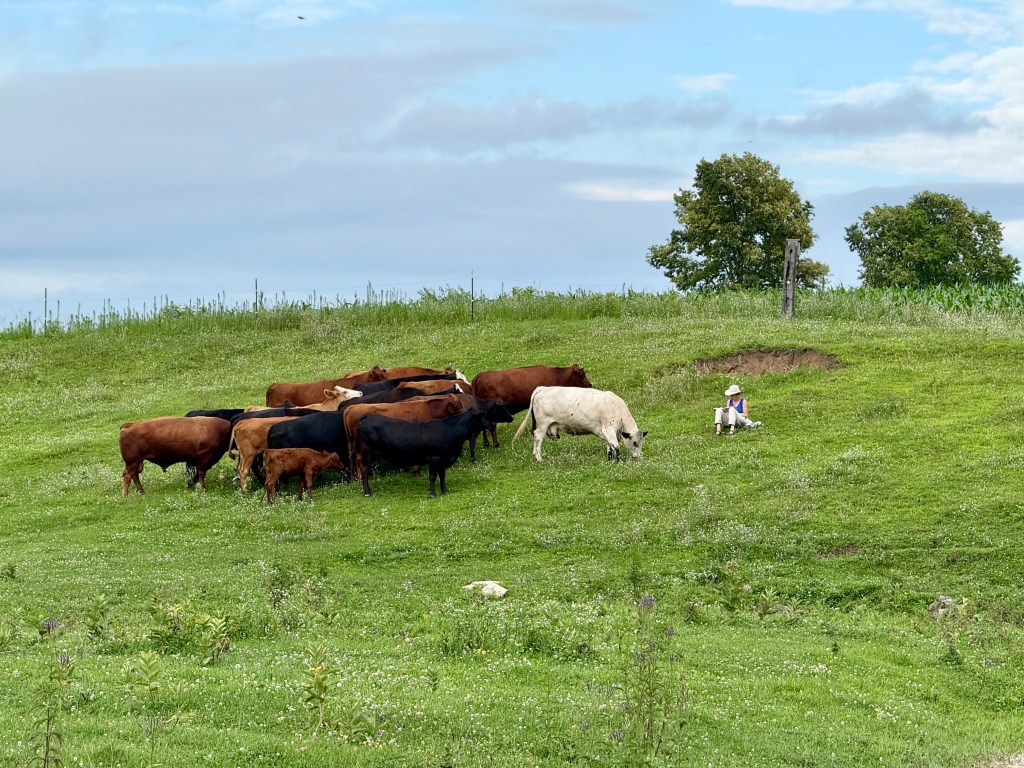
One cow came close enough to drool on Gray’s notebook.
The afternoon was not too fishy, as fishing goes, but I got the feel of where trout hang in the local streams, catching eight brown trout on dry flies, dropper nymphs, and streamers.

Nothing I saw that afternoon was huge, but Adrian showed me three holes inhabited by “lunker” browns 29-30” in length. He hooked one as a kid when he was starting out, and of course it got away. He has seen them in that stream a few times since then but hasn’t caught one. In winter and spring Adrian catches at least one big brown (20-25”) daily on a nearby river.
Weekday mornings during our stay, I woke with the first song of the Indigo Bunting, and headed out to fish a different Class 1 trout stream each day. Weekends I left to the locals who work during the week, and who, by all rights, shouldn’t have to complete with visitors on their home creek.
The streams I fished are designated catch-and-release, and all had cold water 58-64°F. I caught lots of trout on dry flies, typically a Parachute Adams, but also terrestrial insect imitations: grasshoppers and ants.

After my introduction to the Driftless in a grazed pasture, I quickly came to understand why fly fishers like short rods for creeks. My 9-foot long, 5-weight rod was fine for fishing a stream with cow-mown banks, but proved ungainly in the more typical, heavily vegetated streams. There I lost multiple flies in tree branches and cow parsnips and spent hours unhooking flies from vegetation and tying up new hopper-dropper rigs.
I stopped by the Driftless Angler in Viroqua to replace my lost #12 Parachute Adams dry flies and made the mistake of wandering over to the rod rack to drool over their collection of short 3wt rods.
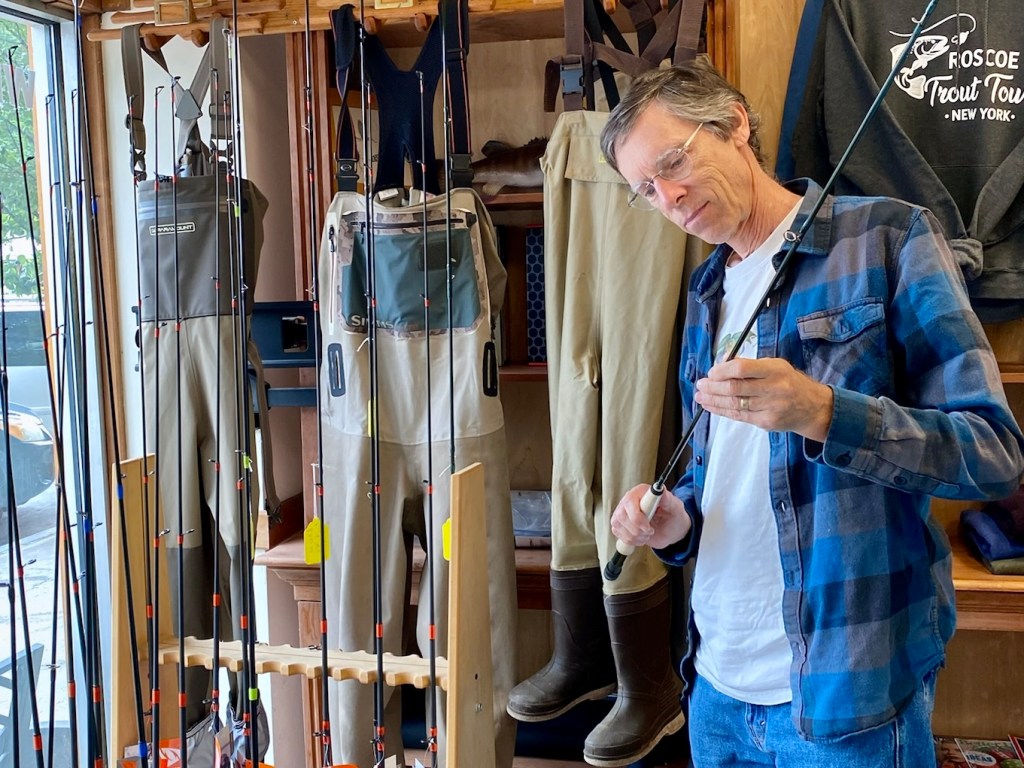
The St. Croix ($400) seemed like a good fit for these streams, but felt like a tent pole compared to the Sage Dart ($825). The urge to buy terrorizes me. Time to leave.
Near our home exchange house, I fished a beautiful wooded stream, this one a particularly tight fit for a 9’ fly rod.

Once I did find a good use for the long rod, flipping the #12 Parachute Adams around a bush into an upstream pool that I could not see. Hearing the splash of a bite, I twitched the rod tip sideways and hooked a nice 11” brown.

The next pool held a rising fish that repeatedly ignored the Adams. I noticed black ants marching along the bank, so I tied on a floating #16 black ant fly and flipped that into the pool. A small brook trout jumped into the air, did a back flip and dove onto the ant fly. It missed the fly, but earned top marks from the judges for difficulty and style.

The adjacent pool upstream was wide open, so I tried the ant again. A second brookie came at the ant fly from below and connected.

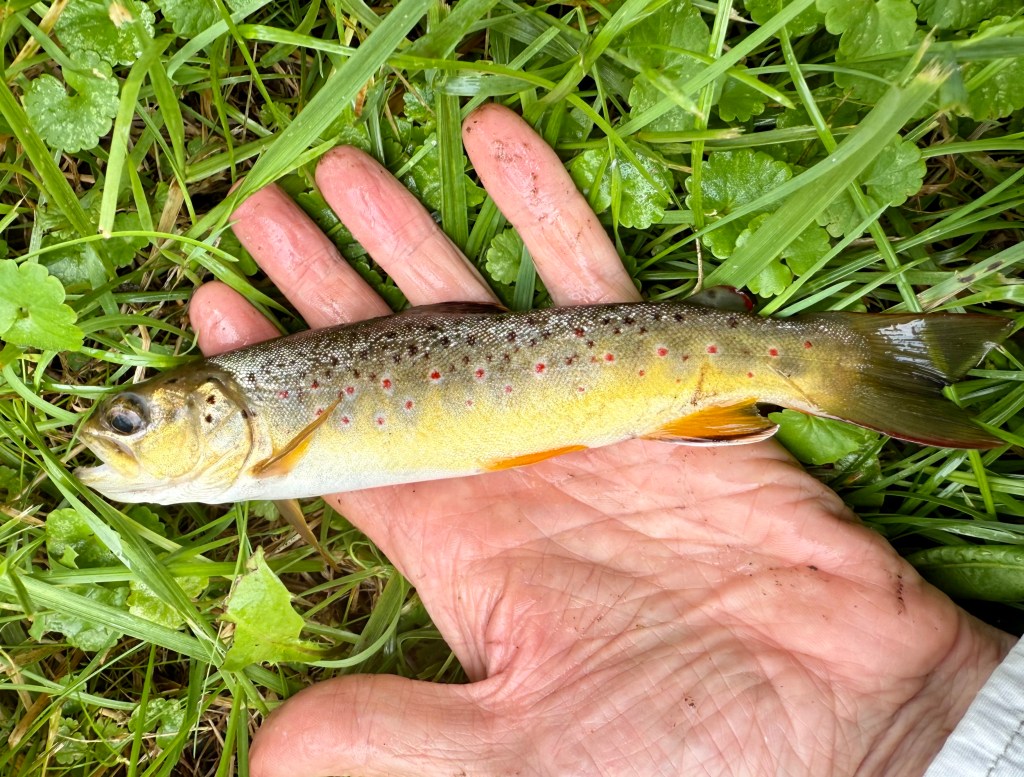
These two were the only trout I caught that morning before the rain set in, but their capture and release through fiddly persistence, the essence of fly fishing for trout, made the morning entirely successful in my view.
The Driftless streams tend to be clear during the summer, which makes the trout more wary. Footpaths along the sides of many indicate the older trout are well-educated. But even on the most heavily fished stream I visited, the ancillary rewards are beyond words: picture rattling calls making you look up to see a pair of Sandhill Cranes flying low overhead, lit amber by the rising sun.
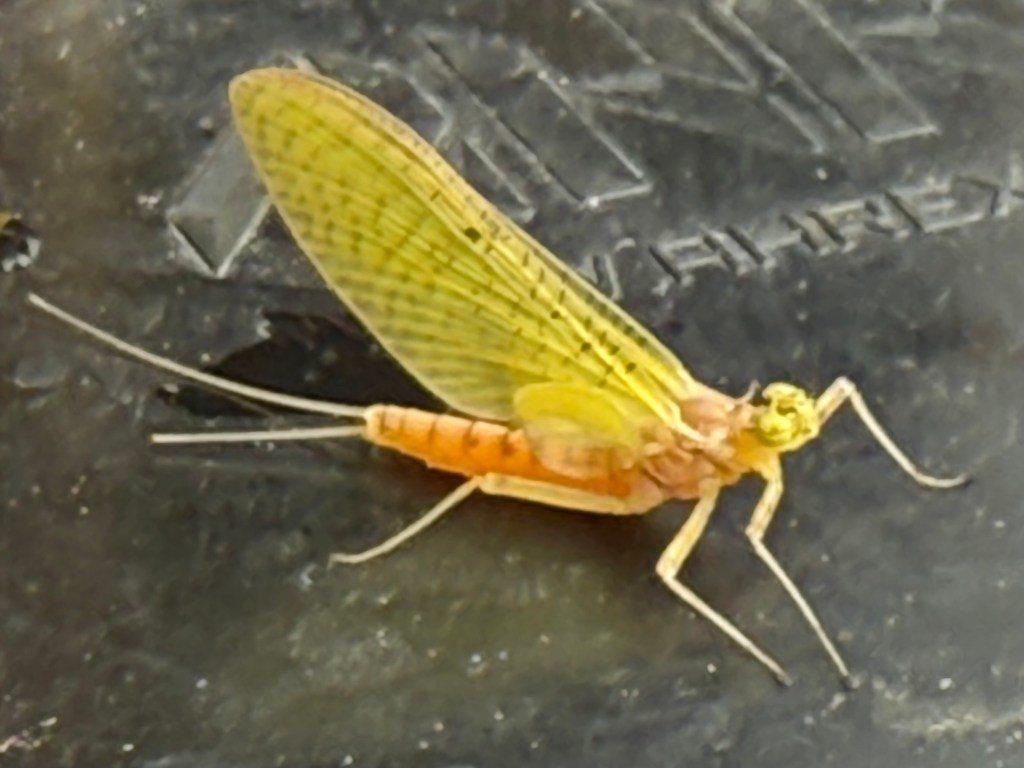
Some days the trout were actively feeding on bugs that did not resemble the gray-bodied Adams flies. For instance, this big yellow mayfly held the trouts’ attention a couple of morning on different streams, but my fly box lacked the size 8-12 Parachute Sulfur fly that would have “matched the hatch”.
Other mornings trout were taking small, unseen insects off the surface or jumping a foot in the air to snap at something they could see and I could not. At those times, I couldn’t get a bite on an Adams dry fly of any size. Looking around, I saw the odd caddis fly and some tiny gnats or blackflies buzzing around. The rising trout refused my size 18 Elk Hair Caddis. Maybe they’d have taken Griffith’s Gnat in size 20 or 22.
If I’d had some.
An article on the Orvis site says that fly anglers who fish clear, spring-fed streams carry multiple fly boxes. Oh. So I’ll need to wear a backpack too?
Adrian wore a backpack…Click, grind, wheeze, the penny drops.
I did make two other relevant discoveries: (1) coffee makes my left hand shake too much to thread thin tippet into the hook eyes of #18 & 20 dry flies, and (2) The smaller-sized dry flies I bought mail order from The Fly Shack had hook eyes blocked by hackle, tying thread, and/or head cement – I gave the company an earful.
When surface feeding trout ignored my dry flies, a sinking nymph fly under an indicator (tiny foam float) or foam grasshopper fly sometimes did the trick. The best such nymph was the Jig Hot Butt Hare’s Ear that I’d bought last summer from Kelly Galloup’s fly shop on the Madison River in Montana. This nymph is said to be good where caddis flies are present.

Last morning in the Driftless, after releasing ten brown trout caught on this cute little fly – including a nice 14-incher – plus another on the dry grasshopper, I lost both of my Jig Hot Butt Hare’s Ear flies to grabby overhead branches. A timely sign to wind in my line. Indeed, wiggling free of my waders back at the car, the sky opened up. If I lived near the Driftless area, I’d assemble the materials to tie this little fly myself, plus the Parachute Sulfur. And I’d splurge on that Sage Dart stream rod.

 Eye of the Cormorant
Leave a comment