on Friday the 13th
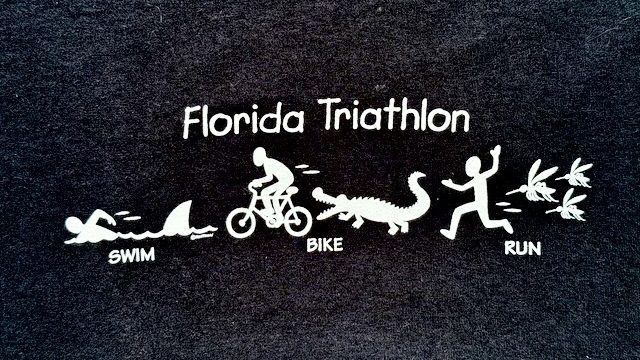
In 1979, Professor Tim Williams, wrote me a grad school recommendation letter that ended with this line:
“If I were planning a research expedition to the mosquito-infested swamps of Hell, I would choose Philip as my field assistant.”
I was never 100% sure if Tim meant that as a compliment, but to my prospective grad school advisor, Mike Beecher, it sounded like high praise so he took me on.
With that reputation as a prelude, I’m embarrassed to report that a year ago, in June of 2024, Black Salt Marsh Mosquitoes kicked by butt (well, bit my butt, to be precise) and drove me out of my favorite Everglades kayak-fishing spot when I’d barely gotten started.
I studied mosquitoes in the lab and I’m not a mosquito sissy.
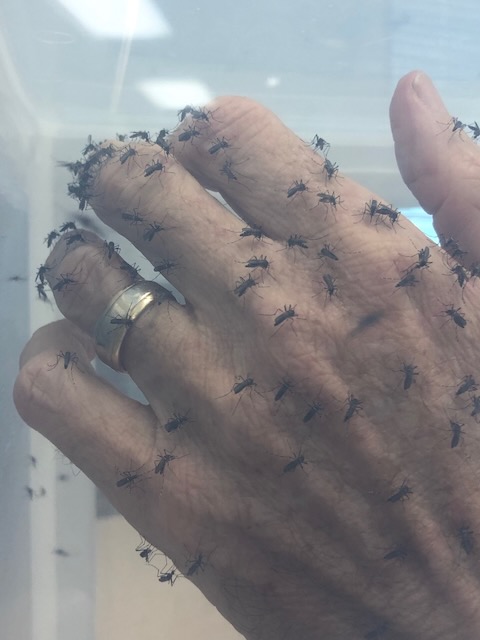
Even I have my limit, and the Black Salt Marsh Mosquito (BSMM) found it that morning.
Determined vampirism of the summer BSSM hoard provides solitude for anyone hardy enough to fish the tidal mangrove estuaries of the Everglades backcountry. That morning, 30 minutes before sunrise, I was the only human within miles, attempting to cast a topwater fly at a large, actively feeding snook. The BSSMs were so brutal, it was hard to pay attention, much less savor the splendor. But the one single mosquito that managed the coup de grâce somehow found her way inside my head net, whereupon I inhaled her. Ten minutes of hard coughing to dislodge that mosquito from my trachea, while her sisters and cousins bit me through my clothes and chewed my exposed finger tips (despite the insect repellant) – that was too much. I gave up and went home with my bitten tail between my itching legs.
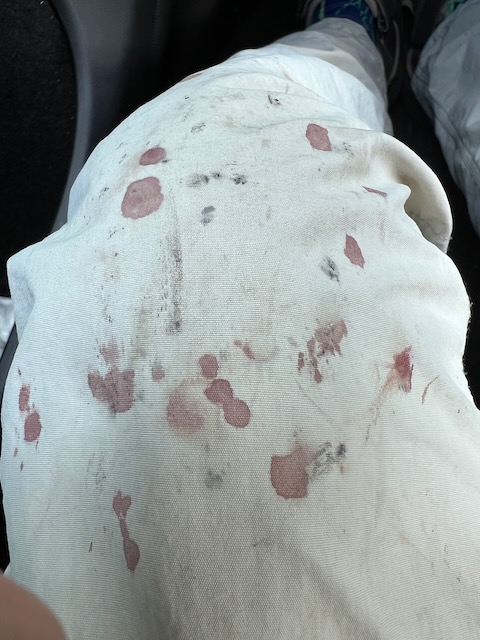
The secret antidote to mosquito bites:
I don’t much react to bites of local mosquitoes, but the number of BSSM bites that day overwhelmed my acquired defenses. To sleep that night I had to take the antidote, the invention of my clever FIU colleague, Dr. Laura Serbus.

Mosquito bites irritate our skin via two histamine receptors, H1 and H2. H1 receptors produce about 20% of the itch and H2 receptors the other 80%. Typical antihistamines, like Benadryl, only block the H1. I use cetirazine instead, which lasts 24 hours and doesn’t make me drowsy. To block the H2, I use Pepsid AC, an over-the-counter drug for excess stomach acid. Not everybody reacts well to the H2 blockers, but I’m OK with them. Itching disappears completely for 12 hours.
* * *
Back into the cauldron on Friday, June 13th, 2025
It took me a full year to recover the motivation to venture back into Mosquito Hell, succumbing once again to the prospect of fly fishing snook, juvenile tarpon, and redfish from the intimacy of the kayak. Winds in the open were 14 mph with gusts to 22 mph and my usual flats and creek mouths were too exposed. That left the sheltered mangrove coves, areas best left for winter when the mosquito population is at a dull roar instead of a loud one.
This time I had to better prepare myself for the onslaught of the June BSSM population. Here’s what I wore:
- Fishing pants. AFTCO, synthetic, light tan
- Snow gaiters, calf height
- Second pair of fishing pants
- Sand socks
- Crocs
- Hoodie fishing shirt, knit fabric
- Tight weave sun shirt, with top button fastened and collar turned up
- Tilley hat
- No-see-um proof head net, Cochrans
- Insect repellant (Lemon Citronella) on my exposed fingertips and the edges of my gaiters where they met my Crocs sandals
It worked well enough at keeping BSSMs from reaching my skin that I could enjoy a good morning fly fishing tarpon & snook. A great morning, in fact. I lost count of the tarpon hits.
The BSSMs found a vulnerable spot where the gaiters met the Crocs [I’ll spare you the photo of my red-spotted ankle]. Next time, I will wear ankle-high neoprene dive booties instead of the Crocs.
Another twenty skeeters somehow managed to bite me on my butt [definitely no photo], though damned if I know how. This happened before while camping on the Arctic tundra and I couldn’t figure it out that time either.
High concentration DEET works pretty well but dissolves plastics on contact (thinking of my fly line here). Picaridin works well too but lasts half as long as DEET.
Mosquitoes don’t see red light (ditto snook, tarpon, redfish). I outfitted my head lamp with a red lens (3D printers rock) so I could see to set up the boat without getting mobbed by BSSMs and no-see-ums.
Two things I don’t think will work for me:
(1) mosquito netting suit. It’s too easy to tear and simple for BSMMs to bite through where it touches my skin or another article of clothing.
(2) permethrin-soaked clothing. Permethrin is a good mosquito excito-repellant, but new research shows it damages our heart and nervous system.
The next puzzle: How do you get 300 mosquitos out of a car?
It took three days to fully rid the car of BSSMs. Several hid in my stuff and found their way into the house. Next time, I’m going to open the car’s rear hatch and all four doors, then drive backwards around the parking lot in circles as fast as I can. Other suggestions are welcome by email or in the comments section below.
buzz buzz buzz.
P.S. I received a comment worth sharing from Dr. David Glabman: “As for the mosquitos in your car maybe try capturing a bat for release in the car since he will eat many times his weight in them.”
Regarding Dr. Glabman’s idea, I very much like the concept. I’d need one of those tropical leaf-gleaning bats that can forage in tight spaces, and I’d have to wait until nightfall for the bat to feed. I do need to drive home with fewer vampires for company. Mabel’s Orchard Spider, however, might do the job. They’re our most common orbweaver, voracious predators of mosquitoes, diurnal, completely harmless to humans, and their possession does not require federal and state permits. I might release a couple in the passenger seat next trip to see what they can do.
© Philip Stoddard, 2025


Leave a Reply