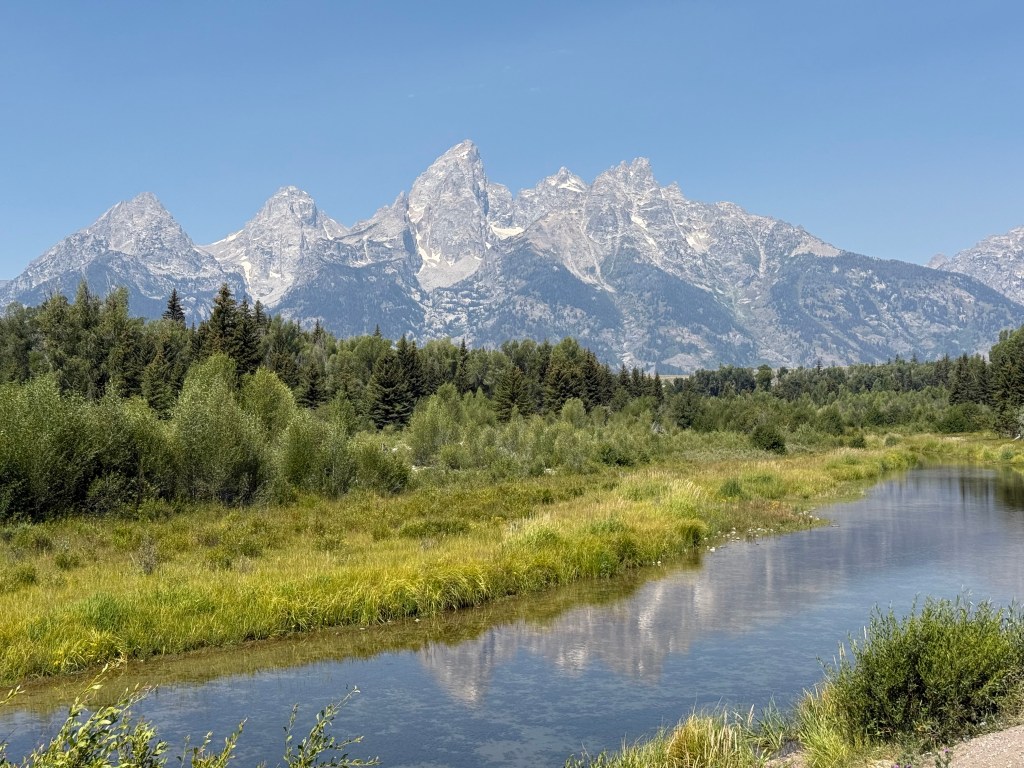
I last visited Grand Teton National Park in August of 1980. Since then, the Tetons have moved about four feet due to fault slippage, not so noticeable for a mountain range 43 miles long. Indeed, most things seem about the same, but one thing that has changed noticeably is the tenfold increase in number of fly fishers.
The exponential rise in the popularity of trout fishing is widely attributed to the movie made from Norman Maclean’s wonderful novel.
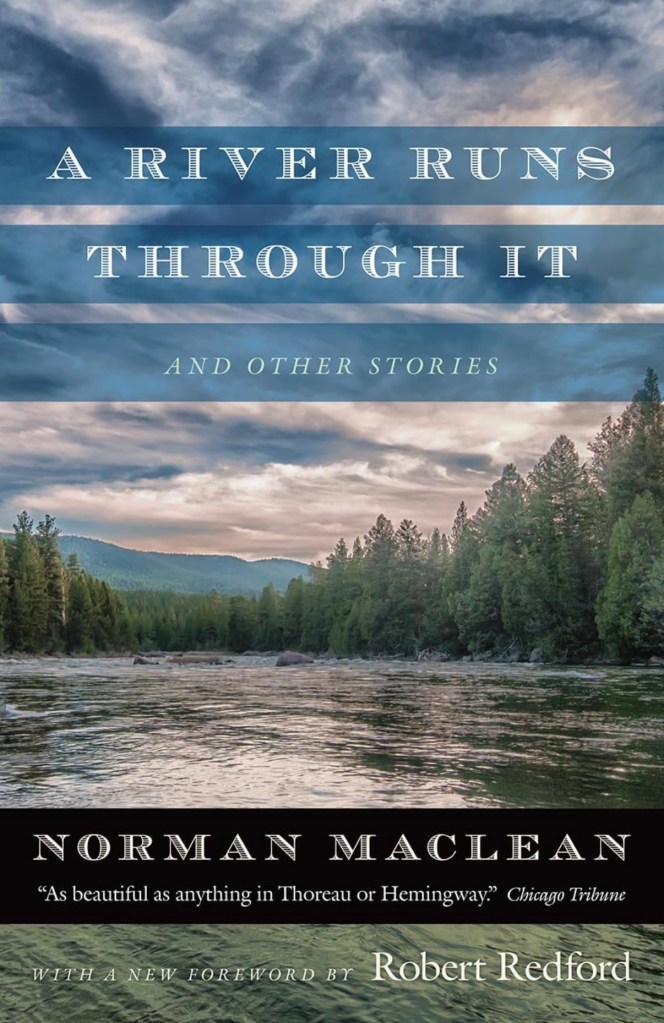
People tell me all the time “I LOVED that movie. It made me want to take up fly fishing. It looks so relaxing.” Relaxing? They missed how seriously the menfolk in that family took the challenging and technical craft of trout fishing on a big western river. The narrator recalled his father’s sermon:
“He told us about Christ’s disciples being fishermen, and we were left to assume, as my brother and I did, that all first-class fishermen on the Sea of Galilee were fly fishermen and that John, the favorite, was a dry-fly fisherman.”

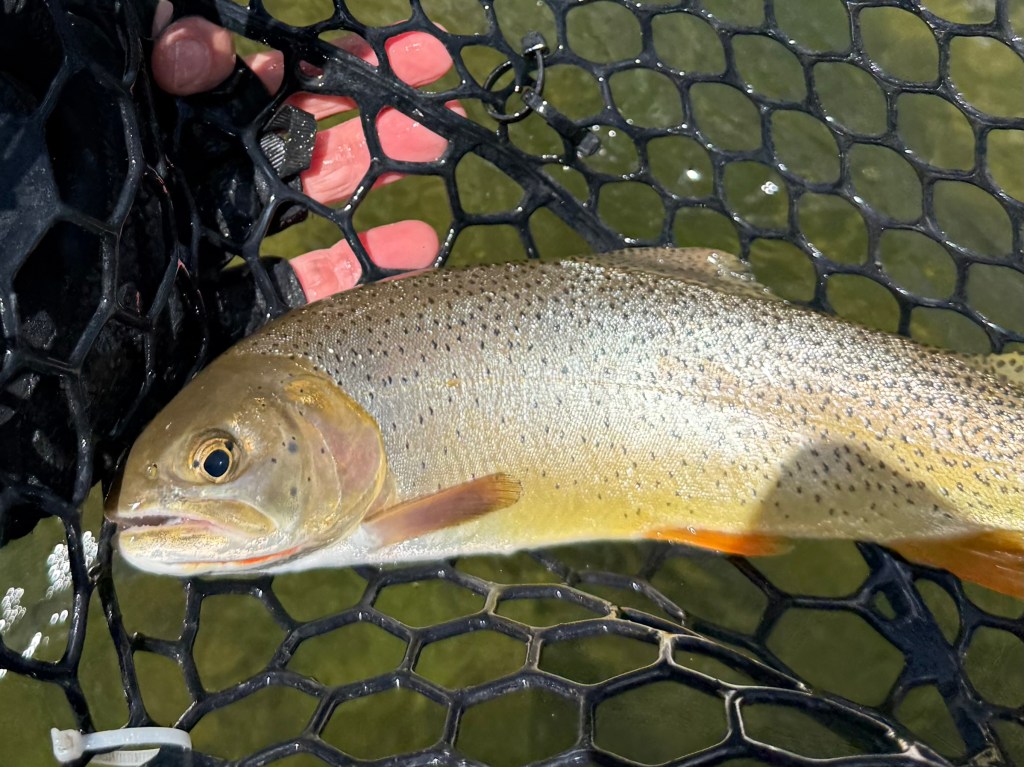
The Snake River is the region’s big trout fishing draw, and even has its own race of fine-speckled Cutthroat Trout. Snake River Cutthroats are gorgeous creatures, silver and gold with little black dots, orange fins, and the trademark orange lines under the chin for which they are named.
Dozens of guided drift boats ply the river each day, and as many people fish from shore. Small trout are gullible but the medium and large ones have learned the mantra “look twice, bite once”.
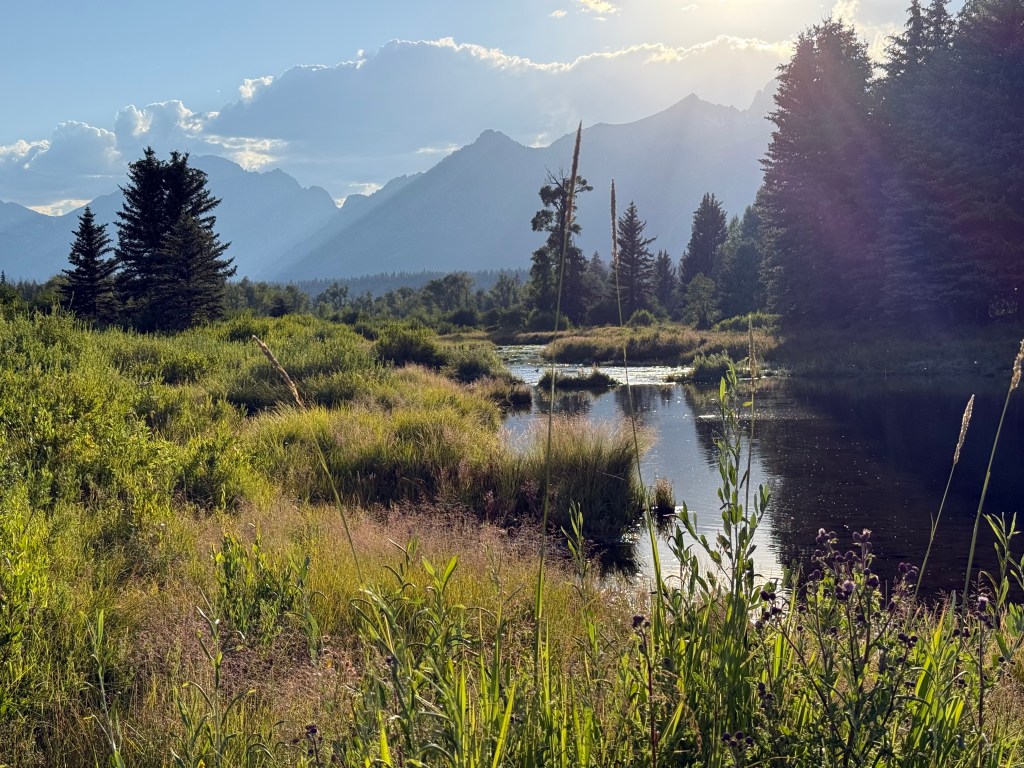
Our first day exploring Teton Park I spotted a distant, shallow creek below a splendid overlook. The Snake River was open for fishing, but creeks in the park were closed for one more day. Gray was painting, so I wandered down to the creek for a look. Descending through the dense brush I sang a little song: “Go away bears – go away moose”.
The creek was brimming with solid cutthroats, 12”-18” in length. Here they are:
The next day we had our big splurge, a full-day float trip down the Snake in a drift boat manned by Larry Milton of Mangis Fishing Guides. In addition to a day of glorious scenery, an oared drift boat (shallow draft dory) provides a fly fisher access to many good trout holes inaccessible to those wading or fishing from shore. Even so, Larry, with his 30+ years of floating the Snake, kept saying “this hole SHOULD get you a bite”.
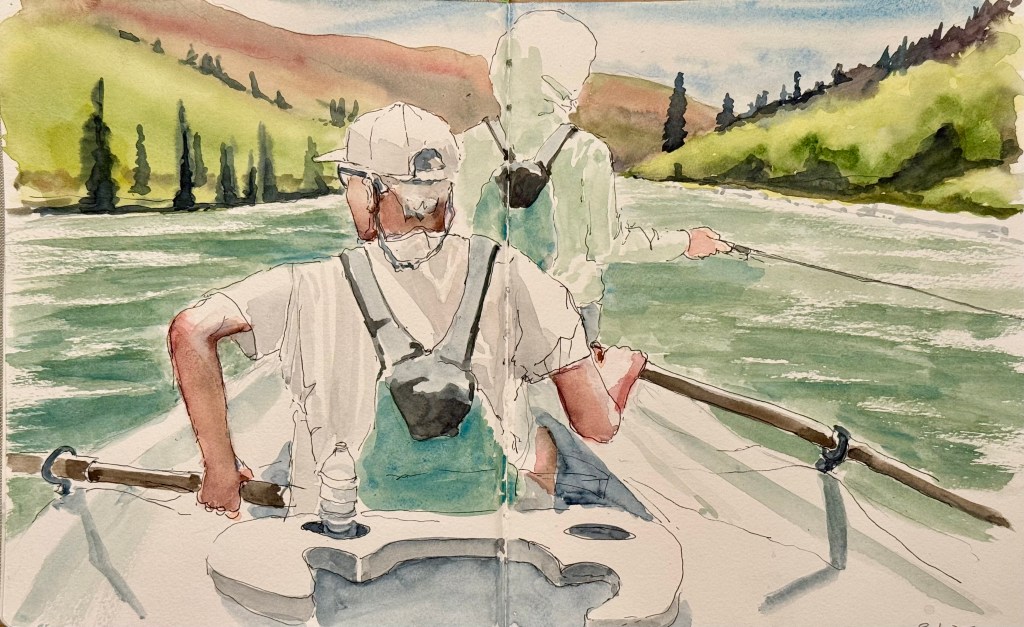
The “hatch” on the river that day was a random hoard of hapless spruce moths that either fell in the water or ventured close enough for a trout to leap up and grab one.
I started out the day casting a “hopper-dropper” rig, a floating grasshopper dry fly with a small sparkly nymph fly dangling below. Usually 90% of bites come on the nymph, but this day 90% of the bites came on the dry fly. I snipped off the nymph to get a better drift of the dry and did a little better.
Of ~20 cutthroat trout I caught and released, one was 16-17”, three were about 11”, and the rest were little pookers, 5-8”. Not a bad day.

The evening of the next day, we returned to that first creek, me with my fly rod, Gray with her watercolor kit. A fellow watching for moose from the overlook told me he’d seen a dozen fishermen trudge up the hill from the creek below. I went exploring anyway, expecting the lovely trout from before would be gone or hiding. To my surprise, every trout from two evenings prior was holding in exactly the same spot as before, lazily rising to pick the odd caddisfly off the surface.

Alas, these beauties showed exactly zero interest in the assorted flies I drifted past them on fine 6X tippet. They weren’t even disturbed by me casting at them. I could just as well have been a moose.
I did get some attention, though. I was followed down the creek, then back up the creek, by a female Cinnamon Teal. She squawked at me the whole time. When I sat down to change flies she flew up into the air to spy on me from above.
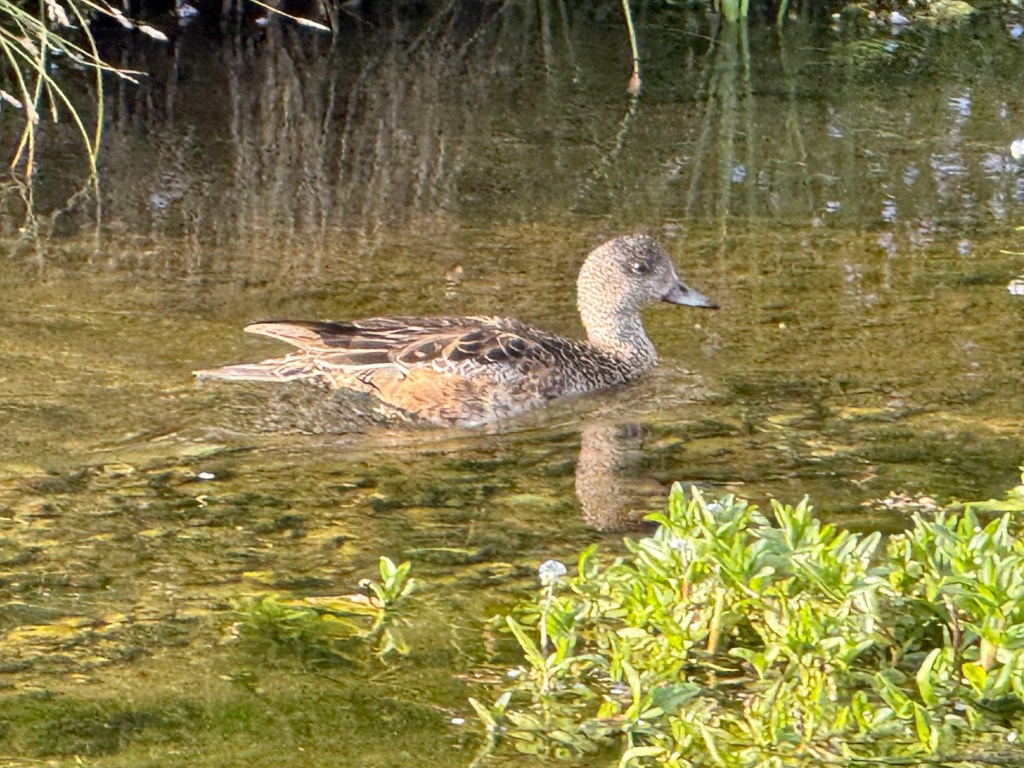
Between bouts of nibbling aquatic vegetation, Mrs. Teal had no compunction against splashing directly over a big trout to keep up with me. I saw no sign of ducklings and it was too late in the year for nesting. She was just a busybody. The extended mountain twilight was coming to an end, and moose were wandering in – time to leave.
Jenny Lake had opened to fishing, but we found the water was over 65° F, too warm to fish trout without stressing them.
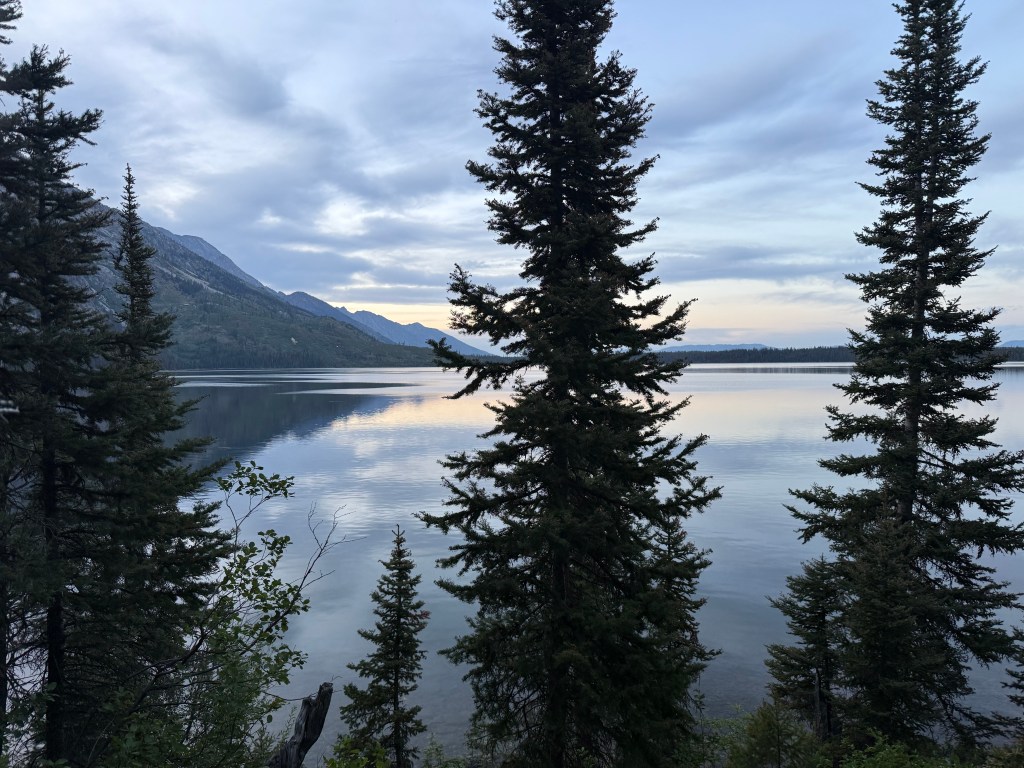
Same with Cottonwood Creek that flows from Jenny Lake.
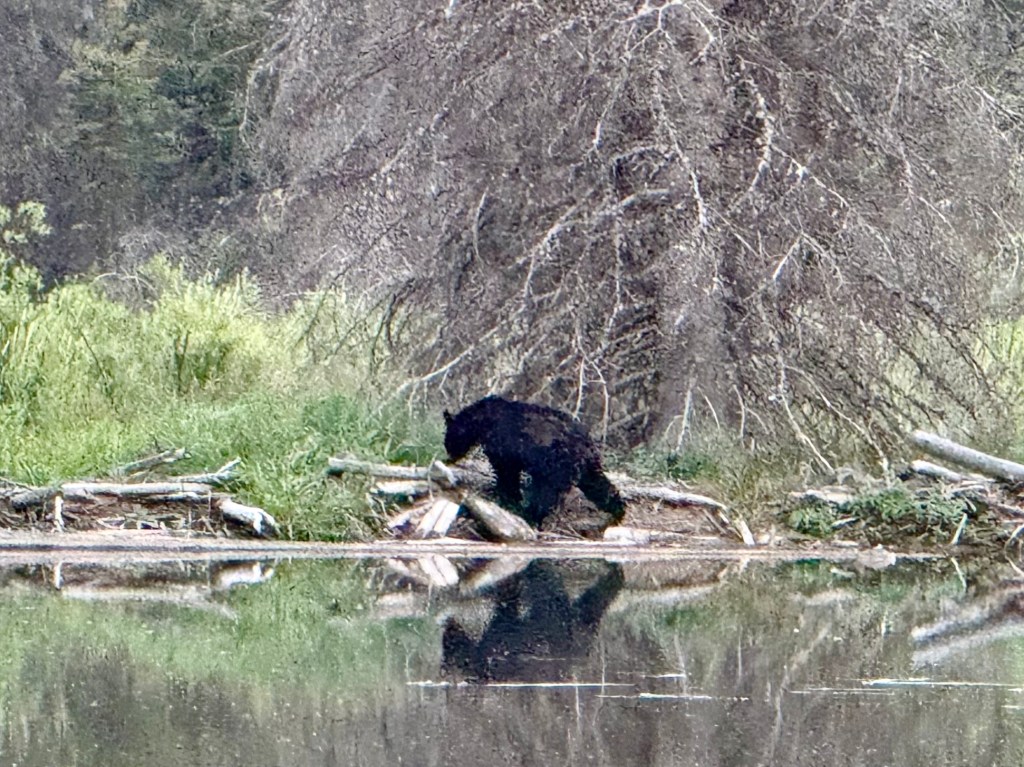
Instead, we hiked in to some beaver ponds to look for moose. Tiny trout dappled the surface or leapt into the air for flying insects, popping from the glassy water like slippery watermelon seeds squeezed between the fingers. Good dry fly fishing for naive 4-5” trout, but mind your backcast and keep an eye peeled for thirsty megafauna.
On our last morning we stopped by Flat Creek in the National Elk Refuge, a spot recommended for wade fishing by Larry the river guide. From the number of parked cars with single-purpose fly rod transport tubes clamped to their roof racks, I estimated 40 experienced and dedicated fly fishers were already stalking this narrow winding creek. Assuming I could even find a couple of bends to myself, I knew these fish would be highly over-educated.
We left the crowded stream and drove over to the Gros Ventre River, which I’d also wanted to explore. We parked at a turnout away from the river and hiked to a section of water not visible from the road.

I had this cold, braided river to myself as far in each direction as I cared to wander. Each bend offered promising trout spots. As I walked the banks, the air filled with small brown grasshoppers. Freshly expired stonefly nymphs littered the gravel bars. Easy to guess what these trout were eating. Indeed, I SAW lots of trout swim up and check out my flies: “Ooo, brown Morish Hopper, size 10” or “Golden Stone nymph, nicely tied.” Indeed, I had a wonderful time picking my way along the game trails, fording the river to access the promising holes and seams, and seeing trout flash my flies in such a beautiful spot, even though I didn’t get a single bite.
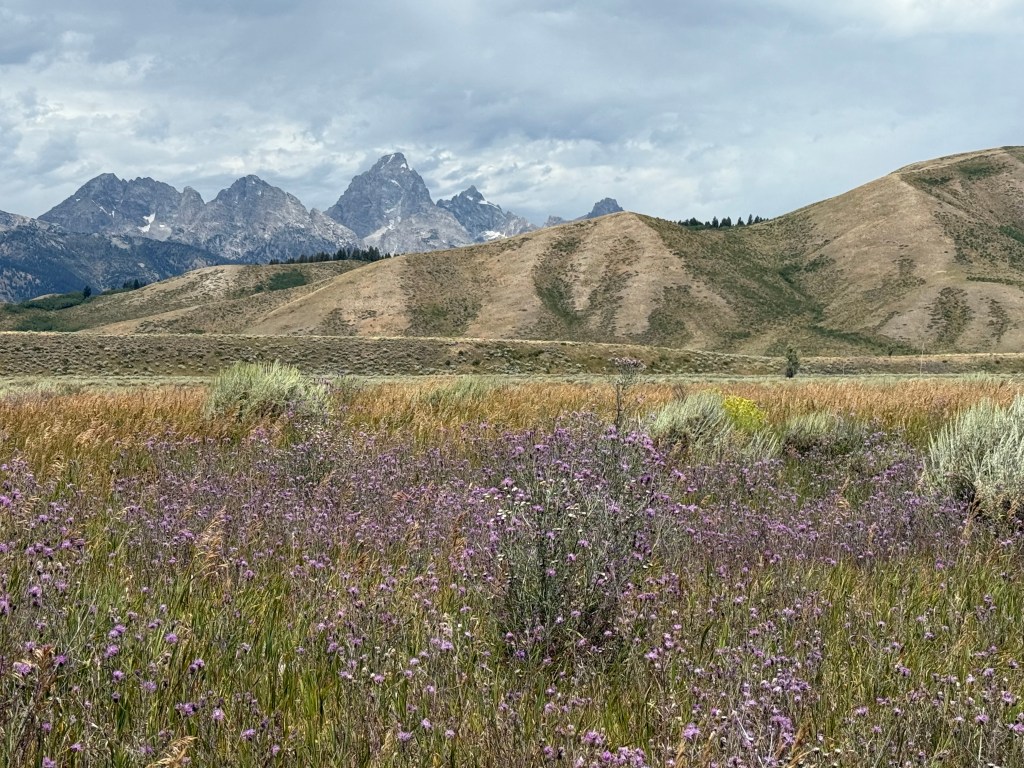
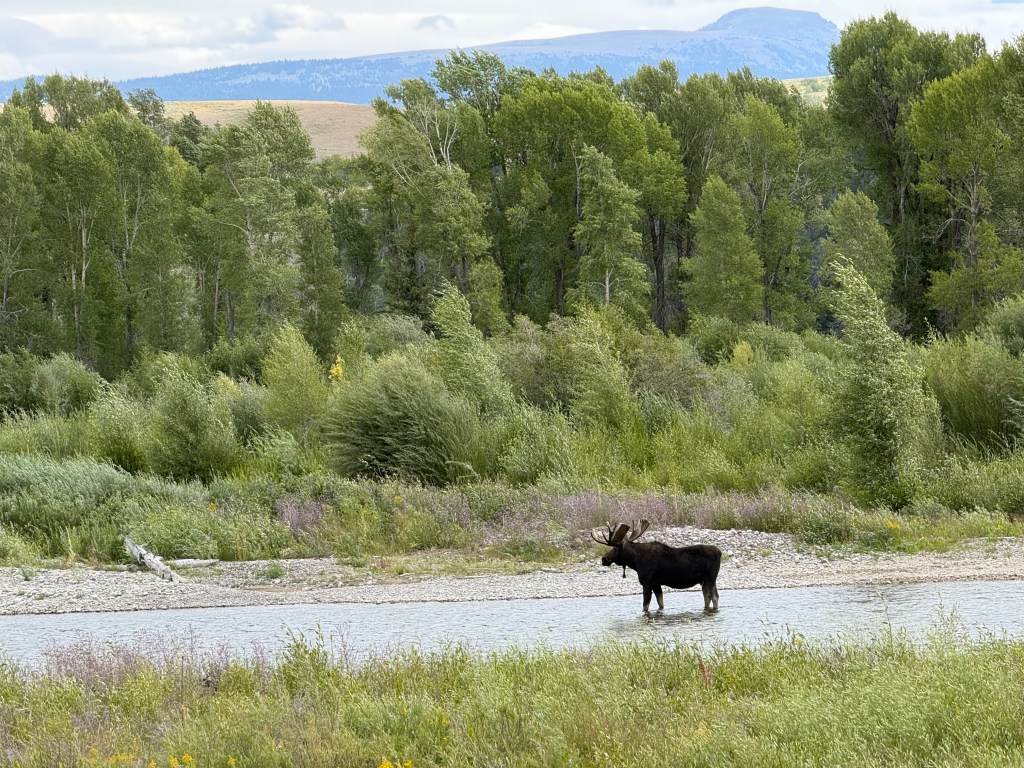
In contrast to our day in the drift boat, I caught one trout and a whitefish while wade-fishing a couple of hours a day across the rest of the week.
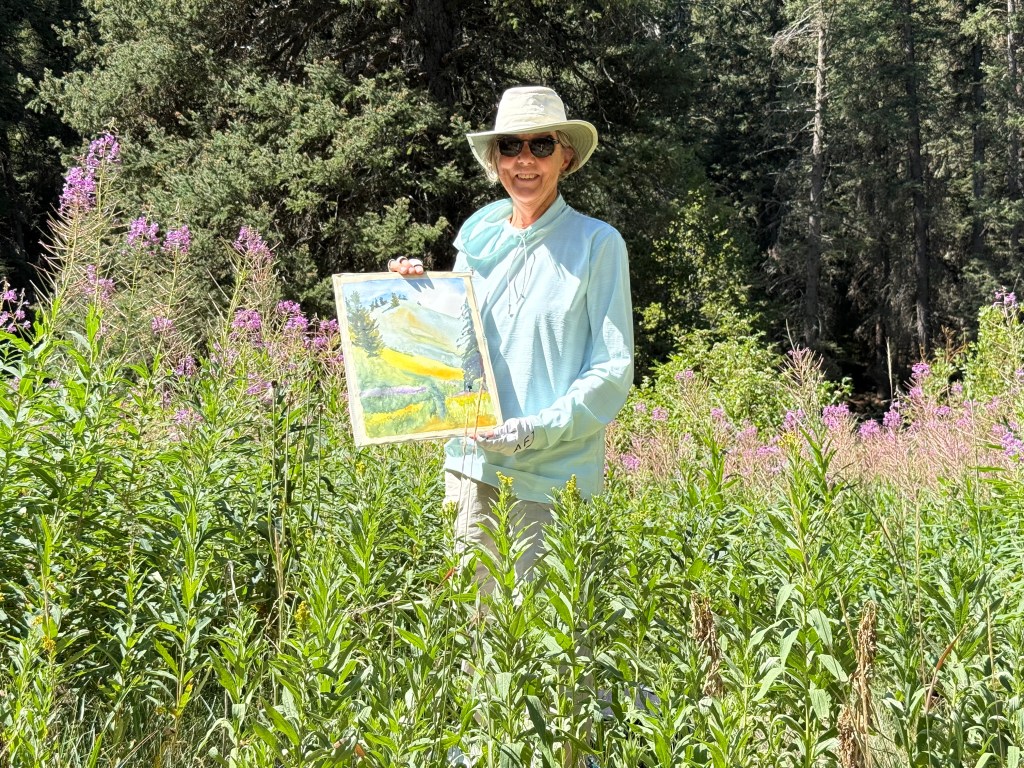
You can’t beat the Tetons for scenery, hiking, and critter-watching. I was delighted to spot my first Pine Marten and spent half an hour happily watching a Dipper bobbing and swimming in a mountain creek while Gray painted nearby, surrounded by a patch of fireweed and its attendant Rufus Hummingbird.

But, if you thrill when a trout eats your fly, and again seeing it up close in your net, the Driftless Area of SW Wisconsin draws far fewer people, and, as a result, offers much more productive trout-fishing.

 Eye of the Cormorant
Leave a comment