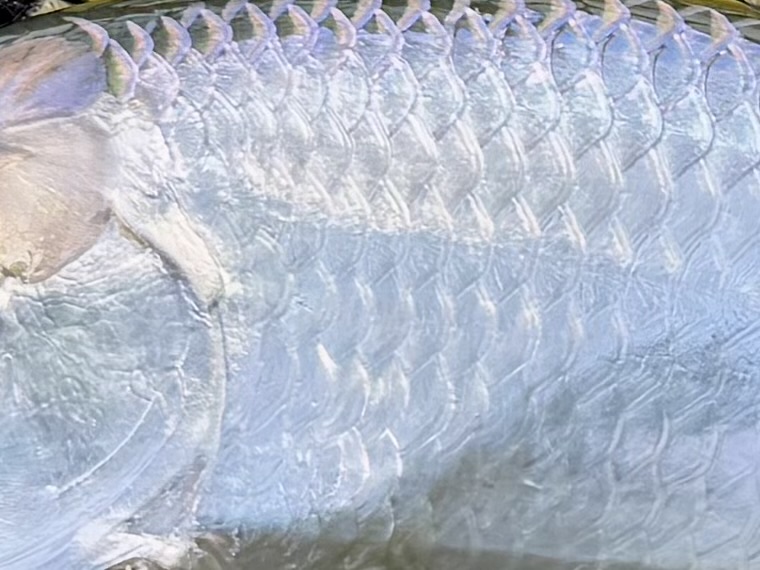
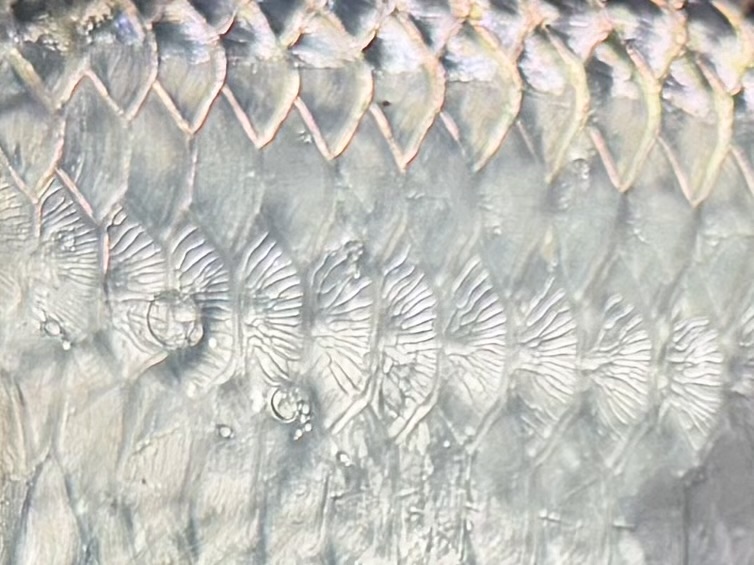
Fish are often camouflaged, some by color and patterns that resemble their backgrounds, others by reflecting the light around them and thus matching any and every background. Tarpon do the latter with scales that work like mirrors.
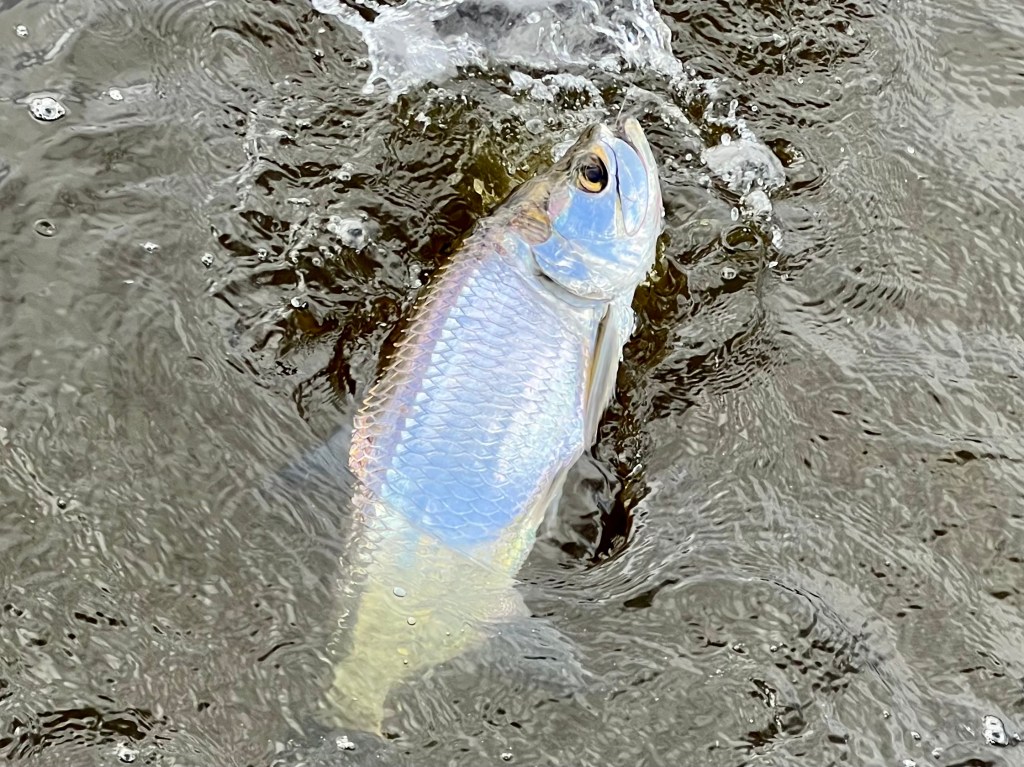
Juvenile tarpon are about my favorite fish to chase on the fly rod. I say “juvenile” because the adults weigh 70 to 200 pounds. I normally avoid disturbing the adults and fly fish instead for smaller juveniles weighing 3 to 20 pounds, reasonably common in the canals and tidal creeks of South Florida.
Tarpon are smart and strong, and they are spirited jumpers. The mantra among tarpon fishers is “Bow to the King”, meaning when the tarpon jumps, you lower the rod to create slack and prevent it breaking off or throwing the fly.
Instead, I lightly tension the fly line during a jump to help the tarpon toss the fly without breaking the line. My goal is to fool the tarpon into eating my fly, have it give me a showy jump or two, but spare it the exhaustion of a complete fight and spare me the guilt of exhausting a beautiful fish.
Yesterday, while kayak-fishing a saltwater canal, three miles from home as the cormorant flies, I spotted a couple of big juvenile tarpon in the 40-60 pound range. I swapped up to a larger fly “the Devil’s Daughter”, a muted black pattern designed by Drew Chicone for catching tarpon that are wise to the fly fisher’s usual sparkly fare.
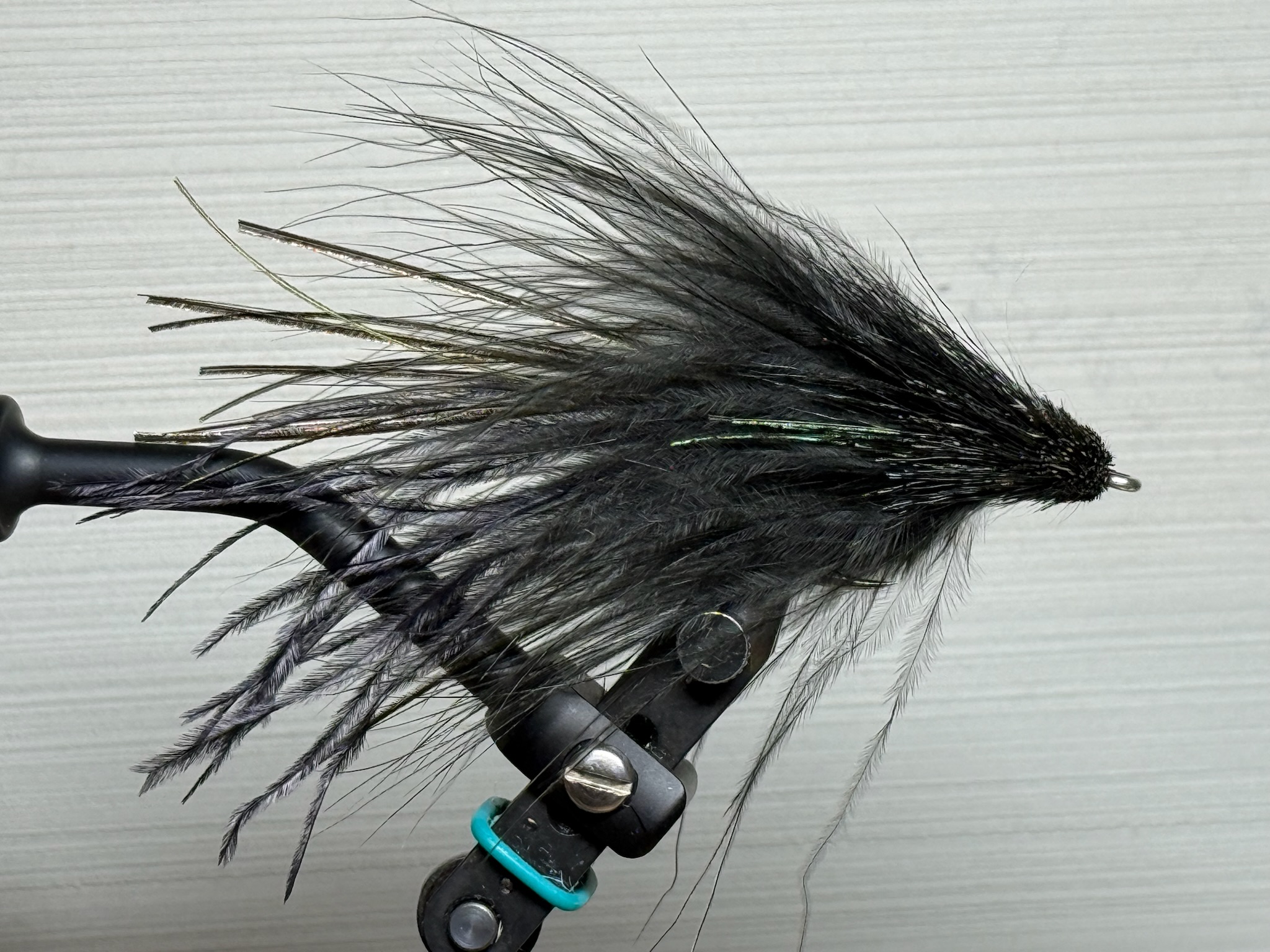
Tarpon can breath air, “rolling” on the surface to gulp a bubble before descending into the murky water. Following a roll, I’d cast the fly 6-10 feet in front, let it sink a bit, and retrieve it steadily. Twice I felt “short strikes”, in which an unseen tarpon grabbed only the feathery tail of the fly. A couple of casts later the fly stopped mid-retrieve, like I’d hooked a log. I set the hook and the line began to pull. The fish was in no hurry.
Smaller tarpon jump immediately. Instead this tarpon went deep and swam away slowly. I took up the slack and kept reeling until my 7wt rod bent double and the leader touched the tip guide of the rod. The tarpon turned and made a dash under the kayak. I flattened the propulsion flippers to keep the line free as I worked it around the bow and the tarpon took off. Once in a while, I’m glad for the smooth drag on my fly reel.
We had been pulling back and forth on the fly line (intermediate clear tip) for a couple of minutes and the tarpon had enough. It took to the air, arcing its body in a fast reciprocating shake that tossed the fly. I got my fly back and the tarpon continued on its hunt for hapless baitfish. I was ecstatic – that’s about as good as it gets in my book.
Sometimes the fly won’t shake loose and I must net the fish to release it. While I have it in the net, I usually take a photo to document the spectacular purples, pinks, blues, and greens reflected by the tarpon’s mirrored scales. Here are some photos from my collection.




Thank you, tarpon.

 Eye of the Cormorant
Leave a comment