I’ve been grappling with a multi-way conflict: (1) trying shake the “forever cold” while (2) healing a torn rotator cuff muscle (supraspinatus) in my fly casting arm, and (3) enjoying every nice day I can on the water with a fly rod and binoculars. At least I don’t have to grade papers.
A cold front reached South Florida, knocking down the mosquitoes and moving sharks away from the shallows. The Everglades mangrove flats beckoned me southwards.

One shallow flat in particular draws me to watch shorebirds and chase game fish.
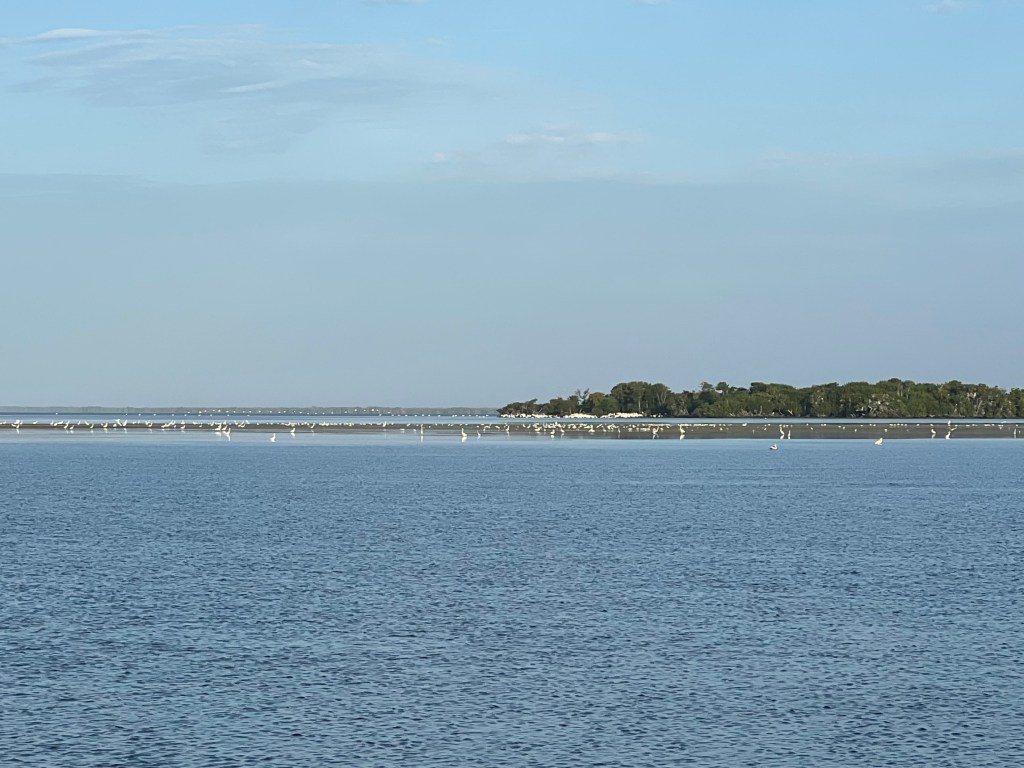
To get the best experience, you have to get the tides right. Depending on the moon and tide phases, the area can be 16 square miles of water (birds wait in the trees and fish are everywhere), 15 square miles of exposed mud (birds dispersed everywhere and fish are concentrated in the channels with the sharks), or something in between (birds and fish both concentrated on the edge of the tide). If the wind comes up, water might blow onto or off the flat, superseding the tidal prediction.
Several two mile trails lead to the edge of the flat. When my late colleague George Dalrymple took his zoology class down the Snake Bight Trail, one student had to be carried out after she fainted from the sheer horror of the Black Salt Marsh Mosquitoes. I found that pedaling my bicycle down the trail lets me keep ahead of the swarm. Just don’t stop! But the best access is in a shallow-draft boat, a kayak, canoe, or technical poling skiff.
Coming by boat, you have access to more of the flat and can approach the edge of the tide where birds and fish are concentrated. However, it’s easy to get trapped by the falling tide, particularly when distracted by fish or shorebirds, both of which follow the rapidly moving tidal edge. If Poseidon empties the bathtub while you are far from a channel, there’s no walking out. The deep, sucking mud steals your sandals before eating you whole.
People who get stuck sometimes phone the Park dispatch office. The ranger explains:“Yes, we see you out there, but we can’t get to you. Unless it’s an emergency and you want to pay for a helicopter, you are going to sit there until the tide comes back in.” You might spend up to eight hours waiting for the next high tide to free your boat. Hope you brought extra water and a granola bar, and good luck with the lightning.
I have willingly allowed myself get stranded at the bottom of the outgoing tide while watching shorebirds, chasing fish, or watching shorebirds chase fish. I eat lunch then escape when the tide returns to float my boat. The show can be worth the wait.


The low tide can bring spectacular birding as it did last week when baitfish and birds filled the runouts along one of the main channels. The flats were covered with winter waterbirds: White Pelicans, Black Skimmers, all the long-legged waders, Marbled Godwits, Short-billed Dowitchers, Wilson’s Plovers, and assorted “peeps”.
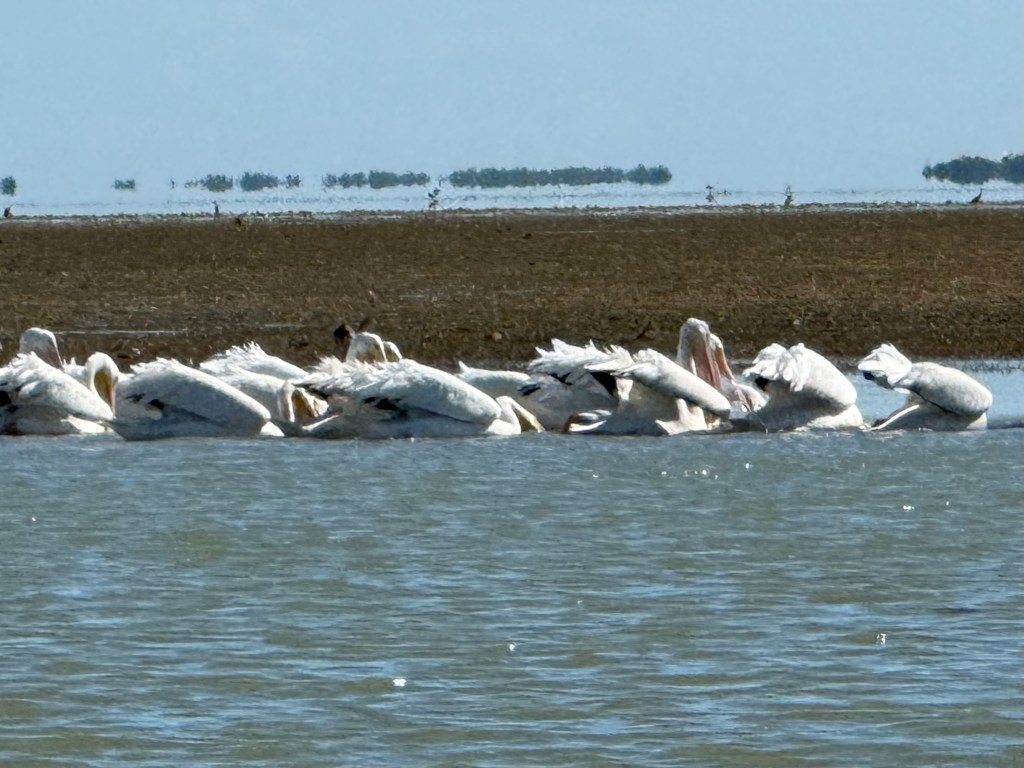

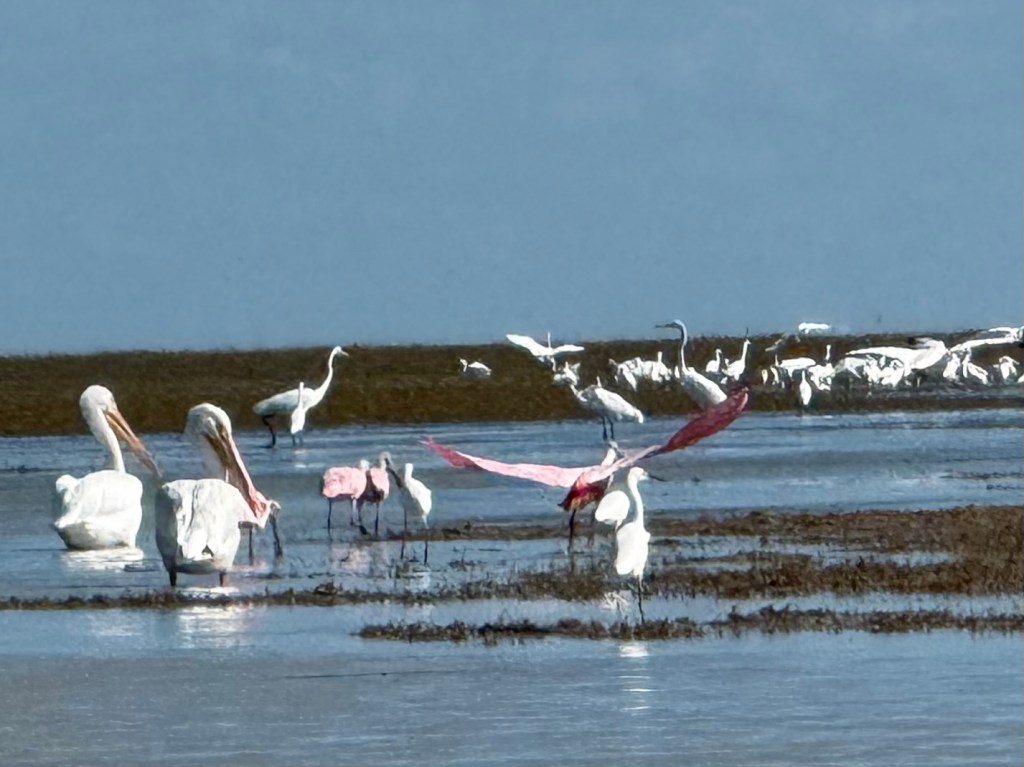
When the high tide pushes birds off the flats, some regroup on the highest shorelines, while others settle into the mangrove trees.

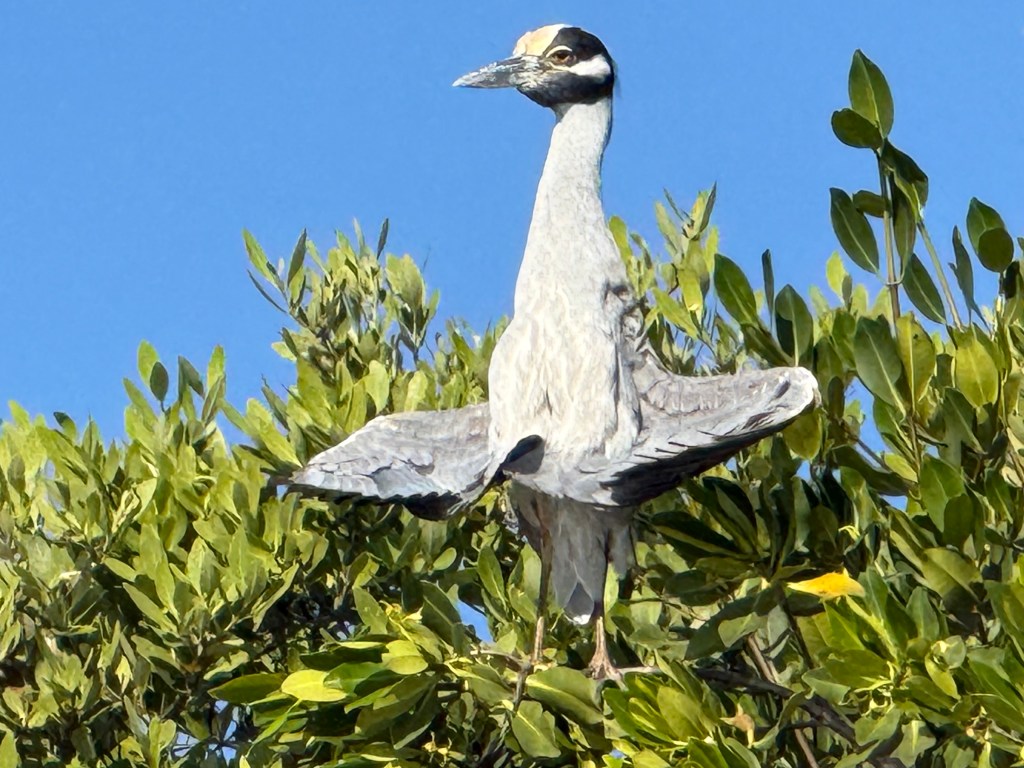

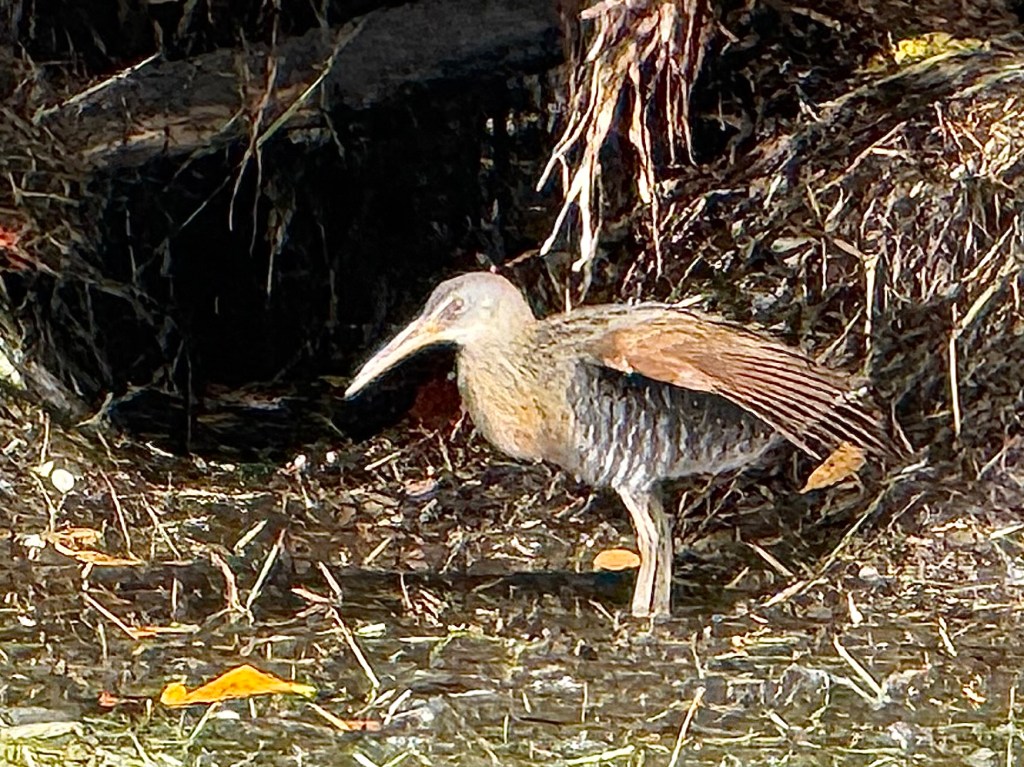
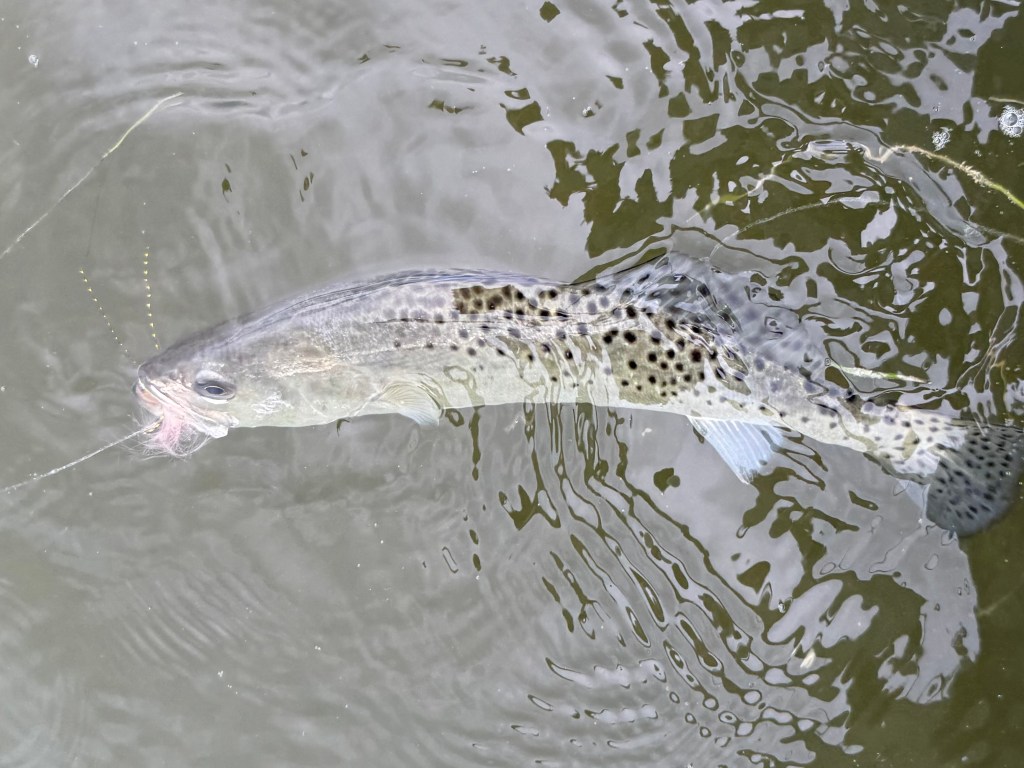
A couple of days prior, my friend Jay Levine had caught and released 30 Snook on fly in a channel and had zero shark hassles. But when I arrived, the water had rewarmed, the sharks were returning, and the Snook were making themselves scarce. I caught and released a couple of Snook safely but an unseen shark took the third one and I called it quits.
Four days later, my fishing friend Jeremy Nawyn asked me to join him kayak fishing this same flat once again. At first I declined, but then I took a look at the tide chart:
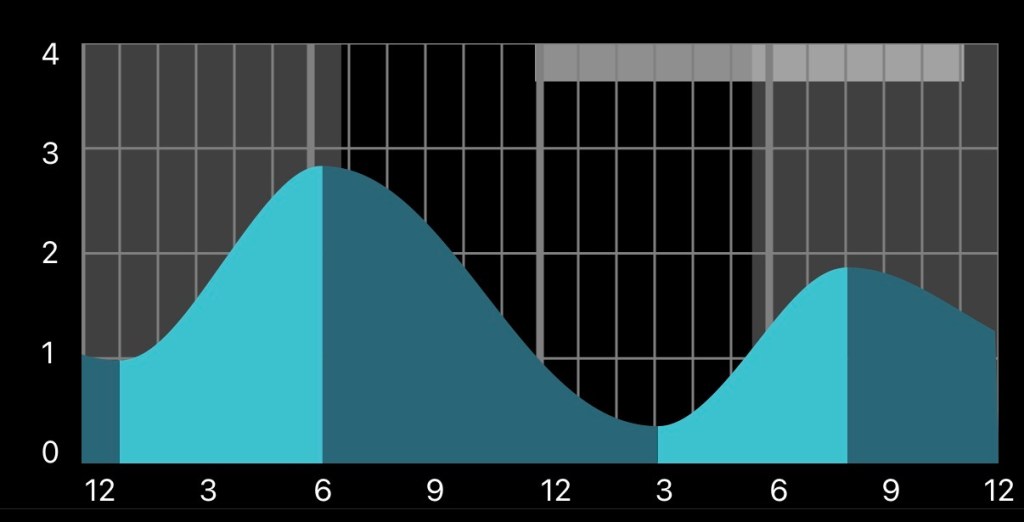
I normally fish this flat by motorized skiff because it’s so exhausting to exit by kayak. If you fish the rising tide (safest) you must paddle back against the fast incoming tidal current to escape, but a long falling tide like this one is a virtual water taxi service. As a lagniappe, the wind would be at our backs coming out. I texted Jeremy that the tide chart had changed my mind. I was in.
Jeremy’s proposal was to head out in the dark before dawn and ride the incoming tide up a narrow unmarked channel on the edge of the flat, then ride the outgoing tide back toward the marina with the wind at our backs. We faced little risk of getting stranded if we stayed in or near the narrow channel, and would not have to fight the tides or winds to escape.
I arrived early to enjoy the starry moonless sky.
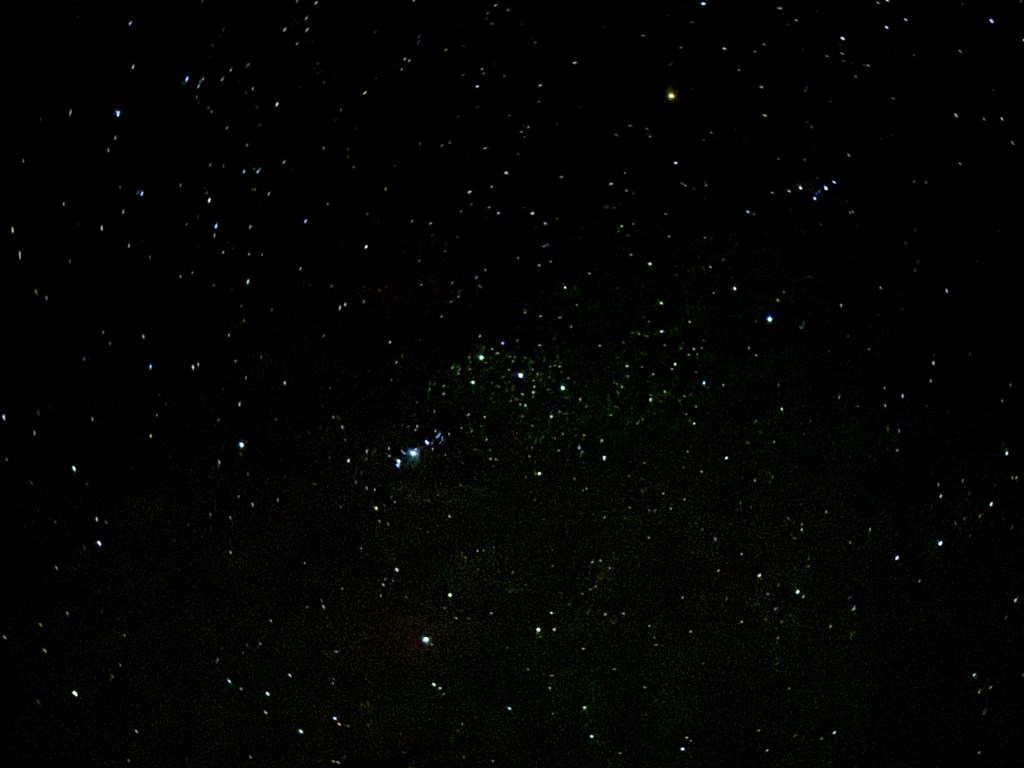
I rigged my kayak while the resident Barred Owl hooted:“Who cooks for you? Who cooks for you-all?”
Jeremy arrived at 5:30 am with his kayak mostly rigged in the back of his pickup truck. We were on the water by 5:45 am, 70 minutes before sunrise.
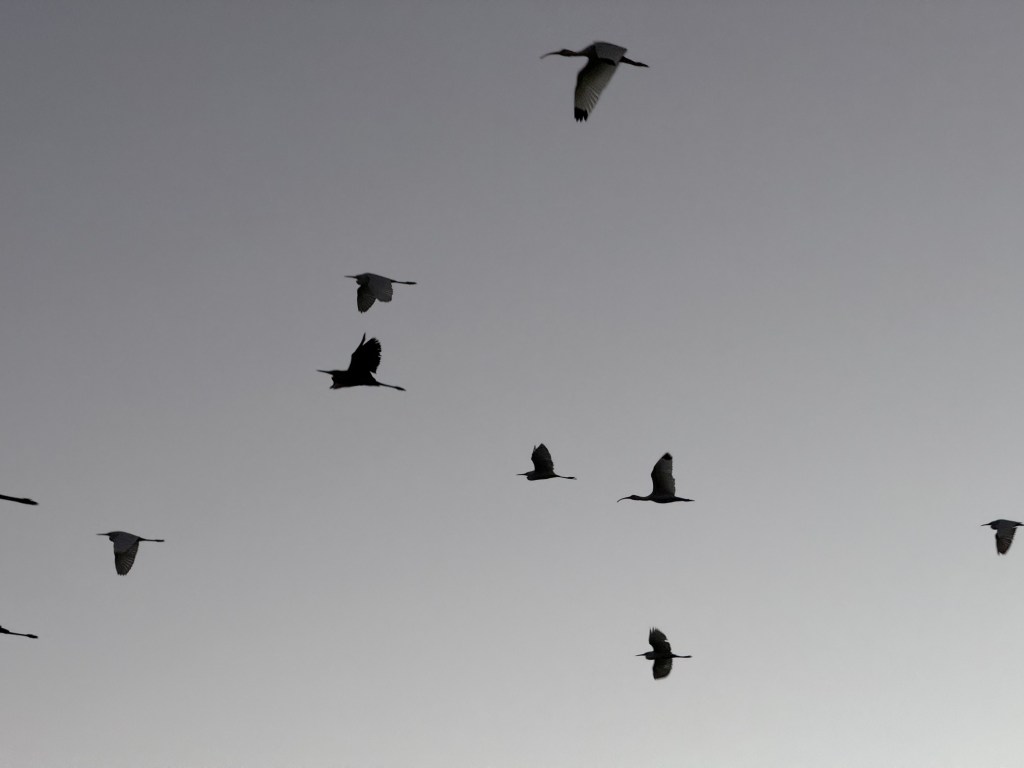

Our fishing strategy was to paddle the narrow channel and cast toward the mangrove roots on shore where the predatory fish typically forage for crabs and small fish when the tide is up.
I hooked a nice Snook near the mangroves then pedaled my kayak hellbent-for-leather onto the shallow flat, grounding the Hobie’s pedal flippers on the mud before stopping to work the fish to my landing net for a quick measurement and release.
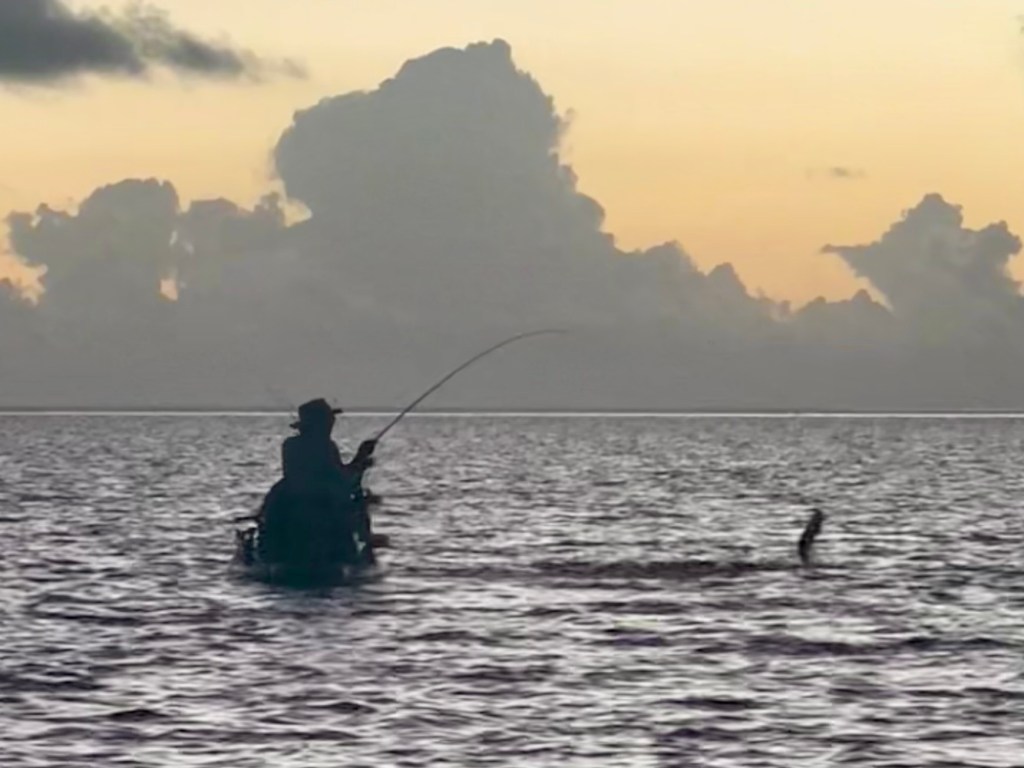
Grounding the kayak on the flat might seem like an odd thing to do on purpose, but it prevents unseen sharks from popping up from below and grabbing the fish on my line. A Snook or Redfish hides handily in a foot of water, but a Lemon Shark or Bull Shark is conspicuous. If a shark comes for my fish in super-skinny water, I can see its approach, open the reel, and let the fish run. My trick worked this morning with a handsome Snook and a chunky Redfish.

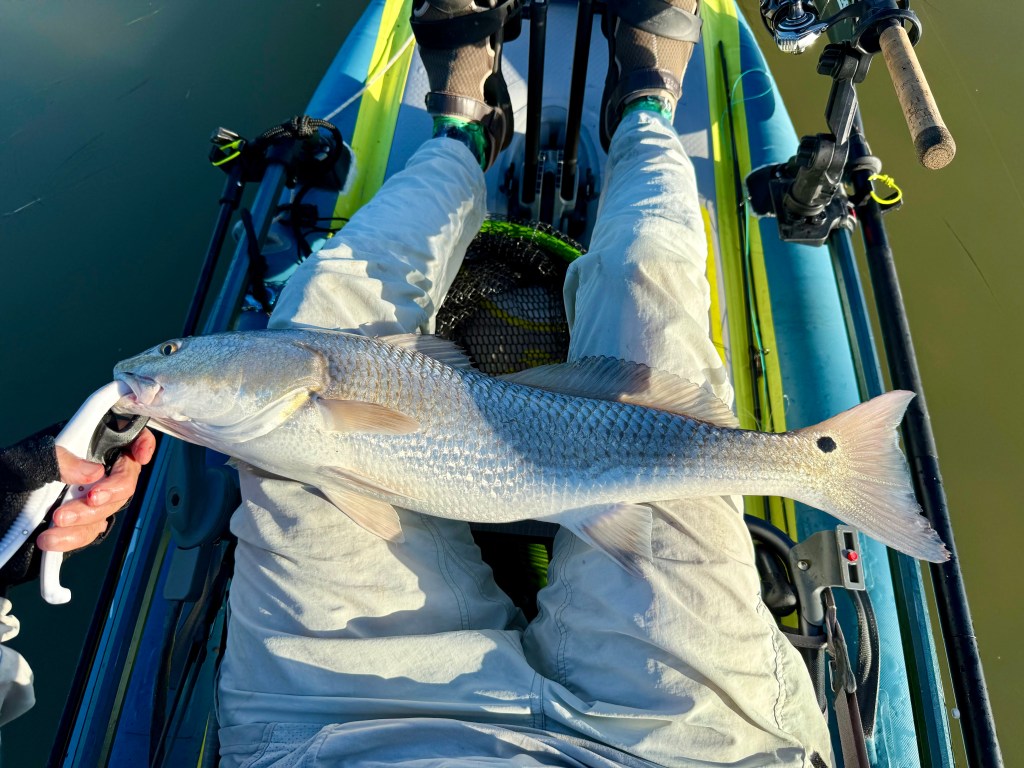
A Lemon Shark circled my kayak looking for my redfish as I hefted it in my landing net from one side of the kayak to the other.
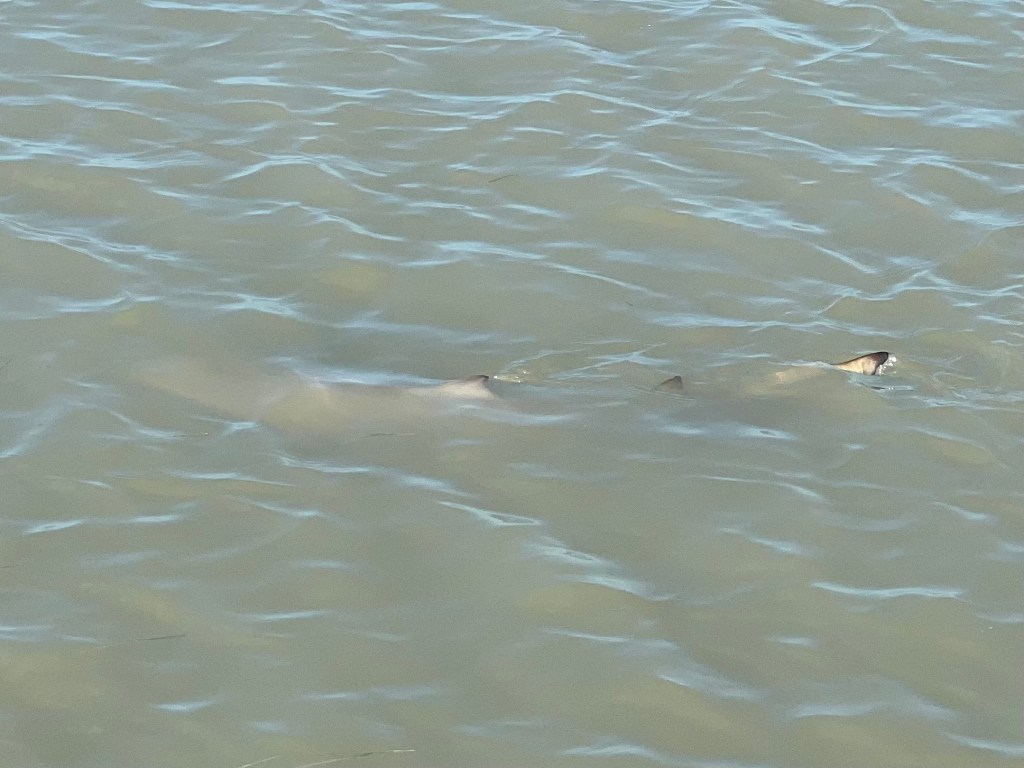
Enough already. I pedaled the kayak right at the shark to chase it away.
Typical of this flat, the water was opaque with sediment. One could only make out detail in the top 6”, which made it hard to spot fish. At the farthest extent of the tiny channel, a three-foot tarpon swam under my kayak, which I only saw because the water was just a foot deep… and dropping. Time to turn around.
I stopped in at a favorite cove on the way back, wherein I often find Snook and Tarpon. A four foot Lemon Shark had gotten in ahead of me and was working over the cove, chasing all the fish up the mangrove creek – definitely time to head back. As cool as they are to see up close, I don’t want sharks hanging around my boat jonesing for my fish. Lemon Sharks at Flamingo have bitten the hands of several fishermen in the past couple of years and even dragged one careless lad overboard and into the water (YouTube video).
I paused to watch eight Ospreys circle a mullet school, diving in succession, snatching hapless fish, and landing in the trees on shore to enjoy a sashimi breakfast.
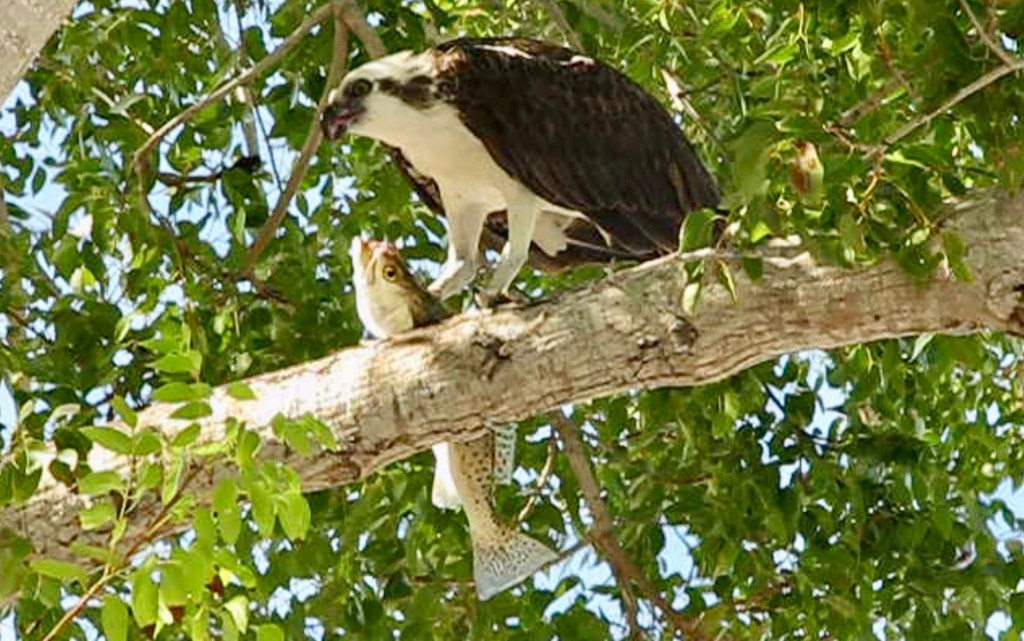
Full of fresh fish, the Ospreys set about collecting soft material to line their stick nests. Some carried clumps of dead seagrass in their feet.
On our way back to the marina, I spotted a young couple in an inflatable kayak paddling the opposite direction, heading toward the heart of the flat. Unless they knew what they were doing, they stood to get stranded in about 20 minutes and stuck there for the next 5 hours. Seeing neither fishing gear nor binoculars, I took them for tourists. I paddled over and asked whether they came here often. “First time” responded the young man in a British accent.
I explained about the tides and the mud, and pointed them toward a channel marker. If they paddled directly to that marker they could spend all day watching birds, sea turtles, and marine mammals from the main channel without getting stranded.
As I packed my gear in the car, I watched another Osprey pair skimming the West Indian Mahogany trees to collect Spanish moss for their bulky nest on the water control lock that separates the Buttonwood Canal from Florida Bay.
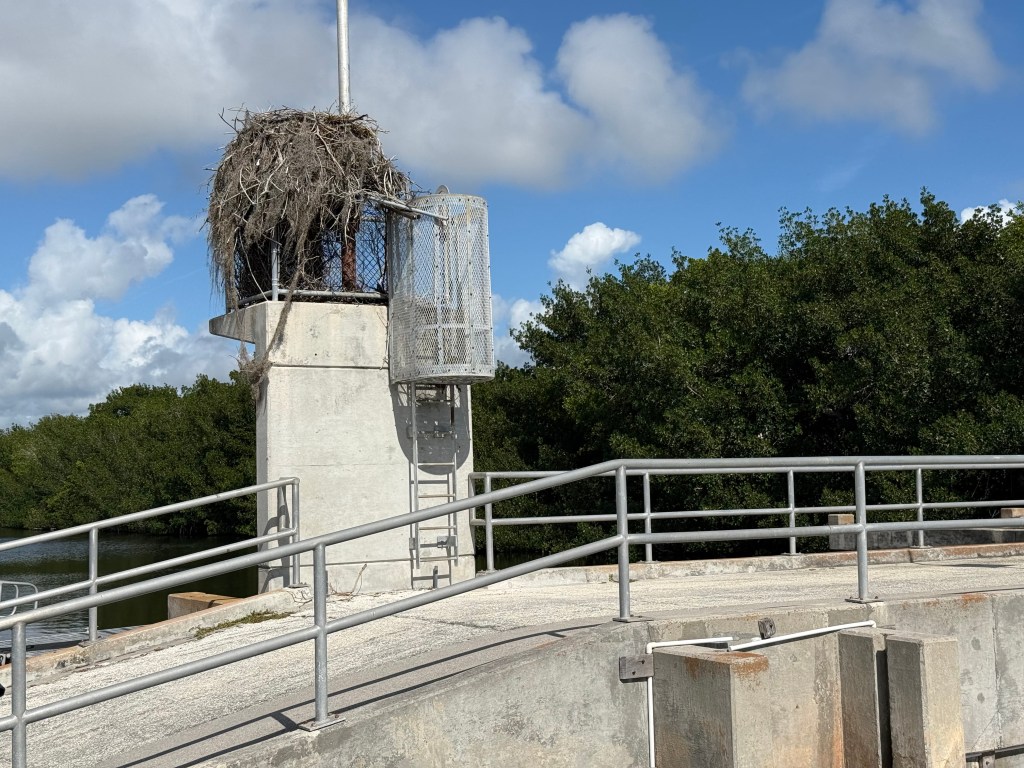
I ate my lunch while overlooking Florida Bay from the refurbished visitor center. In addition to the wildlife viewing it’s entertaining to watch international visitors enjoying this National Park in their own ways.

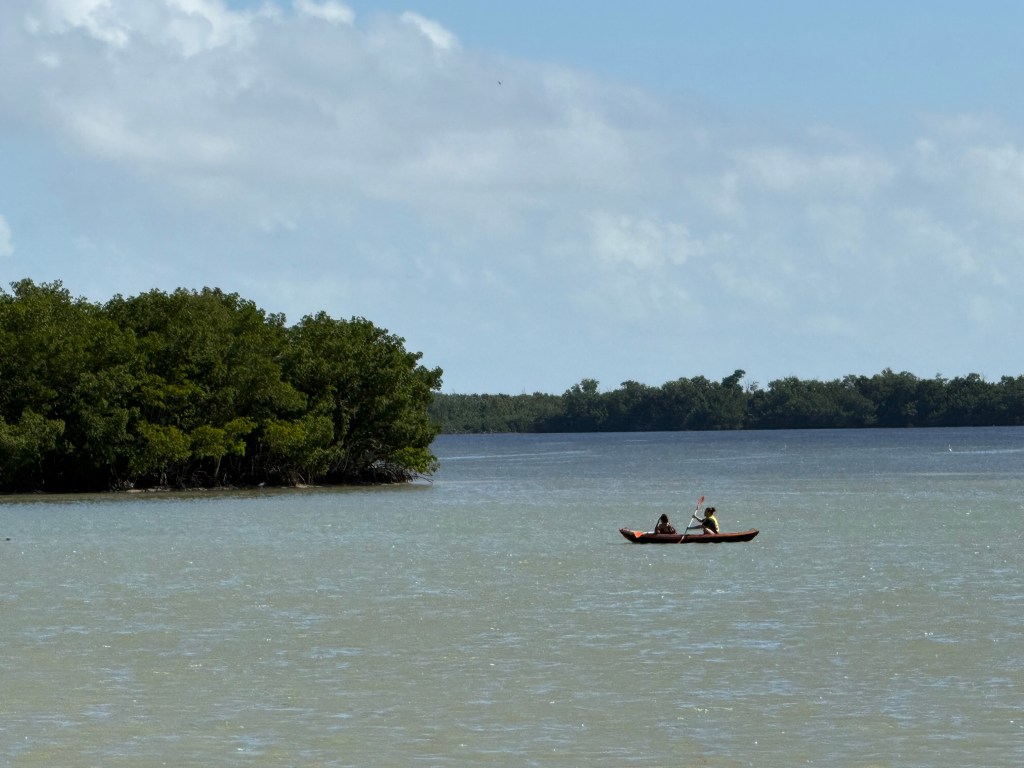
Hey, that’s the same couple in the kayak I saw earlier, now returning from the flats. They pulled their boat ashore and stopped by to say “hi”.
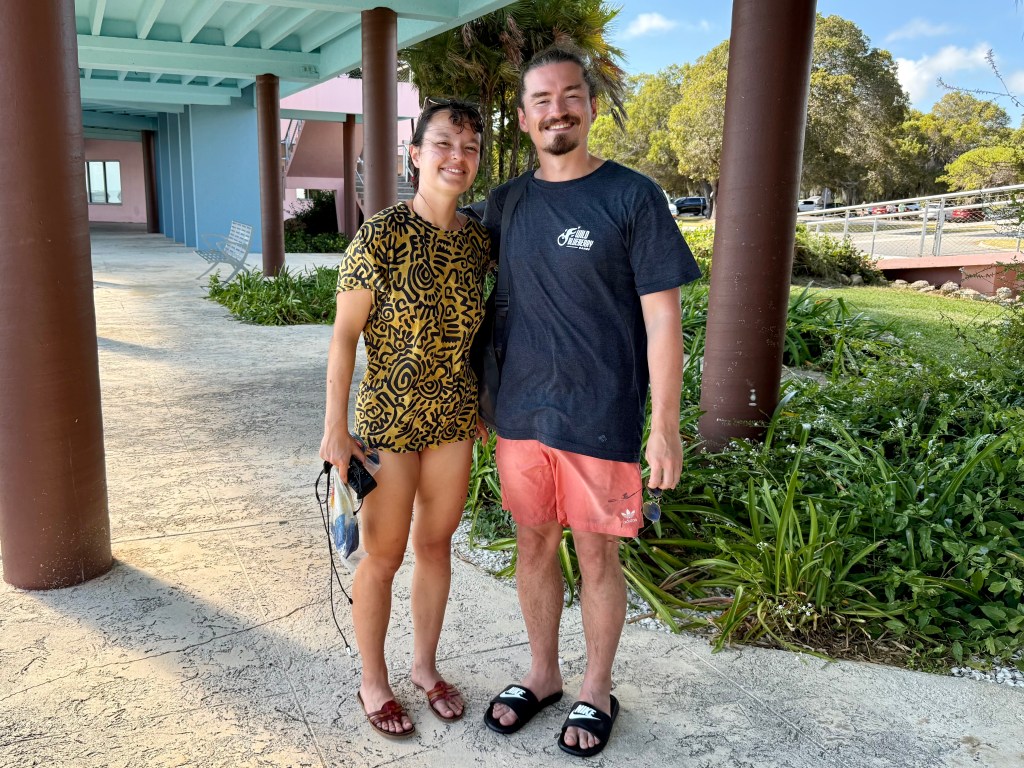
They had decided to head back in after a large American Crocodile surfaced in the channel next to their inflatable kayak.
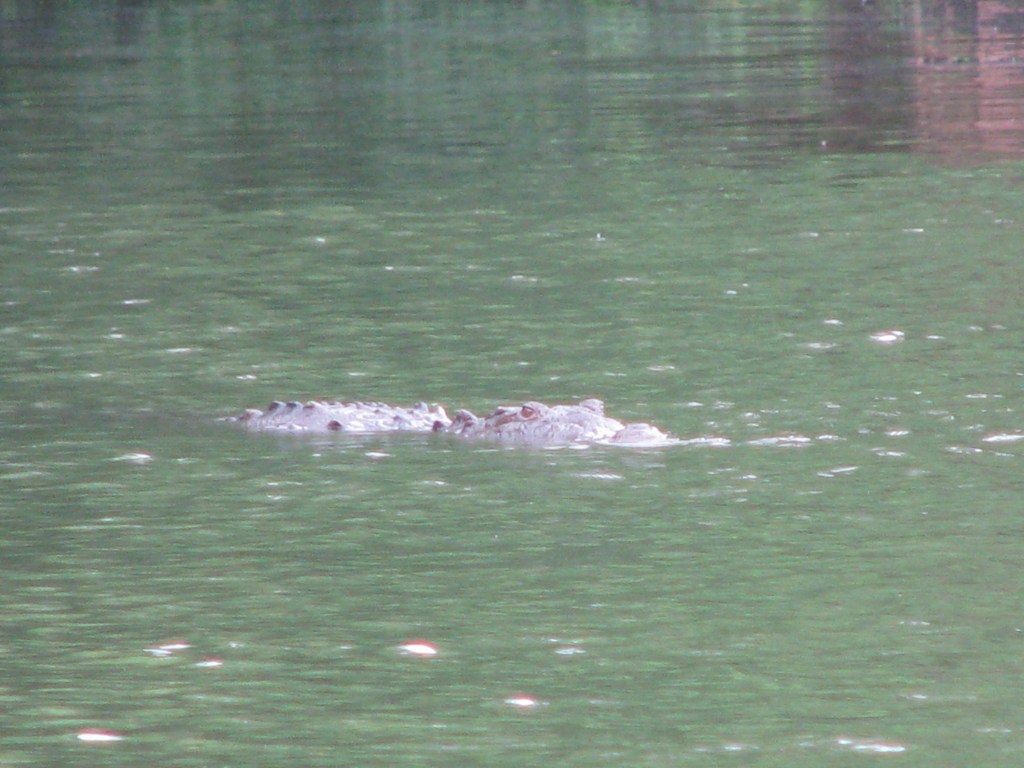
Until recently, I’d have told them not to worry about the normally docile American Crocodile, but last summer an experienced fly fisherman told me of a large croc at Flamingo that went airborne in its best attempt to take him off the deck of his skiff.
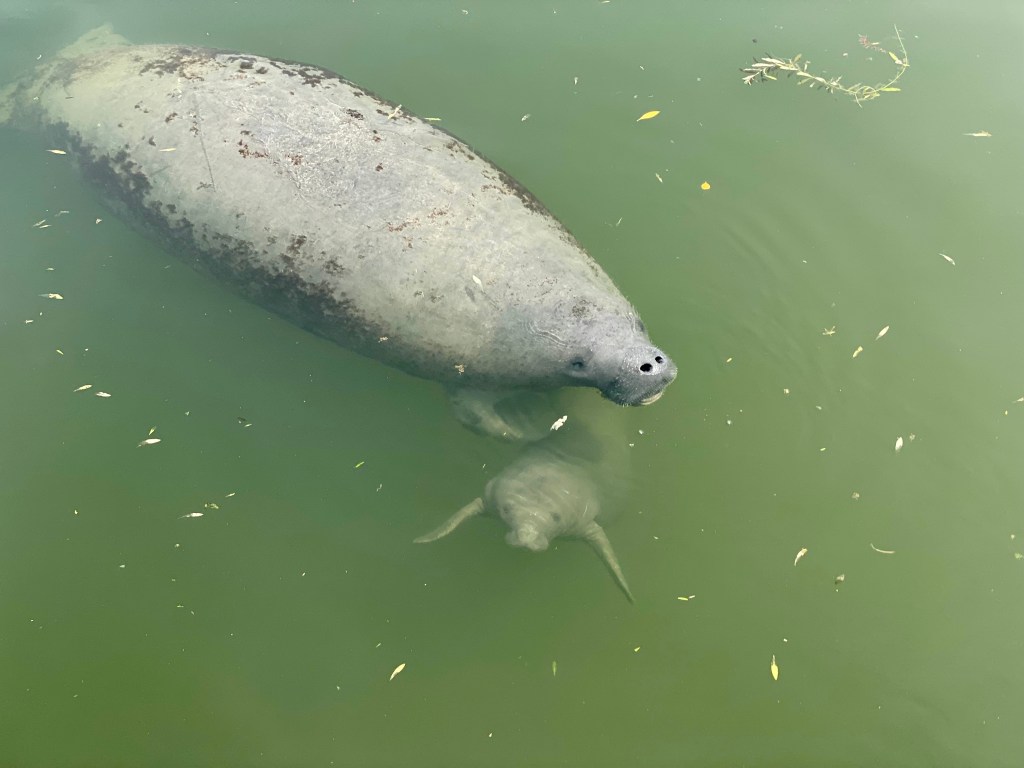
I took Caroline and Jason over to the marina to admire the assembly of mother and baby manatees.
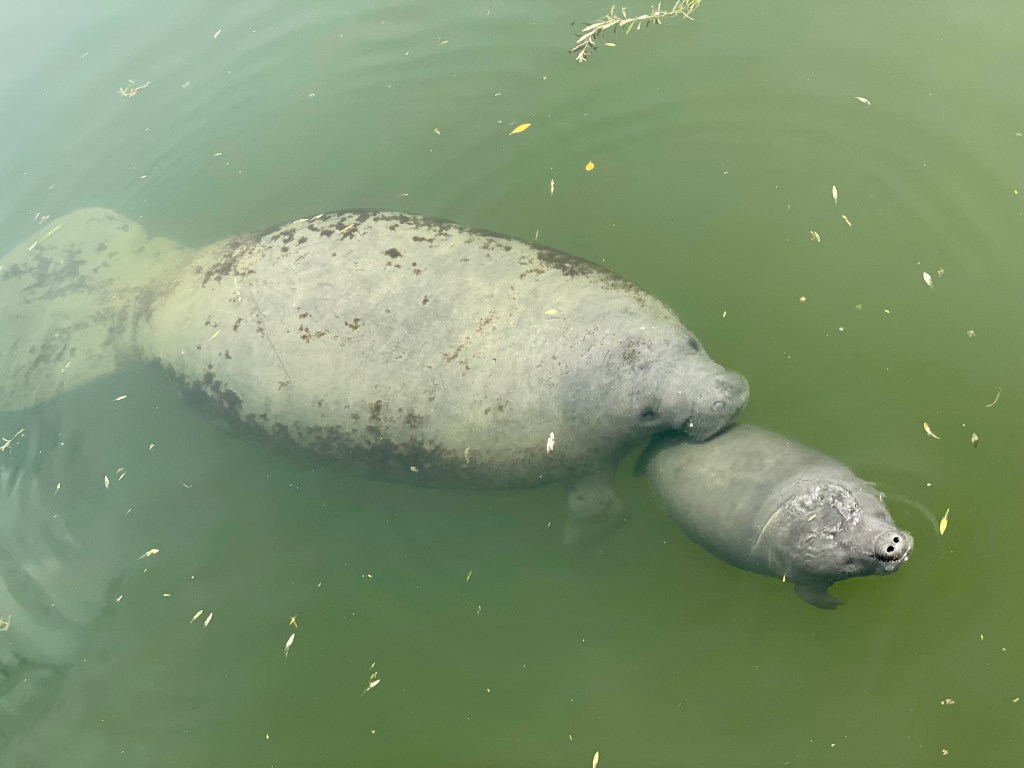
Too cute.
* * *
Pandora’s Flats
A couple of months back, I promised to write an essay about why you shouldn’t fish at Flamingo. The dense mosquito swarms are sufficient reason for normal people to stay away nine months of the year. Risk of stranding on the flats while exposed to sun and lightning should give pause to any sane person. We recently acquired the man-made problem of habituated sharks and crocodiles popping up at random from the opaque water below – recreational fishing boats have trained them well. If you just wanted to fish, you might find an equally productive area with fewer ancillary hazards.

All of these risks have proven insufficient to keep a certain zoologist away. The combination of birds, fish, and scenery will keep me coming back as long as my health and the rising seas allow.


 Eye of the Cormorant
Leave a reply to alwaysgenerous35a3a989d1 Cancel reply