If Miami gets a late tropical storm in November, the South Florida Water Management District pumps the extra water west and north into the Everglades to keep the city from flooding. That back-pumping makes the canals run backwards, enticing juvenile tarpon from Biscayne Bay inland to check out the offerings in the canals of the eastern Everglades.
After a heavy November storm, I will arrive at the Urban Development Boundary before dawn and walk into the Everglades, fly rod in hand, to look for juvy tarpon.
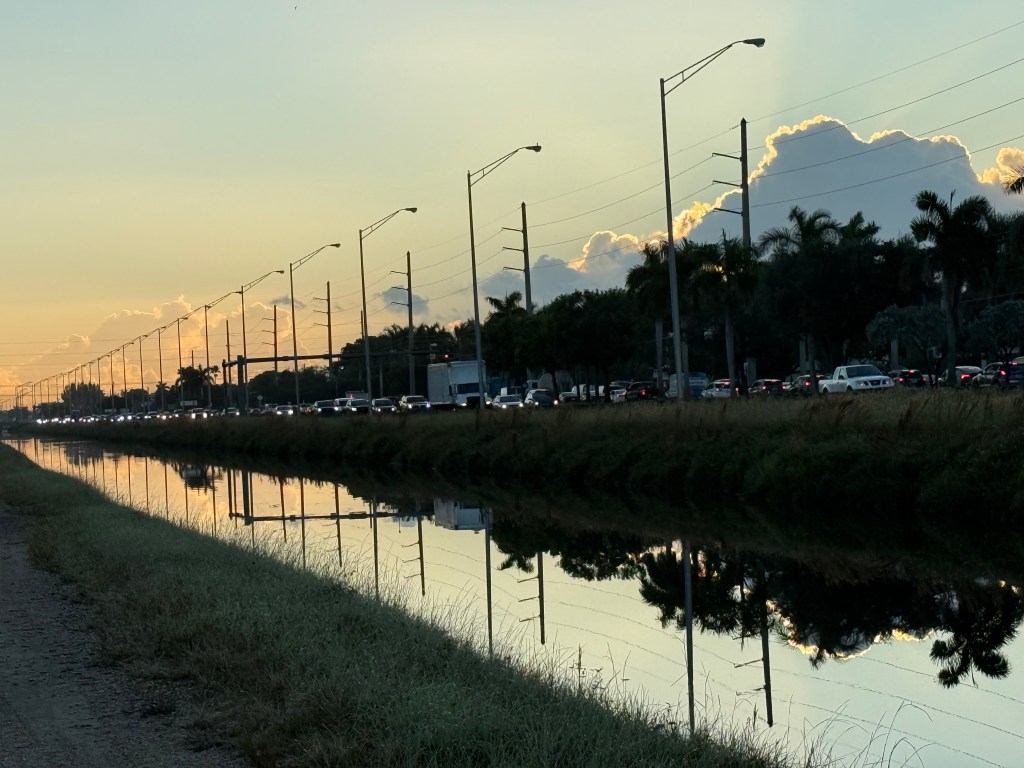
There I might have a fine time educating these young tarpon on the evil ways of catch-and-release fly fishermen.
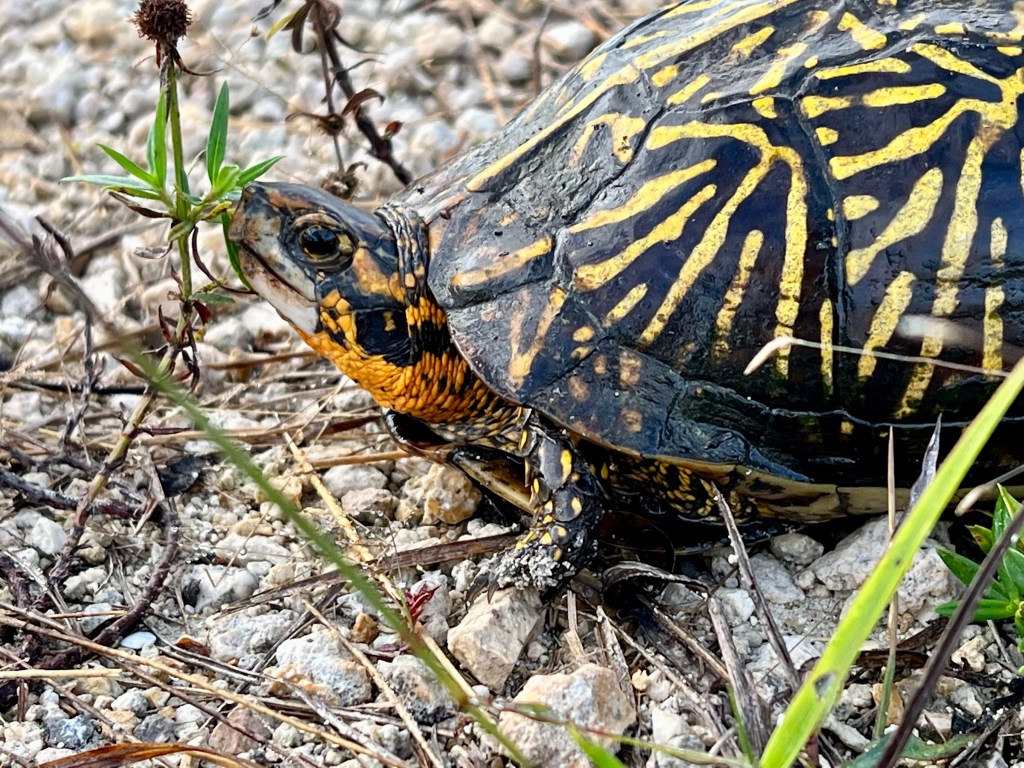
I’ll walk a mile or two from where I park the car, watching for deer, snakes, Florida box turtles, alligators, assorted birds, and of course, the fins of tarpon as they come to the surface for a quick gulp of air.
For the past two years, we have not had a good November storm.
It’s not quite November yet, but it’s been a rainy October, so I ventured out this morning for a look.
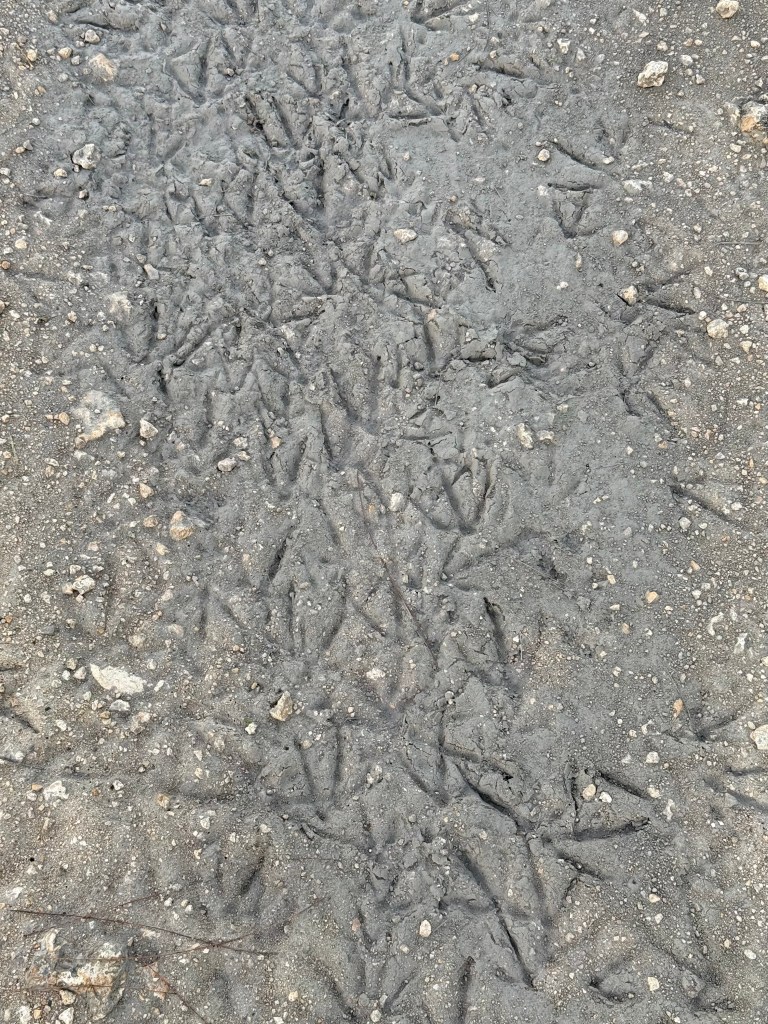
Footprints on the levee indicate recent rains, but the canal is still flowing eastwards towards Biscayne Bay, so there won’t be many tarpon farther up the canal this morning, if any. But I’m here – might as well keep going.
Indeed, I spot only four tarpon, rolling up and down the canal. Following a November storm, 20 to 30 might be visible along this stretch.
These four are probably the regulars from years past. If so, they already hate me. At the very least, I’ll want a fly they have never seen before. I select a fly pattern designed for extra-spooky fish. Being a little tricky to tie, it’s a rarely-fished pattern, but one that tarpon will often eat when they refuse everything else.
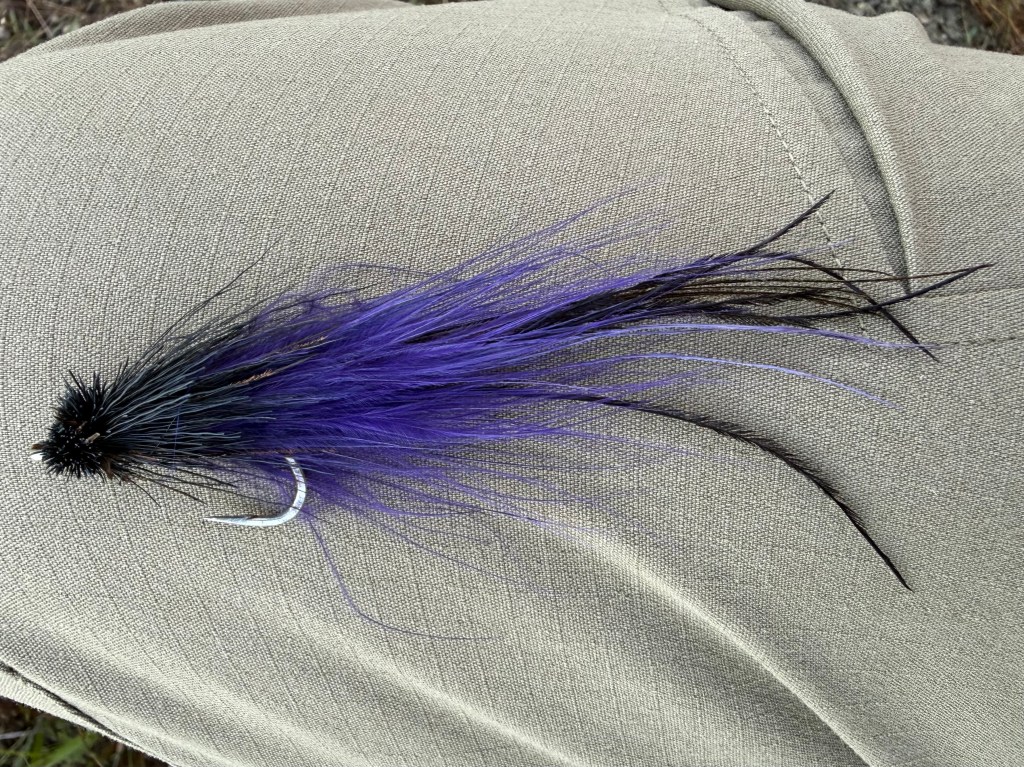
All four of the tarpon seem to remember me from years prior. I can tell because (1) they are larger, thus older, (2) when I approach the bank they move quickly up or down the canal to avoid me, and (3) when they see one of my flies up close they blast away in a shower of spray.
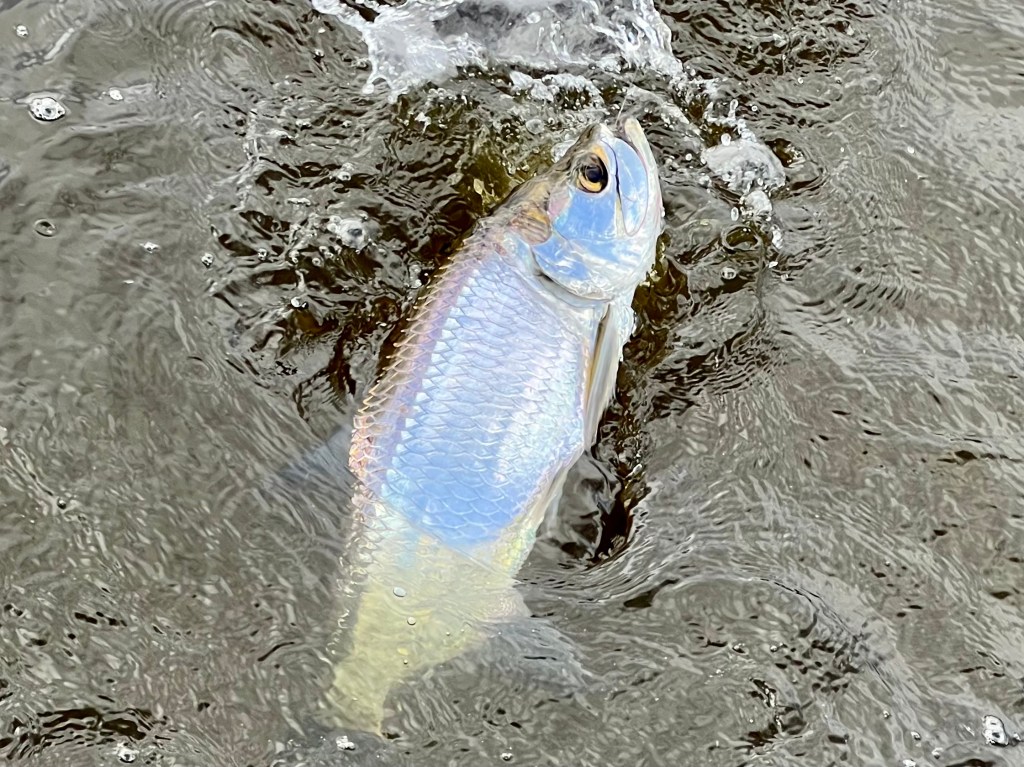
I cast at a string of bubbles rising to the surface. The fly stops and the water explodes. A couple of jumps and I release a younger tarpon that I had not seen among those rolling. It’s probably his or her first and last encounter with an artificial fly.
The action is always over before 9 am. As usual, the side show has been as good as the fish-watching: alligators and turtles playing peek-a-boo along the shoreline; a Northern Harrier flying straight at me, coming close enough to see her eyes.
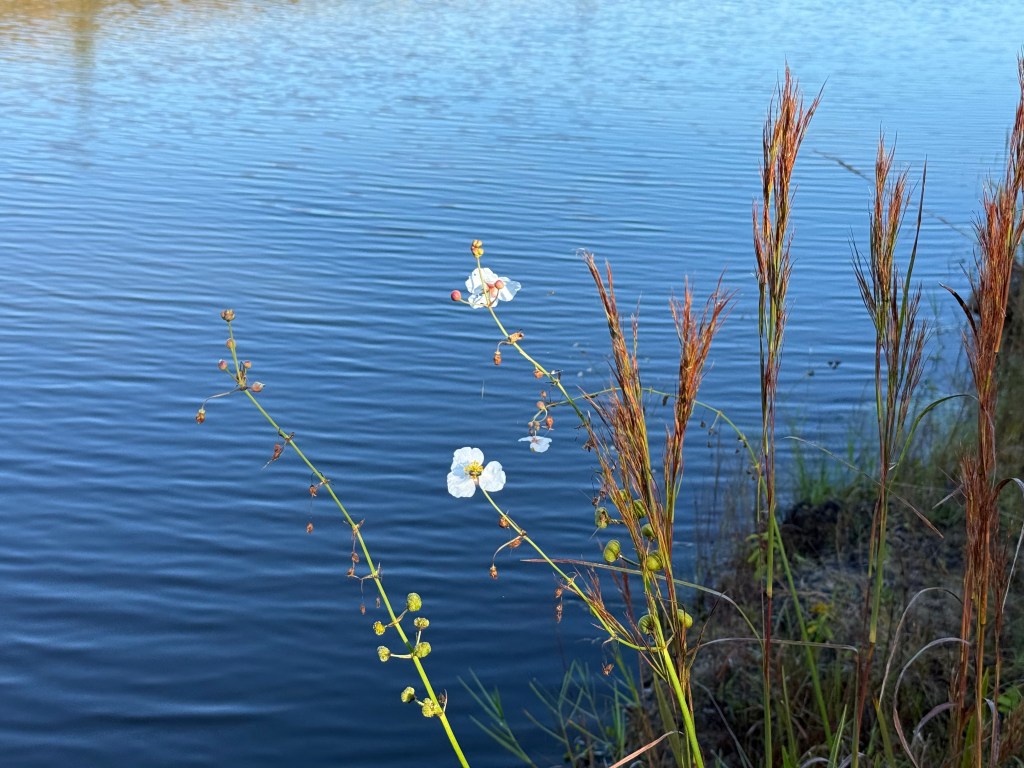
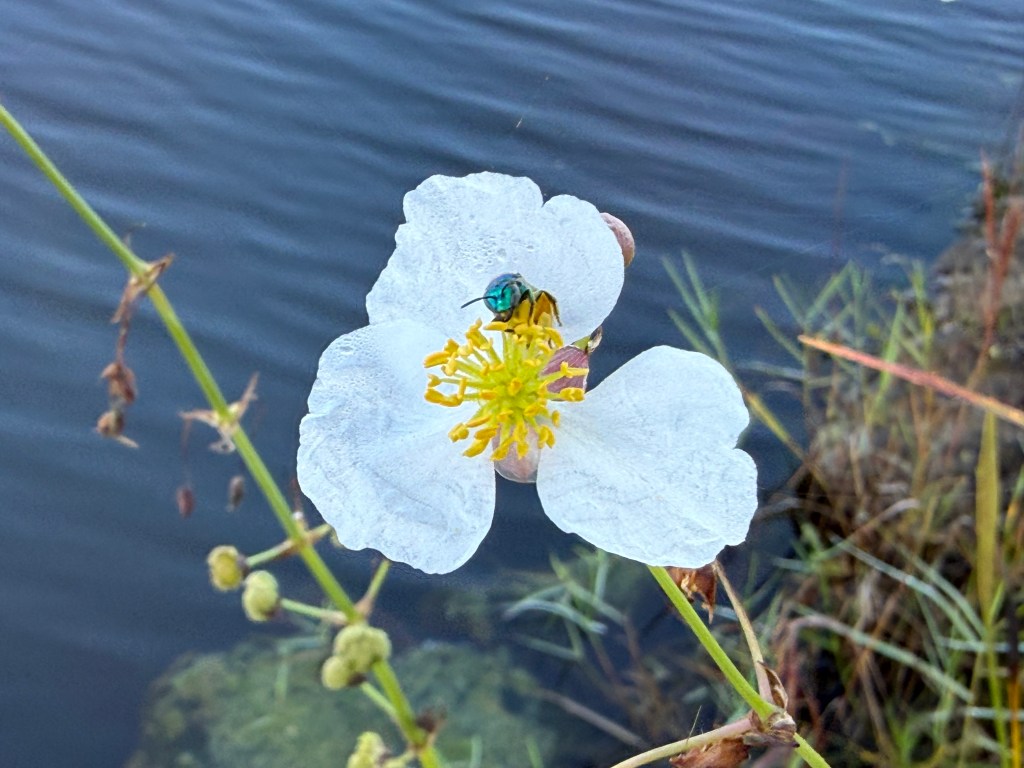
While admiring a clump of blooming duck potato (Sagittaria lancifolia) I spot an iridescent green bee.
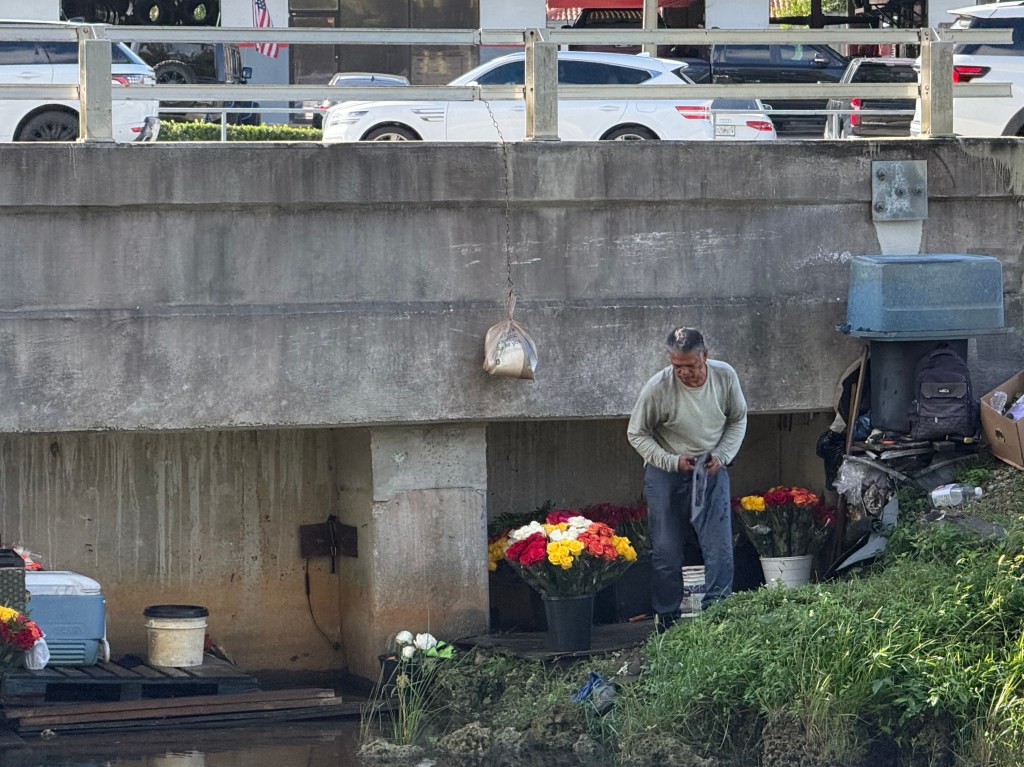
Back at the car, rush hour has eased up and the fellow who sells flowers at the intersection has moved his wares into the shade.
I’m back to waiting for that late tropical storm.


Leave a Reply